 Talmud Bavli
The learning on the whole site is dedicated : L'ilui Nishmat Jamila bat Chlomo Abensour
The learning on the whole site is dedicated : L'ilui Nishmat אליעזר בן רחל
The learning on the whole site is dedicated : For the success of Elyahou ben H'anna & family
Beitza 19a : Youtube
Daf TubeYoutube
3 video classes :
Beitza Page 19a
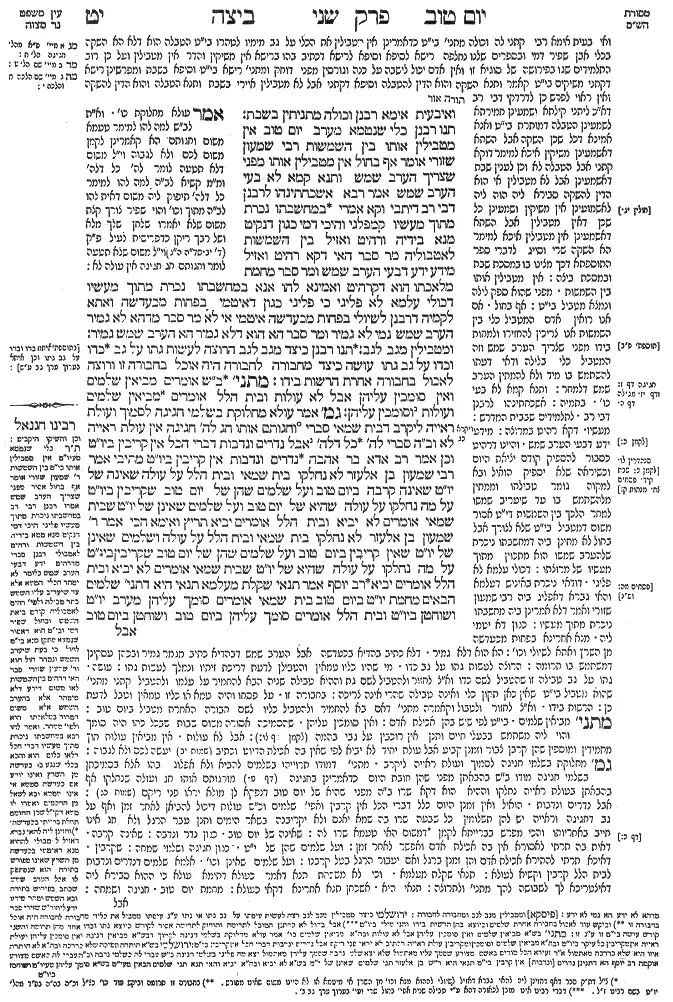
Beitza 19a - Guemara
ואיבעית אימא רבנן וכולה מתניתין בשבת:
תנו רבנן כלי שנטמא מערב יום טוב אין מטבילין אותו בין השמשות רבי שמעון שזורי אומר אף בחול אין מטבילין אותו מפני שצריך הערב שמש ותנא קמא לא בעי הערב שמש אמר רבא אשכחתינהו לרבנן דבי רב דיתבי וקא אמרי במחשבתו נכרת מתוך מעשיו קמפלגי והיכי דמי כגון דנקיט מנא בידיה ורהיט ואזיל בין השמשות לאטבוליה מר סבר האי דקא רהיט ואזיל מידע ידע דבעי הערב שמש ומר סבר מחמת מלאכתו הוא דקרהיט ואמינא להו אנא במחשבתו נכרת מתוך מעשיו דכולי עלמא לא פליגי כי פליגי כגון דאיטמי בפחות מכעדשה ואתא לקמיה דרבנן לשיולי בפחות מכעדשה איטמי אי לא מר סבר מדהא לא גמיר הערב שמש נמי לא גמיר ומר סבר הא הוא דלא גמיר הא הערב שמש גמיר:
ומטבילין מגב לגב:
תנו רבנן כיצד מגב לגב הרוצה לעשות גתו על גב כדו וכדו על גב גתו עושה כיצד מחבורה לחבורה היה אוכל בחבורה זו ורוצה לאכול בחבורה אחרת הרשות בידו:
מתני׳ ב"ש אומרים מביאין שלמים ואין סומכין עליהן אבל לא עולות ובית הלל אומרים מביאין שלמים ועולות וסומכין עליהן:
גמ׳ אמר עולא מחלוקת בשלמי חגיגה לסמוך ועולת ראייה ליקרב דבית שמאי סברי (ויקרא כג, מא) וחגותם אותו חג לה' חגיגה אין עולת ראייה לא וב"ה סברי לה' כל דלה' אבל נדרים ונדבות דברי הכל אין קריבין ביו"ט וכן אמר רב אדא בר אהבה נדרים ונדבות אין קריבין ביו"ט מתיבי אמר רבי שמעון בן אלעזר לא נחלקו בית שמאי ובית הלל על עולה שאינה של יו"ט שאינה קרבה ביום טוב ועל שלמים שהן של יום טוב שקריבין ביו"ט על מה נחלקו על עולה שהיא של יום טוב ועל שלמים שאינן של יו"ט שבית שמאי אומרים לא יביא ובית הלל אומרים יביא תריץ ואימא הכי אמר ר' שמעון בן אלעזר לא נחלקו בית שמאי ובית הלל על עולה ושלמים שאינן של יו"ט שאין קריבין ביום טוב ועל שלמים שהן של יום טוב שקריבין ביו"ט על מה נחלקו על עולה שהיא של יו"ט שבית שמאי אומרים לא יביא ובית הלל אומרים יביא רב יוסף אמר תנאי שקלת מעלמא תנאי היא דתני' שלמים הבאים מחמת יו"ט ביום טוב בית שמאי אומרים סומך עליהן מערב יו"ט ושוחטן ביו"ט ובית הלל אומרים סומך עליהן ביום טוב ושוחטן ביום טוב
Comments from Rashi on Masechet Beitza Page 19a
ואי בעית אימא רבי קתני לה וכולה מתני' בי"ט כדאמרינן אין מטבילין את הכלי על גב מימיו לטהרו בי"ט הטבלה הוא דלא הא השקה בכלי אבן שפיר דמי ובספרים שלנו נחלפה רישא לסיפא וסיפא לרישא דכתיב בהו ברישא אין משיקין והדר אין מטבילין ועל כן רוב התלמידים שגו בפירושה של סוגיא זו ואין אדם יכול לישבה על כנה וגורסין מפני דוחק ומתני' רישא בי"ט וסיפא בשבת ומפרשינן רישא דקתני משיקים בי"ט קאמר ותנא השקה והוא הדין להטבלה וסיפא דקתני אבל לא מטבילין איירי בשבת ותנא הטבלה והוא הדין להשקה ואין ראוי לפרש כן לדרדקי דבי רב דא"כ ליתני קילתא ושמעינן חמירתא לשמעינן הטבלה דמותרת בי"ט ואנא אמינא דכל שכן השקה אבל השתא דאשמעינן משיקין איכא למימר דוקא קתני אבל הטבלה לא וכן לענין שבת דאשמעינן אבל לא מטבילין אי הוא הדין להשקה סבירא ליה הוה ליה לאשמועינן אין משיקין ושמעינן כל שכן דאין מטבילין אבל השתא דאשמעינן אין מטבילין איכא למימר הא השקה שרי וסייג לדברי ספר התוספתא דכך מצינו בו במסכת שבת ובמסכת ביצה: אין מטבילין אותו בין השמשות . מפני שהוא ספק לילה ונמצא מטביל בי"ט: אף בחול . אם אנו רואין אדם המטביל כלי בין השמשות אנו צריכין להחזירו ולמחות בידו מפני שצריך הערב שמש וזה המטביל כלי בלילה ודאי דעתו להשתמש בו מיד ולא להמתין הערב שמש דלמחר: ותנא קמא לא בעי כו' . בתמיה: אשכחתינהו לרבנן דבי רב . לתלמידים שבבית המדרש: מעשיו . דקא רהיט במרוצה: מידע ידע דבעי הערב שמש . והיינו דרהיט כסבור להספיק קודם יציאת היום וכשיראה שלא יספיק הואיל ובא למקוה גומר טבילתו וממתין מלהשתמש בו עד שיעריב שמשו למחר הלכך בין השמשות די"ט אסור משום דמטביל בי"ט שלא לצורך אבל בחול לא מחינן ביה דמחשבתו ניכרת שלהערב שמשו הוא מתכוין מתוך מעשיו של מרוצתו: דכולי עלמא לא פליגי . דודאי ניכרת באיניש דעלמא והאי גברא דאפליג ביה רבי שמעון שזורי ואמר דלא אמרינן ביה מחשבתו ניכרת מתוך מעשיו: כגון דאיטמי ליה . מנא אחרינא בפחות מכעדשה מן השרץ ואתא לשיולי וכו': הא הוא דלא גמיר . דלא כתיב בהדיא בכעדשה אבל הערב שמש דבהדיא כתיב מגמר גמיר ובכהן עסקינן דמשתמש בו תרומה: הרוצה לעשות גתו על גב כדו . מי שהיו כליו טמאין והטבילן לדעת דריכת זיתיו ונמלך לעשות גתו: עושה . גתו על גב טבילה זו שהטביל לשם כדו וא"צ לחזור ולהטביל לשם גת וההיא טבילה שניה הבא להחמיר על עצמו ולהטביל קתני מתניתין שהוא מטביל בי"ט שאין כאן תקון כלי ואינה טבילה שהרי אינה צריכה: בחבורה זו . על פסחו והיה טמא או כליו טמאין וטבל לדעת כן: הרשות בידו . וא"צ לחזור ולטבול וקאמרה מתני' דאם בא להחמיר ולהטביל כליו לשם חבורה האחרת מטביל ביום טוב: מתני' מביאין שלמים . ביו"ט לפי שיש בהן אכילת אדם: ואין סומכין עליהן . שהסמיכה אסורה משום שבות שבכל כחו היה סומך והוי ליה משתמש בבעלי חיים ותנן אין רוכבין על גבי בהמה (לקמן ביצה דף לו:): אבל לא עולות . אין מביאין עולות חוץ מתמידין ומוספין שהן קרבן צבור וזמנן קבוע אבל עולת יחיד לא יביא לפי שאין בה אכילת הדיוט וכתיב (שמות יב) יעשה לכם ולא לגבוה: גמ' מחלוקת בשלמי חגיגה לסמוך ועולת ראייה ליקרב . מתני' דמודו תרוייהו בשלמים להביא ולא אפלוג בהו אלא בסמיכתן בשלמי חגיגה מודו ב"ש בהבאתן מפני שהן חובת היום כדאמרינן בחגיגה (דף ט.) מוחגותם אותו חג ועולה שנחלקו אף בהבאתן בעולת ראייה נחלקו וההיא הוא דקא שרו ב"ה מפני שהיא של יום טוב דנפקא לן מולא יראו פני ריקם (שמות כג): אבל נדרים ונדבות . הואיל ואין זמנן היום כלל דברי הכל אין קרבין ואפי' שלמים וכ"ש עולות דיכול להביאן לאחר זמן ואף על גב דחגיגה וראייה יש להן תשלומין כל שבעה שרו בה שמא יאנס ולא יקריבנה בשאר הימים ותנן עבר הרגל ולא חג אינו חייב באחריותו והכי מפרש בברייתא לקמן דמשום האי טעמא שרו לה: שאינה של יום טוב . כגון נדר ונדבה: שאינה קרבה . דאית בה תרתי לאסורא אין בה אכילת אדם ואפשר לאחר זמן: ועל שלמים שהן של י"ט . כגון חגיגה ושלמי שמחה: שקרבין . דאיכא תרתי להתירא אכילת אדם והן זמנן ברגל ואם יעבור הרגל בטל קרבנו: ועל שלמים שאינן וכו' . אלמא שלמים דנדרים ונדבות לבית הלל קרבין וקשיא לעולא: תנאי שקלת מעלמא . וכי לא משכחת תנא דאמר כעולא דתימא עולא כי ההוא סבירא ליה דאיצטריכא לך לשבושה להך מתני' ולתרוצה: תנאי היא . אשכחן תנא אחרינא דקאי כעולא: מחמת יום טוב . חגיגה ושמחה:
Comments from Tosafot - Beitza 19a
אמר עולא מחלוקת כו'. וא"ת לב"ש למה להו למימר טעמא משום וחגותם הא קאמרינן לקמן משום לכם ולא לגבוה וי"ל משום דלא תטעה לומר לה' כל דלה' ומ"מ קשיא לב"ה למה להו למימר כל דלה' תיפוק ליה משום דאית להו לב"ה מתוך וכו' והוי שפיר צורך קצת משום שלא יאמרו שלחן שלך מלא ושל רבך ריקן כדפרישית לעיל פ"ק (ביצה ד' יב. סד"ה ה"ג) וי"ל משום שלא תטעה לומר וחגותם חג חגיגה אין עולה לא:
Beitza 19a - Mishnah translated into english
And if you wish, say instead that the mishna is in accordance with the opinion of the Rabbis, and on a Festival one is permitted even to immerse an impure vessel on account of its water in order to purify the vessel. And the entire mishna is referring to Shabbat, when it is prohibited to immerse an impure vessel, but it is permitted to purify impure water by bringing it into contact with pure water in a stone vessel.
§ The Sages taught in a baraita: With regard to a vessel that became ritually impure on the eve of a Festival, one may not immerse it during twilight, a time period of doubtful status whether it is a weekday or a Festival, due to the possibility of violating the prohibition against immersing vessels on a Festival.
Rabbi Shimon Shezuri says: Even on a weekday one may not immerse an impure vessel during twilight because the vessel requires sunset. After an impure vessel is immersed, it remains ritually impure for certain purposes until the sun has set and the stars have come out. If one immerses an impure vessel during the twilight period, then owing to the uncertainty as to whether it is day or night, he must wait another full day, until the next sunset, before using the vessel. It is therefore preferable not to put oneself in a situation where one might come to use a vessel before its purification process has been completed.
The Gemara asks: And does the first tanna not require sunset? It is clear that this is required. Rava said: I found the Sages of the school of Rav sitting and saying with regard to this issue that they disagree about whether or not to accept the principle that one’s intention is evident from his actions. And what are the circumstances of this dispute? They are, for example, a case where one was holding a vessel in his hand and running along at the time of twilight to immerse it.
This Sage, i.e., the Rabbis, holds that the fact that he is running along indicates that he knows that the vessel requires sunset. If he arrives at the ritual bath late, he will realize that he must wait another day, and there is no concern that he might come to use the vessel on the same day. Consequently, it is prohibited to immerse the vessel during twilight on the eve of a Festival, as, since it may already be night and he will be unable to use the vessel until the next evening, immersing the vessel would be considered to be preparing something on a Festival for a weekday, which is prohibited. However, it is permitted to immerse a vessel during twilight on an ordinary weekday evening.
And this Sage, Rabbi Shimon Shezuri, holds that perhaps he is running due to his work that he has not finished on time, and not necessarily because he knows that the purification of his vessel requires sunset. He believes that he may use the vessel immediately upon immersion; therefore, the Sages decreed that one should never immerse vessels during twilight.
Rava continues: And I said to them: With regard to the principle that one’s intention is evident from his actions, everyone agrees that this is accepted. Where they disagree is, for example, in a case where a vessel became impure through contact with a creeping animal less than a lentil-bulk in size, and the vessel’s owner came before the Sages to ask whether a vessel becomes impure through contact with less than a lentil-bulk or not. One Sage, Rabbi Shimon Shezuri, holds that since he does not know this matter that a creeping animal smaller than a lentil-bulk does not impart impurity, it stands to reason that he also does not know the halakha of sunset; therefore, there is reason to prohibit him from immersing vessels during twilight even on a weekday. And one Sage, the Rabbis, who permit such immersion on a weekday, hold that it is only this halakha with regard to the size of a creeping animal that he does not know, but the requirement of sunset he does know, as it is stated explicitly in the Torah.
It was taught in the mishna that one may immerse on a Festival from one principle to another and from one group to another. The Gemara attempts to clarify the meaning of this statement: The Sages taught in a baraita: How does one immerse from one principle to another? One who wishes to make his winepress, meaning to immerse and purify vessels for the sake of his winepress, in addition to the purification of his ritually impure pitcher, may do so. In other words, if at first he merely intended to immerse his impure pitcher, but subsequently changed his mind and decided to use it for his winepress, and he wishes to immerse the pitcher a second time for the sake of the winepress, it is permitted to do so.
Similarly, one who wishes to make his pitcher in addition to the purification of his vessels for the sake of his winepress may do so. That is to say, if he originally intended to use the pitcher for his winepress, and after immersing it he decided not to use it for that purpose, and now he wishes to immerse his pitcher a second time, it is permitted to do so. Since the second immersion does not purify the vessel or fulfill any obligation, it is not considered a proper immersion and is not prohibited on a Festival.
Similarly, how does one immerse from one group to another? If one was planning to eat the Paschal offering with this group, and he immersed himself or his ritually impure vessels for that purpose; and now he has reconsidered and wishes to eat the offering with a different group, and he wants to immerse himself or his vessels a second time for the second group, in such a case he has permission to do so even on a Festival, for the same reason: Since this immersion is not obligatory, it is not viewed as an immersion at all.
MISHNA: Beit Shammai say: One may bring peace-offerings on a Festival, but one may not place his hands on them, as this is considered using animals, which is prohibited on a Festival by rabbinic decree. However, one may not bring burnt-offerings, apart from the obligatory daily and additional offerings of the day, because burnt-offerings are consumed entirely on the altar and not by people, and slaughter is permitted on a Festival only for the purpose of human consumption. And Beit Hillel say: One may bring both peace-offerings and burnt-offerings, and one may even place his hands on them.
GEMARA: Ulla said: The dispute applies only to Festival peace-offerings, an obligation of the Festival, with respect to placing hands on them, and to burnt-offerings of appearance, which must be brought over the course of the Festival, with respect to sacrificing them. As Beit Shammai hold that the verse “You shall observe [vaḥaggotem] it as a Festival to the Lord seven days in the year” (Leviticus 23:41) indicates: Festival peace-offerings [ḥagiga], yes, they may be sacrificed even on a Festival day, but burnt-offerings of appearance, no, they may not. And Beit Hillel hold: “To the Lord” means that anything brought as an offering to the Lord may be sacrificed throughout the seven days of the holiday, even on the actual Festival day.
But with regard to vow-offerings and gift-offerings, which are not part of the obligations of the day, all agree, even Beit Hillel, that they may not be sacrificed on a Festival. And likewise, Rav Adda bar Ahava said: Vow-offerings and gift-offerings may not be sacrificed on a Festival.
The Gemara raises an objection against Ulla’s statement from the following baraita: Rabbi Shimon ben Elazar said: Beit Shammai and Beit Hillel did not disagree with regard to a burnt-offering that is not part of the requirements of the Festival, such as a vow-offering or a gift-offering, that it may not be sacrificed on a Festival, or with regard to peace-offerings that are part of the Festival obligations, such as Festival peace-offerings or peace-offerings of rejoicing, that they may be sacrificed on a Festival, as the Festival is their designated time, and if one fails to bring them then he will be unable to sacrifice them later.
The baraita continues: With regard to what, then, did they disagree? It is with regard to a burnt-offering that is part of the Festival requirements, such as the burnt-offering of appearance, and with regard to peace-offerings that are not part of the Festival obligations, such as vow-offerings and gift-offerings. As Beit Shammai say: He may not bring them, and Beit Hillel say: He may bring them. This baraita contradicts Ulla’s opinion that all agree that vow-offerings and gift-offerings may not be sacrificed on a Festival.
The Gemara answers: Resolve the contradiction by emending the text, and say as follows: Rabbi Shimon ben Elazar said: Beit Shammai and Beit Hillel did not disagree with regard to burnt-offerings and peace-offerings that are not part of the requirements of the Festival, such as vow-offerings and gift-offerings, that they are certainly not sacrificed on a Festival, or with regard to peace-offerings that are part of the Festival obligations, such as Festival peace-offerings or peace-offerings of rejoicing, that they may be sacrificed on a Festival. With regard to what did they disagree? It is with regard to a burnt-offering that is part of the Festival requirements, such as the burnt-offering of appearance, as Beit Shammai say: He may not bring it, and Beit Hillel say: He may bring it.
Rav Yosef said: There were never any grounds for objection from the outset, as have you removed all the tanna’im from the world? This is the subject of a dispute among tanna’im, and Rabbi Shimon ben Elazar’s opinion was not unanimously accepted. As it is taught in a different baraita: With regard to peace-offerings that come on account of a Festival on the Festival, e.g., Festival peace-offerings or peace-offerings of rejoicing, Beit Shammai say: One places his hands on them on the eve of the Festival and slaughters them on the Festival, and Beit Hillel say: One places his hands on them on the Festival itself and slaughters them on the Festival.
Traduction : The William Davidson digital edition of the Koren Noé Talmud, with commentary by Rabbi Adin Even-Israel Steinsaltz.