 Talmud Bavli
Beitza 14a : Youtube
Daf TubeYoutube
3 video classes :
Beitza Page 14a
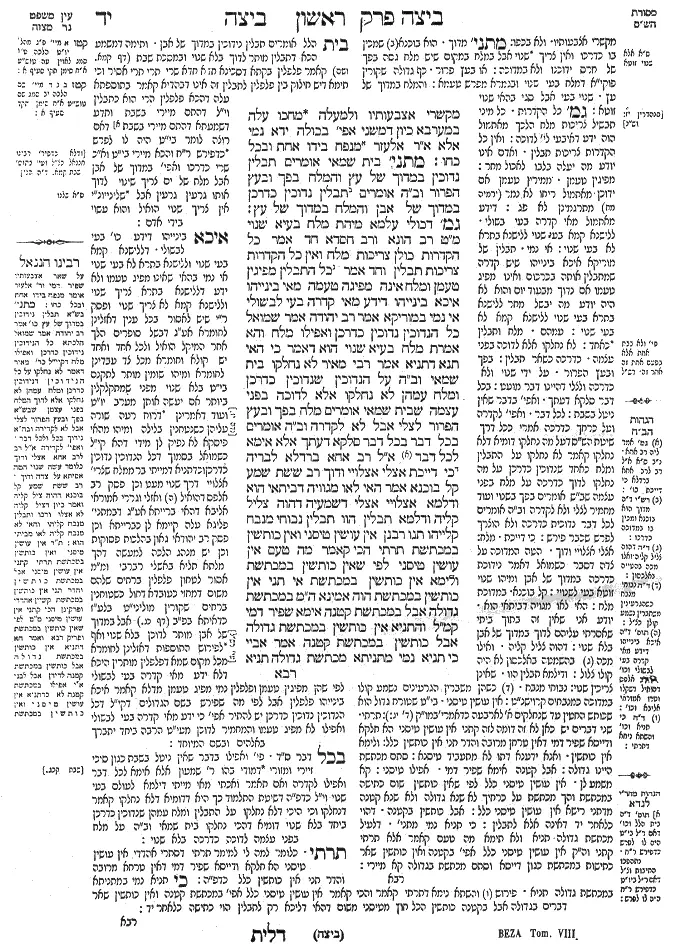
Beitza 14a - Guemara
מקשרי אצבעותיו ולמעלה מחכו עלה במערבא כיון דמשני אפילו בכולה ידא נמי אלא א"ר אלעזר מנפח בידו אחת ובכל כחו:
מתני׳ בית שמאי אומרים תבלין נדוכין במדוך של עץ והמלח בפך ובעץ הפרור ובית הלל אומרים תבלין נדוכין כדרכן במדוך של אבן והמלח במדוך של עץ:
גמ׳ דכולי עלמא מיהת מלח בעיא שנוי מ"ט רב הונא ורב חסדא חד אמר כל הקדרות כולן צריכות מלח ואין כל הקדרות צריכות תבלין וחד אמר כל התבלין מפיגין טעמן ומלח אינה מפיגה טעמה מאי בינייהו איכא בינייהו דידע מאי קדרה בעי לבשולי אי נמי במוריקא אמר רב יהודה אמר שמואל כל הנדוכין נדוכין כדרכן ואפילו מלח והא אמרת מלח בעיא שנוי הוא דאמר כי האי תנא דתניא אמר רבי מאיר לא נחלקו בית שמאי ובית הלל על הנדוכין שנדוכין כדרכן ומלח עמהן לא נחלקו אלא לדוכה בפני עצמה שבית שמאי אומרים מלח בפך ובעץ הפרור לצלי אבל לא לקדרה ובית הלל אומרים בכל דבר בכל דבר סלקא דעתך אלא אימא לכל דבר א"ל רב אחא ברדלא לבריה כי דייכת אצלי אצלויי ודוך רב ששת שמע קל בוכנא אמר האי לאו מגוויה דביתאי הוא ודלמא אצלויי אצלי דשמעיה דהוה צליל קליה ודלמא תבלין הוו תבלין נבוחי מנבח קלייהו תנו רבנן אין עושין טיסני ואין כותשין במכתשת תרתי הכי קאמר מה טעם אין עושין טיסני לפי שאין כותשין במכתשת ולימא אין כותשין במכתשת אי תני אין כותשין במכתשת הוה אמינא ה"מ במכתשת גדולה אבל במכתשת קטנה אימא שפיר דמי קמ"ל והתניא אין כותשין במכתשת גדולה אבל כותשין במכתשת קטנה אמר אביי כי תניא נמי מתניתא מכתשת גדולה תניא
Comments from Rashi on Masechet Beitza Page 14a
מקשרי אצבעותיו . ולא בכפו: מתני' מדוך . הוא בוכנא שמכין בו כדרכו ואין צריך שנוי אבל במלח במקום שיש מלח גסה בפך של חרס ידוכנו ולא במדוכה: או בעץ פרור . כף גדולה שקורין פוקי"א דמלח בעי שנוי ובגמרא מפרש טעמא: והמלח במדוך של עץ . שנוי בעי אבל סגי בהאי שנוי זוטא: גמ' כל הקדרות . כל מיני תבשיל צריכות מלח הלכך מאתמול הוה ידע דאיבעי לי' לדוכה: ואין כל הקדרות צריכות תבלין . ואדם אינו יודע מה יעלה בלבו לאכול מחר: מפיגין טעמן . ממירין טעמן אם ידוכן מאתמול ריחו לא נמר (ירמיהו מח) מתרגמינן לא פג: דידע מאתמול מאי קדרה בעי בשולי . ללישנא קמא בעי שנוי ללישנא בתרא לא בעי שנוי: אי נמי . תבלין של מוריקא איכא בינייהו שיש קדרה שמתבלין אותה בכרכום ואינו מפיג טעמו אם נדוך מבעוד יום והוא לא היה יודע מה יבשל מחר ללישנא בתרא בעי שנוי ללישנא קמא לא בעי שנוי: עמהם . מלח ותבלין כאחד: לא נחלקו אלא לדוכה בפני עצמה . כדרכה כשאר תבלין: בפך ובעץ הפרור . על ידי שנוי ולא כדרכה ולצלי דהיינו דבר מועט: בכל דבר סלקא דעתך . ואפי' בדבר שאין ניטל בשבת: לכל דבר . ואפי' לקדרה ועל כרחך כדרכה אמרי ככל דרך שיטת הש"ס דעל מה נחלקו דומיא דלא נחלקו קאמר לא נחלקו על התבלין ומלח כאחד שנדוכין כדרכן על מה נחלקו לדוך כדרכה על מלח בפני עצמה שב"ש אומרים בפך בשנוי ועוד מחמיר לצלי ולא לקדרה וב"ה אומרים לכל דבר נדוכית כדרכה ולא הוצרך לפרש שכבר פירש: כי דייכת . מלח: אצלי אצלויי ודוך . הטה המדוכה על צדה דסבר כשמואל דאמר נידוכת כדרכה במדוך של אבן ומיהו שנוי זוטא בעי לשנויי: קל בוכנא . במדוכת מלח: האי לאו מגויה דביתאי הוא . יודע אני שאין זה בתוך ביתי שאסרתי עליהם לדוך במדוך של אבן בלא שנוי: דהוה צליל קליה . ואילו מכה בהשמטה באלכסון לא היה קולו צלול: ודילמא תבלין הוו . שאינן צריכין שנוי: נבוחי מנבח . כשהן משברין הגרעינים נשמע קולו במדוכה כמנבחים קרוישנ"ט: אין עושין טיסני . בי"ט שטורח גדול הוא שכותש החטין עד שנחלקים א' לארבעה כדאמרי' במו"ק (ד' יג:): תרתי . שני דברים יש כאן לא זה דומה לזה קתני אין עושין טיסני הא חלקא ודייסא שפיר דמי דאין טרחן מרובה והדר תני אין כותשין כלל: ולימא אין כותשין . ואנא ידענא דתו לא מתעביד טיסנא: סתם מכתשת היינו גדולה: אבל קטנה אימא שפיר דמי . אפילו טיסני: קא משמע לן . אין עושין טיסני כלל לפי שאין כותשין שום כתישה במכתשת והך מכתשת על כרחיך לא שנא גדולה ולא שנא קטנה מדתני רישא אין עושין טיסני כלל: אבל כותשין בקטנה . דהוי כלאחר יד דאינה אלא לתבלין: כי תניא נמי מתני' . דלעיל מכתשת גדולה תניא ולא תימא מה טעם קאמר אלא תרתי קתני וה"ק אין עושין טיסני כלל אפי' בקטנה ואין כותשין שאר כתישות במכתשת כגון דייסא וסתם מכתשת בגדולה קא מיירי:
Comments from Tosafot - Beitza 14a
בית הלל אומרים תבלין נידוכין במדוך של אבן. ותימה דמשמע הכא דתבלין מותר לדוך בלא שנוי ובמסכת שבת (דף קמא. ושם) קאמר פלפלין בקתא דסכינא חדא חדא שרי תרי תרי אסיר וכי תימא דיש חילוק בין פלפלין לתבלין זה אינו דבהדיא קאמר בתוספתא עלה דהכא פלפלין הרי הוא כתבלין וי"ל דהתם מיירי בשבת ותדע דשמעתא דהתם מיירי בשבת דאם רוצה לומר בי"ט היה לו לפרש . כדפירש ר"ח והכא מיירי בי"ט וא"כ שרי כדרכו ואפי' במדוך של אבן אבל מלח של ים צריך שינוי לדוך אותו גרעין גרעין אבל שלינייונ"י אין צריך שנוי הואיל והוא עשוי בידי אדם: איכא בינייהו דידע כו' בעי לבשולי. דללישנא קמא בעי שנוי וללישנא בתרא לא בעי שנוי אי נמי בהאי שאינו מפיג טעמו ולא ידע דללישנא בתרא צריך שנוי וללישנא קמא לא צריך שנוי ופסק ר"י שיש לאסור בכל ענין דאזלינן לחומרא אע"ג דבשל סופרים הלך אחר המיקל הואיל ולכל אחד ואחד יש קולא וחומרא מכל צד עבדינן לחומרא ומיהו שומין מותר לתקנם בי"ט בלא שנוי מפני שמתקלקלין ביותר אם יעשה אותן מערב יו"ט ועוד דאמרינן דרוח רעה שורה עליהן כשנטחנין בלילה ומיהו מהאי פיסקא לא נפיק לן מידי דהא קי"ל כשמואל בסמוך דכל הנדוכין נדוכין כדרכן וכדתניא דמייתי בר ממלח שצרי' אצלויי דרך שנוי מעט וכן פסק רב אלפס דהואיל ואזלי וגררי אמוראי אליבא דהאי ברייתא אע"ג דבמתני' פליגא עלה קיימא לן כברייתא וכן פסק רב יהודאי גאון בהלכות פסוקות וכן יש מנהג הלכה למעשה דהך מלתא תליא באשלי רברבי ומ"מ אסור לטחון פלפלין ברחים שלהם משום דמחזי כעובדא דחול כשטוחנין ברחים שקורין מוליני"ט בלע"ז כדאיתא בפ"ב (דף כג.) אבל במדוך של אבן מותר לדוכן בלא שנוי ואף לפירוש התוספות דאזלינן לחומרא מכל מקום שמא דפלפלין מותרין היכא דלא ידע מאי קדרה בעי לבשולי לפי שהן מפיגין טעמן ופלפלין נמי מפיג טעמן מדלא קאמר איכא בינייהו פלפלין אבל לפי מה שפירש בשם הגדולים דקי"ל דכל הנדוכין נדוכין כדרכן יש להתיר אפי' כי ידע מאי קדרה בעי לבשולי ואפילו לא מפיג טעמו והמחמיר לדוכן מעי"ט הרבה ביחד יתברך באלהים ובשם המיוחד: בכל דבר ס"ד. פי' ואפילו בדבר שאין ניטל בשבת כגון סיכי זיירי ומזורי דמודי בהו ר' שמעון אלא אימא לכל דבר ואפילו לקדרה ואם תאמר ואכתי מאי מייתי דילמא לעולם בעי שנוי וי"ל כדפ"ה דשיטת התלמוד כך היא דדומיא דלא נחלקו קאמר דנחלקו וכי היכי דלא נחלקו על התבלין ומלח עמהן שנדוכין כדרכן ביחד בלא שנוי דומיא דהכי נחלקו בית שמאי וב"ה על מלח בפני עצמה לדוכה כדרכה בלא שנוי: תרתי. כלומר למה לי למימר תרתי דסתרי אהדדי אין עושין טיסני הא חלקא ודייסא שפיר דמי דאין טרחא מרובה והדר תני אין כותשין כלל כדפ"ה: כי תניא נמי במתניתא במכתשת גדולה תניא. פירוש והשתא נימא דתרתי קאמר והכי קאמר אין עושין טיסני כלל אפי' במכתשת קטנה ואין כותשין שאר דברים בגדולה אבל בקטנה כותשין הכל חוץ מטיסני משום דהאי דליכא רק לתבלין הוי כתישה כלאחר יד:
Beitza 14a - Mishnah translated into english
from the joints of his fingers and above, i.e., he does not place the kernels mixed with chaff in his palm but on his fingers, which is an unusual way to hold them.
They laughed at this explanation in the West, Eretz Yisrael, saying: Since he alters his behavior from the usual method, doing so even with his entire hand should be permitted as well. Rather, the halakha is as Rav Elazar said: One may blow while holding the grain with one hand but not two, and he may even do so with all his strength, as this is not considered similar to a prohibited labor at all.
MISHNA: Beit Shammai say: Spices may be pounded on a Festival in a slightly unusual manner, with a wooden pestle, and salt may be pounded only with an earthenware flask or with a wooden pot ladle, in a manner very different from that of a weekday. And Beit Hillel say: Spices may be pounded in their usual manner, even with a stone pestle, and as for salt, although it must be pounded in an irregular manner, a slight modification such as pounding it with a wooden pestle is enough to render the act permitted.
GEMARA: In any event, everyone, both Beit Shammai and Beit Hillel, agrees that the pounding of salt requires a change; it may not be performed in the regular weekday manner. What is the reason for this? Rav Huna and Rav Ḥisda disputed this issue. One of them said: Everyone knows that all dishes require salt, and therefore one should prepare salt the day before the Festival. Since he failed to do so, this task may be performed on the Festival only in an unusual manner. But not all dishes require spices, and therefore it is possible that on the day prior to the Festival, one was not aware that he would require spices on the Festival.
And the other one said a different reason: All spices lose their flavor and cannot be prepared ahead of time, and salt does not lose its flavor, which means one could have prepared it the day before. Since he neglected to do so, he may prepare salt on the Festival only in an unusual manner.
The Gemara asks: What is the practical difference between these two reasons? The Gemara answers: The practical difference between them is in a case where one knew beforehand which type of dish he wants to cook on the Festival. Since he knew which spices he would require, he could have prepared them the day before, in which case spices are no different from salt, and one should be required to prepare them in an unusual manner. However, if the reason is that spices lose their flavor, the fact that he knew which dishes he planned to prepare is of no relevance. Alternatively, there is a practical difference in the case of saffron, whose flavor does not dissipate over the course of a single day. Consequently, one who knows what dish he will prepare on the Festival could have prepared the saffron the day before.
Rav Yehuda said that Shmuel said: All foods that must be pounded before being eaten may be pounded in their usual manner, and this applies even to salt. The Gemara challenges this: But didn’t you say that everyone agrees that salt requires a change in its manner of preparation? The Gemara answers: He said this halakha in accordance with the opinion of that tanna, as it is taught in a baraita that Rabbi Meir said: Beit Shammai and Beit Hillel did not disagree in the case of foods that are regularly pounded. They both maintain that they may be pounded in their usual manner, and salt can be pounded together with them.
They disagreed only about whether it is permitted to pound salt by itself, as Beit Shammai say: Salt may be pounded with a flask and with a wooden pot ladle for roasting, i.e., in small quantities, as one does not require much salt for roasting meat, but it may not be pounded in the large quantities required to salt meat for a cooked pot. And Beit Hillel say: It may be pounded by anything. The Gemara expresses surprise at this last statement: By anything? Can this enter your mind? How can Beit Hillel say that one may pound salt in any manner, when it has been established that everyone agrees that this may be performed only in an unusual manner? Rather, say: Salt may be pounded for anything, whether it is a small quantity for roasting or a large quantity for salting meat.
Rav Aḥa Bardela said to his son: When you pound salt, tilt it a little to the side and then pound, so that it will at least be performed in a slightly different manner on a Festival. The Gemara similarly relates: Rav Sheshet heard the sound of a pestle pounding salt on a Festival. He said to himself: This sound is not coming from inside my house, as I have instructed the members of my household not to do so.
The Gemara asks: But perhaps they tilted it and pounded in a permitted manner? The Gemara answers: This could not have been the case, as Rav Sheshet heard that it was a clear sound, unlike the one produced when a pestle is tilted. The Gemara asks: But perhaps they were pounding spices, which may be pounded in the regular fashion on a Festival? The Gemara answers: The sound produced by pounding spices is distinctive, like a bark, which he would have recognized.
§ The Sages taught in a baraita: On a Festival one may not prepare groats [tisanei], a dish comprised of grains of wheat crushed into quarters, which involves great effort, nor may one grind grain with a mortar and pestle. The Gemara expresses puzzlement: These are two contradictory rulings. The tanna first stated that groats alone may not be prepared, as this involves hard work, implying that other items may be ground. He subsequently states that one may not grind with a mortar and pestle at all. The Gemara answers: This is what he said: The baraita should be amended to read as follows: What is the reason that one may not prepare groats? Because one may not grind with a mortar and pestle.
And let the tanna simply say: One may not grind with a mortar and pestle, from which it can be inferred that groats may not be prepared. The Gemara explains that if he teaches only: One may not grind with a mortar and pestle, I would have said that this applies only to a large mortar and pestle, whose use has the appearance of a weekday activity; but with a small mortar and pestle, one might say it seems well, and one may prepare even groats with this mortar and pestle. The tanna therefore teaches us that groats may not be prepared in any manner.
The Gemara challenges this: But isn’t it taught explicitly in a baraita that one may not grind with a large mortar and pestle, but one may grind with a small mortar and pestle? Abaye said: Also, when the first baraita was taught, it was taught with regard to a large mortar and pestle, not a small one. In other words, the baraita is stating two halakhot, not one, as claimed previously. The tanna first rules that one may not prepare groats even with a small mortar and pestle, and he subsequently states that one may not use a large mortar and pestle for any purpose.
Traduction : The William Davidson digital edition of the Koren Noé Talmud, with commentary by Rabbi Adin Even-Israel Steinsaltz.