 Talmud Bavli
The learning on the whole site is dedicated : L'ilui Nishmat Ledicia bat David Banoun
The learning on the whole site is dedicated : L'ilui Nishmat Chemouel Eliezer ben Batcheva
The learning on the whole site is dedicated : L'ilui Nishmat Amram ben Itshak Loubaton
Beitza 15b : Youtube
Daf TubeYoutube
3 video classes :
Beitza Page 15b
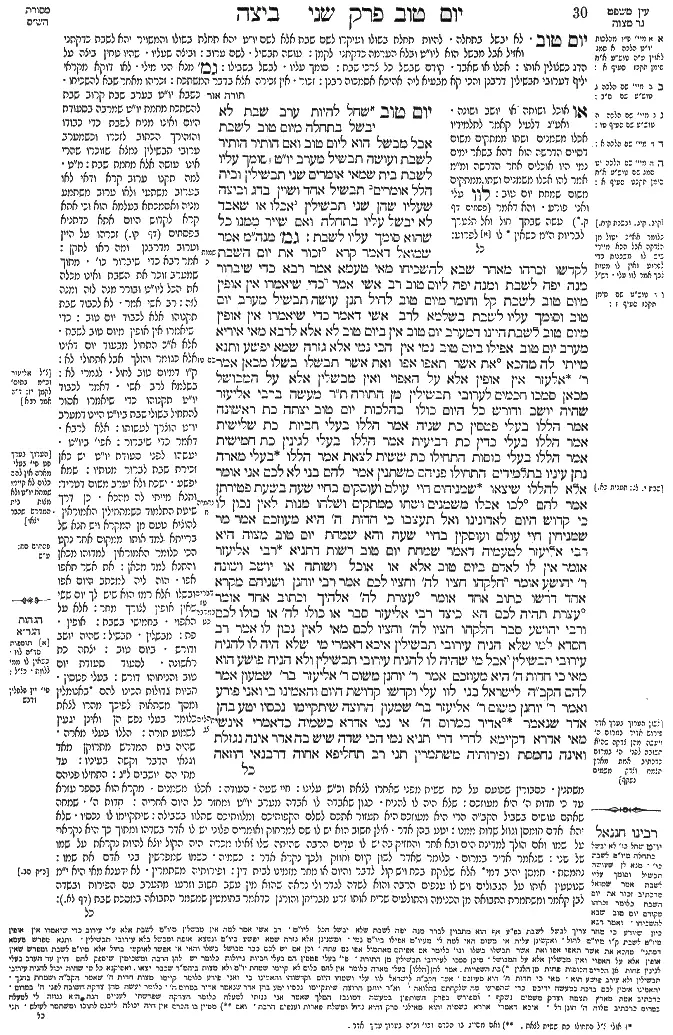
Beitza 15b - Guemara
מתני׳ יום טוב שחל להיות ערב שבת לא יבשל בתחלה מיום טוב לשבת אבל מבשל הוא ליום טוב ואם הותיר הותיר לשבת ועושה תבשיל מערב יום טוב וסומך עליו לשבת בית שמאי אומרים שני תבשילין ובית הלל אומרים תבשיל אחד ושוין בדג וביצה שעליו שהן שני תבשילין אכלו או שאבד לא יבשל עליו בתחלה ואם שייר ממנו כל שהוא סומך עליו לשבת:
גמ׳ מנא הני מילי אמר שמואל דאמר קרא (שמות כ, ז) זכור את יום השבת לקדשו זכרהו מאחר שבא להשכיחו מאי טעמא אמר רבא כדי שיברור מנה יפה לשבת ומנה יפה ליום טוב רב אשי אמר כדי שיאמרו אין אופין מיום טוב לשבת קל וחומר מיום טוב לחול תנן עושה תבשיל מערב יום טוב וסומך עליו לשבת בשלמא לרב אשי דאמר כדי שיאמרו אין אופין מיום טוב לשבת היינו דמערב יום טוב אין ביום טוב לא אלא לרבא מאי איריא מערב יום טוב אפילו ביום טוב נמי אין הכי נמי אלא גזרה שמא יפשע ותנא מייתי לה מהכא (שמות טז, כג) את אשר תאפו אפו ואת אשר תבשלו בשלו מכאן אמר רבי אלעזר אין אופין אלא על האפוי ואין מבשלין אלא על המבושל מכאן סמכו חכמים לערובי תבשילין מן התורה תנו רבנן מעשה ברבי אליעזר שהיה יושב ודורש כל היום כולו בהלכות יום טוב יצתה כת ראשונה אמר הללו בעלי פטסין כת שניה אמר הללו בעלי חביות כת שלישית אמר הללו בעלי כדין כת רביעית אמר הללו בעלי לגינין כת חמישית אמר הללו בעלי כוסות התחילו כת ששית לצאת אמר הללו בעלי מארה נתן עיניו בתלמידים התחילו פניהם משתנין אמר להם בני לא לכם אני אומר אלא להללו שיצאו שמניחים חיי עולם ועוסקים בחיי שעה בשעת פטירתן אמר להם (נחמיה ח, י) לכו אכלו משמנים ושתו ממתקים ושלחו מנות לאין נכון לו כי קדוש היום לאדונינו ואל תעצבו כי חדות ה' היא מעוזכם אמר מר שמניחין חיי עולם ועוסקין בחיי שעה והא שמחת יום טוב מצוה היא רבי אליעזר לטעמיה דאמר שמחת יום טוב רשות דתניא רבי אליעזר אומר אין לו לאדם ביום טוב אלא או אוכל ושותה או יושב ושונה רבי יהושע אומר חלקהו חציו לה' וחציו לכם אמר רבי יוחנן ושניהם מקרא אחד דרשו כתוב אחד אומר (דברים טז, ח) עצרת לה' אלהיך וכתוב אחד אומר (במדבר כט, לה) עצרת תהיה לכם הא כיצד רבי אליעזר סבר או כולו לה' או כולו לכם ורבי יהושע סבר חלקהו חציו לה' וחציו לכם מאי לאין נכון לו אמר רב חסדא למי שלא הניח עירובי תבשילין איכא דאמרי מי שלא היה לו להניח עירובי תבשילין אבל מי שהיה לו להניח עירובי תבשילין ולא הניח פושע הוא מאי כי חדות ה' היא מעוזכם אמר רבי יוחנן משום רבי אליעזר בר' שמעון אמר להם הקדוש ברוך הוא לישראל בני לוו עלי וקדשו קדושת היום והאמינו בי ואני פורע ואמר רבי יוחנן משום רבי אליעזר בר' שמעון הרוצה שיתקיימו נכסיו יטע בהן אדר שנאמר (תהלים צג, ד) אדיר במרום ה' אי נמי אדרא כשמיה כדאמרי אינשי מאי אדרא דקיימא לדרי דרי תניא נמי הכי שדה שיש בה אדר אינה נגזלת ואינה נחמסת ופירותיה משתמרין תני רב תחליפא אחוה דרבנאי חוזאה
Comments from Rashi on Masechet Beitza Page 15b
מתני' יום טוב לא יבשל בתחלה . להיות תחלת בשולו ועיקרו לשם שבת אלא לשם יו"ט יהא תחלת בשולו והמשויר יהא לשבת כדקתני ואזיל אבל מבשל הוא ליו"ט ובלא הערמה כדקתני לקמן: עושה תבשיל . לשם ערוב: וביצה שעליו . שהיו טחין ביצה על הדג כשצולין אותו: אכלו או שאבד . קודם שבשל כל צרכי שבת: סומך עליו . לבשל בשבילו: גמ' מנא הני מילי . לאו דוקא מקראי יליף דערובי תבשילין דרבנן והכי קא מבעיא ליה אהיכא אסמכוה רבנן: זכור . אין זכירה אלא בדבר המשתכח: זכרהו מאחר שבא להשכיחו . כשבא יו"ט בערב שבת קרוב שבת להשתכח מחמת יו"ט שמרבה בסעודת היום ואינו מניח לשבת כדי כבודו והזהירך הכתוב לזכרו וכשמערב ערובי תבשילין נמצא שזוכרו שהרי אינו עושה אלא מחמת שבת: מ"ט . למה תקנו ערוב קרא ודאי לאו בערוב משתעי ולאו ערוב משתמע מניה ואסמכתא בעלמא הוא וכי אתא קרא לקדוש היום אתא כדתניא בפסחים (דף קו.) זכרהו על היין ערוב מדרבנן ומה ראו לתקן: אמר רבא כדי שיברור כו' . מתוך שמערב זוכר את השבת ואינו מכלה את הכל ליו"ט ובורר מנה לזה ומנה לזה: רב אשי אמר . לא לכבוד שבת תקנוהו אלא לכבוד יום טוב: כדי שיאמרו אין אופין מיום טוב לשבת . אלא א"כ התחיל מבעוד יום דאינו אלא כגומר והולך אבל אתחולי לא: ק"ו דמיום טוב לחול . לגמרי לא: בשלמא לרב אשי . דאמר לכבוד ו"ט תקנוהו כדי שיאמרו אסור להתחיל בשולי שבת ביו"ט היינו דמערב יו"ט הוצרך לעשותו: אלא לרבא . דאמר כדי שיברור: אפי' ביו"ט . יעשהו לפני סעודת יו"ט יש כאן זכירת שבת לברור מנותיו: שמא יפשע . ישכח ולא יערב משום דטריד: ותנא מייתי לה מהכא . כן דרך שיטת התלמוד כשמתחילין האמוראין להוציא טעם מן המקרא ויש תנא של ברייתא למד אותו ממקום אחר נקט הכי כלומר האמוראין למדוהו מכאן והתנא למד מכאן: את אשר תאפו אפו . הוה ליה למכתב היום אפו ובשלו אלא רמז הוא שיש לך יום ששי שאין אופין לצורך מחר: אלא על האפוי . בחמישי בשבת: אופין . פת: מבשלין . תבשיל: שהיה יושב ודורש . ביום טוב: יצתה כת ראשונה . לסעוד סעודת יום טוב והניחוהו דורש: בעלי פטסין . חביות גדולות הכינו להם באנומלין ומסך משתאות לפיכך מהרו לצאת כלומר בעלי נפש הן ואינן יגיעין לשמוע תורה: הללו בעלי מארה . שהיה בית המדרש מתרוקן מאד וגנאי הדבר וקשה בעיניו: עד מתי הם יושבים ל"ג: התחילו פניהם משתנין . כסבורין שכועס על כת ששית מפני שאחרו לצאת וכ"ש עלינו: חיי שעה . סעודה: אכלו משמנים . מקרא הוא בספר עזרא עד כי חדות ה' היא מעוזכם: שלא היה לו להניח . כגון שאבדה לו אבדה מערב יו"ט ומחזר כל היום אחריה: חדות ה' . שמחה שאתם עושים בשביל הקב"ה הרי היא מעוזכם היא תעזור אתכם לשלם הקפותיכם ומלוותיכם שתלוו בשבילה: שיתקיימו לו נכסיו . שלא יהא אדם חומסן וגוזל שדות ממנו: יטע בהן אדר . אילן חשוב הוא יש לו שם למרחוק ואומרים פלוני יש לו אדר בשדהו ומתוך כך היא נקראת על שמו ואם הולך למדינת הים ובא אחר והחזיק בה יש לו עדים הרבה שהיתה שלו ואילו מכרה היה הקול יוצא להיות נקראת על שמו של שני: שנאמר אדיר במרום . כלומר שאדר לשון קיום וחוזק ולכך נקרא אדר: כשמיה . כשמו שמפרשין בני אדם את שמו: נחמסת . חמסן יהיב דמי אלא שלוקח בכח ויש קול לדבר והיום או מחר מזמינו לבית דין: ופירותיה משתמרין . לא ידענא מאי היא י"מ שנוטעין אותו על הגבולים ויש לו ענפים הרבה והוא לשדה לגדר ולי נראה שהוא מין עשב חשוב וזרעו מתערב עם הפירות ובשדה לבן קאמר ומשתמרת התבואה מן הכנימה והתולעים שריח אותו זרע מבריחן והורגן כדאמר בחומטין שמשמר התבואה במסכת שבת (דף לא.):
Comments from Tosafot - Beitza 15b
או אוכל ושותה או יושב ושונה. ואע"ג דלעיל קאמר לתלמידיו אכלו משמנים ושתו ממתקים משום דסיים הדרשה הוא דהא בשאר ימים נמי היו אוכלים אחר הדרשה ומ"מ אמר להו אכלו משמנים ושתו ממתקים משום שמחת יום טוב: לוו עלי ואני פורע. והא דאמר (פסחים דף ק.) עשה שבתך חול ואל תצטרך לבריות ה"מ כשאין. לו [א] לפרוע:
Beitza 15b - Mishnah translated into english
MISHNA: With regard to a Festival that occurs on Shabbat eve, one may not cook on the Festival with the initial intent to cook for Shabbat. However, he may cook on that day for the Festival itself, and if he left over any food, he left it over for Shabbat. The early Sages also instituted an ordinance: The joining of cooked foods [eiruv tavshilin], which the mishna explains. One may prepare a cooked dish designated for Shabbat on a Festival eve and rely on it to cook on the Festival for Shabbat.
The tanna’im disagreed with regard to the details of this ordinance: Beit Shammai say: For the purpose of the joining of cooked foods one must prepare two cooked dishes, and Beit Hillel say: One dish is sufficient. And they both agree with regard to a fish and the egg that is fried on it that these are considered two dishes for this purpose.
If one ate the food prepared before the Festival as an eiruv and none of it remained for Shabbat, or if it was lost, he may not rely on it and cook with the initial intent to cook for Shabbat. If he left any part of the eiruv, he may rely on it to cook for Shabbat.
GEMARA: The Gemara asks: From where are these matters derived? What is the source of the halakha of the joining of cooked foods and of the halakha that one who failed to prepare such an eiruv may not cook on a Festival for Shabbat? Shmuel said that the source is as the verse states: “Remember the Shabbat day, to keep it holy” (Exodus 20:8); from which he infers: Remember it and safeguard it from another day that comes to make it forgotten. When a Festival occurs on Friday, preoccupation with the Festival and the preparation and enjoyment of its meals could lead one to overlook Shabbat. Therefore, the Sages instituted an ordinance to ensure that Shabbat will be remembered even then.
The Gemara asks: What is the reason that the Sages instituted this ordinance in particular to ensure that Shabbat would not be overlooked? Rava said: The Sages did so in deference to Shabbat, and they instituted an eiruv so that one will select a choice portion for Shabbat and a choice portion for the Festival. If one fails to prepare a dish specifically for Shabbat before the Festival, it could lead to failure to show the appropriate deference to Shabbat.
Rav Ashi stated a different reason: The Sages did so in deference to the Festival, so that people will say: One may not bake on a Festival for Shabbat unless he began to bake the day before; all the more so, one may not bake on a Festival for a weekday.
We learned in the mishna: One may prepare a cooked dish on a Festival eve and rely on it to cook for Shabbat. Granted, according to Rav Ashi, who said that the reason for an eiruv is so that people will say: One may not bake on a Festival for Shabbat; that is why on a Festival eve, yes, one may prepare the eiruv, but on the Festival itself, no, one may not do so, as it is a reminder that in principle one may not cook on a Festival for Shabbat. However, according to Rava, who stated that the reason for the eiruv is to ensure that one selects choice portions for both the Festival and Shabbat, why does the mishna discuss specifically preparation on a Festival eve? Even were one to prepare a dish for Shabbat on the Festival as well, it would guarantee that he accord the appropriate deference to Shabbat.
The Gemara answers: Yes, it is indeed so; that objective could have been achieved even on the Festival. However, the Sages issued a decree that the eiruv must be prepared on the Festival eve lest one be negligent and fail to prepare one entirely.
The Gemara comments: And a tanna cites the proof for eiruv tavshilin from here, the following verse: “Tomorrow is a day of rest, a holy Shabbat to the Lord. Bake that which you will bake and cook that which you will cook, and all that remains put aside to be kept for you until the morning” (Exodus 16:23). From here Rabbi Eliezer said: One may bake on a Festival for Shabbat only by relying on that which was already baked for Shabbat the day before, and adding to it; and one may cook only by relying on that which was already cooked. From this verse the Sages established an allusion to the joining of cooked foods from the Torah.
§ The Sages taught in a baraita: There was an incident involving Rabbi Eliezer, who was sitting and lecturing about the halakhot of the Festival throughout the entire Festival day. When the first group left in the middle of his lecture, he said: These must be owners of extremely large jugs [pittasin], who apparently have huge containers of wine awaiting them as well as a comparable amount of food, and they have left the house of study out of a craving for their food. After a while a second group departed. He said: These are owners of barrels, which are smaller than pittasin. Later a third group took its leave, and he said: These are owners of jugs, even smaller than barrels.
A fourth group left, and he said: These are owners of jars [laginin], which are smaller than jugs. Upon the departure of a fifth group, he said: These are owners of cups, which are smaller still. When a sixth group began to leave, he became upset that the house of study was being left almost completely empty and said: These are owners of a curse; i.e., they obviously do not have anything at home, so why are they leaving?
He cast his eyes upon the students remaining in the house of study. Immediately, their faces began to change color out of shame, as they feared he was referring to them and that perhaps they should have departed along with the others instead of staying. He said to them: My sons, I did not say that about you but about those who left, because they abandon the eternal life of Torah and engage in the temporary life of eating.
At the time of the remaining students’ departure at the conclusion of Rabbi Eliezer’s lecture, he said to them the verse: “Go your way, eat the fat and drink the sweet, and send portions to him for whom nothing is prepared, for this day is holy to our Lord; and do not be grieved, for the joy of the Lord is your strength” (Nehemiah 8:10).
The Gemara clarifies this baraita. The Master said above: Because they abandon eternal life and engage in temporary life. The Gemara wonders at this: But isn’t the joy of the Festival itself a mitzva and therefore part of eternal life? The Gemara answers: Rabbi Eliezer conforms to his standard line of reasoning, as he said: Physical joy on a Festival is merely optional.
As it is taught in a baraita that Rabbi Eliezer says: A person has no way of fulfilling the mitzva of a Festival correctly apart from either eating and drinking, thereby fulfilling the mitzva of joy in a completely physical manner, or sitting and studying Torah, thereby emphasizing only the spiritual; and those who did not engage in Torah study to the fullest extent acted inappropriately. Rabbi Yehoshua says: There is no need for such a dichotomy; rather, simply divide it: Half to God, Torah study, and half to yourselves, engaging in eating, drinking, and other pleasurable activities.
Rabbi Yoḥanan said: And both of them derived their opinions from one verse, i.e., the two of them addressed the same apparent contradiction between two verses, resolving it in different ways. One verse states: “It shall be a solemn assembly for the Lord, your God” (Deuteronomy 16:8), indicating a Festival dedicated to the service of God, and one verse states: “It shall be a solemn assembly for you” (Numbers 29:35), indicating a celebratory assembly for the Jewish people. How is this to be reconciled? Rabbi Eliezer holds that the two verses should be understood as offering a choice: The day is to be either entirely for God, in accordance with the one verse, or entirely for you, as per the other verse; and Rabbi Yehoshua holds that it is possible to fulfill both verses: Split the day into two, half of it for God and half of it for you.
§ Since the baraita mentions the verse from Nehemiah, the Gemara poses the following question: What is the meaning of: “Send portions to him for whom nothing is prepared” (Nehemiah 8:10)? Rav Ḥisda said: Send to one who does not have food of his own prepared for Shabbat that follows the Festival because he did not prepare a joining of cooked foods and must therefore rely on others. Some say that he said the following: It is necessary to provide food for one who did not have an opportunity to prepare a joining of cooked foods on the eve of the Festival; but one who had an opportunity to prepare a joining of cooked foods and did not prepare one is negligent, and there is no obligation to care for him.
The Gemara poses another question with regard to the same verse: What is the meaning of: “For the joy of the Lord is your strength”? Rabbi Yoḥanan said in the name of Rabbi Eliezer, son of Rabbi Shimon: The Holy One, Blessed be He, said to the Jewish people: My children, borrow on My account, and sanctify the sanctity of the day of Shabbat and the Festivals with wine, and trust in Me, and I will repay this debt.
Apropos the statement attributed to Rabbi Yoḥanan in the name of Rabbi Eliezer, son of Rabbi Shimon, the Gemara cites another statement that Rabbi Yoḥanan said in the name of Rabbi Eliezer, son of Rabbi Shimon: One who wants his properties to be preserved and protected from ruin should plant an eder tree among them, as it is stated: “The Lord on high is mighty [adir]” (Psalms 93:4). Due to the similarity of the words eder and adir, this is understood to mean that the eder tree bestows permanence.
Alternatively: The eder tree will preserve one’s property, as implied by its name, as people say: What is alluded to in the name of the eder? Its name hints that it endures for many generations [darei]. This is also taught in a baraita: A field that contains an eder tree will be neither stolen nor forcibly removed from one’s possession, as the eder serves as a clear indication of its owner, and its fruit is preserved, as the unique odor of the eder sap wards off insects.
§ The Gemara returns to the previous issue: Rav Taḥlifa, brother of Ravnai Ḥoza’a, taught:
Traduction : The William Davidson digital edition of the Koren Noé Talmud, with commentary by Rabbi Adin Even-Israel Steinsaltz.