 Talmud Bavli
The learning on the whole site is dedicated : L'ilui Nishmat Chemouel Eliezer ben Batcheva
The learning on the whole site is dedicated : L'ilui Nishmat Jamila bat Chlomo Abensour
The learning on the whole site is dedicated : L'ilui Nishmat יוסף בן מושה
Beitza 14b : Youtube
Daf TubeYoutube
3 video classes :
Beitza Page 14b
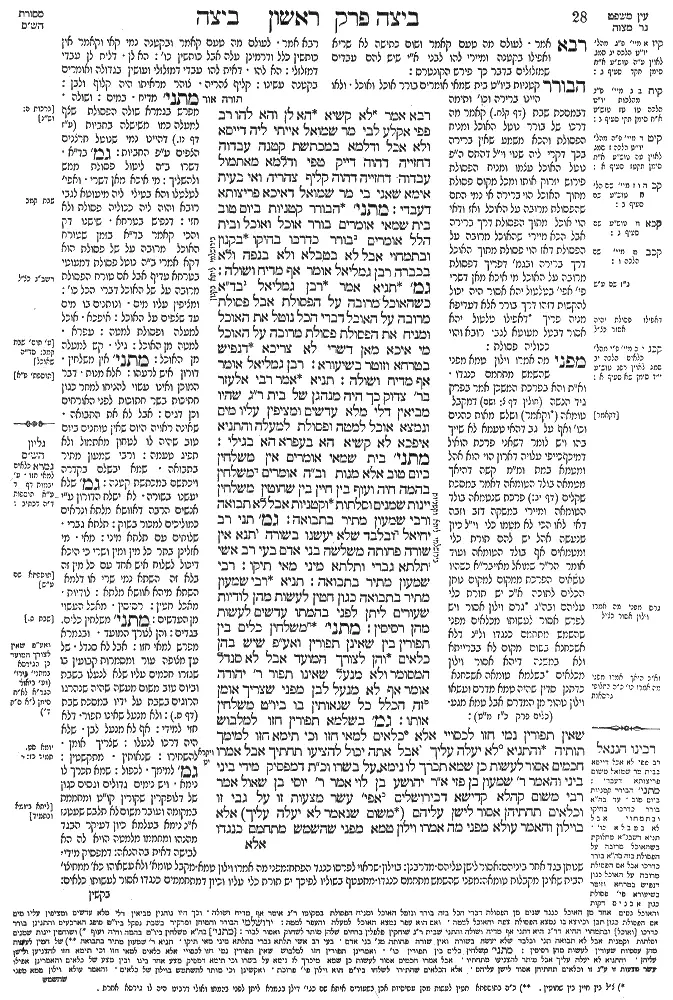
Beitza 14b - Guemara
רבא אמר לא קשיא הא לן והא להו רב פפי אקלע לבי מר שמואל אייתי ליה דייסא ולא אכל ודלמא במכתשת קטנה עבדוה דחזייה דהוה דייק טפי ודלמא מאתמול עבדוה דחזייה דהוה קליף צהריה ואי בעית אימא שאני בי מר שמואל דאיכא פריצותא דעבדי:
מתני׳ הבורר קטניות ביום טוב בית שמאי אומרים בורר אוכל ואוכל ובית הלל אומרים בורר כדרכו בחיקו בקנון ובתמחוי אבל לא בטבלא ולא בנפה ולא בכברה רבן גמליאל אומר אף מדיח ושולה:
גמ׳ תניא אמר רבן גמליאל במה דברים אמורים כשהאוכל מרובה על הפסולת אבל פסולת מרובה על האוכל דברי הכל נוטל את האוכל ומניח את הפסולת פסולת מרובה על האוכל מי איכא מאן דשרי לא צריכא דנפיש בטרחא וזוטר בשיעורא:
רבן גמליאל אומר אף מדיח ושולה:
תניא אמר רבי אלעזר בר' צדוק כך היה מנהגן של בית ר"ג שהיו מביאין דלי מלא עדשים ומציפין עליו מים ונמצא אוכל למטה ופסולת למעלה והתניא איפכא לא קשיא הא בעפרא הא בגילי:
מתני׳ בית שמאי אומרים אין משלחין ביום טוב אלא מנות ובית הלל אומרים משלחין בהמה חיה ועוף בין חיין בין שחוטין משלחין יינות שמנים וסלתות וקטניות אבל לא תבואה ורבי שמעון מתיר בתבואה:
גמ׳ תני רב יחיאל ובלבד שלא יעשנו בשורה תנא אין שורה פחותה משלשה בני אדם בעי רב אשי תלתא גברי ותלתא מיני מאי תיקו:
רבי שמעון מתיר בתבואה:
תניא רבי שמעון מתיר בתבואה כגון חטין לעשות מהן לודיות שעורים ליתן לפני בהמתו עדשים לעשות מהן רסיסין:
מתני׳ משלחין כלים בין תפורין בין שאינן תפורין ואף על פי שיש בהן כלאים והן לצורך המועד אבל לא סנדל המסומר ולא מנעל שאינו תפור רבי יהודה אומר אף לא מנעל לבן מפני שצריך אומן זה הכלל כל שנאותין בו ביום טוב משלחין אותו:
גמ׳ בשלמא תפורין חזו למלבוש שאין תפורין נמי חזו לכסויי אלא כלאים למאי חזו וכי תימא חזו למימך תותיה והתניא (ויקרא יט, יט) לֹא יַעֲלֶה עָלֶיךָ אבל אתה יכול להציעו תחתיך אבל אמרו חכמים אסור לעשות כן שמא תכרך לו נימא על בשרו וכ"ת דמפסיק מידי ביני ביני והאמר ר' שמעון בן פזי א"ר יהושע בן לוי אמר ר' יוסי בן שאול אמר רבי משום קהלא קדישא דבירושלים אפילו עשר מצעות זו על גבי זו וכלאים תחתיהן אסור לישן עליהם (משום שנאמר לא יעלה עליך) אלא בוילון והאמר עולא מפני מה אמרו וילון טמא מפני שהשמש מתחמם כנגדו
Comments from Rashi on Masechet Beitza Page 14b
רבא אמר . לעולם מה טעם קאמר ובקטנה נמי קאי וקאמר אין כותשין כלל ודרמינן עלה אבל כותשין כו': הא לן . דלית לן עבדי דמזלזלי: הא להו . דאית להו עבדי דמזלזלי ועושין בגדולה ואומרים בקטנה עשינו: קליף צהריה . צוהר מראיתו היה קלוף ולבן: מתני' מדיח . במים: ושולה . מפרש בגמרא שולה הפסולת שצף למעלה כמו משישלה בחביות (ע"ז דף נו.) דהיינו נמי שנוטל חרצנים הצפים ע"פ החביות: בד"א . דשרו ב"ה ליטול פסולת ממש ולהשליך: מי איכא מאן דשרי . ואפי' לטלטלו והא בטילי ליה מיעוטא לגבי רובא והוה ליה ככוליה פסולת ולא חזי: דנפיש בטרחא . שישנו דק והכי קאמר בד"א בזמן שטורח האוכל מרובה על של פסולת הוא דקא אמרי ב"ה נוטל פסולת דמעוטי בטרחא עדיף אבל אם טורח הפסולת מרובה על של האוכל דברי הכל כו': ומציפין עליו מים . ונותנים בו מים עד שצפים על האוכל איפכא . אוכל למעלה ופסולת למטה: עפרא . למטה מן האוכל: גילי . קש למעלה מן האוכל: אין משלחין . דורון איש לרעהו: אלא מנות . דבר המוכן ואינו עשוי להניחו למחר כגון חתיכות בשר חתוכות לפני האורחים וכן דגים: אבל לא את התבואה . שאינה ראויה היום שאין טוחנים ביום טוב שהיה לו לטחון מאתמול ולא תפיג טעמה: ורבי שמעון מתיר בתבואה . שמא יבשלם בקדרה ויכתשם במכתשת קטנה: שלא יעשנו בשורה . לא ישלח הדורון ע"י אנשים הרבה דאוושא מלתא ונראים כמוליכים למכור בשוק: תלתא גברי . שלוחים עם תלתא מיני: מאי . מי אזלינן בתר כל מין ומין ושרי כי היכא דיכול לשלוח איש אחד עם כל מין זה בלא זה השתא נמי שרי או דלמא השתא מיהא אוושא מלתא: לודיות . מאכל חטין: רסיסין . מאכל העשוי מן העדשים: משלחין כלים . בגדים: והן לצורך המועד . ובגמרא מפרש למאי חזו: אבל לא סנדל . של עץ מצופה עור ומסמרות קבועין בו שגזרו חכמים עליו שלא לנעלו בשבת וביום טוב משום מעשה שהיה שנהרגו הרוגים בשבת על ידו במסכת שבת (דף ס.): ולא מנעל שאינו תפור . דלא חזי למידי: אף לא מנעל לבן . שלא היה דרכו לנעלו: שצריך אומן . להשחירו: שנאותין . מתקשטין: למימך . לכפול: שמא תכרך לו נימא . ויש נימים גדולין וגסים כגון של דלופקרין שקורין קו"ט ומחממת במקומה ועובר משום לא תלבש שעטנז א"נ נימא בעלמא כיון דעיקר הבגד מהנהו ומחממו מלמטה הויא לה הא לבישה דאית בה הנאה: דמפסיק מידי . שנותן בגד אחר ביניהם: אסור לישן עליהם . מדרבנן: בוילון . שראוי לפרסו כנגד הפתח: מפני מה אמרו וילון טמא . מקבל טומא' ולא עשאוהו כא' ממחיצו' הבית שאינן מקבלות טומאה: מפני שהשמש מתחמם כנגדו . מתעטף בשוליו לפיכך יש תורת כלי עליו וכיון דמתחממים כנגדו אסור לעשותו כלאים:
Comments from Tosafot - Beitza 14b
רבא אמר. לעולם מה טעם קאמר ושום כתישה לא שריא ואפילו בקטנה ומיירי להו לבני א"י שיש להם עבדים שמזלזלים בדבר כך פירש הקונטרס: הבורר קטניות ביו"ט בית שמאי אומרים בורר אוכל ואוכל. ולאו ' היינו ברירה וכו' ותימה דבמסכת שבת (דף קלח.) קאמר מה דרכו של בורר נוטל האוכל ומניח הפסולת והכא משמע שאין ברירה בכך דקרי ליה שנוי וי"ל דהתם ה"פ נוטל האוכל עצמו ומניח הפסולת פירוש יזרוק אותו ומכל מקום פסולת מתוך האוכל הוי ברירה אי נמי התם שהפסולת מרובה על האוכל ואז ודאי הוי אוכל מתוך הפסולת דרך ברירה אבל הכא מיירי שהאוכל מרובה על הפסולת דאז הוי פסולת מתוך האוכל דרך ברירה ובגמ' דפריך דפסולת מרובה על האוכל מי איכא מאן דשרי פי' אפי' בטלטול יהא אסור היה יכול להקשות דזהו דרך בורר אלא דעדיפא מניה פריך דאפילו טלטול יהא אסור דבטל מעוטא לגבי רובא והוי ככוליה פסולת: מפני מה אמרו וילון טמא מפני שהשמש מתחמם כנגדו. וא"ת והא בפרכת המשכן אמר בפרק גיד הנשה (חילין דף צ: ושם) דמקבל טומאה (וקאמר) ושלש מאות כהנים וכו' ואף על גב דהאי טעמא לא שייך בהו ויש לומר דשאני פרכת הואיל דמיכף כייפי עלויה דארון הוי הוא אהל ומטמא במת ומ"מ קשה דהיאך מטמאה בולד הטומאה דאמר במסכת שקלים (דף יב:) פרכת שנטמאה בולד הטומאה ומיירי במשקה דזב וזבה דאי לאו הכי לא מטמו כלי וי"ל כיון שנעשה אהל יש להם תורת כלי ומטמאים אף בולד הטומאה ועוד אומר הר"ר שמואל מאייבר"א כשהיו נושאים הפרכת ממקום למקום נותן הכלים לתוכה א"כ יש תורת כלי עליהם ובה"ג. גרס וילון אסור ויש לפרש אסור לעשותו מכלאים מפני שהשמש מתחמם כנגדו ול"נ דלא אשכחנא בשום מקום לא בברייתא ולא במשנה דיהא אסור וילון מכלאים בשלמא טומאה אשכחנא כדתנן סדין שהיה טמא מדרס ועשאו וילון טהור מן המדרס אבל טמא מגע.
Beitza 14b - Mishnah translated into english
Rava said: This is not difficult; the baraitot do not contradict one another. This ruling, which permits a small mortar and pestle, is for us, the residents of Babylonia, who do not have servants, and that statement is for them, the inhabitants of Eretz Yisrael, who have many servants. Since servants might treat the prohibition lightly, by using a large mortar and pestle and claiming they had used only a small one, they are prohibited from pounding in all cases.
The Gemara relates: Rav Pappi happened to come on a Festival to the house of Mar Shmuel. He brought to him porridge, made from wheat groats, but he did not eat it, out of concern that the wheat might have been pounded on the same day. The Gemara asks: And perhaps they performed the pounding with a small mortar and pestle, in a permitted manner? The Gemara answers: This cannot be the case, as he observed that it was well ground, which cannot be achieved by means of a small mortar and pestle.
The Gemara asks: And perhaps they prepared it the day before, on the Festival eve? The Gemara answers: This cannot be the case, as he observed that the husks of the groats were bright, an indication that they had been prepared recently. And if you wish, say instead that he refrained from eating for another reason, because the house of Mar Shmuel is different, as he had slaves, and slaves are lax with regard to prohibitions. Therefore, Mar Shmuel ought to have prohibited all forms of grinding in his house, to ensure that no one grind anything in an inappropriate manner.
MISHNA: With regard to one who selects legumes on a Festival by separating the edible and inedible portions, Beit Shammai say: He may select food and eat it immediately, while leaving the refuse. And Beit Hillel say: He may select in his usual manner, in his lap, with a tray, or with a large vessel, but he may not do so with a tablet, nor with a winnow, nor with a sieve, as these vessels are specially designed for selecting, which gives his action the appearance of a weekday activity. Rabban Gamliel says: One may even wash the legumes in water and skim off the refuse floating on top.
GEMARA: It is taught in a baraita: Rabban Gamliel said: In what case is this statement said? Under what circumstances did Beit Hillel permit the removal of the refuse in the weekday manner of selecting? In a case where the quantity of the food is greater than the quantity of the refuse. However, if the quantity of refuse is greater than the quantity of food, everyone agrees that one must remove the food and leave the refuse.
The Gemara asks: If the quantity of refuse is greater than the quantity of food, is there an opinion that permits it? Since the smaller amount of food is nullified by the refuse, the entire mixture is considered muktze and may not be moved. The Gemara answers: No, it is necessary to state this halakha in a case where the removal of the refuse is greater in terms of effort, and yet it is smaller in size. In other words, there is actually more food than refuse, but since greater effort is required to remove the refuse, it is preferable to remove the food.
The mishna taught that Rabban Gamliel says: One may even wash the legumes in water and skim off the refuse floating on top. It is taught (Tosefta, Beitza 1): Rabbi Elazar, son of Rabbi Tzadok, said: This was the custom of the house of Rabban Gamliel, that they would bring a bucket full with lentils and pour water in it, and then the food would sink down and the refuse would float up, which spared them from having to separate the lentils from the refuse manually.
The Gemara asks: But isn’t the opposite taught in another baraita, that the food rose to the top while the refuse sunk below? The Gemara answers: It is not difficult. This baraita, which says the refuse sinks down, is referring to refuse in the form of earth, which sinks below the lentils; that baraita, where it is stated that the refuse rises, speaks of straw, which floats on water.
MISHNA: Beit Shammai say: One may send only portions of prepared food on a Festival, but not any other gifts. And Beit Hillel say: One may even send gifts of domesticated animals, undomesticated animals, and fowl, whether alive or slaughtered. Similarly, one may send wines, oils, and vessels of flour, and even legumes, but not grain, which is unfit for use, as one may not grind it on the Festival. And Rabbi Shimon permits sending gifts even in the case of grain, as it can be made into porridge without being ground.
GEMARA: Rav Yeḥiel teaches: And one may send these items provided that he does not do it by means of a convoy of people, as they would look as though they were transporting merchandise to the marketplace. It is taught in a baraita: A convoy consists of no less than three people; if there are fewer than three, it is not called a convoy and is permitted. Rav Ashi raised a dilemma: In a case of three people and three different types of food, what is the halakha? Is this considered a convoy, or does the fact that there are three different types of food mean that each of them is considered a separate item? The Gemara answers: The dilemma shall stand unresolved, as no answer was found.
The mishna taught that Rabbi Shimon permits the sending of grain. It is taught in a baraita: Rabbi Shimon permits the sending of grain, for example: Wheat to prepare from it ludiyot, a type of cookie; barley to place before his animal; or lentils to prepare from them resisin, a dish made from crushed lentils.
MISHNA: One may send clothes, whether they are sewn or whether they are unsewn, and even if they contain diverse kinds, a prohibited mixture of wool and linen [sha’atnez]. But one may do so only if they serve the purposes of the Festival. However, one may not send a spiked sandal, which has nails fixed to it, as the Sages decreed that one may not wear a sandal of this kind on a Shabbat or Festival, nor an unsewn shoe, which is not suitable for a Festival. Rabbi Yehuda says: One may not even send a white shoe, which people do not usually wear, because it requires an artisan to paint it black. This is the general principle: Anything that one may use on a Festival, one may send it.
GEMARA: The Gemara asks a question: Granted, it is permitted to send sewn clothes, as they are suitable for wearing. With regard to clothes that are not sewn as well, they are at least suitable for covering oneself. But in the case of clothes than contain diverse kinds, for what use are they suited? Since these clothes may not be used on the Festival, why is it permitted to send them?
And if you say that clothes of diverse kinds are suited for one to place underneath himself, but isn’t it taught in a baraita: “Neither shall there come upon you a garment of diverse kinds” (Leviticus 19:19)? This verse teaches that one may not wear this garment, but by Torah law you may spread it beneath you. However, the Sages said: It is prohibited to do so, lest a thread [nima] wind itself around his flesh. This shows that the Sages prohibited even spreading underneath oneself a cloth that contains a mixture of wool and linen.
And if you say that the allowance of cloth of diverse kinds is referring to a case where there is something separating between them, i.e., one may place a garment of diverse kinds beneath another object, but didn’t Rabbi Shimon ben Pazi say that Rabbi Yehoshua ben Levi said that Rabbi Yosei ben Shaul said that Rabbi Yehuda HaNasi said, in the name of the sacred congregation in Jerusalem: Even in a case of ten mattresses placed one on top of the other and a cloth of diverse kinds underneath them, it is prohibited to sleep on them, as it is stated: “Neither shall there come upon you” (Leviticus 19:19).
Rather, the mishna is referring to a curtain [vilon] of diverse kinds, which may be hung up, as it is not an item of clothing. The Gemara challenges this: But didn’t Ulla say: For what reason did the Sages say that a curtain is ritually impure, i.e., that it can contract the impurity of a vessel despite the fact that it is not directly used by people? Because the attendant warms himself with it. Since attendants use curtains as makeshift blankets when they are cold, a curtain may not be made from a mixture of wool and linen.
Traduction : The William Davidson digital edition of the Koren Noé Talmud, with commentary by Rabbi Adin Even-Israel Steinsaltz.