 Talmud Bavli
The learning on the whole site is dedicated : L'ilui Nishmat Avraham Ben Simha
The learning on the whole site is dedicated : L'ilui Nishmat רינה בת לדיסיה
The learning on the whole site is dedicated : L'ilui Nishmat Amram ben Itshak Loubaton
Sotah 38b : Youtube
Daf TubeYoutube
2 video classes :
Sotah Page 38b
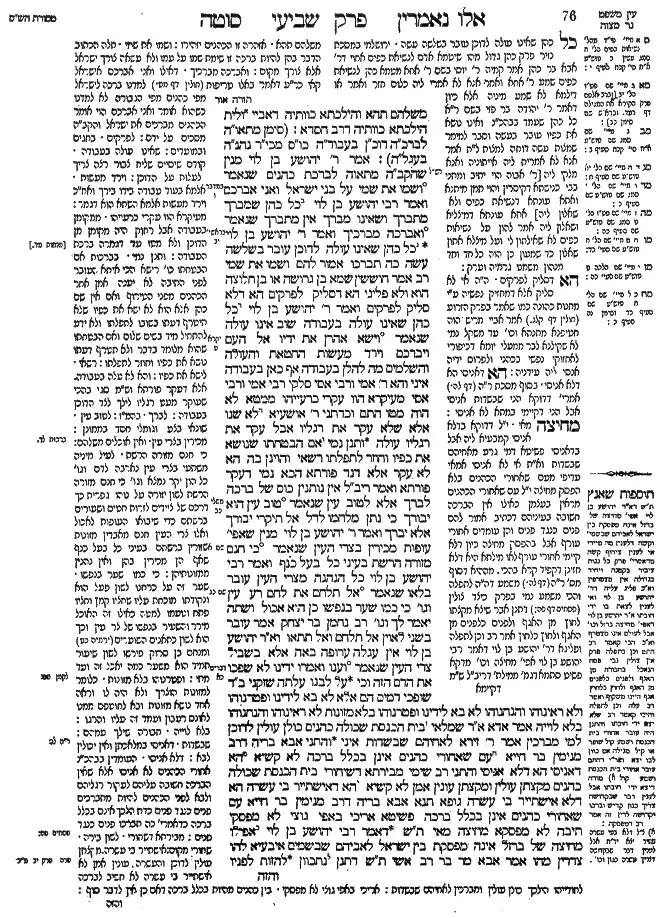
Sotah 38b - Guemara
משלהם תהא והילכתא כוותיה דאביי ולית הילכתא כוותיה דרב חסדא:
(סימן מתאו"ה לברכ"ה דוכ"ן בעבוד"ה כו"ס מר. י"ר נהנ"ה בעגל"ה) אמר ר' יהושע בן לוי מנין שהקב"ה מתאוה לברכת כהנים שנאמר (במדבר ו, כז) ושמו את שמי על בני ישראל ואני אברכם ואמר רבי יהושע בן לוי כל כהן שמברך מתברך ושאינו מברך אין מתברך שנאמר (בראשית יב, ג) ואברכה מברכיך ואמר ר' יהושע בן לוי כל כהן שאינו עולה לדוכן עובר בשלשה עשה כה תברכו אמור להם ושמו את שמי רב אמר חוששין שמא בן גרושה או בן חלוצה הוא ולא פליגי הא דסליק לפרקים הא דלא סליק לפרקים ואמר ר' יהושע בן לוי כל כהן שאינו עולה בעבודה שוב אינו עולה שנאמר (ויקרא ט, כב) וישא אהרן את ידיו אל העם ויברכם וירד מעשות החטאת והעולה והשלמים מה להלן בעבודה אף כאן בעבודה איני והא ר' אמי ורבי אסי סלקי רבי אמי ורבי אסי מעיקרא הוו עקרי כרעייהו ממטא לא הוה מטו התם וכדתני ר' אושעיא לא שנו אלא שלא עקר את רגליו אבל עקר את רגליו עולה ותנן נמי אם הבטחתו שנושא את כפיו וחוזר לתפלתו רשאי והוינן בה הא לא עקר אלא דנד פורתא הכא נמי דעקר פורתא ואמר ריב"ל אין נותנין כוס של ברכה לברך אלא לטוב עין שנאמר (משלי כב, ט) טוב עין הוא יבורך כי נתן מלחמו לדל אל תיקרי יבורך אלא יברך ואמר ר' יהושע בן לוי מנין שאפי' עופות מכירין בצרי העין שנאמר (משלי א, יז) כי חנם מזורה הרשת בעיני כל בעל כנף ואמר רבי יהושע בן לוי כל הנהנה מצרי העין עובר בלאו שנאמר (משלי כג, ו) אל תלחם את לחם רע עין וגו' כי כמו שער בנפשו כן הוא אכול ושתה יאמר לך וגו' רב נחמן בר יצחק אמר עובר בשני לאוין אל תלחם ואל תתאו וא"ר יהושע בן לוי אין עגלה ערופה באה אלא בשביל צרי העין שנאמר (דברים כא, ז) וענו ואמרו ידינו לא שפכו את הדם הזה וכי על לבנו עלתה שזקני ב"ד שופכי דמים הם אלא לא בא לידינו ופטרנוהו ולא ראינוהו והנחנוהו לא בא לידינו ופטרנוהו בלא מזונות לא ראינוהו והנחנוהו בלא לוייה אמר אדא א"ר שמלאי בית הכנסת שכולה כהנים כולן עולין לדוכן למי מברכין אמר ר' זירא לאחיהם שבשדות איני והתני אבא בריה דרב מנימין בר חייא עם שאחורי כהנים אינן בכלל ברכה לא קשיא הא דאניסי הא דלא אניסי והתני רב שימי מבירתא דשיחורי בית הכנסת שכולה כהנים מקצתן עולין ומקצתן עונין אמן לא קשיא הא דאישתייר בי עשרה הא דלא אישתייר בי עשרה גופא תנא אבא בריה דרב מנימין בר חייא עם שאחורי כהנים אינן בכלל ברכה פשיטא אריכי באפי גוצי לא מפסקי תיבה לא מפסקא מחיצה מאי ת"ש דאמר רבי יהושע בן לוי אפילו מחיצה של ברזל אינה מפסקת בין ישראל לאביהם שבשמים איבעיא להו צדדין מהו אמר אבא מר בר רב אשי ת"ש דתנן נתכוון להזות לפניו
Comments from Rashi on Masechet Sotah Page 38b
משלהם תהא . אזהרה זו הכהנים יזהירו: ושמו את שמי . תלה הכתוב הדבר בהן להיות ברכה זו שימת שמו על עמו ולא עשאה צורך ישראל אלא צורך מקום: ואברכה מברכיך . דאילו ואני אברכם אישראל קאי כר"ע דאמר באלו טריפות (חולין דף מט.) למדנו ברכה לישראל מפי כהנים מפי הגבורה לא למדנו כשהוא אומר ואני אברכם הוי אומר הכהנים מברכים את ישראל והקב"ה מסכים על ידם: לפרקים . בחגים ובמועדים: שאינו עולה בעבודה . קודם שיסיים שליח צבור רצה צריך לעלות על הדוכן: וירד מעשות . אלמא בעוד עבודה בידו בירך ואח"כ וירד מעשות אלמא השתא הוא דגמר: מעיקרא הוו עקרי כרעייהו . ממקומן בעבודה אבל רחוק היה מקומן מן הדוכן ולא מטו עד דגמרה ברכת העבודה: ותנן נמי . בברכות אם הבטחתו כו' רישא הכי איתא העובר לפני התיבה לא יענה אמן אחר הכהנים מפני הטירוף ואם אין שם כהן אלא הוא לא ישא את כפיו שלא תיטרף דעתו בשובו לתפלתו ולא ידע להתחיל מיד בשים שלום ואם הבטחתו שהוא מלומד בדבר ולא תטרף דעתו נושא את כפיו וחוזר לתפלתו: רשאי . לישא את כפיו: והא לא עלה בעבודה . אלא דעקר פורתא וש"מ סגי בהכי שעוקר מעט רגליו לילך לצד הדוכן בעבודה: לברך . בהמ"ז: לטוב עין . שונאי בצע וגומלי חסד בממונן: מכירין בצרי עין . ואין אוכלים משלהם: כי חנם מזורה הרשת . לעיל מיניה משתעי בצרי עין נארבה לדם וגו' כל הון יקר נמצא וגו' כי חנם מזורה הרשת לשון יזורה על נוהו גפרית כך דרכם של ציידים לזרות חטים ושעורים ברשתם כדי שיבואו העופות לאכול ואלו צרי העין חנם מאבדין מזונות שזורין ברשתם בעיני כל בעל כנף שאף הן מכירין בהן ואין נהנין ממזונותיהן: כי כמו שער בנפשו . שער זה על כרחנו לשון פעל הוא ונקודתו מוכחת עליו שחציו קמץ וחציו פתח וטעמו למטה כאילו זה האוכל מירר והשעיר בנפשו של צר עין וכך הוא לשון כתאנים השוערים (ירמיהו כט) ומנחם בן סרוק פירשו לשון שיעור תמיד הוא משער כמה יאכל זה ועד מתי: ופטרנוהו בלא מזונות . כלומר למזונות הוצרך ולא היה לו וראה אחד נושא מזונות ובא לחוטפם ממנו לאונס רעבון ועמד זה עליו והרגו: בלא לוייה . חבורה שילך עמהם: שבשדות . דאניסי במלאכתן ואין יכולין לבא: דלא אניסי . העומדין בבהכ"נ אחורי הכהנים לא אניסי אלא שאין הברכה חשובה עליהם לעקור רגליהם ולבא לפני הכהנים להיות מתברכים פנים כנגד פנים כדת הלכך אינם בכלל ברכה כדאמרי' כה תברכו פנים כנגד פנים: מבירתא דשחורי . לשון בירה. שחורי מקום: אישתייר בי עשרה . מקצתן עולין לדוכן והעשרה עונין אמן לא אישתייר בי עשרה לא חשיב לברכה לחודייהו הילכך כולן עולין ומברכין לאחיהם שבשדות: אריכי באפי גוצי לא מפסקי . בין כהנים מהיות בכלל ברכה דאם כן אין לדבר סוף:
Comments from Tosafot - Sotah 38b
כל כהן שאינו עולה לדוכן עובר בשלשה עשה . ירושלמי במסכת נזיר פרק כהן גדול מהו שיטמא אדם לנשיאת כפים אחוי דר' אבא בר כהן אמר קמיה ר' יוסי בשם ר' אחא מטמא כהן לנשיאת כפים שמע ר' אחא ואמר אנא לא אמרי ליה כלום חזר ואמר או דילמא לא שמע מיניה אלא כיון דאמר ר' יהודה בר פזי בשם ר"א כל כהן שעמד בבהכ"נ ואינו נושא את כפיו עובר בעשה וסבר למימר שמצות עשה דוחה למצות ל"ת אמר אנא לא אמרית ליה אייתוניה ואנא מלקי ליה [ר' אבוה הוי יתיב ומתני בבי כנישתא דקיסרין והוי תמן מיתנא ואתא עונתא דנשיאת כפים ולא שאלון ליה] אתא עונתא דמיצליא ושאלון ליה אמר להון על נשיאות כפים לא שאילתון לי ועל מיצלא אתון שאלון כד שמעון כן הוה כל חד וחד מנהון משמט גרמיה וערק: הא דסליק לפרקים . ה"ה אי לא סליק אלא דמחזיק נפשיה ע"י מתנות כהונה כמו שאמר בפרק הזרוע (חולין דף קלג.) אמר אביי מריש הוה חטיפנא מתנתא וכו' עד משקל נמי לא שקילנא לבר ממעלי יומא דכיפורי לאחזוקי נפשי בכהני ולפרוס ידיה אנסי ליה עידניה: הא דאניסי הא דלא אניסי . בסוף מסכת ר"ה (דף לה.) אמרי' דדוקא הני שבשדות אניסי אבל הני דקיימי במתא לא אניסי: מחיצה מאי . י"ל דדוקא בדלא אניסי קמבעיא ליה אבל בדאניסי פשיטא דמי גרע מאחיהם שבשדות וא"ת אי לא אניסי אמאי עדיפי מעם שאחורי הכהנים בלא הפסק מחיצה י"ל עם שאחורי הכהנים מראין בעצמן כאילו אין הברכה חשובה בעיניהם דכתיב אמור להם פנים כנגד פנים והן עומדים אחורי עורף אבל בהפסק מחיצה כיון דלא קיימי אחורי עורף לאו מילתא היא דלא חזינן דקפיד קרא בהכי מההיא דסוף מס' ר"ה (דף לה.) משמע דה"ה לתפלה והכי משמע נמי בפרק כיצד צולין (פסחים דף פה:) דתנן אבר שיצא מקצתו לחוץ מן האגף ולפנים כלפנים מן האגף ולחוץ כלחוץ אמר רב וכן לתפלה ופליגא דר' יהושע בן לוי דאמר רבי יהושע בן לוי אפי' מחיצה וכו' מדקא פשיט סתמא דגמ' ממילת' דריב"ל ש"מ דקיימא לן כוותיה וכמדומה דהכי פסק רבינו חננאל דבכל דוכתא קי"ל כר' יהושע בן לוי ומקשה מפ' כל גגות (עירובין דף צב.) דיתיב ר' זירא ורבה בר רב חנן ויתיב אביי גבייהו ויתבי וקאמרי שמע מינה ממתני' דיורי גדולה בקטנה ואין דיורי קטנה בגדולה וכו' עד צבור בגדולה ושליח צבור בקטנה יוצאין ידי חובתן צבור בקטנה וש"צ בגדולה אין יוצאין ידי חובתן תשעה בגדולה וא' בקטנה מצטרפין תשעה בקטנה וא' בגדולה אין מצטרפין וה"ה גדולה בגדולה דליכא למימר דיורי גדולה בגדולה אלמא לענין תפלה לא אמר אפילו מחיצה של ברזל אין מפסקת ונראה דלא דמי דהיכא דאיכא עשרה בגדולה ושליח צבור עמהן ואחד בגדולה כיוצא בה מתוך שמוציא בני הגדולה יוצא גם זה שבאחרת כה"ג אמרינן דוקא אפילו מחיצה וכו' שהרי מוציא אפילו אחיו שבשדות כדאיתא במסכת ראש השנה (דף לה.) אבל היכא דצריך לצרופינהו ודאי לא מצטרפי וההיא דפ' אין עומדין (ברכות דף לב:) דא"ר אלעזר מיום שחרב בית המקדש נפסקה חומת ברזל בין ישראל לאביהן שבשמים לא שייכא להכא דההיא אמר לגבי הא שאין תפלתן מקובלת כמו בזמן שבהמ"ק קיים מיהו לענין זה אין מפסקת אם יתברכו הצבור ע"י ברכת כהנים שעמהן בבית הכנסת או יוציא ש"צ ידי חובתן גם זה יתברך ויוצא ידי חובתו עמהן דכלפי אבינו שבשמים לא תלי בהפסק מחיצה:
Sotah 38b - Mishnah translated into english
should be from them; one of the priests themselves should call: Priests. The Gemara concludes: And the halakha is in accordance with the opinion of Abaye, that when only one priest is present, the prayer leader does not call: Priest. And the halakha is not in accordance with the opinion of Rav Ḥisda, as an Israelite may also call: Priests.
§ The Gemara cites a mnemonic device for the statements of Rabbi Yehoshua ben Levi: Desires the benediction, platform, during the service, cup, recognize, derives benefit, from a heifer.
Rabbi Yehoshua ben Levi says: From where is it derived that the Holy One, Blessed be He, desires the Priestly Benediction? As it is stated: “So shall they put My name upon the children of Israel, and I will bless them” (Numbers 6:27). This shows that God waits for the priests to bless the people, and only then He Himself blesses them. And Rabbi Yehoshua ben Levi says: Any priest who blesses the people is blessed from Heaven, and one who does not bless the people is not blessed, as it is stated: “And I will bless those who bless you” (Genesis 12:3).
And Rabbi Yehoshua ben Levi says: Any priest who does not ascend the platform to recite the Priestly Benediction violates three positive mitzvot: “So you shall bless,” “And you shall say to them” (Numbers 6:23), and “So shall they put My name” (Numbers 6:27).
Rav says: One need be concerned that a priest who does not ascend to recite the Priestly Benediction is perhaps the son of a priest and a divorced woman, or the son of a priest and a yevama who has performed ḥalitza [ḥalutza]. Perhaps he does not ascend to recite the Priestly Benediction because he is disqualified from the priesthood.
The Gemara comments: And they do not disagree. This statement of Rabbi Yehoshua ben Levi is referring to a case where he ascends periodically. Therefore, there is no reason to believe that he is disqualified from the priesthood, and the assumption is that he violates three positive mitzvot. Whereas that statement of Rav is referring to a case where one does not ascend to recite the Priestly Benediction even periodically, and therefore there is reason to suspect that he is disqualified from the priesthood.
And Rabbi Yehoshua ben Levi says: Any priest who does not ascend the platform during the blessing of the Temple service recited in the Amida prayer may no longer ascend to recite the benediction, as it is stated: “And Aaron lifted up his hands toward the people and blessed them; and he came down from offering the sin-offering, and the burnt-offering, and the peace-offerings” (Leviticus 9:22). Just as there, in the Tabernacle, Aaron lifted up his hands during the service, as evident from the fact that only after he blessed them does it say that he came down from sacrificing the offerings, so too here, in the Amida prayer, the Priestly Benediction is recited during the blessing of Temple service.
The Gemara asks: Is that so? But didn’t the priests Rabbi Ami and Rabbi Asi ascend after the blessing of the service? The Gemara answers: Rabbi Ami and Rabbi Asi would begin walking to the platform during the blessing of the service, but they would not arrive there until after the conclusion of this blessing. And this is sufficient in accordance with what Rabbi Oshaya taught: They taught that a priest may not recite the benediction if he did not ascend the platform during the blessing of Temple service only in a case where he did not begin walking. But if he began walking before the prayer leader finished the blessing, he may ascend the platform even after he has finished the blessing.
And concerning this issue, we also learned in a mishna (Berakhot 34a): A priest who serves as prayer leader does not recite the Priestly Benediction, but if he is certain that he can lift his hands and recite the benediction, and then resume his prayer without becoming confused, he is permitted to do so. And we discussed it and raised the following difficulty: If he did not begin walking to ascend the platform during the blessing of the service, how is it permitted for him to recite the benediction? Rather, it must be explained that he moved slightly to show that he also wanted to ascend the platform. Here too, the statement of Rabbi Oshaya is referring even to a case where the priest uprooted himself slightly from his place during the blessing of the service.
And Rabbi Yehoshua ben Levi says: One may give a cup of blessing to recite the blessing of Grace after Meals only to someone with a good eye, i.e., a generous person, as it is stated: “One who has a good eye will be blessed [yevorakh], for he gives of his bread to the poor” (Proverbs 22:9). Do not read it: “Will be blessed.” Rather, read it: Will bless [yevarekh].
And Rabbi Yehoshua ben Levi says: From where is it derived that even birds recognize miserly people and do not eat the food they have set in bird traps? As it is stated: “For in vain the net is spread in the eyes of any bird” (Proverbs 1:17).
And Rabbi Yehoshua ben Levi says: Anyone who derives benefit from miserly people transgresses a prohibition, as it is stated: “Do not eat the bread of one who has an evil eye, and do not desire his delicacies, for as one that has reckoned within himself, so he is. He says to you: Eat and drink, but his heart is not with you” (Proverbs 23:6–7). Rav Naḥman bar Yitzḥak says: He transgresses two prohibitions, as it says “do not eat” and also “do not desire.”
And Rabbi Yehoshua ben Levi says: When a person is found slain between two cities and it is not known who killed him, a heifer whose neck is broken is brought. This occurs only because of miserly people.
As it is stated: “And they shall speak and say: Our hands have not shed this blood” (Deuteronomy 21:7). But did it enter our hearts to think that the Elders of the court are murderers? Why it is necessary for them to publicize that they did not kill him? Rather, they must declare: It is not so that this victim came to us and we dismissed him, and it is not so that we saw him and left him. In other words, he did not come to us and we in turn dismissed him without food, and we did not see him and then leave him without an escort. It is miserly people who do not provide others with food and cause them to travel to places where they might be murdered.
§ Adda said that Rabbi Samlai says: In a synagogue that is made up entirely of priests, everyone ascends the platform to recite the Priestly Benediction. The Gemara asks: If the entire congregation is composed of priests, for whom do they utter the blessing? Rabbi Zeira says: They say the blessing for their brethren who are in the fields.
The Gemara asks: Is that so? But didn’t Abba, son of Rav Minyamin bar Ḥiyya, teach that the people who are standing behind the backs of the priests are not included in the Priestly Benediction? The Gemara answers: That is not difficult. This is a case where the people are compelled to be in the fields because of their work, and they are therefore included in the benediction. Whereas that statement is referring to people who are not compelled to be away but still do not stand face-to-face with the priests. Consequently, they are not included in the benediction.
The Gemara asks: But didn’t Rav Shimi of Birte deShiḥorei teach the following baraita: In a synagogue that is made up entirely of priests, some of them ascend to recite the benediction and some of them answer amen?
The Gemara answers: That is not difficult. That is a case where, if some of the priests recite the benediction, a quorum of ten priests still remains to receive the benediction and answer amen. Therefore, only some of the priests ascend to recite the benediction. By contrast, this case, which Rabbi Simlai was referring to, is a case where a quorum of ten does not remain to answer amen, so it is better for all of the priests to ascend and bless the people working in the fields.
The Gemara returns to the matter itself cited above: Abba, son of Rav Minyamin bar Ḥiyya, taught: The people who are standing behind the priests are not included in the benediction.
The Gemara raises several questions with regard to this statement: It is obvious that tall people standing in front of short people do not interpose between the priests and the shorter people with regard to the Priestly Benediction. Similarly, a chest or ark containing a Torah scroll does not interpose between the priests and the people. However, what is the halakha with regard to a partition? Come and hear an answer from what Rabbi Yehoshua ben Levi said: Even an iron partition does not interpose between the Jewish people and their Father in Heaven; the people are included in the benediction.
A dilemma was raised before the Sages: What is the halakha in the case of people who are standing to the sides of the priests? Are they included in the blessing? Abba Mar bar Rav Ashi said: Come and hear an answer, as we learned in a mishna (Para 12:2) with regard to the halakha of sprinkling the waters of purification on vessels that contracted ritual impurity imparted by a corpse: If one intended to sprinkle the water forward
Traduction : The William Davidson digital edition of the Koren Noé Talmud, with commentary by Rabbi Adin Even-Israel Steinsaltz.