 Talmud Bavli
The learning on the whole site is dedicated : L'ilui Nishmat Margalit bat Ledicia
The learning on the whole site is dedicated : L'ilui Nishmat Rav Chlomo Ben Jamilla
The learning on the whole site is dedicated : L'ilui Nishmat Chemouel Eliezer ben Batcheva
Ta'anit 26a : Youtube
Daf TubeYoutube
4 video classes :
Ta'anit Page 26a
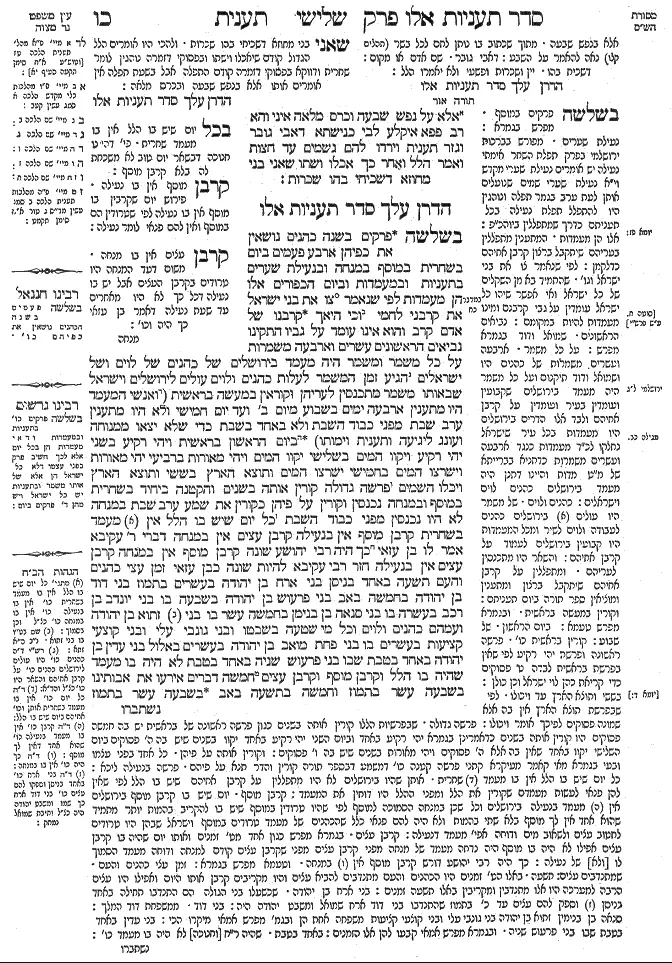
Ta'anit 26a - Guemara
אלא על נפש שבעה וכרס מלאה איני והא רב פפא איקלע לבי כנישתא דאבי גובר וגזר תענית וירדו להם גשמים עד חצות ואמר הלל ואחר כך אכלו ושתו שאני בני מחוזא דשכיחי בהו שכרות:
הדרן עלך סדר תעניות אלו
מתני׳ בשלשה פרקים בשנה כהנים נושאין את כפיהן ארבע פעמים ביום בשחרית במוסף במנחה ובנעילת שערים בתעניות ובמעמדות וביום הכפורים אלו הן מעמדות לפי שנאמר (במדבר כח, ב) צו את בני ישראל את קרבני לחמי וכי היאך קרבנו של אדם קרב והוא אינו עומד על גביו התקינו נביאים הראשונים עשרים וארבעה משמרות על כל משמר ומשמר היה מעמד בירושלים של כהנים של לוים ושל ישראלים הגיע זמן המשמר לעלות כהנים ולוים עולים לירושלים וישראל שבאותו משמר מתכנסין לעריהן וקוראין במעשה בראשית (ואנשי המעמד היו מתענין ארבעה ימים בשבוע מיום ב' ועד יום חמישי ולא היו מתענין ערב שבת מפני כבוד השבת ולא באחד בשבת כדי שלא יצאו ממנוחה ועונג ליגיעה ותענית וימותו) ביום הראשון בראשית ויהי רקיע בשני יהי רקיע ויקוו המים בשלישי יקוו המים ויהי מאורות ברביעי יהי מאורות וישרצו המים בחמישי ישרצו המים ותוצא הארץ בששי ותוצא הארץ ויכלו השמים פרשה גדולה קורין אותה בשנים והקטנה ביחיד בשחרית במוסף ובמנחה נכנסין וקורין על פיהן כקורין את שמע ערב שבת במנחה לא היו נכנסין מפני כבוד השבת כל יום שיש בו הלל אין מעמד בשחרית קרבן מוסף אין בנעילה קרבן עצים אין במנחה דברי ר' עקיבא אמר לו בן עזאי כך היה רבי יהושע שונה קרבן מוסף אין במנחה קרבן עצים אין בנעילה חזר רבי עקיבא להיות שונה כבן עזאי זמן עצי כהנים והעם תשעה באחד בניסן בני ארח בן יהודה בעשרים בתמוז בני דוד בן יהודה בחמשה באב בני פרעוש בן יהודה בשבעה בו בני יונדב בן רכב בעשרה בו בני סנאה בן בנימן בחמשה עשר בו בני זתוא בן יהודה ועמהם כהנים ולוים וכל מי שטעה בשבטו ובני גונבי עלי ובני קוצעי קציעות בעשרים בו בני פחת מואב בן יהודה בעשרים באלול בני עדין בן יהודה באחד בטבת שבו בני פרעוש שניה באחד בטבת לא היה בו מעמד שהיה בו הלל וקרבן מוסף וקרבן עצים חמשה דברים אירעו את אבותינו בשבעה עשר בתמוז וחמשה בתשעה באב בשבעה עשר בתמוז
Comments from Rashi on Masechet Ta'anit Page 26a
אלא בנפש שבעה . מתוך שכתוב בו נותן לחם לכל בשר (תהלים קלו) נאה להאמר על השבע: דאבי גובר . שם אדם או מקום: דשכיח בהו . יין ושכרות ופשעי ולא יאמרו הלל: מתני' בשלשה פרקים במוסף . מפרש בגמרא: נעילת שערים . מפורש בברכות ירושלמי בפרק תפלת השחר אימתי נעילה יש אומרים נעילת שערי מקדש וי"א נעילת שערי שמים שנועלים אותן לעת ערב בגמר תפלה ונוהגין היו להתפלל תפלת נעילה בכל תעניתם כדרך שמתפללין ביוהכ"פ: אלו הן מעמדות . המתענין מתפללין בעריהם שיתקבל ברצון קרבן אחיהם כדלקמן: לפי שנאמר צו את בני ישראל וגו' . שהתמיד בא מן השקלים של כל ישראל ואי אפשר שיהו כל ישראל עומדין על גבי קרבנם ומינו מעמדות להיות במקומם: נביאים הראשונים . שמואל ודוד בגמרא מפרש: על כל משמר . ארבעה ועשרים משמרות של כהנים היו ושמואל ודוד תיקנום ועל כל משמר היה מעמד בירושלים שקבועין ועומדין בעיר ועומדין על קרבן אחיהם ולבד אלו הדרים בירושלים היו מעמדות בכל עיר שישראל נחלקו לכ"ד מעמדות כנגד ארבעה ועשרים משמרות כדתניא בברייתא של מ"ט מדות והיינו דתנן היה מעמד בירושלים כהנים לוים וישראלים: כהנים ולוים . של משמר היו עולים בירושלים כהנים לעבודה ולוים לשיר ומכל המעמדות היו קבועין בירושלים לעמוד על קרבן אחיהם: והשאר היו מתכנסין לעריהם . ומתפללין על קרבן אחיהם שיתקבל ברצון ומתענין ומוציאין ספר תורה ביום תעניתם: וקורין במעשה בראשית . ובגמרא מפרש טעמא: ביום הראשון . של שבוע: קורין בראשית כו' . פרשה ראשונה ופרשת יהי רקיע לפי שאין בפרשת בראשית לבדה תשעה פסוקים כדי קריאת כהן לוי ישראל וכן כולן: בששי ותוצא הארץ עד ויכולו . לפי שבפרשת תוצא הארץ אין בה אלא שמונה פסוקים לפיכך אומר ויכולו: פרשה גדולה . שבפרשיות הללו קורין אותה בשנים כגון פרשה ראשונה של בראשית יש בה חמשה פסוקים היו קורין אותה בשנים כדאמרינן בגמרא יהי רקיע באחד וביום השני יהי רקיע באחד יקוו בשנים שיש בה ה' פסוקים ביום השלישי יקוו באחד שאין בה אלא ה' פסוקים ויהי מאורות בשנים שיש בה ו' פסוקים: וקורין אותה על פיהן . כל אחד בפני עצמו ובעי בגמרא מאי קאמר מעיקרא קתני פרשה קטנה כו' דמשמע דבספר תורה קורין והדר תנא על פיהם. פרשה בנעילה ליכא: כל יום שיש בו הלל אין בו מעמד שחרית . אותן שהיו בירושלים לא היו מתפללין על קרבן אחיהם שיש בו הלל לפי שאין להן פנאי לעשות מעמדם שקורין את הלל ומפני ההלל היו דוחין את המעמד: קרבן מוסף . יום שיש בו קרבן מוסף בירושלים אין מעמד בנעילה בירושלים וכל שכן במנחה הסמוכה למוסף לפי שהיו טרודין במוסף שיש בו להקריב בהמות יותר מתמיד שהוא אחד אין לך מוסף בלא שתי בהמות ולא היה להם פנאי כלל שהכהנים של מעמד טרודים במוסף וישראל שבהן היו טרודים לחטוב עצים ולשאוב מים ודוחה אפי' מעמד דנעילה: קרבן עצים . בגמרא מפרש כגון אחד מט' זמנים ואותו יום שהיה בו קרבן עצים אפילו לא היה בו מוסף היה נדחה מעמד של מנחה מפני קרבן עצים מפני שקרבן עצים קודם למנחה ודוחה מעמד הסמוך לו [ולא] של נעילה: באחד בטבת כך היה רבי יהושע דורש קרבן מוסף אין במנחה . וטעמא מפרש בגמרא: כך היה רבי יהושע דורש קרבן מוסף אין במנחה . וטעמא מפרש בגמרא: זמן עצי כהנים והעם . שמתנדבים עצים: תשעה . באלו הט' זמנים היו הכהנים והעם מתנדבים להביא עצים והיו מקריבין קרבן אותו היום ואפילו היו עצים הרבה למערכה היו אלו מתנדבין ומקריבין באלו תשעה זמנים: בני ארח בן יהודה . שכשעלו בני הגולה הם התנדבו תחילה באחד בניסן וספק להם עצים עד כ' בתמוז שהתנדבו בני דוד ארח שמואל ומשבט יהודה היה: בני דוד . ממשפחת דוד המלך: סנאה בן בנימין זתוא בן יהודה בני גונבי עלי ובני קוצעי קציעות משפחה אחת הן ובגמ' מפרש אמאי מיקרו הכי: בני עדין באחד בטבת שבו שבו בני פרעוש שניה . ובגמרא מפרש אמאי קבעו להן אלו הזמנים: בני עדין באחד בטבת שבו שבו בני פרעוש שניה . ובגמרא מפרש אמאי קבעו להן אלו הזמנים: באחד בטבת . שהיה ר"ח [וחנוכה] לא היה בו מעמד כו':
Comments from Tosafot - Ta'anit 26a
שאני בני מחוזא דשכיחי בהו שכרות. ולהכי היו אומרים הלל הגדול קודם שיאכלו וישתו ובפסוקי דזמרה נוהגין לומר שחרית ודווקא בפסוקי דזמרה קודם התפלה אבל בשעת תפלה אין אומרים אותו אלא בנפש שבעה ובכרס מלאה: בכל יום שיש בו הלל אין בו מעמד שחרית. פי' דהיינו חנוכה דבשאר יום טוב לא משכחת לה בלא קרבן מוסף: קרבן מוסף אין בו נעילה. פירוש יום שקרבין בו מוסף אין בו נעילה לפי שטרודין הם במוסף ואין להם פנאי לומר נעילה: קרבן עצים אין בו מנחה. משום דעד המנחה היו טרודים בקרבן העצים אבל יש בו נעילה דכל כך לא היו מאחרים עד שעת נעילה דאמר בן עזאי כך היה וכו':
Ta'anit 26a - Mishnah translated into english
only on a satisfied soul and a full stomach. Consequently, it is preferable to return home to eat and drink so as to recite hallel in the proper frame of mind. The Gemara asks: Is that so? But Rav Pappa happened to come to the synagogue of Avi Govar in Meḥoza, and he decreed a fast, and rain fell for them before midday, and yet he recited hallel immediately, and only afterward they ate and drank. The Gemara explains: The inhabitants of the city of Meḥoza are different, as drunkenness is common among them. Had Rav Pappa told them to go home to eat and drink, they would have become drunk and been unable to pray.
MISHNA: At three times in the year priests raise their hands to recite the Priestly Benediction four times in a single day, in the morning prayer, in the additional prayer, in the afternoon prayer, and in the evening in the closing of the gates, i.e., the ne’ila prayer. And these are the three times: During communal fasts held due to lack of rain, on which the closing prayer is recited; and during non-priestly watches [ma’amadot], when the Israelite members of the guard parallel to the priestly watch come and read the act of Creation from the Torah, as explained below; and on Yom Kippur.
These are the non-priestly watches: Since it is stated: “Command the children of Israel and say to them: My offering of food, which is presented to Me made by a fire, of a sweet savor to Me, you shall guard the sacrifice to Me in its due season” (Numbers 28:2), this verse teaches that the daily offering was a communal obligation that applied to every member of the Jewish people. The mishna asks: But how can a person’s offering be sacrificed when he is not standing next to it?
The mishna explains: Since it is impossible for the entire nation to be present in Jerusalem when the daily offering is brought, the early prophets, Samuel and David, instituted the division of the priests into twenty-four priestly watches, each of which served for approximately one week, twice per year. For each and every priestly watch there was a corresponding non-priestly watch in Jerusalem of priests, Levites, and Israelites who would stand by the communal offerings for that day to represent the community.
When the time arrived for the members of a certain priestly watch to ascend, the priests and Levites of that watch would ascend to Jerusalem to perform the Temple service. And as for the Israelites assigned to that priestly watch, some of them went up to Jerusalem, while the rest of them assembled in their towns and read the act of Creation. And the members of the non-priestly watch, who represented the entire community that week, would fast four days a week, from Monday until Thursday. And they would not fast on Shabbat eve, in deference to Shabbat, as they did not wish to start Shabbat while fasting. And they did not fast on Sunday, so as not to go from rest and delight immediately to exertion and fasting, and run the risk that they might die as a result of the abrupt change.
Which portions of the Torah would the members of the non-priestly watch read on each day? On Sunday they would read the portions starting with: “In the beginning” and “Let there be a firmament” (Genesis 1:1–8). On Monday they would read: “Let there be a firmament” and “Let the waters be gathered” (Genesis 1:9–13). On Tuesday they would read: “Let the waters be gathered” and “Let there be lights” (Genesis 1:14–19). On Wednesday: “Let there be lights” and “Let the waters swarm” (Genesis 1:20–23). On Thursday: “Let the waters swarm” and “Let the earth bring forth” (Genesis 1:24–31). On Friday: “Let the earth bring forth” and “And the heaven and the earth were finished” (Genesis 2:1–3).
A long passage, consisting of six verses or more, is read by two people, and a short passage is read by one, as one cannot read fewer than three verses from the Torah together. They read from the Torah in the morning prayer and in the additional prayer. In the afternoon prayer the members of the non-priestly watch enter the synagogue and read the daily portion by heart, just as one recites Shema every day. On Shabbat eve at the afternoon prayer, they would not enter the synagogue for the communal Torah readings, in deference to Shabbat.
The mishna states a principle: On any day that has the recitation of hallel, but on which the additional offering was not sacrificed, e.g., Hanukkah, there is no reading of the Torah by the non-priestly watch in the morning prayer. On days that have both hallel and an additional offering, such as Festivals, the non-priestly watch would also not read from the Torah at the closing prayer. When a wood offering was brought, as explained below, there was no non-priestly watch in the afternoon prayer. This is the statement of Rabbi Akiva.
Ben Azzai said to Rabbi Akiva that this is how Rabbi Yehoshua would teach this halakha: On days when an additional offering was sacrificed, there was no non-priestly watch in the afternoon prayer. When a wood offering was brought, there was no non-priestly watch in the closing prayer. Upon hearing this, Rabbi Akiva retracted his ruling and began to teach in accordance with the opinion of ben Azzai.
The mishna details the times for the wood offering of priests and the people. These were private holidays specific to certain families, on which their members would volunteer a wood offering for the altar. There were nine such days and families: On the first of Nisan, the descendants of Araḥ ben Yehuda; on the twentieth of Tammuz, the descendants of David ben Yehuda; on the fifth of Av, the descendants of Parosh ben Yehuda; on the seventh of Av, the descendants of Jonadab ben Rechab; on the tenth of Av, the descendants of Sena’a ben Binyamin; on the fifteenth of Av, the descendants of Zattu ben Yehuda.
And included with this group of Zattu ben Yehuda’s descendants were other priests; and Levites; and anyone who erred with regard to his tribe, i.e., Israelites who did not know which tribe they were from, and the descendants of those who deceived the authorities with a pestle; and the descendants of those who packed dried figs. These last groups and their descriptions are explained in the Gemara.
The mishna resumes its list. On the twentieth of Av, the descendants of Paḥat Moav ben Yehuda; on the twentieth of Elul, the descendants of Adin ben Yehuda; on the first of Tevet, the descendants of Parosh returned to bring wood for a second time; likewise on the first of Tevet, there was no non-priestly watch, as it is Hanukkah, on which hallel is recited, and it is the New Moon, on which an additional offering is sacrificed, and there was also a wood offering.
The mishna discusses the five major communal fast days. Five calamitous matters occurred to our forefathers on the seventeenth of Tammuz, and five other disasters happened on the Ninth of Av. On the seventeenth of Tammuz
Traduction : The William Davidson digital edition of the Koren Noé Talmud, with commentary by Rabbi Adin Even-Israel Steinsaltz.