 Talmud Bavli
The learning on the whole site is dedicated : L'ilui Nishmat Yechayahou ben Moche
The learning on the whole site is dedicated : L'ilui Nishmat Nissim ben Barukh Malka
The learning on the whole site is dedicated : L'ilui Nishmat Jacques Isaac Ben Amram Loubaton
Ta'anit 30a : Youtube
Daf TubeYoutube
4 video classes :
Ta'anit Page 30a
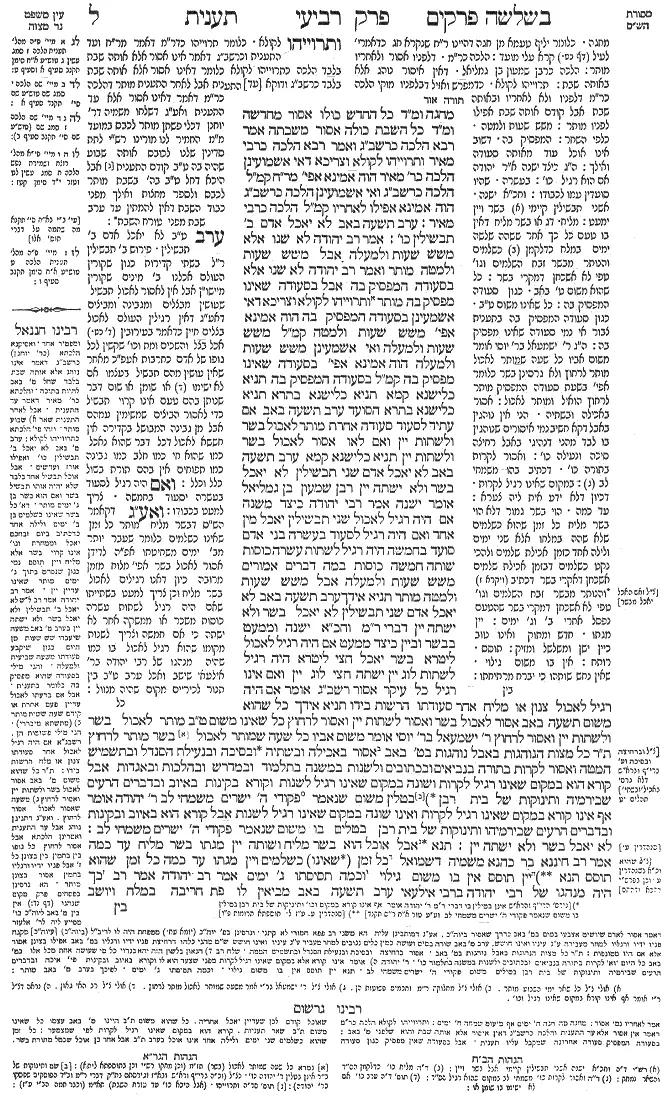
Ta'anit 30a - Guemara
מחגה ומ"ד כל החדש כולו אסור מחדשה ומ"ד כל השבת כולה אסור משבתה אמר רבא הלכה כרשב"ג ואמר רבא הלכה כרבי מאיר ותרוייהו לקולא וצריכא דאי אשמועינן הלכה כר' מאיר הוה אמינא אפי' מר"ח קמ"ל הלכה כרשב"ג ואי אשמועינן הלכה כרשב"ג הוה אמינא אפילו לאחריו קמ"ל הלכה כרבי מאיר:
ערב תשעה באב לא יאכל אדם ב' תבשילין כו':
אמר רב יהודה לא שנו אלא משש שעות ולמעלה אבל משש שעות ולמטה מותר ואמר רב יהודה לא שנו אלא בסעודה המפסיק בה אבל בסעודה שאינו מפסיק בה מותר ותרוייהו לקולא וצריכא דאי אשמעינן בסעודה המפסיק בה הוה אמינא אפי' משש שעות ולמטה קמ"ל משש שעות ולמעלה ואי אשמעינן משש שעות ולמעלה הוה אמינא אפי' בסעודה שאינו מפסיק בה קמ"ל בסעודה המפסיק בה תניא כלישנא קמא תניא כלישנא בתרא תניא כלישנא בתרא הסועד ערב תשעה באב אם עתיד לסעוד סעודה אחרת מותר לאכול בשר ולשתות יין ואם לאו אסור לאכול בשר ולשתות יין תניא כלישנא קמא ערב תשעה באב לא יאכל אדם שני תבשילין לא יאכל בשר ולא ישתה יין רבן שמעון בן גמליאל אומר ישנה אמר רבי יהודה כיצד משנה אם היה רגיל לאכול שני תבשילין יאכל מין אחד ואם היה רגיל לסעוד בעשרה בני אדם סועד בחמשה היה רגיל לשתות עשרה כוסות שותה חמשה כוסות במה דברים אמורים משש שעות ולמעלה אבל משש שעות ולמטה מותר תניא אידך ערב תשעה באב לא יאכל אדם שני תבשילין לא יאכל בשר ולא ישתה יין דברי ר"מ וחכ"א ישנה וממעט בבשר וביין כיצד ממעט אם היה רגיל לאכול ליטרא בשר יאכל חצי ליטרא היה רגיל לשתות לוג יין ישתה חצי לוג יין ואם אינו רגיל כל עיקר אסור רשב"ג אומר אם היה רגיל לאכול צנון או מליח אחר סעודתו הרשות בידו תניא אידך כל שהוא משום תשעה באב אסור לאכול בשר ואסור לשתות יין ואסור לרחוץ כל שאינו משום ט"ב מותר לאכול בשר ולשתות יין ואסור לרחוץ ר' ישמעאל בר' יוסי אומר משום אביו כל שעה שמותר לאכול בשר מותר לרחוץ ת"ר כל מצות הנוהגות באבל נוהגות בט' באב אסור באכילה ובשתיה ובסיכה ובנעילת הסנדל ובתשמיש המטה ואסור לקרות בתורה בנביאים ובכתובים ולשנות במשנה בתלמוד ובמדרש ובהלכות ובאגדות אבל קורא הוא במקום שאינו רגיל לקרות ושונה במקום שאינו רגיל לשנות וקורא בקינות באיוב ובדברים הרעים שבירמיה ותינוקות של בית רבן בטלין משום שנאמר (תהלים יט, ט) פקודי ה' ישרים משמחי לב ר' יהודה אומר אף אינו קורא במקום שאינו רגיל לקרות ואינו שונה במקום שאינו רגיל לשנות אבל קורא הוא באיוב ובקינות ובדברים הרעים שבירמיהו ותינוקות של בית רבן בטלים בו משום שנאמר פקודי ה' ישרים משמחי לב:
לא יאכל בשר ולא ישתה יין:
תנא אבל אוכל הוא בשר מליח ושותה יין מגתו בשר מליח עד כמה אמר רב חיננא בר כהנא משמיה דשמואל כל זמן (שאינו) כשלמים ויין מגתו עד כמה כל זמן שהוא תוסס תנא יין תוסס אין בו משום גילוי וכמה תסיסתו ג' ימים אמר רב יהודה אמר רב כך היה מנהגו של רבי יהודה ברבי אילעאי ערב תשעה באב מביאין לו פת חריבה במלח ויושב
Comments from Rashi on Masechet Ta'anit Page 30a
מחגה . כלומר יליף טעמא מן חגה דהיינו ר"ח שנקרא חג כדאמרי' לעיל (תענית דף כט.) קרא עלי מועד: הלכה כרבן שמעון בן גמליאל . דאין איסור נוהג אלא באותה שבת: הלכה כר"מ . דלפניו אסור ולאחריו מותר: תרוייהו לקולא . כדמפרש ואזיל דבלפניו מוקי הלכה כר"מ דלפניו ולא לאחריו ובאותה שבת אבל קודם אותה שבת אפילו לפניו מותר: הלכה כר"מ . דלפניו אסור ולאחריו מותר: הלכה כרבן שמעון בן גמליאל . דאין איסור נוהג אלא באותה שבת: משש שעות ולמטה . כלפי השחר: המפסיק בה . דשוב אינו אוכל עוד מאותה סעודה ואילך: ה"ג כיצד ישנה א"ר יהודה אם הוא רגיל כו': בעשרה . שהיו סועדין עמו לכבודו: וחכ"א ישנה . אשני תבשילין קיימי בשר ויין ימעט: מליח . דג או בשר מליח דאין בו טעם כל כך אחר ששהה שלשה ימים במלח כדלקמן כשלמים והנותר מבשר זבח השלמים וגו' טפי לא אשכחן דמקרי בשר: כל שהוא משום ט' באב . כגון סעודה המפסיק בה: כל שאינו משום ט"ב . כגון סעודה המפסיק בה בתענית צבור אי נמי סעודה שאינו מפסיק בה: ה"ג ר' ישמעאל בר' יוסי אומר משום אביו כל שעה שמותר לאכול מותר לרחוץ . ולא גרסינן בשר כלומר אפילו בשעת סעודה המפסיק מותר לרחוץ הואיל ומותר לאכול: אסור באכילה ובשתיה . הני אין נוהגין באבל דקא חשיב נמי איסורים שנוהגין בו לבד מהני דנהיגי באבל רחיצה סיכה ונעילה כו': ואסור לקרות בתורה כו' . דכתיב בהו משמחי לב: במקום שאינו רגיל לקרות . דכיון דלא ידע אית ליה צערא: עד כמה . הוי בשר גמור דלא הוי בשר מליח כל זמן שהוא כשלמים שלא שהה במלחו אלא שני ימים ולילה אחד כזמן אכילת שלמים ולהכי נקט כשלמים דבזמן אכילת שלמים אשכחן דאקרי בשר דכתיב (ויקרא ז) והנותר מבשר זבח השלמים וגו' טפי לא אשכחן דמקרי בשר שהטעם נפסל אחרי ב' וג' ימים: יין מגתו . חדש ומתוק ואינו טוב כיין ישן ומשלשל ומזיק: תוסס . רותח: אין בו משום גילוי . שאין נחש שותהו כי יברח מרתיחתו:
Comments from Tosafot - Ta'anit 30a
ותרוייהו לקולא. כלומר תרוייהו כדר"מ דאמר מר"ח ועד התענית וכרשב"ג דאמר אינו אסור אלא אותה שבת בלבד הלכה כתרוייהו לקולא כלומר דאינו אסור אלא אותה שבת בלבד כרשב"ג ודוקא התענית אבל לאחר התענית מותר דהלכה כר"מ דאמר דאינו אסור אלא עד התענית ואע"ג דשלחו משמיה דר' יוחנן דכלי פשתן מותר לכבס במועד מ"מ החמיר לנו מורינו רש"י לתת סדינין שלנו לכובס אותה שבוע שהיה בה ט"ב קודם התענית אבל היכא דחל ט"ב בה' בשבת מותר לכבס ולספר מחצות ואילך מפני כבוד השבת דאין להמתין עד ערב שבת מפני טורח השבת: ערב ט"ב לא יאכל אדם ב' תבשילין. פירוש ב' תבשילין ר"ל בשתי קדירות כגון שקורין העולם אכלנו ב' מינים שקורין מיישו"ן אבל אין לאסור לאכול תבשיל שעושין מבצלים ומגבינה ומביצים דאע"ג דאין רגילין העולם לאכול בצלים חיין כדאמר בעירובין (ד' כט.) אכל בצל והשכים ומת וכו' שקשין לכל גופו של אדם כחרבות אעפ"כ מאחר שאין עושין מהם תבשיל בעצמו אם לא ישימו או שומן או שום דבר שנותן בהם טעם אינו קרוי תבשיל כדי לאסור הביצים שמשימין עמהם אבל מן גבינה המבושל בקדירה אין חששא לאכול דכל דבר שהוא נאכל כמו שהוא חי כמו חלב כמו גבינה כמו תפוחים אין בהם תורת בשול כלל וכלל: ואם היה רגיל לסעוד בעשרה יסעוד בחמשה. צריך למעט בכבודו: ואע"ג דקאמר הש"ס דבשר מליח מותר כל זמן שאינו כשלמים כלומר שעבר יותר מב' ימים משחיטתו אפ"ה לדידן אסור לאכול בשר אפי' מלוח מזמן מרובה כיון דאנו רגילים לאכול בשר מליח וכן צריך למעט בשתייתו שאם היה רגיל לשתות עשרה כוסות משכר או ממשקה אחר לא ישתה כי אם חמשה וצריך לשנות מקומו שהוא רגיל לאכול בו כמו שהיה מנהגו של רבי יהודה בר' אילעאי שישב ואכל ערב ט"ב בין תנור לכיריים מקום שהיה מנוול:
Ta'anit 30a - Mishnah translated into english
derives from the phrase “her Festival” that acts of mirth and rejoicing are prohibited from the New Moon, which is considered like a Festival. And the one who said that these activities are prohibited during the entire month learns this from the phrase “her New Moon.” And the one who said that acts of rejoicing are prohibited during the entire week of the Ninth of Av, derives this from the phrase “her Shabbat,” which also means a week.
With regard to the halakha itself, Rava said: The halakha is in accordance with the opinion of Rabban Shimon ben Gamliel. And Rava also said that the halakha is in accordance with the opinion of Rabbi Meir. The Gemara remarks: And both of these rulings are intended as a leniency. And it is necessary for Rava to state both rulings, for had he taught us only that the halakha is in accordance with the opinion of Rabbi Meir, I would have said that the mourning practices are obligatory even from the New Moon, as maintained by Rabbi Meir. Therefore, Rava teaches us that the halakha is in accordance with the opinion of Rabban Shimon ben Gamliel, that the restrictions of mourning do not apply until the week of the Ninth of Av.
And had he taught us only that the halakha is in accordance with the opinion of Rabban Shimon ben Gamliel, I would have said that the prohibitions apply even after the fast, until the end of the week. Consequently, Rava teaches us that the halakha is in accordance with the opinion of Rabbi Meir. The prohibitions apply only until the Ninth of Av itself, not afterward.
§ The mishna taught: On the eve of the Ninth of Av, a person may not eat two cooked dishes in one meal. Rav Yehuda said: They taught that one may not partake of a meal with two dishes only from six hours of the day and onward, but from six hours and earlier it is permitted. And Rav Yehuda also said: They taught that it is prohibited to eat two dishes only in the concluding meal before beginning the fast. However, in a non-concluding meal it is permitted to eat two cooked dishes.
The Gemara comments: And both of these rulings are intended as a leniency. And it is necessary for Rav Yehuda to state them both, for had he taught us that this halakha is referring only to the concluding meal, I would have said that this applies even from six hours and earlier. Rav Yehuda therefore teaches us that it applies only from six hours and onward. And had he taught us only that it is prohibited to eat two dishes from six hours and onward, I would have said that this applies even to a meal by which he does not stop eating. Rav Yehuda therefore teaches us that it applies only to the concluding meal.
The Gemara comments: It is taught in a baraita in accordance with the first version, and it is taught in a baraita in accordance with the second version. The Gemara elaborates: It is taught in a baraita in accordance with the second version, as follows: With regard to one who dines on the eve of the Ninth of Av, if he will eat another meal, he is permitted to eat meat and to drink wine during this first meal. But if he does not intend to eat another meal, he is prohibited to eat meat and to drink wine.
It is taught in a baraita in accordance with the first version: On the eve of the Ninth of Av, a person may not eat two cooked dishes. Furthermore, one may neither eat meat nor drink wine. Rabban Shimon ben Gamliel says: One must adjust and decrease the amount he eats. Rabbi Yehuda said: How should one adjust his meal? If he is accustomed to eat two cooked dishes at each meal, he should eat only one type of food; and if he is accustomed to dine in the company of ten people, he should dine with only five; and if he is accustomed to drinking ten cups of wine, he should drink only five cups. In what case is this statement said? From six hours and onward; however, from six hours and earlier all these practices are permitted.
It is taught in another baraita: On the eve of the Ninth of Av, a person may not eat two cooked dishes, and he may neither eat meat nor drink wine; this is the statement of Rabbi Meir. And the Rabbis say: One must adjust and reduce his consumption of meat and wine. How does one reduce his meat and wine? If he is accustomed to eating a liter of meat in his meal, he should eat half a liter; if he is accustomed to drinking a log of wine, he should drink half a log of wine; and if he is not accustomed to eating meat or drinking wine at all, it is prohibited for him to do so at all. Rabban Shimon ben Gamliel says: If he is accustomed to eating a radish or a salted dish after his meal, he has permission to do so on the eve of the Ninth of Av, as they are not considered an additional dish.
It is taught in another baraita: In any meal that is eaten due to the fast of the Ninth of Av, it is prohibited to eat meat; and it is prohibited to drink wine; and it is likewise prohibited to bathe in anticipation of the fast. However, in any meal that is not due to the Ninth of Av, i.e., one is eating the meal in order that he shouldn’t be hungry on the Ninth of Av, it is permitted to eat meat and to drink wine, but it is nevertheless prohibited to bathe at that time. Rabbi Yishmael, son of Rabbi Yosei, said in the name of his father: For the entire time that one is permitted to eat meat, he is likewise permitted to bathe.
The Sages taught: All mitzvot practiced by a mourner are likewise practiced on the Ninth of Av: It is prohibited to engage in eating, and in drinking, and in smearing oil on one’s body, and in wearing shoes, and in conjugal relations. It is prohibited to read from the Torah, from the Prophets, and from the Writings, or to study from the Mishna, from the Gemara, and from midrash, and from collections of halakhot, and from collections of aggadot.
However, one may read from a place in the Bible that he is unaccustomed to reading, as it will be difficult for him and he will not derive pleasure from it, and he may likewise study from a place of the Talmud that he is unaccustomed to studying. And one may read from the book of Lamentations; from the book of Job; and from the evil matters in Jeremiah, i.e., his prophecies of doom. And schoolchildren interrupt their studies for the day because it is stated: “The precepts of the Lord are right, rejoicing the heart” (Psalms 19:9).
Rabbi Yehuda says: One may not even read from a place in the Bible that he is unaccustomed to reading, nor may one study from a place of the Talmud that he is unaccustomed to studying. However, one may read from Job, and from Lamentations, and from the evil matters of Jeremiah. And schoolchildren interrupt their studies on that day because it is stated: “The precepts of the Lord are right, rejoicing the heart” (Psalms 19:9).
§ The mishna taught that one may neither eat meat nor drink wine. A tanna taught in the Tosefta: However, one may eat heavily salted meat and drink wine from his press, i.e., wine that has not finished fermenting. The Gemara inquires: With regard to salted meat, how long must this meat remain in salt before it is permitted? Rav Ḥinnana bar Kahana said in the name of Shmuel: As long as it is like peace-offerings, which could be eaten for two days and one night after they were sacrificed. After this time has passed, it is no longer called meat. Therefore, if it was salted for longer than this, it may be eaten on the eve of the Ninth of Av.
The Gemara asks: And with regard to wine from his press, until when is wine considered from his press? As long as it is fermenting. A tanna taught in a baraita: Wine that is fermenting does not have a problem with regard to exposed liquids, as there is no concern that a snake will leave its venom in that wine. And how long is its fermenting period? Three days from the time the grapes were pressed.
Rav Yehuda said that Rav said: This was the custom of Rabbi Yehuda, son of Rabbi Ilai. On the eve of the Ninth of Av, near the evening, they would bring him stale bread with salt, and he would sit
Traduction : The William Davidson digital edition of the Koren Noé Talmud, with commentary by Rabbi Adin Even-Israel Steinsaltz.