 Talmud Bavli
The learning on the whole site is dedicated : L'ilui Nishmat Rav Chlomo Ben Jamilla
The learning on the whole site is dedicated : L'ilui Nishmat Yaakov ben Myriam
The learning on the whole site is dedicated : L'ilui Nishmat Chemouel Eliezer ben Batcheva
Ta'anit 17a : Youtube
Daf TubeYoutube
4 video classes :
Ta'anit Page 17a
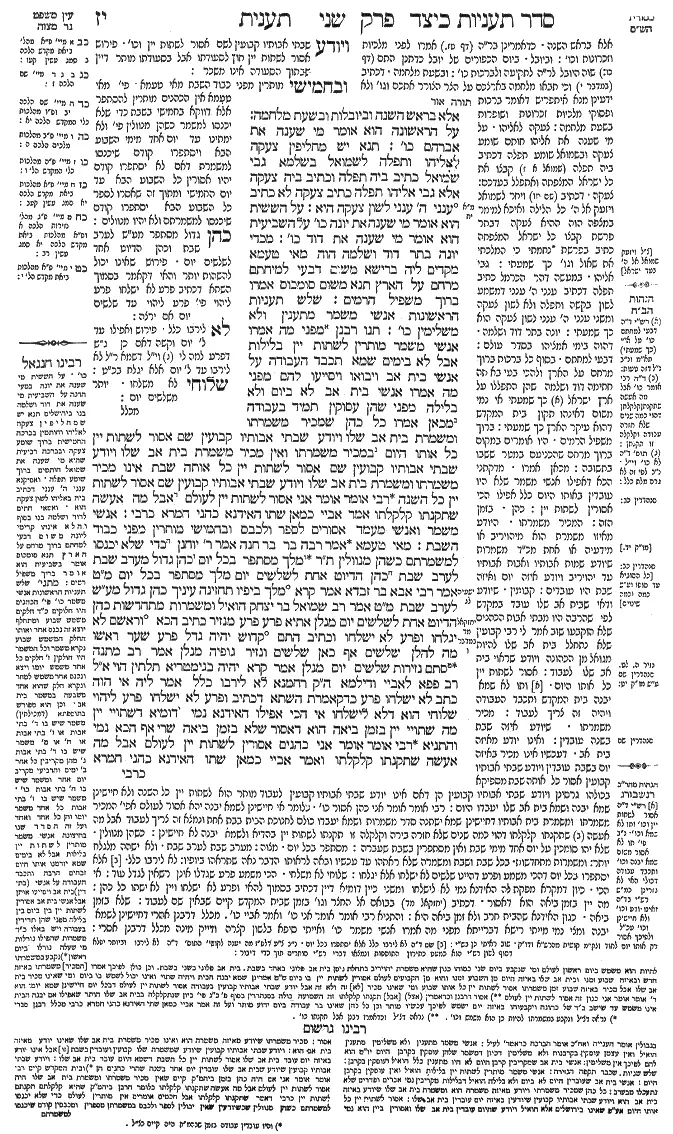
Ta'anit 17a - Guemara
אלא בראש השנה וביובלות ובשעת מלחמה:
על הראשונה הוא אומר מי שענה את אברהם כו':
תנא יש מחליפין צעקה לאליהו ותפלה לשמואל בשלמא גבי שמואל כתיב ביה תפלה וכתיב ביה צעקה אלא גבי אליהו תפלה כתיב צעקה לא כתיב (מלכים א יח, לז) ענני ה' ענני לשון צעקה היא:
על הששית הוא אומר מי שענה את יונה כו' על השביעית הוא אומר מי שענה את דוד כו':
מכדי יונה בתר דוד ושלמה הוה מאי טעמא מקדים ליה ברישא משום דבעי למיחתם מרחם על הארץ תנא משום סומכוס אמרו ברוך משפיל הרמים:
שלש תעניות הראשונות אנשי משמר מתענין ולא משלימין כו':
תנו רבנן מפני מה אמרו אנשי משמר מותרין לשתות יין בלילות אבל לא בימים שמא תכבד העבודה על אנשי בית אב ויבואו ויסייעו להם מפני מה אמרו אנשי בית אב לא ביום ולא בלילה מפני שהן עסוקין תמיד בעבודה מכאן אמרו כל כהן שמכיר משמרתו ומשמרת בית אב שלו ויודע שבתי אבותיו קבועין שם אסור לשתות יין כל אותו היום במכיר משמרתו ואין מכיר משמרת בית אב שלו ויודע שבתי אבותיו קבועין שם אסור לשתות יין כל אותה שבת אינו מכיר משמרתו ומשמרת בית אב שלו ויודע שבתי אבותיו קבועין שם אסור לשתות יין כל השנה רבי אומר אומר אני אסור לשתות יין לעולם אבל מה אעשה שתקנתו קלקלתו אמר אביי כמאן שתו האידנא כהני חמרא כרבי:
אנשי משמר ואנשי מעמד אסורים לספר ולכבס ובחמישי מותרין מפני כבוד השבת:
מאי טעמא אמר רבה בר בר חנה אמר ר' יוחנן כדי שלא יכנסו למשמרתם כשהן מנוולין ת"ר מלך מסתפר בכל יום כהן גדול מערב שבת לערב שבת כהן הדיוט אחת לשלשים יום מלך מסתפר בכל יום מ"ט אמר רבי אבא בר זבדא אמר קרא (ישעיהו לג, יז) מלך ביפיו תחזינה עיניך כהן גדול מע"ש לערב שבת מ"ט אמר רב שמואל בר יצחק הואיל ומשמרות מתחדשות כהן הדיוט אחת לשלשים יום מנלן אתיא פרע פרע מנזיר כתיב הכא (יחזקאל מד, כ) וראשם לא יגלחו ופרע לא ישלחו וכתיב התם (במדבר ו, ה) קדוש יהיה גדל פרע שער ראשו מה להלן שלשים אף כאן שלשים ונזיר גופיה מנלן אמר רב מתנה סתם נזירות שלשים יום מנלן אמר קרא יהיה בגימטריא תלתין הוי א"ל רב פפא לאביי ודילמא ה"ק רחמנא לא לירבו כלל אמר ליה אי הוה כתב לא ישלחו פרע כדקאמרת השתא דכתיב ופרע לא ישלחו פרע ליהוי שלוחי הוא דלא לישלחו אי הכי אפילו האידנא נמי דומיא דשתויי יין מה שתויי יין בזמן ביאה הוא דאסור שלא בזמן ביאה שרי אף הכא נמי והתניא רבי אומר אומר אני כהנים אסורין לשתות יין לעולם אבל מה אעשה שתקנתו קלקלתו ואמר אביי כמאן שתו האידנא כהני חמרא
Comments from Rashi on Masechet Ta'anit Page 17a
אלא בראש השנה . כדאמרינן בר"ה (דף טז.) אמרו לפני מלכיות וזכרונות וכו': וביובל . ביום הכפורים של יובל כדתנן התם (דף כו:) שוה היובל לר"ה לתקיעה ולברכות כו': ובשעת מלחמה . דכתיב (במדבר י) וכי תבאו מלחמה בארצכם על הצר הצורר אתכם וגו' ולא ידעינן מנא איתפריש דאומר ברכות ופסוקי מלכיות זכרונות ושופרות בשעת מלחמה: צעקה לאליהו . על מי שענה את אליהו חותם שומע צעקה ובשמואל שומע תפלה דכתיב ביה תפלה (שמואל א ז) קבצו את כל ישראל המצפתה ואתפלל בעדכם: צעקה . דכתיב (שם טו) ויחר לשמואל ויזעק אל ה' כל הלילה ואיכא למימר במצפה הוה ההיא צעקה דבתר פרשת קבצו כל ישראל המצפתה כתיב בפרשת נחמתי כי המלכתי את שאול וגו' כך שמעתי: גבי אליהו . במעשה דהר הכרמל כתיב תפלה דכתיב ענני ה' ענני דמשמע לשון בקשה ותפלה ולא לשון צעקה ומשני ענני ה' ענני לשון צעקה הוא כך שמעתי: יונה בתר דוד ושלמה . דהוה בימי אמציהו בסדר עולם: דבעי למחתם . בסוף כל ברכות ברוך מרחם על הארץ ולהכי בעי באותה חתימה דוד ושלמה שהן התפללו על ארץ ישראל כך שמעתי אי נמי משום דאינהו תקון בית המקדש דהוא עיקר הארץ כך שמעתי: ברוך משפיל הרמים . היו אומרים במקום ברוך מרחם שהכניעם במטר ששבו בתשובה: מכאן אמרו . מדקתני הכא דאפילו אנשי משמר שלא היו עובדין באותו היום כלל אפילו הכי אסורין לשתות יין: כהן . בזמן הזה: המכיר משמרתו . היודע מאיזו משמרת הוא מיהויריב או מידעיה או אחת מכ"ד משמרות שיודע שמות אבותיו ואבות אבותיו עד יהויריב ויודע איזה יום ואיזה שבת היו עובדים: קבועין . שיודע ודאי שבית אב שלו עובד במקדש לפי שהרבה היו מבתי אבות הכהנים שלא הוקבעו שוב אמר לי רבי קבועין שלא נתחלל בית אב שלו להיות מגואל מן הכהונה ויודע שראוי בית אב שלו לעבוד: אסור לשתות יין כל אותו היום . ותו לא שמא יבנה בית המקדש ותכבד העבודה ויהיה זה צריך לעבוד: מכיר משמרתו . שיודע איזה שבת בשנה עובדין: ואינו יודע מאיזה בית אב . דעכשיו אינו מכיר באיזה יום בשבת עובדין ויודע שבתי אבותיו קבועין אסור כל אותה שבת מספיקא בכולהו גרסינן ויודע שבתי אבותיו קבועין הן דאם אינו יודע שבתי אבותיו קבועין לעבוד מותר הוא לשתות יין כל השנה ולא חיישינן שמא יבנה ושמא בית אב שלו יעבדו היום: ואינו יודע מאיזה בית אב . דעכשיו אינו מכיר באיזה יום בשבת עובדין ויודע שבתי אבותיו קבועין אסור כל אותה שבת מספיקא בכולהו גרסינן ויודע שבתי אבותיו קבועין הן דאם אינו יודע שבתי אבותיו קבועין לעבוד מותר הוא לשתות יין כל השנה ולא חיישינן שמא יבנה ושמא בית אב שלו יעבדו היום: רבי אומר אומר אני כהן אסור כו' . כלומר אי חיישינן לשמא יבנה יהא אסור לעולם אפי' המכיר משמרתו ומשמרת בית אבותיו דחיישינן שמא ישתנה סדר משמרות ושמא יעבדו כולם לחנוכת הבית בבת אחת ונמצא זה צריך לעבוד אבל מה אעשה שתקנתו קלקלתו דהוי כמה שנים שלא חזרה בירה וקלקלה זו תקנתו לשתות יין בהדיא ולשמא יבנה לא חיישינן: כשהן מנוולין . שלא יהו סומכין על יום אחד מימי שבת ואין מסתפרין בשבת שעברה: מסתפר בכל יום . מצוה: מערב שבת לערב שבת . ולא ישהה מלגלח יותר: ומשמרות מתחדשות . בכל שבת ושבת ומשמרה שלא ראתהו עד עכשיו ובאה לראותו הדבר נאה שתראהו ביופיו: לא לירבו כלל . אלא יסתפרו בכל יום דהכי משמע ופרע דהיינו שלשים לא ישלחו אלא יגלחו: שלוחי לא משלחי . הכי משמע פרע שגדלו אינן רשאין לגדל עוד: אי הכי . כיון דמקרא מפקת לה האידנא נמי לא לישלחו ומשני כיין דומיא דיין דכתיב בסמוך להאי ופרע לא ישלחו ויין לא ישתו כל כהן: מה יין בזמן ביאה הוא דאסור . דכתיב (יחזקאל מד) בבואם אל החצר וגו' בזמן שבית המקדש קיים שבאין שם לעבוד: שלא בזמן ביאה . כגון האידנא שהבית חרב ולא זמן ביאה היא: והתניא רבי אומר אומר אני כו' ואמר אביי כו' מכלל דרבנן אסרי . דחיישינן לשמא יבנה ומצי נמי מייתי רישא דברייתא מפני מה אמרו אנשי משמר כו' ואייתי סיפא בלשון קצרה ודייק מינה מכלל דרבנן אסרי:
Comments from Tosafot - Ta'anit 17a
ויודע שבתי אבותיו קבועין לשם אסור לשתות יין וכו'. פירוש אסור לשתות יין חוץ לסעודתו אבל בסעודתו מותר דיין שבתוך הסעודה אינו משכר: ובחמישי מותרין מפני כבוד השבת מאי טעמא. פי' מאי טעמא אין הכהנים מותרין להסתפר אלא דווקא בחמישי בשבת כדי שלא יכנסו למשמר כשהן מנוולין פי' ולא ימתינו עד יום אחד מימי השבוע הבא ויסתפרו קודם שיכנסו למשמרת דאם לא יסתפרו קודם יהיו אסורין כל השבוע הבא עד יום החמישי ומתוך זה שאסרו לספר כל השבוע הבא יסתפרו קודם שיכנסו למשמרתם ולא יהיו מנוולים: כהן גדול מסתפר מע"ש לערב שבת וכהן הדיוט אחד לשלשים יום כהן גדול מסתפר מע"ש לערב שבת וכהן הדיוט אחד לשלשים יום. פירוש שאינו יכול להשהות יותר והאי דקאמר בסמוך השתא דכתיב פרע לא ישלחו פרע ליהוי פי' פרע ליהוי עד שלשים יום אם ירצה: לא לירבו כלל. פירוש ואפילו עד ל' יום וקשה דאם כן ג"ש דפרע למה לי וי"ל דשמא ר"ל לא לירבו עד ל' יום אלא יגלח בכ"ט: שלוחי לא משלחו. יותר משלשים יום:
Ta'anit 17a - Mishnah translated into english
only on Rosh HaShana, and on Yom Kippur of Jubilee Years, and in a time of war.
§ The mishna teaches: For the first blessing he recites: He Who answered Abraham. It was taught in a baraita: Some reverse the order of the conclusion of two blessings, by reciting: Who hears cries, in the fifth blessing, which deals with Elijah, and the conclusion: Who hears prayer, in the blessing of Samuel. The Gemara asks: Granted, with regard to Samuel both options are appropriate, as it is written concerning him: Prayer, and it is likewise written concerning him: Crying. One verse states: “And Samuel said: Gather all of Israel to Mizpah, and I will pray for you to the Lord” (I Samuel 7:5), while another verse states: “And Samuel cried to the Lord for Israel” (I Samuel 7:9).
However, with regard to Elijah, although prayer is written, as it says: “Elijah the prophet came near and said: Lord, the God of Abraham, of Isaac, and of Israel” (I Kings 18:36), which is referring to a prayer, crying is not written. How, then, can one conclude a blessing that deals with Elijah by mentioning crying? The Gemara answers that Elijah’s statement: “Answer me, Lord, answer me” (I Kings 18:37), is an expression of crying, even if the term crying does not itself actually appear.
§ The mishna further teaches: For the sixth he recites: He Who answered Jonah; for the seventh he recites: He Who answered David. The Gemara asks: Since Jonah was after David and Solomon, what is the reason that the tanna mentions Jonah first? The Gemara answers: The reason is due to the fact that he wants to conclude the series with: Blessed are You, Lord, Who has mercy on the Land. Therefore, the last blessing mentions David and Solomon, who were kings of Eretz Yisrael and prayed on its behalf. It was taught in the name of Sumakhos that they said he concludes the final blessing with: Blessed are You, Lord, Who humbles the exalted.
§ The mishna teaches that on the first three fasts, the members of the priestly watch fast but do not complete their fasts until nightfall. The mishna then proceeds to cite other halakhot that deal with the members of the priestly watch and the patrilineal family. The Sages taught: For what reason did they say that the members of the priestly watch are permitted to drink wine at nights but not during the days? They said this lest on a certain day the Temple service becomes burdensome for the members of the patrilineal family, and the members of the priestly watch are called to come and assist them. Therefore, it is prohibited for them to drink wine during the day, when their help might be needed, so that they do not enter the Temple after drinking wine.
The baraita continues to explain the reason for the mishna’s ruling. For what reason did they say that the members of the patrilineal family may not drink wine, neither by day nor by night? Because they are constantly engaged in the Temple service.
From here the Sages stated: Even nowadays, after the destruction of the Temple, with regard to any priest who knows his priestly watch, in which his family served, and the watch of his patrilineal family, and he knows that the family of his forefathers was established as fit for the Temple service there, it is prohibited for him to drink wine that entire day, in the event that the Temple is rebuilt on that day and he will be called to return to the service. In the case of a priest who knows his priestly watch, i.e., the week of the year in which his family served, and does not know the watch of his patrilineal family, the day of the week that his family served, but he knows that the family of his forefathers was established there, it is prohibited for him to drink wine that entire week.
Finally, if he does not know his priestly watch or the watch of his patrilineal family, but he knows that the family of his forefathers was established there, he is prohibited to drink wine that entire year. When the Temple will be rebuilt, his priestly watch might be called upon to serve, and he is unaware of the appointed time for his Temple service.
Rabbi Yehuda HaNasi says: I say that in accordance with this reasoning it is prohibited for any priest to drink wine at any time, even if he knows his priestly watch, as the order of the watches might change when the Temple is rebuilt, or perhaps all the watches will participate in the rededication of Temple. However, what can I do, as his misfortune is his advantage? The unfortunate fact that so many years have passed since the destruction of the Temple means that this decree prohibiting the priests from drinking cannot be sustained. Abaye said: In accordance with whose opinion do priests drink wine nowadays? It is in accordance with the opinion of Rabbi Yehuda HaNasi.
§ The mishna teaches: It is prohibited for both the members of the priestly watch and the members of the non-priestly watch to cut their hair or launder their garments throughout the week, but on Thursday they are permitted to cut their hair and launder their clothes in deference to Shabbat. The Gemara asks: What is the reason for these prohibitions? Rabba bar bar Ḥana said that Rabbi Yoḥanan said: These prohibitions were enacted in order to ensure that the priests will cut their hair and launder their clothes during the week before their service, so that they will not enter their priestly watch when they are unkempt.
The Sages taught: A king cuts his hair every day, a High Priest cuts his hair every Friday, and a common priest once every thirty days. The Gemara clarifies: A king cuts his hair every day. What is the reason for this? Rabbi Abba bar Zavda said that the verse states: “Your eyes shall see the king in his beauty” (Isaiah 33:17), which indicates that a king must always look his best. A High Priest cuts his hair every Friday. The Gemara asks: What is the reason for this? Rav Shmuel bar Yitzḥak said: Since the watches are renewed and changed every Friday, it is fitting for every watch to see the High Priest with his hair perfectly groomed.
§ A common priest cuts his hair once every thirty days. The Gemara asks: From where do we derive this number? It is derived by a verbal analogy from the word pera with regard to priests and pera in connection with a nazirite. It is written here, concerning priests: “Neither shall they shave their heads, nor suffer their locks [pera] to grow long” (Ezekiel 44:20), and it is written there, with regard to a nazirite: “He shall be sacred, he shall let the locks [pera] of the hair of his head grow long” (Numbers 6:5). Just as there, a nazirite who does not specify any other time period cuts his hair after thirty days, so too here, a priest cuts his hair every thirty days.
The Gemara asks: And a nazirite himself, from where do we derive that he may not cut his hair for thirty days? Rav Mattana said: It is a principle that an unspecified naziriteship lasts thirty days. The Gemara inquires: From where do we derive this principle? The Gemara answers that the verse states: “He shall be [yihye] sacred” (Numbers 6:5), and the numerical value [gimatriya] of yihye is thirty. Rav Pappa said to Abaye: But perhaps this is what the Merciful One is saying in the Torah: They should not grow their hair at all, as they must cut it every day. Abaye said to him: If it were written: They shall not grow long their locks, I might have explained as you originally said. Now that it is written: “Nor suffer their locks to grow long,” this indicates that they may have locks, but they may not let them grow long.
The Gemara asks: If it is so that cutting one’s hair is a necessary preparation for the Temple service by Torah law, then even nowadays priests should cut their hair every thirty days as well, in case the Temple is rebuilt and they must resume their service. The Gemara answers: This issue is similar to the prohibition concerning those who have drunk wine. Just as with regard to those who have drunk wine, it is when one enters the Temple that it is prohibited, whereas when one does not enter the Temple it is permitted to drink wine, here the same also applies.
The Gemara questions this conclusion: But isn’t it taught in the aforementioned baraita that Rabbi Yehuda HaNasi says: I say that it is prohibited for all priests to drink wine at any time. However, what can I do, as his misfortune is his advantage? And Abaye said: In accordance with whose opinion do priests drink wine nowadays?
Traduction : The William Davidson digital edition of the Koren Noé Talmud, with commentary by Rabbi Adin Even-Israel Steinsaltz.