 Talmud Bavli
The learning on the whole site is dedicated : L'ilui Nishmat Yaakov ben Myriam
The learning on the whole site is dedicated : L'ilui Nishmat Margalit bat Ledicia
The learning on the whole site is dedicated : L'ilui Nishmat Jacques Isaac Ben Amram Loubaton
Ta'anit 27a : Youtube
Daf TubeYoutube
4 video classes :
Ta'anit Page 27a
Ta'anit 27a - Guemara
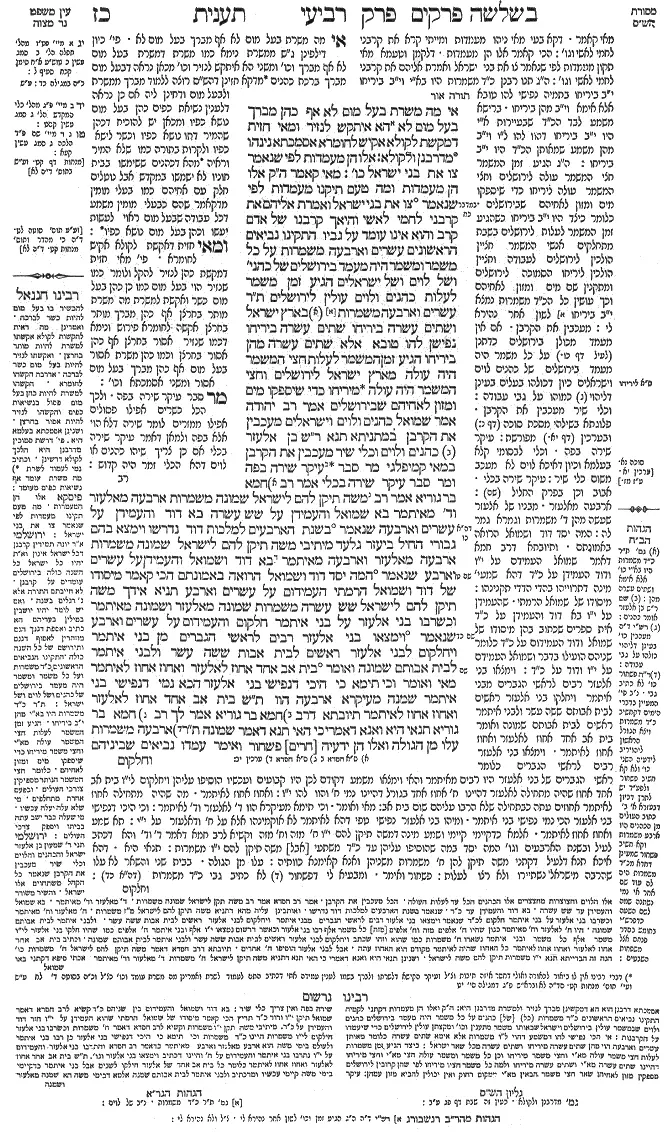
אי מה משרת בעל מום לא אף כהן מברך בעל מום לא הא איתקש לנזיר ומאי חזית דמקשת לקולא אקיש לחומרא אסמכתא נינהו מדרבנן ולקולא:
אלו הן מעמדות לפי שנאמר צו את בני ישראל כו':
מאי קאמר ה"ק אלו הן מעמדות ומה טעם תיקנו מעמדות לפי שנאמר (במדבר כח, ב) צו את בני ישראל ואמרת אליהם את קרבני לחמי לאשי והיאך קרבנו של אדם קרב והוא אינו עומד על גביו התקינו נביאים הראשונים עשרים וארבעה משמרות על כל משמר ומשמר היה מעמד בירושלים של כהני' ושל לוים ושל ישראלים הגיע זמן משמר לעלות כהנים ולוים עולין לירושלים ת"ר עשרים וארבעה משמרות בארץ ישראל ושתים עשרה ביריחו שתים עשרה ביריחו נפישן להו טובא אלא שתים עשרה מהן ביריחו הגיע זמן המשמר לעלות חצי המשמר היה עולה מארץ ישראל לירושלים וחצי המשמר היה עולה מיריחו כדי שיספקו מים ומזון לאחיהם שבירושלים אמר רב יהודה אמר שמואל כהנים ולוים וישראלים מעכבין את הקרבן במתניתא תנא ר"ש בן אלעזר כהנים ולוים וכלי שיר מעכבין את הקרבן במאי קמיפלגי מר סבר עיקר שירה בפה ומר סבר עיקר שירה בכלי אמר רב חמא בר גוריא אמר רב משה תיקן להם לישראל שמונה משמרות ארבעה מאלעזר וד' מאיתמר בא שמואל והעמידן על שש עשרה בא דוד והעמידן על עשרים וארבעה שנאמר (דברי הימים א כו, לא) בשנת הארבעים למלכות דוד נדרשו וימצא בהם גבורי החיל ביעזר גלעד מיתיבי משה תיקן להם לישראל שמונה משמרות ארבעה מאלעזר וארבעה מאיתמר בא דוד ושמואל והעמידן על עשרים וארבע שנאמר (דברי הימים א ט, כב) המה יסד דוד ושמואל הרואה באמונתם הכי קאמר מיסודו של דוד ושמואל הרמתי העמידום על עשרים וארבע תניא אידך משה תיקן להם לישראל שש עשרה משמרות שמונה מאלעזר ושמונה מאיתמר וכשרבו בני אלעזר על בני איתמר חלקום והעמידום על עשרים וארבע שנאמר (דברי הימים א כד, ד) וימצאו בני אלעזר רבים לראשי הגברים מן בני איתמר ויחלקום לבני אלעזר ראשים לבית אבות ששה עשר ולבני איתמר לבית אבותם שמונה ואומר (דברי הימים א כד, ו) בית אב אחד אחוז לאלעזר ואחוז אחוז לאיתמר מאי ואומר וכי תימא כי היכי דנפישי בני אלעזר הכא נמי דנפישי בני איתמר שמנה מעיקרא ארבעה הוו ת"ש בית אב אחד אחוז לאלעזר ואחוז אחוז לאיתמר תיובתא דרב חמא בר גוריא אמר לך רב חמא בר גוריא תנאי היא ואנא דאמרי כי האי תנא דאמר שמונה ת"ר ארבעה משמרות עלו מן הגולה ואלו הן ידעיה [חרים] פשחור ואימר עמדו נביאים שביניהם
Comments from Rashi on Masechet Ta'anit Page 27a
מאי קאמר . דקא בעי מאי ניהו מעמדות ומייתי קרא את קרבני לחמי לאשי וגו': הכי קאמר אלו הן מעמדות . דלקמן וטעמא מאי תקון מעמדות לפי שנאמר צו את בני ישראל ואמרת אליהם את קרבני לחמי לאשי וגו': ה"ג תנו רבנן כ"ד משמרות היו בא"י וי"ב ביריחו י"ב ביריחו בתמיה נפישי להו טובא אלא אימא וי"ב מהן ביריחו . ברישא משמע לבד הכ"ד שבעיירות א"י היו י"ב ביריחו דהוו להו ל"ו וי"ב מהן משמע שמאותן הכ"ד היו י"ב ביריחו: ה"ג הגיע זמן המשמר חצי המשמר עולה לירושלים וחצי המשמר עולה ליריחו כדי שיספקו מים ומזון לאחיהם שבירושלים . כלומר כיצד היו י"ב ביריחו כשהגיע זמן המשמר לעלות לירושלים בשבת מתחלקים אנשי המשמר חציין הולכין לירושלים לעבודה וחציין הולכין ליריחו הסמוכה לירושלים ומתקנין שם מים ומזון לאחיהם וכך עושין כל הכ"ד משמרות נמצא י"ב ביריחו לשון אחר נהירא לי: מעכבין את הקרבן . אם אין מעמד מכולן בירושלים כדתנן (לעיל תענית דף כו.) על כל משמר היה מעמד בירושלים של כהנים לוים וישראלים כיון דכולהו בעלים בעינן דליהוי כמוהו על גבי עבודה: וכלי שיר מעכבין את הקרבן . פלוגתא בשילהי מסכת סוכה (דף נ:) ובערכין (דף יא.) מפורשת: עיקר שירה בפה . וכלי לבסומי קלא בעלמא וכיון דאיכא לוים לא מעכב משום כלי שיר: עיקר שירה בכלי . אבוב וכן בפרק החליל (שם): ארבעה מאלעזר . מבניו של אלעזר שעשה מהן ד' משמרות וגמרא גמר לה: המה יסד דוד ושמואל הרואה באמונתם . ותיובתא דרב חמא דאמר שמואל העמידם על י"ו ודוד העמידן על כ"ד דהא שמעי' מינה דתרוייהו בהדי הדדי תקנינהו: מיסודו של שמואל הרמתי . שהעמידן על י"ו בא דוד והעמידן על כ"ד אית ספרים שכתוב בהן מיסודו של שמואל ודוד העמידום על כ"ד כלומר שניהם הועילו בדבר ושמואל העמידם על י"ו ודוד על כ"ד: וימצאו בני אלעזר רבים לראשי הגברים מבני איתמר ויחלקו בני אלעזר ראשים לבית אבותם ששה עשר ולבני איתמר ראשים לבית אבותם שמונה ואומר בית אב אחד אחוז לאלעזר ואחוז אחוז לאיתמר . וימצאו בני אלעזר רבים לראשי הגברים כלומר ראשי הגברים של בני אלעזר היו רבים מאיתמר והאי וימצאו משמע דקודם לכן היו קבועים ועכשיו הוסיפו עליהן ויחלקום לי"ו בית אב אחד אחוז שהיה מתחילה לאלעזר דהיינו ח' אחוז אחד בגורל דהיינו נמי ח' והוו להו י"ו: ואחוז אחוז לאיתמר . מה שהיה מתחילה אחוז לאיתמר אחוזים עתה כבתחילה שלא הרבו עליהם שום בית אב: מאי ואומר . וכי תימא מעיקרא הוו ד' לאלעזר וד' לאיתמר: וכי היכי דנפישי בני אלעזר הכי נמי נפישי בני איתמר . ומיהו בני אלעזר נפישי טפי דהא לאיתמר לא אוקמינהו אלא על ח' ודאלעזר על י"ו: תא שמע ואחוז אחוז לאיתמר . אלמא כדקיימי קיימי ושמע מינה דמשה תיקן להם י"ו ח' מזה וח' מזה וקשיא לרב חמא דאמר ד' וד' והא דכתב לעיל ובשנת הארבעים וגו' המה יסד במה שהוסיפו עליהן עד כ"ד משתעי [אבל] משה תיקן להם י"ו משמרות: תא שמע ואחוז אחוז לאיתמר . אלמא כדקיימי קיימי ושמע מינה דמשה תיקן להם י"ו ח' מזה וח' מזה וקשיא לרב חמא דאמר ד' וד' והא דכתב לעיל ובשנת הארבעים וגו' המה יסד במה שהוסיפו עליהן עד כ"ד משתעי [אבל] משה תיקן להם י"ו משמרות: תנאי היא . דהא איכא תנא דלעיל דקתני משה תיקן להן ח' משמרות משניהן ואנא קאימנא כוותיה: עלו מן הגולה . בבית שני והשאר לא עלו שהרבה מישראל נשתיירו ולא רצו לעלות: פשחור ואימר . ומבעיא לי דפשחור לא כתיב גבי כ"ד משמרות (דברי הימים א כד):
Comments from Tosafot - Ta'anit 27a
אי מה משרת בעל מום לא אף מברך בעל מום לא. פי' כיון דילפינן ג"ש ממשרת נימא כמו משרת דמשרת בעל מום לא אף מברך וכו' ומשני הא איתקש לנזיר וכו' מכאן נראה דבעל מום מברך ברכת כהנים מדקא חזינן דהש"ס רוצה ללמוד מברך ממשרת ולבעל מום ודחינן ליה אם כן נראה דלענין נשיאת כפים כהן בעל מום נושא כפיו ומכאן יש להוכיח דכהן שהמיר דתו נושא כפיו וכשר לישא כפיו ולקרות בתורה כמו שלא המיר וראיה מהא דכהנים ששימשו בבית חוניו לא ישמשו במקדש אבל נוטלים חלק עם אחיהם כמו בעלי מומין מדקאמר שהם כבעלי מומין משמע דכל עבודה שבעל מום ראוי לעשות יעשו וכהן בעל מום נושא כפיו: ומאי חזית דאקשת לקולא אקיש לחומרא. פי' מאי חזית דמקשת כהן לנזיר להקל ולומר כמו שנזיר הוי בעל מום כמו כן כהן בעל מום כשר ואקשת למשרת מה משרת מותר בחרצן אף כהן מברך מותר בחרצן אקשה לחומרא פירוש ונימא דכמו שנזיר אסור בחרצן אף כהן אסור בחרצן וכמו כהן משרת אסור בעל מום אף כהן מברך בעל מום אסור ומשני אסמכתא וכו': מר סבר עיקר שירה בפה. ולכך הכל כשרים אפילו פסולים אפילו ממזרים לומר שירה דלא הוי אלא בפה ולמאן דאמר עיקר שירה בכלי אם כן צריך שיהו כהנים או לוים דהא הכלי זמר היה קדוש:
Ta'anit 27a - Mishnah translated into english
The Gemara asks: If so, then just as a priest who ministers in the Temple may not be physically blemished, so too, a priest who recites the benediction may not be blemished. The Gemara rejects this suggestion: The priest who recites the benediction is also juxtaposed to a nazirite, who is not affected by a blemish.
The Gemara asks: And what did you see that you juxtaposed the cases in favor of a leniency? Perhaps you should juxtapose for a stringency, by comparing the priest who recites the benediction to a nazirite with regard to grape pits, and comparing him to a priest ministering in the Temple in relation to the prohibition against reciting the benediction if he has a physical blemish. The Gemara explains: These proofs are cited merely as support for halakhot that apply by rabbinic law, and consequently, they are interpreted as a leniency, not a stringency.
§ The mishna taught that these are the non-priestly watches: Since it is stated: “Command the children of Israel.” The Gemara asks: What is the mishna saying about the non-priestly watches? How does the verse relate to the watches? The Gemara explains that the mishna is saying as follows: These are the non-priestly watches, which will be explained later. And what is the reason that they instituted non-priestly watches? Since it is stated: “Command the children of Israel and say to them: My offering of food, which is presented to Me made by a fire, of a sweet savor to Me, you shall observe to sacrifice to Me in their due season” (Numbers 28:2).
The mishna continues: But how can a person’s offering be sacrificed when he is not standing next to it? The early prophets, Samuel and David, instituted twenty-four priestly watches. For each and every priestly watch there was a corresponding watch in Jerusalem of priests, Levites, and Israelites. When the time arrived for the members of a certain priestly watch to ascend, the priests and Levites of that watch would ascend to Jerusalem.
The Sages taught: There were twenty-four priestly watches in Eretz Yisrael, and twelve in Jericho. The Gemara expresses surprise at this statement: Twelve in Jericho? In that case there are too many of them, as this makes a total of thirty-six watches. Rather, the baraita should be read as follows: There were twenty-four in total, twelve of which were in Jericho. How so? When the time arrived for the members of a certain priestly watch to ascend, half the priestly watch would ascend from all over Eretz Yisrael to Jerusalem, and half the priestly watch would ascend from Jericho, in order to provide water and food to their brothers in Jerusalem from Jericho.
Rav Yehuda said that Shmuel said: Priests, Levites, and Israelites are all indispensable for the offering, and consequently, they all must be present when the daily offering is sacrificed. It is taught in a baraita that Rabbi Shimon ben Elazar says: Priests, Levites, and musical instruments are indispensable for the offering. The Gemara asks: With regard to what principle do they disagree? One Sage, Shmuel, holds that the main aspect of the Levites’ song that accompanied the offerings is vocal, and one Sage, Rabbi Shimon ben Elazar, holds that the main aspect of their song is instrumental, performed with a vessel, and therefore both the Levites and their instruments must be present for the daily offering.
Rav Ḥama bar Gurya said that Rav said: Moses initially instituted for the Jews eight priestly watches, four from the descendants of Elazar and four from the descendants of Itamar. Samuel came and established them as sixteen, and David came and established them as twenty-four, as it is stated, after the watches are listed: “In the fortieth year of the reign of David they were sought for, and there were found among them mighty men of valor at Jazer of Gilead” (I Chronicles 26:31).
The Gemara raises an objection against this opinion from a baraita. Moses instituted for the Jews eight priestly watches, four from Elazar and four from Itamar. And David and Samuel came and established them as twenty-four, as it is stated: “Whom David and Samuel the seer ordained in their set office” (I Chronicles 9:22). This baraita indicates that David and Samuel together established the twenty-four watches. The Gemara explains: This is what the baraita is saying: Through their ordination by David and Samuel of Rama the priestly watches incrementally increased in number until they established them as twenty-four.
It is taught in another baraita: Moses instituted for the Jews sixteen priestly watches, eight from Elazar and eight from Itamar. And when the descendants of Elazar grew more numerous than the descendants of Itamar, he divided the descendants of Elazar and established them together with the descendants of Itamar as twenty-four watches, as it is stated: “And there were more chief men found of the sons of Elazar than of the sons of Itamar, and they were divided thus: Of the sons of Elazar there were sixteen heads of fathers’ houses, and of the sons of Itamar, according to their fathers’ houses, eight” (I Chronicles 24:4). And it says: “One father’s house taken for Elazar, and proportionately for Itamar” (I Chronicles 24:6).
The Gemara asks: What is: And it says? Why was it necessary to quote a second verse? The Gemara explains: And if you would say that just as the descendants of Elazar increased, so too, the descendants of Itamar increased, and the eight watches were initially four, as claimed by Rav Ḥama bar Gurya, then come and hear: “One father’s house taken for Elazar, and proportionately for Itamar,” which indicates that the descendants of Itamar remained as they were. This verse is apparently a conclusive refutation of the opinion of Rav Ḥama bar Gurya, who says that Moses established only eight priestly watches.
The Gemara responds: Rav Ḥama bar Gurya could have said to you that the initial order of the priestly watches is a dispute between tanna’im, as indicated by the previous baraita, and I stated my opinion in accordance with that tanna who said that Moses instituted eight priestly watches.
The Sages taught: Only four priestly watches ascended from the Babylonian exile, while the other twenty stayed in Babylonia. And these are the watches who returned: The descendants of Jedaiah, Harim, Pashhur, and Immer. The prophets among those who returned arose
Traduction : The William Davidson digital edition of the Koren Noé Talmud, with commentary by Rabbi Adin Even-Israel Steinsaltz.