 Talmud Bavli
The learning on the whole site is dedicated : L'ilui Nishmat Yaakov ben Myriam
The learning on the whole site is dedicated : L'ilui Nishmat אסתר בת חיים
The learning on the whole site is dedicated : L'ilui Nishmat Ledicia bat David Banoun
Ta'anit 28a : Youtube
Daf TubeYoutube
4 video classes :
Ta'anit Page 28a
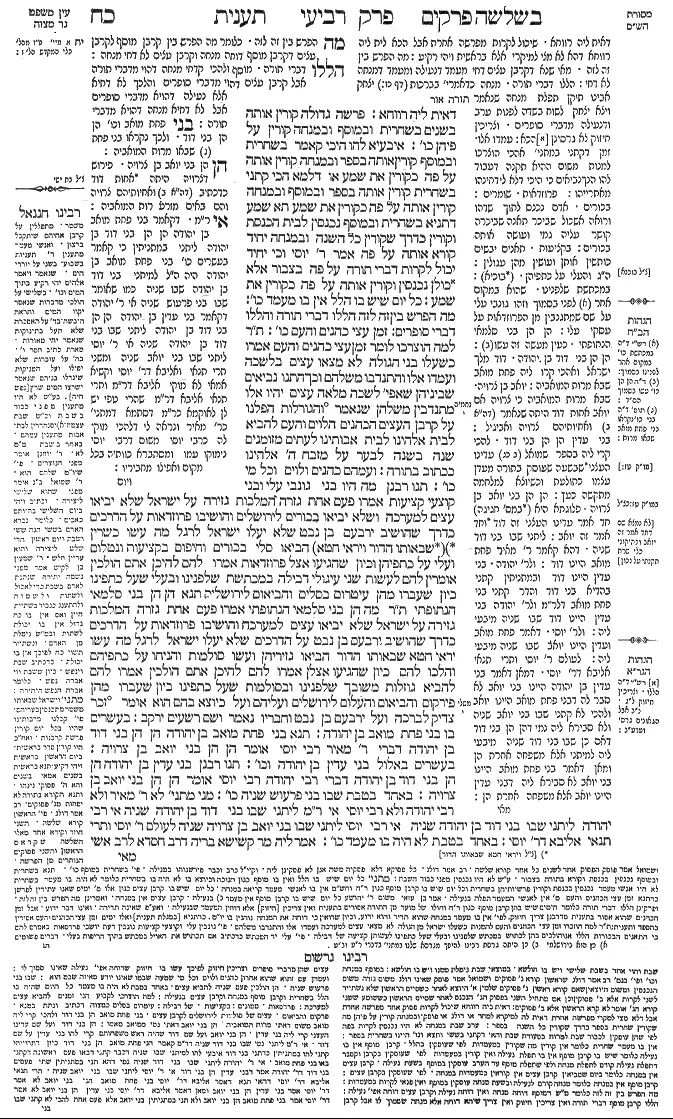
Ta'anit 28a - Guemara
דאית ליה רווחא:
פרשה גדולה קורין אותה בשנים בשחרית ובמוסף ובמנחה קורין על פיהן כו':
איבעיא להו היכי קאמר בשחרית ובמוסף קורין אותה בספר ובמנחה קורין אותה על פה כקורין את שמע או דלמא הכי קתני בשחרית קורין אותה בספר ובמוסף ובמנחה קורין אותה על פה כקורין את שמע תא שמע דתניא בשחרית ובמוסף נכנסין לבית הכנסת וקורין כדרך שקורין כל השנה ובמנחה יחיד קורא אותה על פה אמר ר' יוסי וכי יחיד יכול לקרות דברי תורה על פה בצבור אלא כולן נכנסין וקורין אותה על פה כקורין את שמע:
כל יום שיש בו הלל אין בו מעמד כו':
מה הפרש בין זה לזה הללו דברי תורה והללו דברי סופרים:
זמן עצי כהנים והעם כו' ת"ר למה הוצרכו לומר זמן עצי כהנים והעם אמרו כשעלו בני הגולה לא מצאו עצים בלשכה ועמדו אלו והתנדבו משלהם וכך התנו נביאים שביניהן שאפי' לשכה מלאה עצים יהיו אלו מתנדבין משלהן שנאמר (נחמיה י, לה) והגורלות הפלנו על קרבן העצים הכהנים הלוים והעם להביא לבית אלהינו לבית אבותינו לעתים מזומנים שנה בשנה לבער על מזבח ה' אלהינו ככתוב בתורה:
ועמהם כהנים ולוים וכל מי כו':
תנו רבנן מה היו בני גונבי עלי ובני קוצעי קציעות אמרו פעם אחת גזרה המלכות גזירה על ישראל שלא יביאו עצים למערכה ושלא יביאו בכורים לירושלים והושיבו פרוזדאות על הדרכים כדרך שהושיב ירבעם בן נבט שלא יעלו ישראל לרגל מה עשו כשרין (שבאותו הדור ויראי חטא) הביאו סלי בכורים וחיפום בקציעות ונטלום ועלי על כתפיהן וכיון שהגיעו אצל פרוזדאות אמרו להם להיכן אתם הולכין אומרין להם לעשות שני עיגולי דבילה במכתשת שלפנינו ובעלי שעל כתפינו כיון שעברו מהן עיטרום בסלים והביאום לירושלים תנא הן הן בני סלמאי הנתופתי ת"ר מה הן בני סלמאי הנתופתי אמרו פעם אחת גזרה המלכות גזירה על ישראל שלא יביאו עצים למערכה והושיבו פרוזדאות על הדרכים כדרך שהושיב ירבעם בן נבט על הדרכים שלא יעלו ישראל לרגל מה עשו יראי חטא שבאותו הדור הביאו גזיריהן ועשו סולמות והניחו על כתפיהם והלכו להם כיון שהגיעו אצלן אמרו להם להיכן אתם הולכין אמרו להם להביא גוזלות משובך שלפנינו ובסולמות שעל כתפינו כיון שעברו מהן פירקום והביאום והעלום לירושלים ועליהם ועל כיוצא בהם הוא אומר (משלי י, ז) זכר צדיק לברכה ועל ירבעם בן נבט וחבריו נאמר ושם רשעים ירקב:
בעשרים בו בני פחת מואב בן יהודה:
תנא בני פחת מואב בן יהודה הן הן בני דוד בן יהודה דברי ר' מאיר רבי יוסי אומר הן הן בני יואב בן צרויה:
בעשרים באלול בני עדין בן יהודה וכו' תנו רבנן בני עדין בן יהודה הן הן בני דוד בן יהודה דברי רבי יהודה רבי יוסי אומר הן הן בני יואב בן צרויה:
באחד בטבת שבו בני פרעוש שניה כו':
מני מתני' לא ר' מאיר ולא רבי יהודה ולא רבי יוסי אי ר"מ ליתני שבו בני דוד בן יהודה שניה אי רבי יהודה ליתני שבו בני דוד בן יהודה שניה אי רבי יוסי ליתני שבו בני יואב בן צרויה שניה לעולם ר' יוסי ותרי תנאי אליבא דר' יוסי:
באחד בטבת לא היה בו מעמד כו':
אמר ליה מר קשישא בריה דרב חסדא לרב אשי
Comments from Rashi on Masechet Ta'anit Page 28a
דאית ליה רווחא . שיכול לקרות מפרשה אחרת אבל הכא לית ליה רווחא דהא לא מצי למיקרי אלא בראשית ויהי רקיע: מה הפרש בין זה לזה . מאי שנא דקרבן עצים דחי מעמד דנעילה ומעמד דמנחה לא דחי: הללו דברי תורה . מנחה כדאמרי' בברכות (דף כו.) יצחק אבינו תיקן תפלת מנחה שנאמר ויצא יצחק לשוח בשדה לפנות ערב ודנעילה מדברי סופרים. וצריכין חיזוק לא גרסינן הכא: עמדו אלו . זמן דקתני במתני' אהכי הוצרכו למנות משום ההיא תקנה דעבוד להו הנך נביאים כי היכי דלא לידחינהו מאתרייהו: בכורים . אדם נכנס לתוך שדהו ורואה אשכול שביכר תאנה שביכרה קושר עליה גמי ועושה אותה בכורים: פרוזדאות . שומרים: בקציעות . תאנים יבשים כותשין אותן ועושין מהן עגולין: ה"ג והעלי על כתפיהן . (בוכיא): במכתשת שלפנינו . שהוא במקום אחר לפני בסמוך וזהו גונבי עלי על שם שמתגנבין מן הפרוזדאות על עסקי עלי: הן הן בני סלמאי הנתופתי . כעין מעשה זה עשו: הן הן בני דוד בן יהודה . דוד מלך ישראל ואהכי קרו ליה פחת מואב שבא מרות המואביה: יואב בן צרויה . שבא מרות המואביה כי צרויה אם יואב אחות דוד היתה שנאמר (דברי הימים א ב) ואחיותיהם צרויה ואביגיל: בני עדין הן הן בני דוד . להכי קרי ליה בספר שמואל (ב כג) עדינו העצני שבשעה שעוסק בתורה מעדן עצמו כתולעת וכשיוצא למלחמה מתקשה כעץ: הן הן בני יואב בן צרויה . פלוגתא היא (במס' חגיגה) חד אמר עדינו העצני זה דוד וחד אמר זה יואב: ליתני שבו בני דוד שניה . דהא קאמר ר' מאיר פחת מואב היינו דוד: ולר' יהודה . בני עדין היינו דוד ובמתניתין קתני בהדיא בני דוד והדר קתני בני פחת מואב דלר"מ ול' יהודה בני עדין היינו דוד שבו שניה מיבעי ליה: ולר' יוסי . דאמר פחת מואב ועדין היינו יואב שבו שניה מיבעי ליה: לעולם ר' יוסי ותרי תנאי אליבא דר' יוסי . דמאן דאמר בני עדין בן יהודה היינו בני יואב לא סבר לה דבני פחת מואב היינו יואב ולהכי לא קתני שבו בני יואב שניה ולא סבירא ליה נמי דהן הן בני דוד דאם כן שבו בני דוד שניה מיבעי ליה למיתני אלא משפחה אחרת הן ומאן דאמר בני פחת מואב היינו בני יואב לא סבירא ליה דבני עדין היינו יואב אלא משפחה אחרת הן:
Comments from Tosafot - Ta'anit 28a
מה הפרש בין זה לזה. כלומר מה הפרש בין קרבן מוסף לקרבן עצים דקרבן מוסף דוחה מנחה וקרבן עצים לא דחי מנחה: הללו דברי תורה. מוסף ולהכי קדחי מנחה דהוי מדברי תורה אבל קרבן עצים דהוי מדברי סופרים והלכך לא דחיא אלא נעילה דהויא מדברי סופרים אבל לא דחיא מנחה דהויא מדברי תורה: בני פחת מואב וכו' הן הן בני דוד. ולכך נקראו בני פחת שבאו מרות המואביה: הן הן בני יואב בן צרויה. פירוש דצרויה היתה אחות דוד כדכתיב (דברי הימים א ב) ואחיותיהם צרויה והם באים מזרע רות המואביה: אי ר"מ. דקאמר בני פחת מואב בן יהודה הן הן בני דוד בן יהודה ליתני במתניתין כי קאמר בעשרים כו' בני פחת מואב בן יהודה היה ה"ל למיתני בני דוד בן יהודה שבו שניה כמו שאומר שבו בני פרעוש שניה אי ר' יהודה דקאמר בני עדין בן יהודה הן הן בני דוד בן יהודה ליתני שבו בני דוד בן יהודה שניה אי ר' יוסי ליתני שבו בני יואב שניה ומשני תרי תנאי ואליבא דר' יוסי וקשיא אמאי לא מוקי אליבא דר"מ ותרי תנאי אליבא דר"מ שהרי טפי יש לן לאוקמא כר"מ דסתמא דמתני' כר' מאיר ונראה לי דלהכי מוקי לה כרבי יוסי משום דרבי יוסי נימוקו עמו ומסתברא כוותיה בכל מקום ואפילו מחביריו:
Ta'anit 28a - Mishnah translated into english
as the second reader has space, i.e., he has the option to read from the ensuing paragraph.
§ The mishna taught: A long passage is read by two people, and they read from the Torah in the morning prayer and in the additional prayer. And in the afternoon prayer they read the daily portion by heart, just as one recites Shema. A dilemma was raised before the Sages: With regard to what case is the tanna speaking? Does he mean that in the morning prayer and in the additional prayer they read the portion from a Torah scroll, but in the afternoon prayer each individual reads by heart, just as one recites Shema? Or perhaps this is what is taught: In the morning prayer they read it from a Torah scroll, but in the additional prayer and in the afternoon prayer they read it by heart, just as one recites Shema.
The Gemara suggests: Come and hear, as it is taught in a baraita: In the morning prayer and in the additional prayer they would enter the synagogue and read from the Torah in the manner that they read all year. But in the afternoon prayer, a single individual would read the portion for that day by heart. Rabbi Yosei said: But can an individual read matters of Torah by heart in the presence of the community? Rather, they all enter and read that day’s portion together, just as one recites Shema. This baraita clearly indicates that they would read by heart only in the afternoon service.
The mishna taught: On any day that has the recitation of hallel, but on which the additional offering was not sacrificed, it has no reading of the Torah by the non-priestly watch in the morning service. On days that have both hallel and an additional offering, there was no reading in the afternoon prayer. When a wood offering was brought, there was no reading in the closing prayer. The Gemara asks: What is the difference between this and that, a day on which an additional offering is sacrificed and a day on which a wood offering is brought? The Gemara explains: These days, on which an additional offering is brought, apply by Torah law, but these days, on which a wood offering is brought, apply by rabbinic law, and therefore it overrides only the closing prayer.
The mishna continues with a list of the times for the wood offering of priests and the people. The Sages taught: Why was it necessary to state the times for the wood offering of priests and the people? They said in response that this is what happened: When the people of the exile ascended to Jerusalem in the beginning of the Second Temple period, they did not find enough wood in the Temple chamber for the needs of the altar. And these families arose and donated from their own wood to the Temple.
And the prophets among them stipulated as follows, that even if the entire chamber were full of wood, the descendants of these families would donate wood from their own property on these specific days, as it is stated: “And we cast lots, the priests, the Levites and the people, for the wood offering, to bring it into the house of our God, according to our fathers’ houses, at appointed times year by year, to burn upon the altar of the Lord our God, as it is written in the Torah” (Nehemiah 10:35). Although these donations were not always necessary, it was established that all generations would observe these days.
The mishna further taught that on the fifteenth of Av, wood was brought by the descendants of Zattu ben Yehuda, and with this group were other priests and Levites, and anyone who erred with regard to his tribe, i.e., Israelites who did not know which tribe they were from, and the descendants of those who deceived the authorities with a pestle, and the descendants of those who packed dried figs. The Sages taught: Who were the descendants of those who deceived the authorities with a pestle and the descendants of those who packed dried figs?
They said in explanation: Once, the evil kingdom of Greece issued a decree of apostasy against the Jews, that they may not bring wood for the arrangement of the altar and that they may not bring first fruits to Jerusalem. And they placed guards [prozda’ot] on the roads, in the manner that Jeroboam, son of Nevat, placed guards, so that the Jews could not ascend for the pilgrim Festival.
What did the worthy and sin-fearing individuals of that generation do? They brought baskets of first fruits, and covered them with dried figs, and took them with a pestle on their shoulders. And when they reached the guards, the guards said to them: Where are you going? They said to them: We are going to prepare two round cakes of pressed figs with the mortar that is down the road before us and with the pestle that we are carrying on our shoulders. As soon as they passed the guards, they decorated the baskets of first fruits and brought them to Jerusalem.
A Sage taught: This was something that was performed in a similar manner by the descendants of Salmai of Netophat. The Gemara explains this comment by quoting a baraita. The Sages taught: Who are the descendants of Salmai of Netophat? They said in explanation: Once, the evil kingdom of Greece issued a decree of apostasy against the Jews, that they may not bring wood for the arrangement of the altar. And they placed guards on the roads, in the manner that Jeroboam, son of Nevat, placed guards, so that the Jews could not ascend for the pilgrim Festival.
What did the sin-fearing individuals of that generation do? They brought their pieces of wood and prepared ladders [sulamot], and they placed the ladders on their shoulders and went off to Jerusalem. When they reached the guards, the guards said to them: Where are you going? They said to them: We are going to bring down doves from the dovecote that is located down the road before us and with these ladders that are on our shoulders. As soon as they had passed the guards, they dismantled the ladders and took them up to Jerusalem. The name Salmai alludes to the Hebrew word for ladder, sulam.
And about these families who provided these donations and others like them, the verse says: “The memory of the righteous shall be for a blessing” (Proverbs 10:7), as they are remembered for the good throughout the generations. And about Jeroboam, son of Nevat, and his ilk, it is stated: “But the name of the wicked shall rot” (Proverbs 10:7).
§ The mishna taught: On the twentieth of Av, the wood offering was brought by the descendants of Pahath Moab ben Yehuda. A tanna taught: The descendants of Pahath Moab ben Yehuda are the descendants of David ben Yehuda. He is called Moab because Ruth the Moabite was the grandmother of David’s father, Yishai. This is the statement of Rabbi Meir. Rabbi Yosei says: These are the descendants of Joab, son of Zeruiah, whose mother was the daughter of Yishai and therefore also descended from Ruth.
The mishna further taught: On the twentieth of Elul, the descendants of Adin ben Yehuda brought their wood offering. The Sages taught: The descendants of Adin ben Yehuda are the descendants of David ben Yehuda, who was called Adin. This is the statement of Rabbi Yehuda. Rabbi Yosei says: These are the descendants of Joab, son of Zeruiah.
The mishna taught: On the first of Tevet, the descendants of Parosh returned to bring wood for a second time. The Gemara asks: Who is the author of this opinion of the mishna? It is not the opinion of Rabbi Meir, nor that of Rabbi Yehuda, nor that of Rabbi Yosei. The Gemara elaborates: If it represents the opinion of Rabbi Meir, let him teach, with regard to the twentieth of Av, that the descendants of David ben Yehuda returned for a second time. According to Rabbi Meir, the descendants of Pahath Moab are the descendants of David, and consequently they would return for a second time on that date.
The Gemara continues: If it represents the opinion of Rabbi Yehuda, let him teach that the descendants of David ben Yehuda returned for a second time on a different date, the twentieth of Elul, as he contends that the descendants of Adin ben Yehuda are the descendants of David. And if the mishna represents the opinion of Rabbi Yosei, let him teach that the descendants of Joab, son of Zeruiah, returned for a second time, as he maintains that the descendants of Pahath Moab and the descendants of Adin ben Yehuda are both the descendants of Joab.
The Gemara answers: Actually, the mishna represents the opinion of Rabbi Yosei, and there are two tanna’im whose opinion is in accordance with the opinion of Rabbi Yosei. One tanna maintains that only the descendants of Pahath Moab are the descendants of Joab, while the other claims that only the descendants of Adin ben Yehuda are the descendants of Joab. According to both opinions, neither group was repeated a second time, and therefore the mishna does not pose a difficulty to either of them.
§ The mishna taught that on the first of Tevet there was no non-priestly watch at all, as there was an additional offering, hallel, and a wood offering. Mar Kashisha, son of Rav Ḥisda, said to Rav Ashi:
Traduction : The William Davidson digital edition of the Koren Noé Talmud, with commentary by Rabbi Adin Even-Israel Steinsaltz.