 Talmud Bavli
The learning on the whole site is dedicated : L'ilui Nishmat רינה בת לדיסיה
The learning on the whole site is dedicated : L'ilui Nishmat Reuven ben Rivka SEBBAG
The learning on the whole site is dedicated : L'ilui Nishmat Avraham Ben Simha
Ta'anit 28b : Youtube
Daf TubeYoutube
4 video classes :
Ta'anit Page 28b
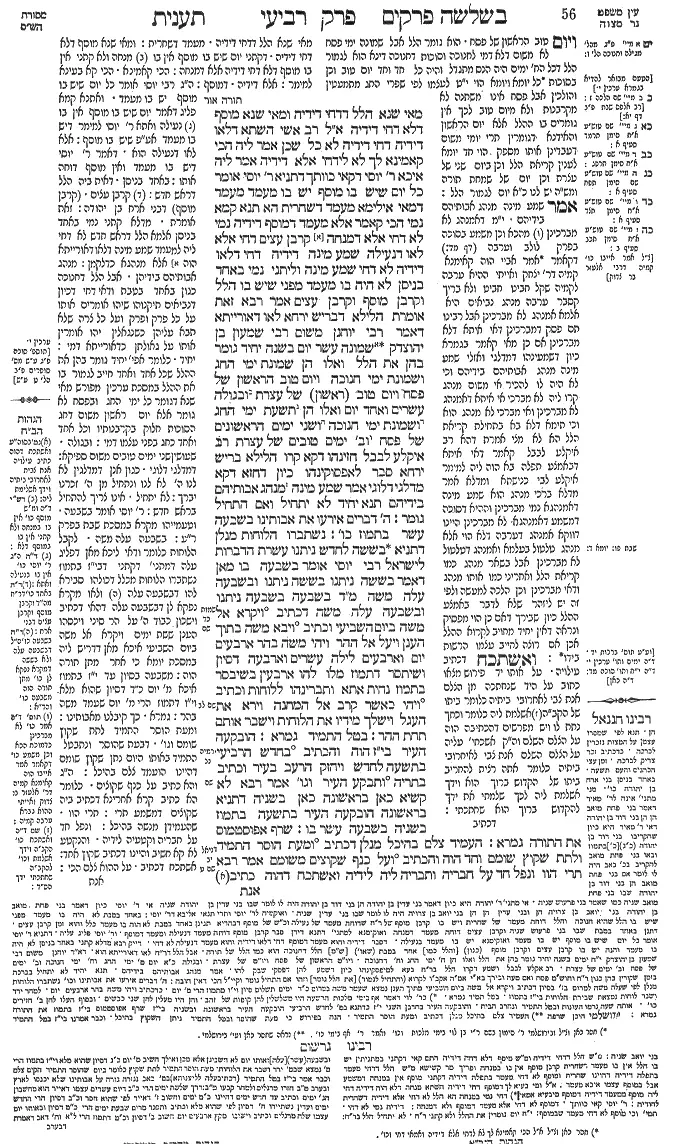
Ta'anit 28b - Guemara
מאי שנא הלל דדחי דידיה ומאי שנא מוסף דלא דחי דידיה א"ל רב אשי השתא דלאו דידיה דחי דידיה לא כל שכן אמר ליה הכי קאמינא לך לא לידחי אלא דידיה אמר ליה איכא ר' יוסי דקאי כוותך דתניא ר' יוסי אומר כל יום שיש בו מוסף יש בו מעמד מעמד דמאי אילימא מעמד דשחרית הא תנא קמא נמי הכי קאמר אלא מעמד דמוסף דידיה נמי לא דחי אלא דמנחה קרבן עצים דחי אלא לאו דנעילה שמע מינה דידיה דחי דלאו דידיה לא דחי שמע מינה וליתני נמי באחד בניסן לא היה בו מעמד מפני שיש בו הלל וקרבן מוסף וקרבן עצים אמר רבא זאת אומרת הלילא דבריש ירחא לאו דאורייתא דאמר רבי יוחנן משום רבי שמעון בן יהוצדק שמונה עשר יום בשנה יחיד גומר בהן את הלל ואלו הן שמונת ימי החג ושמונת ימי חנוכה ויום טוב הראשון של פסח ויום טוב (ראשון) של עצרת ובגולה עשרים ואחד יום ואלו הן תשעת ימי החג ושמונת ימי חנוכה ושני ימים הראשונים של פסח וב' ימים טובים של עצרת רב איקלע לבבל חזינהו דקא קרו הלילא בריש ירחא סבר לאפסוקינהו כיון דחזא דקא מדלגי דלוגי אמר שמע מינה מנהג אבותיהם בידיהם תנא יחיד לא יתחיל ואם התחיל גומר:
ה' דברים אירעו את אבותינו בשבעה עשר בתמוז כו':
נשתברו הלוחות מנלן דתניא בששה לחדש ניתנו עשרת הדברות לישראל רבי יוסי אומר בשבעה בו מאן דאמר בששה ניתנו בששה ניתנו ובשבעה עלה משה מ"ד בשבעה בשבעה ניתנו ובשבעה עלה משה דכתיב (שמות כד, טז) ויקרא אל משה ביום השביעי וכתיב (שמות כד, יח) ויבא משה בתוך הענן ויעל אל ההר ויהי משה בהר ארבעים יום וארבעים לילה עשרים וארבעה דסיון ושיתסר דתמוז מלו להו ארבעין בשיבסר בתמוז נחית אתא ותברינהו ללוחות וכתיב (שמות לב, יט) ויהי כאשר קרב אל המחנה וירא את העגל וישלך מידיו את הלוחות וישבר אותם תחת ההר:
בטל התמיד גמרא:
הובקעה העיר בי"ז הוה והכתיב (ירמיהו נב, ו) בחדש הרביעי בתשעה לחדש ויחזק הרעב בעיר וכתיב בתריה (ירמיהו נב, ז) ותבקע העיר וגו' אמר רבא לא קשיא כאן בראשונה כאן בשניה דתניא בראשונה הובקעה העיר בתשעה בתמוז בשניה בשבעה עשר בו:
שרף אפוסטמוס את התורה גמרא:
העמיד צלם בהיכל מנלן דכתיב (דניאל יב, יא) ומעת הוסר התמיד ולתת שקוץ שומם וחד הוה והכתיב (דניאל ט, כז) ועל כנף שקוצים משומם אמר רבא תרי הוו ונפל חד על חבריה ותבריה ליה לידיה ואשתכח דהוה כתיב
Comments from Rashi on Masechet Ta'anit Page 28b
מאי שנא הלל דדחי דידיה . מעמד דשחרית: ומאי שנא מוסף דלא דחי דידיה . דקתני יום שיש בו מוסף אין בו מנחה ולא קתני אין בו מוסף דלא דחי דידיה אלא דמנחה: הכי קאמינא . הכי קא בעינא למימר: אלא דידיה . דמוסף: ה"ג רבי יוסי אומר כל יום שיש בו מוסף יש בו מעמד . ואתנא קמא פליג דאמר יום שיש בו מוסף אין בו נעילה ואתא ר' יוסי למימר דיש בו מעמד אע"פ שיש בו מוסף: אלא לאו דנעילה הוא . דאמר ר' יוסי דיש בו מעמד ואין מוסף דוחה אותו: באחד בניסן . דאית ביה הלל דראש חדש: קרבן עצים . (קרבן מוסף) דבני ארח בן יהודה: זאת אומרת . מדלא קתני נמי באחד בניסן אלמא הלל דראש חדש לא דחי ליה למעמד שמע מינה דלאו דאורייתא הוה אלא מנהגא כדלקמן: יחיד . כלומר אפי' יחיד גומר בהן את ההלל שכל אחד ואחד חייב לגמור בו את ההלל במסכת ערכין מפורש מאי שנא דגומר כל ימי החג ובפסח לא גומר אלא יום ראשון משום דחג הסוכות חלוק בקרבנותיו וכל אחד ואחד כחג בפני עצמו דמי: ובגולה . שעושין שני ימים טובים משום ספיקא: דמדלגי דלוגי . כגון אנן דמדלגין לא לנו ה' לא לנו ונתחיל מן ה' זכרנו יברך: מנהג אבותיהם בידיהן . אבל הלל דחנוכה כגון באחד בטבת ודאי דחי דכיון דנביאים תיקנוהו שיהו אומרים אותו על כל פרק ופרק ועל כל צרה שלא תבא עליהן כשנגאלין יהו אומרין אותו על גאולתן כדאורייתא דמי: לא יתחיל . אינו צריך להתחיל בראש חדש: ר' יוסי אומר בשבעה . וטעמייהו מקרא במסכת שבת בפרק ר"ע: בשבעה עלה משה . לקבל הלוחות כלומר ודאי ליכא מאן דפליג עלה דמתני' דקתני דבי"ז בתמוז נשתברו הלוחות מכלל דכולהו סבירא להו דבשבעה עלה ולאו מקרא נפקא לן דבשבעה עלה דהאי דכתיב וישכון כבוד ה' על הר סיני ויכסהו הענן ששת ימים ויקרא אל משה ביום השביעי איכא מאן דדריש ליה במסכת יומא כי אחר מתן תורה הוה משבעה בסיון עד י"ז בתמוז איכא מ' יום כ"ד דסיון שהוא מלא וי"ו דתמוז הרי מ' יום שעמד משה בהר: גמרא . כך קיבלנו מאבותינו: ומעת הוסר התמיד לתת שקוץ שומם וגו' . דבעת שהוסר ונתבטל התמיד באותו היום נתן שקוץ שומם דהיינו הועמד צלם בהיכל: ה"ג והא כתיב על כנף שקוצים . כלומר הא כתיב קרא אחרינא דכתיב ביה שקוצים דמשמע תרי: תרי הוו . שהעמידן מנשה בהיכל: ונפל חד על חבריה וקטעיה לידיה . והנקטע לא קא חשיב והיינו דכתיב שקוץ אחד: אשתכח דכתיב . על ההוא צלם הכי:
Comments from Tosafot - Ta'anit 28b
ויום טוב הראשון של פסח. הוא גומר הלל אבל שמונה ימי פסח לא משום דלא דמי לחנוכה וסוכות דחנוכה דינא הוא לגמור הלל דכל הח' ימים היה הנס מתגדל והיה כל חד וחד יום טוב וכן בסוכות כל יומא ויומא הוי י"ט לעצמו לפי שפרי החג מתמעטין והולכין אבל פסח אינו משתנה לא מקרבנות ולא מיום טוב לכך אין גומרים בו ההלל אלא יום הראשון והאידנא דגומרין תרי יומי משום דעבדינן אותו מספק הוי חד יומא לענין קריאת הלל וכן ביום שני של עצרת וכן יום של שמחת תורה ומש"ה יש לנו כ"א יום לגמור הלל: אמר שמע מינה מנהג אבותיהם בידיהם. י"מ דאמנהג לא מברכינן מהכא וכן משמע בסוכה בפרק לולב וערבה (דף מד:) דקאמר אמר אביי הוה קאימנא קמיה דר' יצחק ואייתי ההיא ערבה לקמיה שקל חביט חביט ולא בריך קסבר ערבה מנהג נביאים היא אלמא אמנהג לא מברכינן אבל רבינו תם פסק דמברכינן דאי איתא דלא מברכינן אם כן מאי קאמר בגמרא כיון דשמעינהו דמדלגי ואזלי שמע מינה מנהג אבותיהם בידיהם וכי לא היה לו להכיר אי משום מנהג קרו ליה לא מברכי אי איתא דאמנהג לא מברכינן ואי מברכי לא מנהג הוא וכי תימא דלא בא בתחילת קריאת הלל הא לא מצי אמרת דהא רב איקלע לבבל קאמר דאי איתא דבאמצע תפלה בא הוה ליה למימר איקלע לבי כנישתא ומדלא אמר מדלא ברכי מנהג הוא שמע מינה דאמנהגא נמי מברכינן וההיא דסוכה דמשמע דאמנהגא לא מברכינן היינו דווקא אמנהג דערבה דלא הוי אלא מנהג טלטול בעלמא ואמנהג דטלטול לא מברכינן אבל בשאר מנהג כמו קריאת הלל ואחריני כמו אותו מנהג ודאי מברכינן וכן הלכה למעשה ולפי זה יש ליזהר שלא לדבר באמצע ההלל כיון שבירך דאם כן הוי מפסיק ונראה דאין יחיד מחויב לקרוא ההלל אכן אם רוצה לחייב עצמו הרשות בידו: וישב עליהם את אונס וברעתם יצמיתם ולא הספיקו לומר יצמיתם ה' אלהינו עד שבאו האויבים וכו'. פי' באותו פסוק יש ב' פעמים יצמיתם ולא הספיקו לומר השני עד שבאו וכבשום ואומר ר"י אע"ג דאין אותו פסוק כלל במזמור שיר של מוצ"ש אירע להם כך שאמרו אותו פסוק ובירושל' מפרש אילייא נקט פירוש אילייא הוי כמו אלי כבתולה דהוי לשון קינה כמו שקורין העולם ריאוני"א בלע"ז: ואשתכח דכתיב עילויה על אותו יד פירוש מצאו כתוב על היד שנחתכה מן הצלם אנת צבי לאחרובי ביתיה כלומר ביתו של הקב"ה אשלמת ליה כלומר וכחך נתת לו ויש מפרשים דהכתיבה הוה על הצלם השלם וה"ק אשכחי' עליה על הצלם השלם אנת צבי לאיחרובי ביתיה כלומר אתה רצית להחריב ביתו של הקדוש ברוך הוא וידך אשלמת ליה לכך שלמתי את ידך להקדוש ברוך הוא שחתכתי:
Ta'anit 28b - Mishnah translated into english
What is different about hallel that it overrides its own watch, i.e., the watch in the morning service, when hallel is recited; and what is different about the additional offering, that it does not override its own watch, of the morning service, but it does override the watch of the afternoon service and the closing prayer?
Rav Ashi said to him: Now, as the additional offering overrides the watch of the afternoon service, which is not its own, is it not all the more so that it should take precedence over its own watch? Rav Ḥisda said to Rav Ashi: I meant the opposite, as this is what I am saying to you: It should not take precedence over another watch, that of the closing prayer; rather, let it override only its own watch, the one performed in the additional service.
Rav Ashi said to him: There is Rabbi Yosei, who holds in accordance with your opinion, as it is taught in a baraita that Rabbi Yosei says: On any day on which there is an additional offering, there is a non-priestly watch. The Gemara clarifies: To which non-priestly watch is he referring? If we say that Rabbi Yosei means the non-priestly watch of the morning prayer, but the first tanna also said this. Rather, Rabbi Yosei must mean the non-priestly watch of the additional prayer. However, this too is problematic; is it possible that the additional offering does not override even its own watch, during the additional service itself?
Rather, Rabbi Yosei must be referring to the watch of the afternoon prayer. However, this is also puzzling, for if the wood offering overrides the watch of the afternoon service, the additional offering should certainly take precedence over it. Rather, is it not the case that Rabbi Yosei is speaking of the watch in the closing prayer? One can learn from this that the additional offering overrides its own watch, but it does not override a watch that is not its own. The Gemara concludes: Indeed, learn from this that this is the case.
The Gemara asks: And let the mishna also teach: On the first of Nisan there was no non-priestly watch because it is a day on which hallel is recited, and it is the New Moon, on which an additional offering is sacrificed, and there was also a wood offering. Rava said: That is to say that the hallel recited on a New Moon is not required by Torah law but is a custom.
As Rabbi Yoḥanan said in the name of Rabbi Shimon ben Yehotzadak: On eighteen days a year, the individual completes the full hallel. And they are: The eight days of the festival of Sukkot, including the Eighth Day of Assembly; the eight days of Hanukkah; the first Festival day of Passover; and the Festival day of Assembly, i.e., Shavuot. And in the Diaspora, where a second day is added to each Festival due to uncertainty over the correct date, there are twenty-one days, and they are: The nine days of the festival of Sukkot, including the last day, known as the Celebration of the Torah, the eight days of Hanukkah, the first two days of Passover, and the two Festival days of Assembly.
On this topic, the Gemara relates: Rav happened to come to Babylonia, where he saw that they were reciting hallel on a New Moon. Unfamiliar with this practice, he thought to stop them, as he assumed that they were reciting hallel unnecessarily. Once he saw that they were omitting portions, he said: I can learn from this that they are maintaining the custom of their forefathers, i.e., they know that it is a custom, not an obligation. It is taught in a baraita: An individual should not begin reciting hallel on a New Moon, but if he has begun he should complete it.
§ The mishna taught: Five calamitous matters occurred to our forefathers on the seventeenth of Tammuz, one of which was that the tablets were broken. The Gemara asks: From where do we derive that the tablets were broken on this day? As it is taught in a baraita: On the sixth of the month of Sivan the Ten Commandments were given to the Jewish people. Rabbi Yosei says: It was on the seventh of that month. The Gemara comments: According to the one who said that they were given on the sixth of Sivan, they were given on the sixth, and on the seventh Moses ascended to Mount Sinai.
According to the one who said that the Ten Commandments were given on the seventh of Sivan, they were given on the seventh, and on the seventh Moses ascended to Mount Sinai, as it is written: “And He called to Moses on the seventh day out of the midst of the cloud” (Exodus 24:16), and it is written: “And Moses entered into the midst of the cloud, and he went up into the mount, and Moses was on the mount forty days and forty nights” (Exodus 24:18). The calculation is as follows: There were twenty-four days remaining in Sivan, plus the first sixteen days of Tammuz, which comes to forty days.
On the seventeenth of Tammuz, Moses descended, came, observed the people worshipping the Golden Calf, and broke the tablets. And it is written: “And it came to pass, as soon as he came near to the camp, that he saw the calf and the dancing, and Moses’ anger burned, and he cast the tablets out of his hands, and broke them beneath the mount” (Exodus 32:19). This shows that the tablets were shattered on the seventeenth of Tammuz.
§ The mishna taught that on the seventeenth of Tammuz the daily offering was nullified. The Gemara explains: It is a tradition that this occurred on that date.
The mishna further taught that on the seventeenth of Tammuz the city walls of Jerusalem were breached. The Gemara asks: Was this tragedy something that occurred on the seventeenth of Tammuz? But isn’t it written: “In the fourth month, on the ninth of the month, the famine was severe in the city” (Jeremiah 52:6), and it is written immediately afterward: “Then a breach was made in the city” (Jeremiah 52:7), which clearly indicates that the city was breached on the ninth.
Rava said: This is not difficult, as here the verse is referring to the First Temple, whereas there, in the mishna, it describes the destruction of the Second Temple, as it is taught in a baraita: Upon the destruction of the First Temple, the city walls were breached on the ninth of Tammuz; and at the destruction of the Second Temple they were breached on the seventeenth of Tammuz.
The mishna further taught that on the seventeenth of Tammuz Apostemos publicly burned a Torah scroll. The Gemara explains: This, too, is a tradition.
The mishna also stated that on the seventeenth of Tammuz Manasseh placed an idol in the Sanctuary. The Gemara asks: From where do we derive that this occurred on the seventeenth of Tammuz? As it is written: “And from the time that the daily offering shall be taken away and the abomination that causes appallment is set up” (Daniel 12:11), which indicates that an idol was placed in the Temple on the very day that the daily offering was suspended.
The Gemara asks: And was there only one idol placed there? But isn’t it written: “And upon the wing of detestable things shall be that which causes appallment” (Daniel 9:27)? The plural, “detestable things,” indicates the presence of at least two idols. Rava said: There were initially two idols, but one fell upon the other and broke its hand. Since only one idol was whole, the mishna mentions only that one. Rava continues: And an inscription was found on the broken idol that read:
Traduction : The William Davidson digital edition of the Koren Noé Talmud, with commentary by Rabbi Adin Even-Israel Steinsaltz.