 Talmud Bavli
Ta'anit 31a : Youtube
Daf TubeYoutube
3 video classes :
Ta'anit Page 31a
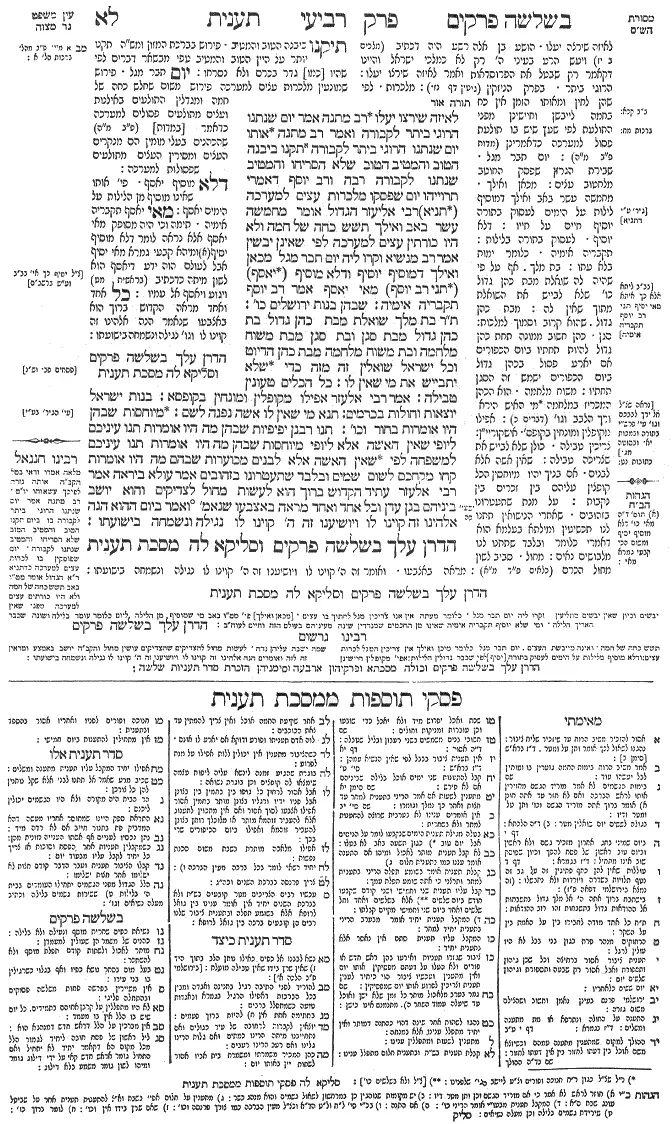
Ta'anit 31a - Guemara
לאיזה שירצו יעלו רב מתנה אמר יום שנתנו הרוגי ביתר לקבורה ואמר רב מתנה אותו יום שנתנו הרוגי ביתר לקבורה תקנו ביבנה הטוב והמטיב הטוב שלא הסריחו והמטיב שנתנו לקבורה רבה ורב יוסף דאמרי תרוייהו יום שפסקו מלכרות עצים למערכה (תניא) רבי אליעזר הגדול אומר מחמשה עשר באב ואילך תשש כחה של חמה ולא היו כורתין עצים למערכה לפי שאינן יבשין אמר רב מנשיא וקרו ליה יום תבר מגל מכאן ואילך דמוסיף יוסיף ודלא מוסיף (יאסף) (תני רב יוסף) מאי יאסף אמר רב יוסף תקבריה אימיה:
שבהן בנות ירושלים כו':
ת"ר בת מלך שואלת מבת כהן גדול בת כהן גדול מבת סגן ובת סגן מבת משוח מלחמה ובת משוח מלחמה מבת כהן הדיוט וכל ישראל שואלין זה מזה כדי שלא יתבייש את מי שאין לו:
כל הכלים טעונין טבילה אמר רבי אלעזר אפילו מקופלין ומונחין בקופסא:
בנות ישראל יוצאות וחולות בכרמים תנא מי שאין לו אשה נפנה לשם:
מיוחסות שבהן היו אומרות בחור וכו':
תנו רבנן יפיפיות שבהן מה היו אומרות תנו עיניכם ליופי שאין האשה אלא ליופי מיוחסות שבהן מה היו אומרות תנו עיניכם למשפחה לפי שאין האשה אלא לבנים מכוערות שבהם מה היו אומרות קחו מקחכם לשום שמים ובלבד שתעטרונו בזהובים אמר עולא ביראה אמר רבי אלעזר עתיד הקדוש ברוך הוא לעשות מחול לצדיקים והוא יושב ביניהם בגן עדן וכל אחד ואחד מראה באצבעו שנאמ' (ישעיהו כה, ט) ואמר ביום ההוא הנה אלהינו זה קוינו לו ויושיענו זה ה' קוינו לו נגילה ונשמחה בישועתו:
הדרן עלך בשלשה פרקים וסליקא לה מסכת תענית
Comments from Rashi on Masechet Ta'anit Page 31a
לאיזה שירצה יעלו . הושע בן אלה רשע היה דכתיב (מלכים ב' יז) ויעש הרע בעיני ה' רק לא כמלכי ישראל והיינו דקאמר רק שבטל את הפרוסדאות ואמר לאיזה שירצו יעלו: הרוגי ביתר . בפרק הניזקין (גיטין דף נז.): מלכרות . לפי שהן לחין ומאותו הזמן אין כח בחמה לייבשן וחיישינן מפני התולעת לפי שעץ שיש בו תולעת פסול למערכה כדאמרינן (מדות פרק ב' משנה ה'): יום תבר מגל . שבירת הגרזן שפסק החוטב מלחטוב עצים: מכאן ואילך . מחמשה עשר באב ואילך דמוסיף לילות על הימים לעסוק בתורה יוסיף חיים על חייו: דלא יוסיף . לעסוק בתורה בלילות: תקבריה אימיה . כלומר ימות בלא עתו: בת מלך . אף על פי שהיה לה שואלת מבת כהן גדול כו' שלא לבייש את השואלת מתוך שאין לה: מבת כהן גדול . שהוא קרוב וסמוך למלכות: סגן . כהן חשוב ממונה תחת כהן גדול להיות תחתיו ביום הכפורים אם יארע פסול בכהן גדול ביום הכפורים ישמש זה הסגן תחתיו: משוח מלחמה . הוא הכהן המכריז במלחמה מי האיש הירא ורך הלבב וגו' (דברים כ): צריכין טבילה . כולן שלא לבייש את שצריכה טבילה: אפילו מקופלין ומונחין בקופס' . אישקוריי"ן: שאין אשה אלא לבנים . אם בניך יהיו מיוחסין הכל קופצין עליהם בין זכרים בין נקבות: שאין אשה אלא לבנים . אם בניך יהיו מיוחסין הכל קופצין עליהם בין זכרים בין נקבות: על מנת שתעטרונו בזהובים . שאחרי הנישואין תתנו לנו תכשיטין ומילתא בעלמא הוא דאמרי כלומר ובלבד שתתנו לנו מלבושים נאים: מחול . סביב לשון מחול הכרם (כלאים פרק רביעי משנה א'): מראה באצבעו . ואומר זה ה' קוינו לו ויושיענו זה ה' קוינו לו נגילה ונשמחה בישועתו:
Comments from Tosafot - Ta'anit 31a
תיקנו ביבנה הטוב והמטיב. פירוש בברכת המזון ומש"ה תקנו יותר על היין הטוב והמטיב טפי מבשאר דברים לפי שהיו [כמו] גדר בכרם ולא נסרחו: יום תבר מגל. פירוש שמונעין מלכרות עצים למערכה פירוש משום שחלש כחה של חמה ומגדלין התולעים באילנות ועצים מתולעים פסולים למערכה כדאמר [במדות] (פ"ב מ"ה) שהכהנים בעלי מומין הם מנקרים העצים ומסירין העצים מתולעים שפסולות למערכה: דלא מוסיף יאסף. פי' אותו שאינו מוסיף מן הלילות על הימים יאסף: מאי יאסף תקבריה אימיה. תימה וכי היה מסופק מאי יאסף אלא נראה לומר דלא מוסיף יסיף ומיהא קבעי גמרא מאי יסיף אבל לעולם הוה ידע דיאסף הוא לשון מיתה כדכתיב (בראשית מט) ויגוע ויאסף אל עמיו: כל אחד ואחד מראה הקדוש ברוך הוא באצבעו שנאמר הנה אלהינו זה קוינו לו וגו' נגילה ונשמחה בישועתו:
Ta'anit 31a - Mishnah translated into english
that they may ascend to wherever they wish, i.e., they may go to Jerusalem, Bethel, or Dan.
Rav Mattana said: There was an additional salvation on this day, as it was the day that the slain of Beitar were brought to burial, several years after the battle at Beitar (see Gittin 57a). And Rav Mattana said: On the same day that the slain of Beitar were brought to burial, they instituted the blessing: Who is good and does good, at Yavne. Who is good, thanking God that the corpses did not decompose while awaiting burial, and does good, thanking God that they were ultimately brought to burial.
It is Rabba and Rav Yosef who both say: The fifteenth of Av was the day on which they stopped chopping down trees for the arrangement of wood that burned on the altar, as it is taught in a baraita that Rabbi Eliezer the Great says: From the fifteenth of Av onward, the strength of the sun grows weaker, and from this date they would not cut additional wood for the arrangement, as they would not be properly dry, and they would therefore be unfit for use in the Temple.
Rav Menashya said: And they called the fifteenth of Av the day of the breaking of the scythe, as from this date onward no more trees were cut down, and therefore it was a celebration for the trees. The Gemara adds: From the fifteenth of Av onward, when the days begin to shorten, one who adds to his nightly Torah study will add years to his life, and he who does not add [mosif] will be gathered [ye’asef]. The Gemara asks: What is the meaning of the phrase: He will be gathered? Rav Yosef said: It means that his mother will bury him, as he will be gathered to his grave (see Genesis 49:33).
§ The mishna taught: As on them the daughters of Jerusalem would go out in white clothes, and on the fifteenth of Av they would go out to the vineyards and dance. The Sages taught this tradition in greater detail: The daughter of the king borrows white garments from the daughter of the High Priest; the daughter of the High Priest borrows from the daughter of the deputy High Priest; the daughter of the deputy High Priest borrows from the daughter of the priest anointed for war, i.e., the priest who would read verses of Torah and address the army as they prepared for battle; the daughter of the priest anointed for war borrows from the daughter of a common priest; and all the Jewish people borrow from each other. Why would they all borrow garments? They did this so as not to embarrass one who did not have her own white garments.
The mishna further taught: All the garments that the women borrowed require immersion, as those who previously wore them before might have been ritually impure. Rabbi Elazar says: Even if the garments were folded and placed in a box [kufsa], an indication that they had not been touched for a long time, they nevertheless require ritual immersion before being worn.
The mishna also stated that the daughters of the Jewish people would go out and dance in the vineyards. A tanna taught: One who did not have a wife would turn to there to find one.
It is taught that those women of distinguished lineage among them would say: Young man, please lift up your eyes and see what you choose for a wife. The Sages taught this practice in greater detail in a baraita: What would the beautiful women among them say? Set your eyes toward beauty, as a wife is only for her beauty. What would those of distinguished lineage among them say? Set your eyes toward family, as a wife is only for children, and the children of a wife from a distinguished family will inherit her lineage. What would the ugly ones among them say? Acquire your purchase for the sake of Heaven, provided that you adorn us with golden jewelry after our marriage to beautify us.
The tractate concludes with a statement related to the topic of dancing. Ulla of the city of Bira’a said that Rabbi Elazar said: In the future, in the end of days, the Holy One, Blessed be He, will arrange a dance of the righteous, and He will be sitting among them in the Garden of Eden, and each and every one of the righteous will point to God with his finger, as it is stated: “And it shall be said on that day: Behold, this is our God, for whom we waited, that He might save us. This is the Lord; for whom we waited. We will be glad and rejoice in His salvation” (Isaiah 25:9). God will be revealed, so that every righteous individual will be able to say: This is our God, as though they were pointing at Him with a finger.
We will return to you, "In three places" - and Tractate Taanit is concluded.
Traduction : The William Davidson digital edition of the Koren Noé Talmud, with commentary by Rabbi Adin Even-Israel Steinsaltz.