 Talmud Bavli
Beitza 32b : Youtube
Daf TubeYoutube
2 video classes :
Beitza Page 32b
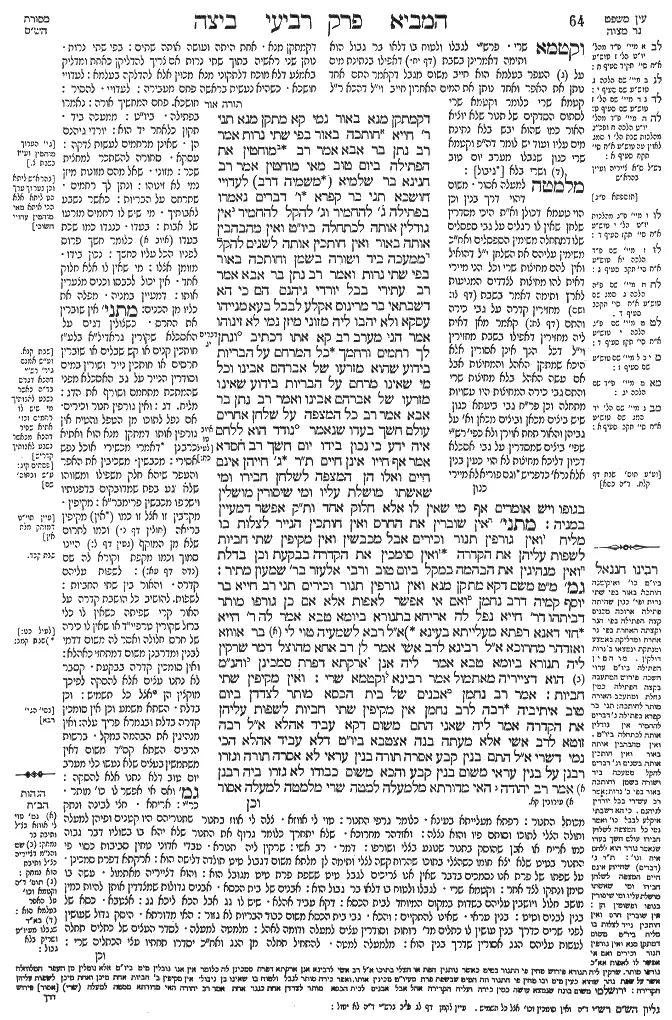
Beitza 32b - Guemara
דקמתקן מנא באור נמי קא מתקן מנא תני ר' חייא חותכה באור בפי שתי נרות אמר רב נתן בר אבא אמר רב מוחטין את הפתילה ביום טוב מאי מוחטין אמר רב חנינא בר שלמיא (משמיה דרב) לעדויי חושכא תני בר קפרא ו' דברים נאמרו בפתילה ג' להחמיר וג' להקל להחמיר אין גודלין אותה לכתחלה ביו"ט ואין מהבהבין אותה באור ואין חותכין אותה לשנים להקל ממעכה ביד ושורה בשמן וחותכה באור בפי שתי נרות ואמר רב נתן בר אבא אמר רב עתירי בבל יורדי גיהנם הם כי הא דשבתאי בר מרינוס אקלע לבבל בעא מנייהו עסקא ולא יהבו ליה מזוני מיזן נמי לא זינוהו אמר הני מערב רב קא אתו דכתיב (דברים יג, יח) ונתן לך רחמים ורחמך כל המרחם על הבריות בידוע שהוא מזרעו של אברהם אבינו וכל מי שאינו מרחם על הבריות בידוע שאינו מזרעו של אברהם אבינו ואמר רב נתן בר אבא אמר רב כל המצפה על שלחן אחרים עולם חשך בעדו שנאמר (איוב טו, כג) נודד הוא ללחם איה ידע כי נכון בידו יום חשך רב חסדא אמר אף חייו אינן חיים ת"ר ג' חייהן אינם חיים ואלו הן המצפה לשלחן חבירו ומי שאשתו מושלת עליו ומי שיסורין מושלין בגופו ויש אומרים אף מי שאין לו אלא חלוק אחד ות"ק אפשר דמעיין במניה:
מתני׳ אין שוברין את החרס ואין חותכין הנייר לצלות בו מליח ואין גורפין תנור וכירים אבל מכבשין ואין מקיפין שתי חביות לשפות עליהן את הקדרה ואין סומכין את הקדרה בבקעת וכן בדלת ואין מנהיגין את הבהמה במקל ביום טוב ורבי אלעזר בר' שמעון מתיר:
גמ׳ מ"ט משם דקא מתקן מנא ואין גורפין תנור וכירים תני רב חייא בר יוסף קמיה דרב נחמן ואם אי אפשר לאפות אלא אם כן גורפו מותר דביתהו דר' חייא נפל לה אריחא בתנורא ביומא טבא אמר לה ר' חייא חזי דאנא רפתא מעלייתא בעינא א"ל רבא לשמעיה טוי לי בר אווזא ואזדהר מחרוכא א"ל רבינא לרב אשי אמר לן רב אחא מהוצל דמר שרקין ליה תנורא ביומא טבא אמר ליה אנן ארקתא דפרת סמכינן והנ"מ הוא דצייריה מאתמול אמר רבינא וקטמא שרי:
ואין מקיפין שתי חביות:
אמר רב נחמן אבנים של בית הכסא מותר לצדדן ביום טוב איתיביה רבה לרב נחמן אין מקיפין שתי חביות לשפות עליהן את הקדרה אמר ליה שאני התם משום דקא עביד אהלא א"ל רבה זוטא לרב אשי אלא מעתה בנה אצטבא ביו"ט דלא עביד אהלא הכי נמי דשרי א"ל התם בנין קבע אסרה תורה בנין עראי לא אסרה תורה וגזרו רבנן על בנין עראי משום בנין קבע והכא משום כבודו לא גזרו ביה רבנן אמר רב יהודה האי מדורתא מלמעלה למטה שרי מלמטה למעלה אסור
Comments from Rashi on Masechet Beitza Page 32b
דקמתקן מנא . אחת היתה ועושה אותה שתים: בפי שתי נרות . נותן שני ראשיה בתוך שתי נרות אם צריך להדליקן כאחת ומדליק באמצע דלא מוכח דלתקוני מנא מכוין אלא להדלקה בעלמא: לעדויי חושכא . כשהיא נעשית בראשה פחם מעבירה: לעדויי . להסיר: חושכא . פחם המחשיך אורה: נאמרו בפתילה . ביו"ט: ממעכה ביד . תקון כלאחר יד הוא: יורדי גיהנם הן . שאינן מרחמים לעשות צדקה: עסקא . סחורה להשתכר למחצית שכר: מזוני . שאל מהם מזונות מיזן נמי לא זינוהו: ונתן לך רחמים . שתרחם על הבריות: כאשר נשבע לאבותיך . מי שיש לו רחמים מזרעו של אבות: בעדו . כנגדו כמו שכת בעדו (איוב א) כלומר חשך פרוס לפניו הכל עליו כחשך: נכון בידו . מזומן אצלו: מי שאין לו אלא חלוק אחד . אין יכול לכבסו וכנים מצערין אותו: דמעיין במניה . מפלה את כליו מן הכנים: מתני' אין שוברין את החרס . כשצולין דגים על האסכלא שקורין גראדיל"א בלע"ז חותכין קנים או קש שבלים או שוברין חרסים או חותכין נייר ושורין במים וסודרין הנייר על גב האסכלא מפני שהמתכת מתחמם ושורף את הדג: מליח . דג: ואין גורפין תנור וכירים . אם נפל לתוכו מן הטפל והטיח אין גורפין אותו דמתקן מנא הוא ואתיא כרבנן דאמרי מכשירי אוכל נפש אסירי: מכבשין . משכיבין את האפר והעפר שיהא חלק משפילו ומשווהו שלא יגע בפת שמדובקים בדפנותיו וישרפו מכבשין פרימבר"א: מקיפין . מקרבין זו אצל זו כמו (אין) מקיפין בריאה (חולין דף נ.) וכמו לתרום שלא מן המוקף (גיטין דף ל:). היינו סמוך וכמו מקפת וקורא לה שם (נדה דף עא:): לשפות עליהם קדרה . והאור בין שתי החביות: לשפות . להושיב כל הושבת קדרה על האור קרי שפיתה כשאין לו כלי ברזל שקורין טרפיי"ד או שאין לו כירה של חרס חלולה ואסר לה משום דדמי לבנין ומדרבנן משום דמתחזי כאהלא: ואין סומכין קדרה בבקעת . קסבר לא נתנו עצים אלא להסקה לפיכך מוקצין הן אצל כל תשמיש: וכן בדלת . השתא משמע וכן אין סומכין קדרה בדלת ובגמרא פריך עלה: ואין מנהיגין את הבהמה במקל . ברשות הרבים השתא קס"ד משום דאין משתמשין בעצים שלא נעשו כלי מערב יום טוב דלא נתנו אלא להסקה: גמ' ואם אי אפשר לו כו' מותר . כר"י: אריחא . חצי לבינה ונתק מכותל התנור: רפתא מעלייתא בעינא . כלומר גרפי התנור: טוי לי אוזא . צלה לי אווז בתנור שתנוריהם היו קטנים ופיהן למעלה ותולה הצלי לתוכו וסותם פיו והוא נצלה: ואזדהר מחרוכא . שלא יתחרך כלומר גרוף את התנור שלא יהא בו בשוליו דבר גבוה כמו אריח או אבן שהוסק בתנור שנוגע בצלי ושורפו: דמר . רב אשי: שרקין ליה תנורא . עבדי אדוני טחין סביבות כסוי פי התנור בטיט שלא יצא חומו כשהצלי בתוכו שהרוח קשה לצלי ותימה לן מלתא משום דגבול טיט תולדה דלישה הוא: ארקתא דפרת סמכינן . על שפתו של פרת אנו נסמכים בדבר שאין אנו צריכים לגבל טיט ששפת פרת טיט מגובל הוא: והוא דצייריה מאתמול . עשה בו סימן ונתקו לצד אחר: וקטמא שרי . לגבלו ולטוח בו דלאו בר גבול הוא: אבנים של בית הכסא . אבנים גדולות שמצדדין אותן להיות כמין מושב חלול ויושבין עליהם בשדות במקום המיוחד לבית הכסא: דקא עביד אהלא . שיש לו גג אבל הכא ליכא גג: אצטבא . כסא של בנין לבנים וטיט: בנין עראי . שאינו להתקיים: והכא . גבי בית הכסא משום כבוד הבריות לא גזור: האי מדורתא . היסק גדול שעושין לפני שרים כדרך בנין עושין לו כתלים מד' רוחות וסודרין עצים למעלה ודומה לאהל: מלמטה למעלה . לסדר העצים של כתלים תחלה לעשות עליהם הגג אסורין שדרך בנין הוא: מלמעלה למטה . להתחיל תחלה מן הגג ואח"כ יסדרו תחתיו עצי הכתלים שרי:
Comments from Tosafot - Beitza 32b
וקטמא שרי. פרש"י לגבלו ולטוח בו דלאו בר גבול הוא ותימה דאמרינן בשבת (דף יח.) דאפילו בנתינת מים על העפר בעלמא הוא חייב משום מגבל דקאמר התם אחד נותן את האפר ואחד נותן את המים האחרון חייב וי"ל דהכא ר"ל קטמא שרי כלומר וקטמא שרי לסתום הסדקים של תנור שלא יוציא האור כמו שהוא יבש בלא נתינת מים עליו ועוד יש לומר דה"פ וקטמא שרי כגון שגבלו מערב יום טוב ושרי בלא [גיבול]: מלמטה למעלה אסור. משום דהוי דרך בנין וכן הוי טעמא דכולן וא"ת היכי מסדרין שלחן שאין לו רגלים על גבי ספסלים שלו דמתחלה משימין הספסלים ואח"כ משימין עליהם את השלחן י"ל דהואיל ואין להם מחיצות שרי וכל הני מיירי דאית להו מחיצות לצדדים המגיעות לארץ ותימה דאמר בשבת (דף לו: ושם) מחזירין קדרה על גבי כירה והתם (דף לח:) קאמר מאן דאית ליה מחזירין דאפילו בשבת מחזירין וי"ל דכל הנך אינן אסורין אלא היכא שמתקן האהל והמחיצות אבל אם עשה האהל בלא מחיצות שרי והתם גבי כירה המחיצות היו עשויות מתחלה וכן פר"ח גבי ביעתא כגון שיש ביצים מכאן וביצים מכאן וא' על גביהן והאור תחת אוירן ולא כפי' רש"י שפי' ביצים שמסדרין על גבי אסכלא דכיון דליכא מחיצות לא הוי כעין בנין אלא נרא' כדפריש וגם פוריא לא מיירי
Beitza 32b - Mishnah translated into english
Is it because he thereby mends a vessel? If so, when one cuts it in the fire, he is also preparing a vessel for use. Rabbi Ḥiyya taught in explanation: He cuts it by fire in the mouth of two candles. In other words, he does not simply cut a wick, but rather inserts a long wick into two lamps, which he subsequently lights in the middle. This indeed leads to the formation of two separate wicks, but only as a result of kindling two lamps. Rav Natan bar Abba said that Rav said: One may moḥet a wick on a Festival. The term moḥet was unknown, and the Gemara therefore asks: What is the meaning of the word moḥet? Rav Ḥanina bar Shelemya said in the name of Rav: To remove the dark; in other words, it is permitted to remove the burnt, charcoaled section to make the lamp shine more brightly.
Bar Kappara taught: Six matters were stated with regard to the halakhot of a wick on a Festival, three of which are to be stringent and three of which are to be lenient. The three halakhot to be stringent are: One may not spin or twist it ab initio on a Festival, and one may not singe it in fire before lighting it so that it will burn well, and one may not cut it into two. The three halakhot to be lenient are: One may crush it by hand, as although it is prohibited to twist it into a wick, one may adjust its shape in an unusual manner; and one may soak it in oil so that it will later burn well; and one may cut it by fire in the mouth of two candles.
§ After citing one teaching in the name of Rav Natan bar Abba, the Gemara quotes a few more statements attributed to the same scholar. Since he is not mentioned often, Rav Natan’s teachings are arranged together, so that they can be remembered more easily. Rav Natan bar Abba said that Rav said: The wealthy Jews of Babylonia will descend to Gehenna because they do not have compassion on others. This is illustrated by incidents such as this: Shabbetai bar Marinus happened to come to Babylonia. He requested their participation in a business venture, to lend him money and receive half the profits in return, and they did not give it to him. Furthermore, when he asked them to sustain him with food, they likewise refused to sustain him.
He said: These wealthy people are not descendants of our forefathers, but they came from the mixed multitude, as it is written: “And show you compassion, and have compassion upon you, and multiply you, as He has sworn to your fathers” (Deuteronomy 13:18), from which it is derived: Anyone who has compassion for God’s creatures, it is known that he is of the descendants of Abraham, our father, and anyone who does not have compassion for God’s creatures, it is known that he is not of the descendants of Abraham, our father. Since these wealthy Babylonians do not have compassion on people, clearly they are not descended from Abraham, Isaac, and Jacob.
This is another teaching that Rav Natan bar Abba said that Rav said: Whoever looks to the table of others for his sustenance, the world is dark for him. Everything looks bleak and hopeless to him, for it is stated: “He wanders abroad for bread: Where is it? He knows the day of darkness is ready at his hand” (Job 15:23). Rav Ḥisda said: Even his life is no life, as he receives no satisfaction from it.
In support of this last claim, the Gemara cites a baraita in which the Sages taught: There are three whose lives are not lives, and they are as follows: One who looks to the table of others for his sustenance; and one whose wife rules over him; and one whose body is ruled by suffering. And some say: Even one who has only one robe. Since he cannot wash it properly, he suffers from lice and dirt. The Gemara comments: And the first tanna, who did not include such a person, maintains: It is possible for him to examine his clothes and remove the lice, which would alleviate his suffering.
MISHNA: One may not break earthenware on a Festival. And one may not cut paper in order to roast salted fish on it. Earthenware shards or pieces of paper that have been soaked in water were placed on the metal surface or in the oven in which the fish was roasted, so that it would not be burned by the heat.
And one may not sweep out anything that has fallen into an oven or stove that interferes with the baking, such as plaster. But one may press down and flatten any accumulated dust and ashes at the bottom of the oven, which might prevent it from lighting properly.
And one may not draw two barrels together in order to place a pot on them, so that its contents will be cooked by a fire lit between the barrels. And one may not prop a pot that does not stand straight with a piece of wood, in order to prevent it from falling. And similarly, with a door. And one may not lead an animal with a stick in the public domain on a Festival; and Rabbi Elazar, son of Rabbi Shimon, permits it.
GEMARA: With regard to the issue of breaking earthenware and cutting paper, the Gemara explains: What is the reason for this prohibition? Because one is thereby preparing a vessel for use.
It was taught in the mishna: And one may not sweep out an oven or stove. Rabbi Ḥiyya bar Yosef taught before Rav Naḥman: And if it is not possible to bake unless one sweeps it out, it is permitted. The Gemara relates an incident with regard to the wife of Rabbi Ḥiyya: A part of a brick fell into her oven on a Festival, preventing her from baking. Rav Ḥiyya said to her: See, you should know that I want good-quality bread. He thereby stated that it would be impossible unless she removed the brick, making it permissible for her to do so. Similarly, Rava said to his attendant: Roast for me a duck in an oven, and be careful not to singe it. He thereby implied that the attendant may remove all impediments from the oven in order to fulfill this requirement because otherwise it would not be possible to cook without singeing.
In a related case, Ravina said to Rav Ashi: Rav Aḥa from Hutzal said to us that the master, Rav Ashi, allows his attendants to plaster the mouth of the oven for him on a Festival. This was done in order to ensure that the roasted or cooked dish would be fully prepared. Why does this not constitute the prohibited labor of kneading on a Festival? He said to him: We rely on the bank of the Euphrates River. We avoid the labor of kneading by taking sufficiently kneaded mud from the riverbank. The Gemara comments: And this applies only when one wrapped or made some mark on the mud the day before, so that it not be muktze. Ravina said: And as for kneading with ashes for this purpose, it is permitted, since the labor of kneading does not apply to ashes.
§ It was taught in the mishna: One may not draw two barrels together in order to place a pot on them. Rav Naḥman said: With regard to large stones of a lavatory, upon which one sits to attend to his needs, it is permitted to put them together in the proper manner, so that they may be used on a Festival. Rabba raised an objection to Rav Naḥman: Wasn’t it taught that one may not draw two barrels together in order to place a pot on them? This seems to indicate that any arrangement resembling building is prohibited. He said to him: There, with regard to barrels, it is different, because one makes a tent. It is not the drawing of the barrels close together that is prohibited. Rather, the placement of the pot over them forms a kind of covering, which is similar to building a tent.
Rabba the Younger, so called to distinguish him from the more famous amora known as Rabba, said to Rav Ashi: However, if that is so, then if, on a Festival, one built a solid bench [itztaba], without a gap below the seat, a situation in which one does not make a tent, so too, will you say that it is permitted? He said to him: The two cases are not comparable: There, with regard to a proper construction, such as a bench, the Torah prohibited erecting a permanent construction, but the Torah did not prohibit erecting a temporary construction. The Sages, however, decreed against creating a temporary construction on a Festival due to a permanent construction. However, here, with regard to a lavatory, due to the dignity of the user, the Sages did not decree with regard to it.
Rav Yehuda said: With regard to this bonfire, in which the wood is arranged in the form of a house, if one arranges it from above to below it is permitted, as this is not the regular manner of building. However, if one prepares it in the usual fashion, from below to above, it is prohibited, for this is considered building.
Traduction : The William Davidson digital edition of the Koren Noé Talmud, with commentary by Rabbi Adin Even-Israel Steinsaltz.