 Talmud Bavli
The learning on the whole site is dedicated : L'ilui Nishmat Yechayahou ben Moche
The learning on the whole site is dedicated : L'ilui Nishmat Amram ben Itshak Loubaton
The learning on the whole site is dedicated : L'ilui Nishmat Nissim ben Barukh Malka
Beitza 2b : Youtube
Daf TubeYoutube
3 video classes :
Beitza Page 2b
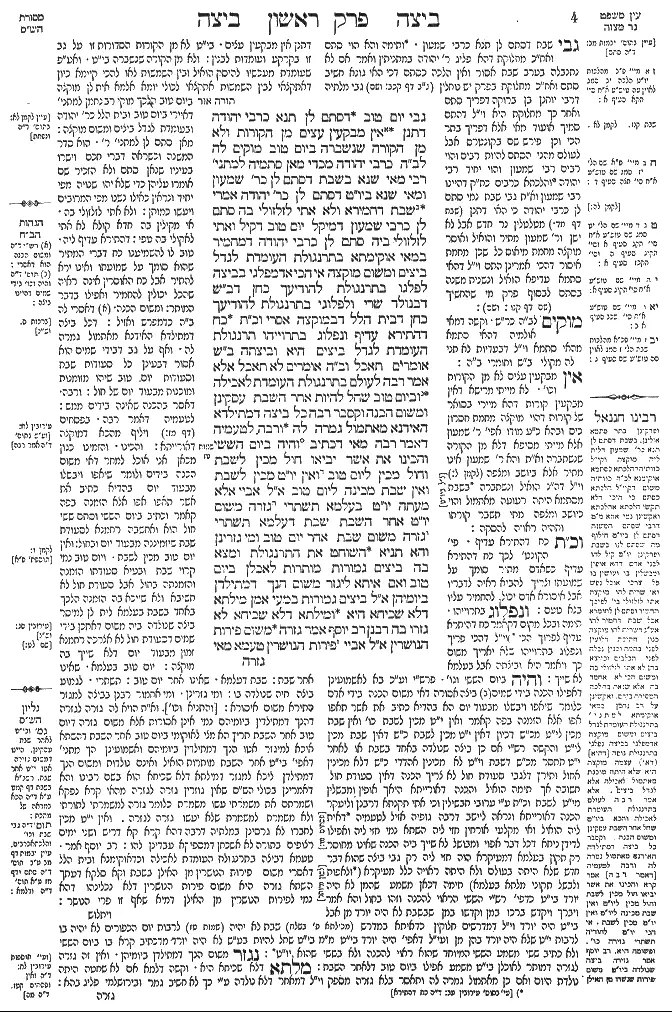
Beitza 2b - Guemara
גבי יום טוב דסתם לן תנא כרבי יהודה דתנן אין מבקעין עצים מן הקורות ולא מן הקורה שנשברה ביום טוב מוקים לה לבית הלל כרבי יהודה מכדי מאן סתמיה למתני' רבי מאי שנא בשבת דסתם לן כרבי שמעון ומאי שנא ביו"ט דסתם לן כרבי יהודה אמרי שבת דחמירא ולא אתי לזלזולי בה סתם לן כרבי שמעון דמיקל יום טוב דקיל ואתי לזלזולי ביה סתם לן כרבי יהודה דמחמיר במאי אוקימתא בתרנגולת העומדת לגדל ביצים ומשום מוקצה אי הכי אדמפלגי בביצה לפלגו בתרנגולת להודיעך כחן דבית שמאי דבנולד שרי ולפלוגי בתרנגולת להודיעך כחן דבית הלל דבמוקצה אסרי וכי תימא כח דהתירא עדיף ונפלוג בתרוייהו תרנגולת העומדת לגדל ביצים היא וביצתה בית שמאי אומרים תאכל ובית הלל אומרים לא תאכל אלא אמר רבה לעולם בתרנגולת העומדת לאכילה וביום טוב שחל להיות אחר השבת עסקינן ומשום הכנה וקסבר רבה כל ביצה דמתילדא האידנא מאתמול גמרה לה ורבה לטעמיה דאמר רבה מאי דכתיב (שמות טז, ה) והיה ביום הששי והכינו את אשר יביאו חול מכין לשבת וחול מכין ליום טוב ואין יום טוב מכין לשבת ואין שבת מכינה ליום טוב א"ל אביי אלא מעתה יום טוב בעלמא תשתרי גזרה משום יום טוב אחר השבת שבת דעלמא תשתרי גזרה משום שבת אחר יום טוב ומי גזרינן והא תניא השוחט את התרנגולת ומצא בה ביצים גמורות מותרות לאכלן ביום טוב ואם איתא ליגזר משום הנך דמתילדן ביומיהן אמר ליה ביצים גמורות במעי אמן מילתא דלא שכיחא היא ומילתא דלא שכיחא לא גזרו בה רבנן רב יוסף אמר גזרה משום פירות הנושרין א"ל אביי פירות הנושרין טעמא מאי
Comments from Rashi on Masechet Beitza Page 2b
דתנן אין מבקעין עצים . בי"ט לא מן הקורות הסדורות זו על גב זו בקרקע ועומדות לבנין: ולא מן הקורה שנשברה בי"ט . ואע"פ שעומדת מעכשיו להיסק הואיל ובין השמשות לאו להכי קיימא כיון דאתקצאי לבין השמשות אתקצאי לכולי יומא אלמא אית לן מוקצה ביום טוב הלכך מוקי רב נחמן למתני' דאיירי ביום טוב ובית הלל כר' יהודה ובעומדת לגדל ביצים ומשום מוקצה: מאן סתם לן למתני' ר' . הוא סדר המשנה וכשראה דברי חכם וישרו בעיניו שנאן סתם ולא הזכיר שם אומרו עליהן כדי שלא יהו שנויה מפי יחיד ונראין כאילו נשנו מפי המרובים ויעשו כמותן: ולא אתי לזלזולי ביה . אי מקילין בה חדא קולא לא אתי לאקולי בה טפי: דהתירא עדיף ליה . טוב לו להשמיענו כח דברי המתיר שהוא סומך על שמועתו ואינו ירא להתיר אבל כח האוסרין אינה ראיה שהכל יכולין להחמיר ואפילו בדבר המותר: ומשום הכנה . דאסרי לה ב"ה כדמפרש ואזיל: דכל ביצה דמתילדא האידנא מאתמול גמרה לה . ואף על גב דבידי שמים הוא אסור דבעינן כל סעודות שבת וסעודות יום טוב שיהו מזומנות ומוכנות מבעוד יום של חול: ורבה . דאסר בהכנה שאינה בידים ממש: לטעמיה דאמר רבה . בפסחים (דף מז:) ויליף מהכא דמוקצה דאורייתא: והכינו . והזמינו כגון מכאן אני אוכל למחר דאי משום הכנה בידים ולומר שיאפו ויבשלו מבעוד יום בהדיא כתיב את אשר תאפו אפו אלא הזמנה בפה קאמר וכתיב ביום הששי וסתם ששי חול הוא ואחשבה רחמנא לסעודת שבת שיזמיננה מבעוד יום ובחול: ואין יום טוב מכין לשבת . ויום טוב נמי קרוי שבת ובעיא סעודתו הזמנה והזמנתה בחול אבל סעודת חול לא חשיבא ולא שייכא בה הזמנה הלכך באחד בשבת בעלמא לית לן למיסר ביצה שנולדה ביה משום דאתכן בידי שמים דסעודת חול לא אצרכה רחמנא זמון מבעוד יום דלא שייך בה מוקצה: יום טוב בעלמא . שאינו אחר שבת: שבת דעלמא . שאינו אחר יום טוב: תשתרי . לגמוע ביצה חיה שנולדה בו: ומי גזרינן . ומי אחמור רבנן בביצה למגזר היתרא משום איסורא: [והתניא וכו'] . וא"ת הויא לה גזרה לגזרה דהנך דמתילדין ביומיהם נמי אינן אסורות אלא משום גזרה דיום טוב אחר השבת תריץ הא מצי לאוקומי ביום טוב אחר השבת דהשתא איכא למיגזר אטו דמתילדין ביומיהם ואשמועינן הך מתני' דאפי' בי"ט אחר השבת מותרות הואיל ואינם נולדות ומשום הנך דמתילדן ליכא למגזר דמילתא דלא שכיחא הוא בשם רבינו והא דאמרינן בכולי הש"ס שאין גוזרין גזרה לגזרה מהאי קרא נפקא ושמרתם את משמרתי עשו משמרת כלומר גזרה למשמרתי לתורתי ולא משמרת למשמרת שלא יעשו גזרה לגזרה: ואין י"ט מכין לחברו . לא גרסינן במלתיה דרבה דהא קרא קא דריש ושני ימים רצופים בתורה לא אשכחן דמספיקא עבדינן להו: רב יוסף אמר . טעמא דביצה בתרנגולת העומדת לאכילה וכדאוקימנא ובית הלל דאסרי משום פירות הנושרין מן האילן בשבת וקא סלקא דעתך השתא גזרה היא משום פירות הנושרין דלא נכלינהו דהא נמי לפירות הנושרין מן האילן דמיא שאף זו פרי הנושר:
Comments from Tosafot - Beitza 2b
גבי שבת דסתם לן תנא כרבי שמעון. ותימה והא הוי סתם ואח"כ מחלוקת דהא פליג ר' יהודה במתניתין ואמר אם לא נתנבלה בערב שבת אסור ואין הלכה כסתם דכי האי גונא חשיב סתם ואח"כ מחלוקת בפרק יש נוחלין (ב"ב דף קכב: ושם) גבי מלתיה דרבי יוחנן בן ברוקה דפריך סתם ואחר כך מחלוקת היא וי"ל דהתם סמיך אועוד מאי אלא דפריך בתר הכי וכן פירש שם בקונטרס אבל לעולם מהני הסתם להיות רבים והוי רבים רבי שמעון והוי יחיד רבי יהודה והלכתא כרבים כת"ק דהיינו רבי שמעון וא"ת גבי שבת נמי סתם לן כרבי יהודה כי האי דתנן (שבת דף מד.) מטלטלין נר חדש אבל לא ישן ור' שמעון מתיר והואיל ואוסר מוקצה מחמת מיאוס כל שכן מחמת איסור דהכי אמרינן התם וי"ל דהאי סתמא עדיפא הואיל ונשנית משנה בסתם לבסוף פרק מי שהחשיך (שם דף קנו: ושם): מוקים לב"ה כר"ש. וקשה דמאי אולמיה דהאי סתמא מהאי סתמא וי"ל דבעדיות לא תני לה מקולי ב"ש וחומרי ב"ה: אין מבקעין עצים לא מן הקורות וכו'. לא מייתי מרישא דאין מבקעין קורות דהא מיירי בסואר של קורות דהוי מוקצה מחמת חסרון כיס ובהא כ"ע מודו אפי' ר' שמעון אלא מייתי מסיפא דלא מן הקורה שנשתברה וא"ת והא ר' שמעון אינו מתיר אלא ביושב ומצפה (לקמן ביצה ל:) וי"ל דה"נ הואיל ונשתברה בשבת מסתמא היתה רעועה מאתמול והוי כיושב ומצפה מתי תשבר קורתו ותהיה ראויה להסקה: וכ"ת כח דהתירא עדיף. פי' הקונט' לכך כח דהתירא עדיף כשאדם מתיר סומך על שמועתו וצריך להביא ראיה לדבריו אבל איסורא אדם יכול להחמיר עליו בלא טעם: ונפלוג בתרוייהו. תימה ובכל מקום דקאמר כח דהיתרא עדיף לפרוך הכי וי"ל דהכי פריך ונפלוג בתרוייהו שלא יאריך משום כך ויאמר היא וביצתה אבל בעלמא לא שייך: והיה ביום הששי וגו'. פרש"י וע"כ בא לאשמועינן דאפילו הכנה בידי שמים ביצה אסורה דאי משום הכנה בידי אדם כלומר שיאפו ויבשלו מבעוד יום הא בהדיא כתיב את אשר תאפו אפו אלא הזמנה בפה קאמר ואין י"ט מכין לשבת כו' ואין שבת מכין לי"ט מכ"ש דכיון דאין י"ט מכין לשבת כ"ש דאין שבת מכין לי"ט והקשה רש"י אם כן ביצה שנולדה באחד בשבת או לאחר י"ט תתסר מכ"ש דשבת וי"ט לא מכינין אהדדי כ"ש דלא מכינין אחול ותירץ דלגבי סעודת חול לא צריך הכנה דאין סעודת חול חשובה אך תימה הואיל והכנה דאורייתא היאך אופין ומבשלין מי"ט לשבת וכ"ת ע"י ערובי תבשילין וכי אתי תקנתא דרבנן וליעקר הכנה דאורייתא ונראה ליישב דרבה גופיה אזיל לטעמיה דאית ליה הואיל ואי מקלעי אורחין חזי ליה השתא נמי חזי ליה ואפילו לדידן ניחא דכל דבר אפוי ומבושל לא שייך ביה הכנה שאינו מחוסר רק תקון בעלמא דמעיקרא הוה חזי ליה רק גבי ביצה שהוא דבר חדש שלא היתה בעולם ולא היתה ראויה כלל מעיקרא (ולאפות ולבשל תקוני מלתא בעלמא) תימה דכאן משמע שהמן לא היה יורד בי"ט כדפי' רש"י הששי הראוי להכנה וזהו בחול והא אמר ויברך ויקדש ברכו במן וקדשו במן שבשבת לא היה יורד מן אבל בי"ט היה יורד וי"ל דמדרשים חלוקין כדאיתא במדרש (מכילתא ע' בשלח) שבת לא יהיה (שמות טז) לרבות יום הכפורים לא יהיה בו לרבות י"ט שלא היה יורד בהן מן ועי"ל דאפי' היה יורד בי"ט מ"מ בי"ט שחל להיות בע"ש לא היה יורד מדכתיב קרא בו ביום הששי ולא כתיב ששי משמע הששי המיוחד שהוא ראוי להכנה ולא בששי שהוא יו"ט: נגזר משום הנך דמתילדן ביומיהן. ואין זה גזרה לגזרה דמותר לאוכלן בי"ט משמע אפילו ביום טוב דלאחר השבת: מלתא דלא שכיחא היא. וקשה דלמא אם לא שחטה היתה נולדת היום ואם כן מאתמול גמרה לה ותאסר בלא גזרה מספק וי"ל דמאחר דלא נולדה ע"י כך לא חשיב גמר ובירושלמי פליג בהא:
Beitza 2b - Mishnah translated into english
with regard to a Festival, the tanna taught us an unattributed mishna in accordance with the opinion of Rabbi Yehuda (Shabbat 156b), as we learned in a mishna in this tractate: One may not chop wood on a Festival from beams prepared for use in construction work, nor may one chop kindling wood from a beam that broke on a Festival. As the beams were not prepared for this use when the Festival began, they are classified as muktze; this demonstrates that an unattributed mishna prohibits muktze on a Festival. Consequently, Rav Naḥman establishes the opinion of Beit Hillel in accordance with the opinion of Rabbi Yehuda, who prohibits muktze. He does so by asserting that the mishna is referring to the case of a chicken designated for laying eggs, which is muktze. This concludes the Gemara’s explanation of Rav Naḥman’s rendering of the tannaitic dispute.
The Gemara asks: Now since, i.e., consider the following: Who is the one who wrote and edited the Mishna, and arranged the unattributed mishnayot? It was Rabbi Yehuda HaNasi. Since the same Sage formulated the statements in both tractates, the question arises: What is different with regard to the halakhot of Shabbat, that he stated the unattributed opinion and ruled for us in accordance with the opinion of Rabbi Shimon, and what is different with regard to the halakhot of a Festival, that he stated the unattributed opinion and ruled for us in accordance with the opinion of Rabbi Yehuda?
They answer and say: In the case of Shabbat, which is stringent with regard to its punishments (see 35b), and therefore people will not come to treat it with contempt, Rabbi Yehuda HaNasi taught us the unattributed mishna in accordance with the opinion of Rabbi Shimon, who rules leniently. Conversely, with regard to a Festival, which is lenient, as certain labors may be performed on a Festival, and therefore people will be more likely to come to treat it with contempt, he stated the unattributed opinion for us in accordance with the opinion of Rabbi Yehuda, who rules stringently.
The Gemara asks: In what manner did you ultimately establish the mishna? It was established as referring to a chicken designated for laying eggs, and the prohibition is due to muktze. If so, rather than disputing with regard to an egg laid on a Festival, let them dispute with regard to the chicken itself. Instead of considering the secondary detail of an egg, Beit Shammai and Beit Hillel could discuss whether or not the chicken itself may be slaughtered on a Festival.
The Gemara answers: Beit Shammai and Beit Hillel also disagree with regard to the chicken, but the dispute was phrased in this manner to convey the far-reaching nature of the opinion of Beit Shammai. The formulation of the mishna emphasizes the extent of Beit Shammai’s lenient opinion, that even in the case of an egg, which is not a regular muktze item but an item that came into being, an especially stringent type of muktze, Beit Shammai nevertheless permit it. By stating the dispute with regard to an egg, the mishna stresses Beit Shammai’s lenient opinion.
The Gemara raises an objection: And let them disagree with regard to a chicken, rather than an egg, to convey the far-reaching nature of the opinion of Beit Hillel, who prohibit its use even in the more lenient case of muktze. And if you say it is better to present the dispute as in the mishna, so as to clarify the more lenient opinion, as the strength of leniency is preferable (Berakhot 60a), there is another option: And let them disagree with regard to both of these cases.
The mishna could have said: With regard to a chicken designated for laying eggs, it and its eggs, Beit Shammai say: It may be eaten, and Beit Hillel say: It may not be eaten. In this manner, the mishna could have referred to all aspects of the dispute, without the need for any lengthy addition. Consequently, Rav Naḥman’s explanation of the mishna is inadequate.
Rather, Rabba said: Actually, the above explanation should be rejected. We are dealing with a chicken designated for food and we are dealing with an egg that was laid on a Festival that occurs after Shabbat, i.e., on a Sunday. And the relevant issue is not the halakhot of muktze; rather, one may not eat the egg due to the prohibition against preparation from Shabbat to a Festival.
And in this regard, Rabba holds that any egg laid now was already fully developed yesterday, and merely emerged from the chicken today. Consequently, an egg laid on a Festival that occurred on a Sunday may not be eaten, as it was prepared on Shabbat, despite the fact that it was prepared naturally, by Heaven, rather than by man.
The Gemara comments: And Rabba, who prohibits one to derive benefit even from something that was not prepared by man, conforms to his standard line of reasoning. As Rabba said: What is the meaning of that which is written with regard to the manna: “And it shall come to pass on the sixth day, that they shall prepare that which they bring in” (Exodus 16:5)? According to Rabba, it can be inferred from this verse that on an ordinary weekday, “the sixth day,” one may prepare what is needed for Shabbat, and similarly, on an ordinary weekday one may prepare what is needed for a Festival. However, on a Festival one may not prepare for Shabbat, and likewise on Shabbat one may not prepare for a Festival.
Abaye said to Rabba: However, if that is so, and the concern is only due to preparation, let an egg laid on a regular Festival, one that does not occur on a Sunday, be permitted. Rabba responded: That egg is not prohibited by Torah law, but by rabbinic decree, due to the case of a Festival that occurs after Shabbat. Abaye asked: On a regular Shabbat, one that does not occur after a Festival, let it be permitted to eat an egg that was laid on that day, provided that one does not cook it. Rabba similarly answered: It is a decree due to a Shabbat that occurs after a Festival.
Abaye further asked: And do we issue a decree of this kind? But isn’t it taught in a baraita (see 6b): In the case of one who slaughters a chicken on a Festival and finds inside it fully developed eggs with their shells, it is permitted to eat them on the Festival. And if it is so, that the aforementioned decree is in effect, let him issue a decree and prohibit these eggs found inside the chicken, due to those that are laid on that day.
Rabba said to him: This is not difficult, as the case of fully developed eggs found inside their mother is an uncommon matter, and in a case of an uncommon matter the Sages did not issue a decree as a preventive measure (Eiruvin 63b). The Sages issued their decrees only for usual situations, in which people might err, but they did not apply them to rare cases. This concludes the Gemara’s discussion of Rabba’s explanation.
The Gemara proceeds to explain other interpretations of the mishna. Rav Yosef said: An egg laid by a chicken designated for food is prohibited for a different reason: It is a decree due to fruits that fall from a tree (Eiruvin 39b). Fruits that fall from a tree on Shabbat or a Festival may not be eaten, and the same applies to eggs that emerge from a chicken.
Abaye said to Rav Yosef: With regard to fruits that fall, what in fact is the reason that the Sages prohibited them?
Traduction : The William Davidson digital edition of the Koren Noé Talmud, with commentary by Rabbi Adin Even-Israel Steinsaltz.