 Talmud Bavli
The learning on the whole site is dedicated : L'ilui Nishmat Ledicia bat David Banoun
The learning on the whole site is dedicated : L'ilui Nishmat אליעזר בן רחל
The learning on the whole site is dedicated : L'ilui Nishmat Jamila bat Chlomo Abensour
Beitza 6b : Youtube
Daf TubeYoutube
3 video classes :
Beitza Page 6b
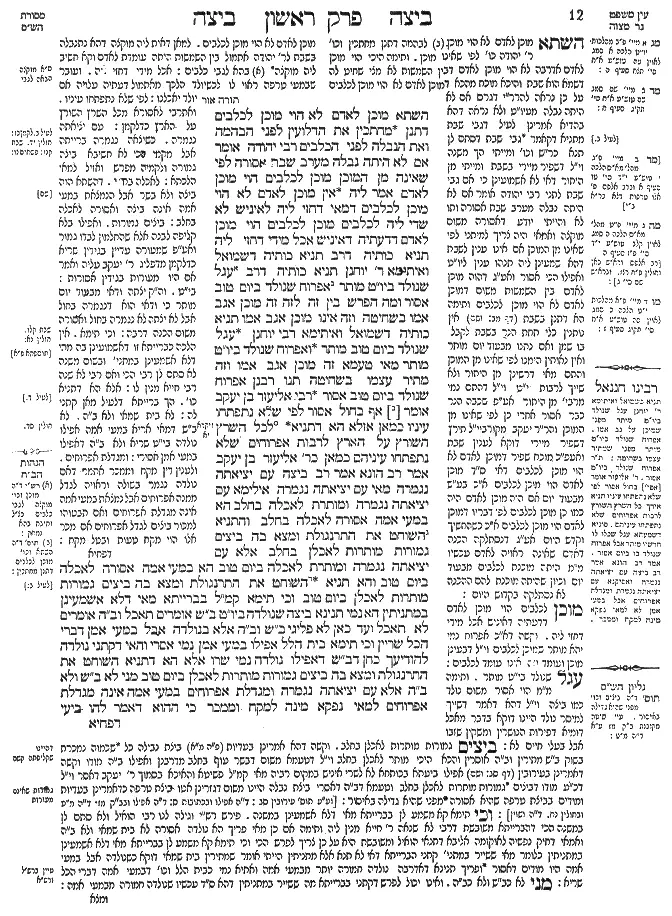
Beitza 6b - Guemara
השתא מוכן לאדם לא הוי מוכן לכלבים דתנן מחתכין את הדלועין לפני הבהמה ואת הנבלה לפני הכלבים רבי יהודה אומר אם לא היתה נבלה מערב שבת אסורה לפי שאינה מן המוכן מוכן לכלבים הוי מוכן לאדם אמר ליה אין מוכן לאדם לא הוי מוכן לכלבים דמאי דחזי ליה לאיניש לא שדי ליה לכלבים מוכן לכלבים הוי מוכן לאדם דדעתיה דאיניש אכל מידי דחזי ליה תניא כותיה דרב תניא כותיה דשמואל ואיתימא ר' יוחנן תניא כותיה דרב עגל שנולד ביו"ט מותר אפרוח שנולד ביום טוב אסור ומה הפרש בין זה לזה זה מוכן אגב אמו בשחיטה וזה אינו מוכן אגב אמו תניא כותיה דשמואל ואיתימא רבי יוחנן עגל שנולד ביום טוב מותר ואפרוח שנולד ביו"ט מותר מאי טעמא זה מוכן אגב אמו וזה מתיר עצמו בשחיטה תנו רבנן אפרוח שנולד ביום טוב אסור רבי אליעזר בן יעקב אומר אף בחול אסור לפי שלא נתפתחו עיניו כמאן אזלא הא דתניא (ויקרא יא, מב) לכל השרץ השורץ על הארץ לרבות אפרוחים שלא נתפתחו עיניהם כמאן כר' אליעזר בן יעקב אמר רב הונא אמר רב ביצה עם יציאתה נגמרה מאי עם יציאתה נגמרה אילימא עם יציאתה נגמרה ומותרת לאכלה בחלב הא במעי אמה אסורה לאכלה בחלב והתניא השוחט את התרנגולת ומצא בא ביצים גמורות מותרות לאכלן בחלב אלא עם יציאתה נגמרה ומותרת לאוכלה ביום טוב הא במעי אמה אסורה לאכלה ביום טוב והא תניא השוחט את התרנגולת ומצא בה ביצים גמורות מותרות לאכלן ביום טוב וכי תימא קמ"ל בברייתא מאי דלא אשמעינן במתניתין הא נמי תנינא ביצה שנולדה ביו"ט ב"ש אומרים תאכל וב"ה אומרים לא תאכל ועד כאן לא פליגי ב"ש וב"ה אלא בנולדה אבל במעי אמן דברי הכל שריין וכי תימא בית הלל אפילו במעי אמן נמי אסרי והא דקתני נולדה להודיעך כחן דב"ש דאפילו נולדה נמי שרו אלא הא דתניא השוחט את התרנגולת ומצא בה ביצים גמורות מותרות לאכלן ביום טוב מני לא ב"ש ולא ב"ה אלא עם יציאתה נגמרה ומגדלת אפרוחים במעי אמה אינה מגדלת אפרוחים למאי נפקא מינה למקח וממכר כי ההוא דאמר להו ביעי
Comments from Rashi on Masechet Beitza Page 6b
מוכן לאדם לא הוי מוכן לכלבים . למאן דאית ליה מוקצה דהא נתנבלה בשבת לר' יהודה אתמול בין השמשות היתה עומדת לאדם וקא חשיב ליה מוקצה בהא לגבי כלבים: אכל מידי דחזי ליה . ועובר שבמעי טרפה ראוי לו לכשיולד הלכך מאתמול דעתיה עלויה אם יולד יאכלנו: לפי שלא נתפתחו עיניו . ואתרבי לאסורא מכל השרץ השורץ על הארץ כדלקמן: עם יציאתה נגמרה . כשיצאה נגמרה ברייתה אבל מקמי הכי לא חשיבא ביצה גמורה ולקמיה מפרש ואזיל למאי הלכתא: לאכלה בחלב . דהשתא הוה ביצה ולא בשר אבל הנמצאת במעי אמה אינה ביצה ואסורה לאכלה בחלב: ביצים גמורות . ואפילו בלא קליפה לבנה אלא שהחלמון לבדו גמור ואע"פ שמעורה עדיין בגידין שריא כדלקמן מדפליג ר' יעקב עליה ואמר אם היו מעורות בגידין אסורות: בי"ט . וה"ק יצתה ודאי מבעוד יום מותר כי ודאי הוא דנגמרה בחול אבל לא יצתה לא נגמרה בחול ואסורה משום הכנה דרבה: וכי תימא . אין הלכה כברייתא זו דאשמועינן בה מאי דלא אשמעינן במתני' ובשום משנה לא סתם לן רבי הכי ואם רבי לא שנה רבי חייא מנין לו: אלא הא דתניא כו' . הך ברייתא דלעיל מאן קתני לה: לא בית שמאי ולא ב"ה . לא ב"ש דמאי אריא במעי אמה אפילו נולדה בי"ט שריא ולא ב"ה דאפילו במעי אמן אסירי: ומגדלת אפרוחים . ולענין דין מקח וממכר אתמר דאם נולדה נגמר בשולה וראויה לגדל ממנה אפרוחים אבל נמצאת במעי אמה אינה מגדלת אפרוחים ואם תבעוהו למכור ביצים לגדל אפרוחים אם מכר אלו הוי מקח טעות ובטל מקח:
Comments from Tosafot - Beitza 6b
השתא מוכן לאדם לא הוי מוכן לבהמה דתנן מחתכין וכו' ר' יהודה כו' לפי שאינו מוכן. ותימה היכי הוי מוכן לאדם אדרבה לא הוי מוכן לאדם דבין השמשות לא מצי שחיט לה דשמא הוא שבת והיכי מוכח מהכא דמוכן לאדם לא הוי מוכן לכלבים על כן נראה להרר"י דגרס אם לא היתה נבלה מעיו"ט ולא נראה דהא בהדיא אמרינן לעיל דגבי שבת מתניא דקאמר. גבי שבת דסתם לן תנא כר"ש וכו' ומייתי הך משנה וי"ל דשפיר מיירי בשבת ומייתי מן היתור דאי לא אשמועינן כי אם גבי שבת לתני רבי יהודה אומר אם לא היתה נבלה מערב שבת אסורה ותו לא והייתי יודע דאסורה משום מוקצה ואמאי היה צריך למיתני לפי שאינו מן המוכן אם אינו ענין לשבת דהא שמעינן ליה תנהו ענין ליו"ט ואפילו הכי אסור ואע"ג דהוה מוכן לאדם בין השמשות משום דמוכן לאדם לא הוי מוכן לכלבים ותימה הא דתנן בשבת (דף מב: ושם) אין נותנין כלי תחת הנר בשבת לקבל בו שמן ואם נתנו מבעוד יום מותר ואין נאותין הימנו לפי שאינו מן המוכן והתם מאי דרשינן מן היתור ולא שייך לרבות י"ט וי"ל דהתם נמי מרבי' מן היתור אע"פ שכבה הנר כבר אסור אחרי כן לפי שאינו מן המוכן והר"ר יעקב מקורביי"ל תירץ דשפיר מיירי דוקא לענין שבת ואעפ"כ מוכח שפיר דמוכן לאדם לא הוי מוכן לכלבים דאי ס"ד מוכן לאדם הוי מוכן לכלבים א"כ בע"ש מבעוד יום אם היה מוכן לאדם היה כמו כן מוכן לכלבים לפי דבריו דמוכן לאדם הוי מוכן לכלבים א"כ כשהחשיך וקדש היום אע"ג דנסתלקה הכנה דאדם שאינה ראויה לאדם עכשיו מ"מ היתה מוכנת לכלבים מבעוד יום וכיון שהיתה מוכנת להם ההכנה לא נסתלקה בקדוש היום: מוכן לכלבים הוי מוכן לאדם דדעתיה דאיניש אכל מידי דחזי ליה. וקשה דא"כ אפרוח נמי יהא מותר שמוכן לכלבים וי"ל דבעינן מוכן ועומד וזה אינו עומד לכלבים: עגל שנולד בי"ט מותר. ותימה מ"מ הוי אסור משום נולד כמו ביצה וי"ל דהא דאמר דשייך למיסר נולד היינו דוקא בדבר מאכל דומיא דפירות הנושרין ומשקין שזבו אבל בעלי חיים לא: ביצים גמורות מותרות לאכלן בחלב. וקשה דהא אמרינן בעדיות (פ"ה מ"א) ביצת נבלה כל. שכמוה נמכרת בשוק ב"ש מתירין וב"ה אוסרין והכא היכי מותר לאכלן בחלב וי"ל דטעמא משום דבשר עוף בחלב מדרבנן ואפילו ב"ה מודו וקשה דאמרינין בעירובין (דף סב: ושם) אפילו ביעתא בכותחא לא לשרי איניש במקום רביה מאי קמ"ל פשיטא והאיכא בסמוך ר' יעקב דאסר וי"ל דכ"ע מודו דביצים. גמורות מותרות לאכלן בחלב וטעמא דב"ה דאסרי ביצת נבלה היינו משום דגזרינן אטו ביצת טרפה כדאמרינן בעדיות ומודים בביצת טרפה שהיא אסורה מפני שהיא גדילה באיסור: [וע"ע תוס' עירובין סב: ד"ה אפילו ובכתובות ס: ד"ה אפילו ובב"ק מז. ד"ה מ"ט ובחולין נח. ד"ה ושוין]: וכי תימא קא משמע לן בברייתא מאי דלא אשמעינן במשנה. פירש רש"י וגילה לנו רבי הואיל ולא סתם לן במשנה הכי דהברייתא משובשת דרבי לא שנאה ר' חייא מנין ליה ותימה אם כן מאי פריך הא נולדה אסורה לא בית שמאי ולא ב"ה ואמאי דחיק נפשיה לאוקומה אליבא דתנאי הואיל ומשובשת היא על כן צריך לפרש הכי וכי תימא קא משמע לן בברייתא מאי דלא אשמעינן במתניתין כלומר מאי ששייר במתני' קתני הברייתא דאי לא תנא אלא מתניתין הייתי אומר שמתירין בית שמאי דוקא כשנולדה אבל במעי אמה היו מודים דאסור ופריך תנינא דאדרבה נולדה חמורה יותר מבמעי אמה ואתיא נמי כבית הלל וכו' דבמעי אמה דברי הכל שריא: מני לא כב"ש ולא כב"ה. ואינו יכול לפרש דקתני בברייתא מה ששייר במתניתין דהא ס"ד עכשיו שנולדה חמורה מבמעי אמה:
Beitza 6b - Mishnah translated into english
Now, we know that food prepared, i.e., fit, for human consumption that became spoiled is not automatically considered prepared for dogs, as we learned in a mishna (see 2a): One may cut pumpkins before an animal to facilitate their consumption, and likewise one may cut up an animal carcass, even of an animal that died on Shabbat, before dogs. Rabbi Yehuda says: If the animal was not already a carcass, i.e., it was not dead and fit for dogs, prior to Shabbat, it is prohibited, because it is not in the category of items considered prepared for use on Shabbat. This shows that although this animal was fit for human consumption while alive, it does not automatically become prepared for dogs once it dies. If so, can food prepared for dogs be considered prepared for humans?
He said to him: Yes. It is not surprising that something prepared and fit for humans is not considered fit and prepared for dogs, as that which is fit for a person, one does not throw it to dogs, and he has therefore removed that animal from his mind. However, something that is prepared for dogs is also considered fit and prepared for humans, as a person’s mind is on anything fit to be eaten by him. One does not completely remove from his mind even food meant for dogs, if it is kosher and edible. Consequently, one has in mind the possibility that he might eat the calf of a cow that is a tereifa once it is born, since at that point it will be kosher and edible.
With regard to the dispute itself, the Gemara comments: It is taught in a baraita in accordance with the opinion of Rav; and it is taught in another baraita in accordance with the opinion of Shmuel, and some say in accordance with the opinion of Rabbi Yoḥanan.
The Gemara elaborates: It is taught in a baraita in accordance with the opinion of Rav: A calf born on a Festival is permitted; a chick born on a Festival is prohibited. And what is the difference between this case and that one? This one, the calf, is prepared on account of its mother by slaughter; and that one, the chick, is not prepared on account of its mother.
The Gemara further explains: It is taught in a baraita in accordance with the opinion of Shmuel, and some say it is the opinion of Rabbi Yoḥanan: A calf born on a Festival is permitted, and a chick born on a Festival is likewise permitted. What is the reason? This one, the calf, is prepared on account of its mother; and that one, the chick, is itself rendered permitted through slaughter.
The Sages taught in a baraita: A chick born on a Festival is prohibited. Rabbi Eliezer ben Ya’akov says: Even on a weekday, the chick is prohibited on the day it hatched because its eyes have not yet opened. A small chick of this kind is not yet considered a bird fit for consumption; rather, it is similar to a creeping animal.
The Gemara comments: In accordance with whose opinion is that which is taught: The verse that states: “Even all creeping animals that creep upon the earth, you shall not eat them, for they are a detestable thing” (Leviticus 11:42) comes to include in the list of prohibited creeping animals even chicks that have not yet opened their eyes. In accordance with whose opinion is this baraita? It is in accordance with the opinion of Rabbi Eliezer ben Ya’akov.
§ Rav Huna said that Rav said: An egg is fully formed upon its emergence; i.e., it is not considered an egg until it is laid. The Gemara inquires: What is the meaning of the statement: An egg is fully formed upon its emergence? To which issue is Rava referring? If we say he meant an egg is fully formed and called an egg only upon its emergence, and at this stage it is permitted to eat it with milk, this indicates that while an egg is still inside its mother, even if it is fully formed, it is considered meat and it is prohibited to eat it with milk. But isn’t it taught in a baraita: With regard to one who slaughters a chicken and finds fully formed eggs inside it, it is permitted to eat them with milk?
Rather, Rav’s statement should be explained as follows: An egg is fully formed upon its emergence in that it is permitted to eat it on a Festival only if the entire egg emerged on a weekday. The Gemara expresses surprise at this claim: This indicates that if an egg is found inside its mother, it is prohibited to eat it on a Festival. But isn’t it taught: With regard to one who slaughters a chicken and finds fully formed eggs inside it, it is permitted to eat them on a Festival?
And if you say: The baraita teaches us that which the mishna did not explicitly teach us, and Rav stated the halakha accordingly; however, this we already learned in the mishna here, as it says in the mishna: With regard to an egg laid on a Festival, Beit Shammai say it may be eaten, and Beit Hillel say it may not be eaten. And Beit Shammai and Beit Hillel disagree only with regard to an egg that was already laid, but concerning eggs inside their mothers, all agree that they are permitted.
And if you say that the mishna should be explained in the opposite manner, as Beit Hillel also prohibit eggs inside their mothers, and the fact that the mishna teaches: Laid, is to convey the far-reaching nature of the opinion of Beit Shammai, that they permit even an egg that was laid. However, consider that which is taught in the aforementioned baraita: With regard to one who slaughters a chicken and finds inside it fully formed eggs, it is permitted to eat them on a Festival. In accordance with whose opinion is this baraita? It is the opinion neither of Beit Shammai nor of Beit Hillel.
Rather, Rav certainly did not prohibit an egg that has not yet been laid. Instead, his statement should be explained as follows: An egg is fully formed upon its emergence, and it produces chicks, i.e., an egg laid in the regular manner can be incubated and a chick will hatch from it. By contrast, an egg that remained inside its mother cannot produce chicks. The Gemara asks: What is the practical halakhic difference of this observation? The Gemara answers: It is relevant for buying and selling. In other words, the difference between the types of eggs has ramifications for terms of commerce. This is like that incident involving a certain individual who would say to the general public: Eggs
Traduction : The William Davidson digital edition of the Koren Noé Talmud, with commentary by Rabbi Adin Even-Israel Steinsaltz.