 Talmud Bavli
The learning on the whole site is dedicated : For the success of Elyahou ben H'anna & family
The learning on the whole site is dedicated : L'ilui Nishmat Jamila bat Chlomo Abensour
The learning on the whole site is dedicated : L'ilui Nishmat Nissim ben Barukh Malka
Beitza 26b : Youtube
Daf TubeYoutube
2 video classes :
Beitza Page 26b
Beitza 26b - Guemara
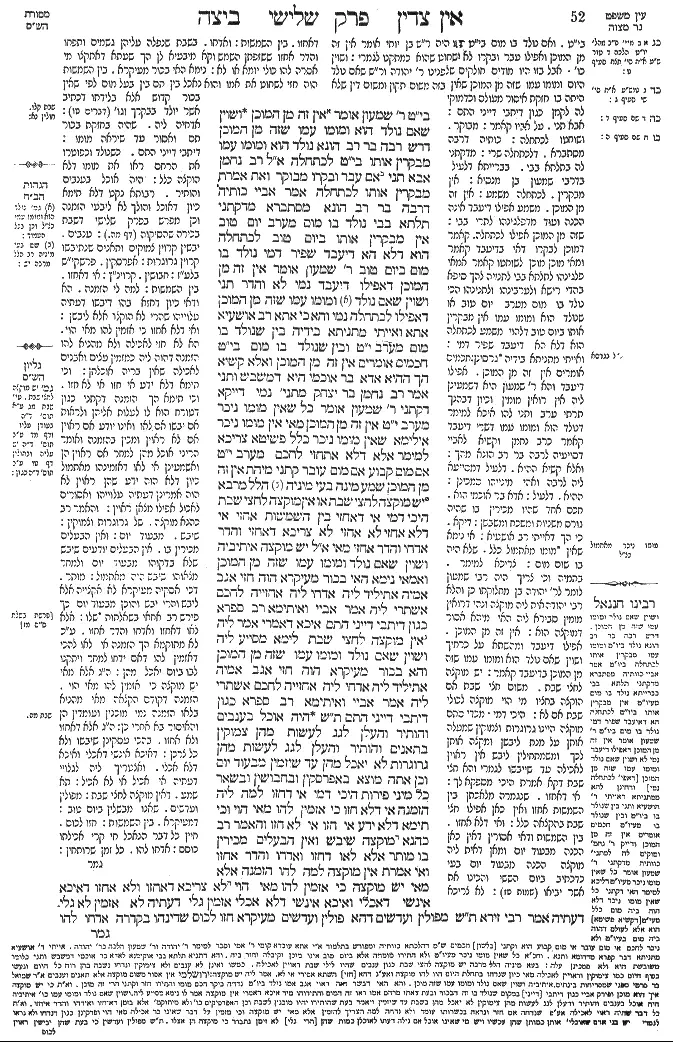
בי"ט ר' שמעון אומר אין זה מן המוכן ושוין שאם נולד הוא ומומו עמו שזה מן המוכן דרש רבה בר רב הונא נולד הוא ומומו עמו מבקרין אותו בי"ט לכתחלה א"ל רב נחמן אבא תני אם עבר ובקרו מבוקר ואת אמרת מבקרין אותו לכתחלה אמר אביי כותיה דרבה בר רב הונא מסתברא מדקתני תלתא בבי נולד בו מום מערב יום טוב אין מבקרין אותו ביום טוב לכתחלה הוא דלא הא דיעבד שפיר דמי נולד בו מום ביום טוב ר' שמעון אומר אין זה מן המוכן דאפילו דיעבד נמי לא והדר תני ושוין שאם נולד ומומו עמו שזה מן המוכן דאפילו לכתחלה נמי והא כי אתא רב אושעיא אתא ואייתי מתניתא בידיה בין שנולד בו מום מערב י"ט ובין שנולד בו מום בי"ט חכמים אומרים אין זה מן המוכן ואלא קשיא הך ההיא אדא בר אוכמי היא דמשבש ותני אמר רב נחמן בר יצחק מתני' נמי דייקא דקתני ר' שמעון אומר כל שאין מומו ניכר מערב י"ט אין זה מן המוכן מאי אין מומו ניכר אילימא שאין מומו ניכר כלל פשיטא צריכא למימר אלא דלא אתחזי לחכם מערב י"ט אם מום קבוע אם מום עובר קתני מיהת אין זה מן המוכן שמע מינה בעי מיניה הלל מרבא יש מוקצה לחצי שבת או אין מוקצה לחצי שבת היכי דמי אי דאחזי בין השמשות אחזי אי דלא אחזי לא אחזי לא צריכא דאחזי והדר אדחי והדר אחזי מאי א"ל יש מוקצה איתיביה ושוין שאם נולד ומומו עמו שזה מן המוכן ואמאי נימא האי בכור מעיקרא הוה חזי אגב אמיה אתיליד ליה אדחי ליה אחזייה לחכם אשתרי ליה אמר אביי ואיתימא רב ספרא כגון דיתבי דייני התם איכא דאמרי אמר ליה אין מוקצה לחצי שבת לימא מסייע ליה ושוין שאם נולד ומומו עמו שזה מן המוכן והא בכור מעיקרא הוה חזי אגב אמיה אתיליד ליה אדחי ליה אחזייה לחכם אשתרי ליה אמר אביי ואיתימא רב ספרא כגון דיתבי דייני התם ת"ש היה אוכל בענבים והותיר והעלן לגג לעשות מהן צמוקין בתאנים והותיר והעלן לגג לעשות מהן גרוגרות לא יאכל מהן עד שיזמין מבעוד יום וכן אתה מוצא באפרסקין ובחבושין ובשאר כל מיני פירות היכי דמי אי דחזו למה ליה הזמנה אי דלא חזו כי אזמין להו מאי הוי וכי תימא דלא ידע אי חזו אי לא חזו והאמר רב כהנא מוקצה שיבש ואין הבעלים מכירין בו מותר אלא לאו דחזו ואדחו והדר אחזו ואי אמרת אין מוקצה למה להו הזמנה אלא מאי יש מוקצה כי אזמין להו מאי הוי לא צריכא דאחזו ולא אחזו דאיכא אינשי דאכלי ואיכא אינשי דלא אכלי אזמין גלי דעתיה לא אזמין לא גלי דעתיה אמר רבי זירא ת"ש מפולין ועדשים דהא פולין ועדשים מעיקרא חזו לכוס שדינהו בקדרה אדחו להו
Comments from Rashi on Masechet Beitza Page 26b
בי"ט . ואם נולד בו מום בי"ט היה ר"ש בן יוחי אומר אין זה מן המוכן ואפילו עבר ובקרו לא ישחוט שהוא כמתקנו לגמרי: ושוין כו' . אבל בזו היו מודים חולקים שלפנינו ר' יהודה ור"ש שאם נולד היום ומומו עמו שזה מן המוכן שאין בזה משום תקון ומשום דין שלא היתה בו חזקת איסור מעולם וכדמוקי לה לקמן כגון דיתבי דייני התם: אבא תני . על אביו קאמר: מבוקר . ושוחטו לכתחלה: כותיה דרבה מסתברא . דלכתחלה שרי: מדקתני לה בתלתא בבי . בברייתא דלעיל בדרבי שמעון בן מנסיא: אין מבקרין . לכתחלה משמע: אין זה מן המוכן . משמע אפילו דיעבד אינה הכנה ועוד מדפלגינהו לתרי בבי: שזה מן המוכן אפילו לכתחלה . קאמר דמוכן לבקרו דאי בדיעבד קאמר ומאי מוכן מוכן לשוחטו קאמר אמאי פלגינהו לתלתא בבי לתנייה להך סיפא בהדי רישא ולערבינהו ולתנינהו הכי נולד בו מום מערב יום טוב או שנולד הוא ומומו עמו אין מבקרין אותו ביום טוב דלהוי משמע לכתחלה הוא דלא הא דיעבד שפיר דמי: ואייתי מתניתא בידיה גרסינן: חכמים אומרים אין זה מן המוכן . אפילו דיעבד והא ר' שמעון היא דשמעינן ליה אין רואין מומין וכיון דבהנך תרתי ערב ותני להו איכא למימר דנולד הוא ומומו עמו דשרי דיעבד קאמר כרב נחמן וקשיא לאביי דסייעיה לרבה בר רב הונא מהך: ואלא קשיא ההיא . דלעיל דמסייעא ליה לרבה ואהי מינייהו סמכינן: ההיא . דלעיל: אדא בר אוכמי הוא . חכם אחד שהיו מכירין בו שהיה גורס משניות ומשכח ומשבשן: דיקא . כי הך דאייתי רב אושעיא: אי נימא שאין מומו מאתמול כלל . שלא היה בו שום מום: צריכא למימר . בתמיה וכי צריך היה רבי שמעון לומר לר' יהודה בן מחלוקתו כן והלא רבי יהודה אית ליה מוקצה ונהי דרואין מומין סבירא ליה האי מיהא אסור דמוקצה הוא: אין זה מן המוכן . אפילו דיעבד ומהשתא על כרחיך ושוין שאם נולד הוא ומומו עמו שזה מן המוכן. בדיעבד קאמר: יש מוקצה לחצי שבת . משום חצי שבת אם הוקצה בחציו מי הוי מוקצה לכולי שבת אם לא: היכי דמי . מכדי סתם מוקצה היינו גרוגרות וצמוקין שמעלה אותן על מנת ליבשן ומקצה אותן לכך ומשמתחילין ליבש אין ראוין לאכילה עד שייבשו לגמרי והא חצי שבת דקא אמרת היכי מספקא לך: אי דאחזו . שנגמרה מלאכתן בין השמשות אחזו ואין כאן אפילו חצי שבת בהקצאה כלל: ואי דלא אחזו . בין השמשות ודאי אסורין דאין כאן הכנה מבעוד יום ומאן דאית ליה מוקצה הכנה מבעוד יום בעי כדכתיב ביום הששי והכינו את אשר יביאו (שמות טז): לא צריכא דאחזו . בין השמשות: נימא האי בכור מעיקרא . בין השמשות הוה חזי לשחוט את אמו והוא נאכל בין תם בין בעל מום לפי שאין בכור קדוש אלא בלידתו דכתיב אשר יולד בבקרך וגו' (דברים טו): אדחיה ליה . שהיה בחזקת בכור תם ואסור עד שיראה מומו: דיתבי דייני התם . כשנולד וכפוטרו את הרחם ראו את מומו דלא הוקצה כלל: היה אוכל בענבים והותיר . רבותא נקט דלא תימא כיון דאוכל והולך לא ליבעי הזמנה וכן מפרש בפרק שלישי דשבת בכירה שהסיקוה (דף מה.): ענבים . יבשין קרוין צמוקים ותאנין שנתיבשו קרוין גרוגרות: אפרסקין . פרשקי"ש בלע"ז: חבושין . קרוני"ץ: אי דאחזו . בין השמשות: למה לי הזמנה . הא ודאי כיון דחזא בהו דיבשו דעתיה עלוייהו שהרי לא הוקצו אלא ליבשן: ואי דלא אחזו כי אזמין להו מאי הוי . הא לא חזי לאכילה ולא מהניא להו הזמנה דהוה ליה כמזמין עצים ואבנים לאכילה שאין בריה אוכלתן: וכי תימא דלא ידע אי חזו אי לא חזו . וכי תימא הך הזמנה דקתני כגון דטורח הוא לו לעלות אליהן ולראות אם יבשו אם לאו ואינו יודע אם ראוין אם לא ראוין ומכין בהזמנה ואומר הריני אוכל מהן למחר אם ראוין הן ואשמעינן אי לאו דאזמינהו מאתמול כיון דלא הוה ידע שהן ראוין לא הוה אמרינן דעתיה עלוייהו ואסורים לאכול אפילו מצאן ראוין: והאמר רב כהנא מוקצה . של גרוגרות וצמוקין: שיבש . מבעוד יום: ואין הבעלים מכירין בו . אין הבעלים יודעים שיבש שלא בדקוהו מבעוד יום ולמחר מצאוהו שיבש היה מאתמול: מותר . דכי אסקיה מעיקרא לא אקצייה אלא ליבש והרי יבש והוכן מבעוד יום כך פירש רב אחאי בשאלתות שלו: ואדחו . בשבת שנפלה עליהן גשמים ותפחו והדר אחזו ששזפתן השמש וקא מיבעיא לן הך שעתא דאתקצו מי אסרה להו כולי יומא או לא: אלא לאו דאחזו ואדחו והדר אחזו . ע"כ לא מתוקמא הך הזמנה אי לאו להכי דאזמין להו דאם ידחו למחר ויתקנו לבו ביום יאכל מהן: ה"ג אלא מאי יש מוקצה כי אזמין להו מאי הוי . הזמנה דקודם הקצאה מאי מהניא בלאו הזמנה נמי מוכנין ועומדין הן והאיסור בא אחרי כן: ה"ג אלא דאחזו ולא אחזו . בהכי עסקינן שיבשו ולא כל צרכן: דאיכא אינשי דאכלי ואיכא דלא אכלי . ואצטריך ליה לגלויי דעתיה אי אכיל אי לא אכיל: תא שמע . דאין מוקצה לחצי שבת: מפולין ועדשים . שאנו מבשלין ביום טוב: דמעיקרא . בין השמשות: חזו לכוס . חיין כל דבר הנאכל חי קרי אכילתו כוסס: אדחו להו . כל זמן שרותחין:
Beitza 26b - Mishnah translated into english
on the Festival itself, Rabbi Shimon says: It is not considered to be among the animals prepared prior to the Festival for use on the Festival; therefore, even if it was examined by an expert, it may not be slaughtered. And Rabbi Yehuda and Rabbi Shimon agree that if the animal was born with its blemish, it is considered to be among the animals prepared for use on the Festival.
Rabba bar Rav Huna taught the halakha as follows: If a firstborn was born with its blemish, experts may examine it on a Festival ab initio, and if the blemish is found to be permanent, the animal may then be slaughtered. Rav Naḥman said to him: Father would teach on this matter that if he transgressed and examined it, it is considered examined after the fact, and you say that one may examine it even ab initio?
Abaye said: It stands to reason that the halakha is in accordance with the opinion of Rabba bar Rav Huna from the fact that the baraita is taught in three parts, which suggests that each part contains a novel halakha. The first section states: If a firstborn developed a blemish on the eve of a Festival one may not examine it on the Festival itself, from which one can learn that it is only ab initio that one may not examine it; but after the fact, it seems well, and the examination is valid.
The second section of the baraita states: If it developed a blemish on the Festival itself, Rabbi Shimon says: It is not considered to be among the animals prepared prior to the Festival for use on the Festival. In other words, even after the fact, no, if the animal was examined by an expert, it may not be slaughtered and eaten. And then in the third section it teaches: And Rabbi Yehuda and Rabbi Shimon agree that if the animal was born with its blemish, it is considered to be among the animals prepared for use on the Festival. The fact that the baraita taught this halakha as an independent clause indicates that even ab initio as well, the animal may be examined.
The Gemara raises an objection: But isn’t it so that when Rav Oshaya came from Eretz Yisrael to Babylonia, he came and brought the following baraita in his hand: Whether the animal developed a blemish on the eve of the Festival or it developed a blemish on the Festival itself, the Rabbis say: It is not considered to be among the animals prepared for use on the Festival, so that even after the fact, if the animal was examined, it may not be slaughtered and eaten. According to this, the allowance granted in the case of a firstborn that was born with its blemish can be only after the fact, as argued by Rav Naḥman, and not ab initio, as maintained by Rabba bar Rav Huna. Why, then, does Abaye accept the opinion of the latter and not that of the former?
The Gemara asks: But if so, that baraita cited earlier, which presents these halakhot differently, is difficult. The Gemara answers: This does not pose a problem, as that baraita was taught by Adda bar Ukhmei, who would often confuse the opinions in the text and teach an inaccurate version of the dispute; therefore, his version is unreliable.
Rav Naḥman bar Yitzḥak said: The mishna is also precise in its wording according to the opinion that no blemish may be examined ab initio. As the mishna teaches that Rabbi Shimon says: Even if the animal has a blemish, it is prohibited to slaughter it, since any firstborn animal whose blemish is not perceptible on the eve of the Festival while it is still day is not considered to be among the animals prepared prior to the Festival for use on the Festival. What is the meaning of the phrase: Whose blemish is not perceptible? If we say that its blemish is not perceptible at all, it is obvious. Need it be said that an animal whose blemish was not perceptible at all prior to the Festival is not considered prepared for use on the Festival?
Rather, one must say that the animal had a perceptible blemish, but it was not shown to a Sage on the eve of the Festival to determine whether it is a permanent blemish or a temporary blemish. In any event, the mishna teaches: It is not considered to be among the animals prepared prior to the Festival for use on the Festival, which indicates that it is not considered prepared even after the fact. It follows that the allowance granted in the case of a firstborn that was born with its blemish is also only after the fact, but the blemish may not be examined ab initio. The Gemara concludes: Indeed, learn from this that this is so.
§ Hillel raised a dilemma before Rava: Is there a prohibition of muktze for half of Shabbat or is there no prohibition of muktze for half of Shabbat? The Gemara asks: What are the circumstances of this case? If an item was fit for eating or for some other purpose at twilight between Friday and Shabbat, it would then be fit for the entire Shabbat. And if it was not fit at twilight, it is not fit for the entire day, as anything considered muktze at twilight remains so throughout Shabbat. How, then, could there be a case of an item that is considered muktze for half of Shabbat?
The Gemara explains: No, it is necessary to raise this dilemma in a case where the item had once been fit for use, and then became disqualified on Shabbat itself for some reason, and then once again became fit. It is about such a case that Hillel asked: What is the halakha? Rava said to Hillel: There is a prohibition of muktze for half of Shabbat, that is to say, once an item becomes disqualified for use on Shabbat, it retains that status for the rest of the day.
Hillel raised an objection from the previously cited baraita that taught: And Rabbi Yehuda and Rabbi Shimon agree that if the animal was born with its blemish, it is considered to be among the animals prepared before the Festival for use on the Festival. But why should this be? Let us say as follows: This firstborn was fit at the outset to be eaten on account of its mother, as had its mother been slaughtered before giving birth to the firstborn, it would have been permitted to eat them both. This being the case, when the firstborn was born, it became disqualified, since once a firstborn is born, it may not be eaten until it acquires a permanent blemish. And later, when he showed it to a Sage, it once again became permitted to him. This shows that although the animal had the status of muktze for part of the day of the Festival, it did not retain that status for the entire day.
Abaye said, and some say it was Rav Safra who said: Here, the baraita is referring to a case where judges were sitting there, observing the firstborn as it was being born, and they immediately saw that it was blemished. Therefore, the animal never lost its permitted status even for a moment.
Some say that Rava said the opposite to Hillel: There is no prohibition of muktze for half of Shabbat, that is to say, even if an item becomes disqualified for use on Shabbat, once it becomes fit again, it is no longer prohibited. The Gemara responds: Let us say that the previously cited baraita supports Rava: And Rabbi Yehuda and Rabbi Shimon agree that if the animal was born with its blemish, it is considered to be among the animals prepared before the Festival for use on the Festival. But wasn’t this firstborn fit to be eaten at the outset on account of its mother; and then when it was born it became disqualified; and then later, when he showed it to a Sage, it once again became permitted to him? This indicates that for half of Shabbat there is no prohibition of muktze.
Abaye said, and some say it was Rav Safra who said: This proof is inconclusive, as the baraita may be referring to a case where judges were sitting there when the firstborn was born, and they immediately saw that it was blemished; therefore the animal never acquired the status of muktze at all.
The Gemara suggests: Come and hear a proof from a different baraita: If one was eating grapes and left some over and took them up to the roof to dry in order to make them into raisins, or if he was eating figs and left some over and took them up to the roof in order to make them into dried figs, he may not eat from them on Shabbat unless he designates them as food to be eaten while it is still day. Otherwise, they are prohibited as muktze. And you would find the same with regard to peaches, and quinces, and all other types of fruit that one left out to dry. It is prohibited to eat any of them on Shabbat due to the prohibition of muktze.
The Gemara proceeds to clarify this baraita: What are the circumstances? If they are fit to be eaten, as they have already dried, why does he require prior designation? Since he placed them there in order to eat them after they dried, they should be considered food that has been designated to be eaten. And if they are not fit to be eaten, as they are yet not dry, even if he designates them the day before, what of it? Of what use is such designation, seeing that the fruit is still unfit to be eaten?
And if you say the baraita is referring to a case where he could not ascend to the roof to examine them, and therefore he did not know whether they were fit or unfit, so that his designation was conditional, there is a difficulty. As didn’t Rav Kahana say: If fruit had been set aside for drying, and it dried and became fit for eating before Shabbat, but the owner did not know about it before Shabbat but only on Shabbat, the fruit is permitted, since he removed it from his mind only for as long as it would be unfit for eating.
Rather, is the baraita not referring to a case where the fruits were fit, and then became disqualified, and then once again became fit, and therefore they have the status of muktze? And if you say that there is no prohibition of muktze for half of Shabbat, why do they require prior designation? The Gemara refutes this argument: Rather, what then do you say, that there is in fact a prohibition of muktze for half of Shabbat? In that case, if he designates them the day before, what of it? How does his designation permit that which is prohibited as muktze?
The Gemara answers: No, the baraita is necessary for a case where the fruits were fit but not completely fit, meaning that there are people who eat them in that state and there are other people who do not eat them. Therefore, if he designated them as food to be eaten, he has revealed his intention that he is included among those who do eat them; if he did not designate them as food, he has not revealed his intention. Therefore, no proof can be adduced from here.
Rabbi Zeira said: Come and hear a resolution to the problem raised above from the halakha governing beans and lentils cooked on a Festival. As beans and lentils at the outset, at twilight, when they are still raw and uncooked, are fit to be chewed as they are and are therefore not in the category of muktze; then, when he casts them into the pot to cook them, they become disqualified because while they are being cooked they are fit neither to be chewed raw nor to be eaten cooked.
Traduction : The William Davidson digital edition of the Koren Noé Talmud, with commentary by Rabbi Adin Even-Israel Steinsaltz.