 Talmud Bavli
The learning on the whole site is dedicated : L'ilui Nishmat Yaakov ben Myriam
The learning on the whole site is dedicated : L'ilui Nishmat יוסף בן מושה
The learning on the whole site is dedicated : L'ilui Nishmat Avraham Ben Simha
Ta'anit 19b : Youtube
Daf TubeYoutube
4 video classes :
Ta'anit Page 19b
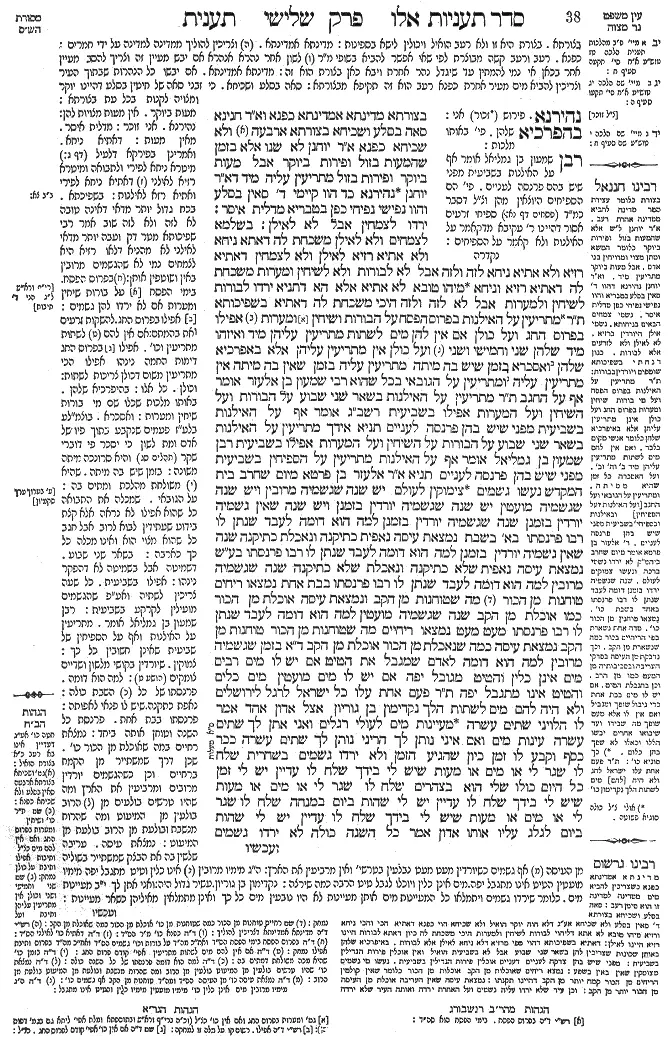
Ta'anit 19b - Guemara
בצורתא מדינתא אמדינתא כפנא וא"ר חנינא סאה בסלע ושכיחא בצורתא ארבעה ולא שכיחא כפנא א"ר יוחנן לא שנו אלא בזמן שהמעות בזול ופירות ביוקר אבל מעות ביוקר ופירות בזול מתריעין עליה מיד דא"ר יוחנן נהירנא כד הוו קיימי ד' סאין בסלע והוו נפישי נפיחי כפן בטבריא מדלית איסר:
ירדו לצמחין אבל לא לאילן:
בשלמא לצמחים ולא לאילן משכחת לה דאתא ניחא ולא אתיא רזיא לאילן ולא לצמחין דאתיא רזיא ולא אתיא ניחא לזה ולזה אבל לא לבורות ולא לשיחין ומערות משכחת לה דאתיא רזיא וניחא מיהו טובא לא אתיא אלא הא דתניא ירדו לבורות לשיחין ולמערות אבל לא לזה ולזה היכי משכחת לה דאתיא בשפיכותא ת"ר מתריעין על האילנות בפרוס הפסח על הבורות ושיחין ומערות אפילו בפרוס החג ועל כולן אם אין להן מים לשתות מתריעין עליהן מיד ואיזהו מיד שלהן שני וחמישי ושני ועל כולן אין מתריעין עליהן אלא באפרכיא שלהן ואסכרא בזמן שיש בה מיתה מתריעין עליה בזמן שאין בה מיתה אין מתריעין עליה ומתריעין על הגובאי בכל שהוא רבי שמעון בן אלעזר אומר אף על החגב ת"ר מתריעין על האילנות בשאר שני שבוע על הבורות ועל השיחין ועל המערות אפילו בשביעית רשב"ג אומר אף על האילנות בשביעית מפני שיש בהן פרנסה לעניים תניא אידך מתריעין על האילנות בשאר שני שבוע על הבורות על השיחין ועל המערות אפילו בשביעית רבן שמעון בן גמליאל אומר אף על האילנות מתריעין על הספיחין בשביעית מפני שיש בהן פרנסה לעניים תניא א"ר אלעזר בן פרטא מיום שחרב בית המקדש נעשו גשמים צימוקין לעולם יש שנה שגשמיה מרובין ויש שנה שגשמיה מועטין יש שנה שגשמיה יורדין בזמנן ויש שנה שאין גשמיה יורדין בזמנן שנה שגשמיה יורדין בזמנן למה הוא דומה לעבד שנתן לו רבו פרנסתו בא' בשבת נמצאת עיסה נאפית כתיקנה ונאכלת כתיקנה שנה שאין גשמיה יורדין בזמנן למה הוא דומה לעבד שנתן לו רבו פרנסתו בע"ש נמצאת עיסה נאפית שלא כתיקנה ונאכלת שלא כתיקנה שנה שגשמיה מרובין למה הוא דומה לעבד שנתן לו רבו פרנסתו בבת אחת נמצאו ריחים טוחנות מן הכור מה שטוחנות מן הקב ונמצאת עיסה אוכלת מן הכור כמו אוכלת מן הקב שנה שגשמיה מועטין למה הוא דומה לעבד שנתן לו רבו פרנסתו מעט מעט נמצאו ריחיים מה שטוחנות מן הכור טוחנות מן הקב נמצאת עיסה כמה שנאכלת מן הכור אוכלת מן הקב ד"א בזמן שגשמיה מרובין למה הוא דומה לאדם שמגבל את הטיט אם יש לו מים רבים מים אינן כלין והטיט מגובל יפה אם יש לו מים מועטין מים כלים והטיט אינו מתגבל יפה ת"ר פעם אחת עלו כל ישראל לרגל לירושלים ולא היה להם מים לשתות הלך נקדימון בן גוריון אצל אדון אחד אמר לו הלויני שתים עשרה מעיינות מים לעולי רגלים ואני אתן לך שתים עשרה עינות מים ואם איני נותן לך הריני נותן לך שתים עשרה ככר כסף וקבע לו זמן כיון שהגיע הזמן ולא ירדו גשמים בשחרית שלח לו שגר לי או מים או מעות שיש לי בידך שלח לו עדיין יש לי זמן כל היום כולו שלי הוא בצהרים שלח לו שגר לי או מים או מעות שיש לי בידך שלח לו עדיין יש לי שהות ביום במנחה שלח לו שגר לי או מים או מעות שיש לי בידך שלח לו עדיין יש לי שהות ביום לגלג עליו אותו אדון אמר כל השנה כולה לא ירדו גשמים
Comments from Rashi on Masechet Ta'anit Page 19b
בצורתא . בצורת היא זו ולא רעב הואיל ויכולין לישא בספינות: מדינתא אמדינתא . וצריכין להוליך ממדינה למדינה על ידי חמרים: כפנא . רעב ורעב קשה מבצורת לפי שאי אפשר להביא בשופי מ"ר לשון אחר נהרא אנהרא אם יבש מעיין זה וצריך להסב מעיין אחר בכאן אי נמי להמתין עד שיגדל נהר אחרת ויבא כאן בצורת הוא זה: מדינתא אמדינתא . אם יבשו כל הנהרות שבתוך העיר וצריכין להביא מים מעיר אחרת כפנא רעב הוא זה תקיפא מבצורתא: סאה בסלע ושכיחא . כי זבני סאה של חיטין בסלע דהיינו יוקר ומצויה לקנות בכל עת בצורתא: מעות ביוקר . אין מעות מצויות להן: נהירנא . אני זוכר: מדלית איסר . מאין מעות: דאתיא ניחא . ואמרינן בפירקא דלעיל (תענית דף ג:) מיטרא ניחא לפירי ולתבואה ומיטרא רזיא לאילני דאתיא ניחא לפירי ואתיא רזא לאילנות: בשפיכתא . בכח גדול יותר מדאי דאינה טובה לא לזה ולא לזה שוב אמר רבי שפיכותא מטר דק ועבה יותר מדאי לאילני לא מהניא דלאו רזיא היא לצמחים נמי לא שהגשמים מרובין באין ושוטפין אותן: בפרוס הפסח . בימי הפסח על בורות שיחין ומערות אם לא ירדו להן גשמים: אפילו בפרוס החג . להשקות זרעים ואת בהמתם: אם אין להם לשתות מתריעין וכו' . אפילו בפרוס החג דימות החמה נינהו אפילו הכי מתריעין משום דכולן צריכות לשתות: וכולן . כל אלו: בהיפרכיא שלהן . באותו מלכות שכלו שם מי בורות שיחין ומערות: ואסכרא . בוצמל"ע בלע"ז פעמים שנקבע בתוך פיו של אדם ומת לשון כי יסכר פי דוברי שקר (תהלים סג) והיא סרונכה מיתה משונה: בזמן שיש בה מיתה . שהיא משולחת מהלכת ומתים בה: על הגובאי . שמכלה את התבואה כל שהוא אפילו לא נראה אלא קצת בידוע שעתידין לבוא לרוב אבל חגב כל שהוא מצוי הוא ואינו מכלה כל כך כארבה: בשאר שני שבוע . דשמיטה אבל בשמיטה לא דהפקר נינהו: אפילו בשביעית . כל שעה צריכין לשתיה ואע"פ שהגשמים מועילין לקרקע בשביעית: רבן שמעון בן גמליאל אומר . מתריעין על האילנות ואף על הספיחין של שביעית שאינן חשובין כל כך: צמוקין . שיורדין בקושי מלשון ושדיים צומקים (הושע ט): למה הוא דומה . פרנסתו של כל השבת כולה: נאפת כתקנה . שיש לו פנאי לאפותה: פרנסתו בבת אחת . פרנסת כל השנה וטוחן אותה ביחד: נמצאת רחיים במה שאוכלת מן הכור כו' . שכן דרך שמשתייר מן הקמח ברחיים וכן כשהגשמים יורדין מרובים ומרביעין את הארץ ומה שהיו טרשים בולעים מן הרוב בולעין מן המיעוט ומה שהרוח מנשבת ובולעת מן הרוב בולעת מן המיעוט: נמצאת עיסה . עריבה שלשין בה את הבצק שמשתייר בשוליה מן העיסה אף גשמים כשיורדין מעט מעט נבלעין בטרשי' ואין מרביעין את הארץ: ה"ג מימיו מרובין אינן כלין וטיט מתגבל יפה מימיו מועטין הטיט אינו מתגבל יפה . מים אינן כלין ויוכלו לגבל טיט הרבה כמה שירצה: נקדימון בן גוריון . עשיר גדול היה: ואני אתן לך י"ב מעיינות מים . כלומר שירדו גשמים ויתמלאו כל המעיינות מים אותן מעיינות לא היו נובעין מים כל כך ואינן מתמלאין מאיליהן כשאר מעיינות:
Comments from Tosafot - Ta'anit 19b
נהירנא. פירוש (זכור) אני: בהפרכיא שלהן. פי' באותו מלכות: רבן שמעון בן גמליאל אומר אף על האילנות בשביעית מפני שיש בהם פרנסה לעניים. פי' הם הספיחים היוצאין מהן וצ"ל דסבר כמ"ד (פסחים דף נא:) ספיחי זרעים אסור דהיינו ר' עקיבא מדקאמר על האילנות ולא קאמר על הספיחים:
Ta'anit 19b - Mishnah translated into english
this is considered a drought. If produce must be brought from one province to another province, this is considered a famine. And Rabbi Ḥanina said: If a se’a of grain is sold for a sela, but it is available, this is considered a drought. Although prices have risen, there is still grain for those who can afford it. However, if four se’a of grain is sold for a sela, and it is not available, this is considered a famine.
Rabbi Yoḥanan said: They taught this only with regard to a time when money is cheap and everyone has it, and produce is expensive. However, when money is expensive, i.e., unavailable, and produce is cheap, they cry out about it immediately, as this is considered a famine. As Rabbi Yoḥanan said: I remember when four se’a of produce were sold for one sela, and yet there were many swollen by famine in Tiberias, as they did not have even one issar with which to purchase food.
§ The mishna taught: If sufficient rain fell for the vegetation but not enough fell for the trees; if it was enough for the trees but not for the vegetation; or if sufficient rain fell for both this and that, i.e., vegetation and trees, but not enough to fill the cisterns, ditches, and caves with water to last the summer, they cry out about it immediately. The Gemara comments: Granted, with regard to rain that fell in sufficient quantities for the vegetation but not for the trees, this case can be found, e.g., if gentle rain fell but heavy rain did not fall, this is insufficient for the trees. Furthermore, it is possible for enough rain to fall for the trees but it is not effective for the vegetation, if heavy rain fell but gentle rain did not fall.
Likewise, in the case of rain that benefits both this and that, trees and vegetation, but not cisterns, ditches, and caves, you can find this too, if both heavy and gentle rain fell, however, they did not fall in abundance, and therefore the water in the cisterns will not last through the summer. However, that which is taught in a baraita: If sufficient rain fell for cisterns, ditches, and caves, but not for either this or that, i.e., trees or plants, how can you find these circumstances? If the rain is enough to fill cisterns, how could it not be enough for plants and trees? The Gemara answers: Where rain comes in a single downpour, it will fill the cisterns but will provide no benefit to plants and trees.
The Sages taught: They cry out about trees that have not received enough rain, until near Passover, as beyond that time any rain will no longer benefit trees. However, they sound the alarm over cisterns, ditches and caves that have not been filled until before the festival of Sukkot. And at any time, if they have no water to drink, they sound the alarm over them immediately.
And what exactly is the meaning of their use of: Immediately, in these cases? Monday, Thursday, and Monday of the week in which the court became aware of the crisis, but not necessarily on the very day that it became evident. And in all of these cases of interrupted rainfall, they sound the alarm over them only in their district [iparkheya], but not in other areas where rain is falling normally.
And with regard to a plague of diphtheria, when it has the potential to cause death they sound the alarm over it, but when it does not have the potential to cause death they do not sound the alarm over it. And they sound the alarm over the arrival of locusts, for any amount, as it is likely that more locusts are on the way. However, they do not sound the alarm over the arrival of grasshoppers. Rabbi Shimon ben Elazar says: They sound the alarm even over grasshoppers, as they too can cause a great deal of damage if they swarm in large numbers.
The Sages taught in a baraita: They sound the alarm over trees during the other six years of the seven-year Sabbatical cycle, when the earth is tilled, but not during the Sabbatical Year, when one must refrain from working the land. However, for cisterns, ditches, and caves, they sound the alarm even in the Sabbatical Year. Rabban Shimon ben Gamliel says: Even for trees they sound the alarm in the Sabbatical Year, because they serve as sustenance for the poor. Since the poor rely on these trees for their food in the Sabbatical Year, they will lose their means of subsistence if it does not rain.
It is taught in another baraita: They sound the alarm over trees during the other years of the Sabbatical cycle, and for cisterns, ditches and caves they sound the alarm even in the Sabbatical Year. Rabban Shimon ben Gamliel says: Even for trees. Furthermore, they sound the alarm for aftergrowths of crops that have grown of their own accord in the Sabbatical Year, because they serve as sustenance for the poor, as it is permitted to eat aftergrowths.
§ It is taught in a baraita that Rabbi Elazar ben Perata said: Since the day that the Temple was destroyed, rain has been meager, i.e., overall, not enough has fallen in the world. There are years whose rains are abundant, and there are years whose rains are scare. There are years whose rains fall in their proper time, and there are years whose rains do not fall in their proper time.
With regard to a year whose rains fall in their proper time, to what may it be compared? To a servant whose master gave him his weekly portion on Sunday. It is thereby found that his dough is baked properly throughout the week, and it is eaten properly, as he has a sufficient amount. Conversely, with regard to a year whose rains do not fall in their proper time, to what may it be compared? To a servant whose master gave him his portion on Shabbat eve, when there is insufficient time to prepare it fully. It is thereby found that his dough is baked improperly, and it is eaten improperly.
With regard to a year whose rains are abundant, to what may it be compared? To a servant whose master gave him his portion for a long period of time all at once. He performs all of his milling at one time, and it is therefore found that the mill grinds and produces waste from a kor of produce in the same amount as it grinds and produces waste from the much smaller kav of produce. During each milling process, the same amount of flour goes to waste. Consequently, milling a large amount of flour in a single milling process preserves flour. And similarly, it is found that dough is diminished from a kor, as it diminishes from a kav.
In contrast, with regard to a year whose rains are scarce, to what may it be compared? To a servant whose master gave him his portion little by little. It is thereby found that the amount that the mill would have ground from a kor of produce is that which in practice it grinds and produces from each kav. It is likewise found that the dough that would have been diminished from a kor is the same amount that is diminished from a kav. In sum, one retains less dough when given his sustenance little by little.
Alternatively, when its rains are abundant, to what may this year be compared? To a person who kneads clay. If he has a lot of water, his water is not used up and the clay will be well kneaded. If he has only a little water, the water will be used up and the clay will not be well kneaded.
§ The Sages taught: Once all the Jewish people ascended for the pilgrimage Festival to Jerusalem and there was not enough water for them to drink. Nakdimon ben Guryon, one of the wealthy citizens of Jerusalem, went to a certain gentile officer [hegemon] and said to him: Lend me twelve wells of water for the pilgrims, and I will give back to you twelve wells of water. And if I do not give them to you, I will give you twelve talents of silver. And the officer set him a time limit for returning the water.
When the set time arrived and no rain had fallen, in the morning the official sent a message to Nakdimon: Send me either the water or the coins that you owe me. Nakdimon sent a message to him: I still have time, as the entire day is mine. At noontime the official again sent a message to him: Send me either the water or the coins that you owe me. Nakdimon sent a message to him: I still have time left in the day. In the afternoon he sent a message to him: Send me either the water or the coins that you owe me. Nakdimon sent a message to him: I still have time left in the day. That officer ridiculed him, saying: Throughout the entire year rain has not fallen,
Traduction : The William Davidson digital edition of the Koren Noé Talmud, with commentary by Rabbi Adin Even-Israel Steinsaltz.