 Talmud Bavli
The learning on the whole site is dedicated : L'ilui Nishmat אסתר בת חיים
The learning on the whole site is dedicated : L'ilui Nishmat Jacques Isaac Ben Amram Loubaton
The learning on the whole site is dedicated : L'ilui Nishmat Ledicia bat David Banoun
Temurah 3a : Youtube
Rabbi Dr. Moshe WeisblumYoutube
1 video class :
Temurah Page 3a
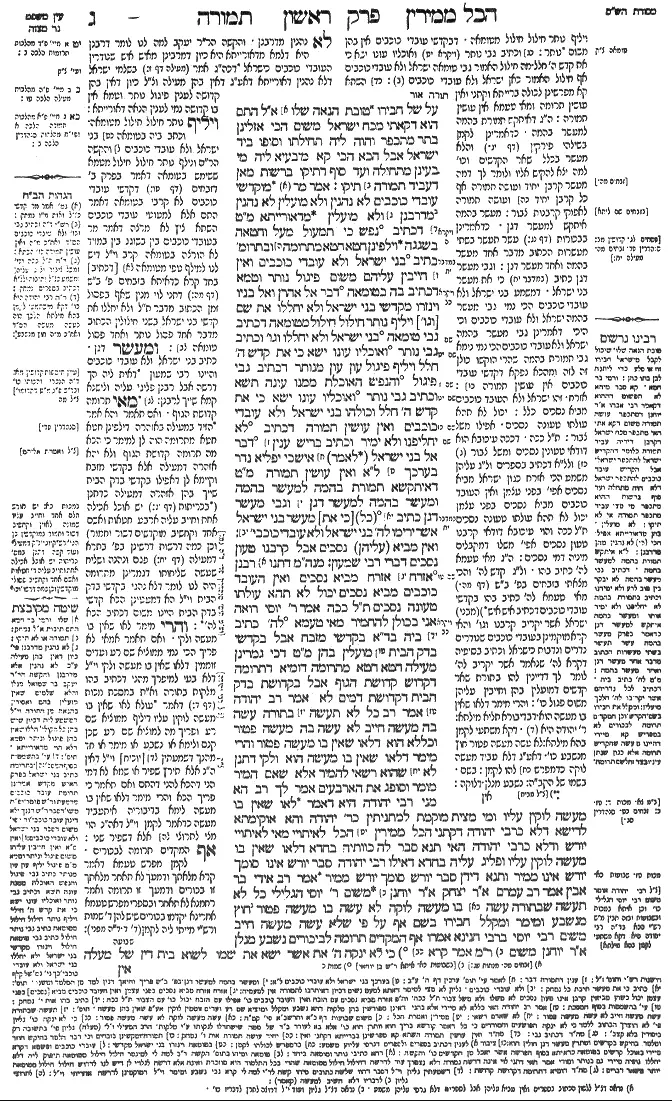
Temurah 3a - Guemara
על של חבירו טובת הנאה שלו א"ל התם הוא דקאתי מכח ישראל משום הכי אזלינן בתר מתכפר והוה ליה תחילתו וסופו ביד ישראל אבל הכא הכי קא מיבעיא ליה מי בעינן מתחילה ועד סוף דתיקו ברשות מאן דעביד תמורה תיקו אמר מר מוקדשי עובדי כוכבים לא נהנין ולא מועלין לא נהנין מדרבנן ולא מועלין מדאורייתא מ"ט דכתיב (ויקרא ה, טו) נפש כי תמעול מעל וחטאה בשגגה וילפינן חטא חטא מתרומה ובתרומה כתיב (במדבר יח, כג) בני ישראל ולא עובדי כוכבים ואין חייבין עליהם משום פיגול נותר וטמא דכתיב בה בטומאה (ויקרא כב, ב) דבר אל אהרן ואל בניו וינזרו מקדשי בני ישראל ולא יחללו את שם [וגו'] ויליף נותר חילול חילול מטומאה דכתיב גבי טומאה (ויקרא כב, ב) בני ישראל ולא יחללו וגו' וכתיב גבי נותר (ויקרא יט, ח) ואוכליו עונו ישא כי את קדש ה' חלל ויליף פיגול עון עון מנותר דכתיב גבי פיגול (ויקרא ז, יח) והנפש האוכלת ממנו עונה תשא וכתיב גבי נותר (ויקרא יט, ח) ואוכליו עונו ישא כי את קדש ה' חלל וכולהו בני ישראל ולא עובדי כוכבים ואין עושין תמורה דכתיב (ויקרא כז, י) לא יחליפנו ולא ימיר וכתיב בריש ענין (ויקרא כז, ב) דבר אל בני ישראל (לאמר) איש כי יפליא נדר בערכך לישנא אחרינא ואין עושין תמורה מ"ט דאיתקשא תמורת בהמה למעשר בהמה ומעשר בהמה למעשר דגן וגבי מעשר דגן כתיב (במדבר יח, כד) (כל) [כי את] מעשר בני ישראל אשר ירימו לה' בני ישראל ולא עובדי כוכבי' ואין מביא (עליהן) נסכים אבל קרבנו טעון נסכים דברי רבי שמעון מנה"מ דתנו רבנן (במדבר טו, יג) אזרח אזרח מביא נסכים ואין העובד כוכבים מביא נסכים יכול לא תהא עולתו טעונה נסכים ת"ל ככה אמר ר' יוסי רואה אני בכולן להחמיר מאי טעמא (ויקרא כב, יח) לה' כתיב ביה בד"א בקדשי מזבח אבל בקדשי בדק הבית מועלין בהן מ"ט דכי גמרינן מעילה חטא חטא מתרומה דומיא דתרומה דקדוש קדושת הגוף אבל בקדושת בדק הבית דקדושת דמים לא אמר רב יהודה אמר רב כל לא תעשה בתורה עשה בה מעשה חייב לא עשה בה מעשה פטור וכללא הוא דלאו שאין בו מעשה פטור והרי מימר דלאו שאין בו מעשה הוא ולקי דתנן לא שהוא רשאי להמיר אלא שאם המיר מומר וסופג את הארבעים אמר לך רב הא מני רבי יהודה היא דאמר לאו שאין בו מעשה לוקין עליו ומי מצית מוקמת למתניתין כר' יהודה והא אוקימתא לרישא דלא כרבי יהודה דקתני הכל ממירין הכל לאיתויי מאי לאיתויי יורש ודלא כרבי יהודה האי תנא סבר לה כוותיה בחדא דלאו שאין בו מעשה לוקין עליו ופליג עליה בחדא דאילו רבי יהודה סבר יורש אינו סומך יורש אינו ממיר ותנא דידן סבר יורש סומך יורש ממיר אמר רב אידי בר אבין אמר רב עמרם א"ר יצחק א"ר יוחנן משום ר' יוסי הגלילי כל לא תעשה שבתורה עשה בו מעשה לוקה לא עשה בו מעשה פטור חוץ מנשבע ומימר ומקלל חבירו בשם אף על פי שלא עשה מעשה חייב משום רבי יוסי ברבי חנינא אמרו אף המקדים תרומה לביכורים נשבע מנלן א"ר יוחנן משום ר"מ אמר קרא (שמות כ, ז) כי לא ינקה ה' את אשר ישא את שמו לשוא בית דין של מעלה
Comments from Rashi on Masechet Temurah Page 3a
טובת הנאה שלו . של תורם שיכול ליתנו לכל כהן שירצה (אי נמי) ואם אמר לו ישראל הילך סלע זה ותנה לבן בתי כהן הוי אותו סלע של תורם ולא של נתרם בשבילו ולא מצי טעין הלה כיון שנתרמה על טבל שלו נמצא דנותן סלע על של עצמו. הך מילתא דרבי אבהו תלת מילי נינהו: התם הוא דקאתי מכח ישראל . שהרי הפרישו ישראל ואהכי אזלינן בתר מתכפר דהוה ליה תחילתו וסופו ביד ישראל דאיתיה בכלל עונשין: הכי גרסינן אבל הכא הכי קמיבעיא ליה מי בעינן מתחילה ועד סוף דתיקו ברשות מאן דעביד תמורה . כלומר אבל הכא בהקדיש עובד כוכבים להתכפר ישראל מי בעינן מתחילת הקדש ועד סופו שתעמוד ברשות האדם הראוי לעשות תמורה כגון ישראל והך בהמה כיון דתחילת קדושתה הויא מכח עובד כוכבים אף על גב דהוי המתכפר ישראל אינו עושה תמורה או דילמא כיון דלבסוף אתיא ביד מתכפר וחזי למיעבד תמורה תפסה בה קדושת תמורה. תיקו: ויליף נותר חילול חילול מטומאה . דבקדשי עובדי כוכבים אין בהן משום נותר: וכתיב גבי נותר (ויקרא יט) ואוכליו עונו ישא כי את קדש ה' חלל . מה חילול האמור גבי טומאה ישראל ולא עובדי כוכבים אף חילול האמור כאן ישראל ולא עובדי כוכבים: השתא קא מפרשינן לכולה ברייתא וקתני ואין עושין תרומה . ומאי טעמא אין עושין תמורה: ה"ג דאיתקש תמורת בהמה למעשר בהמה . כדאמרינן לקמן בשילהי פירקין (תמורה דף יג.) והלא מעשר בכלל שאר הקדשים וכו' למה יצא להקיש אליו ולומר לך דמה מעשר קרבן יחיד ועושה תמורה אף כל קרבן יחיד ועושה תמורה לאפוקי קרבנות צבור: מעשר בהמה איתקש למעשר דגן . כדאמרינן בבכורות (דף נג:) עשר תעשר בשתי מעשרות הכתוב מדבר אחד מעשר בהמה ואחד מעשר דגן: וגבי מעשר דגן כתיב (במדבר יח) כי את מעשר בני ישראל . דמשמע בני ישראל ולא עובדי כוכבים הכי נמי גבי מעשר בהמה ישראל ולא עובדי כוכבים וכי היכי דאמרינן גבי מעשר בהמה ישראל ולא עובדי כוכבים הכי נמי נימא גבי תמורת בהמה שהרי הוקשו כולן זה לזה ומהכא נפקא דקדשי עובדי כוכבים אין עושין תמורה: אזרח . זהו ישראל ולא העובד כוכבים מביא נסכים כלל: יכול לא תהא עולתו טעונה נסכים . אפילו משל צבור: ת"ל ככה . דככה עיכובא הוא דודאי טעונין נסכים ומשל צבור. ולל"א דכתיב בספרים ול"ג עליהן משמע הכי אזרח כגון ישראל מביא נסכים אפי' בפני עצמן ואין העובד כוכבים מביא נסכים בפני עצמן יכול לא תהא עולתו טעונה נסכים ת"ל ככה והוי עיכובא דודאי קרבנו טעון נסכים אפי' משלו דמקבלים מיניה דמי נסכים: ה"ג מאי טעמא לה' כתיב בהו ול"ג קדש לה' . והכי מצאתי בזבחים בפ' ב"ש (דף מה.) מאי טעמא לה' כתיב בהו בקדשי עובדי כוכבים דכתיב איש איש מבני ישראל אשר יקריב קרבנו וגו' והאי קרא מוקמינן בעובדי כוכבים שנודרים נדרים ונדבות כישראל וכתיב בסיפיה דקרא לה' שנאמר אשר יקריב לה' לומר לך דדיינין להו בתורת שאר קדשים דמועלין בהן וחייבין עליהן משום פגול כו': והרי מימר דלאו שאין בו מעשה הוא . דבדיבורא תליא מילתא: ר' יהודה היא . דקא משתעי לקמן בהא מילתא: לא עשה מעשה פטור חוץ מנשבע כו' . דאע"ג דלא עביד מעשה לוקה כדמפרש להו לקמן: בשם . בשמו של הקב"ה: נשבע מנלן . דלוקה:
Comments from Tosafot - Temurah 3a
לא נהנין מדרבנן . והקשה הר"ר יעקב למה לנו לומר דרבנן היא דלמא מדאורייתא היא כיון דמרבינן מאיש איש שנודרין העובדי כוכבים כישראל דכה"ג אמר (מעילה דף ז:) בשלמי ישראל דלא נהנין דאורייתא דאע"ג דאין בהן מעילה וצ"ל כיון דאין בהן קדושה לענין פיגול נותר וטמא אין בו קדושה נמי לענין הנאה דאורייתא: ויליף נותר חילול חילול מטומאה . וכתב ביה בטומאה בני ישראל ולא עובדי כוכבים והקשה הר"ם ונילף נותר חילול חילול מטמא ששימש בטומאה דאמר בפרק ב' דזבחים (דף טו:) דקדשי עובדי כוכבים לא קרבי בטומאה דאמר התם אלא למעוטי עובדי כוכבים השתא ציץ לא מרצה דאמר מר בעובדי כוכבים בין בשוגג בין במזיד לא הורצה בטומאה קרב וי"ל דיש לנו למילף טפי מטומאה [דכתיב] בחד קרא כדאיתא בזבחים פ' ב"ש (דף מה:) דתני לוי מנין שאף בפסול זמן הכתוב מדבר ת"ל ולא יחללו את קדשי בני ישראל בשני חילולין הכתוב מדבר אחד פסול נותר ואחד פסול טומאה: ומעשר דגן . כתיב בני ישראל ולא עובדי כוכבים והיינו רבי שמעון דאית ליה הך דרשה אבל רבנן פליגי עליה ולישנא קמא שייך לרבנן: מאי תרומה קדושת הגוף . ואם תאמר והא אמר הזיד במעילה באזהרה דילפינן חטא חטא מתרומה הוה לן למימר כי הכא מה תרומה קדושת הגוף ולא יהא אזהרה דמעילה אלא בקדשי מזבח וקיימא לן דאפילו בקדשי בדק הבית שייך בהן אזהרה דמעילה כדתנן (בכריתות (דף יג:) יש אוכל אכילה אחת וחייב עליה ארבע חטאות ואשם אחד וקחשיב מוקדשים דשור וחמור) וכן כמה דרשות דרשינן בפ' בתרא דמעילה (דף יח:) פגם ונהנה ושליח שעשה שליחותו דגמרינן מתרומה היה לנו לומר דלא נהגי בקדשי בדק הבית וי"ל הא דמעטינן הכא קדשי בדק הבית היינו משום דכתיב הכא לה': והרי מימר לאו שאין בו מעשה ולקי . ואם תאמר אמאי לא פריך הכי נמי ממוציא שם רע ועדים זוממין דלאו שאין בו מעשה ולקי וי"ל דלא בעי למיפרך מהני דכתיב בהו מלקות בתורה וא"ת במסכת מכות (דף ד:) דאמר עולא לאו שאין בו מעשה לוקין עליו דיליף ממוציא שם רע ופריך מה למוציא שם רע שכן קנס ולימא או נשבע או מימר או חד מהנך דשמעתין [יוכיח] וי"ל דאין ה"נ אלא תירץ שפיר או שמא לא דמי הני דהכא להני דהתם ואם תאמר כי פריך הכא והרי מימר דלאו שאין בו מעשה לימא בדיבוריה איתעביד מעשה כדאמר לקמן וי"ל דאה"נ הוי מצי לתרוצי אלא דשפיר שני: אף המקדים תרומה לבכורים . לקמן מפרש טעמא דאמר קרא מלאתך ודמעך לא תאחר מלאתך זו בכורים ודמעך זו תרומה ואמר רחמנא לא תאחר ובספרי מפרש טעמא אחרינא יקדמו בכורים שיש להן ד' שמות ורש"י מייתי ליה לקמן (תמורה ד' ד. ד"ה מפני):
Temurah 3a - Mishnah translated into english
for the purpose of exempting the produce of another, the benefit of discretion as to which priest or Levite will receive it is his. Apparently, the halakhot of substitution follow the one achieving atonement.
Rami bar Ḥama could say to this: There, in Rabbi Yoḥanan’s statement, the offering comes on behalf of the Jew who consecrated it. Due to that reason, we follow the one atoning, and during both the initial consecration of the offering and its ultimate sacrifice the animal is in the possession of a Jew, who is able to effect substitution. But here, where a gentile consecrated the animal, this is how he raises the dilemma: Do we require that from the initial consecration of the offering until the ultimate act of sacrifice it must be in the possession of one who is able to effect substitution or not? The Gemara concludes: The dilemma shall stand [teiku] unresolved.
§ The Master said in the baraita cited on the previous amud: With regard to animals consecrated by gentiles, one may not derive benefit ab initio, but if one benefited from them after the fact, he is not liable for misusing consecrated property. The Gemara explains: The halakha that one may not benefit from them ab initio is by rabbinic law. And that halakha that if one benefited from them after the fact he is not liable for misusing consecrated property is by Torah law.
What is the reason that one is not liable for misuse? As it is written with regard to misuse of consecrated property: “If anyone commit a trespass, and sin through error, in the holy items of the Lord” (Leviticus 5:15). And we derive a verbal analogy from the use of the word “sin” in this verse and the word “sin” used in the context of teruma: “They shall therefore keep My charge, lest they bear sin for it” (Leviticus 22:9). And with regard to teruma it is written explicitly: “Even of all the hallowed items of the children of Israel” (Numbers 18:8), from which one can infer: But not of gentiles. The halakhot of misuse as well, therefore, do not apply to animals consecrated by gentiles.
The baraita continues: And if one consumes them, i.e., animals consecrated by gentiles, one is not liable for committing a transgression, with regard to the prohibitions of piggul, notar, or consuming offerings while ritually impure. The source for this is a verse, as it is written with regard to ritual impurity: “Speak to Aaron and to his sons, that they separate themselves from the holy items of the children of Israel, which they hallow unto Me, and that they profane not My holy name” (Leviticus 22:2). This verse explicitly mentions items consecrated by the children of Israel, to emphasize that the halakha of distancing oneself from consecrated items while in a state of ritual impurity does not include items consecrated by gentiles.
And one derives the exemption from notar by drawing a verbal analogy between the word “profane” used in the context of notar and the word “profane” used in the context of ritual impurity. As it is written in the verse cited above with regard to ritual impurity: “That they separate themselves from the holy items of the children of Israel, which they hallow unto Me, and that they profane not My holy name.” And it is written with regard to notar: “But every one that eats it shall bear his iniquity, because he has profaned the holy item of the Lord” (Leviticus 19:8). Since the prohibition against consuming consecrated items while impure does not apply to the offerings of gentiles, neither does the prohibition of notar.
And the tanna of the baraita derives the gentiles’ exemption from piggul by verbal analogy between the word “iniquity” used in the context of piggul and the word “iniquity” used in the context of notar, as it is written with regard to piggul: “And the soul that eats of it shall bear his iniquity” (Leviticus 7:18), and it is written with regard to notar: “But everyone that eats it shall bear his iniquity, because he has profaned the holy item of the Lord” (Leviticus 19:8). And based on these two verbal analogies, one concludes that with regard to all of them, i.e., piggul, notar, and ritually impure offerings, the prohibition against consumption applies only to offerings of the children of Israel, but not to those of gentiles.
The baraita continues: And a gentile cannot render a non-sacred animal a substitute for one he has consecrated. The Gemara cites the source for this halakha: As it is written with regard to substitutions: “He shall not exchange it, nor substitute it” (Leviticus 27:10), and it is written at the beginning of the matter: “Speak to the children of Israel, and say to them: When a man shall clearly utter a vow of persons to the Lord, according to your valuation” (Leviticus 27:2). Since the passage specifically addresses the children of Israel, the halakhot of substitution apply only to them, not to gentiles.
The Gemara presents another version of the source for this halakha: The baraita states: And a gentile cannot render a non-sacred animal a substitute for one he has consecrated. What is the reason? The reason is that the substitution of consecrated animals is juxtaposed with the animal tithe (see Leviticus 27:32), and the animal tithe is juxtaposed with the grain tithe. And with regard to the grain tithe it is written: “For the tithe of the children of Israel, which they set apart as a gift to the Lord, I have given to the Levites for an inheritance” (Numbers 18:24), indicating that the halakhot of the grain tithe apply only to the children of Israel, but not to gentiles. From the juxtapositions, one derives that the same holds for substitution.
The baraita continues: And one does not bring libations for a gentile as an independent offering, but his offering requires libations. This is the statement of Rabbi Shimon. The Gemara explains: From where are these matters derived? They are derived from a verse, as the Sages taught in a baraita: The verse states with regard to libations: “All that are homeborn shall do these after this manner, in presenting an offering made by fire, of a sweet savor to the Lord” (Numbers 15:13). One who is homeborn, i.e., a Jew, brings libations, but a gentile does not bring libations. One might have thought that a gentile’s burnt offering should not require libations; therefore, the verse states: “So shall it be done for each bull, or for each ram, or for each of the lambs, or of the goats” (Numbers 15:10–11). This teaches that every burnt offering, even that of a gentile, requires libations.
The baraita continues: Rabbi Yosei said: I see the logic of the opinion that in all of these cases it is correct to be stringent about the offerings of gentiles. The Gemara explains: What is the reason? With regard to the offering of a gentile, it is written: “Whosoever he be of the house of Israel, or of the strangers in Israel, that brings his offering, whether it be any of their vows, or any of their gift offerings, which are brought to the Lord for a burnt offering” (Leviticus 22:18). The verse equates the offerings of gentiles, “the strangers in Israel,” with those of Jews, and indicates that the consecrated status of the former is identical to that of the latter.
The baraita continues: In what case is this statement said? It is said with regard to animals consecrated for the altar, but with regard to animals consecrated for Temple maintenance, one who benefits from them is liable for misusing consecrated property. The Gemara explains: What is the reason? The reason is that when we learn that items consecrated by gentiles are not subject to liability for misuse by the verbal analogy between the word sin and another instance of the word sin from the context of teruma, this applies only to consecrated property that is similar to teruma, which is consecrated with inherent sanctity. But with regard to an item that has the sanctity of the Temple maintenance, whose sanctity inheres in its value, as it will ultimately be sold and the proceeds used for Temple maintenance, the analogy does not apply.
§ The mishna teaches that one who effects substitution receives lashes. Rav Yehuda says that Rav says: With regard to any prohibition in the Torah, if one performed an action to transgress it, he is liable to receive lashes. But if he did not perform an action to transgress it, he is exempt from receiving lashes.
The Gemara asks: But is it an established principle that one who transgresses a prohibition that does not involve an action is exempt? But there is the prohibition of substitution, which is a prohibition that does not involve an action, and one is flogged for transgressing it, as we learned in the mishna: That is not to say that it is permitted for a person to effect substitution; rather, it means that if one substituted a non-sacred animal for a consecrated animal, the substitution takes effect, and the one who substituted the non-sacred animal incurs the forty lashes.
The Gemara answers: Rav could have said to you: In accordance with whose opinion is this mishna written? It is in accordance with that opinion of Rabbi Yehuda, who said: With regard to a prohibition that does not involve an action, one is flogged for transgressing it. The Rabbis, however, disagree.
The Gemara counters: But can you establish the mishna as being in accordance with the opinion of Rabbi Yehuda? But we established the first clause of the mishna as not being in accordance with the opinion of Rabbi Yehuda, as it teaches: Everyone substitutes a non-sacred animal for a consecrated animal, and the Gemara added (2a): What does the expansive term everyone serve to include? It serves to include an inheritor, and accordingly, this mishna is not in accordance with the opinion of Rabbi Yehuda, who holds that an inheritor cannot effect substitution.
The Gemara answers: The tanna of this mishna holds in accordance with the opinion of Rabbi Yehuda with regard to one matter, that one is flogged for transgressing a prohibition that does not involve an action, and disagrees with him with regard to one other matter, as Rabbi Yehuda holds that an inheritor does not place his hands on the head of the offering when he sacrifices it, and an inheritor is not able to substitute a non-sacred animal for a consecrated one that he inherited; and the tanna of our mishna holds that an inheritor places his hands on the head of the offering when he sacrifices it, and an inheritor is able to substitute a non-sacred animal for a consecrated one that he inherited.
Rav Idi bar Avin says that Rav Amram says that Rabbi Yitzḥak says that Rabbi Yoḥanan says in the name of Rabbi Yosei HaGelili: With regard to every prohibition in the Torah, if one performed an action to transgress it, he is flogged. But if he did not perform an action to transgress it, he is exempt from lashes, except for one who takes an oath, and one who effects substitution, and one who curses another using the name of God. For these three transgressions, even though he did not perform an action, he is liable to receive lashes. They said in the name of Rabbi Yosei, son of Rabbi Ḥanina: Also one who separates teruma prior to designating the first fruits is flogged, even though teruma can be separated by intention alone, without an action.
The Gemara discusses the sources for these exceptions. From where do we derive that one who takes an oath using the name of God is flogged? Rabbi Yoḥanan says in the name of Rabbi Meir that the verse states: “For the Lord will not hold him guiltless that takes His name in vain” (Exodus 20:7). One can infer: The higher, i.e., heavenly, court
Traduction : The William Davidson digital edition of the Koren Noé Talmud, with commentary by Rabbi Adin Even-Israel Steinsaltz.