 Talmud Bavli
Temurah 19a : Youtube
Rabbi Dr. Moshe WeisblumYoutube
1 video class :
Temurah Page 19a
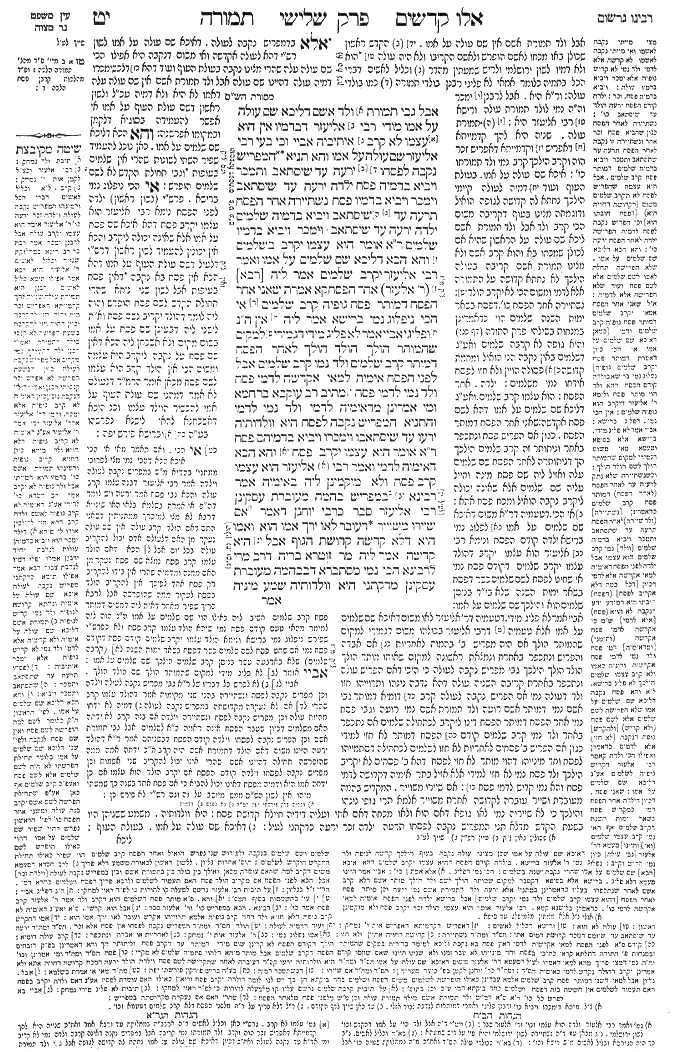
Temurah 19a - Guemara
אבל גבי תמורת ולד אשם דליכא שם עולה על אמו מודי רבי אליעזר דבדמיו אין הוא עצמו לא קרב איתיביה אביי וכי בעי רבי אליעזר שם עולה על אמו והא תניא המפריש נקבה לפסחו ירעה עד שיסתאב ותמכר ויביא בדמיה פסח ילדה ירעה עד שיסתאב וימכר ויביא בדמיו פסח נשתיירה אחר הפסח תרעה עד שיסתאב ויביא בדמיה שלמים ילדה ירעה עד שיסתאב וימכר ויביא בדמיו שלמים ר"א אומר הוא עצמו יקרב בשלמים והא הכא דליכא שם שלמים על אמו ואמר רבי אליעזר יקרב שלמים אמר ליה [רבא] (ר' אלעזר) אחר הפסח קא אמרת שאני אחר הפסח דמותר פסח גופיה קרב שלמים אי הכי ניפלוג נמי ברישא אמר ליה אין ה"נ ופליגי אביי אמר לא פליג מידי דגמירי למקום שהמותר הולך הולד הולך לאחר הפסח דמותר קרב שלמים ולד נמי קרב שלמים אבל לפני הפסח אימיה למאי אקדשה לדמי פסח ולד נמי לדמי פסח מתיב רב עוקבא בר חמא ומי אמרינן מדאימיה לדמי ולד נמי לדמי והתניא המפריש נקבה לפסח היא וולדותיה ירעו עד שיסתאבו וימכרו ויביא בדמיהם פסח ר"א אומר הוא עצמו יקרב פסח והא הכא דאימיה לדמי ואמר רבי אליעזר הוא עצמו קרב פסח ולא מוקמינן ליה באימיה אמר רבינא במפריש בהמה מעוברת עסקינן רבי אליעזר סבר כרבי יוחנן דאמר אם שיירו משוייר דעובר לאו ירך אמו הוא ואמו היא דלא קדשה קדושת הגוף אבל היא קדשה אמר ליה מר זוטרא בריה דרב מרי לרבינא הכי נמי מסתברא דבבהמה מעוברת עסקינן מדקתני היא וולדותיה שמע מיניה
Comments from Rashi on Masechet Temurah Page 19a
אבל ולד תמורת אשם אין שם עולה על אמו . הקדש ראשון שכולן באו מכחו לאשם הופרש ולאשם הקריבו ולא היה עולה הוא ולא דמיו. לשון ירושלמי ולריש שמעתין מהדר וכליל לאשים דברי הכל בתמיה כלומר אמאי לא פליגי רבנן בולדי תמורה כמו בולדי עולה: ור"א היא . אבל לרבנן ימכר וה"ה נמי לולד תמורת עולה ורישא רבי אליעזר היא: תמורת עולה . שניה היא להך קדמייתא דאפריש וקדמייתא דאפריש זכר הוה וקרב הילכך קרב נמי ולד תמורתו כו': איכא שם עולה על אמו . בעולת העוף ועוד דמיה לעולה קיימי הילכך נחתא לה קדושה לגופה הואיל ודוגמתה מצינו בעוף דקריבה משום הכי קרב ולד אבל ולד תמורת אשם ליכא שם עולה על הראשון שהיא אם לכולן שמכחו בא והוא קרב אשם ולא מצינו תמורת אשם קריבה בעולה הילכך לא נחתא קדושה על התמורה אלא לדמי ומשום הכי לא יקרב הולד: נשתיירה אחר הפסח כו' . דפסח בשאר ימות השנה שלמים הוי כדאמרינן במנחות בשילהי פרק התודה (דף פג:) והיא גופה לא קרבה שלמים ואע"ג דשלמים באין נקבה הני הואיל ומחמת קדושה פסולה הויין ולא חזו לפסח אידחו נמי משלמים: ילדה . אחר הפסח: הוא עצמו קרב שלמים . ואע"ג דליכא שם שלמים על אמו דהא לשם פסח אקדשה: שאני אחר הפסח דמותר הפסח . כגון אם הפריש פסח ונתכפר באחר וניתותר זה קרב שלמים הילכך הך דניתותרה לאחר הפסח שם שלמים עלה ואזיל ליה שם פסח מינה וחייל עליה שם שלמים אלא שאינה יכולה ליקרב נקבה הואיל ומכח פסח אתא: אי הכי . דטעמיה דר"א משום דאיכא שם שלמים על אמו לפלוג נמי ברישא ילדה קודם הפסח ונימא רבי אליעזר הוא עצמו יקרב דהולד עצמו יקרב שלמים דקודם פסח נמי אי שחיט לפסח לשם שלמים כשר דפסח בשאר ימות השנה שלא בי"ד בניסן שלמים הוא והילכך שם שלמים על אמו: אביי אמר לא פליג מידי . דטעמיה דר' אליעזר לאו משום דאיכא שם שלמים על אמו אלא טעמיה דרבי אליעזר בכולהו משום דגמירי למקום שהמותר הולך אם היה מפריש ב' בהמות לאחריות אם אבדה והפריש ונתכפר באחרת ונמצאת ראשונה למקום שאותו מותר הולך הולד הולך הילכך גבי מפריש נקבה לעולה כי היכי דאם הפריש עולה ונתכפר באחרת קריבה השניה עולה דהא נדבה נינהו ותרוייהו חזו ולד דעולה נמי אם הפריש נקבה לעולה קרב דומיא דמותר גבי אשם נמי דמותר אשם רועה ולד תמורת אשם נמי רועה וגבי פסח נמי אחר הפסח דמותר הפסח דינו ליקרב לכתחילה שלמים אם נתכפר באחר ולד נמי קרב שלמים קודם הפסח דמותר לא חזי למידי כגון אם הפריש ב' פסחים לאחריות לא חזו לשלמים לכתחילה דסתמייהו לפסח וחד מינייהו דהוי מותר לא חזי לפסח דהא ב' פסחים לא יקריב הילכך ולד פסח נמי לא חזי למידי אלא אזיל בתר אימיה דקדושה לדמי פסח והא נמי קדיש לדמי פסח: אם שיירו משוייר . המקדיש בהמה מעוברת ושייר עוברה לקדושה אחרת משוייר אלמא תרי גופי נינהו והילכך כי לא שייריה נמי לאו גופא דאם הוא ולאו מכחה דאם אתי ועליה דידיה חיילא קדושת פסח: היא וולדותיה . משמע ששניהן היו בשעת הקדש מדלא תני המפריש נקבה לפסחו תרעה ילדה זכר ירעה כדקתני לעיל:
Comments from Tosafot - Temurah 19a
והא הכא דליכא שם שלמים על אמו . כאן נוכל להעמיד שפיר השתי לשונות שהרי אין שלמים בעופות וגבי תחילת הקדש לא לשם שלמים הופרש: אי הכי ניפלוג נמי ברישא . פרש"י (לשון ראשון) ילדה לפני הפסח נימא רבי אליעזר הוא עצמו יקרב פסח דהא איכא שם פסח על אמו אלא שאינה יכולה ליקרב והכא אין יכולין להעמיד לשון ראשון דרש"י דלעיל דשם עולת העוף על אמו דהא הכא אין פסח בא נקבה דאין פסח בעופות אבל לשון שני ניחא שהרי תחילת הקדש לשם פסח הופרש והוה ליה לומר דהולד יקריב לשם פסח וא"ת לישני ליה דבעינן שם פסח על אמו בשום מקום ולא אשכחן ליה הכא דאין שם פסח על נקבה ליקרב היא עצמה ומשום הכי אין הולד קרב הוא עצמו לשם פסח מכאן אומר הרמ"ר דלעולם לא אמר דמהני שם עולת העוף על אמו להכשיר הוולד עצמו וכל היכא דאשכחנא להאי לישנא נפרשהו בע"ה וברישא פירש יפה: אי הכי . ואם תאמר מאי אי הכי איכא הכא דהכי נמי מצי לפרוכי ממתני' בהדיא מ"ש במפריש נקבה לעולה וילדה אמר רבי אליעזר דבנה עצמו קרב עולה והכא גבי פסח אמר ירעה ויש לומר דה"פ אי אמרת בשלמא בלאו האי שינויא דרבא לא מצי למיפרך ממתניתין דשאני התם דאם הולד קרב עולה אין שם עולה נעקר מן האם דלעולם אדם יכול להקריב עולה בכל יום אבל הכא דאם הולד עצמו קרב פסח נמצא שם פסח נעקר מן האם ממנה ומדמיה שהרי אין בידו להקריב רק פסח אחד לפיכך אין להקריב הולד בפסח לעקור ממה שהופרשה אבל לרבא פריך שפיר מאחר דאית ליה דמשום דמותר פסח קרב שלמים חשיב ליה כאילו הוי שם שלמים על אמו ה"נ הוה ליה למימר מהאי טעם קודם פסח נמי שיהא הולד עצמו קרב פסח ולא כפרש"י שפירש ניפלוג נמי ברישא ונימא הולד עצמו יקרב שלמים קודם פסח דקודם פסח נמי אם שחט פסח לשם שלמים כשר דפסח בשאר ימות השנה (קרבה שלמים) שלא בארבעה עשר בניסן קרב שלמים הילכך שם שלמים על אמו: אביי אומר לא פליג מידי למקום שהמותר הולך שם הולד הולך . אביי לא לפרש כל דבריו של ר"א גבי מפריש נקבה לעולה וילדה וכן מפריש נקבה לפסח ונשתיירה בהני שני מקומות אמר דהולד עצמו קרב שהרי אם לא נעקרה מקדושתה במפריש נקבה לעולה דמיה לא ידחו מהיות עולה וכן מפריש נקבה לפסח ונשתיירה וילדה אם בנה קרב לא ידחה האם משלמים דכיון שעבר הפסח אינה ראויה כ"א לשלמים אבל גבי תמורת אשם וכן הפריש נקבה לפסחו וילדה קודם הפסח דבשניהם אמר ר"א דהולד ירעה היינו משום דאם הולד דתמורת אשם היה קרב א"כ ידחה אמה ממה שהופרשה תחילה דהיינו אשם שהרי אינו יכול להקריב שני אשמות וכן מפריש נקבה לפסחו וילדה קודם הפסח אם יקרב הולד הוא עצמו אם כן ידחה אמו היא ודמיה מפסח דאינו יכול להביא כי אם פסח אחד בשנה כך שמעתי מיהו אין לשון הש"ס ממש מיושב על זה וגם רש"י לא פירש כן:
Temurah 19a - Mishnah translated into english
But with regard to the offspring of the substitute of a guilt offering, where there is no burnt offering status for its mother, as the animal for which it was substituted was a guilt offering, Rabbi Elazar concedes that an animal purchased with its money, received from selling the offspring, yes, it is sacrificed as a burnt offering, but the offspring itself is not sacrificed as a burnt offering.
Abaye raised an objection to Rava: And does Rabbi Elazar require that there be burnt offering status for its mother, in order for the offspring to be sacrificed as a burnt offering? But isn’t it taught in a baraita: In the case of one who designates a female animal for his Paschal offering, which must be a male, the animal is left to graze until it becomes unfit, and it is then sold and he brings a Paschal offering with the money received for its sale. If the female animal gave birth to a male,the offspring may not be sacrificed as a Paschal offering despite the fact that it is a male. Rather, it is left to graze until it becomes unfit, and then it is sold and he brings a Paschal offering with the money received from its sale.
If the animal remained without a blemish until after Passover, it is left to graze until it becomes unfit, and he brings a peace offering with the money received for its sale. If it gave birth to a male after Passover, the offspring too is left to graze until it becomes unfit, and then it is sold, and he brings a peace offering with the money received for its sale. Rabbi Elazar disagrees in the latter case and says: The offspring itself is sacrificed as a peace offering.
Abaye explains his objection: But here, it is a case where there is no peace offering status for its mother, as the mother was consecrated as a Paschal offering, and yet Rabbi Elazar says that the offspring is sacrificed as a peace offering. Rava said to Abaye in response: Do you say that this statement of Rabbi Elazar with regard to a Paschal offering after Passover contradicts my explanation? Not so; the status of a Paschal offering after Passover is different, as a leftover Paschal offering itself is sacrificed as a peace offering. Therefore, a female animal designated as a Paschal offering has the status of a peace offering after Passover.
Abaye asked Rava: If so, that the reason Rabbi Elazar permits the offspring to be sacrificed is that the mother also has the status of a peace offering, let Rabbi Elazar also disagree with the Rabbis in the first clause of the baraita, where the female animal designated as a Paschal offering gave birth before Passover. Rabbi Elazar should state that this offspring itself may be brought as a peace offering, as here too the mother has the status of a peace offering, since a Paschal offering slaughtered before Passover as a peace offering is valid. Rava said to Abaye: Yes, it is indeed so, and they disagree in this case as well.
Abaye suggested another explanation of the opinion of Rabbi Elazar and said: In a case where the female animal designated as a Paschal offering gave birth before Passover, there is nobody who disagrees; rather, they all agree that the offspring may not be sacrificed. As it is learned as a tradition that to the place that the leftover offering goes, the offspring goes as well. Therefore, after Passover, when the leftover Paschal offering is sacrificed as a peace offering, the offspring is also sacrificed as a peace offering.
But before Passover, when the Paschal offering is not yet considered leftover, the offspring is endowed with the same sanctity as the mother. In what way is the mother consecrated? It is consecrated for the value of a Paschal offering, that is, so that it should be sold and a Paschal offering should be purchased with the proceeds, as the female animal itself may not be sacrificed as a Paschal offering. If so, the offspring as well is consecrated only for the value of a Paschal offering.
Rav Ukva bar Ḥama raises an objection to this explanation of Abaye: And do we say that Rabbi Elazar maintains that as its mother is consecrated only for the value of a Paschal offering, the offspring as well is consecrated only for the value of a Paschal offering? But isn’t it taught in a baraita: One who designates a female animal as a Paschal offering, it and its offspring are left to graze until they become unfit, and then they are sold, and he brings a Paschal offering with the money received for their sale. Rabbi Elazar says: The offspring itself is sacrificed as a Paschal offering.
But here it is a case where its mother was consecrated for the value of a Paschal offering, and nevertheless Rabbi Elazar said that the offspring itself is sacrificed as a Paschal offering, and we do not establish the status of the offspring based upon the sanctity of the mother.
Ravina says: One can answer that here we are dealing with a case of one who designates a pregnant animal, and Rabbi Elazar holds in accordance with the opinion of Rabbi Yoḥanan, who said with regard to one who consecrates a pregnant animal for a specific purpose, that if he left it out, i.e., designated the fetus as having a different sanctity, it is left out from the sanctity of the mother and consecrated in accordance with the designated sanctity. The reason is that a fetus is not considered the thigh of its mother, but rather the mother and its offspring are considered two separate animals. Here too, it is only its mother that is not sanctified with the inherent sanctity of a Paschal offering, but only for the value of a Paschal offering, as it is female. But the offspring is consecrated as a Paschal offering.
Mar Zutra, son of Rav Mari, said to Ravina: This, too, stands to reason, that we are dealing with a case where he designated a pregnant animal, from the fact that the baraita teaches: It and its offspring. This indicates that both the mother and its offspring were in existence at the time of the consecration. The Gemara comments: Conclude from here that this explanation is correct.
Traduction : The William Davidson digital edition of the Koren Noé Talmud, with commentary by Rabbi Adin Even-Israel Steinsaltz.