 Talmud Bavli
Temurah 27b : Youtube
Rabbi Dr. Moshe WeisblumYoutube
1 video class :
Temurah Page 27b
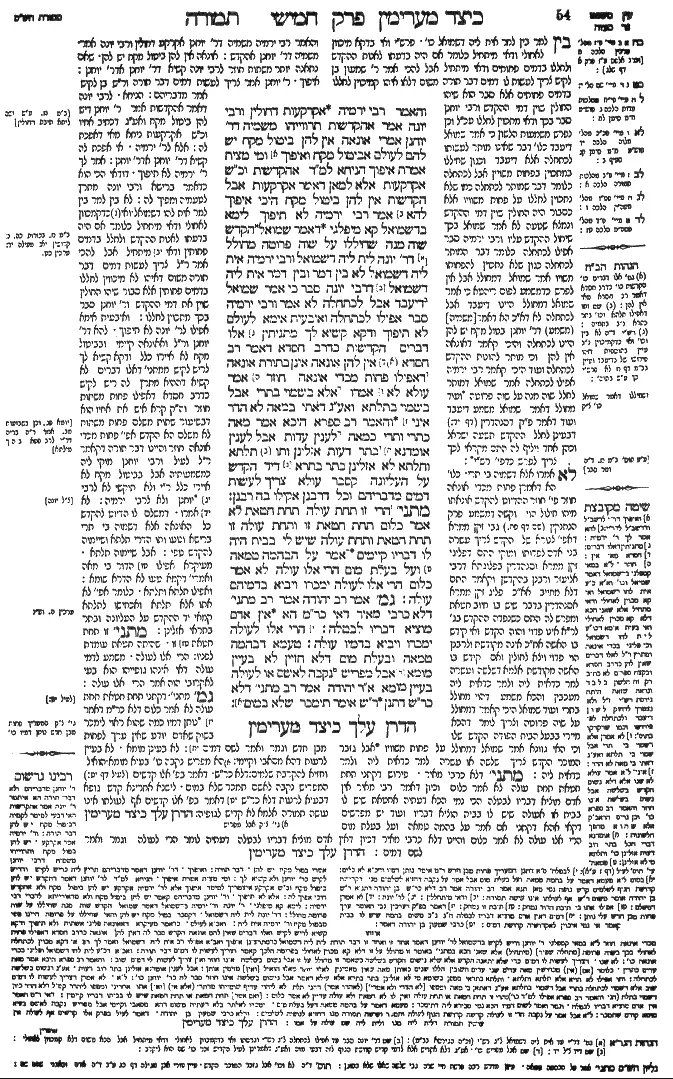
Temurah 27b - Guemara
והאמר רבי ירמיה אקרקעות דחולין ורבי יונה אמר אהקדשות תרווייהו משמיה דר' יוחנן אמרי אונאה אין להן ביטול מקח יש להם לעולם אביטול מקח ואיפוך ומי מצית אמרת איפוך הניחא למ"ד אהקדשות וכ"ש אקרקעות אלא למאן דאמר אקרקעות אבל הקדשות אין להן ביטול מקח היכי איפוך להא אמר רבי ירמיה לא תיפוך לימא בדשמואל קא מיפלגי דאמר שמואל הקדש שוה מנה שחיללו על שוה פרוטה מחולל דר' יונה לית ליה דשמואל ורבי ירמיה אית ליה דשמואל לא בין דמר ובין דמר אית ליה דשמואל דרבי יונה סבר כי אמר שמואל דיעבד אבל לכתחלה לא אמר ורבי ירמיה סבר אפילו לכתחלה ואיבעית אימא לעולם לא תיפוך ודקא קשיא לך מתניתין אלו דברים הקדשות כדרב חסדא דאמר רב חסדא אין להן אונאה אינן בתורת אונאה דאפילו פחות מכדי אונאה חוזר אמר עולא לא אמרו אלא בשמוי בתרי אבל בשמוי בתלתא ואע"ג דאתי במאה לא הדר איני והאמר רב ספרא היכא אמר מאה כתרי ותרי כמאה לענין עדות אבל לענין אומדנא בתר דעות אזלינן ותו תלתא ותלתא לא אזלינן בתר בתרא דיד הקדש על העליונה קסבר עולא צריך לעשות דמים מדבריהם וכל דרבנן אקילו בה רבנן מתני׳ הרי זו תחת עולה תחת חטאת לא אמר כלום תחת חטאת זו ותחת עולה זו תחת חטאת ותחת עולה שיש לי בבית היה לו דבריו קיימים אמר על הבהמה טמאה ועל בעלת מום הרי אלו עולה לא אמר כלום הרי אלו לעולה ימכרו ויביא בדמיהם עולה גמ׳ אמר רב יהודה אמר רב מתני' דלא כרבי מאיר דאי כר"מ הא אין אדם מוציא דבריו לבטלה הרי אלו לעולה ימכרו ויביא בדמיו עולה טעמא דבהמה טמאה ובעלת מום דלא חזיין לא בעיין מומא אבל מפריש נקבה לאשם או לעולה בעיין מומא א"ר יהודה אמר רב מתני' דלא כר"ש דתנן ר"ש אומר תימכר שלא במום
הדרן עלך כיצד מערימין
Comments from Rashi on Masechet Temurah Page 27b
והאמר רבי ירמיה . משמיה דר' יוחנן אקרקע דחולין ורבי יונה אמר משמיה דר' יוחנן אהקדש: אונאה אין להן ביטול מקח יש להן . שאם נתאנה יותר משתות חוזר. לרבי יונה קשיא דר' יוחנן אדר' יוחנן: איפוך . ר' יוחנן אמר צריך לעשות דמים דבר תורה ור"ש בן לקיש אמר מדבריהם: הניחא . לרבי יונה דאמר אהקדשות אמר ר' יוחנן דיש להן ביטול מקח ואע"ג דכתיב אחיו וכ"ש אקרקעות ניחא מאי דאפכת לה: אלא לר' ירמיה . אי אפכת לה קשיא דר' יוחנן אדר' יוחנן: אמר לך ר' ירמיה לא תיפוך . דודאי הכי הוא כדאמר ברישא ורבי יונה מתרץ לטעמיה ומפיך לה: לא בין למר בין למר אית להו דשמואל . ואי כדקמכוון לאחולי ודאי מיתחיל כלומר אם היה בדעתו לאנות ההקדש ולחלל בדמים פחותין ודאי מיתחיל אבל להכי אמר ר"ל צריך לעשות דמים דבר תורה משום דאיהו לא מיכווין לחללו בדמים פחותין אלא סבור שיהו החולין שוין את דמי ההקדש ור' יוחנן סבר בכך מתכוין לחללו: ואיבעית אימא אפילו לר' יונה לא תיפוך . להא דר יוחנן ור"ל ואאונאה קיימי ובביטול מקח לא איירו כלל ודקא קשיא לך לריש לקיש ממתני' דאלו דברים לא קשיא דההיא מתרץ לה ריש לקיש כדרב חסדא דאפילו פחות משתות חוזר וה"ק קרא איש את אחיו הוא דבשיעור שתות משלם פחות משתות לא משלם הא הקדש אפי' פחות מכדי אונאה חוזר והיינו דבר תורה דקאמר ר"ל לעיל ורבי יוחנן מוקי ליה כמשמעותיה אבל בביטול מקח לא איירי כלל ר"י ולא תיקשי לא לרבי יוחנן ולא לרבי ירמיה: לא אמרו . דמשלם לו הדיוט להקדש כל האונאה אלא דשמוה בי תרי ברישא וטעו ותו הדרי תלתא ושיימוה להקדש טפי: אבל שיימוה תלתא . מעיקרא אפילו הדור בי מאה ואמרי' דקמא טעו לא הדרא שומא: ואפילו תלתא ותלתא . כלומר אפי' לא אתו אלא תלתא ואכחישו לתלתא קמאי יד ההקדש על העליונה ובתר בתראי אזלינן: מתני' זו תחת חטאת זו . שהיתה חטאת עומדת לפניו: הרי אלו לעולה . משמע לדמי עולה דאי אינהו גופייהו הוא בעי לאקרובי הוה אמר הרי אלו עולה: גמ' מתני' . דקתני תחת חטאת תחת עולה לא אמר כלום דלא כר"מ דאמר נותן דמיו כמה שהוא ראוי לימכר בשוק שאדם יודע שאין ערך לפחות מבן חדש וגמר ואמר לשם דמים: לא בעינן מומא . לא בעיין לרעות דהא מסאבי וקיימי: הא מפריש נקבה כו' בעיא מומא . הואיל וחזיא להקרבת שלמים: דלא כר"ש . דאמר בפ' אלו קדשים (לעיל תמורה דף יט:) המפריש נקבה לאשם תמכר שלא במום. לישנא אחרינא קדש גופא דבעיא לרעות דלא כר"ש דאמר בפ' אלו קדשים אף לעולתו אינו עושה תמורה אלמא לא קדיש לגופיה:
Comments from Tosafot - Temurah 27b
בין למר בין למר אית ליה דשמואל כו' . פרש"י ואי בדקא מיכוון לאחולי ודאי מיתחיל כלומר אם היה בדעתו לאנות ההקדש ולחללו בדמים פחותים ודאי מיתחיל אבל להכי אמר ר' שמעון בן לקיש צריך לעשות לו דמים דבר תורה משום דלאו איהו קמיכוין לחללו בדמים פחותים אלא סבר הוא שיהו החולין שוין דמי ההקדש ורבי יוחנן סבר בכך ודאי מתכוין לחללו עכ"ל וכן נפרש משמעות הלשון כי אמר שמואל דיעבד כלו' דבר שאינו מותר לעשותו לכתחלה אלא דיעבד וכגון שחיללו במתכוין בפחות משויין אבל לכתחלה כלומר דבר שמותר לכתחלה כמו שלא נתכוין לחללו על פחות משוויו אלא כסבור היה החולין שוין דמי ההקדש ונמצא שטעה לא אמר שמואל בכך שיחול ההקדש עליו ורבי ירמיה סבר אפילו לכתחלה כלומר דבר המותר לכתחלה כגון שלא נתכוין להפחותו משויו אמר שמואל דמחולל אבל אין לפרש כדמשמע לפום ריהטא כי אמר שמואל דמחולל היינו דיעבד אבל לכתחלה לא דא"כ הא דאמר [משמיה] (משמע) דר' יוחנן בטול מקח יש להן היינו לכתחלה והיכי קאמר דאונאה אין להן וכי מותר להונות ההקדש לכתחלה ועוד היכי קאמר רבי ירמיה אפילו לכתחלה אמר שמואל דמותר לחלל שוה מנה על שוה פרוטה ועוד מחולל דאמר שמואל משמע דיעבד ועוד דאמר פ"ק דסנהדרין (דף יד:) דבעינן לחלל ההקדש תשעה ישראל וכהן אחד ויליף לה התם מקראי לכך צריך לפרש כדפי' רש"י: לא אמרו אלא דשמוה בי תרי . כלו' הא דאמרן פחות מכדי אונאה חוזר פי' חוזר ההדיוט להקדש אונאתו מיהו חילול הוי וקשה דמשמע פרק הנחנקין (שם דף פח.) גבי זקן ממרא דאפי' צנורא של הקדש צריך עשרה בני אדם לפדותו ומוקי התם דפליגי זקן ממרא וסנהדרין בפלוגתא דרבי אליעזר ורבנן בהקדשן וקאמר התם דלא מחייב אא"כ פליג זקן ממרא אסנהדרין בדבר שיש בו חיוב חטאת ומפרש לה התם כשנפדה ההקדש בג' לר"א אינו פדוי והוה הקדש ואי קידש בו האשה אח"כ אינה מקודשת ולרבנן הוי פדוי ויצא לחולין ואם קידש בו האשה מקודשת אלמא דשלשה ועשרה למר כדאית ליה ולמר כדאית ליה מעכבין והכא משמע דהוי מחולל בתרי ועוד שמואל היכי קאמר דמחולל על שוה פרוטה וצריך לומר דהכא מיירי בבעל הבית הפודה הקדש שלו וכי האי גוונא אמר שמואל דמחולל על פחות משוויו אבל גזבר המוכר הקדש צריך שלשה או עשרה למר כדאית ליה ולמר כדאית ליה: מתני' דלא כרבי מאיר . פירוש דקתני תחת חטאת תחת עולה לא אמר כלום וכיון דאמר רבי מאיר אין אדם מוציא דבריו לבטלה הכי נמי הכא דעתיה אחטאת שיש לו בבית או אעולה שיש לו בבית הוציא דבריו ועוד יש מפרשים דקאי אהא דקתני אם אמר על בהמה טמאה ועל בעלת מום הרי אלו עולה לא אמר כלום והיינו דלא כרבי מאיר דכיון דאין אדם מוציא דבריו לבטלה דעתיה לומר הרי לעולה וגמר ואמר לשם דמים:
Temurah 27b - Mishnah translated into english
But didn’t Rabbi Yirmeya say this ruling with regard to non-sacred lands, and Rabbi Yona said it with regard to consecrated property, and both of them said it in the name of Rabbi Yoḥanan: They are not subject to the halakhot of exploitation, in the case of a disparity of one-sixth. But they are subject to nullification of a transaction, in the case of a greater disparity. If so, according to the opinion of Rabbi Yona, Rabbi Yoḥanan maintains that when the disparity between the value and the payment is greater than one-sixth, the transaction is nullified by Torah law. But in that case, why would Rabbi Yoḥanan rule here that only by rabbinic law is he required to calculate the difference and pay its value?
The Gemara answers: Actually, they disagree in a case of nullification of a transaction, i.e., more than one-sixth, and one should reverse attribution of the opinions; the opinion previously attributed to Rabbi Yoḥanan is actually that of Reish Lakish, and the opinion attributed to Reish Lakish is the ruling of Rabbi Yoḥanan.
The Gemara asks: But how can you say that one should reverse the attribution of the opinions of Rabbi Yoḥanan and Reish Lakish? This works out well according to the one who says that Rabbi Yoḥanan holds that consecrated property is not subject to the halakhot of exploitation if the disparity between the value and the payment is one-sixth, but it is subject to nullification of the transaction if the disparity between the value and the payment is greater than one-sixth. According to this opinion, that of Rabbi Yona, it is apparent all the more so that lands are subject to nullification if the disparity is greater than one-sixth.
But according to the one who said that Rabbi Yoḥanan holds that only lands are subject to nullification if the disparity is greater than one-sixth, but with regard to consecrated property there is no nullification of a transaction, i.e., Rabbi Yirmeya, how can he reverse attribution of that opinion, and claim that Rabbi Yoḥanan maintains that he is required to pay the difference in value by Torah law?
Rabbi Yirmeya said: According to my opinion, do not reverse attribution of the opinions of Rabbi Yoḥanan and Reish Lakish. In other words, Rabbi Yoḥanan maintains that he is required to pay the difference in value by rabbinic law. This is consistent with Rabbi Yirmeya’s ruling that Rabbi Yoḥanan holds that there is no nullification of a transaction in the case of consecrated property. Only Rabbi Yona would reverse attribution of the opinions of Rabbi Yoḥanan and Reish Lakish in order for Rabbi Yoḥanan’s opinion to be consistent with his statement, as cited by Rabbi Yona, that there is nullification of a transaction in the case of consecrated property.
It has been established that Rabbi Yona maintains that according to Rabbi Yoḥanan consecrated property is subject to nullification of a transaction, whereas Rabbi Yirmeya disputes that claim. The Gemara suggests: Shall we say that they disagree with regard to a statement of Shmuel, as Shmuel said: Consecrated property worth one hundred dinars [maneh] that one desacralized, with its sanctity transferred to a coin worth one peruta, is desacralized. Since consecrated property is not subject to nullification of a transaction, it is desacralized by coins worth any sum. The suggestion is that Rabbi Yona is not of the opinion that the halakha follows the ruling of Shmuel, and Rabbi Yirmeya is of the opinion that the halakha follows the ruling of Shmuel.
The Gemara rejects this suggestion: No; both this Sage and that Sage are of the opinion that the halakha follows the ruling of Shmuel. The difference between them is that Rabbi Yona maintains that when Shmuel stated his halakha, he was referring to consecrated property that one desacralized after the fact, but he did not say that one may do so ab initio; and Rabbi Yirmeya maintains that Shmuel rules that it is permitted to desacralize consecrated property with coins worth any sum, even ab initio.
If you wish, say instead, with regard to the dispute between Reish Lakish and Rabbi Yoḥanan: Actually, do not reverse the attribution of their respective opinions. In fact, they disagree with regard to a disparity of one-sixth, and Reish Lakish holds that one is required to pay the difference value by Torah law. And as for that which poses a difficulty for you with regard to the opinion of Reish Lakish, that it is taught in the mishna: These are matters that are not subject to the halakhot of exploitation: Slaves, documents, lands, and consecrated property, which indicates that one is required to pay the difference in value by rabbinic law, that mishna should be understood in accordance with the explanation of Rav Ḥisda.
As Rav Ḥisda said: What is the meaning of the phrase: Are not subject to the halakhot of exploitation? This means that they are not subject to the standard principles of exploitation at all; rather, more stringent halakhot apply in these cases. As, even if the disparity is less than the measure of exploitation, i.e., less than one-sixth, one may renege on the transaction, and in the case of consecrated property he is required to pay the value of the disparity.
§ With regard to a case in which there was a disparity between the assessed value of property and its actual value, where one must pay the difference to the Temple treasury, Ulla said: The Sages said that one must pay the value of the disparity to the Temple treasury only if the value of the consecrated property was initially assessed by only two people and afterward three other people determined that the consecrated property was worth more. But in a case where the value of the consecrated property was initially assessed by three people, as required by halakha, and that amount was paid to the Temple treasury, even if afterward one hundred people came and assessed the value of the consecrated property at a higher value, one need not return the disparity of value to the Temple treasury.
The Gemara asks: Is that so? But didn’t Rav Safra say: Where did one say the ruling that one hundred witnesses are like two witnesses, and two witnesses are like one hundred witnesses? That principle applies specifically to the matter of testimony. But with regard to the matter of assessments, we follow the majority of opinions. If so, in Ulla’s case, one should follow the assessment of the one hundred and pay the disparity to the Temple treasury.
And furthermore, even in a case where three people initially assessed the value of the consecrated property, and afterward three other people assessed the consecrated property at a higher value, don’t we follow the latter assessment? Isn’t there is a principle that the Temple treasury of consecrated property always has the advantage?
The Gemara answers: Ulla holds that the halakha that the owner is required to conduct an appraisal, to ascertain the relative value of the two animals and to pay the difference to the Temple treasury, applies by rabbinic law, not by Torah law, and the Sages were lenient with regard to all rabbinic laws. Therefore, even if one hundred people assessed the value of the consecrated property at a higher value than the earlier assessment, one is not required to pay the disparity in value to the Temple treasury.
MISHNA: If one said: This non-sacred animal is hereby in place of a burnt offering, or: It is in place of a sin offering, he has said nothing, as he did not say that it was in place of a specific offering. If he said: It is in place of this sin offering, or: It is in place of this burnt offering, or if he said: It is in place of a sin offering that I have in the house, or: It is in place of a burnt offering that I have in the house, and he had that offering in his house, his statement stands, i.e., is effective.
If he said with regard to a non-kosher animal and with regard to a blemished animal: These animals are hereby designated as a burnt offering, he has said nothing. If he said: These animals are hereby designated for a burnt offering, the animals should be sold, and he brings a burnt offering purchased with the money received from their sale.
GEMARA: The mishna teaches that if one said: This non-sacred animal is hereby in place of a burnt offering, he has said nothing. Rav Yehuda said that Rav said: The mishna is not in accordance with the opinion of Rabbi Meir, as, if it is in accordance with the opinion of Rabbi Meir, didn’t Rabbi Meir say: A person does not utter a statement for naught. In other words, if one issues a statement that cannot be fulfilled as stated, it is interpreted in a manner that renders it relevant. Consequently, when he said: This non-sacred animal is in place of a burnt offering, he must have been referring to a burnt offering that he had in his house.
§ The mishna teaches: If he said with regard to a non-kosher animal and with regard to a blemished animal: These animals are hereby designated for a burnt offering, the animals should be sold, and he brings a burnt offering purchased with the money received from their sale. The Gemara infers: The reason that these animals are sold is that they are non-kosher and blemished animals, which are not fit to be sacrificed, and therefore they do not require the development of a blemish for them to be sold. But in the case of one who separates a female animal for a guilt offering or for a burnt offering, which may be brought only from males, since a female animal is fit to be sacrificed as a different type of offering, the animal does require the development of a blemish for it to be sold.
Consequently, Rav Yehuda said that Rav said: The mishna is not in accordance with the opinion of Rabbi Shimon, as we learned in a mishna (19b) that Rabbi Shimon says: In the case of one who designates a female animal for a guilt offering, since a female is unfit to be sacrificed as that offering, its halakhic status is like that of a blemished animal in the sense that it does not become inherently sacred; rather, only its value is sacred. Therefore, it may be sold without it having developed a blemish, and a guilt offering is purchased with the money received from its sale.
Traduction : The William Davidson digital edition of the Koren Noé Talmud, with commentary by Rabbi Adin Even-Israel Steinsaltz.