 Talmud Bavli
The learning on the whole site is dedicated : For the success of Elyahou ben H'anna & family
The learning on the whole site is dedicated : L'ilui Nishmat Nissim ben Barukh Malka
The learning on the whole site is dedicated : L'ilui Nishmat Reuven ben Rivka SEBBAG
Makkot 17b : Youtube
Daf TubeYoutube
2 video classes :
Makkot Page 17b
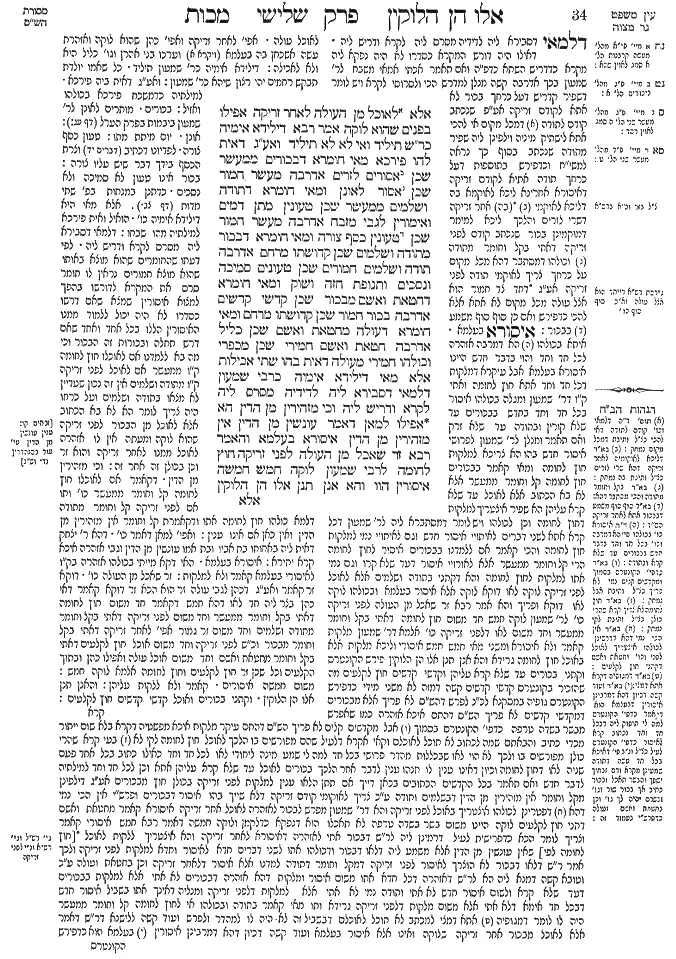
Makkot 17b - Guemara
אלא לאוכל מן העולה לאחר זריקה אפילו בפנים שהוא לוקה אמר רבא דילידא אימיה כר"ש תיליד ואי לא לא תיליד ואע"ג דאית להו פירכא מאי חומרא דבכורים ממעשר שכן אסורים לזרים אדרבה מעשר חמור שכן אסור לאונן ומאי חומרא דתודה ושלמים ממעשר שכן טעונין מתן דמים ואימורין לגבי מזבח אדרבה מעשר חמור שכן טעונין כסף צורה ומאי חומרא דבכור מתודה ושלמים שכן קדושתו מרחם אדרבה תודה ושלמים חמורים שכן טעונים סמיכה ונסכים ותנופת חזה ושוק ומאי חומרא דחטאת ואשם מבכור שכן קדשי קדשים אדרבה בכור חמור שכן קדושתו מרחם ומאי חומרא דעולה מחטאת ואשם שכן כליל אדרבה חטאת ואשם חמירי שכן מכפרי וכולהו חמירי מעולה דאית בהו שתי אכילות אלא מאי דילידא אימיה כרבי שמעון דלמאי דסבירא ליה לדידיה מסרס ליה לקרא ודריש ליה וכי מזהירין מן הדין הא אפילו למאן דאמר עונשין מן הדין אין מזהירין מן הדין איסורא בעלמא והאמר רבא זר שאכל מן העולה לפני זריקה חוץ לחומה לרבי שמעון לוקה חמש חמשה איסורין הוו והא אנן תנן אלו הן הלוקין
Comments from Rashi on Masechet Makkot Page 17b
לאוכל עולה . אפי' לאחר זריקה ואפי' כהן שהוא לוקה ואזהרת עשה אשכחן בה בעלמא (ויקרא א) וערכו בני אהרן וגו' כליל היא ולא לאכילה: ואע"ג דאית ביה פירכא . למילתיה כדמשכח פירכא בכולהו ואזיל: בכורים . מותרים לאונן לר' שמעון ביבמות בפרק הערל (דף עג:): אונן . יום מיתת מתו: טעון כסף צורה . לפדיונו דכתיב (דברים יד) וצרת הכסף בידך דבר שיש עליו צורה: בכור אינו טעון לא סמיכה ולא נסכים . כדתנן במנחות בפ' שתי מדות (דף צב.).: אלא מאי היא דילידא אימיה כו'. הואיל ואית פירכא למילתיה מהו שבחו: דלמאי דסבירא ליה מסרס לקרא ודריש ליה . לפי דעתו שהחומרים שהוא מוצא באותו שהוא מוצא חמורים נראין לו חומר סרס את המקרא לדורשו בהפך למצוא איסורין שמצא שאם דרשו כסדרו לא היה יכול ללמוד ממנו האיסורין הללו בכל אחד ואחד שאם דרש תחלה ובכורות זה הבכור וכי מה בא ללמדנו אם לאוכלו חוץ לחומה ק"ו ממעשר אם לאוכל לפני זריקה ק"ו מתודה ושלמים אין זה נכון שעדיין לא מצאו בתודה ושלמים ועל כרחו היה צריך לומר הא לא בא הכתוב אלא לאוכל מן הבכור לפני זריקה שהוא לוקה ומעתה אין לו אזהרה לאוכל ממנו לאחר זריקה והוא זר וכן בכולן זה אחר זה: וכי מזהירין מן הדין . דקאמר אם לאוכלו חוץ לחומה קל וחומר ממעשר כו' ותו אם לפני זריקה קל וחומר מתודה דלמא כולהו חוץ לחומה אתו ודקאמרת קל וחומר אין מזהירין מן הדין ואין כאן אם אינו ענין: ואפי' למאן דאמר כו' . דהא ר' יצחק דאית ליה באחותו בת אביו ובת אמו עונשין מן הדין וגבי אזהרה איכא קרא יתירא: איסורא בעלמא . האי דקא מייתי בכולהו אזהרה בק"ו לאיסורי בעלמא קאמר ולא למלקות: זר שאכל מן העולה כו' . דוקא זר קאמר ואע"ג דכהן לגבי עולה זר הוא הכא זר דוקא קאמר דאי כהן בצר ליה חד לאו דהא חמש דקאמר חד משום חוץ לחומה דאתי בקל וחומר ממעשר וחד משום לפני זריקה דאתי בקל וחומר מתודה ושלמים וחד משום זר גמור אפי' לאחר זריקה דאתי בקל וחומר מבכור וכ"ש לפני זריקה וחד משום אוכל חוץ לקלעים דאתי בקל וחומר מחטאת ואשם וחד משום אוכל עולה ואפילו כהן ובתוך הקלעים וכל שכן זר חוץ לקלעים וחוץ לחומה אלמא לוקה חמש: משום חמשה איסורים . קאמר ולא ללקות עליהן: והאנן תנן אלו הן הלוקין . וקתני בכורים ואוכל קדשי קדשים חוץ לקלעים:
Makkot 17b - Mishnah translated into english
to teach only with regard to one who partakes of the flesh of a burnt-offering after the sprinkling, even inside the courtyard, that he is flogged.
Rava says with regard to Rabbi Shimon’s statement in the baraita: With regard to anyone whose mother is bearing a child who is like Rabbi Shimon, she should bear that child, and if not, it is preferable that she does not bear him at all. Rava was so impressed by Rabbi Shimon’s statement that he praised him and characterized him as the model of a wise man. Rava added: And I say this even though there is a refutation for each of his conclusions. What are the refutations?
What is the stringency of first fruits vis-à-vis second-tithe produce? It is that first fruits are forbidden to non-priests, who are permitted to eat second-tithe produce. That can be refuted; on the contrary, second-tithe produce is more stringent than first fruits, in that it is forbidden to an acute mourner, i.e., one whose close relative died that day, which is not the case with regard to first fruits according to the opinion of Rabbi Shimon (see Yevamot 73b).
And what is the stringency of a thanks-offering and a peace-offering vis-à-vis second-tithe produce? It is that the thanks-offering and the peace-offering require the placement of blood and sacrificial portions upon the altar. That can be refuted; on the contrary, second-tithe produce is more stringent than the thanks-offering and the peace-offering, in that the redemption of second-tithe produce requires money minted into a coin. A disqualified thanks-offering and peace-offering, like other disqualified offerings, may be redeemed with any object of equal value.
And what is the stringency of a firstborn offering vis-à-vis a thanks-offering and a peace-offering? It is that the sanctity of the firstborn takes effect from the womb, while the other offerings are consecrated by their owners. That can be refuted; on the contrary, a thanks-offering and a peace-offering are more stringent, in that they require placing hands on the head of the offering before its sacrifice, and libations, and the waving of the breast and the thigh, which is not the case with regard to a firstborn offering.
And what is the stringency of a sin-offering and a guilt-offering vis-à-vis a firstborn offering? It is that a sin-offering and a guilt-offering are offerings of the most sacred order. That can be refuted; on the contrary, a firstborn offering is more stringent, in that its sanctity takes effect from the womb, not from consecration by its owner.
And what is the stringency of the burnt-offering vis-à-vis a sin-offering and a guilt-offering? It is that it is burnt in its entirety upon the altar, and no part of it is given to the priests. That can be refuted; on the contrary, the sin-offering and the guilt-offering are more stringent, in that they atone for one’s sins, and a burnt-offering is brought as a gift offering.
And all of those matters listed in the baraita are more stringent than the burnt-offering because there are two consumptions with regard to each of these matters, as they are consumed upon the altar and consumed by their owner and the priests, whereas the burnt-offering is consumed in its entirety upon the altar.
The Gemara asks: Rather, what is the meaning of this statement of praise: With regard to anyone whose mother is bearing a child who is like Rabbi Shimon, she should bear that child, and if not, it is preferable if she does not bear him at all? Ultimately, all of his derivations can be refuted. The Gemara answers: The praise is based on the fact that in order to arrive at what he himself holds, he transposes the verse and interprets it. Rabbi Shimon does not interpret the verse from beginning to end; rather, he begins with the final case of first fruits, in order to arrive at the desired conclusion. Rava was impressed with Rabbi Shimon’s interpretation.
The Gemara asks with regard to Rabbi Shimon, who derived prohibitions not written in the Torah by means of a fortiori inferences: And does one derive a prohibition from an a fortiori inference? But even according to the one who says that if there is a prohibition written explicitly in the Torah, one administers punishment based on an a fortiori inference, one does not derive a prohibition from an a fortiori inference. The Gemara answers: Rabbi Shimon does not derive prohibitions for which one is flogged from those inferences; rather, he derives a mere prohibition.
The Gemara asks: But doesn’t Rava say: With regard to a non-priest who ate the flesh of a burnt-offering before sprinkling its blood, outside the walls, according to Rabbi Shimon he is flogged with five sets of lashes: One because he is a non-priest; one for eating a burnt-offering; one for eating the flesh of an offering before its blood was sprinkled; one for eating offerings of the most sacred order outside the Temple courtyard; and one for eating sacrificial food outside of Jerusalem. Apparently, Rabbi Shimon holds that all these are actual prohibitions for which one is flogged. The Gemara answers: It does not mean that one is actually flogged; rather, it means that they are five prohibitions.
The Gemara asks: But didn’t we learn in the mishna: And these are the people who are flogged by Torah law? Among them is a priest who eats first fruits before the recitation of the accompanying Torah verses, and the Gemara established that the mishna is in accordance with the opinion of Rabbi Shimon.
Traduction : The William Davidson digital edition of the Koren Noé Talmud, with commentary by Rabbi Adin Even-Israel Steinsaltz.