 Talmud Bavli
The learning on the whole site is dedicated : L'ilui Nishmat Jamila bat Chlomo Abensour
The learning on the whole site is dedicated : L'ilui Nishmat Reuven ben Rivka SEBBAG
The learning on the whole site is dedicated : L'ilui Nishmat Amram ben Itshak Loubaton
Makkot 21b : Youtube
Daf TubeYoutube
2 video classes :
Makkot Page 21b
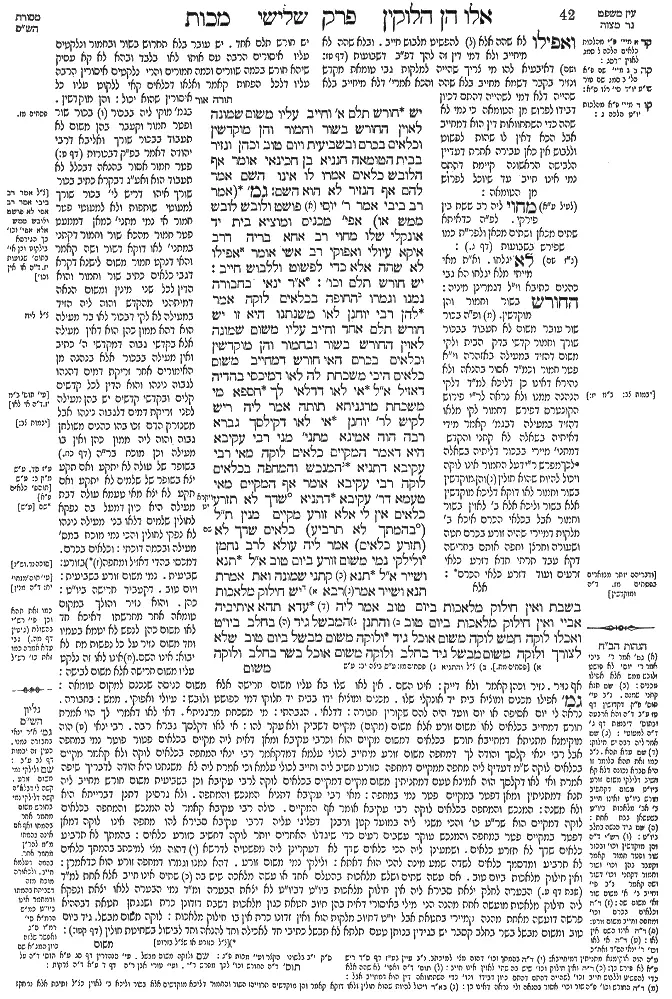
Makkot 21b - Guemara
יש חורש תלם א' וחייב עליו משום שמונה לאוין החורש בשור וחמור והן מוקדשין וכלאים בכרם ובשביעית ויום טוב וכהן ונזיר בבית הטומאה חנניא בן חכינאי אומר אף הלובש כלאים אמרו לו אינו השם אמר להם אף הנזיר לא הוא השם:
גמ׳ (אמר רב ביבי אמר ר' יוסי פושט ולובש לובש ממש או) אפי' מכניס ומוציא בית יד אונקלי שלו מחוי רב אחא בריה דרב איקא עיולי ואפוקי רב אשי אומר אפילו לא שהה אלא כדי לפשוט וללבוש חייב:
יש חורש תלם וכו':
א"ר ינאי בחבורה נמנו וגמרו החופה בכלאים לוקה אמר להן רבי יוחנן לאו משנתנו היא זו יש חורש תלם אחד וחייב עליו משום שמונה לאוין החורש בשור ובחמור והן מוקדשין וכלאים בכרם האי חורש דמחייב משום כלאים היכי משכחת לה לאו דמיכסי בהדיה דאזיל א"ל אי לאו דדלאי לך חספא מי משכחת מרגניתא תותה אמר ליה ריש לקיש לר' יוחנן אי לאו דקילסך גברא רבה הוה אמינא מתני' מני רבי עקיבא היא דאמר המקיים כלאים לוקה מאי רבי עקיבא דתניא המנכש והמחפה בכלאים לוקה רבי עקיבא אומר אף המקיים מאי טעמא דר' עקיבא דתניא (ויקרא יט, יט) שדך לא תזרע כלאים אין לי אלא זורע מקיים מנין ת"ל ((ויקרא יט, יט) בהמתך לא תרביע) כלאים שדך לא (תזרע כלאים) אמר ליה עולא לרב נחמן ולילקי נמי משום זורע ביום טוב א"ל תנא ושייר א"ל תנא קתני שמונה ואת אמרת תנא ושייר אמר רבא יש חילוק מלאכות בשבת ואין חילוק מלאכות ביום טוב אמר ליה עדא תהא איתיביה אביי ואין חילוק מלאכות ביום טוב והתנן המבשל גיד בחלב ביו"ט ואכלו לוקה חמש לוקה משום אוכל גיד ולוקה משום מבשל ביום טוב שלא לצורך ולוקה משום מבשל גיד בחלב ולוקה משום אוכל בשר בחלב ולוקה
Comments from Rashi on Masechet Makkot Page 21b
יש חורש תלם אחד . יש עובר בלא תחרוש בשור ובחמור ונלקטים עליו איסורים הרבה עם אותו לאו בלבד ובהא לא קא עסיק שיהא חורש בכמה שוורים וכמה חמורים והרי נלקטים איסורין הרבה עליו דלכל הפחות קאמר ואלאו דכלאים קאי ללקוט עליו כל איסורין שהוא יכול: והן מוקדשין . בגמ' מוקי ליה בבכור בכור שור ופטר חמור וקעבר בהן משום לא תעבוד בבכור שורך ואליבא דרבי יהודה דאמר בפ"ק דבכורות (דף ט:) פטר חמור אסור בהנאה דבכלל לא תעבוד הוא ואע"ג דבקרא כתיב בכור שורך איהו דריש לי' בכור שורך למעוטי שותפות ולא למעוטי פטר חמור אי נמי מתני' כמאן דממעט פטר חמור מהכא שור וחמור דקתני במתני' לאו דוקא דשור ושה קאמר והאי דנקט חמור משום לישנא דקרא דגבי כלאים כתיב שור וחמור והוא הדין לכל שני מינין ומשום הנאה דמיתהני מהקדש והוה ליה הזיד במעילה לא לקי דבכור לאו בר מעילה הוא דהא ממון כהן הוא דאין מעילה אלא בקדשי גבוה דמקדשי ה' כתיב ואין מעילה בבכור אלא בנהנה מן האימורים אחר זריקת דמים דהנהו לגבוה נינהו והוא הדין לכל קדשים קלים ובקדשי קדשים יש בהן מעילה לפני זריקת דמים דלגבוה נינהו אבל משנזרק הדם זכו בהו כהנים משולחן גבוה והוה ליה ממון כהן ואין בו מעילה וכן מוכח בר"ה (דף כח.) בשופר של עולה לא יתקע ואם תקע יצא בשופר של שלמים לא יתקע ואם תקע לא יצא מאי טעמא עולה דבת מעילה היא כיון דמעל בה נפקא לחולין שלמים דלאו בני מעילה נינהו לא נפקי לחולין והכי נמי מוכח במס' מעילה ובכמה דוכתי: וכלאים בכרם . דמכסי בהדי דאזיל ומחפה בזורע: שביעית . נמי משום זורע בשביעית: ויום טוב . דקעביד חרישה ביו"ט: כהן: והוא נזיר והולך במקום טומאה אחר מחרשתו דאיכא חד לאו משום כהן לנפש לא יטמא בעמיו וחד משום נזיר על כל נפשות מת לא יבוא: אינו השם . אינו לאו זה נלקט עליו משום חרישה אלא משום לבישה: אף נזיר . נזיר וכהן קאמר ולא דייק: אינו השם . אין לאו שלו בא עליו משום חרישה אלא משום כניסה שנכנס למקום טומאה: גמ' אפילו מכניס ומוציא בית יד אונקלי שלו . מכניס ומוציא ידו בבית יד חלוקו דמי כפושט ולובש: עיולי ואפוקי . ממש: בחבורה . נראה לי יום אסיפה או יום וועד היה להם שקורין חבורה: דדלאי . הגבהתי: מי משכחת מרגניתא . דאי לאו דאמרי לך הוי אמרת חורש דמחייב בכלאים לאו משום זורע אלא משום (מקום) מקיים דשביק ולא עקר להו: אי לאו דקלסך גברא רבה . רבי ינאי הוה מוקימנא מתניתא דמחייבא חורש בכלאים דמשום מקיים הוא וכרבי עקיבא ומאן דאית ליה מקיים בכלאים פטור פוטר נמי במחפה אבל רבי ינאי קלסך והודה לך דמחפה משום זורע מיחייב לכולי עלמא דמדקאמר רבי ינאי המחפה בכלאים לוקה ולא קאמר מקיים בכלאים לוקה ש"מ דעדיף ליה מחפה ממקיים דמחפה כזורע חשיב ליה וחייב לכולי עלמא וכי אמרת ליה לא משנתנו היא הודה לדבריך שיפה אמרת ואי לאו דקלסך הוה אמינא טעם דמתניתין משום מקיים דמקיים בכלאים לוקה לרבי עקיבא וכן בשביעית משום חורש מחייב ליה תנא דמתניתין ומאן דפטר במקיים פטר נמי במחפה: מאי רבי עקיבא דתניא המנכש והמחפה . ולא גרסינן דתנן דברייתא היא ולא משנה: המנכש והמחפה בכלאים לוקה רבי עקיבא אומר אף המקיים . כולה רבי עקיבא קאמר לה המנכש והמחפה בכלאים לוקה דמקיים הוא שר"ע כו' והכי משני ליה במועד קטן ורבנן דפליגי עליה דרבי עקיבא סבירא להו מחפה אינו לוקה דמאן דפטר במקיים פטר במחפה והמנכש עוקר עשבים רעים כדי שיגדלו האחרים יותר לוקה דחשיב כזורע כלאים: בהמתך לא תרביע כלאים שדך לא תזרע כלאים . ושמעינן ליה הכי כלאים שדך לא דעקרינן ליה מפשטיה לדרשא דהוה מצי למיכתב בהמתך כלאים לא תרביע ומדסמך כלאים לשדה שמע מינה להכי הוא דאתא: ולילקי נמי משום זורע . דהא נמנו וגמרו דמחפה זורע הוא כדאמרן: ואין חילוק מלאכות ביום טוב . אם עשה שתים ושלש מלאכות בהעלם אחד או עשה מלאכה שיש בה שתים אינו חייב אלא אחת למ"ד (שבת דף ע.) הבערה לחלק יצאת סבירא ליה אין חילוק מלאכות ביו"ט דביו"ט לא יצאת הבערה ומ"ד נמי הבערה ללאו יצאת ונפקא ליה חילוק מלאכות מועשה אחת מהנה הני מילי באיסורי דאית בהן חיוב חטאת כגון מלאכות דשבת דזדונן כרת ושגגתן חטאת דבההיא פרשה דועשה מאחת מהנה קמיירי בחטאת אבל יו"ט דחיוב מלקות הוא ואין זדונו כרת אין בו חילוק מלאכות: לוקה משום מבשל . גיד ביום טוב ומשום מבשל בשר בחלב קסבר יש בגידין בנותן טעם תלתא לא תבשל כתיבי חד לאכילה וחד להנאה וחד לבישול בשחיטת חולין (דף קטו:):
Makkot 21b - Mishnah translated into english
Apropos the case where one receives several sets of lashes for performing a single action, the mishna continues: There is one who plows a single furrow and is liable to receive lashes for violating eight prohibitions. How so? For plowing with an ox and a donkey, in violation of the prohibition: “You shall not plow with an ox and a donkey together” (Deuteronomy 22:10); and they are consecrated, and therefore he is guilty of misuse of consecrated property; and he is plowing diverse kinds in a vineyard; and it is during the Sabbatical Year, when it is prohibited to work the land; and it is on a Festival, when plowing is a prohibited labor; and he is both a priest and a nazirite and is performing the plowing in a place of impurity imparted by a corpse, which is prohibited for both a priest (see Leviticus 21:1) and a nazirite (see Numbers 6:6).
Ḥananya ben Ḥakhinai says: If he was wearing a garment consisting of diverse kinds of wool and linen while plowing he is also flogged for violating that prohibition. The Sages said to him: That is not a prohibition in the same category as the others, as it is not connected to the act of plowing. Ḥananya ben Ḥakhinai said to them: According to that criterion, the fact that he is a nazirite is also not in the same category, as a nazirite and a priest are not flogged for plowing; rather, they are flogged for contracting impurity imparted by a corpse.
GEMARA: Rav Beivai says that Rabbi Yosei says that when the mishna teaches with regard to wearing a garment of diverse kinds of wool and linen: And he removes it and dons it after each forewarning, does it mean that one is liable for each forewarning only if he actually removes and dons it, or perhaps one is liable even if he inserts and removes his arm from the sleeve of his garment [unkali]; perhaps this is also considered removing and donning the garment? The Gemara relates: Rav Aḥa, son of Rav Ika, gestured: One is liable only for actually inserting his body in the garment entirely and then removing it. Rav Ashi says: The reference in the mishna is not to actually removing and donning the garment; rather, even if he only waited an interval equivalent to the period required to remove and to don the garment, he is liable to receive lashes for each and every forewarning.
§ The mishna teaches: There is one who plows a single furrow and is liable to receive lashes for violating eight prohibitions. Rabbi Yannai says that when the Sages sat in a group, their opinions were counted and they concluded: One who covers seeds of diverse kinds with dirt is flogged for sowing diverse kinds. Rabbi Yoḥanan said to them: Isn’t this the halakha in our mishna: There is one who plows a single furrow and is liable to receive lashes for violating eight prohibitions, including: For plowing with an ox and a donkey, and they are consecrated, and he is plowing diverse kinds in a vineyard. With regard to this person who plows who is liable to receive lashes due to violating the prohibition of diverse kinds, how can you find these circumstances? Plowing a field is unrelated to sowing diverse kinds. Is it not a case where one covers the seeds with dirt in the course of his plowing as he proceeds, indicating that one who covers the seeds of diverse kinds is flogged?
Rabbi Yannai said to him: You are correct; but if I had not lifted the earthenware shard for you, would you have found the gem beneath it? It was only after I told you the halakha that you succeeded in finding a source in the mishna. Later, Reish Lakish said to Rabbi Yoḥanan: If it was not for the fact that a great man, Rabbi Yannai, praised your statement, I would say that there is no proof from the mishna, as it is possible to say: Whose opinion is expressed in the mishna? It is that of Rabbi Akiva, who says: One who maintains diverse kinds by performing actions essential for their existence is flogged. Therefore, one who plows and covers seeds of diverse kinds is liable to receive lashes, as he facilitates the existence of the diverse kinds, not because in covering the seeds it is as though he sowed them.
The Gemara asks: What is the aforementioned statement of Rabbi Akiva? It is as it is taught in a baraita: One who weeds and one who covers the seeds of diverse kinds with dirt is flogged, as he performed an action that promotes the growth of the diverse kinds, which is tantamount to sowing. Rabbi Akiva says: Even one who maintains diverse kinds violates the prohibition.
The Gemara asks: What is the reason for the opinion of Rabbi Akiva? As it is taught in a baraita that it is written: “Your field you shall not sow with diverse kinds” (Leviticus 19:19), I have derived only that sowing diverse kinds is prohibited. From where do I derive that maintaining diverse kinds, which does not involve any positive action, is also prohibited? It is as the verse states: “Your animals you shall not breed with different species [kilayim]; your field you shall not sow with diverse kinds [kilayim]” (Leviticus 19:19), which is interpreted as though it is written: Diverse kinds [kilayim] in your field you shall not sow, indicating that one may not allow diverse kinds to remain in his field.
Ulla said to Rav Naḥman: And let him be flogged also for violating the prohibition of sowing on a Festival. Rav Naḥman said to him: Indeed, lashes for that prohibition could have been included in the mishna. The tanna taught certain prohibitions and omitted other prohibitions.
Ulla said to him: The tanna taught and specifically enumerated eight sets of lashes, and you say that he taught some and omitted some? Rava says: The reason that sowing on a Festival was omitted is that there is a division of labors on Shabbat, but there is no division of labors on a Festival. On Shabbat, one who unwittingly performs several prohibited labors during one lapse of awareness is liable to bring one sin-offering for each labor that he performed. On a Festival, if one performs several prohibited labors, he is liable to receive only one set of lashes, as there is one prohibition against performing labor on a Festival. Since the mishna listed plowing on the Festival, it does not also list sowing on the Festival. Ulla said to him: That [ada] is so.
Abaye raised an objection to the opinion of Rava: And is there no division of labors on a Festival? But didn’t we learn in a baraita: One who cooks a sciatic nerve in milk on a Festival and eats it is flogged with five sets of lashes. How so? He is flogged for violating the prohibition of eating a sciatic nerve (see Genesis 32:33); and he is flogged for violating the prohibition of cooking on a Festival not for the purpose of the Festival, as he is prohibited from eating it; and he is flogged for violating the prohibition of cooking a sciatic nerve, which is meat, in milk; and he is flogged for violating the prohibition of eating meat cooked in milk; and he is flogged
Traduction : The William Davidson digital edition of the Koren Noé Talmud, with commentary by Rabbi Adin Even-Israel Steinsaltz.