 Talmud Bavli
Makkot 4a : Youtube
Daf TubeYoutube
2 video classes :
Makkot Page 4a
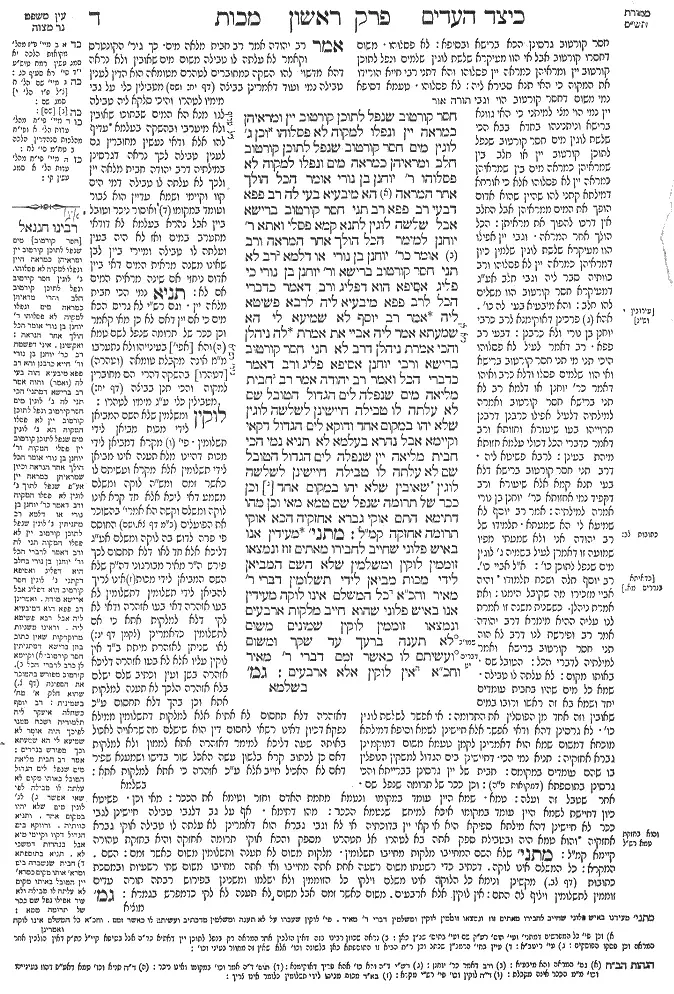
Makkot 4a - Guemara
חסר קורטוב שנפל לתוכן קורטוב יין ומראיהן כמראה יין ונפלו למקוה לא פסלוהו וכן ג' לוגין מים חסר קורטוב שנפל לתוכן קורטוב חלב ומראיהן כמראה מים ונפלו למקוה לא פסלוהו ר' יוחנן בן נורי אומר הכל הולך אחר המראה הא מיבעיא בעי לה רב פפא דבעי רב פפא רב תני חסר קורטוב ברישא אבל שלשה לוגין לתנא קמא פסלי ואתא ר' יוחנן למימר הכל הולך אחר המראה ורב אומר כר' יוחנן בן נורי או דלמא רב לא תני חסר קורטוב ברישא ור' יוחנן בן נורי כי פליג אסיפא הוא דפליג ורב דאמר כדברי הכל לרב פפא מיבעיא ליה לרבא פשיטא ליה אמר רב יוסף לא שמיעא לי הא שמעתא אמר ליה אביי את אמרת לה ניהלן והכי אמרת ניהלן דרב לא תני חסר קורטוב ברישא ורבי יוחנן אסיפא פליג ורב דאמר כדברי הכל ואמר רב יהודה אמר רב חבית מליאה מים שנפלה לים הגדול הטובל שם לא עלתה לו טבילה חיישינן לשלשה לוגין שלא יהו במקום אחד ודוקא לים הגדול דקאי וקיימא אבל נהרא בעלמא לא תניא נמי הכי חבית מליאה יין שנפלה לים הגדול הטובל שם לא עלתה לו טבילה חיישינן לשלשה לוגין שאובין שלא יהו במקום אחד וכן ככר של תרומה שנפל שם טמא מאי וכן מהו דתימא התם אוקי גברא אחזקיה הכא אוקי תרומה אחזקה קמ"ל:
מתני׳ מעידין אנו באיש פלוני שחייב לחבירו מאתים זוז ונמצאו זוממין לוקין ומשלמין שלא השם המביאן לידי מכות מביאן לידי תשלומין דברי ר' מאיר וחכ"א כל המשלם אינו לוקה מעידין אנו באיש פלוני שהוא חייב מלקות ארבעים ונמצאו זוממין לוקין שמונים משום (שמות כ, יב) לא תענה ברעך עד שקר ומשום (דברים יט, יט) ועשיתם לו כאשר זמם דברי ר' מאיר וחכ"א אין לוקין אלא ארבעים:
גמ׳
Comments from Rashi on Masechet Makkot Page 4a
חסר קורטוב גרסינן . הכא ברישא ובסיפא: לא פסלוהו . משום דחסרו קורטוב אבל אי הוו מעיקרא שלשת לוגין שלמים ונפל לתוכן קורטוב יין ומראיהן כמראה יין פסלוהו והא דתני רבי חייא הורידו את המקוה כי האי תנא סבירא ליה: לא פסלוהו . טעמא דסיפא נמי משום דחסר קורטוב הוי וגבי יין נמי הוי מצי למיתני כי האי גוונא ברישא וניתנינהו בחדא בבא הכי שלשת לוגין מים חסר קורטוב שנפל לתוכן קורטוב יין או חלב בין שמראיהן כמראה מים בין שמראיהן כמראה יין לא פסלוהו אלא כי אורחא דמילתא קתני להו שהיין שהוא אדום הופך את המים ממראיהן אבל החלב אין דרכו להפוך את מראיתן: הכל הולך אחר המראה . וגבי יין אפילו הוו מעיקרא שלשת לוגין שלמין כיון דמראיהן כמראה יין לא פסלוהו ורב כוותיה סבר ליה וגבי חלב אע"ג דמעיקרא חסר קורטוב הוו משלים להו חלב: והא מיבעיא בעי לה כו' . אהא פרכינן דאוקימנא לרב כרבי יוחנן בן נורי ולא כרבנן: דבעי רב פפא . רב דאמר לעיל לא פסלוהו היכי תני מי תני חסר קורטוב ברישא ואי הוו שלמים פסלו ודלא כרב ואיהו דאמר כר' יוחנן או דלמא רב לא תני ברישא חסר קורטוב ואמרה למילתיה דלעיל אפילו כרבנן דרבנן תרוייהו בעו שיעורא וחזותא ורב דאמר כדברי הכל דכולי עלמא חזותא מיהת בעינן: לרבא פשיטא ליה . דרב תני חסר קורטוב ברישא דלא בעי תנא קמא אלא שיעורא ורב דקפיד נמי אחזותא כר' יוחנן בן נורי אמרה למילתיה: אמר רב יוסף לא שמיעא לי הא שמעתא . תלמידו של רב יהודה אני ולא שמעתי מפיו שמועה זו דאמרן לעיל בשמיה ג' לוגין מים שנפל לתוכן כו': א"ל אביי כו' . רב יוסף חלה ושכח תלמודו והיה אביי מזכירו מה שקיבל הימנו: ואת אמרת ניהלן . כששנית משנה זו אמרת לנו עליה ההיא מימרא דרב יהודה אמר רב ופירשת לנו דרב לא הוה תני חסר קורטוב ברישא ואמר למילתיה לדברי הכל: הטובל שם . באותו מקום: לא עלתה לו טבילה . שמא כל מים שהיו בחבית עומדים יחד ושמא בא זה ראשו ורובו במים שאובין וזה אחד מן הפוסלין את התרומה: אי אפשר לשלשת לוגין כו' . לא גרסינן דהא ודאי אפשר אלא חיישינן לשמא וסיפא דמילתא מוכחא דמשום שמא הוא דאמרינן לקמן טעמא משום דמוקמינן גברא אחזקיה: תניא נמי הכי . דחיישינן בים הגדול למשקין הנופלין בו שהם עומדים במקומם: חבית של יין גרסינן בברייתא והכי גרסינן בתוספתא (דמקואות פ"ה): וכן ככר של תרומה שנפל שם . אחר שטבל זה ועלה: טמא . שמא היין עומד במקומו ונטמא מחמת האדם וחזר וטימא את הככר: מאי וכן . פשיטא כיון דחיישת לשמא היין עומד במקומו איכא למיחש שנטמא הככר: מהו דתימא . אף על גב דלגבי טבילה חיישינן לגבי ככר לא חיישינן דהא מילתא ספיקא היא אי קאי יין בדוכתיה אי לא וגבי גברא הוא דאמרינן לא עלתה לו טבילה אוקי גברא אחזקיה. והוא טמא היה ובטבילת ספק אתה בא לטהרו אל תטהרנו מספק והכא אוקי תרומה אחזקה והיא בחזקת טהורה קיימא קמ"ל: מתני' שלא השם המחייבו מלקות מחייבו תשלומין . מלקות משום לא תענה ותשלומין משום כאשר זמם: השם . המקרא: כל המשלם אינו לוקה . דכתיב כדי רשעתו משום רשעה אחת אתה מחייבו ואי אתה מחייבו משום שתי רשעיות ובמסכת כתובות (דף לב.) מקשינן ונימא כל הלוקה אינו משלם וילקו כל הזוממין ולא ישלמו ומשנינן בפירוש רבתה תורה עדים זוממין לתשלומין ויליף לה התם: אין לוקין אלא ארבעים . משום כאשר זמם אבל משום לא תענה לא לקי כדמפרש בגמרא: גמ'
Makkot 4a - Mishnah translated into english
less one kortov or any small measure of water, into which a kortov of wine fell, increasing the measure of liquid to a total of three log, and the appearance of those three log is like the appearance of wine; and then those three log fell into a ritual bath, completing its requisite forty se’a, it did not invalidate the ritual bath, because three log of drawn water invalidate the ritual bath, and less than that measure of water fell into the ritual bath. And likewise, in a case where there are three log of drawn water less one kortov into which a kortov of milk fell and the appearance of those three log is like the appearance of water, and those three log fell into a ritual bath, completing its requisite forty se’a, it did not invalidate the ritual bath, because in this case too, less than three log of drawn water fell into the ritual bath.
Rabbi Yoḥanan ben Nuri says: Everything follows the appearance of those three log. Therefore, if it has the appearance of wine it does not invalidate the ritual bath; if it has the appearance of water it invalidates the ritual bath. Perhaps Rav Yehuda says that Rav says that the mixture of water and wine does not invalidate the ritual bath because he holds in accordance with the opinion of Rabbi Yoḥanan ben Nuri that everything follows the appearance. Rabbi Ḥiyya holds in accordance with the opinion of the first tanna that the amount of drawn water is the decisive factor, and therefore, regardless of its appearance, three log of water invalidates a ritual bath.
The Gemara asks: Wasn’t this matter already raised as a dilemma by Rav Pappa? As Rav Pappa raised a dilemma: There are two ways to explain the mishna. One is that Rav teaches: In a case where there are three log of drawn water less one kortov, in the first clause. But in a case where there are three complete log of water, according to the first tanna, it invalidates the ritual bath even if its appearance is that of wine. And Rabbi Yoḥanan ben Nuri comes to say: Everything follows the appearance, meaning that even in that case, if its appearance is that of wine it does not invalidate the ritual bath. And if that is the dispute, Rav states his opinion in accordance with the opinion of Rabbi Yoḥanan ben Nuri.
Or perhaps Rav did not teach: In a case where there are three log of drawn water less one kortov, in the first clause of the mishna; rather, he taught: In a case where there are three complete log of water into which a kortov of wine fell. According to this version of the mishna, even the first tanna agrees that if its appearance is that of wine it does not invalidate the ritual bath. And when Rabbi Yoḥanan ben Nuri disagrees, it is only with regard to the latter clause that he disagrees, in the case of three log of drawn water less one kortov into which a kortov of milk fell and the appearance of those three log is like the appearance of water. The first tanna holds that in order to invalidate a ritual bath two criteria must be fulfilled: There must be three log of water and its appearance must be that of water. In this case there is less than three log of water. Rabbi Yoḥanan ben Nuri holds that there is only one criterion, appearance. Therefore, in the case of milk, the ritual bath is invalidated.
And according to this latter rendering of the dispute, Rav states his opinion in accordance with the opinion of everyone. Why then does Rava state: This statement of Rav is in accordance with the opinion of Rabbi Yoḥanan ben Nuri?
The Gemara answers: This is not difficult, as although for Rav Pappa there is a dilemma how to interpret the mishna, for Rava it is obvious.
Apropos this discussion, the Gemara relates that Rav Yosef said: I did not hear this halakha with regard to the dilemma whether the first clause of the mishna includes the phrase: Less one kortov. Abaye said to him: You said it to us, but you forgot due to your illness. And this is what you said to us: Rav did not teach: Less one kortov, in the first clause of the mishna, and Rabbi Yoḥanan ben Nuri disagrees only with regard to the latter clause, and it is Rav who states his opinion in accordance with the opinion of everyone.
§ And Rav Yehuda says that Rav says: In the case of a barrel full of drawn water that fell into the Mediterranean Sea, concerning one who immerses there in the spot where the water fell, the immersion did not effect his purification, because we are concerned that three log of drawn water should not be collected in one place, in the place where he immerses. The Gemara qualifies this halakha: And this applies specifically to the Mediterranean Sea, whose waters are largely stagnant. But in the case of a standard river, whose waters flow, no, this halakha does not apply, as the water from the barrel will immediately intermingle with the river water.
The Gemara notes: This is also taught in a baraita: In the case of a barrel full of wine that fell into the Mediterranean Sea, concerning one who immerses there, the immersion did not effect his purification, because we are concerned that three log of drawn wine that is unfit for immersion should not be collected in one place. And likewise, a loaf of teruma that fell there, where the wine fell, is impure through contact with the wine.
The Gemara asks: What is added by the clause introduced with the term: And likewise? If the concern is that the wine remained in one place and did not intermingle with the seawater, ostensibly that concern applies to halakhot of ritual impurity. The Gemara answers: Lest you say that there, with regard to immersion, the reason he is impure is that since there is uncertainty whether his immersion effected his purification, the principle is: Establish the person on his presumptive status of impurity. But here, in the case of a loaf of teruma, since there is uncertainty whether it was rendered impure, the principle is: Establish the teruma on its presumptive status of purity. Therefore, the tanna of the baraita teaches us that the concern that the loaf touched the wine is substantial to the extent that it prevails even over the loaf’s presumptive status of purity.
MISHNA: If witnesses said: We testify with regard to a man called so-and-so that he is liable to pay another person two hundred dinars, and they were found to be conspiring witnesses, they are flogged, and they pay the money they sought to render him liable to pay. Why do they receive two punishments? It is due to the fact that the source that brings them to liability to receive lashes is not the source that brings them to liability for payment; this is the statement of Rabbi Meir. And the Rabbis say: Anyone who pays as punishment for a transgression is not flogged for that same transgression.
Likewise, if witnesses said: We testify with regard to a man called so-and-so that he is liable to receive forty lashes, and they were discovered to be conspiring witnesses, they are flogged with eighty lashes; one set of lashes due to violation of the prohibition: “You shall not bear false witness against your neighbor” (Exodus 20:13), and one set of lashes due to the verse: “And you shall do to him as he conspired” (Deuteronomy 19:19), which is the punishment for conspiring witnesses; this is the statement of Rabbi Meir. And the Rabbis say: They are flogged with only forty lashes, due to the verse “And you shall do to him as he conspired.”
Traduction : The William Davidson digital edition of the Koren Noé Talmud, with commentary by Rabbi Adin Even-Israel Steinsaltz.