 Talmud Bavli
The learning on the whole site is dedicated : L'ilui Nishmat אסתר בת חיים
The learning on the whole site is dedicated : L'ilui Nishmat אליעזר בן רחל
The learning on the whole site is dedicated : L'ilui Nishmat Rav Chlomo Ben Jamilla
Makkot 3a : Youtube
Daf TubeYoutube
2 video classes :
Makkot Page 3a
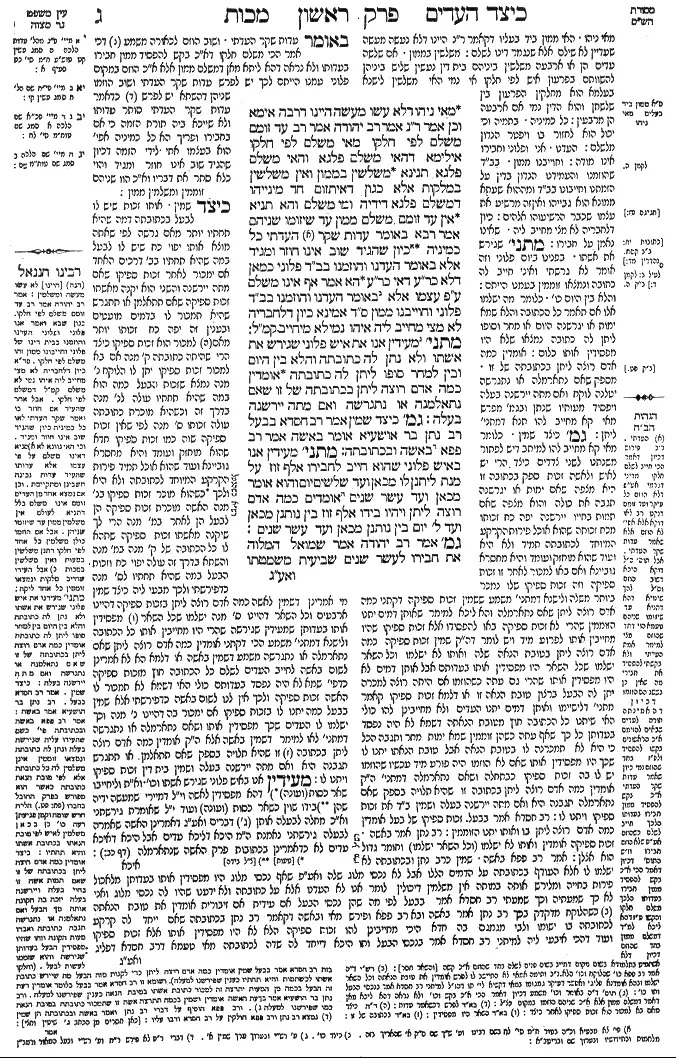
Makkot 3a - Guemara
מאי ניהו דלא עשו מעשה היינו דרבה אימא וכן אמר ר"נ אמר רב יהודה אמר רב עד זומם משלם לפי חלקו מאי משלם לפי חלקו אילמא דהאי משלם פלגא והאי משלם פלגא תנינא משלשין בממון ואין משלשין במלקות אלא כגון דאיתזום חד מינייהו דמשלם פלגא דידיה ומי משלם והא תניא אין עד זומם משלם ממון עד שיזומו שניהם אמר רבא באומר עדות שקר העדתי כל כמיניה כיון שהגיד שוב אינו חוזר ומגיד אלא באומר העדנו והוזמנו בב"ד פלוני כמאן דלא כר"ע דאי כר"ע הא אמר אף אינו משלם ע"פ עצמו אלא באומר העדנו והוזמנו בב"ד פלוני וחוייבנו ממון ס"ד אמינא כיון דלחבריה לא מצי מחייב ליה איהו נמי לא מיחייב קמ"ל:
מתני׳ מעידין אנו את איש פלוני שגירש את אשתו ולא נתן לה כתובתה והלא בין היום ובין למחר סופו ליתן לה כתובתה אומדין כמה אדם רוצה ליתן בכתובתה של זו שאם נתאלמנה או נתגרשה ואם מתה יירשנה בעלה:
גמ׳ כיצד שמין אמר רב חסדא בבעל רב נתן בר אושעיא אומר באשה אמר רב פפא באשה ובכתובתה:
מתני׳ מעידין אנו באיש פלוני שהוא חייב לחבירו אלף זוז על מנת ליתנן לו מכאן ועד שלשים יום והוא אומר מכאן ועד עשר שנים אומדים כמה אדם רוצה ליתן ויהיו בידו אלף זוז בין נותנן מכאן ועד ל' יום בין נותנן מכאן ועד עשר שנים:
גמ׳ אמר רב יהודה אמר שמואל המלוה את חבירו לעשר שנים שביעית משמטתו
Comments from Rashi on Masechet Makkot Page 3a
מאי ניהו . האי ממון ביד בעליו דקאמר ר"נ היינו דלא נעשה מעשה שעדיין לא שילם אלא שנגמר דינו לשלם: משלשין בממון . אם שלשה עדים הן או ארבעה משלשין ביניהם בית דין נעשין שליש ביניהן להשוותם בפרעון איש לפי חלקו אי נמי האי משלשין לישנא בעלמא הוא מחלקין הפרעון בין שלשתן והוא הדין נמי אם ארבעה הן מרבעין: כל כמיניה . בתמיה וכי יכול הוא לחזור בו ויפטר הנדון מלשלם: העדנו . אני ופלוני וחבירו אינו מודה: וחוייבנו ממון . בב"ד שהוזמנו והעמידנו הנדון בדין על הזמתנו וחייבונו בב"ד ומההוא שעתא ממונא הוא גבייהו ואין זה מרשיע את עצמו שכבר הרשיעוהו אלהים: כיון דלחבריה לא מצי מחייב ליה . שאינו נאמן על חבירו: מתני' שגירש את אשתו . בפנינו ביום פלוני וזה אומר לא גרשתי ואיני חייב לה כתובה ונמצאו זוממין בעמנו הייתם: והלא בין היום כו' . כלומר מה ישלמו אלו אם תאמר כל הכתובה והלא שמא ימות או יגרשנה היום או מחר וסופו ליתן לה כתובה נמצאו שלא היו מפסידין אותו כלום: אומדין כמה אדם רוצה ליתן בכתובתה של זו . מספק שאם נתארמלה או נתגרשה יטלנה לוקח ואם מתה יירשנה בעלה ויפסיד מעותיו שנתן ובגמ' מפרש מאי קא מחייב להו תנא דמתני' ליתן: גמ' כיצד שמין . כלומר מאי קא מחייב להו למיתב דיש לפתור משנתנו לשני צדדים כיצד הרי יש לאיש ולאשה זכות ספק בכתובה זו היא מצפה שאם ימות או יגרשנה תגבה את כולה והוא מצפה שאם תמות בחייו יירשנה יפה כח זכותו מכח זכותה שהוא אוכל פירות הקרקע המיוחד לכתובתה תמיד ולא היא ועוד שהוא מוחזק ועומד והיא מחסרא גוביינא ואם באו למכור לאחר זו זכות ספיקה וזה זכות ספיקו שלו נמכר ביותר משלה ולישנא דמתני' משמע ששמין זכות ספיקה דקתני כמה אדם רוצה ליתן שאם נתארמלה והא ליכא למימר שאותן דמים יתנו הזוממין שהרי לא זכות ספיקה באו להפסידו אלא זכות ספיקו שהיו מחייבין אותו לפרוע מיד ויש לומר דה"ק שמין זכות ספיקה כמה אדם רוצה ליתן בטובת הנאה שלה ואותו לא ישלמו וכל השאר ישלמו שכל השאר היו מפסידין אותו בעדותם אבל אותן דמים לא היו מפסידין אותו שהרי גם עתה כשהוזמו אם היתה רוצה למכרה יתן לה הבעל ברצון טובת הנאה זו או דלמא זכות ספיקו קאמר מתני' דלישיימו ואותן דמים יתנו העדים ולא מחייבינן להו כולי האי שיתנו כל הכתובה חוץ מטובת הנאתה דשמא לא היה נפסד בעדותן כל כך שאף עתה כשהן זוממין שמא ימות מחר ותגבה הכל כי היא לא תמכרנה לו בטובת הנאה אבל טובת הנאתו יתנו לו שכך היו מפסידין אותו שאם לא הוזמו היה פורע מיד עכשיו שהוזמו יש לו בה זכות ספיקו כבתחלה ושאם נתארמלה דמתני' ה"ק אומדין כמה אדם רוצה ליתן בכתובה זו שהיא תלויה בספק שאם נתארמלה תגבנה היא ואם מתה יירשנה בעלה ושמין ב"ד את זכות ספיקו ויתנו לו: רב חסדא אמר בבעל . זכות ספיקו של בעל אומדין כמה אדם רוצה ליתן בו ואותו יתנו הזוממין: רב נתן אמר באשה . זכות ספיקה אומדין ואותו לא ישלמו (וכל השאר ישלמו) וחומר גדול הוא אצלן: אמר רב פפא באשה . שמין כרב נתן ובכתובתה לא ישלמו לו אלא העודף בכתובתה על הדמים הללו אבל לא נכסי מלוג שלה ואע"פ שאף נכסי מלוג היו מפסידין אותו בעדותן מלאכול פירות בחייה ומלירש אותה במותה אין משלמין דיכולין לומר אנו לא העדנו אלא על כתובתה ולא ידענו שהיו לה נכסי מלוג ואני לא כך שמעתיה וכך שמעתי רב חסדא אמר בבעל לפי מה שהן נכסי הבעל אם עידית אם זיבורית אומדין את טובת הנאתה כשהלוקח מדקדק בכך רב נתן אמר באשה ובא רב פפא ופירש מאי ובאשה דקאמר רב נתן בכתובתה שאם ייחד לה קרקע לכתובתה בו ישומו ולבי מגמגם בה חדא היכי מחייבינן להו זכות ספיקה הלא לא היו מפסידין אותו אלא זכות ספיקו ועוד דהכי איבעי ליה למיתני רב חסדא אמר בנכסי הבעל ותו היכא דייחד לה שדה לכתובתה מאי טעמא דרב חסדא דפליג:
Makkot 3a - Mishnah translated into english
The Gemara is puzzled by this: What is the meaning of the statement: The money remains in the possession of the owner? It means that they did not perform an action. That is identical to the reasoning of Rabba, and it is not an additional explanation. The Gemara emends the formulation of the presentation of the statement. Say: And likewise Rav Naḥman says: Know that it is so, as the money remains in the possession of the owner. Rav Naḥman is not disagreeing with Rabba; he merely formulates the statement differently.
§ Apropos the statement of Rabbi Akiva in the baraita, Rav Yehuda says that Rav says: A conspiring witness pays according to his share. The Gemara asks: What is the meaning of: Pays according to his share? If we say that it means that this witness pays half of the sum that the set conspired to render another liable to pay with their testimony, and that witness pays the other half, we already learned this in a mishna (5a): When punishing conspiring witnesses, one divides the punishment of money among them, but one does not divide the punishment of lashes among them; each receives the full thirty-nine lashes.
Rather, the Gemara explains that the expression: Pays according to his share, means that in a case where only one of the set was rendered a conspiring witness, the halakha is that he pays his half of the sum. The Gemara asks: And does he pay at all in that case? But isn’t it taught in a baraita: A conspiring witness pays money only when both were rendered conspiring witnesses? If only one was rendered a conspiring witness, he does not pay.
Rava says: The statement is not referring to a case of conspiring witnesses; rather, Rav’s statement applies to the case of one who says: It was false testimony that I testified. The Gemara asks: Is it in his power to have this statement accepted by the court? That runs counter to the principle: Once a witness stated his testimony he may not then state a revision of that testimony.
The Gemara answers: Rather, Rav’s statement applies to the case of one who says: We testified and were rendered conspiring witnesses in such and such a court. Since he was already convicted as a conspiring witness, it is as though he is admitting an obligation to give monetary restitution, and he is therefore liable to pay his share. The Gemara asks: In accordance with whose opinion is this halakha? It is not in accordance with the opinion of Rabbi Akiva, since if it were in accordance with the opinion of Rabbi Akiva, doesn’t he say: A conspiring witness also does not pay based on his own admission?
The Gemara answers: Rather, Rav’s statement applies to the case of one who says: We testified and were rendered conspiring witnesses in such and such a court and we were rendered liable to pay a specific sum of money. In that scenario, Rabbi Akiva would concede that one pays on the basis of his own admission. Once the court rendered him liable to pay a specific sum, his admission is not that he is liable to pay a fine, in which case he would be exempt. Once the court actually instructed them to pay, the debt has the status of any other monetary restitution, and one does pay monetary restitution based on his own admission.
The Gemara explains the novel element in Rav’s statement: It might enter your mind to say that since he is unable to render his fellow witness liable to pay based on his admission, as only the testimony of two witnesses is capable of doing so, he too is not liable to pay based on that admission. To counter this, Rav teaches us that his admission that he owes money renders him liable to pay.
MISHNA: In the case of witnesses who said: We testify with regard to a man called so-and-so that he divorced his wife and did not give her payment of her marriage contract, and they were then rendered conspiring witnesses, the question arises with regard to the manner in which the sum of their payment is calculated. It is not possible to render the witnesses liable to pay the entire sum of the marriage contract, as they can claim: But isn’t it so that either today or tomorrow, i.e., at some point in the future, he may divorce his wife or die and ultimately he will be liable to give her payment of her marriage contract? That being the case, the witnesses did not conspire to render him liable to pay a sum that he would otherwise not be liable to pay.
The sum of their payment is calculated as follows: The court assesses how much money another person would be willing to give in order to purchase the rights to this woman’s marriage contract, cognizant of the uncertainty that if she was widowed or divorced the purchaser will receive payment of the marriage contract but if she dies, her husband will inherit from her, and the one who purchased her marriage contract will receive nothing.
GEMARA: The mishna establishes that the payment of the conspiring witnesses is calculated based on the sum that one would be willing to pay for rights to payment of the marriage contract, taking into consideration the uncertainty whether he will ultimately receive that payment. The Gemara asks: How does the court assess that sum? Rav Ḥisda says: One calculates the sum in terms of the husband: How much would one be willing to pay for the husband’s rights to the marriage contract based on the likelihood that his wife will die first and he will inherit from her?
Rav Natan bar Oshaya says: One calculates the sum in terms of the wife: How much would one be willing to pay for the wife’s rights to the marriage contract based on the likelihood that the husband will die first or divorce her?
Rav Pappa says: One calculates the sum in terms of the wife, as Rav Natan bar Oshaya said, and the assessment is done in terms of the sum of her marriage contract. One does not include in the calculation any usufruct property that the wife brought with her into the marriage, the profits of which belong to the husband, despite the fact that as a result of the testimony of the conspiring witnesses the husband would lose his rights to those profits. One calculates the sum only in terms of her marriage contract.
MISHNA: In the case of witnesses who said: We testify with regard to a man called so-and-so that he owes another person one thousand dinars that he borrowed on the condition that he is to give the money back to him from now until thirty days have passed, and the borrower says that he borrowed that sum but it was on the condition that he is to give the money back to him from now until ten years have passed, and they were rendered conspiring witnesses, here too, it is not possible to render the witnesses liable to pay the entire sum.
Rather, the court estimates how much money a person would be willing to give so that he would keep a loan of one thousand dinars in his possession, and one calculates the difference between that sum in a situation where he would be required to give the money back from now until thirty days have passed, and that same sum in a situation where he would be required to give the money back from now until ten years have passed. That difference is the sum that the testimony of the conspiring witnesses sought to have the borrower lose; therefore, it is the sum that they must pay.
GEMARA: Rav Yehuda says that Shmuel says: In the case of one who lends money to another for a period of ten years, the Sabbatical Year abrogates the debt (see Deuteronomy 15:1–11) and absolves the borrower of the obligation to repay it.
Traduction : The William Davidson digital edition of the Koren Noé Talmud, with commentary by Rabbi Adin Even-Israel Steinsaltz.