 Talmud Bavli
Arachin 31b : Youtube
Rabbi Dr. Moshe WeisblumYoutube
1 video class :
Arachin Page 31b
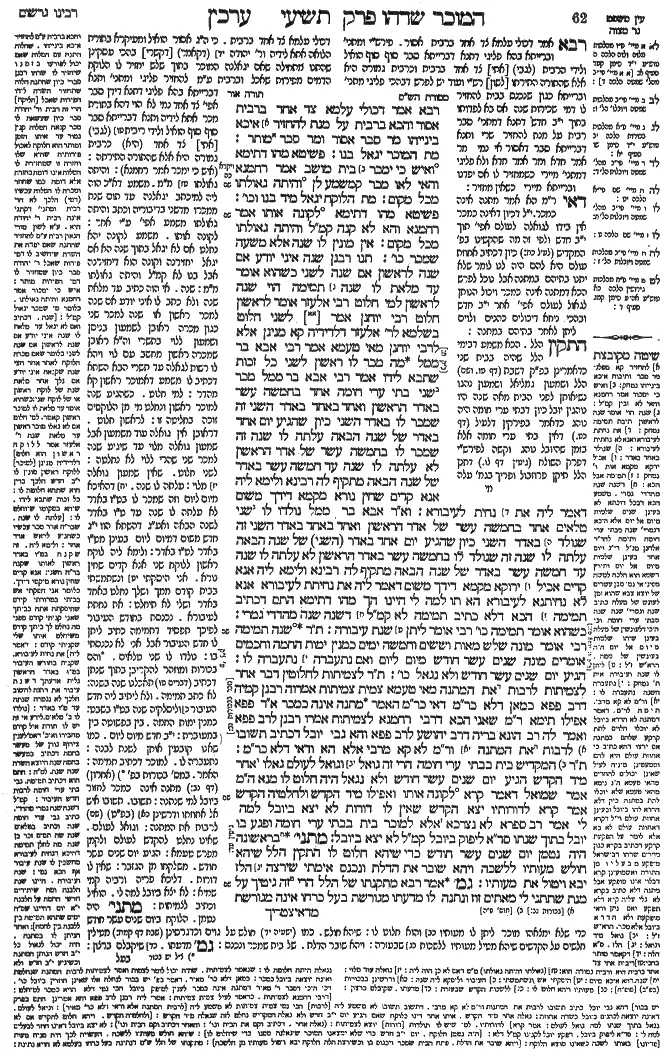
Arachin 31b - Guemara
רבא אמר דכולי עלמא צד אחד ברבית אסור והכא ברבית על מנת להחזיר איכא בינייהו מר סבר אסור ומר סבר מותר:
מת המוכר יגאל בנו:
פשיטא מהו דתימא (ויקרא כה, כט) ואיש כי ימכר בית מושב אמר רחמנא והאי לאו מכר קמשמע לן (ויקרא כה, כט) והיתה גאולתו מכל מקום:
מת הלוקח יגאל מיד בנו וכו':
פשיטא מהו דתימא {ויקרא כה } לקונה אותו אמר רחמנא והא לא קנה קמ"ל והיתה גאולתו מכל מקום:
אין מונין לו שנה אלא משעה שמכר כו':
תנו רבנן שנה איני יודע אם שנה לראשון אם שנה לשני כשהוא אומר עד מלאת לו שנה תמימה הוי שנה לראשון למי חלוט רבי אלעזר אומר לראשון חלוט רבי יוחנן אמר לשני חלוט בשלמא לר' אלעזר דלדידיה קא מנינן אלא לרבי יוחנן מאי טעמא אמר רבי אבא בר ממל מה מכר לו ראשון לשני כל זכות שתבא לידו אמר רבי אבא בר ממל מכר שני בתי ערי חומה אחד בחמשה עשר באדר הראשון ואחד באחד באדר השני זה שמכר לו באדר השני כיון שהגיע יום אחד באדר של שנה הבאה עלתה לו שנה זה שמכר לו בחמשה עשר של אדר הראשון לא עלתה לו שנה עד חמשה עשר באדר של שנה הבאה מתקיף לה רבינא ולימא ליה אנא קדים שחין נורא מקמא דידך משום דאמר ליה את נחית לעיבורא:
וא"ר אבא בר ממל נולדו לו שני טלאים אחד בחמשה עשר של אדר הראשון ואחד באחד באדר השני זה שנולד באדר השני כיון שהגיע יום אחד באדר (השני) של שנה הבאה עלתה לו שנה זה שנולד לו בחמשה עשר באדר הראשון לא עלתה לו שנה עד חמשה עשר באדר של שנה הבאה מתקיף לה רבינא ולימא ליה אנא קדים אכיל ירוקא מקמא דידך משום דאמר ליה את נחיתת לעיבורא אנא לא נחיתנא לעיבורא הא תו למה לי היינו הך מהו דתימא התם דכתיב תמימה הכא דלא כתיב תמימה לא קמ"ל דשנה שנה מהדדי גמרי:
כשהוא אומר תמימה כו' רבי אומר ליתן שנת עיבורה:
ת"ר (ויקרא כה, ל) שנה תמימה רבי אומר מונה שלש מאות וששים וחמשה ימים כמנין ימות החמה וחכמים אומרים מונה שנים עשר חודש מיום ליום ואם נתעברה נתעברה לו:
הגיע יום שנים עשר חודש ולא נגאל כו':
ת"ר לצמיתות לחלוטין דבר אחר לצמיתות לרבות את המתנה מאי טעמא צמית צמיתות אמרוה רבנן קמיה דרב פפא כמאן דלא כר"מ דאי כר"מ האמר מתנה אינה כמכר א"ר פפא אפילו תימא ר"מ שאני הכא דרבי רחמנא לצמיתות אמרו רבנן לרב פפא ואמר לה רב הונא בריה דרב יהושע לרב פפא והא גבי יובל דכתיב תשובו לרבות את המתנה ור"מ לא קא מרבי אלא הא ודאי דלא כר"מ:
ת"ר המקדיש בית בבתי ערי חומה הרי זה גואל וגואל לעולם גאלו אחר מיד הקדש הגיע יום שנים עשר חודש ולא נגאל היה חלוט לו מנא ה"מ אמר שמואל דאמר קרא {ויקרא כה } לקונה אותו ואפילו מיד הקדש ולחלטיה הקדש אמר קרא לדורותיו יצא הקדש שאין לו דורות לא יצא ביובל למה לי אמר רב ספרא לא נצרכא אלא למוכר בית בבתי ערי חומה ופגע בו יובל בתוך שנתו סד"א ליפוק ביובל קמ"ל לא יצא ביובל:
מתני׳ בראשונה היה נטמן יום שנים עשר חודש כדי שיהא חלוט לו התקין הלל שיהא חולש מעותיו ללשכה ויהא שובר את הדלת ונכנס אימתי שירצה הלז יבא ויטול את מעותיו:
גמ׳ אמר רבא מתקנתו של הלל הרי זה גיטיך על מנת שתתני לי מאתים זוז ונתנה לו מדעתו מגורשת בעל כרחו אינה מגורשת
Comments from Rashi on Masechet Arachin Page 31b
דכולי עלמא צד אחד ברבית . כי ה"ג אסור הואיל ומעיקרא בתורת הלואה אתא לידיה ור' יהודה (דקאמר) [דקשרי] בהכי עסקינן שהתנו מתחילה שאם יגאלנה המוכר בתוך שלש יחזיר לו הלוקח הדמים מפירות שאכל וברבית ע"מ להחזיר פליגי ומתני' ותנא דברייתא בהא פליגי דתנא דידן סבר אפי' צד אחד נמי לא הוי דהא בתורת מכר אתא לידיה ותנא דברייתא סבר סוף סוף הואיל ולידי ריבית (לגבי) [אתי] צד אחד (היא) כרבית גמורה היא אלא שהתורה התירתה: (איש כי ימכר אמר רחמנא): והיתה גאולתו מ"מ . משמע דא"כ הוה ליה למיכתב יגאלנה עד תום שנת ממכרו מדשני בדיבוריה וכתב והיתה גאולתו משמע אפי' ע"י אחר: לקונה אותו . משמע לקונה יהא נחלט אם לא יגאל בתוך שנה הא אם יגאל יחזירנה וקונה הוא דיחזירנה אבל בנו לא קמ"ל והיתה גאולתו מ"מ: שנה . אי הוה כתיב עד מלאת שנה ולא כתב לו איני יודע אם שנה למכר ראשון או שנה למכר שני כגון מכרה ראובן לשמעון בניסן ושמעון ללוי בתשרי וה"א ראובן שמכרה ראשון מחשב עם לוי ויהא לו רשות לגאלה עד תשרי הבא השתא דכתיב לו משמע דאמוכר ראשון קא מהדר: למי חלוט . כשהגיע שנה למוכר ראשון ונחלט מי מן הלוקחים זוכה בחליטה זו: לראשון חלוט . דראובן אין גואלה עוד משמעון אבל שמעון גואלה מלוי עד שיגיע שנה למכר שני שהרי ללוי לא נחלטה: לשני חלוט . שאין שמעון גואלה מלוי: עלתה לו שנה . דהאיכא מיום ליום וזה שמכר לו בט"ו באדר לא עלתה לו שנה עד ט"ו באדר לשנה הבאה ואע"ג דהשתא הוו י"ג חדש משום דמיום ליום בעינן מט"ו באדר לט"ו באדר: ולימא ליה . לוקח ראשון ללוקח שני אנא קדים שחין נורא אני היסקתי ונשתמשתי בבית קודם ממך ושלך נחלט באחד באדר ושלי לא תיחלט: את נחתת לעיבורא . נכנסת בחודש העיבור לפיכך תפסיד דתמימה כתיב ליתן לו חדש העיבור אבל אני לא נכנסתי בו: נולדו לו שני טלאים . והם בכורות ומוזהר להקריבן בתוך שנתן דכתיב (דברים טו) תאכלנו שנה בשנה: לא כתב תמימה . ולא ליתיב ליה חדש העיבור וליסלקיה שנה בט"ו בשבט: כמנין ימות החמה . בין בפשוטה בין במעוברת: י"ב חדש מיום ליום . כמו שאנו קובעין אותן לשנת לבנה: נתעברה לו . למוכר דכתיב תמימה: האמר . במס' בכורות בפ' אחרון (דף נב:) מתנה אינה כמכר לחזור ביובל למי שנתנה: תשובו . תשובו איש אל אחוזתו ודרשינן (בפ"ט) (שם) לרבות את המתנה: וגואל לעולם . שאינו נחלט להקדש לעולם ולקמן מפרש טעמא: הגיע יום שנים עשר חודש . משלקחו מן הגזבר: שאין לו דורות . דליכא פריה ורביה קמי שמיא: לא יצא ביובל למה לי . הואיל וכתיב לצמיתות: מתני' היה נטמן . הלוקח ביום שנים עשר חודש כדי שלא ימצאהו מוכר ליתן לו מעותיו והוא חלוט לו: שיהא חולש . כמו (ישעיהו יד) חולש על גוים וכדגרסינן (שבת דף קמח:) מטילין חלשים על הקדשים. שיהא מטיל מעותיו ללשכות שבעזרה: ויהא שובר הדלת . של בית שמכר ונכנס: גמ' מדעתו . שיקבלם ברצון: בעל כרחו . שהטילתם בביתו כי ה"ג דתקין הלל במתני':
Comments from Tosafot - Arachin 31b
רבא אמר דכולי עלמא צד אחד ברבית אסור . פירש"י ומתני' וברייתא בהא פליגי דתנא דברייתא סבר סוף סוף הואיל ולידי הרבית (לגבי) [אתי] צד אחד ברבית וכרבית גמורה היא אלא שהתורה התירתו [לשון] רש"י ועוד יש לפרש דבהכי פליגי מתני' וברייתא כגון שנכנס בבית להחזיר לו דמי שכירות שנה אם בא לפדותו בתוך י"ב חדש דתנא דמתני' סבר רבית על מנת להחזיר שרי ותנא דברייתא סבר דאסור אי נמי מר אמר חדא ומר אמר חדא ולא פליגי דמתני' מיירי כשמחזיר לו אם יפדנו וברייתא מיירי כשאין מחזיר: דאי ר"מ הא אמר מתנה אינה כמכר . י"ל דכיון דאינה כמכר אין בידו לגואלה לעולם אפי' תוך י"ב חדש ולפי זה מה שהקשינו בפ' המקדיש (לעיל ערכין כח:) כיון דכתיב אחוזת עולם היא להם היה לנו לומר שלא יתנו בתיהם במתנה אבל נוכל לפרש הכא דמתנה אינה כמכר ויכול הנותן לגאול לעולם אפי' אחר י"ב חדש ובהכי ניחא דיכולים כהנים ולוים ליתן לאחר בתיהם במתנה: התקין הלל . הכא משמע דבימי הלל שהיה בבית שני כדאמרינן בפ"ק דשבת (דף טו. ושם) הלל ושמעון גמליאל ושמעון נהגו נשיאותן לפני הבית מאה שנה היו נוהגין יובל כיון דבתי ערי חומה היה נוהג כדאמר בפירקין דלעיל (ערכין דף כט.) דאין בתי ערי חומה אלא בזמן שהיובל נוהג וקשה לפירש"י דפרק השולח (גיטין דף לו.) דתנן הלל תיקן פרוזבול ופריך בגמ' עלה מי איכא מידי דאורייתא משמטא והתקין הלל דלא תשמט ומשני בשביעית בזמן הזה דרבנן ופרש"י והלל כרבי סבירא ליה דאמר שביעית להשמטת מלוה בזמן הזה דרבנן ואע"ג דהלל בבית שני הוה סבירא ליה דבבית שני הואיל ולא היה יובל נוהג לא היה נוהג שמיטה מדאורייתא ודאמרינן מנו יובלות לקדש שמיטין מדרבנן קאמר וכאן משמע דבבית שני היה יובל נוהג מן התורה וכן משמע בכריתות פרק ארבעה מחוסרי כפרה בסופו (דף יא.) ויתנו ידיהם להוציא (את) נשיהם ואשמים וגו' אמר רב חסדא מלמד שכולן שפחה חרופה בעלו ושפחה חרופה היינו חציה שפחה וחציה בת חורין המאורסת לעבד עברי ואמרינן בפרקין דלעיל (ערכין דף כט.) דאין עבד עברי נוהג אלא בזמן שהיובל נוהג אלמא נהגו יובלות בבית שני וצ"ל דע"כ דאין הכי נמי דנהגו יובלות בבית שני ואע"ג דכל ישראל לא חזרו בימי עזרא כדכתיב (נחמיה ז) כל הקהל כאחד ארבע רבוא אלפים שלש מאות וששים ומיהו מכל שבט ושבט חזרו מקצתן והוי שפיר כמו כל יושביה עליה כדאמרינן לקמן שמנו יובלות אע"ג דלא חזרו כולן וההיא דפרק השולח (גיטין דף לו.) צ"ל דהלל לאו לדריה תקין אלא יודע היה שהבית היה עתיד ליחרב ולפיכך תיקן פרוזבול ואע"ג דבעי התם הלל כי תקין פרוזבול לדריה הוא דתקין או לדרי עלמא תקין ההיא לאו לאביי קבעי כי אם לרבא דמתרץ התם הפקר ב"ד היה הפקר:
Arachin 31b - Mishnah translated into english
Rava said: Everyone agrees that uncertain interest is prohibited; and here, the dispute between Rabbi Yehuda and the Rabbis concerns the permissibility of interest given on the condition that it will be returned. That is, in addition to the arrangement described in the baraita, the parties agreed that the buyer will consume the produce, and if the sale will later be nullified, then the buyer will reimburse the seller for the value of the produce. One Sage, the first tanna, holds that although the interest is subsequently refunded, this practice is prohibited, and one Sage, Rabbi Yehuda, holds that this is permitted.
§ The mishna teaches: With regard to one who sells a house from among the houses of walled cities, if the seller died, his son may redeem the house from the buyer. The Gemara asks: This is obvious, as a son inherits his father’s property. The Gemara responds: Lest you say that when the Merciful One states: “And if a man sells a dwelling house in a walled city, then he may redeem it until the completion of the year after it is sold” (Leviticus 25:29), this indicates that the man who redeems the house must be the same man who sold it, and this son did not sell; therefore, the same verse teaches us: “And he shall have the right of redemption,” indicating that the right of redemption applies in any case, either to the seller or his son.
The mishna further teaches: If the buyer died, the seller may redeem the house from the possession of the buyer’s son. The Gemara asks: This, too, is obvious. The Gemara responds: Lest you say that the Merciful One states: “Then the house that is in the walled city shall stand in possession of the one who bought it in perpetuity” (Leviticus 25:30), and as this son did not buy the house, the buyer cannot redeem it from him; therefore, the previous verse teaches us: “He shall have the right of redemption,” indicating that this right applies in any case, even from the buyer’s son.
§ The mishna teaches that if the buyer sold the house to another, one calculates the year only from the time that the owner sold the house to the first buyer, as it is stated: “And if it is not redeemed until the passage of a full year for him” (Leviticus 25:30). The Sages taught: When the verse states “year,” I do not know if one counts the year from when the owner sold it to the first buyer, or if one counts the year from when the first buyer sold it to the second. When the verse states: “Until the passage of a full year for him,” you must say that it is a year from when the owner sold it to the first buyer.
The Gemara asks: In such a case, if the owner did not redeem the house within one year of the first sale, to whom does it belong in perpetuity? Rabbi Elazar says: It belongs in perpetuity to the first buyer. Rabbi Yoḥanan says: It belongs in perpetuity to the second buyer. The Gemara asks: Granted, according to the opinion of Rabbi Elazar, it is understandable why the house belongs to the first buyer, as one calculates the year according to his acquisition. But according to the opinion of Rabbi Yoḥanan, what is the reason that the house belongs to the second buyer after the conclusion of one year from the acquisition of the first buyer? Rabbi Abba bar Memel says: What did the first buyer sell to the second buyer? He sold him any right to the field that will come into his possession. This includes the fact that the house will belong to him in perpetuity after the conclusion of one year from the first purchase.
Rabbi Abba bar Memel says: If one sold two houses of walled cities, one on the fifteenth day of the first month of Adar in a leap year, and the other one on the first day of the second Adar, then the halakha is as follows: With regard to this house that he sold to him on the first day of the second Adar, once the first day of Adar of the next year arrives, it is counted as though a full year has elapsed. With regard to this house that he sold to him on the fifteenth day of the first Adar, it is not counted as though a full year has elapsed until the fifteenth day of Adar of the next year.
Ravina objects to this: But let the first buyer say to the second: I preceded you and kindled a fire before you, i.e., I bought my house before you acquired yours. How, then, can you gain possession in perpetuity before me? The Gemara responds: This is due to the fact that the second buyer can say to him: You descended to the house during the intercalated month, i.e., the first Adar, and as it is taught in the mishna, the seller has the right to redeem the house for an entire year, including the intercalated month.
And Rabbi Abba bar Memel says: If two lambs were born to a single owner, one on the fifteenth day of the first Adar, and the other one on the first day of the second Adar, then the halakha is as follows: With regard to this lamb that was born on the first day of the second Adar, once the first day of Adar of the next year arrives, it is counted as though a full year has elapsed, and if it was a firstborn it should be sacrificed before that time arrives ab initio. With regard to this lamb that was born to him on the fifteenth day of the first Adar, it is not counted as though a full year has elapsed until the fifteenth day of Adar of the next year.
Ravina again objects to this: But let the lamb that was born first say to the other lamb: I preceded you and ate vegetables before you, i.e., I was born first. The Gemara responds: This is due to the fact that the second lamb can say to the first: You descended to the world during the intercalated month, which is added to the year, whereas I did not descend to the world during the intercalated month.
The Gemara asks: Why do I also need this second halakha? This halakha with regard to the lambs is identical to that halakha concerning the houses. The Gemara answers: Lest you say that there, with regard to houses of walled cities, where it is written: “A full year” (Leviticus 25:30), this is indeed the halakha, but here, with regard to lambs, where it is not written: A full year, perhaps this is not the case; Rabbi Abba bar Memel therefore teaches us that by means of a verbal analogy between the words “year” and “year” the two cases derive their halakhot from each other. With regard to houses of walled cities, it is written: “And if it is not redeemed until the passage of a full year for him” (Leviticus 25:30), and it is written with regard to lambs: “Your lamb shall be without blemish, a male of the first year” (Exodus 12:5).
§ The mishna teaches: When it states: “A full year” (Leviticus 25:30), this serves to include the intercalated month in the year calculated from the sale. Rabbi Yehuda HaNasi says: This serves to give the seller a year and its addition. With regard to this matter, the Sages taught in a baraita: “A full year”; Rabbi Yehuda HaNasi says: This means that one counts 365 days, in accordance with the number of days in a solar year, which are eleven more than in a lunar year. And the Rabbis say: One counts twelve months from day to day, and if an additional month was intercalated into the year, then the month was intercalated to the benefit of the seller, i.e., he has thirteen months to redeem his house.
§ The mishna teaches: If the final day of the twelve-month period arrived and the house was not redeemed, it becomes the property of the buyer in perpetuity. This is the halakha with regard to one who buys a house in a walled city and one to whom it is given as a gift, as it is stated: “In perpetuity [latzemitut]” (Leviticus 25:30). With regard to this matter, the Sages taught: “Latzemitut” means in perpetuity; that is, the seller can no longer redeem the house against the buyer’s will, nor does it return to his possession in the Jubilee Year. Another matter derived from this verse is that “latzemitut” serves to include a house given as a gift. What is the reason, i.e., how is this derived from “latzemitut”? The verse could have stated tzemit, but instead it states tzemitut. The expanded term serves to include a house given as a gift.
The Sages said the above baraita before Rav Pappa, and then asked: In accordance with whose opinion is this ruling? Ostensibly, it is not in accordance with the opinion of Rabbi Meir, as if it is in accordance with the opinion of Rabbi Meir, doesn’t he say with regard to the return of an ancestral field in the Jubilee Year that a gift is not like a sale, i.e., an ancestral field given as a gift does not return to the original owner in the Jubilee Year? Likewise, a house in a walled city given as a gift should not become the perpetual property of the buyer after twelve months. Rav Pappa said: You may even say that the baraita is in accordance with the opinion of Rabbi Meir, and it is different here, as the Merciful One includes a house given as a gift through the term “latzemitut.”
The Sages said to Rav Pappa, and some say that Rav Huna, son of Rav Yehoshua, said to Rav Pappa: But consider the case of the Jubilee Year, as it is written: “In this year of Jubilee you shall return every man unto his possession” (Leviticus 25:13), and the Sages teach that this verse serves to include the gift, and yet Rabbi Meir does not include a gift. Rather, this baraita is certainly not in accordance with the opinion of Rabbi Meir.
§ The Sages taught: With regard to one who consecrates a house among the houses of walled cities, this individual may redeem it from the Temple treasury, and he may always redeem it, even after the first year, unlike a sale. If another redeemed the house from the possession of the Temple treasury, and the final day of the twelve-month period from its redemption arrived and the house was not redeemed by its owner, the house has become the property of the other individual in perpetuity.
The Gemara asks: From where is this matter derived? Shmuel says: As the verse states: “And if it is not redeemed until the passage of a full year for him, then the house that is in the walled city shall stand in possession of the one who bought it in perpetuity, throughout his generations; it shall not go out in the Jubilee” (Leviticus 25:30). The verse indicates that the house belongs in perpetuity to “the one who bought it,” even if he purchased it from the possession of the Temple treasury. The Gemara asks: But why is the consecrator always capable of redeeming the house from the possession of the Temple treasury? Let it belong to the Temple treasury in perpetuity if it is not redeemed within one year. The Gemara answers that the verse states: “Throughout his generations.” Excluded, therefore, is the Temple treasury, as it is not a person and it does not have generations.
The Gemara asks: Why do I need the phrase in the above verse: “It shall not go out in the Jubilee”? After all, it already stated: “In perpetuity.” Rav Safra said: This phrase is necessary only for the case of one who sells a house among the houses of walled cities and the Jubilee Year arrived during the year of the sale. It might enter your mind to say that the house should leave the possession of the buyer to enter the possession of its owner in the Jubilee Year. Therefore, the verse teaches us: “It shall not go out in the Jubilee,” to teach that this is not the case.
MISHNA At first, the buyer would conceal himself on the final day of the twelve-month period, in order to ensure that it would become his in perpetuity. Hillel instituted that the seller would place [ḥolesh] his money in the chamber of the court and that he will break the door and enter the house, and when the other individual, i.e., the buyer, will wish to do so, he may come to the chamber and take his money.
GEMARA Rava says: It may be inferred from the ordinance of Hillel in the mishna that if one says to his wife: This is your bill of divorce on the condition that you will give me two hundred dinars, and she gave the money to him with his consent, then she is divorced. But if she gave it to him against his will, she is not divorced.
Traduction : The William Davidson digital edition of the Koren Noé Talmud, with commentary by Rabbi Adin Even-Israel Steinsaltz.