 Talmud Bavli
The learning on the whole site is dedicated : L'ilui Nishmat אסתר בת חיים
The learning on the whole site is dedicated : L'ilui Nishmat Yechayahou ben Moche
The learning on the whole site is dedicated : L'ilui Nishmat Amram ben Itshak Loubaton
Arachin 28a : Youtube
Rabbi Dr. Moshe WeisblumYoutube
1 video class :
Arachin Page 28a
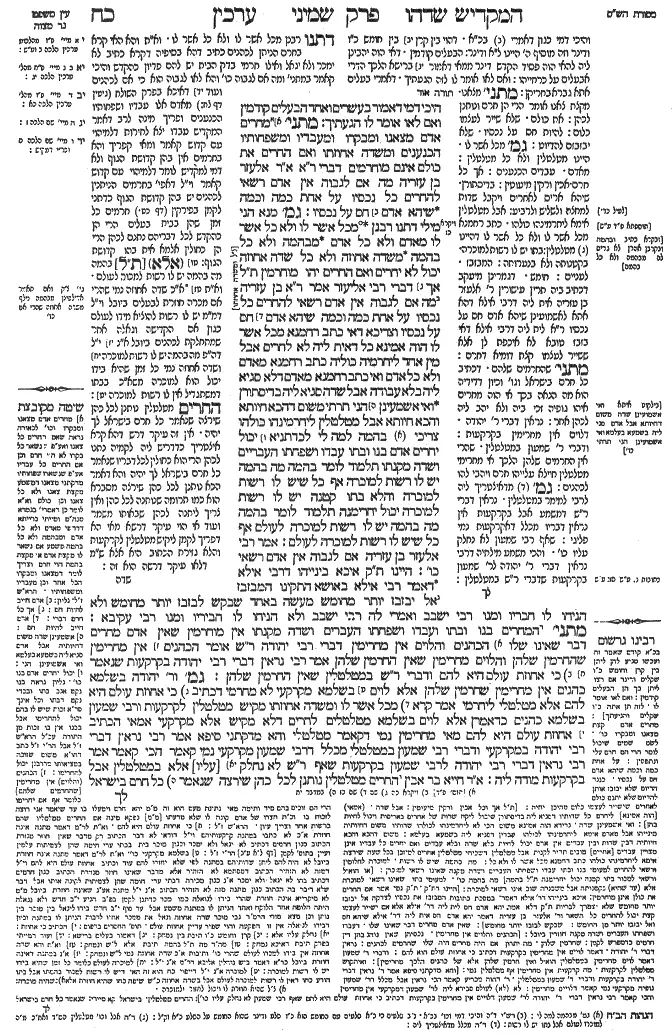
Arachin 28a - Guemara
היכי דמי דאמור בעשרים ואחד הבעלים קודמין ואם לאו אומר לו הגעתיך:
מתני׳ מחרים אדם מצאנו ומבקרו ומעבדיו ומשפחותיו הכנענים ומשדה אחוזתו ואם החרים את כולם אינם מוחרמים דברי ר"א א"ר אלעזר בן עזריה מה אם לגבוה אין אדם רשאי להחרים כל נכסיו על אחת כמה וכמה שיהא אדם חס על נכסיו:
גמ׳ מנא הני מילי דתנו רבנן (ויקרא כז, כח) מכל אשר לו ולא כל אשר לו מאדם ולא כל אדם מבהמה ולא כל בהמה משדה אחוזה ולא כל שדה אחוזה יכול לא יחרים ואם החרים יהו מוחרמין ת"ל אך דברי רבי אליעזר אמר ר"א בן עזריה מה אם לגבוה אין אדם רשאי להחרים כל נכסיו על אחת כמה וכמה שיהא אדם חס על נכסיו וצריכא דאי כתב רחמנא מכל אשר לו הוה אמינא כל דאית ליה לא לחרים אבל מין אחד ליחרמיה כוליה כתב רחמנא מאדם ולא כל אדם ואי כתב רחמנא מאדם דלא סגיא ליה בלא עבודה אבל שדה סגיא ליה בדיסתורן ואי אשמעינן הני תרתי משום דהכא חיותא והכא חיותא אבל מטלטלין ליחרמינהו כולהו צריכי בהמה למה לי לכדתניא יכול יחרים אדם בנו ובתו עבדו ושפחתו העבריים ושדה מקנתו תלמוד לומר בהמה מה בהמה יש לו רשות למוכרה אף כל שיש לו רשות למוכרה והלא בתו קטנה יש לו רשות למוכרה יכול יחרימנה תלמוד לומר בהמה מה בהמה יש לו רשות למוכרה לעולם אף כל שיש לו רשות למוכרה לעולם:
אמר רבי אלעזר בן עזריה אם לגבוה אין אדם רשאי כו':
היינו ת"ק איכא בינייהו דרבי אילא דאמר רבי אילא באושא התקינו המבזבז אל יבזבז יותר מחומש מעשה באחד שבקש לבזבז יותר מחומש ולא הניחו לו חבריו ומנו רבי ישבב ואמרי לה רבי ישבב ולא הניחו לו חביריו ומנו רבי עקיבא:
מתני׳ המחרים בנו ובתו ועבדו ושפחתו העברים ושדה מקנתו אין מוחרמין שאין אדם מחרים דבר שאינו שלו הכהנים והלוים אין מחרימין דברי רבי יהודה ר"ש אומר הכהנים אין מחרימין שהחרמין שלהן והלוים מחרימין שאין החרמין שלהן אמר רבי נראין דברי רבי יהודה בקרקעות שנאמר כי אחוזת עולם היא להם ודברי ר"ש במטלטלין שאין החרמין שלהן:
גמ׳ ור' יהודה בשלמא כהנים אין מחרימין שחרמין שלהן אלא לוים בשלמא מקרקעי לא מחרמי דכתיב כי אחוזת עולם היא להם אלא מטלטלי ליחרמי אמר קרא מכל אשר לו ומשדה אחוזתו מקיש מטלטלין לקרקעות ורבי שמעון בשלמא כהנים כדאמרן אלא לוים בשלמא מטלטלים לחרים דלא מקיש אלא מקרקעי אמאי הכתיב אחוזת עולם היא להם מאי מחרימין נמי דקאמר מטלטלי והא מדקתני סיפא אמר רבי נראין דברי רבי יהודה במקרקעי ודברי רבי שמעון במטלטלי מכלל דרבי שמעון מקרקעי נמי קאמר הכי קאמר אמר רבי נראין דברי רבי יהודה לרבי שמעון בקרקעות שאף ר"ש לא נחלק [עליו] אלא במטלטלין אבל בקרקעות מודה ליה:
א"ר חייא בר אבין החרים מטלטלין נותנן לכל כהן שירצה שנאמר כל חרם בישראל
Comments from Rashi on Masechet Arachin Page 28a
והיכי דמי כגון דאמרי בכ"א . דהוי בין קרן בין חומש כ"ו ודינר וזה מוסיף ה' היינו ל"א ודינר: הבעלים קודמין . דאי הוה יהבינן ליה להאי הוה פסיד הקדש דינר ממאי דאמור ברישא הלכך הדרי אבעלים על כרחייהו: ואם לאו אומר לו לזה הגעתיך . דאמרי בעלים אתא גברא בחריקן: מתני' מצאנו . מקצת צאנו אומר הרי הן חרם ונותנן לכהן: את כולם . שלא שייר לעצמו כלום: להיות חס על נכסיו . שלא יבזבזם להדיוט: גמ' מכל אשר לו . היינו מטלטלין ולא כל מטלטלין: מאדם . עבדים הכנענים: אך כל חרם . אכין ורקין מיעוטין: בדיסתורן . שיהא אריס לאחרים ויקבל שדות למחצה ולשליש ולרביע: אבל מטלטלין אימא ליחרמינהו כולהו . כתב רחמנא מכל אשר לו ולא כל אשר לו דהיינו מטלטלין: בתו יש לו רשות למוכרה בקטנותה ולא בנערותה: המבזבז . לעניים: חומש . דגמרינן מיעקב דכתיב ביה תרין עישורין. ר' אלעזר בן עזריה אית ליה דרבי אילא דהא אתא לאשמועינן שיהא אדם חס על נכסיו ר"א לית ליה דרבי אילא דאי בזבז טובא לא איכפת לן אלא ששייר לעצמו קצת דומיא דחרם: מתני' שהחרמים שלהם . דכתיב כל חרם בישראל וגו' וכיון דדידיה הוא מה הנאה בכך אי הוה מחרים איהו גופיה זכי ביה ולא יהב ליה לכהן אחר: נראין דברי ר' יהודה . דלוים אין מחרימין בקרקעות: ודברי ר' שמעון במטלטלין . שהרי אין החרמים שלהן הלכך אי מחרימי מטלטלין חיילא עלייהו חרם ויהבי להו לכהנים: גמ' מדאיצטריך ליה לרבי למימר במטלטלין נראין דברי ר"ש דמשמע אבל בקרקעות אין נראין דבריו מכלל דאקרקעות נמי פליגי: שאף רבי שמעון לא נחלק עליו כו' . והכי משמע מילתיה דרבי נראין דברי ר' יהודה לר' שמעון בקרקעות שדברי ר"ש במטלטלין:
Comments from Tosafot - Arachin 28a
דתנו רבנן מכל אשר לו ולא כל אשר לו . וא"ת והא האי קרא בחרם הניתן לכהנים כתיב דהא בסיפיה דקרא כתיב לא ימכר ולא יגאל ואילו חרמי בדק הבית יש להם פדיון כהקדש והיכי קאמר במתני' ומה אם לגבוה כו' והא לאו לגבוה הוא כי אם לכהנים ועוד דאיכא בפרק השולח (גיטין דף לח:) מאדם אלו עבדיו ושפחותיו הכנענים ופריך מינה לרב דאמר המקדיש עבדו יצא לחירות דלמיהוי עם קדוש קאמר ומאי קפריך והא בחרמים אין בהן קדושת הגוף ולא דמי למקדיש לומר דלמיהוי עם קדוש קאמר וי"ל דאפי' בחרמים הניתנין לכהנים יש בהן קדושת הגוף כדתני לקמן בפירקין (ערכין דף כט.) חרמים כל זמן שהן בבית בעלים הרי הן כהקדש לכל דבריהם נתנם לכהן הרי הן כחולין אלמא אית בהו קדושת הגוף: (אלא) [ת"ל] בהמה מה בהמה יש לו רשות למכור לעולם . וא"ת א"כ שדה אחוזה נמי שהרי אם מכרה חוזרת לבעלים ביובל וי"ל דמ"מ יש לו רשות להוציא מידו לעולם כגון אם הקדישה וגאלה אחר שמתחלקת לכהנים ביובל א"נ י"ל דה"פ מה בהמה יש לו רשות למוכרה ושדה אחוזה נמי כל זמן שהיא בידו יכול הוא למוכרה משא"כ בבתו דמשתגדיל אין לו רשות למוכרה: החרים מטלטלין נותנן לכל כהן שירצה שנאמר כל חרם בישראל לך יהיה . אין זה עיקר דרש דהא קרא איצטריך כדדריש ליה לקמיה נתנו לכהן הרי הוא כחולין לכל דבריו שנאמר כל חרם בישראל לך יהיה והא דאמר הכא נותנן לכל כהן שירצה מסברא הוא כמו תרומה שנותנה לכל כהן ואין צריך ליתנה לכהן שבאותו משמר ועוד אי הוי עיקר דרשא מאי הא דפריך לקמן ליקיש מטלטלין לקרקעות והלא גזירת הכתוב היא אלא ש"מ דלאו עיקר דרשה הוא זה:
Arachin 28a - Mishnah translated into english
What are the circumstances of such an offer? It is in a case where the owner initially said he would purchase the field for twenty-one sela. In such an instance, the additional one-fifth amounts to five sela and one dinar, which means that the total payment of the owner is twenty-six sela and one dinar, greater than the offer of the other person. Accordingly, the owner takes precedence, and when the one-fifth is added to the twenty-six sela offer of the other person, the total price paid by the owner is equal to thirty-one sela and one dinar. And if the payment of the owner does not exceed the offer of the other person even when accounting for the additional one-fifth, then the treasurer says to the other person: The field has come into your possession.
MISHNA: A person may dedicate, for sacred or priestly use, some of his flock and some of his cattle, and some of his Canaanite slaves and maidservants, and some of his ancestral field. But if he dedicated all that he has of any type of property, they are not dedicated, i.e., the dedication does not take effect; this is the statement of Rabbi Eliezer. Rabbi Elazar ben Azarya said: If for the Most High a person may not dedicate all his property, it is all the more so the case that a person should spare his property and not give all of it to others.
GEMARA: The Gemara asks: From where are these matters, stated in the mishna, derived? The Gemara explains that this is as the Sages taught in a baraita, with regard to the verse: “Notwithstanding, no dedicated thing that a man may dedicate to the Lord of all that he has, whether of man or animal, or of his ancestral field” (Leviticus 27:28). The verse indicates that one may dedicate “of all that he has” but not all that he has; likewise “of man” but not every man, i.e., not every slave of his; “of man or animal” but not every animal of his; and finally one may dedicate “of his ancestral field” but not all of his ancestral field.
It might have been thought that one may not dedicate all his properties ab initio, but if he did dedicate all of them, they should be dedicated. Therefore the verse states: “Notwithstanding,” to teach that they are not dedicated. This is the statement of Rabbi Eliezer. Rabbi Elazar ben Azarya said: If for the Most High a person may not dedicate all his property, it is all the more so the case that a person should spare his property and not give it all to others.
The Gemara notes: And it is necessary to derive this halakha with regard to all the categories in the verse. As, if the Merciful One had written only: “Of all that he has,” I would say that one may not dedicate all that he has, but let him dedicate all of one type of property. Therefore, the Merciful One writes “of man,” to teach that he may not dedicate every man.
And if the Merciful One had written only: “of man,” one might say that he may not dedicate all of his slaves, as it is not possible for him to be without a slave to perform his work; but with regard to a field, it is possible for him to maintain a livelihood by sharecropping [distoran]. And if the Torah had taught this halakha with regard to only these two types, i.e., ancestral fields and slaves, one might say these may not be dedicated in their entirety because here there is livelihood and here there is also livelihood. But in the case of movable property, on which maintaining a livelihood does not depend, let him dedicate all of them. Therefore, all of these derivations are necessary.
The Gemara further asks: Why do I need for the verse to state “or animal”? The Gemara explains it is necessary for that which is taught in a baraita: One might have thought a person can dedicate his son or his daughter, his Hebrew slave or maidservant, or his purchased field. Therefore, the verse states “animal” to teach that just as an animal is an item that he has permission to sell, so too, one can dedicate any item that he has permission to sell. He cannot dedicate an item that he does not have the ability to sell.
The baraita continues: But in the case of his minor daughter, he has permission to sell her as a Hebrew maidservant. If so, one might have thought he may dedicate her. Therefore, the verse states “animal,” indicating that just as an animal is an item that he always has permission to sell, so too, one can dedicate any item that he always has permission to sell, whereas one may not sell his daughter once she reaches majority. A field as well can be sold only until the Jubilee Year.
§ The mishna teaches that Rabbi Elazar ben Azarya said: If for the Most High a person may not dedicate all his property, it is all the more so the case that one should spare his property and not give it all to others. The Gemara raises a difficulty: This is identical to the opinion of the first tanna, i.e., Rabbi Eliezer, who prohibits the dedication of all one’s property.
The Gemara responds: There is a practical difference between them with regard to the statement of Rabbi Ila, as Rabbi Ila said: In Usha the Sages instituted that one who dispenses his money to charity should not dispense more than a fifth. Rabbi Eliezer, who did not state that one should spare his property, rules that one may give all his money to charity, provided he keeps a small portion for himself, whereas Rabbi Elazar ben Azarya maintains that one should not give more than a fifth.
The Gemara relates that there was an incident involving a certain individual who sought to dispense more than a fifth of his property as charity, and his friend did not let him act upon his wishes. And who was this friend? It was Rabbi Yeshevav. And some say it was Rabbi Yeshevav who wanted to give too much charity, and his friend did not let him do so. And who was the friend? It was Rabbi Akiva.
MISHNA: In the case of one who dedicates his son or his daughter, or his Hebrew slave or maidservant, or his purchased field, those items are not considered dedicated, as a person may not dedicate an item that is not his. Priests and Levites may not dedicate their property; this is the statement of Rabbi Yehuda. Rabbi Shimon says: Priests may not dedicate their property, as all dedicated property is theirs; it is one of the priestly gifts, as the verse states: “Everything dedicated in Israel shall be yours” (Numbers 18:14). But Levites may dedicate their property, as dedicated property is not theirs.
Rabbi Yehuda HaNasi said: The statement of Rabbi Yehuda appears to be correct with regard to land, as it is stated about the land of the Levites: “But the fields of the open land surrounding their cities may not be sold, as that is their perpetual possession” (Leviticus 25:34), and they cannot renounce that land. And the statement of Rabbi Shimon appears to be correct with regard to movable property, which the Levites may dedicate, as dedicated property is not theirs. It is a gift for the priests, not the Levites.
GEMARA: The Gemara asks: And as for Rabbi Yehuda, what is his reasoning? Granted, priests may not dedicate property, as dedicated property is theirs; it is one of the gifts of the priesthood. But why are Levites unable to dedicate their property? Granted, they may not dedicate land, as it is written: “As that is their perpetual possession” (Leviticus 25:34). But let them dedicate movable property. The Gemara explains that the verse states: “Notwithstanding, no dedicated thing, that a man may dedicate to the Lord of all that he has, whether of man or animal, or of his ancestral field” (Leviticus 27:28). The verse juxtaposes the dedication of movable property to that of land. Accordingly, as Levites cannot dedicate land, they cannot dedicate movable property either.
The Gemara asks: And with regard to Rabbi Shimon, what is his reasoning? Granted, priests may not dedicate their property, as we stated above, because dedicated property is theirs. But why may Levites dedicate their property? Granted, let them dedicate movable property, as Rabbi Shimon does not juxtapose movable property to land. But why may Levites dedicate land? Isn’t it written: That is their perpetual possession? The Gemara answers: What does Rabbi Shimon mean when he says Levites may dedicate property? He means they may dedicate only movable property.
The Gemara objects: But from the fact that the latter clause of the mishna teaches: Rabbi Yehuda HaNasi said the statement of Rabbi Yehuda appears to be correct with regard to land, and the statement of Rabbi Shimon appears to be correct with regard to movable property; by inference one may conclude that Rabbi Shimon also says Levites can dedicate their land. The Gemara explains that this is what the mishna is saying: Rabbi Yehuda HaNasi said that the statement of Rabbi Yehuda appears to be correct even to Rabbi Shimon with regard to land belonging to Levites, as even Rabbi Shimon disagrees with Rabbi Yehuda about the ability of Levites to dedicate property only with regard to movable property. But with regard to land, Rabbi Shimon concedes to Rabbi Yehuda that the Levites cannot dedicate it.
§ Rabbi Ḥiyya bar Avin says: One who dedicated movable property may give it to any priest that he wishes, as it is stated: “Everything dedicated in Israel
Traduction : The William Davidson digital edition of the Koren Noé Talmud, with commentary by Rabbi Adin Even-Israel Steinsaltz.