 Talmud Bavli
Arachin 20a : Youtube
Rabbi Dr. Moshe WeisblumYoutube
1 video class :
Arachin Page 20a
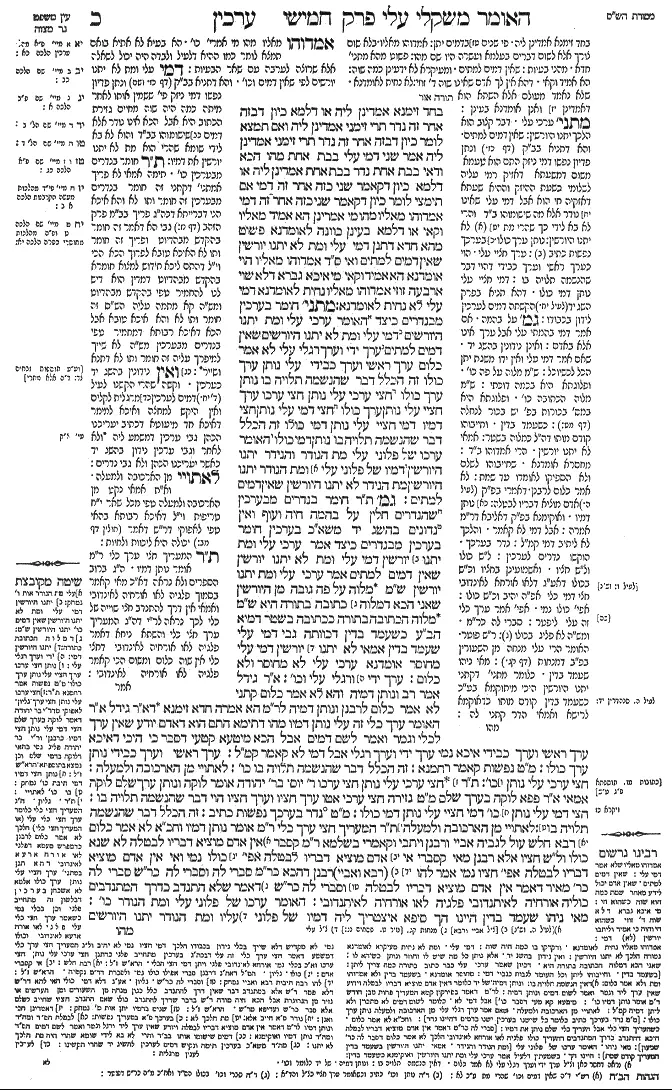
Arachin 20a - Guemara
בחד זימנא אמדינן ליה או דלמא כיון דבזה אחר זה נדר תרי זימני אמדינן ליה ואם תמצא לומר כיון דבזה אחר זה נדר תרי זימני אמדינן ליה אמר שני דמי עלי בבת אחת מהו הכא ודאי בבת אחת נדר בבת אחת אמדינן ליה או דלמא כיון דקאמר שני כזה אחר זה דמי אם תימצי לומר כיון דקאמר שני כזה אחר זה דמי אמדוהו מאליו מהו מי אמרינן הא אמיד מאליו וקאי או דלמא בעינן כוונה לאומדנא פשוט מהא חדא דתנן דמי עלי ומת לא יתנו יורשין שאין דמים למתים ואי ס"ד אמדוהו מאליו הוי אומדנא הא אמיד וקאי מי איכא גברא דלא שוי ארבעה זוזי אמדוהו מאליו נחית לאומדנא דמי עלי לא נחית לאומדנא:
מתני׳ חומר בערכין מבנדרים כיצד האומר ערכי עלי ומת יתנו היורשים דמי עלי ומת לא יתנו היורשים שאין דמים למתים ערך ידי וערך רגלי עלי לא אמר כלום ערך ראשי וערך כבידי עלי נותן ערך כולו זה הכלל דבר שהנשמה תלויה בו נותן ערך כולו חצי ערכי עלי נותן חצי ערכו ערך חציי עלי נותן ערך כולו חצי דמי עלי נותן חצי דמיו דמי חציי עלי נותן דמי כולו זה הכלל דבר שהנשמה תלויה בו נותן דמי כולו האומר ערכו של פלוני עלי מת הנודר והנידר יתנו היורשין דמיו של פלוני עלי ומת הנודר יתנו היורשין מת הנידר לא יתנו היורשין שאין דמים למתים:
גמ׳ ת"ר חומר בנדרים מבערכין שהנדרים חלין על בהמה חיה ועוף ואין נדונים בהשג יד משא"כ בערכין חומר בערכין מבנדרים כיצד אמר ערכי עלי ומת יתנו יורשין דמי עלי ומת לא יתנו יורשין שאין דמים למתים אמר ערכי עלי ומת יתנו יורשין ש"מ מלוה על פה גובה מן היורשין שאני הכא דמלוה כתובה בתורה היא ש"מ מלוה הכתובה בתורה ככתובה בשטר דמיא הב"ע כשעמד בדין דכוותה גבי דמי עלי שעמד בדין אמאי לא יתנו יורשין דמי עלי מחוסר אומדנא ערכי עלי לא מחוסר ולא כלום:
ערך ידי ורגלי עלי וכו':
א"ר גידל אמר רב ונותן דמיה והא לא אמר כלום קתני לא אמר כלום לרבנן ונותן דמיה לר"מ הא אמרה חדא זימנא דא"ר גידל א"ר האומר ערך כלי זה עלי נותן דמיו מהו דתימא התם הוא דאדם יודע שאין ערך לכלי וגמר ואמר לשם דמים אבל הכא מיטעא קטעי דסבר כי היכי דאיכא ערך ראשי וערך כבידי איכא נמי ערך ידי וערך רגלי אבל דמי לא קאמר קמ"ל:
ערך ראשי וערך כבידי נותן ערך כולו:
מ"ט נפשות קאמר רחמנא:
זה הכלל דבר שהנשמה תלויה בו כו':
לאתויי מן הארכובה ולמעלה:
חצי ערכי עלי נותן כו':
ת"ר חצי ערכי עלי נותן חצי ערכו ר' יוסי בר' יהודה אומר לוקה ונותן ערך שלם לוקה אמאי א"ר פפא לוקה בערך שלם מ"ט גזירה חצי ערכי אטו ערך חציו וערך חציו הוי דבר שהנשמה תלויה בו:
חצי דמי עלי נותן כו' דמי חציי עלי נותן דמי כולו:
מ"ט (ויקרא כז, ב) נדר בערכך נפשות כתיב:
זה הכלל דבר שהנשמה תלויה בו:
לאתויי מן הארכובה ולמעלה ת"ר המעריך חצי ערך כלי ר"מ אומר נותן דמיו וחכ"א לא אמר כלום רבא חלש עול לגביה אביי ורבנן ויתבי וקאמרי בשלמא ר"מ קסבר אין אדם מוציא דבריו לבטלה לא שנא כולו ול"ש חציו אלא רבנן מאי קסברי אי אדם מוציא דבריו לבטלה אפי' כולו נמי ואי אין אדם מוציא דבריו לבטלה אפי' חציו נמי אמר להו (רבא ואביי) רבנן דהכא כר"מ סברי לה וסברי לה כר"ש סברי לה כר' מאיר דאמר אין אדם מוציא דבריו לבטלה וסברי לה כר"ש דאמר שלא התנדב כדרך המתנדבים כוליה אורחיה לאיתנדובי פלגיה לאו אורחיה לאיתנדובי:
האומר ערכו של פלוני עלי ומת הנודר כו':
מאי ניהו שעמד בדין היינו הך סיפא איצטריך ליה דמיו של פלוני עליו ומת הנודר יתנו היורשים
Comments from Rashi on Masechet Arachin Page 20a
בחד זימנא אמדינן ליה . פי שנים בדמים יתן: אמדוהו מאליו . בלא שום צורך אלא לשום דברים בעלמא ועשרה היו שם מהו: פשוט מהא . מתני' חדא מהני בעיות: שאין דמים למתים . ומעיקרא לא ידעינן כמה שוה: הא אמיד וקאי . דהא אין לך אדם שאינו שוה ד' זוזי: לא נחית לאומדנא . שלא נאמד מעולם אלא השתא הוא דאמדינן ואנן אומדנא בעינן: מתני' ערכי עלי . דבר קצוב הוא הלכך יתנו היורשין: שאין דמים למתים . והא דתניא בב"ק (דף כז.) ונתן פדיון נפשו דמי ניזק התם הוא טעמא משום דמשעתא דאזיק רמי עליה לשלומי כשעת ההיזק וההיא שעתא דאזקיה חי הוא אבל דמי עלי שאינו נודר אלא מה שישומוהו ב"ד והרי לא בא לידי כך שהרי מת לא יתנו היורשין: נותן ערך כולו . בערכך נפשות כתיב: ערך חציי עלי . הוי כערך ראשי וערך כבידי דהוי דבר שהנשמה תלויה בו: דמי חציי עלי נותן דמי כולו . דהא תניא בפרק השג יד (לעיל ערכין יח.) הקשתה דמים לערכין לידון בכבודו: גמ' על בהמה . אם אמר דמי בהמתי עלי אבל ערך אינו אלא באדם: ואינן נידונין בהשג יד . שאם אמר דמי עלי ואין ידו משגת יתן הכל לכשיוכל: ש"מ מלוה על פה כו' . ופלוגתא היא בכמה דוכתי: ש"מ מלוה הכתובה כו' . ופלוגתא היא במס' בכורות בפ' יש בכור לנחלה (דף מט:): כשעמד בדין . וחייבוהו קודם מותו דה"ל כמלוה בשטר: אמאי לא יתנו יורשין . הרי אמדוהו ב"ד: מחסרא אומדנא . שחייבוהו לשלם ולא הספיקו לאומדו עד שמת: לא אמר כלום לרבנן . דאמרי בפ"ק (לעיל ערכין ה.) אדם מוציא דבריו לבטלה: נותן דמיו . ואוקימנא בפ"ק דאליבא דר"מ אמרה: אבל דמי לא קאמר . והלכך לא ליתיב דמי קמ"ל: נדר בערכך . הוקשו נדרים לערכין: ל"ש כולו ול"ש חציו . ואשמועינן בחציו וכ"ש בכולו דאע"ג דלאו אורחא לאינדובי חצי דמי כלי אפ"ה יהיב וכ"ש כולו: אפי' כולו נמי . אפי' אמר ערך כלי זה עלי ליפטר: סברי לה כר"מ . ומש"ה לא פליג בכולו: ר"ש פוטר האומר הרי עלי מנחה מן השעורין בפ"ב דמנחות (דף קג.): מאי ניהו שעמד בדין . כלומר מתני' דקתני יתנו היורשין היכי מיתוקמא בע"כ כשעמד בדין קודם מותו כדאוקמא לרישא ואמאי הדר קתני לה:
Comments from Tosafot - Arachin 20a
אמדוהו מאליו מהו מי אמרי' כו' . הא בעיא לא אתיא בואם תמצא לומר כמו ההיא דלעיל ולבדה היה יכול לשאלה אלא שרוצה לערבה עם שאר הבעיות: דמי עלי ומת לא יתנו יורשים לפי שאין דמים וכו' . והא דתניא בב"ק (דף כז. ושם) ונתן פדיון נפשו דמי ניזק פי' ששמין אותו לאחר מיתה כמה היה שוה מחיים גזירת הכתוב היא אבל הכא אינו נודר אלא דמים שישומוהו בב"ד והוא לא בא לידי שומא שהרי הוא מת לא יתנו יורשין את דמיו: ת"ר חומר בנדרים מבערכין כו' . תימה אמאי לא פריך אמתני' דקתני זה חומר בנדרים מבערכין זה חומר ותו לא והא איכא הני דברייתא דכה"ג פריך בב"מ פרק הזהב (דף נז:) גבי הא דאמר זה חומר בהקדש מבהדיוט ופריך זה חומר ותו לא האיכא טובא לפרוך הכא הכי וי"ל דהתם ליכא חידוש למצוא חומרא בהקדש מבהדיוט דמדין הוא דיש לנו להחמיר טפי בהקדש מבהדיוט ומש"ה קא מתמה עליה הש"ס זה חומר ותו לא והא איכא טובא אבל הכא דאיכא רבותא דמחמיר טפי בנדרים מבערכין מש"ה לא שייך למיפרך עליה זה חומר ותו לא דתנא ושייר: ואין נידונין בהשג יד כערכין . וקשה שהרי הקשנו לעיל (ערכין ד' יח.) דמים לערכין מרגלית לקלים ואין היקש למחצה ואיכא למימר דאיכא חד מיעוטא דכתיב יעריכנו הכהן גבי ערכין דמשמע ליה ולא לאחר וגבי ערכין נידון בהשג יד כאשר יעריכנו הכהן ולא גבי נדרים: לאתויי מן הארכובה ולמעלה . וא"ת אמאי נקט מן הארכובה ולמעלה טפי מכל שאר י"ח טריפות וי"ל דאיכא רבותא בהאי טפי לאפוקי דר"ש דאמר (חולין דף מב:) יכולה היא ליכוות ולחיות: ת"ר המעריך חצי ערך כלי ר"מ אומר נותן דמיו . ה"ג ברוב הספרים ולא נראה דא"כ מאי קאמר בסמוך פלגיה לאו אורחיה לאינדובי ואמאי אין דרך להתנדב חצי שוייה של כלי לכך נראה לר"י דה"ג המעריך ערך חצי כלי והשתא ניחא דאמר פלגיה לאו אורחיה לאינדובי דחצי כלי אין שוה כלום ומשום הכי קאמר פלגיה לאו אורחיה לאינדובי:
Arachin 20a - Mishnah translated into english
we assess him once and he donates twice the value of that single assessment, or perhaps since he vowed sequentially we assess him twice?
And if you say in that case that since he vowed sequentially we assess him twice, if he says at the same time: My assessment is twice incumbent upon me, what is the halakha? Do we say that here certainly he vowed at the same time, and therefore we assess him once, or perhaps since he says the word: Twice, it is considered as though he vowed sequentially and therefore he must be assessed twice?
Finally, if you say that since he says the word: Twice, it is considered as though he vowed sequentially and he must be assessed twice, if a court of ten assessed him on its own,i.e., not for the purpose of assessing a vow, what is the halakha? Do we say that he has already been assessed on his own and now stands before us, and therefore there is no need for another assessment, or perhaps we require an assessment to be performed with intent for the sake of consecration to the Temple treasury.
The Gemara suggests: Resolve at least one of these dilemmas, as we learned in the mishna below: In the case of one who says: It is incumbent upon me to donate my assessment, and then dies, his heirs need not give his assessment to the Temple treasury, as there is no monetary value for the dead, and his assessment at the time of his vow is unknown.
The Gemara explains the resolution: And if it enters your mind that in a case where a court of ten assessed him on its own it is a valid assessment with regard to his vow, why does the mishna state that his heirs do not have to donate to the Temple treasury? Isn’t he considered as standing assessed from the outset, as is there a person who is not worth at least four zuz? This proves that an assessment is required to be performed with intent for the sake of consecration to the Temple treasury.
The Gemara rejects this resolution: In a case where a court of ten assessed him on its own before he took his vow, he has entered into an assessment, i.e., an assessment has actually been performed. By contrast, in the case of one who says: It is incumbent upon me to donate my assessment, and then dies, he has not entered into an assessment, i.e., no actual assessment has been conducted at all.
MISHNA: There are halakhot that are more stringent with regard to valuations than with regard to vows of assessment. How so? In the case of one who says: It is incumbent upon me to donate my valuation, and then dies, his heirs must give his valuation to the Temple treasury. But one who says: It is incumbent upon me to donate my assessment, and then dies, his heirs need not give his assessment to the Temple treasury, as there is no monetary value for the dead.
One who says: It is incumbent upon me to donate the valuation of my forearm, or: The valuation of my leg, has not said anything, as there are valuations in the Torah only for a complete person. But if one says: It is incumbent upon me to donate the valuation of my head, or: The valuation of my liver, he gives the valuation of his entire self. This is the principle: One who valuates an item upon which the soul is dependent, i.e., without which one will die, gives the valuation of his entire self.
One who says: It is incumbent upon me to donate half of my valuation, gives half of his valuation. But one who says: It is incumbent upon me to donate the valuation of half of me, gives the valuation of his entire self. Likewise, one who says: It is incumbent upon me to donate half of my assessment, gives half of his assessment; one who says: It is incumbent upon me to donate the assessment of half of me, gives the assessment of his entire self. This is the principle: One who takes a vow with regard to an item upon which the soul is dependent gives the assessment of his entire self.
With regard to one who says: It is incumbent upon me to donate the valuation of so-and-so, and both the one who vowed and the object of the vow die, the heirs of the one who vowed must give the valuation of the object of the vow to the Temple treasury. With regard to one who says: It is incumbent upon me to donate the assessment of so-and-so, and the one who vowed dies, his heirs must give his assessment to the Temple treasury. If the object of the vow dies, the heirs of the one who vowed need not give his assessment to the Temple treasury, as there is no monetary value for the dead.
GEMARA: The Sages taught in a baraita: There are halakhot that are more stringent with regard to vows of assessment than with regard to valuations, as vows of assessment take effect with regard to a domesticated animal, an undomesticated animal, and a bird. If one says: It is incumbent upon me to donate the assessment of this bird, he must donate that assessment. This is not the case with regard to valuations, as they do not take effect with regard to animals and birds. And another halakha that is more stringent with regard to vows of assessment than with regard to valuations is that the destitute who take vows of assessment are not assessed based on affordability. This is not the case with regard to valuations, which are assessed based on whether the one who vows can afford to pay what they vowed.
There is a halakha that is more stringent with regard to valuations than with regard to vows of assessment. How so? In the case of one who said: It is incumbent upon me to donate my valuation, and dies, his heirs must give his valuation to the Temple treasury. But one who says: It is incumbent upon me to donate my assessment, and dies, his heirs need not give his assessment to the Temple treasury, as there is no monetary value for the dead.
The baraita taught with regard to a person who said: It is incumbent upon me to donate my valuation, and dies, that his heirs must give his valuation to the Temple treasury. The Gemara suggests one can conclude from this ruling that one collects a loan by oral agreement from the heirs, as no promissory note was written with regard to this obligation. The Gemara rejects this conclusion: Here the heirs’ obligation to pay the valuation of the deceased is different, i.e., it is not the same as a loan by oral agreement, as a valuation is considered a loan, i.e., debt, written in the Torah, in accordance with the deceased’s age and sex at the time of the vow.
The Gemara objects: If so, can one conclude from the baraita that a loan that is written in the Torah, i.e., any financial obligation that applies by Torah law, is considered as though it were written in a document? The Gemara rejects this conclusion: Here we are dealing with a case where he stood in judgment before he died, and the court obligated him to donate his valuation. The court’s ruling is considered like a financial obligation written in a document, and therefore the heirs are required to pay his valuation.
The Gemara asks: If so, then in the corresponding situation, with regard to one who said: It is incumbent upon me to donate my assessment, the baraita must also be referring to one who stood in judgment. But in that case, why don’t the heirs have to donate his assessment? The Gemara answers that in the case of one who said: It is incumbent upon me to donate my assessment, even if he stood in judgment and the court obligated him to pay, the assessment of the precise amount he must pay is still lacking, as that amount is determined only through the assessment of a court. By contrast, with regard to one who said: It is incumbent upon me to donate my valuation, if he stood in judgment and the court obligated him to pay, nothing is lacking, as the amount he pays is fixed by the Torah.
§ The mishna teaches that one who says: It is incumbent upon me to donate the valuation of my forearm, or of my leg, has not said anything, as there are valuations in the Torah only for a complete person. Rav Giddel says that Rav says: And although he is exempt from donating the valuation, he must give the assessment of the forearm or leg.
The Gemara asks: But isn’t it taught in the mishna that he has not said anything? The Gemara answers: The ruling of the mishna that he has not said anything applies according to the opinion of the Rabbis, but he must give the assessment according to the opinion of Rabbi Meir. Rabbi Meir maintains that a person does not utter a statement for naught, and therefore he must have intended to vow to donate the assessment of the limb, as there is no valuation for limbs.
The Gemara asks: But didn’t Rav Giddel already say it once, as Rav Giddel says that Rav says: In the case of one who says: It is incumbent upon me to donate the valuation of this vessel, although he is exempt from donating the valuation of the vessel, according to the opinion of Rabbi Meir he must give the assessment of the vessel.
The Gemara answers: It was necessary for Rav Giddel to repeat that halakha with regard to one who vowed the valuation of his forearm or leg, lest you say this ruling is applicable only there, with regard to a vessel, as a person knows that there is no valuation for a vessel, and he therefore intended and said his vow for the sake of assessments. But here, with regard to his forearm or leg, he erred, as he thought that just as there is an obligation to donate the valuation in a case where one said: It is incumbent upon me to donate the valuation of my head, or: The valuation of my liver, so too, there is an obligation to donate the valuation if one said: It is incumbent upon me to donate the valuation of my forearm or the valuation of my leg. But he did not intend to say a vow of assessments. Therefore, Rav Giddel teaches us that even in the case of one who vowed to donate the valuation of his forearm or leg, he did not speak in error but intended to donate the assessment.
§ The mishna teaches that if one says: It is incumbent upon me to donate the valuation of my head, or: The valuation of my liver, he gives the valuation of his entire self. The Gemara asks: What is the reason? The Gemara answers that the Merciful One states: “A valuation of living people” (Leviticus 27:2), which indicates that in the case of one who valuates an item upon which the soul is dependent and without which one will die, he must give the valuation of his entire self.
The mishna further teaches that this is the principle: One who valuates an item upon which the soul is dependent and without which one will die gives the valuation of his entire self. The Gemara explains that the phrase: This is the principle, serves to include one who vowed to donate the valuation of his leg from the knee and above. Since one would die if his leg were severed above the knee, this is considered an item upon which the soul is dependent, and therefore he gives the valuation of his entire self.
The mishna teaches that one who says: It is incumbent upon me to donate half of my valuation, gives half of his valuation. The Sages taught in a baraita (Tosefta 3:3): One who says: It is incumbent upon me to donate half of my valuation, gives half of his valuation. Rabbi Yosei, son of Rabbi Yehuda, says: He is flogged and must give his full valuation.
The Gemara asks: Since he did not commit a sin, why is he flogged? Rav Pappa said in response: He is flogged, i.e., punished, in that he must donate his full valuation. What is the reason he needs to give his full valuation? A rabbinic decree was issued that one who says: It is incumbent upon me to donate half of my valuation, must give the value of his entire self, due to a concern that this case might become confused with the similar one of a person who vows to donate the valuation of half of himself. And the halakha in such a case is that he must give the value of his entire self, as the valuation of half of him is an item upon which the soul is dependent.
The mishna further teaches that one who says: It is incumbent upon me to donate half of my assessment, gives half of his assessment. But one who says: It is incumbent upon me to donate the assessment of half of me, gives the assessment of his entire self, as one who takes a vow of assessment with regard to an item upon which the soul depends must give the assessment of his entire self. The Gemara asks: What is the reason? After all, it is only with regard to valuations that the Torah states: “A valuation of living people” (Leviticus 27:2), indicating that one who valuates an item upon which the soul depends must give the valuation of his entire self; but this is not stated with regard to assessments.
The Gemara answers that it is written: “When a man shall clearly utter a vow [neder] with regard to a valuation [be’erkekha] of living people” (Leviticus 27:2). The verse juxtaposes vows of assessment [neder] and valuations [erekh], thereby teaching that just as one who takes a vow of valuation with regard to an item upon which the soul depends must give the valuation of his entire self, so too, one who takes a vow of assessment with regard to an item upon which the soul is dependent must give the assessment of his entire self.
The mishna further teaches that this is the principle: One who takes a vow of assessment with regard to an item upon which the soul is dependent gives the assessment of his entire self. The Gemara explains that the phrase: This is the principle, serves to include one who vowed to donate the assessment of his leg from the knee and above. Since one would die if his leg were severed above the knee, this is an item upon which the soul depends, and therefore he gives the assessment of his entire self.
§ The Sages taught in a baraita: With regard to one who valuates in order to donate half the valuation of a vessel, Rabbi Meir says: He gives half the assessment of the vessel, and the Rabbis say: He has not said anything. The Gemara relates: Rava became sick, and Abaye and other Sages came to visit him. As they were sitting and talking, they said: Granted that Rabbi Meir holds that a person does not utter a statement for naught, and therefore there is no difference whether one vowed to donate the entire valuation of a vessel, and there is no difference whether one vowed to donate half its valuation; in either case he must have intended to donate the assessment, as there is no valuation with regard to vessels.
But with regard to the Rabbis in the baraita, what do they hold? If they maintain that a person utters a statement for naught, then even if one vowed to donate the entire valuation of a vessel, he should be exempt and the Rabbis should disagree with regard to that case. And if the Rabbis maintain that a person does not utter a statement for naught, then even one who vowed to donate half the valuation of a vessel should be obligated to give half of the assessment.
Rava and Abaye said to the Sages in response: The Rabbis here in the baraita hold in accordance with the opinion of Rabbi Meir, but they also hold in accordance with the opinion of Rabbi Shimon. Rava and Abaye elaborated: They hold in accordance with the opinion of Rabbi Meir, who says that a person does not utter a statement for naught, and therefore one who vows to donate the valuation of a vessel must give its assessment.
And they also hold in accordance with the opinion of Rabbi Shimon with regard to one who consecrated an item for a purpose for which it was unsuited, e.g., if one sought to bring a barley meal offering even though meal offerings may be brought only from wheat (see Menaḥot 103a). Rabbi Shimon says he is exempt from any obligation, as this person did not donate in the manner typical of donors. So too, with regard to one who vows to donate the valuation of a vessel, it is the typical manner for one to donate an entire vessel, and therefore one who does so is obligated to donate the assessment of the vessel. But it is not the typical manner for one to donate half a vessel, and therefore one who vows in this manner has not said anything and is exempt.
§ The mishna teaches that if one said: It is incumbent upon me to donate the valuation of so-and-so, and both the one who vowed and the object of the vow die, the heirs of the one who vowed must give his valuation to the Temple treasury. The Gemara asks: What is the specific case to which the mishna is referring? It must be referring to a case where he stood in judgment, and the court obligated him to donate his valuation before he died. The court’s ruling is considered like a financial obligation written in a document, and therefore the heirs of the one who vowed are required to pay his valuation.
If so, this clause in the mishna is identical to that previous clause in the mishna, which states that if one said: It is incumbent upon me to donate my valuation, and he dies, his heirs must give his valuation to the Temple treasury. Since it was explained that the earlier clause is also dealing with a case where he stood in judgment, for what purpose was this halakha repeated in the mishna? The Gemara answers: It was necessary to repeat this halakha in order to teach the latter clause of the mishna: With regard to one who says it is incumbent upon him to donate the assessment of so-and-so, and the one who vowed dies, his heirs must give his assessment to the Temple treasury.
Traduction : The William Davidson digital edition of the Koren Noé Talmud, with commentary by Rabbi Adin Even-Israel Steinsaltz.