 Talmud Bavli
Arachin 7a : Youtube
Rabbi Dr. Moshe WeisblumYoutube
1 video class :
Arachin Page 7a
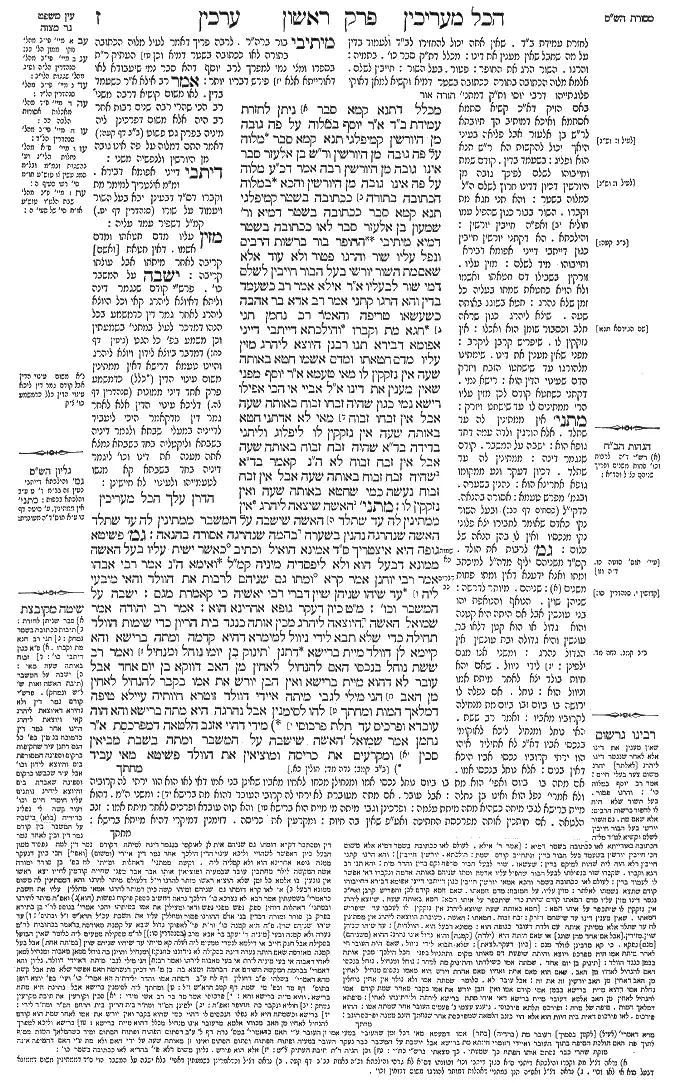
Arachin 7a - Guemara
מכלל דתנא קמא סבר ניתן לחזרת עמידת ב"ד א"ר יוסף במלוה על פה גובה מן היורשין קמיפלגי תנא קמא סבר מלוה על פה גובה מן היורשין ור"ש בן אלעזר סבר אינו גובה מן היורשין רבה אמר דכ"ע מלוה על פה אינו גובה מן היורשין והכא במלוה הכתובה בתורה ככתובה בשטר קמיפלגי תנא קמא סבר ככתובה בשטר דמיא ור' שמעון בן אלעזר סבר לאו ככתובה בשטר דמיא מיתיבי החופר בור ברשות הרבים ונפל עליו שור והרגו פטור ולא עוד אלא שאם מת השור יורשי בעל הבור חייבין לשלם דמי שור לבעליו א"ר אילא אמר רב כשעמד בדין והא הרגו קתני אמר רב אדא בר אהבה כשעשאו טריפה והאמר רב נחמן תני חגא מת וקברו והילכתא דייתבי דייני אפומא דבירא תנו רבנן היוצא ליהרג מזין עליו מדם חטאתו ומדם אשמו חטא באותה שעה אין נזקקין לו מאי טעמא א"ר יוסף מפני שאין מענין את דינו א"ל אביי אי הכי אפילו רישא נמי כגון שהיה זבחו זבוח באותה שעה אבל אין זבחו זבוח מאי לא אדתני חטא באותה שעה אין נזקקין לו ליפלוג וליתני בדידה בד"א בשהיה זבח זבוח באותה שעה אבל אין זבח זבוח לא ה"נ קאמר בד"א שהיה זבח זבוח באותה שעה אבל אין זבח זבוח נעשה כמי שחטא באותה שעה ואין נזקקין לו:
מתני׳ האשה שיצאה ליהרג אין ממתינין לה עד שתלד האשה שישבה על המשבר ממתינין לה עד שתלד האשה שנהרגה נהנין בשערה בהמה שנהרגה אסורה בהנאה:
גמ׳ פשיטא גופה היא איצטריך ס"ד אמינא הואיל וכתיב (שמות כא, כב) כאשר ישית עליו בעל האשה ממונא דבעל הוא ולא ליפסדיה מיניה קמ"ל ואימא ה"נ אמר רבי אבהו אמר רבי יוחנן אמר קרא (דברים כב, כב) ומתו גם שניהם לרבות את הוולד והאי מיבעי ליה עד שיהו שניהן שוין דברי רבי יאשיה כי קאמרת מגם:
ישבה על המשבר וכו':
מ"ט כיון דעקר גופא אחרינא הוא:
אמר רב יהודה אמר שמואל האשה היוצאה ליהרג מכין אותה כנגד בית הריון כדי שימות הוולד תחילה כדי שלא תבא לידי ניוול למימרא דהיא קדמה ומתה ברישא והא קיימא לן דוולד מיית ברישא דתנן תינוק בן יומו נוחל ומנחיל ואמר רב ששת נוחל בנכסי האם להנחיל לאחין מן האב דווקא בן יום אחד אבל עובר לא דהוא מיית ברישא ואין הבן יורש את אמו בקבר להנחיל לאחין מן האב הני מילי לגבי מיתה איידי דוולד זוטרא חיותיה עיילא טיפה דמלאך המות ומחתך להו לסימנין אבל נהרגה היא מתה ברישא והא הוה עובדא ופרכיס עד תלת פרכוסי מידי דהוי אזנב הלטאה דמפרכסת א"ר נחמן אמר שמואל האשה שישבה על המשבר ומתה בשבת מביאין סכין ומקרעים את כריסה ומוציאין את הוולד פשיטא מאי עביד
Comments from Rashi on Masechet Arachin Page 7a
מכלל דת"ק סבר כו' . בתמיה: והרגו . השור הרג את החופר: פטור . בעל השור: חייבין לשלם . אלמא מלוה הכתובה בתורה ככתובה בשטר דמיא וקשיא למאן דאוקי פלוגתייהו דרבי יוסי ות"ק דמתני' באם הזיק דא"כ קשיא סתמא אסתמא. ואיכא דמותיב הך תיובתא לר"ש בן אלעזר אבל פליאה בעיני היאך יכול להקשות הא ר"ש תנא הוא ופליג: בשעמד בדין . קודם שמת וחייבוהו לשלם לפיכך גובה מן היורשין דכיון דדינו חרוץ לשלם ה"ל כמלוה בשטר: והא תני חגא מת וקברו . השור בבור כגון שהפיל עמו חוליא ואפ"ה חייבין יורשין: והילכתא . הא דקתני יורשין חייבין כגון דייתבי דייני אפומא דבירא וחייבוהו מיד לשלם: מזין עליו . זורקין בשבילו דם חטאתו ואשמו ולא הויא כחטאת שמתו בעליה כל זמן שלא נהרג: חטא . בשוגג באותה שעה שיצא ליהרג כגון שראה חלב וכסבור שומן הוא ואכלו: אין נזקקין לו . שיפריש קרבן ליקרב: מפני שאין מענין את דינו . שימתינו מלהורגו עד שישחטו הזבח ויזרק הדם שעינוי הדין הוא: רישא נמי . דקתני כשחטא קודם לכן מזין עליו הרי ממתינים לו עד שישחט ויזרק: מתני' אין ממתינין לה עד שתלד . אלא הורגין ולדה עמה דחד גופא הוא: ישבה על המשבר . קודם שנגמר דינה: ממתינין לה עד שתלד . דכיון דעקר ונע ממקומו גופא אחרינא הוא: נהנין בשערה . ובגמ' מפרש טעמא: אסורה בהנאה . כדקי"ל (פסחים דף כב:) ובעל השור נקי כאדם שאומר לחבירו יצא פלוני נקי מנכסיו ואין לו בהן הנאה של כלום: גמ' לרבות את הולד . קס"ד משניהם יליף מדה"ל למיכתב ומתו ואנא ידענא דאין ומתו פחות משנים: שניהם מיותר לדרשה: שניהן שוין . הנואף והנואפת יהו בני עונשין אבל אם היתה היא קטנה והוא גדול או הוא קטן דלאו בר עונשין והיא גדולה ובת עונשין אין הגדול נהרג: ומשני אנו מגם ילפינן: לידי ניוול . שאם יהא חיות בולד יצא לאחר מיתת אמו וניוול הוא: נוחל . אם נפלה לו ירושה בו ביום ובו ביום מת מנחילה לקרוביו מאביו: ואמר רב ששת . האי נוחל ומנחיל ליכא לאוקומי בנכסי אביו דא"נ לא אתיליד איהו הוו ירתי קרוביו נכסי אביו היכא דאין בנים: אלא נוחל בנכסי אמו . אם מתה בו ביום ואפי' הוא מת בו ביום נוחל נכסי אמו ומנחילן מכחו לאחיו מאביו שאינן בני אמו דאי לאו הוא הוו ירתי לה קרוביה ולא אמרי' נפל הוא ואינו בן נחלה: אבל עובר . אם מתה מעוברת לא ירתי לה קרובי העובר דהוא מת ברישא: ומשני ה"מ . דהוא מיית ברישא לגבי מיתה כשהיא מתה מיתת עצמה: ופרכינן וגבי מיתה מי מיית הוא ברישא והא הוה עובדא ופרכיס לאחר מיתת אמו: זנב הלטאה . אם חותכין אותה מפרכסת החתיכה ואע"פ שאין בה חיות: ומקרעין את כריסה . דזימנין דמיקרי דהיא מייתא ברישא:
Comments from Tosafot - Arachin 7a
מיתיבי בור ברה"ר . לרבה פריך דאמר לעיל מצוה הכתובה בתורה לאו ככתובה בשטר דמיא וכן העתיק ר"ת בספרו ומצי נמי למפרך לרב יוסף דהא סבר נמי שיעבודא לאו דאורייתא אלא פירש דבריו יותר: אמר רב אילא א"ר כשעמד בדין . לאו משום קושיא דרבה משני רב הכי שהרי רבה שנים רבות אחר רב היה אלא משום דפרכינן ליה מיניה בפרק גט פשוט (ב"ב דף קעה:) דאמר התם דמלוה על פה אינו גובה מן היורשין ולנפשיה משני: דיתבי דייני אפומא דבירא . ומ"מ איצטריך למימר מת וקברו דס"ד דבעינן יבא בעל השור ויעמוד על שורו (סנהדרין דף יט.) קמ"ל דשפיר עמד עליה: מזין עליו מדם חטאתו ומדם אשמו . דאין חטאת [ואשם] קריבה לאחר מיתתו אבל עולתו קריבה: ישבה על המשבר כו' . פרש"י קודם שנגמר דינה וליתא דאיוצא ליהרג קאי וכל היוצא ליהרג לאחר גמר דין כדמשמע בכל הנהו דמדכר לעיל במתני' בשמעתין וכן משמע בפ' כל הגט (גיטין דף כח:) דמדבר ביוצא לידון ויוצא ליהרג והיינו טעמא דרישא דאין ממתינין משום עינוי הדין (כלל) כדמשמע פרק אחד דיני ממונות (סנהדרין דף לה.) דליכא עינוי הדין אלא לאחר גמר דין מדקאמר היכי ליעביד לדייניה במעלי שבתא ולגמר דיניה בשבתא וליקטליה בחד בשבתא נמצא אתה מענה את דינו וכו' ליגמר דיניה בחד בשבתא קא מנשו לטעמייהו ולעינוי לא חיישינן:
Arachin 7a - Mishnah translated into english
The Gemara asks: If so, can one conclude by inference that the first tanna holds that one who is being taken to be executed can be brought back to stand before the court for judgment? This is clearly erroneous, as the court is not permitted to delay his execution.
Rav Yosef says: Everyone agrees that his execution may not be delayed. Rather, they disagree as to whether or not one who is owed money from a loan by oral agreement can collect from the heirs. The first tanna holds that one who is owed money from a loan by oral agreement can collect from the heirs, and therefore the injured party can collect from the heirs after the execution. But Rabbi Shimon ben Elazar holds that one who is owed money from a loan by oral agreement cannot collect from the heirs, and therefore the heirs are exempt from payment for the injury.
Rabba said: Actually, everyone agrees that one who is owed money from a loan by oral agreement cannot collect from the heirs; and here the tanna’im disagree with regard to whether a loan that is written in the Torah, e.g., one’s obligation to pay if he causes damage, is considered as though it is written in a document. The first tanna holds that a loan that is written in the Torah is considered as though it is written in a document, and may be collected from the heirs. And Rabbi Shimon ben Elazar holds that it is not considered as though it is written in a document, and therefore it may not be collected.
The Gemara raises an objection against the opinion that one cannot collect a loan that is written in the Torah from the heirs, from a baraita (Tosefta, Bava Kamma 6:2): If one was digging a pit in the public thoroughfare, and an ox fell on the digger of the pit and killed him, the owner of the ox is exempt from paying damages, as the digger of the pit should not have dug the pit. Moreover, if the ox died as a result of the fall, the heirs of the owner of the pit are liable to pay the value of the ox to its owner. This shows that an obligation that is written in the Torah, such as compensation for damage, is collected from heirs.
Rabbi Ila said that Rav said: The baraita is dealing with a case where the digger of the pit stood trial for the damage before he died, and once judgment is rendered by a court the resulting financial obligation is comparable to a written loan, not one that is written in the Torah. The Gemara raises an objection: But it is taught in the baraita that the ox killed him. Rav Adda bar Ahava said: The baraita does not mean that the ox literally killed him, rather, that it rendered him as one who has a wound that will cause him to die within twelve months [tereifa], and there was enough time before his death to sentence him to pay damages.
The Gemara raises an objection: But doesn’t Rav Naḥman say that Ḥagga teaches a slightly different version of the baraita, that if the digger of the pit died from the impact of the ox, and the ox effectively buried him in the ground at the bottom of the pit, his heirs have to pay damages to the owner of the ox? In this scenario, how could it be possible for the digger to stand trial? The Gemara answers: The halakha in the baraita, that the owner of the ox collects from the heirs of the digger, is dealing with a case where judges sat at the opening of the pit and rendered the digger liable to pay damages before he died.
§ The Sages taught another baraita on the same topic: With regard to one taken to be executed, they sprinkle for his sake on the altar from the blood of his sin offering and from the blood of his guilt offering, which he brought earlier. But if he sinned at that time, obligating him to bring a sin offering or a guilt offering, the court does not attend to his obligation, and his execution is not delayed so that he can sacrifice the offering. The Gemara asks: What is the reason for this? Rav Yosef said: It is because the court may not afflict him by forcing him to wait for his judgment, his execution, until the offering is sacrificed.
Abaye said to Rav Yosef: If so, if the offering is not sacrificed in order to avoid afflicting the sentenced by delaying his execution, then this should apply even in the first clause as well, where he had already brought the offering. Why does the court delay his execution until the blood is sprinkled? Rav Yosef answered: The first clause is referring to a case where his offering was already slaughtered at that time, and all that remained to be done was the sprinkling of the blood. Delaying the execution for such a short time is not a problem.
The Gemara asks: But then in a case where he set aside his offering but it was not yet slaughtered, what is the halakha? Is it true that they do not delay his execution in order to sacrifice the offering? If so, instead of teaching a new case and stating: But if he sinned at that time and thereby became obligated to sacrifice a sin offering or a guilt offering, the court does not attend to his obligation, let the baraita distinguish and teach a distinction within the case of where he already brought the offering itself: In what case is this statement, that the blood is sprinkled, said? When his offering was already slaughtered at that time. But if his offering was not yet slaughtered, his execution is not delayed.
The Gemara answers: That is indeed what he is saying: In what case is this statement said? When his offering was already slaughtered at that time. But if his offering was not yet slaughtered, it is considered as though he sinned at that time, and therefore the court does not attend to his obligation.
MISHNA: In the case of a pregnant woman who is taken by the court to be executed, the court does not wait to execute her until she gives birth. Rather, she is killed immediately. But with regard to a woman taken to be executed who sat on the travailing chair [hamashber] in the throes of labor, the court waits to execute her until she gives birth. In the case of a woman who was killed through court-imposed capital punishment, one may derive benefit from her hair. But in the case of an animal that was killed through court-imposed execution, e.g., for goring a person, deriving benefit from the animal is prohibited.
GEMARA: Isn’t it obvious that the court executes the pregnant woman rather than waiting? After all, it is part of her body. The Gemara answers: It was necessary for the mishna to teach this, as it might enter your mind to say that since it is written: “And if men strive together, and hurt a woman with child, so that her offspring depart…he shall be fined, as the woman’s husband shall place upon him” (Exodus 21:22), the fetus is considered to be the property of the husband. If so, the court should wait until she gives birth before executing her, and not cause him to lose the fetus. Consequently, the mishna teaches us that the court does not take this factor into account.
The Gemara asks: But why not say that indeed the court should delay her execution until she gives birth? Rabbi Abbahu says that Rabbi Yoḥanan says: The verse states: “If a man be found lying with a woman married to a husband, then they shall also both of them die, the man that lay with the woman, and the woman” (Deuteronomy 22:22). The amplifying term “both of them” serves to add her fetus, teaching that it dies together with her.
The Gemara asks: But this phrase is required for the following halakha: Neither of the two adulterers mentioned in the verse is punished until both of them are equal, i.e., they have both reached majority. This is the statement of Rabbi Yoshiya. The Gemara answers: When you say that the child also dies, it is derived from the word “also,” whereas the halakha that they must be equal is learned from the term “both of them.”
§ The mishna teaches: With regard to a woman taken to be executed who sat on the travailing chair in the throes of labor, the court waits to execute her until she gives birth. The Gemara asks: What is the reason for delaying the execution in this case? The Gemara answers: Once the fetus uproots from its place and begins to leave the woman’s body, it is considered an independent body and may not be killed together with the mother.
Rav Yehuda says that Shmuel says: In the case of a pregnant woman who is taken by the court to be executed, one strikes her opposite the womb, i.e., on the abdomen, so that the fetus dies first and so that she not suffer disgrace as a result of publicly bleeding from labor. The Gemara asks: Is this to say that according to Shmuel if a pregnant woman dies, she dies first, before the fetus? It is clear that this is Shmuel’s assumption, as he mandates killing the fetus before the mother, lest the live fetus bring about the onset of labor as a reaction to the woman’s death. Were the fetus to perish first, before the woman, there would be no need for this. But this is difficult, as we maintain that the fetus dies first.
As we learned in a mishna (Nidda 43b–44a): A baby boy, one day old, inherits the estate of his relatives who died on the day of his birth, and if he dies, he bequeaths that inheritance to his relatives. And Rav Sheshet says: This mishna is teaching that a day-old child inherits his mother’s property when she died after he was born, to bequeath it to his heirs who are not the mother’s heirs, e.g., to his paternal brothers.
The Gemara explains the difficulty: It is specifically in a case where the boy is one day old that he inherits and bequeaths, but a fetus who died while still in the womb does not inherit and bequeath. The reason is that we presume that the fetus died first, before its mother, and a son does not inherit through his mother while in the grave, in order to bequeath her property to his paternal brothers.
The Gemara answers: This matter, i.e., the presumption that the fetus dies first, applies only in a case of natural death. In such a situation, since the fetus’s vitality is minimal, the Angel of Death’s drop of poison enters his body and cuts the two organs that must be severed in ritual slaughter, i.e., the windpipe and the gullet [simanim], thereby killing him before his mother. But in a case where the mother was killed, e.g., if she was executed, she dies first.
The Gemara asks: Is it true that the fetus always dies first when the mother dies naturally? But there was an incident where the mother died naturally and the fetus made three spasmodic motions afterward. The Gemara answers: That is just as it is with the tail of the lizard, which jerks after being severed from the lizard; it is just a spasmodic motion, which does not indicate that it is still alive.
§ Rav Naḥman says that Shmuel says: In the case of a woman who sat on the travailing chair in the throes of labor, and died on Shabbat, one brings a knife, and tears open her abdomen, and removes the fetus, as it might still be alive, and it could be possible to save its life. The Gemara asks: But isn’t it obvious that this is permitted? After all, what is the person who cuts her abdomen doing?
Traduction : The William Davidson digital edition of the Koren Noé Talmud, with commentary by Rabbi Adin Even-Israel Steinsaltz.