 Talmud Bavli
Arachin 11b : Youtube
Rabbi Dr. Moshe WeisblumYoutube
1 video class :
Arachin Page 11b
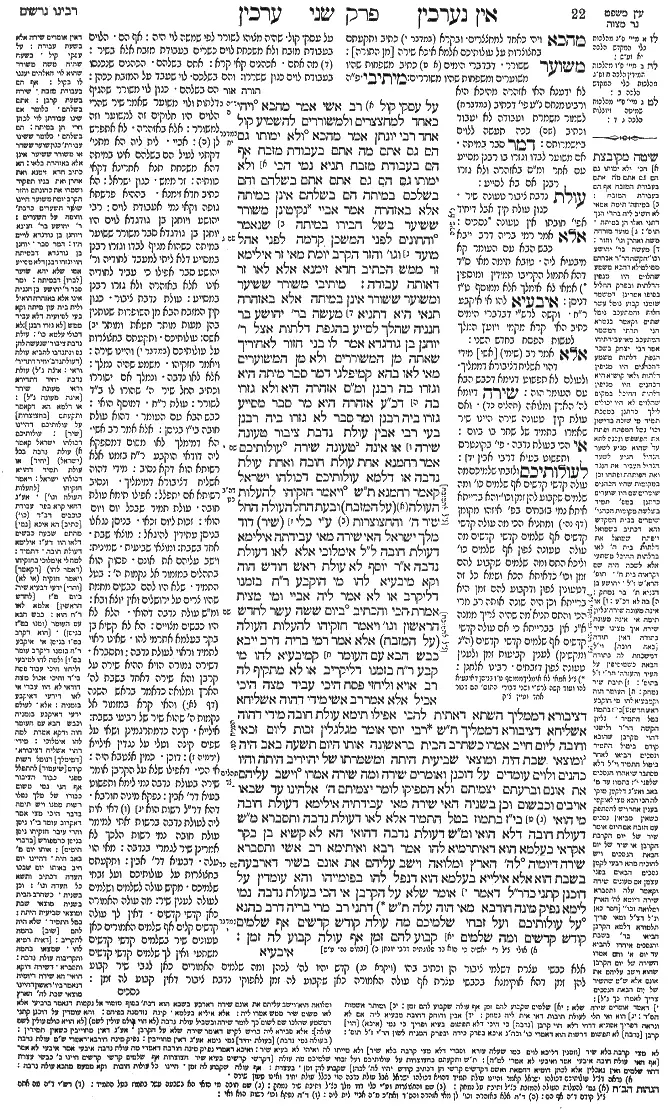
Arachin 11b - Guemara
על עסקי קול רב אשי אמר מהכא (דה"ב ה, יג) ויהי כאחד למחצצרים ולמשוררים להשמיע קול אחד רבי יונתן אמר מהכא (במדבר יח, ג) ולא ימותו גם הם גם אתם מה אתם בעבודת מזבח אף הם בעבודת מזבח תניא נמי הכי ולא ימותו גם הם גם אתם אתם בשלהם והם בשלכם במיתה הם בשלהם אינן במיתה אלא באזהרה אמר אביי נקיטינן משורר ששיער בשל חבירו במיתה שנאמר (במדבר ג, לח) והחונים לפני המשכן קדמה לפני אהל מועד וגו' והזר הקרב יומת מאי זר אילימא זר ממש הכתיב חדא זימנא אלא לאו זר דאותה עבודה:
מיתיבי משורר ששיער ומשוער ששורר אינן במיתה אלא באזהרה תנאי היא דתניא מעשה בר' יהושע בר חנניה שהלך לסייע בהגפת דלתות אצל ר' יוחנן בן גודגדא אמר לו בני חזור לאחוריך שאתה מן המשוררים ולא מן המשוערים מאי לאו בהא קמיפלגי דמר סבר מיתה היא וגזרו בה רבנן ומ"ס אזהרה היא ולא גזרו בה דכ"ע אזהרה היא מר סבר מסייע גזרו ביה רבנן ומר סבר לא גזרו ביה רבנן בעי רבי אבין עולת נדבת ציבור טעונה שירה או אינה טעונה שירה {במדבר י } עולותיכם אמר רחמנא אחת עולת חובה ואחת עולת נדבה או דלמא עולותיכם דכולהו ישראל קאמר רחמנא ת"ש (דה"ב כט, כז) ויאמר חזקיהו להעלות העולה (על המזבח) ובעת החל העולה החל שיר ה' והחצוצרות ע"י כלי (שיר) דוד מלך ישראל האי שירה מאי עבידתה אילימא דעולת חובה ל"ל אימלוכי אלא לאו דעולת נדבה א"ר יוסף לא עולת ראש חודש הוה וקא מיבעיא להו מי הוקבע ר"ח בזמנו דליקרב או לא אמר ליה אביי ומי מצית אמרת הכי והכתיב (דה"ב כט, יז) ביום ששה עשר לחדש הראשון וגו' ויאמר חזקיהו להעלות העולה (על המזבח) אלא אמר רמי בריה דרב ייבא כבש הבא עם העומר קמיבעיא להו מי קבע ר"ח בזמנו דליקריב או לא מתקיף לה רב אויא וליחזי פסח היכי עביד מצה היכי אכיל אלא אמר רב אשי מידי דהוה אשליחא דציבורא דממליך השתא דאתית להכי אפילו תימא עולת חובה מידי דהוה אשליחא דציבורא דממליך ת"ש רבי יוסי אומר מגלגלין זכות ליום זכאי וחובה ליום חייב אמרו כשחרב הבית בראשונה אותו היום תשעה באב היה ומוצאי שבת היה ומוצאי שביעית היתה ומשמרתו של יהויריב היתה והיו כהנים ולוים עומדים על דוכנן ואומרים שירה ומה שירה אמרו (תהלים צד, כג) וישב עליהם את אונם וברעתם יצמיתם ולא הספיקו לומר יצמיתם ה' אלהינו עד שבאו אויבים וכבשום וכן בשניה האי שירה מאי עבידתיה אילימא דעולת חובה מי הואי בי"ז בתמוז בטל התמיד אלא לאו דעולת נדבה ותסברא מ"ש דעולת חובה דלא הואי ומ"ש דעולת נדבה דהואי הא לא קשיא בן בקר אקראי בעלמא הוא דאיתרמיא להו אמר רבא ואיתימא רב אשי ותסברא שירה דיומיה (תהלים כד, א) לה' הארץ ומלואה וישב עליהם את אונם בשיר דארבעה בשבת הוא אלא אילייא בעלמא הוא דנפל להו בפומייהו והא עומדין על דוכנן קתני כדר"ל דאמר אומר שלא על הקרבן אי הכי בעולת נדבה נמי לימא נפיק מינה חורבא מאי הוה עלה ת"ש דתני רב מרי בריה דרב כהנא (במדבר י, י) על עולותיכם ועל זבחי שלמיכם מה עולה קודש קדשים אף שלמים קודש קדשים ומה שלמים קבוע להם זמן אף עולה קבוע לה זמן:
Comments from Rashi on Masechet Arachin Page 11b
על עסקי קול . שהיה מצוהו לשורר לפי שמשה לוי היה: אף הם . הלוים בעבודת מזבח ולא משכחת לוים כשרים בעבודת מזבח אלא בשיר: מה אתם . אכהנים קאי קרא: אתם בשלהם . הכהנים שנכנסו בעבודת לוים כגון ששררו: והם בשלכם . לוי שעבד על המזבח ככהן: הם בשלהם . כגון לוי משורר שהגיף דלתות ולוי משוער שאמר שיר שהרי הלוים היו חלוקים זה למשוער וזה למשורר: אלא באזהרה . לא אתפרש לן: אביי . לית ליה הא מתני' דקתני לעיל הם בשלהם אינו במיתה דהא משכחת תנא אחרינא דקאי כוותיה: זר ממש . כגון ישראל: הא כתיב חדא זימנא . בההיא פרשתא גופה וקאי נמי אעבודת לוים: רבי יהושע ויוחנן בן גודגדא לוים היו. יוחנן בן גודגדא סבר משורר ששוער במיתה כשהוא מגיף לבדו וגזרו רבנן במסייע דלא ליתי למעבד לחודיה ור' יהושע סבר אפילו כי עביד לחודיה אינו אלא באזהרה ולא גזרו רבנן במסייע: עולת נדבת ציבור . כגון קיץ המזבח הבא מן השופרות שנותנין בהן מעות מותר חטאת ומותר אשם: עולותיכם . ותקעתם בחצוצרות על עולותיכם (במדבר י) והיינו שירה: ויאמר חזקיהו . משמע שהיה נמלך: אלא לאו נדבה . ונמלך אם ישוררו וכתיב החל שיר ה' שהורו לו ב"ד לשורר: עולת ר"ח . דמוסף הואי: כבש הבא עם העומר . דהוא עולת חובה בי"ו בניסן: אלא אמר רב אשי . הא דמימלך לאו משום דמספקא ליה דודאי הוקבע ר"ח בזמנו אלא רשותא הוא דקא נסיב: מידי דהוה אשליח דציבורא דמימליך . ונסיב רשותא אם יתפלל: אפילו תימא עולת חובה . עולת תמיד שבכל יום ויום הואי: זכות ליום זכאי . בניסן נגאלו בניסן עתידין להיגאל: מוצאי שבת . אחד בשבת: ומוצאי שביעית . שמינית: וישב עליהם את אונם . פסוק הוא בתהלים במזמור אל נקמות ה': בטל התמיד . שלא היו להם כבשים מחמת שהיו צרים על ירושלים ואין יוצא ובא: ומ"ש עולת נדבה דהואי . הלא לא היו כבשים מצויים: הא לא קשיא בן בקר בעלמא אתרמי להו . שאינו ראוי לתמיד וראוי לעולת נדבה: ותסברא . דשירה גמורה הויא ההיא שירה על קרבן והא שירה דאחד בשבת לה' הארץ ומלואה כדאמר בראש השנה (דף לא.) והאי קרא במזמור אל נקמות ה' שהוא שיר של רביעי בשבת: אילייא . קינה כדמתרגמינן ושאי על שפים קינה וטלי על נגדין אילייא (ירמיהו ז): דוכן כמין אצטבא היה: אי הכי . דאפילו שלא על הקרבן אומר שירה בעולת נדבה נמי לימא ותפשוט בעיא דר' אבין: נפקא מיניה חורבא . דהא דר"ל רשות הוא דאי אית ליה לעולת נדבה ברשות אתי למימר עולת חובה נמי רשות הלכך לא אמרינן שיר לגמרי בנדבה: מאי הוי עלה . דבעיא דר' אבין: ותקעתם בחצוצרות על עולותיכם ועל זבחי שלמיכם . מקיש עולה לשלמים ושלמים לעולה לענין שיר: מה עולה האמורה כאן קדשי קדשים . דאין לך עולה קדשים קלים אף שלמים האמורים כאן טעונים שיר בשלמים קדשי קדשים משתעי ואין לך שלמים קדשי קדשים אלא כבשי עצרת דשלמי ציבור הן וכתיב בהו (ויקרא כג) קדש יהיו לה' לכהן ומה שלמים האמורים כאן לגבי שיר קבוע להן זמן דהא אוקימנא בכבשי עצרת אף עולה האמורה כאן שקבוע לה זמן לאפוקי נדבת ציבור דאין קבוע לה זמן:
Comments from Tosafot - Arachin 11b
מהכא ויהי כאחד למחצצרים . ובקרא (במדבר י) כתיב ותקעתם בחצוצרות על עולותיכם אלמא איכא שירה [מן התורה]: משוער ששורר . דבדברי הימים (א ט) כתיב משפחות שהיו משוערים ומשפחות שהיו משוררים: מיתיבי . פ"ה לא ידענא האי אזהרה מהיכא היא ורבינו מנחם נ"ע פי' דכתיב (במדבר ח) לשמור משמרת ועבודה לא יעבוד וכתיב (שם) ככה תעשה ללוים במשמרותם: דמר סבר במיתה . אם משוער לבדו וגזרו בו רבנן מסייע עם אחר ומ"ס באזהרה ולא גזרו רבנן אם בא לסייע: עולת נדבת ציבור טעונה שיר . כגון עולת קיץ אבל דיחיד אפי' חובתו אין טעונה נסכים: אלא אמר רמי בריה דרב ייבא כבש הבא עם העומר קא מיבעיא ליה . טובא תימה מאי ס"ד דהא אתמול הקריבו תמידין ומוספין אמאי לא אימלך אלא ממוסף ט"ז דניסן: איבעיא להו אי איקבע ר"ח . וקשה לרש"י דבדברי הימים כתיב האי קרא מקמי ויועץ המלך לעשות הפסח בחדש השני: אלא אמר רב (שימי) [אשי] מידי דהוי אשליח דציבורא דממליך . ולעולם לא תפשוט דנימא דכבש הבא עם העומר הוה: שירה דיומא לה' הארץ ומלואה (תהלים כד) . ואם עולת קיץ טעונה שירה היינו שיר שאמרו בתמיד של שחר בו ביום: אי הכי בעולת נדבה . פי' בקונטרס ותפשוט בעיא דרבי אבין: לעולותיכם ולזבחי שלמיכם מה עולה קדשי קדשים אף שלמים כו' ומה שלמים שקבוע להן זמן וכו' . והא ברייתא איתא נמי בזבחים בפ' איזהו מקומן (דף נה.) ומתניא הכי מה עולה קדשי קדשים אף שלמים קדשי קדשים מה עולה טעונה צפון אף שלמים כו' וליכא התם ומה שלמים שקבוע להם זמן וכו' כדאיתא הכא ושמא כל זה דטעונין צפון ודקבוע להם זמן היא ברייתא וכן היה שונה אותה רב מרי הכי והתם תניא מה שהיה צריך ממנה א"נ אין בברייתא כי אם עולה קדשי קדשים אף שלמים קדשי קדשים (ה"נ ומקשינן) לענין קביעות זמן ולענין טעונה צפון דזבחים. רבינו אלחנן:
Arachin 11b - Mishnah translated into english
This indicates that God responded to Moses, who was a Levite, by commanding him about matters pertaining to the voice, i.e., that the Levites must accompany the sacrifices with song. Rav Ashi says that the obligation for the Levites to sing in the Temple is derived from here: “It came to pass, when the trumpeters and singers were as one, to make one sound to be heard in praising and thanking the Lord” (II Chronicles 5:13). This indicates that just as there is a requirement for trumpets to be sounded during the sacrifice of communal offerings (see Numbers 10:10), there is likewise a requirement for the Levites to sing.
Rabbi Yonatan says that the requirement for the Levites to sing in the Temple is derived from here: The Torah commands the priests with regard to the Levites: “They shall not come near the altar, that they die not, neither they nor you” (Numbers 18:3). The verse equates the Levites with the priests, indicating that just as you, the priests, are obligated to perform the service on the altar, so too they, the Levites, are obligated to perform a service pertaining to the altar, i.e., the song that accompanies the offerings.
A derivation of halakhot based on the comparison between priests and Levites in this verse is also taught in a baraita: It is stated: “That they die not, neither they nor you.” This indicates that if you, the priests, perform their duties, i.e., the Levites’ duties, or they, the Levites, perform yours, e.g., the sacrificial rites, the perpetrator is liable to receive death at the hand of Heaven. But if they, the Levites, perform a function that belongs to a different group of Levites, but is nevertheless a duty of theirs, i.e., the Levites in general, e.g., if Levites assigned to open and close the gates of the Temple decide instead to sing, they are not punished with death; rather, they have merely violated a prohibition.
Abaye said: We hold that a Levite designated to serve as a singer who instead served in another Levite’s position as a gatekeeper is liable to be put to death, as it is stated: “And those that were to pitch tent before the Tabernacle eastward, before the Tent of Meeting toward the sunrising, were Moses and Aaron and his sons, keeping the charge of the Sanctuary, for the charge of the children of Israel; and the stranger that drew near was to be put to death” (Numbers 3:38). What is the meaning of the term “stranger” in this verse? If we say it is referring to an actual stranger, i.e., a non-Levite, isn’t it written already on another occasion that he is liable to be put to death (see Numbers 3:10)? Rather, this is not its meaning; instead, it is referring to one who is a Levite but is a stranger to that service.
The Gemara raises an objection to Abaye’s statement from a baraita: A singer who served as a gatekeeper and a gatekeeper who sang are not punished with death; rather, they have merely violated a prohibition.
The Gemara explains that this matter is a dispute between tanna’im, as it is taught in a baraita: There was an incident involving Rabbi Yehoshua bar Ḥananya, a Levite, who went to Rabbi Yoḥanan ben Gudgeda, also a Levite, in order to assist in closing the doors of the Temple. Rabbi Yoḥanan ben Gudgeda said to him: My son, go back, as you are among the singers and not among the gatekeepers.
The Gemara analyzes the baraita: What, is it not the case that these two Levite Sages disagree about this, that one Sage, Rabbi Yoḥanan ben Gudgeda, holds that if a Levite who is a singer closes the gate by himself, it is a prohibition punishable by death, and therefore the Sages decreed that a Levite who is a singer should not even assist the gatekeepers in closing the gates; and one Sage, Rabbi Yehoshua bar Ḥananya, holds that it is a prohibition that is not punishable by death, and therefore the Sages did not decree that a Levite who is a singer should not assist the gatekeepers in closing the gates?
The Gemara responds: No, that is not necessarily the correct analysis of the baraita. Rather, everyone agrees that one Levite performing another Levite’s task by himself is a prohibition that is not punishable by death. One Sage holds that the Sages nevertheless decreed that a Levite who is a singer should not even assist the gatekeepers, and one Sage holds that the Sages did not decree that a Levite who is a singer should not assist the gatekeepers in closing the gates.
§ Rabbi Avin raises a dilemma: Does a communal voluntary burnt offering require an accompanying song or does it not require song? He explains the two sides of the dilemma: The Merciful One states in the Torah: “You shall blow with the trumpets over your burnt offerings” (Numbers 10:10). Does the term “burnt offerings” include both an obligatory burnt offering and a voluntary burnt offering, or perhaps the Merciful One is saying that the trumpets and song must accompany the burnt offerings of the entire Jewish people, i.e., they must be burnt offerings that are an obligation of the people?
The Gemara suggests: Come and hear a proof from a verse: “And Hezekiah commanded to offer the burnt offering upon the altar, and when the burnt offering began, the song of the Lord began also, and the trumpets, together with the instruments of David king of Israel…And Hezekiah the king and the princes commanded the Levites to sing praises unto the Lord” (II Chronicles 29:27–30). The Gemara analyzes the description of this service: This song, what was its purpose? If we say that it accompanied an obligatory burnt offering that was brought on that day, why did they have to seek authorization from Hezekiah? Why did Hezekiah need to issue a specific command that they should accompany this offering with song? Rather, is it not the case that this song served to accompany the voluntary burnt offering that Hezekiah brought on that day?
Rav Yosef said: No, that day was a New Moon, and it was the additional burnt offering of the New Moon, an obligatory burnt offering, that was accompanied by the song. As for the need for Hezekiah’s approval, the explanation is as follows: It was the thirtieth day following the previous New Moon, and they were asking him if the current New Moon was established in its time, i.e., on that day, so that the burnt offering of the New Moon should be sacrificed, or if the New Moon had not been declared on that day. Hezekiah clarified that the court had declared the New Moon, and therefore they should sacrifice the offering.
Abaye said to Rav Yosef: And how can you say that that day was the New Moon? Isn’t it written: “On the sixteenth day of the first month” (II Chronicles 29:17), and later, in that context, it states: “And Hezekiah commanded to offer the burnt offering upon the altar”?
Rather, Rami, son of Rav Yeiva, said: The question they were asking Hezekiah referred to the obligatory, communal burnt offering lamb that comes with the omer, i.e., the barley offering brought on the sixteenth of the first month, Nisan. They asked: Was the New Moon of Nisan established in its correct time, which means that it is now in fact the sixteenth of Nisan and the omer offering and the lamb brought with it should be sacrificed, or was it not really the sixteenth of Nisan?
Rav Avya objects to this explanation: How is it possible that they were unsure whether it was the sixteenth of Nisan? Let them see how the Paschal offering was performed on the fourteenth of Nisan and how matza was eaten the following night. The day of the sixteenth of Nisan could easily be determined from when those mitzvot were performed.
Rather, Rav Ashi said: They asked permission from Hezekiah before sacrificing the lamb that comes with the omer offering, just as it is with regard to a prayer leader, who, as a gesture of respect, asks permission from the congregation before leading them in prayer. Likewise, the people asked permission from Hezekiah as a formal gesture of respect, not because they required his advice. The Gemara notes: Now that you have arrived at this explanation, you may even say that it was a common obligatory burnt offering, e.g., the daily offering, and they asked permission of Hezekiah before sacrificing it, just as it is with regard to a prayer leader, who asks permission from the congregation before leading it in prayer.
The Gemara has still not proven whether or not a communal voluntary burnt offering must be accompanied with song. The Gemara suggests: Come and hear a proof from the following baraita. Rabbi Yosei says: A fortunate matter is brought about on an auspicious day, and a deleterious matter on an inauspicious day.
As the Sages said: When the Temple was destroyed for the first time, that day was the Ninth of Av, a date on which several calamities had already occurred; and it was the conclusion of Shabbat, i.e., it was on the day after Shabbat, a Sunday; and it was the year after a Sabbatical Year; and it was the week of the priestly watch of Jehoiarib; and the priests and Levites were standing on their platform and singing song. And what song were they singing? They were singing the verse: “And He brought upon them their own iniquity, and He will cut them off in their own evil” (Psalms 94:23). And they did not manage to recite the end of that verse: “The Lord our God will cut them off,” before gentiles came and conquered them. And likewise, the same happened when the Second Temple was destroyed.
The Gemara analyzes the baraita: This song, what was its purpose? If we say that it accompanied an obligatory burnt offering, was there any obligatory communal burnt offering sacrificed at that time? The daily offering had already ceased to be sacrificed, due to a lack of animals, on the seventeenth of Tammuz, three weeks before the Ninth of Av. Rather, is it not correct to say that this song accompanied a voluntary burnt offering?
The Gemara asks: And can you understand this to be the case? What is different about an obligatory burnt offering, which was not sacrificed at this time because they did not have animals to bring, and what is different about a voluntary burnt offering, that it was sacrificed? Just as there were no animals available for obligatory offerings, there were none available for voluntary burnt offerings either. The Gemara answers: That is not difficult. A young bull, which cannot be sacrificed as the daily offering, for which lambs are required, happened to come into their possession merely by coincidence, and they sacrificed it as a voluntary burnt offering. This indicates that the Levites are required to sing as an accompaniment to the sacrifice of a communal voluntary burnt offering.
Rava said, and some say Rav Ashi said: And how can you understand the description of the destruction cited in the baraita? The song of the day for Sunday, which is when the baraita says that the Temple was destroyed, is the psalm that begins: “The earth is the Lord’s, and the fullness thereof” (Psalms 24:1). And yet the verse that the baraita says that the Levites were singing, “And He brought upon them their own iniquity,” is in the song for Wednesday, not the song for Sunday. Rather, it was merely a portentous lamentation [eiliyya] that came into their mouths, not an actual song recited over an offering.
The Gemara asks: But isn’t it taught in the baraita that the Levites were standing on their platform near the altar, which is where they stood when they sang to accompany offerings? The Gemara answers: This can be explained in accordance with the opinion of Reish Lakish, who says: The Levites are permitted to recite songs on the platform even when it is not for an offering. The Gemara asks: If so, if the Levites may recite songs on the platform at will, let them also recite a song for a voluntary burnt offering, even if it is not required. The Gemara answers: That could result in a mishap, as the Levites might assume that just as singing for a voluntary burnt offering is optional, so too singing for an obligatory burnt offering is also optional.
The question of whether a song must be recited for a communal voluntary burnt offering has still not been resolved. The Gemara asks: What came of it, i.e., what is the resolution to that question? The Gemara responds: Come and hear a proof, as Rav Mari, son of Rav Kahana, teaches that the verse: “You shall blow with the trumpets over your burnt offerings, and over the sacrifices of your peace offerings” (Numbers 10:10), juxtaposes burnt offerings to peace offerings, which indicates that there is a relevant comparison between them with regard to the sounding of trumpets, and, by extension, to song.
There are two conclusions that are to be drawn from this comparison: Just as the burnt offering is an offering of the most sacred order, so too, the peace offering that must be accompanied by song is one that is an offering of the most sacred order, and the only peace offering of this kind is the lambs that are brought together with the two loaves on Shavuot. And just as this peace offering has a set time when it must be brought, so too, the burnt offering that must be accompanied by song is one that has a set time, which excludes voluntary burnt offerings. Consequently, voluntary burnt offerings are not accompanied by song.
Traduction : The William Davidson digital edition of the Koren Noé Talmud, with commentary by Rabbi Adin Even-Israel Steinsaltz.