 Talmud Bavli
Makkot 12b : Youtube
Daf TubeYoutube
2 video classes :
Makkot Page 12b
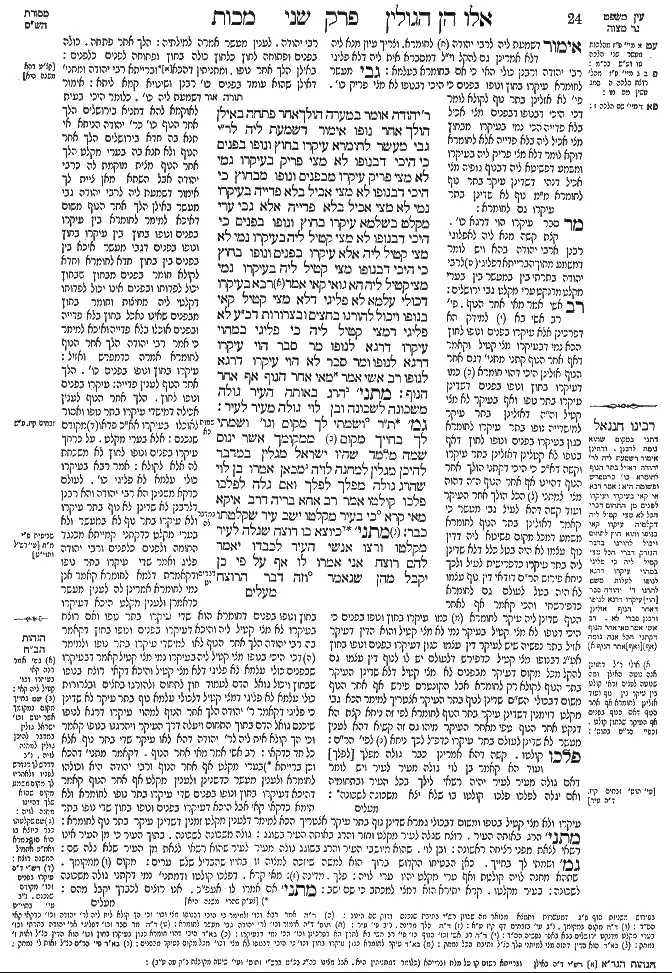
Makkot 12b - Guemara
ר' יהודה אומר במערה הולך אחר פתחה באילן הולך אחר נופו אימור דשמעת ליה לר"י גבי מעשר לחומרא עיקרו בחוץ ונופו בפנים כי היכי דבנופו לא מצי פריק בעיקרו נמי לא מצי פריק עיקרו מבפנים ונופו מבחוץ כי היכי דבנופו לא מצי אכיל בלא פדייה בעיקרו נמי לא מצי אכיל בלא פדייה אלא גבי ערי מקלט בשלמא עיקרו בחוץ ונופו בפנים כי היכי דבנופו לא מצי קטיל ליה בעיקרו נמי לא מצי קטיל ליה אלא עיקרו בפנים ונופו בחוץ כי היכי דבנופו מצי קטיל ליה בעיקרו נמי מצי קטיל ליה הא גואי קאי אמר רבא בעיקרו דכולי עלמא לא פליגי דלא מצי קטיל קאי בנופו ויכול להורגו בחצים ובצרורות דכ"ע לא פליגי דמצי קטיל ליה כי פליגי במהוי עיקרו דרגא לנופו מר סבר הוי עיקרו דרגא לנופו ומר סבר לא הוי עיקרו דרגא לנופו רב אשי אמר מאי אחר הנוף אף אחר הנוף:
מתני׳ הרג באותה העיר גולה משכונה לשכונה ובן לוי גולה מעיר לעיר:
גמ׳ ת"ר (שמות כא, יג) ושמתי לך מקום וגו' ושמתי לך בחייך מקום ממקומך אשר ינוס שמה מלמד שהיו ישראל מגלין במדבר להיכן מגלין למחנה לויה מכאן אמרו בן לוי שהרג גולה מפלך לפלך ואם גלה לפלכו פלכו קולטו אמר רב אחא בריה דרב איקא מאי קרא (במדבר לה, כח) כי בעיר מקלטו ישב עיר שקלטתו כבר:
מתני׳ כיוצא בו רוצח שגלה לעיר מקלטו ורצו אנשי העיר לכבדו יאמר להם רוצח אני אמרו לו אף על פי כן יקבל מהן שנאמר (דברים יט, ד) וזה דבר הרוצח
Comments from Rashi on Masechet Makkot Page 12b
רבי יהודה . לענין מעשר אמרה למילתיה: הלך אחר פתחה . כולה בפנים ופתוחה לחוץ כלחוץ כולה בחוץ ופתוחה לפנים כלפנים: באילן הלך אחר נופו . ומתניתין דהכא. וברייתא רבי יהודה ומתני' דאילן שהוא עומד בפנים כו' רבנן ושינויא קמא ליתא: אימור דשמעת ליה כו' . כלומר היכי בעית לאוקמא להא דתניא בירושלים הלך אחר הנוף כו' כר' יהודה הניחא אי תנא בה חדא בירושלים הלך אחר הנוף ולא תנא בה בערי מקלט הלך אחר הנוף מצית מוקמת לה כרבי יהודה אבל השתא מאן ציית לך אימור דשמעת ליה לרבי יהודה גבי מעשר באילן הלך אחר הנוף משום דאיכא למימר לחומרא בין עיקרו בפנים ונופו בחוץ בין עיקרו בחוץ ונופו בפנים דגבי מעשר איכא בין בפנים בין בחוץ חדא לחומרא וחדא לקולא חומר בפנים מבחוץ שבחוץ יכול לפדותו ובפנים אינו יכול לפדותו דקלטי ליה מחיצות וחומר בחוץ מבפנים שאינו נאכל בחוץ בלא פדייה ובפנים אוכלו בלא פדייה ואיכא למימר כי אמר רבי יהודה הלך אחר הנוף לחומרא אמרה כדמפרש ואזיל: עיקרו בחוץ ונופו בפנים כו' . הלך אחר הנוף לענין פדייה: עיקרו בפנים ונופו לחוץ . הלך אחר הנוף לענין אכילה דמישדי עיקרו בתר נופו ואסור לאוכלו בעיקרו אא"כ פדאו מקודם שנכנס: אלא בערי מקלט . על כרחך עיקרו בפנים ונופו לחוץ לא משכחת לה אלא לקולא: אמר רבא בעיקרו כולי עלמא לא פליגי כו' . לעולם כדקא משנינן הא רבי יהודה והא רבנן דלרבנן לא שדינן לא נוף בתר עיקרו ולא עיקרו בתר נוף לא במעשר ולא בערי מקלט כדקתני קמייתא מכנגד החומה ולפנים כלפנים ורבי יהודה פליג ואמר שדי עיקרו בתר נופו ודקאמרת דלמא לחומרא קאמר אנן נמי לחומרא אמרינן לה לענין מעשר כדאמרן ולענין מקלט היכא דעיקרו בחוץ ונופו בפנים דחומרא הוא שדי עיקרו בתר נופו ואם רוצח בעיקרו לא מצי קטיל ליה והיכא דעיקרו בפנים ונופו בחוץ דקאמר בה רבי יהודה הלך אחר הנוף לאו למישדי עיקרו בתר נופו ולמימר דכי היכי בנופו מצי קטיל ליה בעיקרו נמי מצי קטיל קאמר דבעיקרו שבפנים כולי עלמא לא פליגי דלא מצי קטיל והיכא דקאי רוצח בנופו שבחוץ ויכול גואל הדם לעמוד חוץ לתחום ולהורגו בחצים ובצרורות כולי עלמא לא פליגי דמצי קטיל דלכולי עלמא נוף בתר עיקר לא שדינן כי פליגי דקאמר ר' יהודה הלך אחר הנוף למהוי עיקרו דרגא לנופו שיכנס גואל הדם בתוך התחום ויעלה דרך העיקר ויהרגנו בנופו קאמר וכי הך קולא אית ליה לר' יהודה דהא לאו עיקר שדי בתר נוף אלא כל חד כדקאי: רב אשי אמר מאי אחר הנוף . דקאמר מתני' דהכא וכן ברייתא בערי מקלט אף אחר הנוף ורבי יהודה היא וכולהו לחומרא ולענין מעשר כדשנינן ולענין מקלט אף אחר הנוף קאמר דהיכא דעיקרו בחוץ ונופו בפנים שדי עיקרו בתר נופו לחומרא ולא תימא כדקאי קאי אבל היכא דעיקרו בפנים ונופו בחוץ שדי נופו בתר עיקרו ולא מצי קטיל בנופו ומשום דבכולי גמרא שדינן נוף בתר עיקר אצטריך הכא למימר דלענין מקלט זמנין דשדינן עיקר בתר נוף לחומרא: מתני' הרג באותה העיר . רוצח שגלה לעיר מקלט וחזר והרג באותה העיר בשוגג: גולה משכונה לשכונה . בתוך העיר כי מן העיר אינו רשאי לצאת מפני רציחה ראשונה: ובן לוי . שהוא מיושבי העיר והרג בשוגג גולה מעיר לעיר שהוא רשאי לצאת מן העיר שלא גלה שם: גמ' ושמתי לך בחייך . כאן הבטיחו הקדוש ברוך הוא למשה שיזכה למצוה זו בחייו שהבדיל שלש ערים: מקום ממקומך . שתהא מחנה לויה קולטת ואף ערי מקלט יהיו ערי לויה: פלך . מדינה: מאי קרא . דפלכו קולטו ודמתני' נמי דקתני גולה משכונה . לשכונה: בעיר מקלטו . קרא יתירא הוא דמצי למכתב כי שם ישב: מתני' אם אמרו לו אעפ"כ . אנו רוצים לכבדך יקבל מהם:
Makkot 12b - Mishnah translated into english
Rabbi Yehuda says: With regard to a cave, follow its entrance; if the entrance is inside the city, the status of the entire cave is that of part of the city, and one may partake of tithes in it. With regard to a tree, follow its boughs. The baraita that states that with regard to second tithe in Jerusalem and cities of refuge one follows the boughs is in accordance with the opinion of Rabbi Yehuda.
The Gemara rejects that explanation. Say that you heard Rabbi Yehuda express this opinion with regard to second-tithe produce in a situation where his ruling is a stringency, as in the case where the trunk of a tree is outside Jerusalem and its boughs are inside Jerusalem, just as among its boughs, one may not redeem second-tithe produce, and he must partake of it in Jerusalem, so too at its trunk he may not redeem second-tithe produce, even though it stands outside of Jerusalem. So too in a case where the trunk of a tree is inside and its boughs outside, there is a stringency: Just as among its boughs, one may not partake of second-tithe produce without redemption, so too at its trunk he may not partake of second-tithe produce without redemption, even though it stands inside Jerusalem.
But with regard to cities of refuge, it may be otherwise: Granted, if its trunk is outside the boundary and its boughs are inside, just as among its boughs, the blood redeemer may not kill the unintentional murderer, so too at its trunk, he may not kill him. But if its trunk was inside and its boughs outside, would one say that just as among its boughs, the blood redeemer may kill him, at its trunk, he may also kill him? Isn’t the unintentional murderer standing inside the city of refuge? How could one say that it is permitted for the blood redeemer to kill him inside the city?
Rava said that it can be explained as follows: In the case where its trunk is inside the boundary and its boughs outside, and the unintentional murderer was standing at its trunk, everyone agrees that the blood redeemer may not kill him, and when Rabbi Yehuda said that the trunk follows the boughs, he did not intend to include that case. If the murderer is standing among the boughs of the tree, and the blood redeemer is able to kill him with arrows and pebbles, everyone, including the Rabbis, agrees that the blood redeemer may kill him, as the boughs are outside the city.
When they disagree is with regard to whether its trunk can become a step for its boughs, enabling the blood redeemer to gain access to the unintentional murderer there. One Sage, Rabbi Yehuda, holds: Its trunk can become a step for its boughs; the blood redeemer may gain access to the boughs extending outside the boundary and kill the unintentional murderer by climbing the trunk inside the city. It was in that context that Rabbi Yehuda says that the trunk follows the boughs. And one Sage, the Rabbis, holds: Its trunk cannot become a step for its boughs.
Rav Ashi said: What is the meaning of Rabbi Yehuda’s statement: Follow its boughs? It does not mean that the location of the boughs is the only determining factor; rather, it means that in addition to the trunk, follow the boughs as well in a case where it is a stringency. Therefore, with regard to a city of refuge a tree whose trunk is inside the boundary and its boughs extend beyond the boundary, the halakhic status of the boughs is the same as what it would be were they inside the boundary.
MISHNA: If an unintentional murderer, exiled to a city of refuge, unintentionally killed a person in the same city, he is exiled from that neighborhood where he resided to another neighborhood within that city. And a Levite who is a permanent resident of a city of refuge and unintentionally killed a person is exiled from that city to another city.
GEMARA: Apropos the halakha in the mishna that a Levite is exiled from one city to another city, the Gemara cites that which the Sages taught with regard to the verse: “And one who did not lie in wait…and I will appoint for you a place where he may flee” (Exodus 21:13). “And I will appoint for you”; God said to Moses: There will be a place that provides refuge for unintentional murderers already during your lifetime. “A place”; it will be from your place, meaning the Levite camp served as the place that provided refuge in the wilderness. “Where he may flee”; this teaches that Israel would exile unintentional murderers in the wilderness as well, before they entered the land. To where did they exile unintentional murderers when they were in the wilderness? They exiled them to the Levite camp, which provided refuge.
From here the Sages said: A Levite who killed unintentionally is exiled from one district to another district, to a different Levite city in the other district. And if he was exiled to a city in his own district, he is admitted to the city in his district, which provides him with refuge. Rav Aḥa, son of Rav Ika, said: What is the verse from which it is derived that a murderer who unintentionally killed in the city of refuge where he was exiled is exiled to another neighborhood in that same city? It is derived from a verse, as it is stated: “For in his city of refuge he shall dwell” (Numbers 35:28), indicating that it is a city in which he was already admitted, as the verse is referring to it as his city, and he shall continue to reside there as well.
MISHNA: Similarly, in the case of a murderer who was exiled to a city of refuge and the people of the city sought to honor him due to his prominence, he shall say to them: I am a murderer. If the residents of the city say to him: We are aware of your status and nevertheless, we wish to honor you, he may accept the honor from them, as it is stated: “And this is the matter [devar] of the murderer” (Deuteronomy 19:4), from which it is derived that the murderer is required to say [ledabber] to them that he is a murderer. He is not required to tell them any more than that.
Traduction : The William Davidson digital edition of the Koren Noé Talmud, with commentary by Rabbi Adin Even-Israel Steinsaltz.
Makkot 12b : Significance
Next step
Finished studying Makkot 12b? Carry on with the rest of the tractate.
Study Makkot 13aFrequently asked questions: Makkot 12b
Where is Makkot 12b in tractate Makkot?
Makkot 12b is page 22 of 46 in tractate Makkot (Seder Nezikin).
When is daf 12 of Makkot studied in Daf Yomi?
Daf Yomi covers one daf a day, both sides. Daf 12 of Makkot will be studied on September 21, 2032.
Is there a video class on Makkot 12b?
Yes, by Daf Tube, Rabbi Dr. Moshe Weisblum. These classes were published on YouTube by their authors and are gathered on this site.
What is tractate Makkot about?
The Masechet Makot is the fifth tractate of the Seder Nezikin. The Gemara Makot is the study of the laws relating to Jewish courts and the punishments they may administer, and may be considered a continuation of the tractate Sanhedrin, of which it originally formed part. The Makot tractate is a gemara which contains 3 chapters.
Your study is also dedicated to them
- L'ilui Nishmat Jamila bat Chlomo Abensour
- L'ilui Nishmat Chemouel Eliezer ben Batcheva
- L'ilui Nishmat אליעזר בן רחל