 Talmud Bavli
Horayot 14a : Youtube
Daf TubeYoutube
2 video classes :
Horayot Page 14a
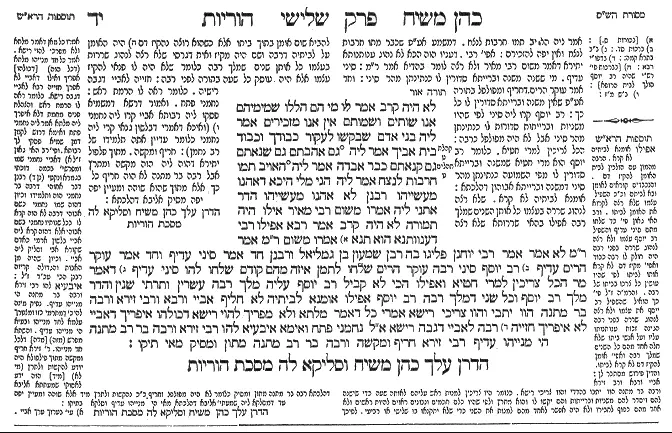
Horayot 14a - Guemara
לא היה קרב אמר לו מי הם הללו שמימיהם אנו שותים ושמותם אין אנו מזכירים אמר ליה בני אדם שבקשו לעקור כבודך וכבוד בית אביך אמר ליה (קהלת ט, ו) גם אהבתם גם שנאתם גם קנאתם כבר אבדה אמר ליה (תהלים ט, ז) האויב תמו חרבות לנצח אמר ליה הני מלי היכא דאהנו מעשייהו רבנן לא אהנו מעשייהו הדר אתני ליה אמרו משום רבי מאיר אילו היה תמורה לא היה קרב אמר רבא אפילו רבי דענוותנא הוא תנא אמרו משום ר"מ אמר ר"מ לא אמר אמר רבי יוחנן פליגו בה רבן שמעון בן גמליאל ורבנן חד אמר סיני עדיף וחד אמר עוקר הרים עדיף רב יוסף סיני רבה עוקר הרים שלחו לתמן איזה מהם קודם שלחו להו סיני עדיף דאמר מר הכל צריכין למרי חטיא ואפילו הכי לא קביל רב יוסף עליה מלך רבה עשרין ותרתי שנין והדר מלך רב יוסף וכל שני דמלך רבה רב יוסף אפילו אומנא לביתיה לא חליף אביי ורבא ורבי זירא ורבה בר מתנה הוו יתבי והוו צריכי רישא אמרי כל דאמר מלתא ולא מפריך להוי רישא דכולהו איפריך דאביי לא איפריך חזייה רבה לאביי דגבה רישא א"ל נחמני פתח ואימא איבעיא להו רבי זירא ורבה בר רב מתנה הי מנייהו עדיף רבי זירא חריף ומקשה ורבה בר רב מתנה מתון ומסיק מאי תיקו:
הדרן עלך כהן משיח וסליקא לה מסכת הוריות
Comments from Rashi on Masechet Horayot Page 14a
אמר ליה האויב תמו חרבות לנצח . דמשמע אע"פ שכבר מתו חרבות לנצח ואין יפה להזכירם: אפי' רבי . דעניו הוה הכא לא נהוג ענותנותא יתירא דאמר משום רבי מאיר ולא רצה לומר בהדיא אמר ר"מ: סיני עדיף . מי ששנה משנה וברייתא סדורין לו כנתינתן מהר סיני: וחד אמר עוקר הרים . דחריף ומפולפל בתורה אע"פ שאין משנה וברייתא סדורין לו כל כך: רב יוסף קרו ליה סיני לפי שהיו משניות וברייתות סדורות לו כנתינתן מהר סיני אבל לא היה מפולפל כרבה: הכל צריכין למרי חטיא . כלומר רב יוסף הוא מרי חטיא שמשנה וברייתא סדורין לו מפי השמועה כנתינתן מהר סיני דמשנה וברייתא אבוהון דהלכתא: אומנא לביתיה לא קרא . שלא רצה לנהוג שררה בעצמו כל אותן השנים שמלך רבה אפילו בהאי שררותא שלא רצה להביא שום אומן בתוך ביתו אלא כשהוא רוצה להקיז דם היה האומן על לביתיה דרבה ושם היה מקיז ואית דגרסי שלא רצה לנהוג שררות בעצמו כל אותן שנים שמלך רבה כלומר שלא היה לו פנאי להקיז עצמו אלא היה עוסק כל שעה בתורה לפני רבה: חזייה לאביי דגבה רישיה . כלומר ראה לו הרמת ראש: נחמני פתח . ואמור דרשא דמשמיא פסקו ליה רבותא אביי קרו ליה נחמני (ואיכא דאמרי דבלשון גנאי קרי ליה נחמני כלומר עדיין אתה תלמידו של רב נחמן): חריף ומקשה . מתוך פלפול יתירא דהוה ליה הוה מקשה ומתרץ אבל רבה בר מתנה לא הוה חריף כל כך אלא מתוך שהוא שוהה ומעיין יפה יפה מסיק אליבא דהלכתא:
Horayot 14a - Mishnah translated into english
it would not be sacrificed. Rabbi Yehuda HaNasi’s son said to him: Who are these Sages whose water we drink but whose names we do not mention? Rabbi Yehuda HaNasi said to him: They are people who sought to abolish your honor and the honor of your father’s house.
His son said to him, citing the verse: “Their love as well as their hatred and their envy is long ago perished” (Ecclesiastes 9:6): That was long ago and they have already died. Therefore, there is no harm in mentioning their names. Rabbi Yehuda HaNasi said to him: But it is also stated: “The enemy are come to an end; the wasted places are forever” (Psalms 9:7). Although the enemies died, the desolation that they created remains. Therefore, although they are dead, their names should not be mentioned. Rabban Shimon said to his father: These matters apply in a case where their actions were effective. In the case of these Sages, their actions were not effective. Rabbi Yehuda HaNasi then taught him: The Sages said in the name of Rabbi Meir: If it was considered a substitute, it would not be sacrificed. Rava said: Even Rabbi Yehuda HaNasi, who is humble, taught: The Sages said in the name of Rabbi Meir. But he did not say directly: Rabbi Meir said.
§ Rabbi Yoḥanan said: Rabban Shimon ben Gamliel and the Rabbis disagreed with regard to this matter. One said: Sinai, i.e., one who is extremely knowledgeable, is preferable; and one said: One who uproots mountains, i.e., one who is extremely incisive, is preferable.
The Gemara relates that this is not merely a theoretical dispute; rather, at one point it had practical ramifications. Rav Yosef was Sinai; Rabba was one who uproots mountains. They sent a message from Babylonia to there, Eretz Yisrael: Which takes precedence? They sent in response: Sinai is preferable, as the Master said: Everyone requires the owner of the wheat, i.e., one who is expert in the sources. And even so, Rav Yosef did not accept upon himself the appointment of head of the yeshiva. Rabba reigned for twenty-two years, and then Rav Yosef reigned. The Gemara relates that in all those years that Rabba presided, Rav Yosef did not even call a bloodletter to his home. Rav Yosef did not assume even the slightest air of authority, in deference to Rabba, and would go to seek out the bloodletter rather than expecting that the bloodletter would accommodate him.
The Gemara relates: Abaye, Rava, Rabbi Zeira, and Rabba bar Mattana were sitting and studying in a group and were in need of a head for their group. They said: Let anyone who will say a matter that is not refuted be the head. Everyone’s statements were refuted, and the statement of Abaye was not refuted. Rabba saw that Abaye raised his head, i.e., he noticed that his statement was not refuted. Rabba said to him: Naḥmani, calling Abaye by his name rather than by his nickname, begin and say your lecture.
A dilemma was raised before the Sages: Between Rabbi Zeira and Rabba bar Rav Mattana, which of them is preferable? Rabbi Zeira is incisive and raises pertinent difficulties, and Rabba bar Rav Mattana is moderate and not so incisive, but ultimately he draws the appropriate conclusions. What is the conclusion? Which is preferable? The Gemara concludes: The dilemma shall stand unresolved.
Traduction : The William Davidson digital edition of the Koren Noé Talmud, with commentary by Rabbi Adin Even-Israel Steinsaltz.