 Talmud Bavli
Horayot 13b : Youtube
Daf TubeYoutube
2 video classes :
Horayot Page 13b
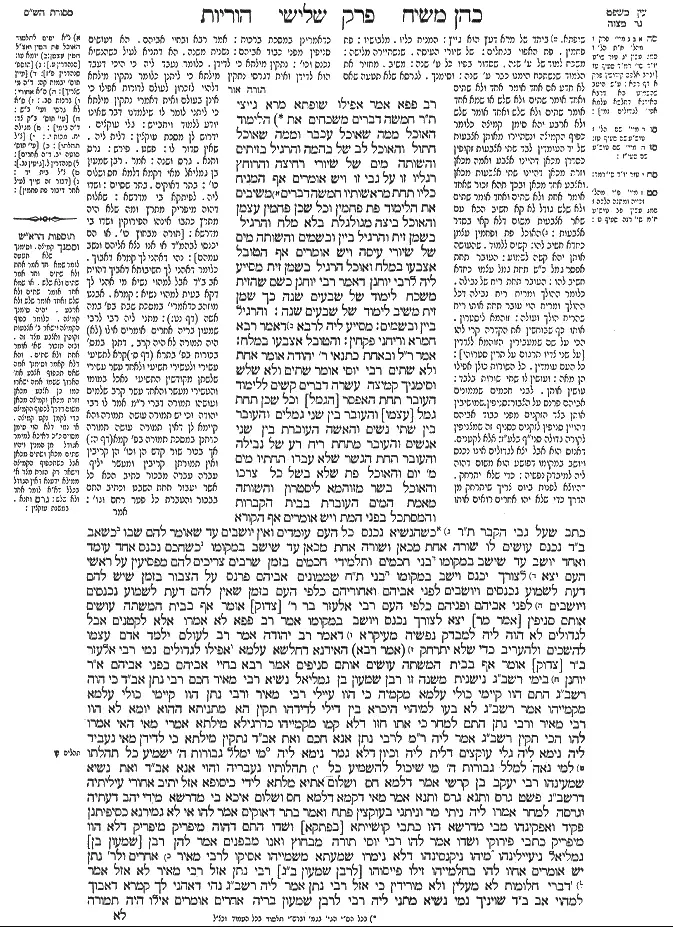
Horayot 13b - Guemara
רב פפא אמר אפילו שופתא מרא גייצי ת"ר חמשה דברים משכחים את הלימוד האוכל ממה שאוכל עכבר וממה שאוכל חתול והאוכל לב של בהמה והרגיל בזיתים והשותה מים של שיורי רחיצה והרוחץ רגליו זו על גבי זו ויש אומרים אף המניח כליו תחת מראשותיו חמשה דברים משיבים את הלימוד פת פחמין וכל שכן פחמין עצמן והאוכל ביצה מגולגלת בלא מלח והרגיל בשמן זית והרגיל ביין ובשמים והשותה מים של שיורי עיסה ויש אומרים אף הטובל אצבעו במלח ואוכל הרגיל בשמן זית מסייע ליה לרבי יוחנן דאמר רבי יוחנן כשם שהזית משכח לימוד של שבעים שנה כך שמן זית משיב לימוד של שבעים שנה:
והרגיל ביין ובשמים:
מסייע ליה לרבא דאמר רבא חמרא וריחני פקחין:
והטובל אצבעו במלח:
אמר ר"ל ובאחת כתנאי ר' יהודה אומר אחת ולא שתים רבי יוסי אומר שתים ולא שלש וסימניך קמיצה עשרה דברים קשים ללימוד העובר תחת האפסר [הגמל] וכל שכן תחת גמל [עצמו] והעובר בין שני גמלים והעובר בין שתי נשים והאשה העוברת בין שני אנשים והעובר מתחת ריח רע של נבילה והעובר תחת הגשר שלא עברו תחתיו מים מ' יום והאוכל פת שלא בשל כל צרכו והאוכל בשר מזוהמא ליסטרון והשותה מאמת המים העוברת בבית הקברות והמסתכל בפני המת ויש אומרים אף הקורא כתב שעל גבי הקבר ת"ר כשהנשיא נכנס כל העם עומדים ואין יושבים עד שאומר להם שבו כשאב ב"ד נכנס עושים לו שורה אחת מכאן ושורה אחת מכאן עד שישב במקומו כשחכם נכנס אחד עומד ואחד יושב עד שישב במקומו בני חכמים ותלמידי חכמים בזמן שרבים צריכים להם מפסיעין על ראשי העם יצא לצורך יכנס וישב במקומו בני ת"ח שממונים אביהם פרנס על הצבור בזמן שיש להם דעת לשמוע נכנסים ויושבים לפני אביהם ואחוריהם כלפי העם בזמן שאין להם דעת לשמוע נכנסים ויושבים לפני אביהם ופניהם כלפי העם רבי אלעזר בר ר' [צדוק] אומר אף בבית המשתה עושים אותם סניפין [אמר מר] יצא לצורך נכנס ויושב במקומו אמר רב פפא לא אמרו אלא לקטנים אבל לגדולים לא הוה ליה למבדק נפשיה מעיקרא דאמר רב יהודה אמר רב לעולם ילמד אדם עצמו להשכים ולהעריב כדי שלא יתרחק (אמר רבא) האידנא דחלשא עלמא אפילו לגדולים נמי רבי אלעזר ב"ר [צדוק] אומר אף בבית המשתה עושים אותם סניפים אמר רבא בחיי אביהם בפני אביהם א"ר יוחנן בימי רשב"ג נישנית משנה זו רבן שמעון בן גמליאל נשיא רבי מאיר חכם רבי נתן אב"ד כי הוה רשב"ג התם הוו קיימי כולי עלמא מקמיה כי הוו עיילי רבי מאיר ורבי נתן הוו קיימי כולי עלמא מקמייהו אמר רשב"ג לא בעו למיהוי היכרא בין דילי לדידהו תקין הא מתניתא ההוא יומא לא הוו רבי מאיר ורבי נתן התם למחר כי אתו חזו דלא קמו מקמייהו כדרגילא מילתא אמרי מאי האי אמרו להו הכי תקין רשב"ג אמר ליה ר"מ לרבי נתן אנא חכם ואת אב"ד נתקין מילתא כי לדידן מאי נעביד ליה נימא ליה גלי עוקצים דלית ליה וכיון דלא גמר נימא ליה (תהלים קו, ב) מי ימלל גבורות ה' ישמיע כל תהלתו למי נאה למלל גבורות ה' מי שיכול להשמיע כל תהלותיו נעבריה והוי אנא אב"ד ואת נשיא שמעינהו רבי יעקב בן קרשי אמר דלמא חס ושלום אתיא מלתא לידי כיסופא אזל יתיב אחורי עיליתיה דרשב"ג פשט גרס ותנא גרס ותנא אמר מאי דקמא דלמא חס ושלום איכא בי מדרשא מידי יהב דעתיה וגרסה למחר אמרו ליה ניתי מר וניתני בעוקצין פתח ואמר בתר דאוקים אמר להו אי לא גמירנא כסיפיתנן פקיד ואפקינהו מבי מדרשא הוו כתבי קושייתא [בפתקא] ושדו התם דהוה מיפריק מיפריק דלא הוו מיפריק כתבי פירוקי ושדו אמר להו רבי יוסי תורה מבחוץ ואנו מבפנים אמר להן רבן [שמעון בן] גמליאל ניעיילינהו מיהו ניקנסינהו דלא נימרו שמעתא משמייהו אסיקו לרבי מאיר אחרים ולר' נתן יש אומרים אחוו להו בחלמייהו זילו פייסוהו [לרבן שמעון ב"ג] רבי נתן אזל רבי מאיר לא אזל אמר דברי חלומות לא מעלין ולא מורידין כי אזל רבי נתן אמר ליה רשב"ג נהי דאהני לך קמרא דאבוך למהוי אב ב"ד שויניך נמי נשיא מתני ליה רבי לרבן שמעון בריה אחרים אומרים אילו היה תמורה
Comments from Rashi on Masechet Horayot Page 13b
שופתא . ביתד של מרא דעץ הוא גייץ: המניח כליו . מלבושיו: פת פחמין . פת האפוי בגחלים: האוכל פת ופחמין עצמן כחדא חשיב להו: של שיורי העיסה . שנשתיירה מלישה: משכח למוד של ע' שנה . שסדור בפיו כל ע' שנה: משיב . מחזיר את הלמוד שנשתכח הימנו כבר ע' שנה: וסימנך . לגרסא שלא תטעה שאם לא תדע אם אחד אומר אחד ולא שתים ואחד אומר שתים ולא שלש או שמא אחד אומר שתים ולא שלש ואחד אומר שלש ולא ארבע יהא סימן קמיצה כלומר כפוף הקמיצה ונשתיירו מאותן אצבעות של יד העומדין לבד שתי אצבעות זקופין כסדרן מכאן דהיינו אצבע ואמה מכאן וזרת מכאן דהיינו שתי אצבעות מכאן ואצבע אחד מכאן ובכך תהא זכור שאחד אומר אחת ולא שתים ואחד אומר שתים ולא שלש גודל לא קא חשיב הכא עם שאר אצבעות משום דלא קאי בסדר אצבעות: קשים ללמוד . שהעושה אותן יהא קשה לשמוע: העובר תחת אפסר גמל כ"ש תחת גמל עצמו כחדא חשיב להו: העובר תחת ריח של נבילה . כלומר ההולך ומריח ריח נבילה דכל ההולך ומריח הוי עובר תחת אותו ריח שהריח הולך ועולה: זוהמא ליסטרון . אותו כף שבוחשין את הקדרה קרי להו הכי על שם שמעבירין הזוהמא לצדדין [על שני צדיו תרגום על תרין סטרוהי]: כל העם עומדין . כל השורות כולן אפילו הן מאה: ועושין לו שתי שורות בלבד: עושין אותן . לבני חכמים שממונים אביהם פרנס על הצבור: סניפין . שמושיבין אותן בצד הזקנים מפני כבוד אביהם דהויין סניפין לזקנים כסניף זה שמצניפין לקורה גדולה סני"ף בלע"ז: אלא לקטנים . דאנוס הוא אבל יצא לגדולים אינו נכנס ויושב במקומו דפושע הוא משום דהוה ליה למיבדק נפשיה: כדי שלא יתרחק . דהיוצא לפנות ביום צריך שיתרחק מן הדרך כדי שלא יהו אחרים רואים אותו כדאמרינן במסכת ברכות: אמר רבא ובחיי אביהם . הא דעושים סניפין מפני כבוד אביהם: נשנית משנה . הא דתניא לעיל כשהנשיא נכנס וכו': נתקין מילתא כי לדידן . כלומר נעבד ליה כי היכי דעבד הוא לדידן ואית דגרסי נתקין מילתא כי ליתנן כלומר נתקין מילתא דלהוי לזכרון לעולם לדורות אפילו כי אינן בעולם ואית דאמרי נתקין מילתא כי ליתני לומר לו שילמדנו דבר שאינו יודע ללמוד ויתבייש: גלי עוקצים . ידרוש לן מסכת עוקצין: דלית ליה . שאין סדור לו: פשט . פירש: גרס ותנא . גרס ושנה: אמר . רבן שמעון בן גמליאל מאי דקמא דלמא חס ושלום כו': בתר דאוקים . בתר שסיים: ושדו ליה . לפיתקא בי מדרשא: שאלות דהוה מיפריק מתרץ ומה שלא היה מתרץ כתבו אינהו הפירוקין ושדו בי מדרשא: [תורה מבחוץ כו' . או הם יכנסו לבהמ"ד או אנו נצא אליהם ונשב עמהם]: נהי דאהני לך קמרא דאבוך . כלומר דאהני לך חשיבותא דאביך דהוית אב ב"ד אבל למהוי נשיא מי אהני לך דקא בעית למהוי נשיא: קמרא . אבנט מוזהב כדאמרי' במסכת שבת בפ' במה אשה (דף נט:): מתני ליה רבי לרבי שמעון בריה אחרים אומרים אילו (לא) היה תמורה לא היה קרב . דתנן במס' בכורות בפ' בתרא (דף ס.) קרא לתשיעי עשירי ולעשירי תשיעי ולאחד עשר עשירי שלשתן מקודשין התשיעי נאכל במומו והעשירי מעשר והאחד עשר קרב שלמים ועושהו תמורה דברי ר"מ אמר לו רבי יהודה וכי יש תמורה עושה תמורה והא קיימא לן דאין תמורה עושה תמורה כדתנן במסכת תמורה בפ' קמא (דף ה:) אך בכור שור קדש הן וכו' הן קריבין ואין תמורתן קריבין ומעשר יליף עברה עברה מבכור כתיב הכא כל אשר יעבור תחת השבט וכתיב התם בבכור והעברת כל פטר רחם וגו':
Horayot 13b - Mishnah translated into english
Rav Pappa said: They gnaw even on the handle of a hoe.
§ The Sages taught in a baraita: There are five factors that cause one to forget his Torah study: One who eats from that which a mouse eats and from that which a cat eats, and one who eats the heart of an animal, and one who is accustomed to eating olives, and one who drinks water that remains from washing, and one who washes his feet with this foot atop that foot. And some say: Also one who places his garments under his head. Correspondingly, there are five factors that restore forgotten Torah study: Eating bread baked on coals and all the more so one who warms himself with the heat of the coals themselves, and one who eats a hard-boiled egg [beitza megulgelet] without salt, and one who is accustomed to eating olive oil, and one who is accustomed to drinking wine and smelling spices, and one who drinks water that remains from kneading dough. And some say: Also one who dips his finger in salt and eats it.
The Gemara elaborates on the baraita: One who is accustomed to eating olive oil restores forgotten Torah study. The Gemara notes: This supports the opinion of Rabbi Yoḥanan, as Rabbi Yoḥanan said: Just as eating an olive causes one to forget seventy years’ worth of Torah study, olive oil restores seventy years’ worth of Torah study.
The baraita continues: And one who is accustomed to drinking wine and smelling spices restores forgotten Torah study. The Gemara notes: This supports the opinion of Rava, as Rava said: Wine and spices rendered me wise.
The baraita continues: One who dips his finger in salt and eats it restores forgotten Torah study. Reish Lakish says: And that is the case with regard to one finger. The Gemara notes: This is parallel to a dispute between tanna’im. Rabbi Yehuda says: One finger but not two. Rabbi Yosei says: Two fingers but not three. And your mnemonic for the fact that the dispute is between one and two fingers is kemitza, i.e., the ring finger. When one presses his ring finger to his palm, there remain two straight fingers on one side and one on the other.
Ten factors are detrimental for Torah study: One who passes beneath the bit of the camel, and all the more so one who passes beneath a camel itself; and one who passes between two camels; and one who passes between two women; and a woman who passes between two men; and one who passes beneath a place where there is the foul odor of an animal carcass; and one who passes under a bridge beneath which water has not passed for forty days; and one who eats bread that was not sufficiently baked; and one who eats meat from zuhama listeron, a utensil consisting of a spoon and a fork, used to remove the film on the surface of soup; and one who drinks from an aqueduct that passes through a cemetery; and one who gazes at the face of the dead. And some say: Also one who reads the writing that is on the stone of a grave.
§ The Sages taught in a baraita: When the Nasi of the Sanhedrin enters, all the people stand and they do not sit until he says to them: Sit. When the deputy Nasi of the Sanhedrin enters, the people form for him one row from here, on this side of the path that he takes, and one row from there, on the other side of it, in a display of deference, until he sits in his place, and then they may be seated. When the Ḥakham, who is ranked third among the members of the Sanhedrin, enters, one person stands when he is within four cubits of the Ḥakham, and another sits, i.e., when one is no longer within four cubits of the Ḥakham he may sit. And all those whom the Ḥakham passes do this, until he sits in his place. When the multitudes require their services, i.e., they serve a public role, sons of the Sages and Torah scholars may step over the heads of the people seated on the ground in order to reach their places in the Sanhedrin. If one of the Sages left for the purpose of relieving himself, when he is finished he may enter and sit in his place in the Sanhedrin, and he need not be concerned that he is imposing upon those assembled.
When they have the wisdom to hear and to study, the sons of Torah scholars, whose fathers are appointed as leaders of the congregation, enter and sit before their fathers, and their backs are directed toward the people. When they do not have the wisdom to hear and to study they enter and sit before their fathers, and their faces are directed toward the people, so everyone sees that they are seated there in deference to their fathers but not as students. Rabbi Elazar, son of Rabbi Tzadok, says: Even at a wedding party one renders them attachments [senifin] and seats them adjacent to their fathers.
The Master said: If one of the Sages left for the purpose of relieving himself, when he is finished he may enter and sit in his place. Rav Pappa said: The Sages said this only with regard to one who leaves for minor bodily functions, i.e., to urinate. But with regard to one who leaves for major bodily functions, i.e., to defecate, no, he may not return to his place, because he should have examined himself initially so that he would not need to leave. His failure to do so constitutes negligence and he may not impose upon others when he returns, as Rav Yehuda says that Rav says: A person should always accustom himself to relieving himself in the morning and in the evening so that he will not need to distance himself during the daylight hours to find an appropriate place. Rava said: Today, when the world is weak and people are not as healthy as they once were, one may even return after he leaves for major bodily functions.
Rabbi Elazar, son of Rabbi Tzadok, says: Even at a wedding party one renders them attachments. Rava said: This applies during the lifetime of their fathers and in the presence of their fathers.
§ Rabbi Yoḥanan says: This mishna, i.e., the preceding baraita, was taught during the days of Rabban Shimon ben Gamliel. Rabban Shimon ben Gamliel was the Nasi, Rabbi Meir was the Ḥakham, and Rabbi Natan was the deputy Nasi. When Rabban Shimon ben Gamliel was there, everyone would arise before him. When Rabbi Meir and Rabbi Natan would enter, everyone would arise before them. Rabban Shimon ben Gamliel said: Shouldn’t there be a conspicuous distinction between me and them in terms of the manner in which deference is shown? Rabban Shimon ben Gamliel instituted the provisions delineated in this baraita that distinguish between the Nasi and his subordinates with regard to the deference shown them.
That day, when Rabban Shimon ben Gamliel instituted these provisions, Rabbi Meir and Rabbi Natan were not there. The following day when they came to the study hall, they saw that the people did not stand before them as the matter was typically done. They said: What is this? The people said to them: This is what Rabban Shimon ben Gamliel instituted.
Rabbi Meir said to Rabbi Natan: I am the Ḥakham and you are the deputy Nasi. Let us devise a matter and do to him as he did to us. What shall we do to him? Let us say to him: Reveal to us tractate Okatzim, which he does not know. And once it is clear to all that he did not learn, he will not have anything to say. Then we will say to him: “Who can express the mighty acts of the Lord, shall make all His praises heard?” (Psalms 106:2), indicating: For whom is it becoming to express the mighty acts of the Lord? It is becoming for one who is capable of making all His praises heard, and not for one who does not know one of the tractates. We will remove him from his position as Nasi, and I will be deputy Nasi and you will be Nasi.
Rabbi Ya’akov ben Korshei heard them talking, and said: Perhaps, Heaven forfend, this matter will come to a situation of humiliation for Rabban Shimon ben Gamliel. He did not wish to speak criticism or gossip about Rabbi Meir and Rabbi Natan, so he went and sat behind the upper story where Rabban Shimon ben Gamliel lived. He explained tractate Okatzin; he studied it aloud and repeated it, and studied it aloud and repeated it.
Rabban Shimon ben Gamliel said to himself: What is this that is transpiring before us? Perhaps, Heaven forfend, there is something transpiring in the study hall. He suspected that Rabbi Meir and Rabbi Natan were planning something. He concentrated and studied tractate Okatzin. The following day Rabbi Meir and Rabbi Natan said to him: Let the Master come and teach a lesson in tractate Okatzin. He began and stated the lesson he had prepared. After he completed teaching the tractate, he said to them: If I had not studied the tractate, you would have humiliated me.
Rabban Shimon ben Gamliel commanded those present and they expelled Rabbi Meir and Rabbi Natan from the study hall as punishment. Rabbi Meir and Rabbi Natan would write difficulties on a scrap of paper [pitka] and would throw them there into the study hall. Those difficulties that were resolved were resolved; as for those that were not resolved, Rabbi Meir and Rabbi Natan wrote resolutions on a scrap of paper and threw them into the study hall. Rabbi Yosei said to the Sages: How is it that the Torah, embodied in the preeminent Torah scholars, is outside and we are inside?
Rabban Shimon ben Gamliel said to them: Let us admit them into the study hall. But we will penalize them in that we will not cite halakha in their names. They cited statements of Rabbi Meir in the name of Aḥerim, meaning: Others, and they cited statements of Rabbi Natan in the name of yesh omerim, meaning: Some say. Rabbi Meir and Rabbi Natan were shown a message in their dreams: Go, appease Rabban Shimon ben Gamliel. Rabbi Natan went. Rabbi Meir did not go. He said in his heart: Matters of dreams are insignificant. When Rabbi Natan went, Rabban Shimon ben Gamliel said to him: Although the ornate belt, i.e., the importance, of your father was effective in enabling you to become deputy Nasi, as Rabbi Natan’s father was the Babylonian Exilarch, will it render you Nasi as well?
Years later, Rabbi Yehuda HaNasi taught Rabban Shimon his son that Aḥerim say: If it was considered a substitute,
Traduction : The William Davidson digital edition of the Koren Noé Talmud, with commentary by Rabbi Adin Even-Israel Steinsaltz.