 Talmud Bavli
No video class on this page yet.
To add a video to this page please click here.Keritot Page 27a
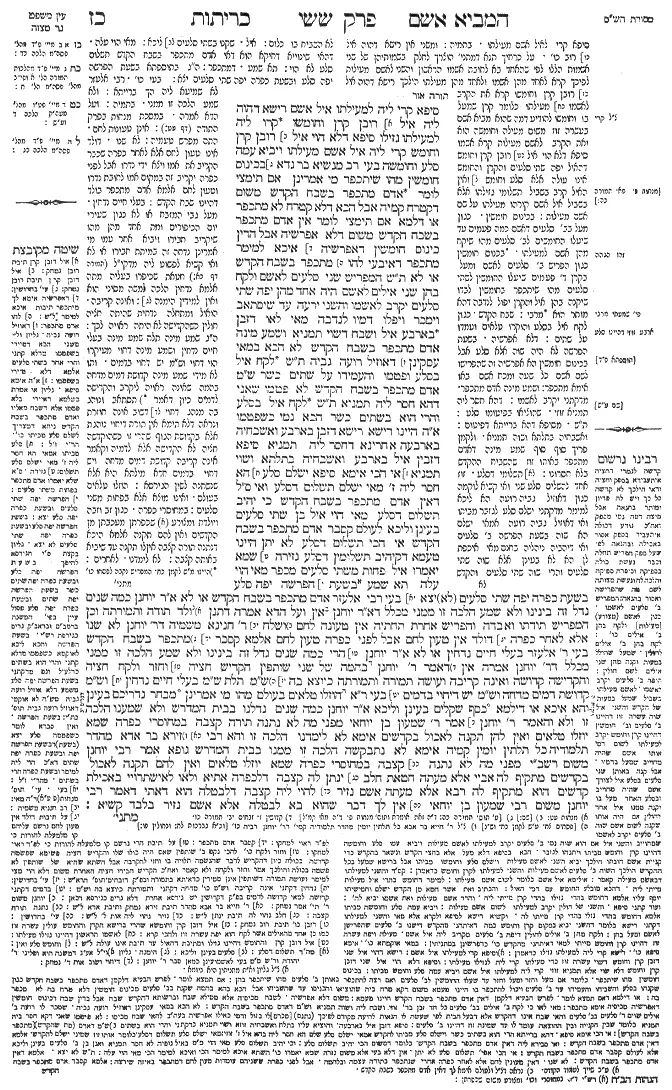
Keritot 27a - Guemara
סיפא קרי ליה למעילתו איל אשם רישא דהוה ליה איל רובן קרן וחומשו קרו ליה למעילתו גזילו סיפא דלא הוי איל רובן קרן וחומש קרי ליה איל אשם מעילתו ויביא עמה סלע וחומשה בעי רב מנשיא בר גדא בכינוס חומשין מהו שיתכפר מי אמרינן אם תימצי לומר אדם מתכפר בשבח הקדש משום דקטרח קמיה אבל הכא דלא קטרח לא מתכפר או דלמא אם תימצי לומר אין אדם מתכפר בשבח הקדש משום דלא אפרשיה אבל הדין כינוס חומשין דאפרשיה איכא למימר מתכפר דאיבעי להו מתכפר בשבח הקדש או לא ת"ש המפריש שני סלעים לאשם ולקח בהן שני אילים לאשם היה אחד מהן יפה שתי סלעים יקרב לאשמו והשני ירעה עד שיסתאב וימכר ויפלו דמיו לנדבה מאי לאו דזבן בארבע איל ושבח דשוי תמניא ושמע מינה אדם מתכפר בשבח הקדש לא הכא במאי עסקינן דאוזיל רועה גביה ת"ש לקח איל בסלע ופטמו והעמידו על שתים כשר ש"מ אדם מתכפר בשבח הקדש לא פטמו שאני דהא חסר ליה תמניא ת"ש לקח איל בסלע והרי הוא בשתים כשר הכא נמי כשפטמו א"ה היינו רישא רישא דזבן בארבע ואשבחיה בארבעה אחרינא דחסר ליה תמניא סיפא דזבין איל בארבע ואשבחיה בתלתא ושוי תמניא אי הכי אימא סיפא ישלם סלע הא חסר ליה ז' מאי ישלם תשלום דסלע ואי ס"ל דאין אדם מתכפר בשבח הקדש כי יהיב תשלום דסלע מאי הוי איל בן שתי סלעים בעינן וליכא לעולם קסבר אדם מתכפר בשבח הקדש אי הכי תשלום דסלע לא יתן היינו טעמא דקיהיב תשלומין דסלע גזירה שמא יאמרו איל פחות משתי סלעים מכפר מאי הוי עלה תא שמע בשעת הפרשה יפה סלע בשעת כפרה יפה שתי סלעים לא יצא בעי רבי אלעזר אדם מתכפר בשבח הקדש או לא א"ר יוחנן כמה שנים גדל זה בינינו ולא שמע הלכה זו ממני מכלל דא"ר יוחנן אין ועל הדא אמרה דתנן ולד תודה ותמורתה וכן המפריש תודתו ואבדה והפריש אחרת תחתיה אין טעונה לחם ושלח ר' חנינא משמיה דר' יוחנן לא שנו אלא לאחר כפרה דולד אין טעון לחם אבל לפני כפרה טעון לחם אלמא קסבר מתכפר בשבח הקדש בעי ר' אלעזר בעלי חיים נדחין או לא א"ר יוחנן הרי כמה שנים גדל זה בינינו ולא שמע הלכה זו ממני מכלל דר' יוחנן אמרה אין דאמר ר' יוחנן בהמה של שני שותפין הקדיש חציה וחזר ולקח חציה והקדישה קדושה ואינה קריבה ועושה תמורה ותמורתה כיוצא בה ש"מ תלת ש"מ בעלי חיים נדחין וש"מ קדושת דמים מדחה וש"מ יש דיחוי בדמים בעי ר"א הוזלו טלאים בעולם מהו מי אמרינן (דברים יב, יא) מבחר נדריכם בעינן והא איכא או דילמא (ויקרא ה, טו) כסף שקלים בעינן וליכא א"ר יוחנן כמה שנים גדלנו בבית המדרש ולא שמענו הלכה זו ולא והאמר ר' יוחנן אמר ר' שמעון בן יוחאי מפני מה לא נתנה תורה קצבה במחוסרי כפרה שמא יוזלו טלאים ואין להן תקנה לאכול בקדשים אימא לא לימדנו הלכה זו והא רבי זירא בר אדא מהדר תלמודיה כל תלתין יומין קמיה אימא לא נתבקשה הלכה זו ממנו בבית המדרש גופא אמר רבי יוחנן משום רשב"י מפני מה לא נתנה קצבה במחוסרי כפרה שמא יוזלו טלאים ואין להם תקנה לאכול בקדשים מתקיף לה אביי אלא מעתה חטאת חלב ינתן לה קצבה דלכפרה אתיא ולאו לאישתרויי באכילת קדשים הוא מתקיף לה רבא אלא מעתה אשם נזיר להוי ליה קצבה דלבטלה הוא דאתי דאמר רבי יוחנן משום רבי שמעון בן יוחאי אין לך דבר שהוא בא לבטלה אלא אשם נזיר בלבד קשיא:
Comments from Rashi on Masechet Keritot Page 27a
רישא קרי גזילו למעילתו סיפא קרי לאיל אשם מעילתו . בתמיה: ומשני אין רישא דהוה איל רוב כו' . על כרחיך תנא דמתני' הוצרך לחלק בשמותיהן של שני אשמות הללו לפי שהאחד בא לחובת אשמו הראשון והשני לאשם מעילות לפיכך קרא לאחד מהן אשמו ולאחד מהן מעילתו הילכך רישא דהוה איל רובן קרן וחומשו קרא את הקרב לאשמו מעילתו כלומר קרן שמעל בו וחומשו להודיע דמה שהוא מביא אשם בעשרה זוז משום מעילה וחומשה הוא ואת הקרב לאשם מעילות קרא אשמו סיפא דלא הוי איל רובן קרן וחומש דהאיל יפה שתי סלעים והקרן והחומש אינו עולה אלא סלע וחומש ואין האיל קרב בשביל תשלומי גזילתו אלא בשביל איל אשם קורהו מעילתו על שם אשם מעילות: בכינוס חומשין . כגון מעל בב' סלעים דאשם כמה פעמים עד שיעלו החומשים לב' סלעים מהו שיקח מהן אשם למעילתו. בכנוס חומשין כגון הפריש ב' סלעים לאשם ומעל בקרן ד' פעמים שיעלו החומשין לשתי סלעים מהו שיתכפר בחומשין לבדו שיקנה בהן איל והקרן יפול לנדבה דהא מותר הוא מרבי: שבח הקדש . כגון לקח איל בסלע והוקרו טלאים ועמדו על שתים: דלא אפרשיה . בשעת הפרשה לא היה שוה אלא סלע אבל בכינוס חומשין הא אפרשיה זה שהפרישו לשם אשם כל שעה ומכח אשם באו אימא מתכפר: ושמע מינה אדם מתכפר . מדקתני יקרב לאשמו: דהא חסר ליה תמניא זוזי . שהוציאו בפיטומו סלע: ת"ש . מסיפא דהא ברייתא דפיטום: ואשבחיה בתלתא ושוה תמניא . ולקמן פריך סוף סוף שמע מינה דאדם מתכפר באותו זוז שהשביח ההקדש בלא חסרונו: תשלומי דסלע . זוז אחד להשלים סלע שני. ואי קשיא לוקמה כגון דאוזיל גביה רועה הא ליכא למימר מדקתני ישלם סלע לגזבר מביתו ואי דאוזיל גביה רועה אמאי ישלם הא שוה בשעת הפרשה ב' סלעים ואי דיהביה ניהליה בחנם מאי איכפת לן הא לא בעינן אלא שוה שתי סלעים והרי שוה שתי סלעים והקדש לא השביח בו כלום: איל . שקנו בשתי סלעים ליכא: מאי הוי עלה . דהאי שינוייא דחיקא הוא דאי אדם מתכפר בשבח הקדש תשלום סלע לא הוי: תא שמע . דמתכפר: ה"ג בתוספתא בשעת הפרשה יפה סלע ובשעת כפרה יפה שתי סלעים יצא: בעי כו' . רבי אלעזר לא שמיעא ליה הך ברייתא: ולא שמע הלכה זו ממני . בתמיה: ועל הדא אמרה . במסכת מנחות בפרק התודה (דף עט:): אינן טעונות לחם . התם מפרש טעמיה: לא שנו . דולד אינו טעון לחם אלא לאחר כפרה שכבר הקריב את אמו ויצא ידי נדרו אבל לפני כפרה יקריב זה במקום אמו לחובת נדרו וטעון לחם. אלמא אדם מתכפר בולד דהיינו שבח הקדש: בעלי חיים נדחין . מעל גבי המזבח או לא כגון שעירי יום הכיפורים ומת אחד מהן מהו שיקריב חבירו ויביא אחר עמו מי אמרינן נדחה זה במיתת חבירו או לא. ואי קשיא לפשוט ליה מדקי"ל (תמורה דף כא:) חטאת שכיפרו בעליה מתה אלמא נדחין הלכה למשה מסיני הוא ואין למידין הימנה: ואינה קריבה . הואיל ומתחלה נדחית שהיתה חציה חולין כשהקדישה לא היתה ראויה לכך: ה"ג שמע מינה תלת שמע מינה בעלי חיים נדחין ושמע מינה דחוי מעיקרו הוי דחוי וש"מ יש דחוי בדמים . ותו לא מידי שמע מינה קדושת דמים מדחה בהמה שאינה ראויה ליקרב והקדישה לדמים כיון דאמר תסתאב ונוהג בה מנהג דחוי דשוב אינה חוזרת ונראה דלא תימא אין תורת דיחוי נוהגת אלא בקדושת הגוף שהרי זו כשהוקדשה חציה לא הקדישה אלא לדמיה וקאמר אינה קריבה. קדושת דמים מדחה ויש דחוי בדמים חדא מילתא היא אלא שנשתנה לשון הגירסא: הוזלו טלאים בעולם . ואינו מוצא אלא בפחות משני סלעים: במחוסרי כפרה . כגון זב וזבה ויולדת ומצורע שכפרתן מעכבתן מן הקדשים ואין להם תקנה. אלמא היכא דנתנה תורה קצבה אין לו תקנה עד שיביא באותה קצבה: לא לימדנו . לאחרים:
Keritot 27a - Mishnah translated into english
whereas the latter clause uses the term: His misuse, in reference to the ram he brings as a guilt offering.
The Gemara answers: In the first clause, where he purchased two non-sacred rams with two dinars of consecrated money, the value of the bigger ram is equal to the principal plus its one-fifth that he is obligated to repay for that which he stole. Therefore, the mishna uses the term: His misuse, in reference to repayment for that which he stole. In the latter clause, where he purchased one non-sacred ram with one dinar of consecrated money, the value of the bigger ram is not equal to the principal plus one-fifth. Consequently, the mishna uses the term: His misuse, in reference to the ram he brings as a guilt offering, and he brings together with it payment of one sela and its one-fifth.
§ Rav Menashya bar Gadda raises a dilemma: What is the halakha with regard to one who misused consecrated property several times until the accumulation of one-fifths that he owes totals two sela: May he bring a guilt offering with that money and thereby achieve atonement?
The Gemara explains the sides of the dilemma. Do we say: If you say that a person can achieve atonement with an enhancement of consecrated property, e.g., if one initially purchased a ram worth one sela and then its market value increased to two sela while the animal was in his possession, this is because he exerted himself with regard to the animal by caring for it while it was in his possession. But here, where he did not exert himself, but the value accumulated on its own, he cannot achieve atonement.
Or perhaps we say the opposite: If you say that a person cannot achieve atonement with an enhancement of consecrated property, this is because he did not designate the ram as an offering when it was worth two sela, and its value appreciated on its own. But here, with regard to the accumulation of one-fifths, where he designated the total value as consecrated property, it is possible to say that he can receive atonement by bringing a guilt offering with that money. The Gemara notes that this dilemma itself was raised before the Sages: Can one achieve atonement with an enhancement of consecrated property that occurred while the animal was in his possession, or not?
The Gemara suggests: Come and hear a proof from the mishna: With regard to one who designates two sela to purchase a ram for a guilt offering and he purchased two rams for a guilt offering with the two sela, if one of them was now worth two sela, he shall sacrifice it for his guilt offering. And the second ram that he purchased with the money that he designated does not become non-sacred. Rather, it shall graze until it becomes blemished; and then it shall be sold, and the money received for it shall be allocated for communal gift offerings.
The Gemara explains the proof: What, is it not that the mishna is referring to a case where he bought the ram for four dinars, which is equal to one sela, and its value appreciated while in his possession until it was worth eight dinars, or two sela, and the mishna rules he may bring this ram as a guilt offering? And if so, conclude from this mishna that a person can achieve atonement with an enhancement of consecrated property. The Gemara rejects this proof: No; what are we dealing with here? It is with a ram that was worth two sela at the time of purchase, but the shepherd who sold it reduced the price for him.
The Gemara suggests: Come and hear a proof from a baraita (Tosefta 4:9): With regard to one who purchased a ram for one sela and he fattened the ram and thereby established its value at two sela, it is valid for sacrifice as a guilt offering. Conclude from this baraita that a person can achieve atonement with an enhancement of consecrated property. The Gemara rejects this proof: No; the case of one who fattened an animal is different, as he lost eight dinars, which is two sela, in expenses for the animal, including the price he paid. But he cannot achieve atonement if the animal’s value appreciated on its own while in his possession.
The Gemara further suggests: Come and hear a proof from the continuation of the same baraita: If one purchased a ram for one sela and now it has appreciated to the value of two sela, it is valid for sacrifice as a guilt offering. The Gemara explains: Here too, it is referring to a case where one fattened the ram.
The Gemara raises a difficulty: If so, this is the same case as in the first clause of that baraita and is therefore unnecessary. The Gemara answers: The first clause is dealing with one who purchased a ram for four dinars and he increased its value by spending another four dinars to fatten the animal, which means that he lost eight dinars, which equal two sela, in total expenses on the ram. The latter clause is discussing a case of one who purchased a ram for four dinars and he increased its value by spending another three dinars to fatten it, and then the ram appreciated one more dinar on its own, and is now worth eight dinars.
The Gemara objects: If so, say the latter clause of that baraita: And in addition he shall pay one sela to the Temple treasury. Why is this the halakha? Didn’t he lose seven dinars in total expenses on the ram, four dinars for its purchase and three for fattening it, and therefore the ram added only one dinar of value on its own? The Gemara answers: What is the meaning of the statement: He shall pay? The baraita is teaching that he must complete the payment of the sela, i.e., by giving one additional dinar.
The Gemara asks: But if one maintains that a person cannot achieve atonement with an enhancement of consecrated property, what is the significance of the fact that he gives one dinar that is the completion of the payment of the sela? We require him to bring a ram that cost him two sela, and there is no such animal here. The Gemara answers: Actually, the tanna of this baraita in the Tosefta holds that a person can achieve atonement with an enhancement of consecrated property.
The Gemara objects: If so, he should not give the one dinar that is the completion of the payment of one sela, as the ram is now worth two sela. The Gemara explains: This is the reason that he must give the one dinar that is the completion of the payment of one sela: It is a rabbinic decree, lest people say that a ram worth less than two sela atones as a guilt offering.
The Gemara asks: What halakhic conclusion was reached about the question of whether a person can achieve atonement with an enhancement of consecrated property? The Gemara suggests: Come and hear a proof from a baraita: With regard to a ram that was worth one sela at the time that it was designated as a guilt offering, and then its value appreciated until it was worth two sela at the time of atonement, one who sacrificed it has not fulfilled his obligation with that ram. This demonstrates that one cannot achieve atonement with an enhancement of consecrated property.
Rabbi Elazar, who was apparently unaware of the previously cited baraita, raised the same dilemma: Can a person achieve atonement with an enhancement of consecrated property that occurred while the animal was in his possession, or not? Rabbi Yoḥanan said, in puzzlement: How many years has this Rabbi Elazar grown among us and learned Torah from me, and yet he did not hear this halakha from me.
The Gemara asks: Should one conclude by inference from this statement that Rabbi Yoḥanan said the halakha with regard to this matter? The Gemara answers: Yes, and he said that halakha with regard to this ruling, as we learned in a mishna (Menaḥot 79b): In the case of the offspring of an animal designated as a thanks offering or an animal that is its substitute, and likewise if one designated an animal as his thanks offering and it was lost and he designated another in its stead, and the first animal was then found, in all three cases, the second animal, i.e., the offspring, the substitute, or the replacement, is sacrificed, but it does not require the bringing of loaves with it.
And with regard to the offspring of a thanks offering, Rabbi Ḥanina sent a letter from Eretz Yisrael to the Sages in Babylonia containing the following statement in the name of Rabbi Yoḥanan: That mishna taught that the offspring does not require loaves only in a case where they were sacrificed after the owner achieved atonement by sacrificing the mother and sprinkling its blood, since he has thereby fulfilled his obligation, as the offspring does not require the bringing of loaves.
But if one sacrificed the offspring before he achieved atonement through sacrifice of the mother, then the offspring requires the bringing of loaves, as it is the fulfillment of his obligation to bring a thanks offering. Evidently, Rabbi Yoḥanan holds that a person can achieve atonement with an enhancement of consecrated property, as this offspring of a consecrated animal is considered its enhancement.
§ Rabbi Elazar raises a dilemma: If consecrated living animals were rendered unfit to be sacrificed, are they permanently disqualified or not? Rabbi Yoḥanan said, in puzzlement: How many years has this Rabbi Elazar grown among us and learned Torah from me, and yet he did not hear this halakha from me.
The Gemara asks: Should one conclude by inference from this statement that Rabbi Yoḥanan said the halakha with regard to this matter? The Gemara answers: Yes, as Rabbi Yoḥanan says: With regard to an animal that belongs to two partners, if one of them consecrated the half of it that belonged to him, and then acquired its other half from his partner and consecrated it,it is consecrated but it may not be sacrificed. And it renders a non-sacred animal for which it is exchanged consecrated as a substitute, and its substitution is like it, i.e., it too is consecrated but it may not be sacrificed.
One can conclude from this ruling of Rabbi Yoḥanan three halakhot. Conclude from it that consecrated living animals can be permanently disqualified. When he consecrated only half of the animal it was not fit for sacrifice, and this meant that the animal was permanently disqualified even after it became fully consecrated. And conclude from it that sanctity that inheres in an animal’s value disqualifies another animal, i.e., the substitute. The sanctity is considered inherent in its value because only half of the animal was initially consecrated. And conclude from it that there is disqualification with regard to monetary value, i.e., even an animal that is consecrated only for its monetary value can be disqualified from sacrifice.
§ Rabbi Elazar raises a dilemma: If the price of lambs depreciated in the world and one cannot find a ram valued at two sela, what is the halakha? The Gemara explains the sides of the dilemma: Do we say that we require an offering that fulfills the condition: “Your choice vows” (Deuteronomy 12:11), and that requirement is fulfilled, as he is bringing the best animal available? Or perhaps we require a guilt offering to be purchased in accordance with the verse: “Silver by shekels” (Leviticus 5:15), i.e., two sela, and that requirement is not fulfilled.
Rabbi Yoḥanan said: How many years have we grown in the study hall and we have not heard this halakha. The Gemara asks: And has this halakha not been heard? But doesn’t Rabbi Yoḥanan say that Rabbi Shimon ben Yoḥai says: For what reason did the Torah not provide a fixed value for offerings brought by those lacking atonement, who must bring an offering of purification for them to be permitted to eat consecrated meat, e.g., a zav and a leper? It is because the price of lambs might depreciate below the Torah’s fixed value and they would have no remedy to eat sacrificial food. This statement indicates that one may not bring a ram that is worth less than two sela for a guilt offering, as the Torah fixed its value. The Gemara answers: Say that Rabbi Yoḥanan said: How many years have we not taught this halakha in the study hall.
The Gemara raises a difficulty: But didn’t Rabbi Zeira bar Adda review his studies before Rabbi Yoḥanan every thirty days, which indicates that the statements of Rabbi Yoḥanan were repeatedly studied? The Gemara answers: Say that Rabbi Yoḥanan said that this halakha was not asked from us in the study hall.
The Gemara discusses the matter itself: Rabbi Yoḥanan says in the name of Rabbi Shimon ben Yoḥai: For what reason did the Torah not provide a fixed value for offerings brought by those lacking atonement? It is because the price of lambs might depreciate below the Torah’s fixed value and they would have no remedy to eat sacrificial food.
Abaye objects to this statement: If that is so, let a fixed value be provided for a sin offering brought for eating prohibited fat, i.e., a regular sin offering, as it is brought for atonement and it is not brought to permit consumption of sacrificial food. Similarly, Rava objects to this statement: If that is so, let there be a fixed value in the Torah for a guilt offering brought by an impure nazirite, as it comes for naught, i.e., it does not come to permit consumption of sacrificial food, which is achieved by his purification rite of the sprinkling from the ashes of the red heifer upon him on the third and seventh days. As Rabbi Yoḥanan says in the name of Rabbi Shimon ben Yoḥai: Nothing comes for naught other than the guilt offering of a nazirite alone. The Gemara notes that this matter is indeed difficult.
Traduction : The William Davidson digital edition of the Koren Noé Talmud, with commentary by Rabbi Adin Even-Israel Steinsaltz.