 Talmud Bavli
The learning on the whole site is dedicated : L'ilui Nishmat Amram ben Itshak Loubaton
The learning on the whole site is dedicated : L'ilui Nishmat Chemouel Eliezer ben Batcheva
The learning on the whole site is dedicated : L'ilui Nishmat אסתר בת חיים
No video class on this page yet.
To add a video to this page please click here.Keritot Page 28a
Keritot 28a - Guemara
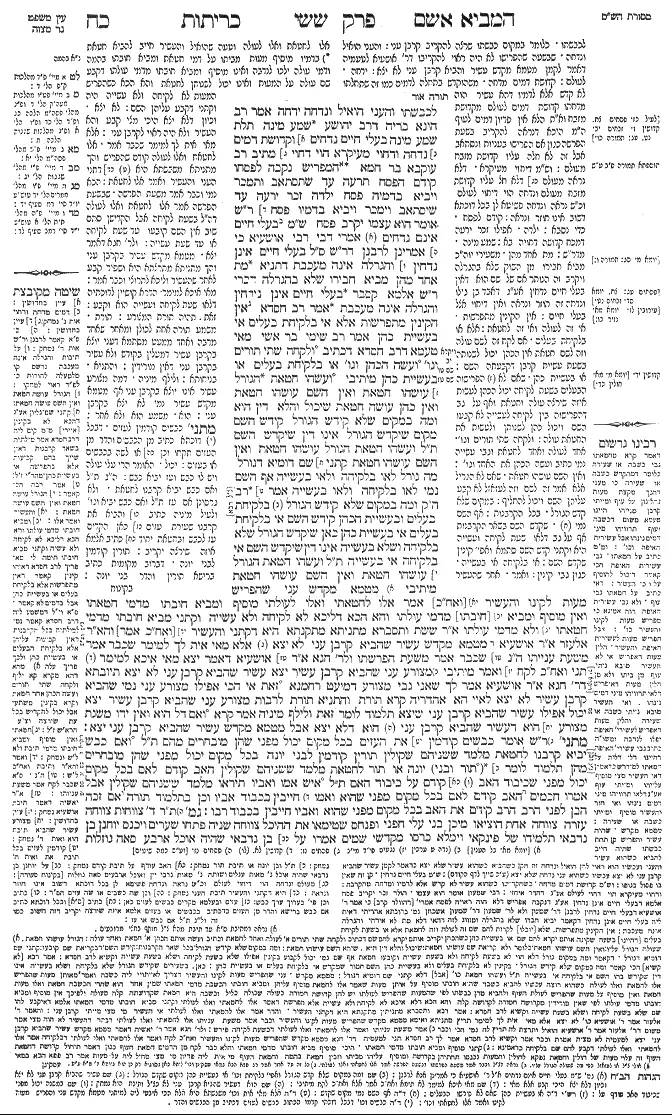
לכבשתו והעני הואיל ונדחה ידחה אמר רב הונא בריה דרב יהושע שמע מינה תלת שמע מינה בעלי חיים נדחים וקדושת דמים נדחה ודחוי מעיקרא הוי דחוי מתיב רב עוקבא בר חמא המפריש נקבה לפסחו קודם הפסח תרעה עד שתסתאב ותמכר ויביא בדמיה פסח ילדה זכר ירעה עד שיסתאב וימכר ויביא בדמיו פסח ר"ש אומר הוא עצמו יקרב פסח ש"מ בעלי חיים אינם נדחים אמרי דבי רבי אושעיא כי אמרינן לרבנן דר"ש ס"ל בעלי חיים אינן נדחין והגרלה אינה מעכבת דתניא מת אחד מהן מביא חבירו שלא בהגרלה דברי ר"ש אלמא קסבר בעלי חיים אינן נידחין והגרלה אינה מעכבת אמר רב חסדא אין הקינין מתפרשות אלא אי בלקיחת בעלים אי בעשיית כהן אמר רב שימי בר אשי מאי טעמא דרב חסדא דכתיב (ויקרא יב, ח) ולקחה שתי תורים וגו' (ויקרא טו, ל) ועשה הכהן וגו' או בלקיחת בעלים או בעשיית כהן מיתיבי (ויקרא טז, ט) ועשהו חטאת הגורל עושהו חטאת ואין השם עושהו חטאת ואין כהן עושה חטאת שיכול והלא דין הוא ומה במקום שלא קידש הגורל קידש השם מקום שיקדש הגורל אינו דין שיקדש השם ת"ל ועשהו חטאת הגורל עושהו חטאת ואין השם עושהו חטאת קתני שם דומיא דגורל מה גורל לאו בלקיחה ולאו בעשייה אף השם נמי לאו בלקיחה ולאו בעשייה אמר רב ה"ק ומה במקום שלא קידש הגורל בלקיחת בעלים ובעשיית הכהן קידש השם אי בלקיחת בעלים אי בעשיית כהן כאן שיקדש הגורל שלא בלקיחה ושלא בעשייה אינו דין שיקדש השם אי בלקיחה אי בעשייה ת"ל ועשהו חטאת הגורל עושהו חטאת ואין השם עושהו חטאת מיתיבי מטמא מקדש עני שהפריש מעות לקינו והעשיר אמר אלו לחטאתי ואלו לעולתי מוסיף ומביא חובתו מדמי חטאתו ואין מוסיף ומביא מדמי עולתו והא הכא דליכא לא לקיחה ולא עשייה וקתני מביא חובתו מדמי חטאתו ולא מדמי עולתו א"ר ששת ותסברא מתניתא מתקנתא היא דקתני והעשיר והא"ר אלעזר א"ר אושעיא מטמא מקדש עשיר שהביא קרבן עני לא יצא אלא מאי אית לך למימר שכבר אמר משעת ענייתו ה"נ שכבר אמר משעת הפרשתו ולר' חגא א"ר אושעיא דאמר יצא מאי איכא למימר תני ואח"כ לקח ואמר מיתיבי מצורע עני שהביא קרבן עשיר יצא עשיר שהביא קרבן עני לא יצא תיובתא דר' חגא א"ר אושעיא אמר לך שאני גבי מצורע דמיעט רחמנא (ויקרא יד, ב) זאת אי הכי אפילו מצורע עני נמי שהביא קרבן עשיר לא יצא לאיי הא אהדריה קרא תורת והתניא תורת לרבות מצורע עני שהביא קרבן עשיר יצא יכול אפילו עשיר שהביא קרבן עני שיצא תלמוד לומר זאת ולילף מיניה אמר קרא (ויקרא יד, כא) ואם דל הוא ואין ידו משגת מצורע הוא דעשיר שהביא קרבן עני הוא דלא יצא אבל מטמא מקדש עשיר שהביא קרבן עני יצא:
מתני׳ ר"ש אומר כבשים קודמין את העזים בכל מקום יכול מפני שהן מובחרים מהם ת"ל (ויקרא ד, לב) ואם כבש יביא קרבנו לחטאת מלמד ששניהם שקולין תורין קודמין לבני יונה בכל מקום יכול מפני שהן מובחרים מהן תלמוד לומר ((ויקרא יב, ו) תור ובני) יונה או תור לחטאת מלמד ששניהם שקולין האב קודם לאם בכל מקום יכול מפני שכיבוד האב קודם על כיבוד האם ת"ל (ויקרא יט, ג) איש אמו ואביו תיראו מלמד ששניהם שקולין אבל אמרו חכמים האב קודם לאם בכל מקום מפני שהוא ואמו חייבין בכבוד אביו וכן בתלמוד תורה אם זכה הבן לפני הרב הרב קודם את האב בכל מקום מפני שהוא ואביו חייבין בכבוד רבו:
גמ׳ ת"ר ד' צווחות צווחה עזרה צווחה אחת הוציאו מיכן בני עלי חפני ופנחס שטימאו את ההיכל צווחה שניה פתחו שערים ויכנס יוחנן בן נדבאי תלמידו של פינקאי וימלא כרסו מקדשי שמים אמרו על בן נדבאי שהיה אוכל ארבע סאה גוזלות
Comments from Rashi on Masechet Keritot Page 28a
לכבשתו . כלומר במקום כבשתו שרצה להקריב קרבן עני: והעני הואיל ונדחה . שבשעה שהפרישו לא היה ראוי להקריבו דר' אושעיא לטעמיה דאמר לקמן מטמא מקדש עשיר והביא קרבן עני לא יצא: ידחה . לעולם: קדושת דמים מדחה . משהוקדש בתחלה לדמים כמו זה שתחלתו לא קדש אלא לדמיו דהא עשיר הוה מדחתו קדושת דמים לעולם מקדושת מזבח. וא"ת הלא אין פדיון דמים לעוף ה"מ היכא דנראה להקריב בשעת הפרשה כגון אם הפרישו בעניות ונסתאב אבל זה לא חלה עליו קדושת מזבח מעולם: וש"מ דיחוי מעיקרא . דלא נראה מעולם דלא חל עליו קדושת מזבח מעולם ונדחה הוי דיחוי לעולם וכ"ש נראה ונדחה פשיטא לן בכל דוכתא דשוב אינו חוזר ונראה: קודם לפסח . כדי נסבא: ילדה . אפילו זכר ירעה דמכח קדושה דחויה בא: שמע מינה . מדר"ש: מת אחד מהן . משעירי יוה"כ מביא חבירו מן השוק שלא בהגרלה ויקרב זה הנותר אם של שם הוא דאין בעלי חיים נדחין אע"ג דאבד בן גילו ונדחה זה חוזר ונראה ואין דיחוי אצל בעלי חיים: אין הקינין מתפרשות . אי זה לעולה ואי זה לחטאת: אלא או בלקיחת בעלים . אם לקח זה לשם עולה וזה לשם חטאת אין הכהן יכול לשנותה בשעת עשיית קרבן דקבעתה השם: או בעשיית כהן . שאם לא הפרישוה הבעלים בשעת לקיחה יכול הכהן לעשות איזה שירצה עולה וחטאת ואף על גב דהפרישוה בין לקיחה לעשייה לא קבעו השם ויכול כהן לשנותן ולעשות את החטאת עולה: ולקחה שתי תורים וגו' . אחד לעולה ואחד לחטאת וגבי עשייה נמי כתיב ועשה הכהן את האחד וגו': ואין השם עושהו חטאת . שאם לא הגריל אלא אמר זה לשם וזה לעזאזל לא קבע עליהן השם ויכול להחליף: במקום שלא קדש הגורל . בכל הקרבנות: אף השם נמי . שקדש השם בשאר הקרבנות אף על גב דלאו שעת לקיחה ועשייה היא וקתני קדש השם סתמא ואפי' קינין שקדש השם: אי בלקיחה אי בעשייה . כגון גבי קינין: ואמר . אחר שהעשיר אלו לחטאת ואלו לעולה וטעה שהואיל והעשיר חייב להביא חטאת בדמיו מוסיף מעות מביתו על דמי חטאת ומביא חובתו בהמה ודמי עולה ילכו לנדבה ואינו מוסיף ומביא חובתו מדמי עולתו דקבע שם עולה על המעות ואינו יכול לשנותן לחטאת. והא הכא כשהפריש המעות לא לקיחה ולא עשייה היה וקתני דקבע עליהן השם: לא יצא . וכיון דלא יצא היכי מצי קבע והא העשיר ולא היה ראוי לקרבן עני: אלא מאי אית לך למימר שכבר אמר . אלו לחטאת ואלו לעולה קודם שהפריש והך מתניתא משבשתא היא דתני העני והעשיר ואמר אלו לחטאת: הכא נמי וכבר אמר משעת הפרשה . שבשעת הפרשה אמר אלו לחטאת ואלו לעולה דה"ל בשעת לקיחה אבל הקדישן סתם שוב אין השם קובעו עד שעת לקיחה או עד שעת עשייה: ולר' חגא דאמר יצא . מטמא מקדש עשיר בקרבן עני והך מתניתא מתרצתא היא ושפיר קבע לאחר שהעשיר וליכא לתרוצי וכבר אמר: מאי איכא למימר . הדרא קושיין לדוכתיה דלאו שעת לקיחה ועשייה הוא וקבע: זאת . תהיה תורת המצורע: תורת . משמע תורה אחת לכולן ומאחר שאחד מרבה ואחד ממעט מסתמא דעני יוצא בקרבן עשיר דמעלין בקודש ולא עשיר בקרבן עני דאין מורידין: והתניא . בניחותא: ולילף מיניה . דמה מצורע עשיר אינו יוצא בקרבן עני אף מטמא מקדש עשיר נמי לא יצא בקרבן עני: הוא . משמע הוא ולא אחר: מתני' כבשים קודמין לעזים . דבכל דוכתא כתיב מן הכבשים והדר מן העזים תקחו וכן או לשה בכבשים או בעזים: יכול . האומר הרי עלי עולה ויש לו כבש ועז יביא כבש: ה"ג ת"ל ואם כבש יביא קרבנו לחטאת ולא גרסינן אם עז: ת"ל ואם כבש יביא וגו' . ולעיל מיניה כתיב והביא את קרבנו שעירת עזים כאן הקדים עז לכבש ובחטאת יחיד כתיב. אלמא איזה שירצה יקריב: תורין קודמין לבני יונה . דברוב מקומות כתיב ברישא תורין והדר בני יונה:
Keritot 28a - Mishnah translated into english
instead of a female lamb, and he then became poorer, a bird pair is now the appropriate offering for him. Nevertheless, since his offering was disqualified at the outset because at that time he was obligated to bring a female lamb, it is permanently disqualified.
Rav Huna, son of Rav Yehoshua, said: One can conclude from this ruling three halakhot. Conclude from it that consecrated living animals can be permanently disqualified even if the animal is unblemished, as is the case with regard to this pair of birds. And conclude from it that when there is sanctity that inheres in an animal’s value, where the consecrated item will not be sacrificed as an offering, it can be disqualified. When he was wealthy and designated the bird pair as his offering, the two birds were consecrated only with sanctity that inheres in their value because they were unfit for sacrifice, and yet the birds were permanently disqualified.
And finally, conclude from this that a disqualification at the outset, when the animal is initially consecrated, is considered a permanent disqualification. Not only is an animal that was initially fit to be sacrificed and was later disqualified permanently disqualified, but even in a case such as this, where the birds were unfit for sacrifice from the beginning, the disqualification is permanent.
Rav Ukva bar Ḥama raises an objection from a baraita (Tosefta, Temura 2:3): With regard to one who designates a female animal for his Paschal offering before Passover, since the Paschal offering must be a male it is left to graze until it becomes blemished, at which point it is sold and one brings a Paschal offering with the money received from its sale. Similarly, if this animal gave birth to a male animal, the offspring is left to graze until it becomes blemished, at which point it is sold and one brings a Paschal offering with the money received from its sale.
Rabbi Shimon says: It is not necessary to sell the offspring in such a case, as the offspring itself is sacrificed as a Paschal offering. Conclude from this statement of Rabbi Shimon that consecrated living animals are not permanently disqualified, as the mother was unfit to be a Paschal offering and yet the offspring, which is an extension of the mother’s sanctity, is fit for sacrifice.
The school of Rabbi Oshaya say: When we say that consecrated living animals can be permanently disqualified, this applies according to the opinion of the Rabbis, who maintain that the offspring is not sacrificed. Nevertheless, it is correct that Rabbi Shimon holds that consecrated living animals are not permanently disqualified.
And Rabbi Shimon likewise maintains that the drawing of the lots for the two goats on Yom Kippur to decide which goat is designated as a sacrifice and which is designated as the scapegoat, is not indispensable. As it is taught in a baraita: If one of the goats died following their designation, one brings another goat instead of it, and it is designated without drawing lots. The surviving goat is still used for the purpose for which it was designated by the lot; this is the statement of Rabbi Shimon.
Evidently, Rabbi Shimon holds: Consecrated living animals are not permanently disqualified. Although the surviving goat was disqualified when the other goat died, it is once again fit when a new goat is designated as its partner. And Rabbi Shimon also holds that the drawing of the lots is not indispensable, as the new goat was designated without drawing lots.
§ Rav Ḥisda says: Nests, i.e., pairs of birds, are designated,one as a burnt offering and one as a sin offering, only in the following manner: Either by the owner at the time of purchase or, if the owner did not designate the birds at that stage, by the priest at the time of sacrifice.
Rav Shimi bar Ashi said: What is the reason of Rav Ḥisda? As it is written with regard to the offering of a woman after childbirth: “And she shall purchase two doves or two pigeons, one for a burnt offering and the other for a sin offering” (Leviticus 12:8). And with regard to the offering of a leper it is written: “And the priest shall sacrifice the one for a sin offering, and the other for a burnt offering” (Leviticus 15:30). Together, these verses indicate that one bird is designated as a burnt offering and the other as a sin offering either by the owner at the time of purchase or by the priest at the time of sacrifice.
The Gemara raises an objection from a baraita in the Sifra that discusses the drawing of lots for the two goats of Yom Kippur. The verse states: “Aaron shall bring forward the goat upon which the lot came up for the Lord, and he shall sacrifice it for a sin offering” (Leviticus 16:9). This teaches that the drawing of the lot renders it a sin offering, but verbally designating the name of the goat does not render it a sin offering, and likewise the act of the priest, placing the lot on the goat, does not render it a sin offering.
A verse is required to teach this halakha, as one might have come to the opposite conclusion: Could this not be derived through an a fortiori inference, as follows: And if in a case where the drawing of a lot does not sanctify an animal with a specific designation, e.g., a woman after childbirth, who cannot determine by lot the status of the two birds she must bring, one as a sin offering and one as a burnt offering, nevertheless, in such a case a verbal designation of the name does sanctify with a specific designation; is it not logical in a case where the drawing of a lot sanctifies an animal with a specific designation, i.e., the two goats of Yom Kippur, that verbally designating the name should sanctify it with a specific designation?
The baraita concludes: Therefore the verse states, with regard to one of the two goats of Yom Kippur: “He shall sacrifice it for a sin offering,” to teach that the drawing of the lot renders it a sin offering, but verbally designating the name of the goat does not render it a sin offering.
The Gemara explains the objection: The baraita teaches that verbally designating the name of an offering is similar to drawing a lot. If so, one can reason as follows: Just as the drawing of a lot is not performed at the time of purchase nor at the time of sacrifice, so too verbal designation of the name also does not have to be performed at the time of purchase nor at the time of sacrifice. This contradicts the opinion of Rav Ḥisda.
Rav said that this is what the baraita is saying: And if in a place where the drawing of a lot, either by the owner at the time of purchase or by the priest at the time of sacrifice, does not sanctify an animal with a specific designation, and nevertheless a verbal designation of the name, either by the owner at the time of purchase or by the priest at the time of sacrifice, does sanctify it with a specific designation; here, with regard to the two goats, where the drawing of a lot that does not take place at the time of purchase nor at the time of sacrifice sanctifies the animal with a specific designation, is it not logical that verbally designating the name, either at the time of purchase or at the time of sacrifice, should sanctify it with a specific designation?
Therefore, the verse states: “He shall sacrifice it for a sin offering,” to teach that drawing the lot renders it a sin offering, but verbally designating the name of the goat does not render it a sin offering.
The Gemara raises another objection to the opinion of Rav Ḥisda from a baraita: In the case of a poor person who defiles the Temple, i.e., he entered the Temple while ritually impure, who designated money for his nest, as he is required to bring one bird as a sin offering and another bird as a burnt offering, and he then became wealthier, he is now obligated to bring a female lamb or goat as a sin offering.
If he was unaware that he is no longer obligated to bring a pair of birds, and he says: This money is for my sin offering and this money is for my burnt offering, which is an error, as he is not obligated to bring a burnt offering, he adds more money and brings his obligation of a lamb or goat for his sin offering from the money designated for his sin offering. But he may not add more money and bring his obligation of a sin offering from the money designated for his burnt offering, as one may not use money that is designated for a burnt offering for the purchase of a sin offering.
The Gemara explains the objection: But here, the baraita is dealing with a case where he said: This money is for my sin offering and that money is for my burnt offering, which means that he designated the money at a stage that was not the time of purchase nor the time of sacrifice; and yet the baraita teaches that the designation is established and therefore he brings his obligation of a sin offering from the money designated for a sin offering but not from the money designated for a burnt offering.
Rav Sheshet said: And can you understand that this baraita is properly explained, i.e., the baraita as it stands is difficult, as it teaches: He became wealthier and said: This money is for my sin offering and this money is for my burnt offering. But this is difficult, as doesn’t Rabbi Elazar say that Rabbi Oshaya says: A wealthy person who defiles the Temple, i.e., he entered the Temple while ritually impure,who brought the offering of a poor person to atone for his transgression has not fulfilled his obligation. Since he cannot fulfill his obligation with that offering, how can his designation permanently establish the status of the money?
Rather, what have you to say? You must say that the baraita is referring to a case where he already said: This money is for my sin offering and this money is for my burnt offering, at the time when he was poor. So too, it is referring to a case where he already said it even earlier, at the time when he designated the money, and therefore there is no difficulty for Rav Ḥisda.
The Gemara asks: But according to Rabbi Ḥagga, who says that Rabbi Oshaya says that a wealthy person who brings the offering of a poor person has fulfilled his obligation, what can be said? According to this opinion, there is no inherent difficulty in the baraita that necessitates Rav Sheshet’s interpretation, and therefore that baraita apparently contradicts Rav Ḥisda’s ruling. The Gemara answers that one should teach the baraita as follows: And after he became wealthier, he purchased animals and said at the time of purchase: This is designated as my sin offering and this as my burnt offering.
With regard to the dispute between Rabbi Elazar and Rabbi Ḥagga in the case of a wealthy person who brings the offering of a poor person, the Gemara raises an objection from a baraita: A poor leper who brought the offering of a wealthy person has fulfilled his obligation. By contrast, a wealthy leper who brought the offering of a poor person has not fulfilled his obligation. This is apparently a conclusive refutation of the opinion that Rabbi Ḥagga says that Rabbi Oshaya says.
The Gemara explains that Rabbi Ḥagga could have said to you: The halakha is different with regard to a wealthy leper, as the Merciful One excluded the possibility of a wealthy person bringing the offering of a poor person in the verse: “This shall be the law of the leper” (Leviticus 14:2). The emphasis of “this” teaches that a leper fulfills his obligation only with the appropriate offering.
The Gemara objects: If so, that this halakha is derived from a verse, then even in the case of a poor leper who brings the offering of a wealthy person as well, he should not fulfill his obligation. The Gemara rejects that suggestion: This is not so, as the verse returned to state: “This shall be the law of the leper,” which includes a leper who brings an inappropriate offering. As it is taught in a baraita that the phrase “the law of the leper” serves to include a poor leper who brought the offering of a wealthy person, that he has fulfilled his obligation. One might have thought that even in the case of a wealthy leper who brought the offering of a poor person, he has fulfilled his obligation. Therefore, the verse states: “This shall be the law.”
The Gemara raises a difficulty: But why not derive a principle from that verse that with regard to any sliding-scale offering, a wealthy person who brings a poor person’s offering has not fulfilled his obligation? The Gemara answers: With regard to a leper the verse states: “And if he is poor and cannot afford” (Leviticus 14:21). The emphasis of “he” teaches that it is only with regard to a leper that a wealthy person who brought a poor person’s offering has not fulfilled his obligation. But in the case of one who defiles the Temple, i.e., he entered the Temple while ritually impure, a wealthy person who brought a poor person’s offering has fulfilled his obligation.
MISHNA: Rabbi Shimon says: Lambs precede goats almost everywhere in the Torah that they are both mentioned, as in the verse: “You shall take it from the lambs or from the goats” (Exodus 12:5). One might have thought that it is due to the fact that sheep are more select than goats. Therefore, the verse states: “And he shall bring for his offering a goat” (Leviticus 4:28), after which it is written: “And if he bring a lamb as his offering for a sin offering” (Leviticus 4:32), which teaches that both of them are equal.
Similarly, doves precede pigeons almost everywhere in the Torah, as in the verse: “And he shall bring his guilt offering…two doves, or two pigeons” (Leviticus 5:7). One might have thought that it is due to the fact that doves are more select than pigeons. Therefore, the verse states: “And a pigeon or a dove for a sin offering” (Leviticus 12:6), with the usual order reversed, which teaches that both of them are equal.
Likewise, mention of the father precedes that of the mother almost everywhere in the Torah, as in the verse: “Honor your father and your mother” (Exodus 20:12). One might have thought that it is due to the fact that the honor of the father takes precedence over the honor of the mother. Therefore, the verse states: “Every man shall fear his mother and his father” (Leviticus 19:3), with the order reversed, which teaches that both of them are equal. But the Sages said: Honor of the father takes precedence over honor of the mother everywhere, due to the fact that both the son and his mother are obligated in the honor of his father.
And likewise with regard to Torah study, if the son was privileged to acquire most of his Torah knowledge from studying before the teacher, honor of the teacher takes precedence over honor of the father, due to the fact that both the son and his father are obligated in the honor of his teacher, as everyone is obligated in the honor of Torah scholars.
GEMARA: With regard to the mishna’s discussion of lambs and goats, the Sages taught in a baraita: The Temple courtyard cried four cries. The first cry was: Remove Ḥofni and Pineḥas the sons of Eli the priest from here, as they have rendered the Sanctuary in Shiloh impure (see I Samuel 4:13–22).
The second cry was: Open the gates, and let Yoḥanan ben Nedavai, the student of Pinkai, enter and fill his belly with meat of offerings consecrated to Heaven, as he is worthy to eat offerings. They said about ben Nedavai that he would eat four se’a of doves
Traduction : The William Davidson digital edition of the Koren Noé Talmud, with commentary by Rabbi Adin Even-Israel Steinsaltz.