 Talmud Bavli
The learning on the whole site is dedicated : L'ilui Nishmat Rav Chlomo Ben Jamilla
The learning on the whole site is dedicated : L'ilui Nishmat אליעזר בן רחל
The learning on the whole site is dedicated : L'ilui Nishmat Margalit bat Ledicia
No video class on this page yet.
To add a video to this page please click here.Keritot Page 17b
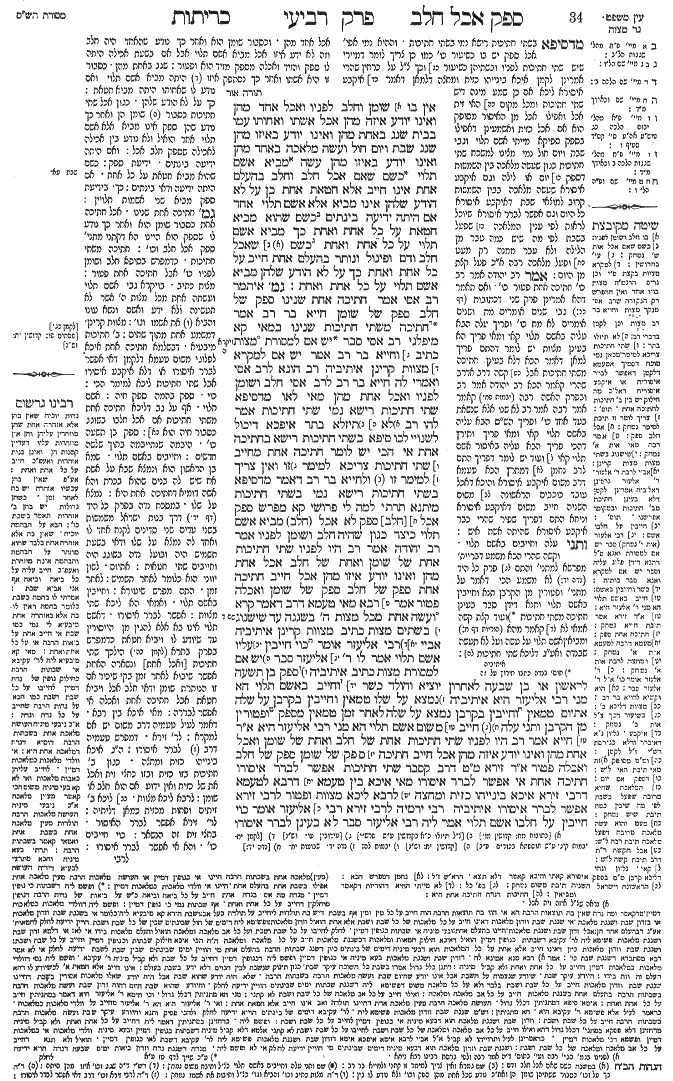
Keritot 17b - Guemara
אין בו שומן וחלב לפניו ואכל אחד מהן ואינו יודע איזה מהן אכל אשתו ואחותו עמו בבית שגג באחת מהן ואינו יודע באיזו מהן שגג שבת ויום חול ועשה מלאכה באחד מהן ואינו יודע באיזו מהן עשה מביא אשם תלוי כשם שאם אכל חלב וחלב בהעלם אחת אינו חייב אלא חטאת אחת כן על לא הודע שלהן אינו מביא אלא אשם תלוי אחד אם היתה ידיעה בינתים כשם שהוא מביא חטאת על כל אחת ואחת כך מביא אשם תלוי על כל אחת ואחת כשם שאכל חלב ודם ופיגול ונותר בהעלם אחת חייב על כל אחת ואחת כך על לא הודע שלהן מביא אשם תלוי על כל אחת ואחת:
גמ׳ איתמר רב אסי אמר חתיכה אחת שנינו ספק של חלב ספק של שומן חייא בר רב אמר חתיכה משתי חתיכות שנינו במאי קא מיפלגי רב אסי סבר יש אם למסורת (ויקרא ה, יז) מצות כתיב וחייא בר רב אמר יש אם למקרא מצוות קרינן איתיביה רב הונא לרב אסי ואמרי לה חייא בר רב לרב אסי חלב ושומן לפניו ואכל אחת מהן מאי לאו מדסיפא שתי חתיכות רישא נמי שתי חתיכות אמר להו רב לא תיזלא בתר איפכא דיכול לשנויי לכו סיפא בשתי חתיכות רישא בחתיכה אחת אי הכי יש לומר חתיכה אחת מחייב שתי חתיכות צריכא למימר זו ואין צריך למימר זו ולחייא בר רב דאמר מדסיפא בשתי חתיכות רישא נמי בשתי חתיכות מיתנא תרתי למה לי פרושי קא מפרש ספק אכל ספק לא אכל חלב מביא אשם תלוי כיצד כגון שהיה חלב ושומן לפניו אמר רב יהודה אמר רב היו לפניו שתי חתיכות אחת של שומן ואחת של חלב אכל אחת מהן ואינו יודע איזו מהן אכל חייב חתיכה אחת ספק של חלב ספק של שומן ואכלה פטור אמר רבא מאי טעמא דרב דאמר קרא (ויקרא ד, כב) ועשה אחת מכל מצות ה' בשגגה עד שישגוג בשתים מצות כתיב מצוות קרינן איתיביה אביי רבי אליעזר אומר כוי חייבין עליו אשם תלוי אמר לו ר' אליעזר סבר יש אם למסורת מצות כתיב איתיביה ספק בן תשעה לראשון או בן שבעה לאחרון יוציא והולד כשר וחייב באשם תלוי הא מני רבי אליעזר היא איתיביה נמצא על שלו טמאין וחייבין בקרבן על שלה אתיום טמאין וחייבין בקרבן נמצא על שלה לאחר זמן טמאין מספק ופטורין מן הקרבן ותני עלה חייב משום אשם תלוי הא מני רבי אליעזר היא א"ר חייא אמר רב היו לפניו שתי חתיכות אחת של חלב ואחת של שומן ואכל אחת מהן ואינו יודע איזה מהן אכל חייב חתיכה ספק של שומן ספק של חלב ואכלה פטור א"ר זירא מ"ט דרב קסבר שתי חתיכות אפשר לברר איסורו חתיכה אחת אי אפשר לברר איסורו מאי איכא בין טעמא דרבא לטעמא דרבי זירא איכא בינייהו כזית ומחצה לרבא ליכא מצוות ופטור לרבי זירא אפשר לברר איסורו איתיביה רבי ירמיה לרבי זירא רבי אליעזר אומר כוי חייבין על חלבו אשם תלוי אמר ליה רבי אליעזר סבר לא בעינן לברר איסורו
Comments from Rashi on Masechet Keritot Page 17b
אכל אחד מהן . וכסבור שומן הוא ואחר כך נודע שהאחד היה חלב וזה לא ידע איזו אכל מביא אשם תלוי אבל אם בשעת אכילה היתה לו ספק והזיד ואכלה מספק מזיד הוא ופטור: שגג באחת מהן . כסבור זו היא אשתו ואחר כך נסתפק איזו היתה מביא אשם תלוי ואם נודע לו שאחותו היתה מביא חטאת: כך על לא הודע שלהן . כגון אכל שתי חתיכות כסבור שומן הן ואחר כך נודע שהן ספק אינו מביא אלא אשם תלוי אחד הואיל ולא נודע בין אכילה לאכילה שספק חלב אכל: ואם היתה ידיעה בינתים . ידיעת ספק: כשם שהוא מביא חטאת על כל אחת . אם היתה ידיעה ודאי בינתים: כך . בידיעת ספק מביא שני אשמות תלויין: גמ' חתיכה אחת שנינו . אכל חתיכה אחת כסבור שומן הוא ואחר כך נודע לו שספק הוא היינו הא דקתני מתני' ספק אכל חלב וכו': חתיכה משתי חתיכות . כדמפרש בסיפא חלב ושומן לפניו כו' אבל חתיכה אחת פטור: מצות כתיב . בויקרא גבי אשם תלוי ועשתה אחת מכל מצות ה' אשר לא תעשינה ולא ידע ואשם ונשא עונו והביא את אשמו וגו': מצוות קרינן . דמשמע אחת מתוך שתים: ב' חתיכות מיבעיא . דבשלמא חתיכה אחת איכא לפלוגי משום טעמא דלקמן דאי אפשר לברר איסורו או דלא איקבע איסורו אבל שתי חתיכות ליכא למימר הכי: כוי . ספק בהמה ספק חיה: אשם תלוי . אף על גב דליכא חתיכה אחת משתי חתיכות אם אכל חלבו בשוגג כסבור חיה הוא: ספק בן תשעה כו' . היבמה שנתייבמה בתוך שלשה חדשים: וחייבים באשם תלוי . שמא בן הראשון הוא ונמצא שבא על אשת אח שיש לה בנים שהוא בכרת והא אשה דומיא דחתיכה אחת היא: נמצא על שלו . במסכת נדה בפרק כל היד (דף יד.) דרך בנות ישראל משמשות בשני עדים שני סדינים לקנח אחד לו ואחד לה נמצא על שלו ודאי בשעת תשמיש היה ובועל נדה בשוגג הוה וחייבים שתי חטאות: אתיום . לשון יווני הוא. כלומר לאחר תשמיש: לאחר זמן . התם מפרש שיעורא: וחייבין באשם תלוי . ואמאי הא ליכא שתי מצוות: אפשר לברר איסורו . דאשם תלוי אינו בא אלא להגין מן הייסורין עד שיוודע לו ויביא חטאת כדמפרש בפרק בתרא (לקמן כריתות כה.) הילכך שתי חתיכות [ואכל אחת] ונשארה האחת אפשר שיבוא לאחר זמן בקי שיכיר אם זו הנותרת שומן ודאי חלב אכל ויביא חטאת אבל חתיכה אחת ואכלה אי אפשר לבררה: מאי איכא בין רבא . דאמר לעיל טעמיה דרב משום יש אם למקרא: לר' זירא . דמפרש טעמיה דרב לברר איסורו: ה"ג איכא בינייהו כזית ומחצה . כגון ב' חתיכות בזו כזית ובזו כחצי זית ואכל את של כזית ואין ידוע אם הוא חלב או שומן: לרבא ליכא מצוות . ליכא ב' זיתים ופחות מכזית כמאן דליתיה: לר' זירא אפשר לברר האיסור . בחצי זית זה הנשאר: כוי חייבים כו' . והא אי אפשר לברר איסורו:
Comments from Tosafot - Keritot 17b
מדסיפא בשתי חתיכות רישא נמי בשתי חתיכות . וההיא נמי אפי' אכל ספק יש בו כשיעור כו' כמו כן צריך לומר דמיירי שיש שתי חתיכות לפניו ובשתיהן כשיעור וכך צ"ל על כרחין שהרי אמרינן לקמן איכא בינייהו כזית ומחצה דלמאן דאמר איקבע איסורא ליכא אם כן שמע מינה דיש שתי חתיכות ומכל מקום האי זית אכל ואפילו אכל מן האיסור מסופק הוא אם אכל כזית ואשמעינן דאפילו בספק ספיקא מייתי אשם תלוי וגבי שבת ויום חול נמי מצינו למשכח שתי חתיכות כגון שעשה מלאכה בין השמשות דספק יום או לילה וגם איקבע איסורא שעשה מלאכה בבין השמשות קרוב למוצאי שבת דאיקבע איסורא כל היום וגם אפשר לברר איסורא שיוכל לראות לפי ענין המלאכה שפעל בשבת לפי מה שיש כמה עבר מן הלילה ולא עבר ממנה רק מעט ופעל מלאכה רבה א"כ פעל קצת מן היום: אמר רב יהודה אמר רב כו' חתיכה אחת פטור כו' . ואם תאמר דהא אמרינן פרק שני דכתובות (דף כב:) גבי שנים אומרים מת ושנים אומרים לא מת כו' ופריך עלה הבא עליה באשם תלוי קאי ומאי פריך הא בעינן מצוות יש לומר דהתם פריך למאן דאמר הכא דלא בעינן חתיכה משתי חתיכות אבל קשה דרב אדרב שהרי קאמר הכא רב יהודה אמר רב ובפרק האשה רבה (יבמות פח.) קאמר אמר רבה אמר רב לא שנו אלא שנשאת בעד אחד כו' ופריך הש"ס הבא עליה באשם תלוי קאי ומאי פריך ותירץ דהכי פריך הבא עליה באיסור אשם תלוי קאי ועוד יש לומר דפריך התם לרב נחמן דמתרץ הכא טעמא דרב משום איקבע איסורא והיכא דאכל עובד כוכבים הראשונה משום השניה חייב משום דאיקבע איסורא וניחא התם דפריך שפיר שהרי כבר איקבע איסורא שהיתה אשת איש: איתיביה אביי . כל הנך פירכי מצי למיפרך לעיל לחייא בר רב: ותני עלה וחייבים באשם תלוי . וקשה שהרי הכא משמע דבריית' מפרשא למתני' והתם פרק כל היד (נדה יד:) לא משמע הכי דאמר על מתני' ופטורין מן הקרבן תנא וחייבין באשם תלוי ותנא דידן סבר בעינן חתיכה משתי חתיכות ועוד קצת קשה אמאי לא קאמר מהא (הוריות דף ח:) ומביאין אשם תלוי על עשה ועל לא תעשה שבנדה ואע"ג דליכא שתי חתיכות:
Keritot 17b - Mishnah translated into english
whether there is not the measure that determines liability in the piece he ate, he must bring a provisional guilt offering.
If one has a piece of permitted fat and a piece of forbidden fat before him and he ate one of them and he does not know which of them he ate; or if his wife and his sister were with him in the house and he unwittingly engaged in intercourse with one of them and he does not know with which of them he unwittingly engaged in intercourse; or if he confused Shabbat and a weekday and he performed labor prohibited on Shabbat on one of the days and he does not know on which of them he performed the labor, in all of those cases he is liable to bring a provisional guilt offering.
Just as in a case where one unknowingly ate a piece of forbidden fat and then another piece of forbidden fat in a single lapse of awareness he is liable to bring only one sin offering, so too, in a case where their status is unknown to him and he ate them both unwittingly during a single lapse in awareness, he is liable to bring only one provisional guilt offering.
But if he had gained knowledge between the first and second instance of eating that there is a possibility the fat might be prohibited, then the halakha is different: Just as he would be liable to bring a sin offering for each and every piece when he gained knowledge of their prohibited status in between each act of consumption, so too, he must bring a provisional guilt offering for each and every instance in which he consumed food that might be forbidden after learning of their uncertain status in between each unwitting act of consumption.
Just as in a case where one ate forbidden fat, and blood, and piggul, and notar in one lapse of awareness he is liable to bring a sin offering for each and every one, so too, with regard to a case where their status is unknown to him and he ate them unwittingly during one lapse of awareness, he must bring a provisional guilt offering for each and every item.
GEMARA: With regard to the mishna’s mention of one who ate a piece of fat whose status was uncertain, it was stated that Rav Asi says: We learned that one is liable to bring a provisional guilt offering in the case of one single piece that is uncertain if it is of forbidden fat and uncertain if it is of permitted fat. Ḥiyya bar Rav disagreed and said: We learned this halakha in the case of an uncertainty involving one piece out of two pieces, one of which is forbidden fat and the other permitted fat, but in the case of a single piece, one who consumes it is not liable to bring an offering.
The Gemara inquires: With regard to what matter do Rav Asi and Ḥiyya bar Rav disagree? The Gemara answers: It is stated in a verse discussing the obligation to bring a provisional guilt offering: “And if anyone sin, and do any of the commandments [mitzvot] of the Lord that are not to be done, though does not know it; yet is he guilty, and shall bear his iniquity” (Leviticus 5:17). Rav Asi holds: The tradition of the manner in which the verses in the Torah are written is authoritative, and one derives halakhot based on the spelling of the words. Therefore, the obligation to bring a provisional guilt offering applies only when there is uncertainty with regard to a single piece, because the word is written as “mitzvat,” in the singular form.
And Ḥiyya bar Rav says: The vocalization of the Torah is authoritative, meaning that one derives halakhot based on the pronunciation of the words, even if it diverges from the spelling. Therefore, since we read the word in the plural, as mitzvot, the obligation to bring a provisional guilt offering applies only when two pieces are present.
Rav Huna raised an objection to Rav Asi, and some say it was Ḥiyya bar Rav who raised the objection to Rav Asi: The latter clause in the mishna states: If one has a piece of permitted fat and a piece of forbidden fat before him and he ate one of them. What, is it not correct to infer from the fact that the latter clause of the mishna is referring to two pieces that the first clause, which introduces the topic, is also referring to two pieces?
Rav said to them: Do not go after the opposite, i.e., do not cite a proof from a source that could be understood in the reverse manner, as Rav Asi can answer you by claiming that whereas the latter clause is referring to two pieces, the first clause is referring to one piece. The Gemara questions this claim: If so, one can say that once the mishna has taught that the consumption of one piece of fat that might be forbidden renders him obligated to bring a provisional guilt offering, does it need to be said that the same applies in a case involving two pieces, where one of them is definitely forbidden? The Gemara answers that the mishna is employing the style: This, and it is unnecessary to say that, i.e., it first teaches the more difficult and novel case, then teaches the easier, more straightforward one.
The Gemara asks: And according to the opinion of Ḥiyya bar Rav, who says that from the fact that the latter clause of the mishna is referring to two pieces, the first clause is also is referring two pieces, why do I need two clauses to teach the same halakha? The Gemara answers that the mishna is explaining itself, as follows: If there is uncertainty whether one ate forbidden fat and uncertainty whether one did not eat forbidden fat, he must bring a provisional guilt offering. How so? For example, in a case where there was forbidden fat and permitted fat before him, and he ate one of them.
§ The Gemara cites a series of virtually identical statements attributed to Rav, followed by different rationales for his opinion, after each of which it raises several objections from a baraita or a mishna. Rav Yehuda says that Rav says: In a case where one had two pieces of fat before him, one of permitted fat and one of forbidden fat, if he ate one of them and he does not know which of them he ate, he is obligated to bring a provisional guilt offering. But if there was only one piece before him and there was uncertainty whether it was of forbidden fat and uncertainty whether it was of permitted fat, and he ate it, he is exempt.
Rava said: What is the reason for the opinion of Rav? He derives it from that which the verse states: “And if anyone sin, and do any of the commandments [mitzvot] of the Lord that are not to be done, though he does not know it; yet is he guilty, and shall bear his iniquity” (Leviticus 4:22). Rav derives from the plural mitzvot that one is not liable to bring a provisional guilt offering until he is unwitting with regard to one of two items, which in this case is two pieces of fat. The Gemara asks: But isn’t it written “mitzvat,” in the singular form? The Gemara answers: We read it as mitzvot, in the plural. In other words, according to Rava, Rav maintains that the vocalization of the Torah is authoritative.
Abaye raised an objection to Rava from a baraita. Rabbi Eliezer says: With regard to a koy, a kosher animal with characteristics of both a domesticated animal and a non-domesticated animal, one is obligated to bring a provisional guilt offering for eating its fat. The prohibition of forbidden fats applies only to those of a domesticated animal; the corresponding fats are permitted in the case of a non-domesticated animal. Since a koy is of uncertain status, one must bring a provisional guilt offering for eating its fat. Evidently, one is liable to bring a provisional guilt offering even in a case where there was uncertainty involving a single item.
Rava said to Abaye: Rabbi Eliezer holds that the tradition of the manner in which the verses in the Torah are written is authoritative. Consequently, as the singular form “mitzvat” is written, he maintains that a provisional guilt offering must be brought in a case of uncertainty involving a single item, such as the fat of a koy.
The Gemara raised an objection to Rav from a baraita: If one consummates levirate marriage with his yevama and seven months later she gives birth, there is uncertainty whether the child is nine months old, i.e., counting from conception, and is the offspring of the first husband, which would mean the levirate bond did not take effect, or whether the child is only seven months old and is the offspring of the latter husband, i.e., the yavam, not the deceased, in which case the levirate bond did take effect. In such a situation, due to the possibility that she is forbidden to him as his brother’s wife, he must divorce her. But the offspring is of unflawed lineage, as whether it was born from the first or the second husband, its conception involved no transgression.
The baraita concludes: And to atone for the possibility that they engaged in forbidden intercourse they are each obligated to bring a provisional guilt offering. This indicates that one is obligated to bring a provisional guilt offering even when the uncertainty involves a single item. The Gemara answers: In accordance with whose opinion is this baraita? It is in accordance with the opinion of Rabbi Eliezer, who, as stated above, maintains that one is obligated to bring a provisional guilt offering for uncertainty involving a single item.
The Gemara raised another objection to Rav from a mishna (Nidda 14a): It is the custom of Jewish women to engage in intercourse with their husbands with two cloths, one for her husband to wipe himself with to see if any of her blood is on him after intercourse, and one for her to check herself to ascertain after intercourse whether her menstrual flow has begun. If after intercourse blood was found on his cloth, the woman and her husband are both ritually impure for seven days, in accordance with the halakha of a menstruating woman and a man who engages in intercourse with her, and they are each liable to bring a sin offering for unwittingly performing an action punishable by karet.
The mishna continues: If blood was found on her cloth immediately [otyom] after intercourse, the woman and her husband are likewise ritually impure for seven days and are each liable to bring a sin offering. If blood was found on her cloth after time passed, they are both impure due to uncertainty, as it is possible the blood appeared only after intercourse, and they are exempt from bringing the sin offering. And it is taught with regard to this last case in the mishna: They are each nevertheless liable to bring a provisional guilt offering. The Gemara again answers: In accordance with whose opinion is this mishna? It is in accordance with the opinion of Rabbi Eliezer.
§ Rabbi Ḥiyya says that Rav says: In a case where one had two pieces of fat before him, one of permitted fat and one of forbidden fat, and he ate one of them and he does not know which of them he ate, he is obligated to bring a provisional guilt offering. But if there was only one piece before him and there was uncertainty whether it was of permitted fat and uncertainty whether it was of forbidden fat, and he ate it, he is exempt.
Rabbi Zeira said: What is the reason for the ruling of Rav? He holds one is liable to bring a provisional guilt offering only in a case involving two pieces, as it is possible to identify its prohibition. As, an expert might later examine the remaining piece and determine whether or not one ate the prohibited piece. By contrast, in a case of uncertainty involving only one piece, it is impossible to identify its prohibition and ascertain whether one ate a forbidden or permitted piece of fat.
The Gemara asks: What difference is there between the reason given earlier by Rava for Rav’s ruling and the reason stated here by Rabbi Zeira? The Gemara answers: The difference between them is a case where there were two pieces before a person, one measuring an olive-bulk and the other measuring one-half of an olive-bulk. Since according to halakha a measure of less than an olive-bulk is of no relevance in such a case, it is considered as though only one piece is present before him.
The Gemara elaborates: According to Rava, who contends that Rav maintains that the plural vocalization of the Torah is authoritative, this is not a case of uncertainty involving two items, as required by the plural form mitzvot, and therefore he is exempt. By contrast, according to Rabbi Zeira, this is a case where it is possible to identify its prohibition by examining the remaining piece, and he is therefore obligated to bring a provisional guilt offering.
Rabbi Yirmeya raised an objection to Rabbi Zeira from a baraita. Rabbi Eliezer says: With regard to a koy, one is obligated to bring a provisional guilt offering for eating its fat. Evidently, one must bring a provisional guilt offering even in a case where the uncertainty involves only a single item. Rabbi Zeira said to Rabbi Yirmeya: Rabbi Eliezer holds we do not require a case where it is possible to identify its prohibition in order for one to be obligated to bring a provisional guilt offering.
Traduction : The William Davidson digital edition of the Koren Noé Talmud, with commentary by Rabbi Adin Even-Israel Steinsaltz.