 Talmud Bavli
The learning on the whole site is dedicated : L'ilui Nishmat Yaakov ben Myriam
The learning on the whole site is dedicated : L'ilui Nishmat אסתר בת חיים
The learning on the whole site is dedicated : L'ilui Nishmat יוסף בן מושה
Hagigah 11a : Youtube
Rabbi Dr. Moshe WeisblumYoutube
1 video class :
Hagigah Page 11a
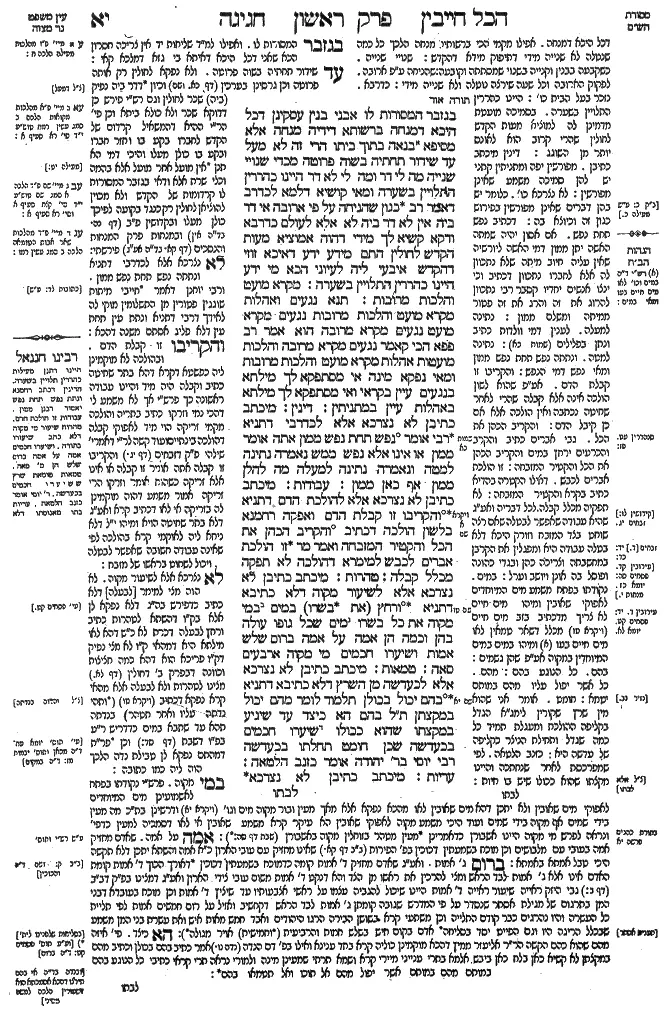
Hagigah 11a - Guemara
בגזבר המסורות לו אבני בנין עסקינן דכל היכא דמנחה ברשותא דידיה מנחה אלא מסיפא בנאה בתוך ביתו הרי זה לא מעל עד שידור תחתיה בשוה פרוטה מכדי שנויי שנייה מה לי דר ומה לי לא דר היינו כהררין התלויין בשערה ומאי קושיא דלמא לכדרב דאמר רב כגון שהניחה על פי ארובה אי דר ביה אין לא דר ביה לא אלא לעולם כדרבא ודקא קשיא לך מידי דהוה אמוציא מעות הקדש לחולין התם מידע ידע דאיכא זוזי דהקדש איבעי ליה לעיוני הכא מי ידע היינו כהררין התלויין בשערה:
מקרא מועט והלכות מרובות:
תנא נגעים ואהלות מקרא מועט והלכות מרובות נגעים מקרא מועט נגעים מקרא מרובה הוא אמר רב פפא הכי קאמר נגעים מקרא מרובה והלכות מועטות אהלות מקרא מועט והלכות מרובות ומאי נפקא מינה אי מסתפקא לך מילתא בנגעים עיין בקראי ואי מסתפקא לך מילתא באהלות עיין במתניתין:
דינין:
מיכתב כתיבן לא נצרכא אלא לכדרבי דתניא רבי אומר (שמות כא, כג) נפש תחת נפש ממון אתה אומר ממון או אינו אלא נפש ממש נאמרה נתינה למטה ונאמרה נתינה למעלה מה להלן ממון אף כאן ממון:
עבודות:
מיכתב כתיבן לא נצרכא אלא להולכת הדם דתניא (ויקרא א, ה) והקריבו זו קבלת הדם ואפקה רחמנא בלשון הולכה דכתיב (ויקרא א, יג) והקריב הכהן את הכל והקטיר המזבחה ואמר מר זו הולכת אברים לכבש למימרא דהולכה לא תפקה מכלל קבלה:
טהרות:
מיכתב כתיבן לא נצרכא אלא לשיעור מקוה דלא כתיבא דתניא (ויקרא טו, ו) ורחץ (את בשרו) במים במי מקוה את כל בשרו מים שכל גופו עולה בהן וכמה הן אמה על אמה ברום שלש אמות ושיערו חכמים מי מקוה ארבעים סאה:
טמאות:
מיכתב כתיבן לא נצרכא אלא לכעדשה מן השרץ דלא כתיבא דתניא (ויקרא יא, לב) בהם יכול בכולן תלמוד לומר מהם יכול במקצתן ת"ל בהם הא כיצד עד שיגיע במקצתו שהוא ככולו שיערו חכמים בכעדשה שכן חומט תחלתו בכעדשה רבי יוסי בר' יהודה אומר כזנב הלטאה:
עריות:
מיכתב כתיבן לא נצרכא
Comments from Rashi on Masechet Hagigah Page 11a
דכל היכא דמנחה . אפילו מקמי הכי ברשותיה מנחה הלכך כל כמה שנטלה לא שנייה מידי דתיפוק מידא דהקדש: שנויי שנייה . כשקבעה בבנין וקנייה בשנוי שמסתתה וקובעה: שהניחה ע"פ ארובה . לפקוק הארובה וכל שעה שירצה נוטלה ולא שנייה מידי: כדרבא . נזכר בעל הבית כו: היינו כהררין התלויין בשערה . בסמיכה מועטת מדמינן לה למוציא מעות הקדש לחולין שהרי קרוב הוא לאונס יותר מן השוגג: דינין מיכתב כתיבן . מפורשין יפה ומתניתין קתני יש להן סמיכה משמע שאינן מפורשין: לא נצרכא כו' . כלומר יש בהן דברים שאינן מפורשין בפירוש כגון זה וכיוצא בה: דכתיב נפש תחת נפש . אם אסון יהיה שמתה האשה יתן ממון דמי האשה ליורשיה שאין עליה חיוב מיתה שלא נתכוון לה אלא לחברו נתכוון דכתיב וכי ינצו אנשים יחדיו קסבר רבי נתכוון להרוג את זה והרג את זה פטור ממיתה ומשלם ממון: נתינה למעלה . לענין דמי וולדות כתיב ונתן בפלילים (שמות כא): נתינה למטה . ונתתה נפש תחת נפש ממון ומאי נפש דמי הנפש: והקריבו זו קבלת הדם . אע"פ שהוא לשון הולכה. אינה אלא קבלה שהרי לאחר שחיטה נכתבה ואין הולכה אלא אם כן קיבל הדם: והקריב הכהן את הכל . גבי אברים כתיב והקרב והכרעים ירחץ במים והקריב הכהן את הכל והקטיר המזבחה: זו הולכת אברים לכבש . דאילו הקטרה בהדיא כתיב בקרא והקטיר המזבחה: לא תפקיה מכלל קבלה . לכל דבריה ואע"ג שהיא עבודה שאפשר לבטלה שאם רצה שוחט בצד המזבח וזורק היכא דלא בטלה עבודה היא ומפגלין את הקרבן במחשבתה וצריכה כהן ובגדי כהונה ופוסל בה אונן ויושב וערל: במים . נקודתו בפתח משמע מים המיוחדים לאפוקי שאובין ומיהו מים חיים לא צריך מדכתיב בזב מים חיים (ויקרא טו) מכלל דשאר טמאין לאו מים חיים בעו ומיהו במים במים המיוחדין במקוה אע"פ שהן גשמים: בהם . כל הנוגע בהם: מהם . כל אשר יפול עליו מהם במותם יטמא: חומט . אומר אני שהוא מין שרץ שקורין לימג"א הגדל בקליפה ההולכת ומעגלת תמיד כל כמה שגדל ותחילת הניצר כקליפה של עדשה היא: כזנב הלטאה . לפי שמפרכסת לאחר שנחתכה והיינו מקצתו שהוא ככולו שיש בו חיות:
Comments from Tosafot - Hagigah 11a
בגזבר המסורות לו. ואפילו למ"ד שליחות יד אין צריכה חסרון הכא שאני דכל היכא דאיתא בי גזא דמלכא קאי: עד שידור תחתיה בשוה פרוטה. ולא נפקא לחולין רק אותה פרוטה וכן גרסינן בערכין (דף כא. ושם) וכיון דדר ביה נפיק (ביה) שכר לחולין וגם רש"י פירש כן דדוקא שכר ולא כולא ביתא וכן פי' הר"י ההיא דהמשאיל קרדום של הקדש לחברו בקע בו וחזר חברו ובקע בו כולן מעלו והיכי דמי הא תנן אין מועל אחר מועל אלא בהמה וכלי שרת אלא ודאי בגזבר המסורות לו קרדומות של הקדש ולא מכוין להוציאן לחולין רק כנגד בקועה לפיכך כולן מעלו ובקדושין פ"ב (דף נה. בד"ה אין) ובמנחות פרק המנחות והנסכים (דף קא. בד"ה אע"ג) פירשתי: לא נצרכא אלא לכדרבי דתניא ונתתה נפש תחת נפש ממון. ורבי יוחנן דאמר חייבי מיתות שוגגין פטורין מן התשלומין מוקי לה לאידך דרבי דתניא ונתת עין תחת עין דלא פליג אסתם משנה דהכא: והקריבו זו קבלת הדם. ובהולכה לא מוקמינן ליה כפשטא דקרא דהא בתר שחיטה כתיב וקבלה היה מיד והיינו עבודה ראשונה כך פרש"י אך לא משמע לי דהכי נמי וזרקו כתיב בתריה והולכה מקמי זריקה הוי מיד לאפוקי קבלה דהולכה בינתיים ועוד קשה לר"י דאמרי' שילהי פ"ק דזבחים (דף יג.) והקריבו זו קבלה אתה אומר זו קבלה או אינו אלא זריקה כשהוא אומר וזרקו הרי זריקה אמור משמע דהוה מוקמינן לה בזריקה אי לאו דכתיב קרא ואע"ג דלא בתר שחיטה הויא ומיהו י"ל דלא ניחא ליה לאוקמי קרא בהולכה לפי שאינה עבודה חשובה שאפשר לבטלה ויכול לשחוט בראשו של מזבח: לא נצרכא אלא לשיעור מקוה. לא הוה מצי למימר [לבעלה] דלא כתיב כדפירש בה"ג דלא נפקא לן אלא בק"ו דהשתא לטהרות כתיב ורחץ לבעלה דכרת לא כ"ש דהא לאו מילתא היא דמהאי ק"ו לא מצי נפיק דק"ו פריכא הוא דהא כמה חציצות וכוונה דבפרק ב' דחולין (דף לא.) מצינו לטהרות ולא לבעלה אלא מהאי קרא נפקא דכתיב (ויקרא טו) (ותהי נדתה עליו ואחר תטהר) בנדתה תהא עד שתבא במים כדדריש ר"ע בפ"ו דשבת (דף סד:) וכן פר"ת דמהתם נפקא לן טבילת נדה הלכך הוה ליה כמו כתובה: במי מקוה. פרש"י נקודתו בפתח לאשמועינן מים המיוחדים לאפוקי מים שאובין ולא יתכן דהא מים שאובין לאו מהכא נפקא אלא מאך מעין ובור מקוה מים וגו' (ויקרא יא) ודרשינן בת"כ מה מעין בידי שמים אף מקוה בידי שמים ועוד היכי משמע מקוה לאפוקי שאובין הא עיקר קרא משמע שאובין אי לאו דסמכיה למעין כדפי' ונראה לפרש מי מקוה היינו אשבורן כדאמרינן מעין מטהר בזוחלין מקוה באשבורן (שבת דף סה:): אמה על אמה. שאדם מחזיק אמה בעובי עם מלבושים וכן מוכח בשמעתין דכוכין בפ' הפירות (ב"ב דף קא.) שאינו מחזיק עם עובי הארון כ"א אמה והשתא יתכן דלא תקשה היכי טבל אמתא באמתא: ברום ג' אמות. ואע"ג שאדם מחזיק ד' אמות קומה כדמוכח בשמעתין דכוכין דאורך הכוך ד' אמות קומת האדם אינו אלא ג' אמות לבד הראש ומצי להרכין את ראשו מן הצד והא דנקט ד' אמות משום עובי צידי הארון ואע"ג דמצינו בפ"ק דב"ב (דף ב:) גבי היזק ראייה שיעור ראייה ד' אמות היינו שיכול להגביה עצמו על ראשי אצבעותיו עד שיציץ ד' אמות וכן מוכח בעובדא דבני המן בתרגום של מגילת אסתר שנסדר על פי המדרש שגובה קומתן ג' אמות לבד הראש דקחשיב ואזיל על רום חמשים אמות לפי תליית כל העשרה והיו נהרגים כבר קודם התלייה וכן משתעי קרא בשושן הבירה הרגו היהודים ואבד חמש מאות איש ואת עשרת בני המן משמע שבכלל הריגה היו וגם הפייט יסד בסליחה אדם בקום חיש בשלש אמות והרביעית (וחמישית) אויר מגולה: הא כיצד. פי' איזה מהם שהוא כהם הקשה הר"ר אליעזר ממיץ דהכא מוקמינן כוליה קרא בחד ענינא ואילו בפ' דם הנדה (נדה נו.) אמר כתיב בהם בכולן וכתיב מהם במקצתן לא קשיא כאן בלח כאן ביבש אלמא בתרי ענייני מיירי קרא ושמא תרתי שמעינן מינה ולמורי נראה תרי קראי כתיבי כל הנוגע בהם במותם מהם במותם אשר יפול מהם אל תוכו ואל תטמאו בהם:
Hagigah 11a - Mishnah translated into english
Rather, we are dealing with the treasurer of the Temple, to whom the consecrated building stones were transferred for safekeeping. The reason for the exemption is that anywhere that the stone is resting, it is considered to be resting within his domain. Consequently, he is not liable for picking up the stone or beam, as he is permitted to carry it. However, he does not have permission to give it to someone else, and therefore when he hands it over to someone else he has misused consecrated property. If so, this halakha is also perfectly logical and should not be considered like mountains suspended by a hair.
Rather, the comparison of these halakhot to mountains suspended by a hair is based on the latter clause of that same mishna: If he built the stone into his house, he has not misused consecrated property until he dwells under it an amount of time that is worth a peruta. Since he has changed the stone by incorporating it into his house, what difference is there to me if he dwelt there, and what difference is there to me if he did not dwell there? Apparently, this is the halakha considered like mountains suspended by a hair.
The Gemara rejects this claim. And what is the logical difficulty with this halakha? Perhaps it is stated in accordance with the opinion of Rav. As Rav said: This mishna is referring to a case where he placed the stone over a window, but he did not make any adjustment to the stone itself. If he dwelt in the house, yes, he has misused consecrated property, as he derived benefit from it. If he did not dwell in it, no, he has not misused consecrated property, as he gained no benefit from the stone.
Rather, the reason is actually in accordance with the aforementioned opinion of Rava, who holds that the innovative element of this halakha involves a case where the homeowner remembered, which caused the agent to misuse consecrated property. And with regard to that which posed a difficulty for you, i.e., that the halakha here should be just as it is with regard to one who spends consecrated money for non-sacred purposes, the two cases are not identical. There, in the case that Rava mentioned, the agent knew that he also had consecrated coins and therefore he should have examined carefully whether this money was consecrated. Here, did the agent know that there was a possibility that the money was consecrated? This is why this halakha is like mountains suspended by a hair.
§ The mishna explained that those matters that are like mountains suspended by a hair have little written about them in the Torah, and yet the details of their halakhot are numerous. A Sage taught in the Tosefta: The halakhot of leprosy and the halakhot of ritual impurity imparted by tents in which a corpse lies have little in the Torah and their halakhot are numerous. The Gemara asks: With regard to leprosy, is there little about their halakhot in the Torah? Leprosy is something about which there are numerous details stated in the Torah (see Leviticus, chapters 13–14). Rav Pappa said that this is what the mishna is saying: Leprosy has numerous details in the Torah but relatively few halakhot. In contrast, the case of ritual impurity imparted by tents has little in the Torah but numerous halakhot.
The Gemara asks: And what is the practical difference whether there are numerous or few references to a particular halakha in the Torah? The Gemara answers: If you are uncertain about a matter with regard to the halakhot of leprosy, delve into the verses, as it is treated extensively there. And if you are uncertain about a matter with regard to the halakhot of the ritual impurity imparted by tents, delve into the Mishna, as these halakhot are not sufficiently explicated in the Torah.
§ The mishna taught that monetary law is one of those matters that have something to support them in the Torah. The Gemara asks: Monetary laws are written in the Torah; why does the mishna merely say it has something to support it? The Gemara answers: This is necessary only according to the opinion of Rabbi Yehuda HaNasi.
The Gemara elaborates. As it is taught in a baraita that Rabbi Yehuda HaNasi says: “But if any harm follow, then you shall give life for life” (Exodus 21:23). This verse is referring to a payment of money. Do you say money, or perhaps it is solely an actual life that is demanded? The term giving is stated below: “You shall give life for life,” and giving is stated above, in the previous verse: “And he shall give as the judges determine” (Exodus 21:22). Just as there, the giving is in the form of money, so too here, it is referring to a payment of money. Although this halakha is not explicit in the Torah, the verses lend support to it.
§ The mishna stated that the halakhot of sacrificial rites have something to support them. The Gemara asks: Sacrificial rites are written explicitly in the Torah. The Gemara answers: It is necessary to state that sacrificial rites have merely something to support them only with regard to the rite of carrying the blood to the altar. As it is taught in a baraita: “And Aaron’s sons, the priests, shall offer the blood” (Leviticus 1:5); this is referring to collecting the blood, which is the stage before carrying the blood to the altar.
And the Merciful One expressed collecting the blood in the language of carrying, i.e., by means of the term offer. As it is written: “And the priest shall offer the whole, and make it smoke upon the altar” (Leviticus 1:13). And the Master said that this term, “offer,” is not referring to sacrificing on the altar, as that is expressed by the phrase: “Make it smoke upon the altar.” Rather, this is referring to carrying the limbs to the ramp next to the altar, from where it is placed on the altar itself.
Evidently, the Torah is referring to collecting the blood with the same terminology it used when referring to carrying. That is to say that carrying should not be excluded from the category of collecting. In other words, all the halakhot that pertain to collecting the blood of offerings, e.g., that it must be performed by a priest with his right hand, apply equally to carrying the blood.
§ The mishna further taught that the halakhot of ritual purity have something to support them. The Gemara again asks: But ritual purity is written explicitly in the Torah. The Gemara answers: The observation that the halakhot of ritual purity merely have something to support them is necessary only for the minimum measure of a ritual bath, which is not written explicitly in the Torah. As it is taught in a baraita: “And he shall bathe his flesh in water” (Leviticus 14:9). This means in the water of a ritual bath. And it is stated: “And he shall wash all his flesh in water” (Leviticus 15:16), which indicates that it must contain water in which his whole body can enter. And how much water is this? One cubit by one cubit with a height of three cubits. And the Sages estimated that the measure for ritual bath water is forty se’a.
§ The mishna stated that the halakhot of ritual impurity also have something to support them. Once again the Gemara asks: Ritual impurity is written explicitly in the Torah. The Gemara answers: This is necessary only with regard to the size of a lentil-bulk from a creeping animal, which is not written. As it is taught in a baraita with regard to a verse that deals with creeping animals: “Whoever touches them when they are dead shall be impure” (Leviticus 11:31).
One might have thought that only someone who touches an entire, whole creeping animal becomes ritually impure. The verse states: “And upon whatever any of them falls, when they are dead, it shall be impure” (Leviticus 11:32). “Of them” indicates that this halakha applies even if one comes into contact with a part of them. One might have thought that even some of them suffices to impart impurity. The verse states: “Them,” i.e., all of them. This conclusion apparently contradicts the first ruling.
How can this apparent contradiction be resolved? One does not become impure until he touches some of it that is like the whole, i.e., a significant amount. And the Sages estimated this measure as the size of a lentil-bulk. The reason is that in its early stages, the ḥomet, the smallest of these creeping animals, is the size of a lentil-bulk. Rabbi Yosei, son of Rabbi Yehuda, says: The size of a lentil-bulk is that of a lizard’s tail, which is considered a part that is like the whole. The tail of a lizard can be cut off easily, and as it continues to twitch even after it has been cut off, it has the appearance of life. Consequently, it is fitting to label it as a part that is like the whole.
§ The mishna further taught that the halakhot of those with whom relations are forbidden have something to support them. The Gemara asks: The halakhot of those with whom relations are forbidden are written explicitly in the Torah. The Gemara answers: This is necessary only
Traduction : The William Davidson digital edition of the Koren Noé Talmud, with commentary by Rabbi Adin Even-Israel Steinsaltz.