 Talmud Bavli
Eruvin 4b : Youtube
Rabi Yitzchok LobensteinYoutube
2 video classes :
Eruvin Page 4b
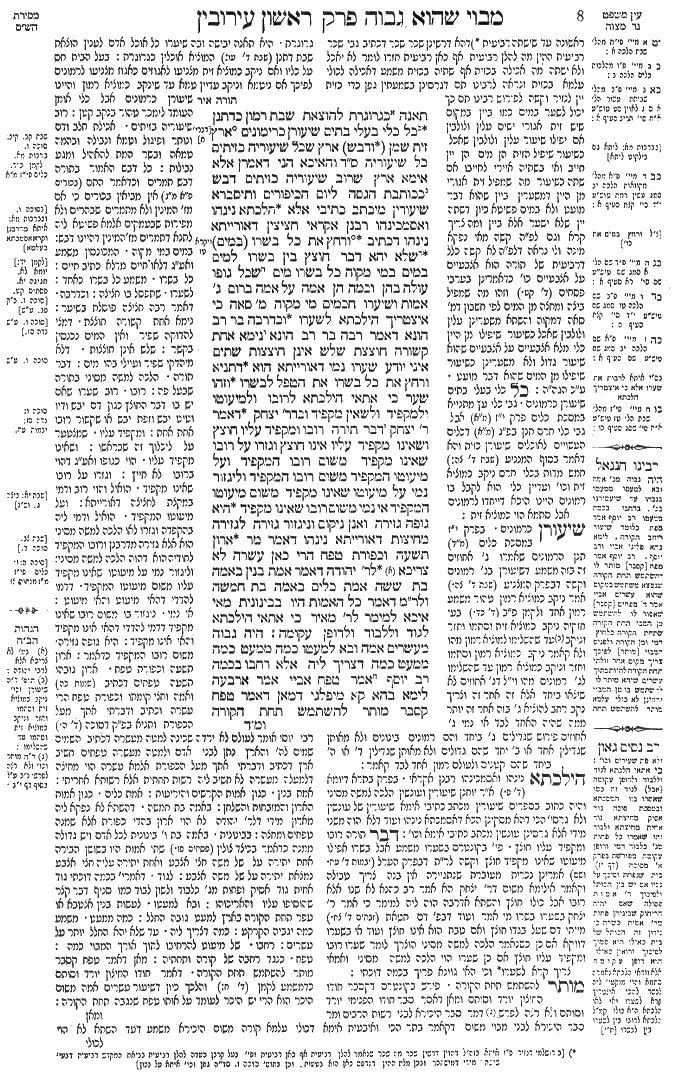
Eruvin 4b - Guemara
תאנה כגרוגרת להוצאת שבת רמון כדתנן כל כלי בעלי בתים שיעורן כרימונים (דברים ח, ח) ארץ זית שמן (ודבש) ארץ שכל שיעוריה כזיתים כל שיעוריה ס"ד והאיכא הני דאמרן אלא אימא ארץ שרוב שיעוריה כזיתים דבש ככותבת הגסה ליום הכיפורים ותיסברא שיעורין מיכתב כתיבי אלא הלכתא נינהו ואסמכינהו רבנן אקראי חציצין דאורייתא נינהו דכתיב (ויקרא טו, טז) ורחץ את כל בשרו (במים) שלא יהא דבר חוצץ בין בשרו למים במים במי מקוה כל בשרו מים שכל גופו עולה בהן וכמה הן אמה על אמה ברום ג' אמות ושיערו חכמים מי מקוה מ' סאה כי איצטריך הילכתא לשערו וכדרבה בר רב הונא דאמר רבה בר רב הונא נימא אחת קשורה חוצצת שלש אינן חוצצות שתים איני יודע שערו נמי דאורייתא הוא דתניא ורחץ את כל בשרו את הטפל לבשרו וזהו שער כי אתאי הילכתא לרובו ולמיעוטו ולמקפיד ולשאין מקפיד וכדר' יצחק דאמר ר' יצחק דבר תורה רובו ומקפיד עליו חוצץ ושאינו מקפיד עליו אינו חוצץ וגזרו על רובו שאינו מקפיד משום רובו המקפיד ועל מיעוטו המקפיד משום רובו המקפיד וליגזור נמי על מיעוטו שאינו מקפיד משום מיעוטו המקפיד אי נמי משום רובו שאינו מקפיד היא גופה גזירה ואנן ניקום וניגזור גזירה לגזירה מחיצות דאורייתא נינהו דאמר מר ארון תשעה וכפורת טפח הרי כאן עשרה לא צריכא לר' יהודה דאמר אמת בנין באמה בת ששה אמת כלים באמה בת חמשה ולר"מ דאמר כל האמות היו בבינונית מאי איכא למימר לר' מאיר כי אתאי הילכתא לגוד וללבוד ולדופן עקומה:
היה גבוה מעשרים אמה ובא למעטו כמה ממעט כמה ממעט כמה דצריך ליה אלא רחבו בכמה רב יוסף אמר טפח אביי אמר ארבעה לימא בהא קא מיפלגי דמאן דאמר טפח קסבר מותר להשתמש תחת הקורה
Comments from Rashi on Masechet Eruvin Page 4b
גרוגרת . היא תאנה יבישה ובה שיערו כל אוכל אדם לענין הוצאת שבת דתנן (שבת ד' עו:) המוציא אוכלין כגרוגרת: בעל הבית חס על כליו ואם ניקב כמוציא זית מצניעו לאגוזים כאגוז מצניעו לרמונים לפיכך אם ניטמא וניקב עדיין טמא עד שינקב כמוציא רמון והיינו שיעורן כרמונים אבל כלי אומן העומד לימכר טהור בנקב קטן: רוב שיעוריה כזיתים . אכילת חלב ודם ונותר ופיגול וטמא ונבילה ובהמה טמאה ובשר המת להאהיל ומגע נבילות: כל דבש האמור בתורה דבש תמרים וכדאמר התם (בכורים פ"א מ"ג) אין מביאין בכורים כי אם מז' המינין ולא מתמרים שבהרים ולא מפירות שבעמקים אלמא פשיטא ליה לתנא דתמרים מז' המינין דהיינו דבש: במים במי מקוה . המכונסין משמע ואע"ג דלאו חיים מדלא כתיב חיים: כל בשרו . משמע כל בשרו כאחד: לשערו . שתפסל בו חציצה: וכדרבה . דאמר רבה חציצה פוסלת בשיער: נימא אחת קשורה חוצצת . דמצי להדוקה שפיר ואין המים נכנסין בקשר: שלש אינן חוצצות . דלא מיהדקי שפיר ועיילי בהו מים: דבר תורה . הלכה למשה מסיני בתורה שבעל פה: רובו . רוב שערו שאם יש בו דבר החוצץ כגון דם יבש ודיו וטיט יבש וזפת יבש או שקשור רובו אחת אחת: ומקפיד עליו . שמצטער על ליכלוך זה שבראשו: ושאינו מקפיד עליו . הוי כגופו ואע"ג דהוי ברובו לא חייץ: וגזרו על רובו שאינו מקפיד . הואיל והוי רוב ודמי במקצת לחציצה דאורייתא: ועל מיעוטו המקפיד . הואיל ודמי ליה בהקפדה וגזרו לאו הלכה למשה מסיני הוא אלא גזירה מדרבנן ורובו המקפיד לחודיה הוא דהוה הלכה למשה מסיני: וליגזור נמי על מיעוטו שאינו מקפיד עליו משום מיעוטו המקפיד . דדמו להדדי דהאי מיעוט והאי מיעוט: אי נמי . ניגזור בו משום רובו שאינו מקפיד דדמי להדדי דהאי אינו מקפיד והאי אינו מקפיד: היא גופה גזירה . משום רובו המקפיד כדאמר: ארון תשעה וכפורת טפח . ארון גובהו תשעה טפחים דכתיב (שמות כה) ואמה וחצי קומתו וכפורת טפח הרי עשרה וכתיב ודברתי אתך מעל הכפורת ותניא בפ"ק דסוכה (ד' ה.) רבי יוסי אומר לעולם לא ירדה שכינה למטה מעשרה דכתיב השמים שמים לה' והארץ נתן לבני אדם ולמטה מעשרה טפחים חשיב ארץ דכתיב ודברתי אתך מעל הכפורת אלמא עשרה הוי מחיצה דלמעלה מעשרה לא חשיב ליה רשות תחתית אלא רשותא אחריתי: טפח . כנגד רחבה של קורה ותחתיה: אמות בנין . כגון אמות הקרשים והיריעות: אמת כלים . כגון אמות הארון והמזבחות והשלחן: באמה בת חמשה . דהשתא לא נפקא ליה מארון מידי דלר' יהודה לא הוי לארון בהדי כפורת אלא שמנה טפחים ומחצה: בבינונית . באמה בת ו' בינונית לכל אדם ויש גדולה ממנה כדאמר בכיצד צולין (פסחים פו.) שתי אמות היו בשושן הבירה אחת יתירה על של משה חצי אצבע ואחת יתירה עליה חצי אצבע נמצאת. יתירה על של משה אצבע: לגוד . דאמרינן בכמה דוכתי גוד אחית גוד אסיק ופחות משלש כלבוד ולשון לבוד כמו סניף דבר קצר שהוסיפו עליו והאריכוהו: ובא למעטו . לעשות בנין אצטבא או עפר תחת הקורה בארץ למעט גובה החלל: כמה ממעט . משמע: כמה יגביה הקרקע: כמה דצריך ליה . עד שלא יהא החלל יותר על עשרים: רחבו . של מיעוט להרחיבו לתוך אורך המבוי כמה: טפח . כנגד רחבה של קורה ותחתיה: מאן דאמר טפח קסבר מותר להשתמש תחת הקורה . דאמר חודו החיצון יורד וסותם כדמשמע לקמן (עירובין ד' ח:) והלכך כיון דשיעור עשרים אמה משום היכר הוא הרי יש היכר לעומד על אותו טפח שנגבה תחת הקורה:
Comments from Tosafot - Eruvin 4b
כל כלי בעלי בתים שיעורן כרמונים . גבי כלי עץ מתנייא במסכת כלים פרק י"ז (מ"א) אבל גבי כלי חרס תנן בפ"ג (מ"א) דכלים העשויים לאוכלים שיעורן כזית והא דאמר בסוף המצניע (שבת ד' צה:) חמש מדות בכלי חרס ניקב כמוציא זית וכו' ועדיין כלי הוא לקבל בו רמונים היינו היכא דייחדו לרמונים אבל סתמא הוי כמוציא זית: שיעורן כרמונים . בפרק י"ז במסכת כלים (מ"ד) תנן הרמונים שאמרו ג' אחוזים זה בזה משמע דשיעורן בג' רמונים וקשה דבפרק המצניע (שבת ד' צה.) אמר ניקב כמוציא רמון טהור משמע רמון אחד ולקמן פ"ב (עירובין ד' כד.) בעי חזקיה ניקב כמוציא זית וסתמו וחזר וניקב עד שהשלימו למוציא רמון מהו ולא קאמר ניקב כמוציא רמון וסתמו וחזר וניקב כמוציא רמון עד שהשלימו לג' רמונים מהו וי"ל דג' אחוזים לא שיצאו ביחד אלא זה אחר זה וצריך נקב רחב להוציא ג' בזה אחר זה יותר ממה שהיה האחד לבד אי נמי ג' אחוזים פירוש שגדילים ג' ביחד והם רמונים בינונים ולא מאותן שגדילין אחד או ב' יחד שהם גדולים ולא מאותן שגדילין ד' או ה' ביחד שהם קטנים ולעולם רמון אחד לבד קאמר: הילכתא נינהו ואסמכינהו רבנן אקראי . בפרק בתרא דיומא (ד' פ.) א"ר יוחנן שיעורין ועונשין הלכה למשה מסיני והיה כתוב בספרים שיעורין מכתב כתיבי אימא שיעורין של עונשין ולא גרסי' הכי דהא מסקינן הכא דאסמכתא נינהו ועוד דלא הוה משני מידי אלא גרסינן עונשין מכתב כתיבי אימא וכו': דבר תורה רובו ומקפיד עליו חוצץ . פי' בקונטרס בשערו משמע אבל בשרו אפילו מיעוטו שאינו מקפיד חוצץ וקשה לר"ת דבפרק הערל (יבמות ד' עח. ושם) אמרינן נכרית מעוברת שנתגיירה אין בנה צריך טבילה וקאמר אילימא משום דר' יצחק הא אמר רב כהנא לא שנו אלא רובו אבל כולו חוצץ והשתא אדרבה הוה ליה למימר כי אמר ר' יצחק בשערו בשרו מי אמר ועוד דבפ' דם חטאת (זבחים ד' צח.) מייתי דם שעל בגדו חוצץ ואם טבח הוא אינו חוצץ ועוד אי בשערו דווקא אם כן כשנאמר הלכה למשה מסיני הוצרך לומר שערו רובו ומקפיד עליו חוצץ אם כן שערו הוי הלכה למשה מסיני ואמאי צריך קרא לשערו וכי האי גוונא פריך בכמה דוכתי: מותר להשתמש תחת הקורה . פירש בקונטרס דקסבר חודו החיצון יורד וסותם ומאן דאסר סבר חודו הפנימי יורד וסותם ולא רצה לפרש דמר סבר היכירא לבני רשות הרבים ומר סבר היכירא לבני מבוי משום דקאמר בתר הכי ואיבעית אימא דכולי עלמא קורה משום היכירא משמע דעד השתא לא הוי לכולי עלמא משום היכירא ואין להקשות לפירושו הואיל וסברי קורה משום מחיצה א"כ מאי טעמא דמאן דאמר טפח והא לא הוי מחיצה לפחות מד' אין לחוש הואיל והוי דופן אלא שבא למעטו כדפי' בקונטר' בענין זה בסמוך:
Eruvin 4b - Mishnah translated into english
Fig alludes to the measure of a dried fig-bulk with regard to the halakhot of carrying out on Shabbat. One is liable for carrying food fit for human consumption on Shabbat, provided that he carries a dried fig-bulk of that food.
Pomegranate teaches the measure, as that which we learned in a mishna: All ritually impure wooden vessels belonging to ordinary homeowners become pure through being broken, as broken vessels cannot contract or maintain ritual impurity, and they are considered broken if they have holes the size of pomegranates.
The Sages interpreted: A land of olive oil and honey, as: A land, all of whose measures are olive-bulks. The Gemara poses a question: Does it enter your mind that it is a land all of whose measures are olives-bulks? Yet aren’t there those measures that we just mentioned above, which are not olive-bulks? Rather, say: A land, most of whose measures are olive-bulks, as most measures, e.g., those relating to forbidden foods and to impurity imparted by a corpse in a tent and by contact with an animal carcass, are olive-bulks.
Honey, i.e., dates from which date honey is extracted, also determines a measure, as with regard to eating on Yom Kippur, one is liable only if he eats a large date-bulk of food. Clearly, the measurements pertaining to mitzvot are explicitly written in the Torah and were not transmitted to Moses from Sinai.
The Gemara refutes this argument: And can you hold that all these measures are explicitly written in the Torah with regard to each of the halakhot mentioned above? Rather, they are halakhot that were transmitted to Moses from Sinai, and the Sages based them on verses in the Torah.
Rabbi Ḥiyya bar Ashi said above that Rav said that the laws governing interpositions that invalidate ritual immersion are halakhot transmitted to Moses from Sinai. The Gemara challenges this assertion: These, too, are written in the Torah, as it is written: “And he shall bathe all his flesh in the water” (Leviticus 15:16), and the Sages derived that nothing should intervene between his flesh and the water. The definite article in the phrase “in the water” indicates that this bathing is performed in water mentioned elsewhere, i.e., specifically in the water of a ritual bath, and not in just any water. And the phrase “all his flesh” indicates that it must be in water into which all of his body can enter, i.e., in which a person can immerse his entire body at once. And how much water is that? It is a cubit by a cubit by the height of three cubits. And the Sages calculated the volume of a ritual bath of this size and determined that the waters of a ritual bath measure forty se’a. As this is derived from the Written Torah, what need is there for a halakha transmitted to Moses from Sinai?
The Gemara answers: The halakha transmitted to Moses from Sinai is needed with regard to his hair, that it too must be accessible to the water without interposition. And this is in accordance with the opinion of Rabba bar Rav Huna, as Rabba bar Rav Huna said: A single hair tied in a knot constitutes an interposition and invalidates the immersion. Three hairs tied together in a knot do not constitute an interposition, because three hairs cannot be tied so tightly that water cannot penetrate them. With regard to two hairs tied together in a knot, I do not know the halakha. This halakha with regard to hair is a halakha transmitted to Moses from Sinai.
The Gemara raises a difficulty: The halakha with regard to his hair is also written in the Torah, as it was taught in a baraita: And he shall bathe all [et kol] his flesh. The superfluous word et comes to amplify and include that which is subordinate to his flesh, and that is hair.
The Gemara answers: The halakha transmitted to Moses from Sinai comes to teach the details of interpositions on the body with regard to its majority and its minority, and with regard to one who is particular and one who is not particular, in accordance with the opinion of Rabbi Yitzḥak.
As Rabbi Yitzḥak said: By Torah law, if there is an interposition between a person and the water, and it covers the majority of his body, and he is particular and wants the interposing substance removed, only then is it considered an interposition that invalidates immersion in a ritual bath. However, if he is not particular about that substance, it is not considered an interposition. The Sages, however, issued a decree prohibiting substances covering the majority of one’s body with regard to which he is not particular, due to substances covering the majority of one’s body with regard to which he is particular. And, they issued a decree prohibiting substances covering the minority of his body with regard to which one is particular, due to substances covering the majority of his body with regard to which one is particular.
The Gemara raises a question: Then let us also issue a decree deeming substances covering the minority of one’s body with regard to which he is not particular an interposition due to substances covering the minority of his body with regard to which one is particular, or alternatively, due to substances covering the majority of his body with regard to which he is not particular.
The Gemara answers: We do not issue that decree, because the halakha that deems both an interposition covering the minority of his body about which one is particular and an interposition covering the majority of his body about which one is not particular an interposition is itself a decree. Shall we then rise up and issue one decree to prevent violation of another decree? In any case, these details with regard to interpositions are neither written nor alluded to in the Torah; rather, they are halakhot transmitted to Moses from Sinai.
Rabbi Ḥiyya bar Ashi said that Rav said that the halakhot of partitions were transmitted to Moses from Sinai. The Gemara challenges this assertion as well: They are written in the Torah, as the fundamental principle that a partition ten handbreadths high establishes a separate domain is derived from the Torah.
As the Master said: The Holy Ark in the Tabernacle was nine handbreadths high, as the verse states that its height was a cubit and a half. A cubit contains six handbreadths, so its height totaled nine handbreadths. And the cover atop the Ark was one handbreadth, which total ten. There is a tradition that the Divine Presence does not descend into the domain of this world, which is derived from the verse that states that the Divine Presence would reveal itself from above the cover of the Ark. Apparently, a partition of ten handbreadths creates a separate domain.
The Gemara answers: The halakha transmitted to Moses from Sinai is necessary only according to the opinion of Rabbi Yehuda, who said: The cubit mentioned with regard to the building of the Tabernacle and the Temple was a large cubit of six handbreadths, whereas the cubit mentioned with regard to the sacred vessels was a cubit of five handbreadths. According to this opinion, the Ark, which was a cubit and a half, and its cover, which was a handbreadth, measured eight and a half handbreadths. Therefore, nothing can be derived with regard to a partition of ten handbreadths.
The Gemara poses a question. And according to the opinion of Rabbi Meir, who said: All the cubits were medium ones, regular cubits of six handbreadths; what can be said? Apparently, according to his opinion, the laws governing partitions are explicitly stated in the Torah.
The Gemara answers: According to the opinion of Rabbi Meir, the halakha with regard to a partition of ten handbreadths is indeed written in the Torah. However, the halakha transmitted to Moses from Sinai comes to teach other halakhot concerning partitions, e.g., the halakhot of extending [gode], according to which an existing partition is extended upward or downward to complete the requisite measure; and the halakhot of joining [lavud], according to which two solid surfaces are joined if they are separated by a gap of less than three handbreadths; and the halakhot of the curved wall of a sukka. A sukka is valid even if there are up to four cubits of invalid roofing, provided that this roofing is adjacent to one of the walls of the sukka. In that case, the invalid roofing is considered a bent extension of the wall. These concepts are certainly not written in the Torah.
The Gemara returns to the laws of alleyways: If the cross beam spanning the entrance to an alleyway was higher than twenty cubits from the ground and one comes to diminish its height, how much must he diminish it? The Gemara is surprised by the question: How much must he diminish it? The amount that he needs in order to render its height less than twenty cubits.
Rather, the space between the cross beam and the ground must, of course, be reduced to twenty cubits. However, when one raises the alleyway, how much must the width of the raised section be in order to render the alleyway fit for carrying within it? Rav Yosef said: One handbreadth. Abaye said: Four handbreadths.
The Gemara suggests: Let us say that these amora’im disagree about this: The one who said one handbreadth holds that one is permitted to utilize the area beneath the cross beam spanning the entrance to the alleyway, as he maintains that the cross beam serves as a partition, and the alleyway is considered as if it were sealed by a partition descending from the outer edge of the cross beam that faces the public domain. Since the area beneath the cross beam is part of the alleyway and is less than twenty cubits, there is a conspicuous demarcation for one standing in the alleyway.
Traduction : The William Davidson digital edition of the Koren Noé Talmud, with commentary by Rabbi Adin Even-Israel Steinsaltz.