 Talmud Bavli
Megillah 8a : Youtube
Daf TubeYoutube
3 video classes :
Megillah Page 8a
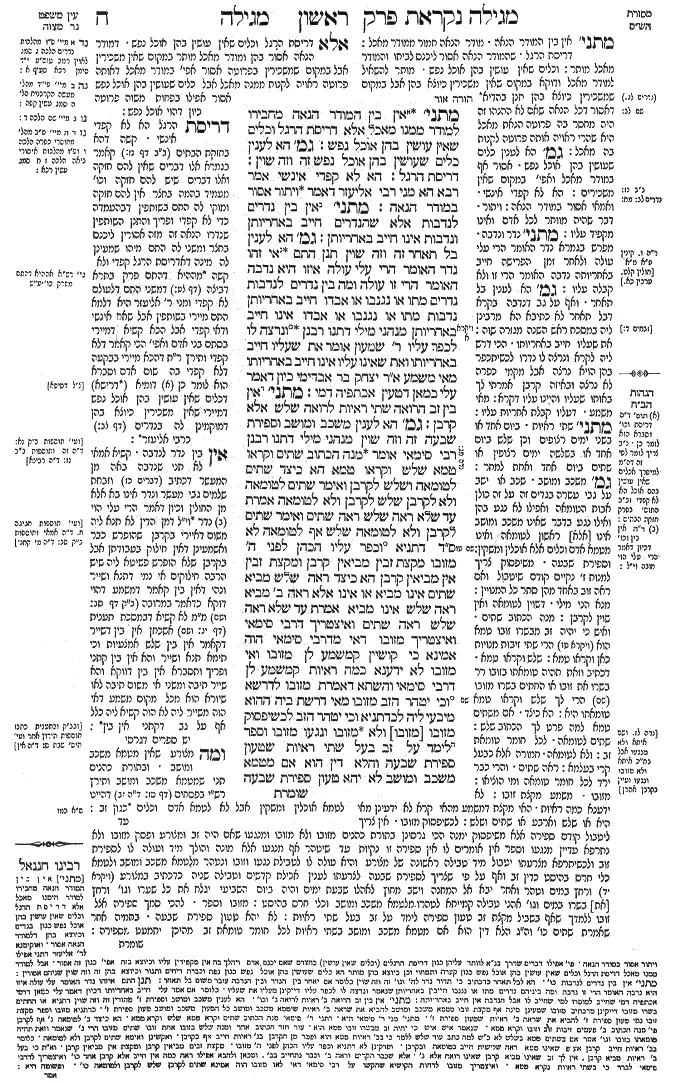
Megillah 8a - Guemara
מתני׳ אין בין המודר הנאה מחבירו למודר ממנו מאכל אלא דריסת הרגל וכלים שאין עושין בהן אוכל נפש:
גמ׳ הא לענין כלים שעושין בהן אוכל נפש זה וזה שוין:
דריסת הרגל:
הא לא קפדי אינשי אמר רבא הא מני רבי אליעזר דאמר ויתור אסור במודר הנאה:
מתני׳ אין בין נדרים לנדבות אלא שהנדרים חייב באחריותן ונדבות אינו חייב באחריותן:
גמ׳ הא לענין בל תאחר זה וזה שוין תנן התם אי זהו נדר האומר הרי עלי עולה איזו היא נדבה האומר הרי זו עולה ומה בין נדרים לנדבות נדרים מתו או נגנבו או אבדו חייב באחריותן נדבות מתו או נגנבו או אבדו אינו חייב באחריותן מנהני מילי דתנו רבנן (ויקרא א, ד) ונרצה לו לכפר עליו ר' שמעון אומר את שעליו חייב באחריותו ואת שאינו עליו אינו חייב באחריותו מאי משמע א"ר יצחק בר אבדימי כיון דאמר עלי כמאן דטעין אכתפיה דמי:
מתני' אין בין זב הרואה שתי ראיות לרואה שלש אלא קרבן:
גמ' הא לענין משכב ומושב וספירת שבעה זה וזה שוין מנהני מילי דתנן רבנן רבי סימאי אומר מנה הכתוב שתים וקראו טמא שלש וקראו טמא הא כיצד שתים לטומאה ושלש לקרבן ואימר שתים לטומאה ולא לקרבן שלש לקרבן ולא לטומאה אמרת עד שלא ראה שלש ראה שתים ואימר שתים לקרבן ולא לטומאה שלש אף לטומאה לא ס"ד דתניא (ויקרא טו, טו) וכפר עליו הכהן לפני ה' מזובו מקצת זבין מביאין קרבן ומקצת זבין אין מביאין קרבן הא כיצד ראה שלש מביא שתים אינו מביא או אינו אלא ראה ב' מביא ראה שלש אינו מביא אמרת עד שלא ראה שלש ראה שתים ואיצטריך דרבי סימאי ואיצטריך מזובו דאי מדרבי סימאי הוה אמינא כי קושיין קמשמע לן מזובו ואי מזובו לא ידענא כמה ראיות קמשמע לן דרבי סימאי והשתא דאמרת מזובו לדרשא (ויקרא טו, יג) וכי יטהר הזב מזובו מאי דרשת ביה ההוא מיבעי ליה לכדתניא וכי יטהר הזב לכשיפסוק מזובו [מזובו] ולא מזובו ונגעו מזובו וספר לימד על זב בעל שתי ראיות שטעון ספירת שבעה והלא דין הוא אם מטמא משכב ומושב לא יהא טעון ספירת שבעה
Comments from Rashi on Masechet Megillah Page 8a
מתני' אין בין המודר הנאה . מודר הנאה חמור ממודר מאכל: דריסת הרגל . שהמודר הנאה אסור ליכנס לביתו והמודר מאכל מותר: וכלים שאין עושין בהן אוכל נפש . מותר להשאיל למודר מאכל ודוקא במקום שאין משכירין כיוצא בהן אבל במקום שמשכירין כיוצא בהן תנן בהדיא דאסור דכל הנאה שאם לא ההנהו זה היה מחסר בה פרוטה הנאת מאכל היא שהרי ראויה אותה פרוטה לקנות בה מאכל: גמ' הא לענין כלים שעושין בהן אוכל נפש . אסור אף במודר מאכל ואפי' במקום שאין משכירים: הא לא קפדי אינשי . ואמאי אסור במודר הנאה: ויתור . דבר שהיה מוותר לכל אדם ואינו מקפיד עליו: מתני' נדר ונדבה . מפרש בגמרא נדר האומר הרי עלי עולה ולאחר זמן הפרישה חייב באחריותה נדבה האומר הרי זו ולא קבלה עליו: גמ' הא לענין בל תאחר . ואף על גב דנדבה בקרא דבל תאחר לא כתיבא הא מרבינן ליה במסכת ראש השנה מגזרה שוה: את שעליו חייב באחריותו . הכי דרש ליה לקרא ונרצה לו נדרו לכשיתכפר בהן הויא נרצה אבל מקמי כפרה לא נרצה ובאיזה קרבן אמרתי לך באותו שעליו והיינו עליו דקרא: מאי משמע . דעליו קבלת אחריות עליו: מתני' שתי ראיות . ביום אחד או בשני ימים רצופים וכן שלש ביום אחד או בשלשה ימים רצופין או שתים ביום אחד ואחת למחר: גמ' משכב ומושב . שכב או ישב על גבי עשרה בגדים זה על זה כולן אבות הטומאה ואפילו לא נגע בהן ואילו נגע בדבר שאינו משכב ומושב אינו [אלא] ראשון לטומאה ואינו מטמא אדם וכלים אלא אוכלין ומשקין: וספירת שבעה . משיפסוק צריך למנות ז' נקיים קודם שיטבול ואם ראה זוב באחד מהן סתר כל המנויין: מנא הני מילי . דשוין לטומאה ואין שוין לקרבן: מנה הכתוב שתים . ואיש כי יהיה זב מבשרו זובו טמא הוא (ויקרא טו) הרי שתי זיבות מנויות כאן וקראו טמא: שלש וקראו טמא . דכתיב וזאת תהיה טומאתו בזובו רר בשרו את זובו או החתים בשרו מזובו (שם). הרי לך שלש וקראו טמא טומאתו היא: הא כיצד . אם משתים טמא למה פרט לך הכתוב שלש: שתים לטומאה . לכל חומר טומאת זב: ולא לטומאה . חמורה אלא כבעל קרי בעלמא: ראה שתים . והרי כבר ירד לכל חומר טומאה ומי הוציאו: מזובו . משמע מקצת זובו: לא ידענא כמה ראיות . האי מקצת דמשמע מהאי קרא לא ידעינן מאי היא או שלש וארבע או שתים ושלש: לכשיפסוק מזובו . אין צריך ליטבול קודם ספירה אלא משיפסוק ימנה הכי גרסינן בתורת כהנים מזובו ולא מזובו ומנגעו שאם היה זב ומצורע ופסק מזובו ולא נתרפא עדיין מנגעו וספר אין אומרים לו אין ספירה זו נקיות עד שיטהר אף מנגעו אלא מונה והולך מיד ועולה לו לספירת זוב ולכשיתרפא מצרעתו יטבול מיד טבילה ראשונה של מצורע והיא עולה לו לטבילת נגעו וזובו ונטהר מלטמא משכב ומושב ולטמא כלי חרס בהיסט כדין זב ואף על פי שצריך לספירת שבעה לצרעתו לענין אכילת קדשים וטבילה שניה כדכתיב במצורע (ויקרא יד) ורחץ במים וטהר ואחר יבא אל המחנה וישב מחוץ לאהלו שבעת ימים והיה ביום השביעי יגלח את כל שערו וגו' ורחץ בשרו במים וגו' אהני טבילה קמייתא לטהרו מלטמא משכב ומושב וכלי חרס בהיסט: מזובו וספר . להכי סמך ספירה אצל זובו ללמדך שאף בשביל מקצת זב טעון ספירה לימד על זב בעל שתי ראיות: לא יהא טעון ספירת שבעה . בתמיה אחר שאמרת שתים כו' וה"ג הלא דין הוא אם מטמא משכב ומושב בשתי ראיות לכל חומר טומאת זב מהיכן יתמעט מספירה:
Comments from Tosafot - Megillah 8a
אלא דריסת הרגל וכלים שאין עושין בהן אוכל נפש. דמודר הנאה אסור בהן ומודר מאכל מותר במקום שאין משכירין . אבל במקום שמשכירין בפרוטה אסור אפי' במודר מאכל דאותה פרוטה ראויה לקנות ממנה מאכל אבל כלים שעושין בהן אוכל נפש אסור אפילו בפחות משוה פרוטה כיון דהוי אוכל נפש: דריסת הרגל הא לא קפדי אינשי. קשה דהא בחזקת הבתים (ב"ב דף נז:) קאמר בגמרא אלו דברים שאין להם חזקה ואלו דברים שיש להם חזקה וכו' מעמיד בהמה בחצר אין להם חזקה ומוקי לה התם בשותפין דבהעמדה כדי לא קפדי ופריך והתנן השותפין שנדרו הנאה זה מזה אסורין ליכנס בחצר ומשני לה התם מיהו שמעינן לה מינה דאדריסת הרגל קפדי ולא קשה מההיא דהתם פרק בתרא דביצה (דף לט:) דמשני התם דלעולם לא קפדי ומני ר' אליעזר היא דלמא התם מיירי בשותפין אבל שאר אינשי. ודאי קפדי אבל הכא קשיא דמיירי בסתם בני אדם ואפי' הכי קאמר דלא קפדי ותירץ ר"ת דהכא מיירי בבקעה דלא קפדי בה שום אדם וסברא הוא לומר כן דומיא (דרישא) דכלים שאין עושין בהן אוכל נפש דמיירי שאין משכירין כיוצא בהן דמוקימנן לה בנדרים (דף לב:) כרבי אליעזר: אין בין נדר לנדבה. קשיא אמאי לא תני שנדבה באה מן המעשר דכתיב (דברים כז) וזבחת שלמים גבי מעשר ונדר אינו בא אלא מן החולין וכיון דאמר הרי עלי הוי נדר וי"ל דמן הדין לא תנא ליה משום דאיירי בקרבן שהופרש כבר ואשמעינן דאין חילוק בעבודתן אבל בקרבן שלא הופרש פשיטא ליה שיש הרבה חילוקים אי נמי דתנא ושייר ונהי דאין בין קאמר דמשמע דהוי דוקא כדאמר במרובה (ב"ק דף סב: ושם) מ"מ לא קשיא דבמסכת תענית (דף יג: ושם) אשכחן אין בין דשייר דקאמר אין בין שלש אמצעיות וכי תימא תנא ושייר והא אין בין קתני ופריך ותסברא אין בין דווקא והא שייר תיבה ומשני אי משום תיבה לאו שיורא הוא מכל מקום משמע דאי הוה משייר ליה לא הוה קשיא ליה כלל אף על גב דקתני אין בין : יש ספרים דגרסי ומה מצורע שאין מטמא משכב ומושב. ובתורת כהנים תני שמטמא משכב ומושב ותירץ רש"י בפסחים (דף סז: ד"ה זב) דהיינו לטמא אוכלין ומשקין אבל לא לטמא אדם וכלים. כגון זב:
Megillah 8a - Mishnah translated into english
MISHNA: The difference between one for whom benefit from another is forbidden by vow and one for whom benefit from another’s food is forbidden by vow is only with regard to stepping foot on his property, and with regard to borrowing utensils from him that one does not use in the preparation of food, but for other purposes; as those two benefits are prohibited to the former, but permitted to the latter.
GEMARA: The Gemara infers that with regard to the matter of utensils that one uses in preparation of food, both this, one who vowed that any benefit is forbidden, and that, one who vowed that benefit from food is forbidden, are equal. It is prohibited for both to derive benefit from utensils used in the preparation of food.
The mishna stated that for one for whom benefit from another is forbidden by vow, stepping foot on the latter’s property is prohibited. The Gemara asks: What benefit is that? Aren’t people not particular about other people treading on their property? Rava said: In accordance with whose opinion is this mishna taught? It is the opinion of Rabbi Eliezer, who said: Overlooking is prohibited in the case of one for whom benefit is forbidden by vow. For one for whom benefit from another is forbidden by vow, benefit is forbidden even in matters with regard to which one is typically not particular and overlooks others’ use of his property, e.g., stepping foot on it.
MISHNA: The difference between animals consecrated to the Temple as vow offerings and animals consecrated as gift offerings is only that in the case of vow offerings, if they died or were lost before being sacrificed on the altar, one is obligated in the responsibility to replace them, and in the case of gift offerings, if they died or were lost, one is not obligated in the responsibility to replace them.
GEMARA: The Gemara infers that with regard to the matter of the prohibition: Do not be slack to pay one’s pledges, both this, a vow offering, and that, a gift offering, are equal. If one delayed bringing either a vow offering or a gift offering, he violates the prohibition.
We learned in a mishna there: Which is the case of a vow offering? It is one who says: It is incumbent upon me to bring a burnt-offering. Which is the case of a gift offering? It is one who says: This animal is a burnt-offering. And what is the difference between a vow offering and a gift offering? With regard to vow offerings, if the animals died or were stolen or were lost, the one who vowed is obligated in the responsibility to replace them, as he undertook to bring a burnt-offering and he is not absolved of his obligation until he brings the offering. With regard to gift offerings, however, if the animals died or were stolen or were lost, the one who vowed is not obligated in the responsibility to replace them.
The Gemara asks: From where are these matters derived? The Gemara answers: It is as the Sages taught in a baraita with regard to a burnt-offering, that the verse states: “And it shall be accepted for him to make atonement upon him” (Leviticus 1:4). Rabbi Shimon says: That which is incumbent upon him, i.e., which he accepted as a personal obligation, he bears responsibility to replace it if it died or was stolen; however, that which is not incumbent upon him, i.e., that which he did not accept as a personal obligation but which he designated as an offering, he does not bear responsibility to replace it.
The Gemara asks: From where may that conclusion be inferred from the verse? Rabbi Yitzḥak bar Avdimi said: Since he said it is incumbent upon me to bring a burnt-offering, he is considered as one who bears it upon his shoulders. The expression: Upon me, indicates an assumption of responsibility to bring an offering.
MISHNA: The difference between a zav who experiences two emissions of a pus-like discharge from his penis and one who experiences three emissions is only that the zav who experienced three emissions is obligated to bring an offering after he recovers, in order to complete his purification process.
GEMARA: The Gemara infers that with regard to the matter of transmitting ritual impurity to a surface designated for lying and a surface designated for sitting, and similarly with regard to the counting of seven days clean of emissions so that he may immerse in a ritual bath as part of the purification process, both this, i.e., one who experienced two emissions, and that, one who experienced three emissions, are equal.
The Gemara asks: From where are these matters derived? The Gemara answers: It is as the Sages taught in a baraita that Rabbi Simai says: The verse enumerated two emissions: “When any man has an emission out of his flesh, due to his emission he is impure” (Leviticus 15:2), and it called the zav impure. Another verse enumerated three emissions: “And this shall be his impurity in his emission: Whether his flesh runs with his emission, or his flesh be stopped from his emission, it is his impurity” (Leviticus 15:3), and it too called him impure. How so? If he is impure after two emissions, for what purpose does the Torah mention three? It is to teach: Two emissions to establish impurity and three to render him liable to bring an offering.
The Gemara raises an alternative. And say instead: Two emissions to establish impurity but not to render him liable to bring an offering; three emissions to render him liable to bring an offering, but not to establish impurity. The Gemara rejects this: That is impossible, as you can say that until he experienced three emissions, he already experienced two, and therefore he is impure in the case of three emissions as well.
The Gemara raises a different alternative. And say instead: Two emissions to render him liable to bring an offering, but not to establish impurity; three emissions to establish impurity as well. The Gemara answers that this suggestion cannot enter your mind, as it is taught in a baraita that the verse states: “And the priest shall make atonement for him before the Lord from his emission” (Leviticus 15:15). The preposition “from” that precedes the words “his emissions” indicates that some with the status of a zav bring an offering and some with the status of a zav do not bring an offering. How so? If he experienced three emissions, he brings an offering; if he experienced two emissions, he does not bring an offering.
The baraita suggests: Or perhaps, it means nothing other than that if one experienced two emissions, he brings an offering; if he experienced three emissions, he does not bring an offering. The baraita rejects this: That is impossible, as you can say that until he experienced three emissions, he already experienced two, and therefore he is obligated to bring an offering in the case of three emissions as well.
The Gemara comments: It was necessary to cite the proof of Rabbi Simai based on the number of mentions of the word emissions in the two verses, and it was necessary to cite the proof from the words: From his emission. As if the difference between two and three emissions was derived from the statement of Rabbi Simai, I would have said in accordance with our question: Perhaps one who experiences two emissions brings an offering, and one who experiences three emissions is impure and brings an offering. Therefore, it teaches us: From his emission. And if the difference between two and three emissions was derived from the term: From his emission, I would not have known how many emissions render him liable to bring an offering, only that some with the status of a zav are not required to bring an offering. Therefore, it teaches us the proof cited by Rabbi Simai.
The Gemara asks: And now that you said that the term: From his emission, is exclusionary and comes for derivation, what do you derive from the verse: “And when the zav is cleansed from his emission” (Leviticus 15:13)?
The Gemara answers: That verse is needed to derive that which was taught in a baraita. It is written: “And when the zav is cleansed from his emission, then he shall count to himself seven days for his purification” (Leviticus 15:13), when his emissions cease. The baraita infers from the term: From his emission, that he needs to be cleansed only from his emission, but not from his emission and his leprosy. If one was both a zav and also had leprosy, he need not wait until he is asymptomatic of his leprosy before counting seven clean days. Rather, he counts seven clean days, and after the leprosy symptoms cease, he immerses for both impurities. “From his emission, then he shall count”: This teaches concerning a zav who experienced two emissions, that he too requires a count of seven clean days.
The baraita continues: But in order to derive that halakha, the verse is unnecessary, as isn’t it only logical? If a zav who experienced two emissions renders a surface designated for lying and a surface designated for sitting ritually impure and all strictures of a zav apply to him, wouldn’t he require a count of seven clean days to become purified?
Traduction : The William Davidson digital edition of the Koren Noé Talmud, with commentary by Rabbi Adin Even-Israel Steinsaltz.