 Talmud Bavli
Hagigah 6a : Youtube
Rabbi Dr. Moshe WeisblumYoutube
1 video class :
Hagigah Page 6a
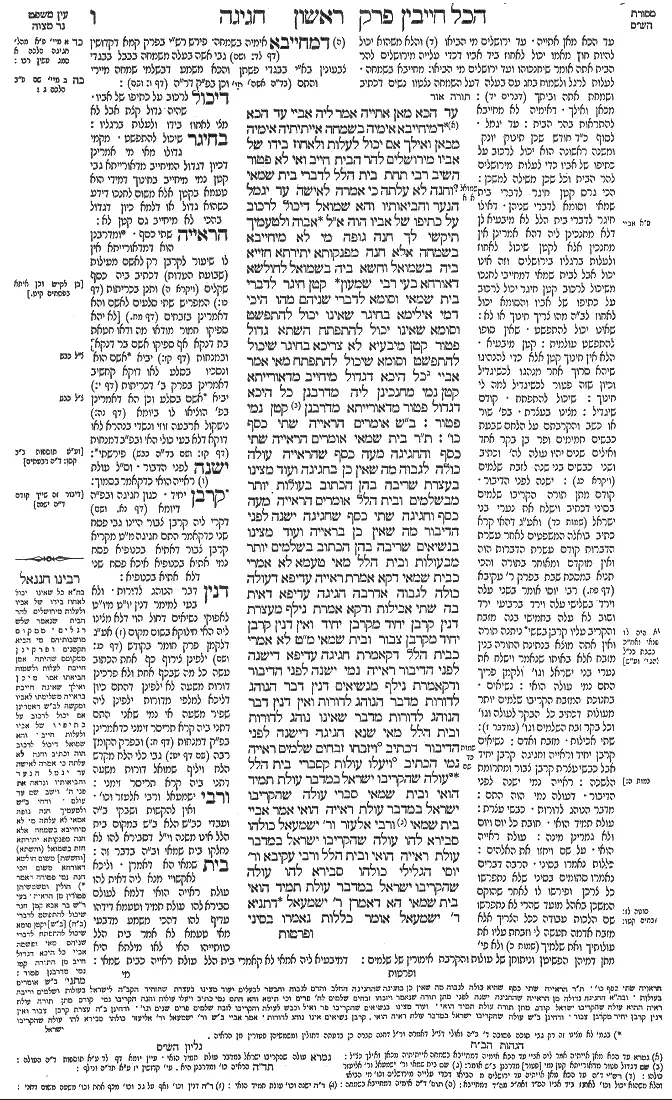
Hagigah 6a - Guemara
עד הכא מאן אתייה אמר ליה אביי עד הכא דמיחייבא אימיה בשמחה אייתיתיה אימיה מכאן ואילך אם יכול לעלות ולאחוז בידו של אביו מירושלים להר הבית חייב ואי לא פטור השיב רבי תחת בית הלל לדברי בית שמאי (שמואל א א, כב) וחנה לא עלתה כי אמרה לאישה עד יגמל הנער והביאותיו והא שמואל דיכול לרכוב על כתיפו של אביו הוה א"ל אבוה ולטעמיך תיקשי לך חנה גופה מי לא מיחייבא בשמחה אלא חנה מפנקותא יתירתא חזייא ביה בשמואל וחשא ביה בשמואל לחולשא דאורחא בעי רבי שמעון קטן חיגר לדברי בית שמאי וסומא לדברי שניהם מהו היכי דמי אילימא בחיגר שאינו יכול להתפשט וסומא שאינו יכול להתפתח השתא גדול פטור קטן מיבעיא לא צריכא בחיגר שיכול להתפשט וסומא שיכול להתפתח מאי אמר אביי כל היכא דגדול מיחייב מדאורייתא קטן נמי מחנכינן ליה מדרבנן כל היכא דגדול פטור מדאורייתא מדרבנן קטן נמי פטור:
ב"ש אומרים הראייה שתי כסף כו':
ת"ר בית שמאי אומרים הראייה שתי כסף והחגיגה מעה כסף שהראייה עולה כולה לגבוה מה שאין כן בחגיגה ועוד מצינו בעצרת שריבה בהן הכתוב בעולות יותר מבשלמים ובית הלל אומרים הראייה מעה כסף וחגיגה שתי כסף שחגיגה ישנה לפני הדיבור מה שאין כן בראייה ועוד מצינו בנשיאים שריבה בהן הכתוב בשלמים יותר מבעולות ובית הלל מאי טעמא לא אמרי כבית שמאי דקא אמרת ראייה עדיפא דעולה כולה לגבוה אדרבה חגיגה עדיפא דאית בה שתי אכילות ודקא אמרת נילף מעצרת דנין קרבן יחיד מקרבן יחיד ואין דנין קרבן יחיד מקרבן צבור ובית שמאי מ"ט לא אמרי כבית הלל דקאמרת חגיגה עדיפא דישנה לפני הדיבור ראייה נמי ישנה לפני הדיבור ודקאמרת נילף מנשיאים דנין דבר הנוהג לדורות מדבר הנוהג לדורות ואין דנין דבר הנוהג לדורות מדבר שאינו נוהג לדורות ובית הלל מאי שנא חגיגה דישנה לפני הדיבור דכתיב (שמות כד, ה) ויזבחו זבחים שלמים ראייה נמי הכתיב (שמות כד, ה) ויעלו עולות קסברי בית הלל עולה שהקריבו ישראל במדבר עולת תמיד הואי ובית שמאי סברי עולה שהקריבו ישראל במדבר עולת ראייה הואי אמר אביי בית שמאי ורבי אלעזר ור' ישמעאל כולהו סבירא להו עולה שהקריבו ישראל במדבר עולת ראייה הואי ובית הלל ורבי עקיבא ור' יוסי הגלילי כולהו סבירא להו עולה שהקריבו ישראל במדבר עולת תמיד הואי בית שמאי הא דאמרן ר' ישמעאל דתניא ר' ישמעאל אומר כללות נאמרו בסיני
Comments from Rashi on Masechet Hagigah Page 6a
עד הכא מאן אתייה . עד ירושלים מי הביאו והלא משהוא יכול להיות חוץ מאמו יכול לאחוז ביד אביו דכדי עלייה מירושלים להר הבית אתה אומר שיחנכוהו ועד ירושלים מי הביאו: מחייבא בשמחה . לעלות לרגל ולשמוח בחג עם בעלה דעל השמחה נצטוו נשים דכתיב ושמחת אתה וביתך (דברים יד): מכאן ואילך . דאימיה לא מחייבא להתראות בהר הבית: עד יגמל . לסוף כ"ד חדש שכן תינוק יונק ומשנה ראשונה הוא יכול לרכוב על כתיפו של אביו כדי לעלות מירושלים להר הבית וכל שכן משילה למשכן: הכי גרס קטן חיגר לדברי בית שמאי וסומא לדברי שניהן . דאילו חיגר לדברי בית הלל לא מיבעיא לן דלא מחנכינן ליה דהא אמרינן אין מחנכין אלא לקטן שיכול לאחוז ולעלות ברגליו בירושלים וזה אינו יכול אבל לבית שמאי דמחייבי לחנכו משיכול לרכוב קטן חיגר יכול לרכוב על כתיפו של אביו והסומא יכול לאחוז לב"ה מהו צריך חינוך או לא: שאינו יכול להתפשט . שאין סופו להתפשט עולמית: קטן מיבעיא . הלא אין חינוך קטן אלא כדי להנהיגו שיהא סרוך אחר מנהגו לכשיגדיל וכיון שזה פטור לכשיגדיל למה לי חינוך: שיכול להתפתח . קודם שיגדיל: מצינו בעצרת . בפ' שור או כשב והקרבתם על הלחם שבעת כבשים תמימים ופר בן בקר אחד ואילים שנים יהיו עולה לה' וכתיב ושני כבשים בני שנה לזבח שלמים (ויקרא כג): ישנה לפני הדיבור . קודם מתן תורה הקריבו שלמים בסיני דכתיב וישלח את נערי בני ישראל (שמות כד) ואע"ג דהאי קרא כתיב בואלה המשפטים לאחר עשרת הדברות קודם עשרת הדברות הוה ואין מוקדם ומאוחר בתורה והכי תניא במסכת שבת בפרק ר' עקיבא (דף פח.) רבי יוסי אומר בשני עלה וירד בשלישי עלה וירד ברביעי ירד ושוב לא עלה בחמישי בנה מזבח והקריב עליו קרבן בששי ניתנה תורה ואין אתה מוצא בנתינת התורה בנין מזבח אלא באותו שנאמר וישלח את נערי בני ישראל וגו' ולקמן פריך התם נמי עולה הואי: נשיאים . בחנוכת המזבח הקריבו שלמים יותר מעולות דכתיב כל הבקר לעולה וגו' וכל בקר זבח השלמים וגו' (במדבר ז): שתי אכילות . מזבח ואדם: נשיאים קרבן יחיד וראייה וחגיגה קרבן יחיד אבל כבשי עצרת קרבן צבור ומתרומת הלשכה: ראייה נמי ישנה לפני הדיבור . דעולה נמי הוה התם: מדבר הנוהג לדורות . כבשי עצרת: עולת תמיד הואי . חובת כל יום ויום ולא גמרינן מינה: עולת ראייה הואי . על שם ויחזו את האלהים: כללות נאמרו בסיני . הרבה דברים נאמרו סתומים בסיני שלא נתפרשו כל צרכן ופירשו לו לאחר שהוקם המשכן באהל מועד שהרי לא נתפרשו שם הלכות עבודה ככל הצריך אלא מזבח אדמה מעשה לי וזבחת עליו את עולותיך ואת שלמיך (שמות כ) ולא פי' מתן דמיהן הפשיטן וניתוחן של עולות והקרבת אימורין של שלמים:
Comments from Tosafot - Hagigah 6a
דמחייבא אימיה בשמחה. פירש רש"י בפרק קמא דקדושין (דף לד: ושם) גבי אשה בעלה משמחה בבבל בבגדי צבעונין בא"י בבגדי פשתן והכא משמע דבשלמי שמחה מיירי והתם (בד"ה אשה) פי' וכן בפ"ק דר"ה (דף ו: ושם): דיכול לרכוב על כתיפו של אביו. שהיה גדול קצת אבל לא מצי לאחוז בידו ולעלות ברגליו: בחיגר שיכול להתפשט. מקמי גדולו מאי מי אמרינן דכיון דגדול המיחייב מדאורייתא גבי קטן נמי מיחייב בחינוך דמידי הוא טעמא בקטן אלא משום לחנכו דידע כשהוא גדול או דלמא כיון דגדול בהכי לא מיחייב גם קטן לא: הראייה שתי כסף: ומדרבנן הוא דמדאורייתא אין לו שיעור לקרבן רק לאשם מעילות (שבועת העדות) דכתיב ביה כסף שקלים (ויקרא ה) ותנן בכריתות (דף כו:) המפריש שתי סלעים לאשם והא דאמרינן בזבחים (דף מח.) [לא יהא ספיקו חמור מודאו מה ודאו חטאת בת דנקא אף ספיקו אשם בר דנקא] ובמנחות (דף קז:) יביא אשם הוא ונסכיו בסלע לאו דוקא קחשיב דאמרינן בפרק ב' דכריתות (דף י:) יביא אשם בסלע וכן הא דאמרינן בפ' הוציאו לו ביומא (דף נה:) נישקול ארבעה זוזי ונשדי בנהרא לאו דוקא דלא בעי כולי האי ובפ"ב דמנחות (דף קז: ושם בד"ה כבש) פירשתי: ישנה לפני הדבור. וס"ל עולת ראייה הואי כדקאמר בסמוך: קרבן יחיד. כגון חגיגה ובפ"ה דיומא (דף נא. ושם) דקרי ליה קרבן צבור היינו גבי פסח שני כדקאמר התם חגיגה מ"ט מקריא קרבן צבור דאתיא בכנופיא פסח נמי אתיא בכנופיא איכא פסח שני דלא אתיא בכנופיא: דנין דבר הנוהג לדורות. ולא בעי למימר דנין יו"ט מיו"ט לאפוקי נשיאים דחול הוי דלא מצינו ליה האי חילוקא בשום מקום אע"ג דלקמן פרק חומר בקודש (חגיגה דף כג: ושם) ילפינן צירוף כף אחת הכתוב עשה כל מה שבכף אחת ולא פרכינן דורות משעה לא ילפינן דהתם כיון דליכא למלפי מדורות ילפינן ליה שפיר משעה אי נמי שאני התם דתני ביה קרא תריסר זימני כדאמרינן בפ"ק דמנחות (דף ח:) ובפרק הקומץ רבה (שם דף יט:) גבי כלי הלח מקדש הלח ויליף שמואל דורות משעה דתני ביה קרא תריסר זימני: ורבי ישמעאל ורבי אלעזר וכו'. ואין להקשות ושבקי ב"ה ועבדי כב"ש הלא ב"ש במקום בית הלל אינו משנה וי"ל דסבירא להו לא נחלקו בית שמאי וב"ה בדבר זה: בית שמאי הא דאמרן. וליכא לאקשויי מנא ליה דאית להו עולת ראייה הואי דלמא לעולם סבירא להו עולת תמיד וטעמא דידהו עדיף להו דהכי משמע מדבעי מאי טעמא לא אמר בית הלל כוותייהו האי לאו מילתא היא דמיבעיא ליה אמאי לא קאמרי בית הלל עולת ראייה כבית שמאי:
Hagigah 6a - Mishnah translated into english
Who brought him to here, all the way to Jerusalem? If the father could bring his child to Jerusalem, why can’t he bring him to the Temple Mount?
Abaye said to him: With regard to the way to here, as his mother is also obligated in rejoicing on the Festival, his mother brought him when she herself ascended to the capital. From this point forward, if he is able to ascend and hold his father’s hand from Jerusalem to the Temple Mount, he is obligated, and if not, he is exempt.
It is taught in a baraita that Rabbi Yehuda HaNasi responded in place of Beit Hillel, that according to the statement of Beit Shammai that a child who is unable to ride on his father’s shoulders is not obligated in the mitzva of appearance, they must explain a verse that deals with Hanna, Samuel’s mother: “But Hanna did not ascend, for she said to her husband: Until the child is weaned, when I will bring him” (I Samuel 1:22). But Samuel was able to ride on his father’s shoulders. The age of weaning is twenty-four months, before which Samuel was already old enough to ride on his father’s shoulders, and yet he was not ready to ascend to the Tabernacle. This shows that only a child who is able to walk on his own is obligated in the mitzva of appearance.
Rabbi Yehuda HaNasi’s father said to him: According to your reasoning, ask about Hanna herself: Wasn’t she obligated in rejoicing? Why didn’t she travel to the Tabernacle to fulfill a mitzva in which she herself was obligated? Rather, Hanna saw in Samuel the need for extra pampering, and she was concerned about Samuel lest he experience weakness from the journey. Since she was unable to bring him, she herself did not come.
Rabbi Shimon raises a dilemma: With regard to a minor who is lame and yet he is able to ascend on his father’s shoulders, according to the statement of Beit Shammai, and likewise a minor who is blind but is able to hold his father’s hand and ascend, according to the statements of both Beit Shammai and Beit Hillel, what is the halakha? Are these children obligated in the mitzva of appearance?
The Gemara inquires: What are the circumstances of this case? If we say that it is referring to a lame minor who cannot be healed, and a blind child who cannot develop sight, what is the dilemma? Now, if an adult in this state is exempt, is it necessary to ask about a minor? Since this minor will never be obligated in the mitzva, even when he is an adult, there is no need to train him in its performance. The Gemara explains: No; it is necessary to ask with regard to a lame minor who can be healed and a blind minor who can develop sight. What is the halakha? Since the minor might eventually be obligated, is it necessary to train him at this point?
Abaye said: Anywhere that an adult is obligated by Torah law, one must also train a minor in that state of health by rabbinic law. Anywhere that an adult is exempt by Torah law, a minor in that same state is also exempt by rabbinic law. Since in this current condition an adult would be exempt, there is no obligation to train this minor either, despite the fact that he might become obligated in the future.
§ The mishna taught that Beit Shammai say: The burnt-offering of appearance, brought by a pilgrim when he appears at the Temple on a Festival, must be worth at least two silver coins, and the Festival peace-offering must be worth at least one silver ma’a coin. And Beit Hillel say: The burnt-offering of appearance must be worth at least one silver ma’a and the Festival peace-offering at least two silver coins.
The Sages taught in a baraita that Beit Shammai say: The burnt-offering of appearance must be worth two silver coins, and the Festival peace-offering need be worth only one silver ma’a. The reason the burnt-offering must be worth more is that the burnt-offering of appearance goes up entirely to God, which is not so with regard to the Festival peace-offering, as parts of a peace-offering are eaten by its owner while other portions are consumed by the priests. And furthermore, another reason for this difference is that we find with regard to the festival of Assembly, i.e., Shavuot, that the verse includes more burnt-offerings than peace-offerings. The sacrificial requirement consists of one bull, two rams, and seven sheep as burnt-offerings, but only two sheep for peace-offerings.
And Beit Hillel say: The burnt-offering of appearance must be worth one silver ma’a and the Festival peace-offering must be worth two silver coins. The reason for this difference is that the Festival peace-offering existed before the speech of God, i.e., before the giving of the Torah on Mount Sinai, which is not so with regard to the mitzva of appearance. And furthermore, another reason is that we find with regard to the offerings of the princes during the dedication of the Tabernacle that the verse includes more peace-offerings than burnt-offerings. Each prince brought one cow, a ram, and a sheep as burnt-offerings, but two cows, two rams, five goats, and five sheep as peace-offerings.
The Gemara asks: And Beit Hillel, what is the reason that they do not say in accordance with the opinion of Beit Shammai? Beit Hillel would respond to both claims of Beit Shammai. With regard to that which you said, that the burnt-offering of appearance is superior because it goes up entirely to God, on the contrary, the Festival peace-offering is superior, as it has two consumptions, by God on the altar and by people. And with regard to that which you said that we derive this halakha from the festival of Assembly, i.e., Shavuot, one could argue instead that one should derive the halakhot of the offering of an individual from another offering of an individual, i.e., the princes; and one does not derive the halakhot of the offering of an individual from the communal offering of Shavuot.
The Gemara asks the reverse question: And what is the reason that Beit Shammai do not say in accordance with the opinion of Beit Hillel? Beit Shammai would respond to the arguments of Beit Hillel: With regard to that which you said, that the Festival peace-offering is superior, as it existed before the speech of God, the burnt-offering of appearance also existed before the speech. According to the opinion of Beit Shammai, the Jewish people sacrificed burnt-offerings at Mount Sinai before the giving of the Torah.
And with regard to that which you said, that one derives the halakhot of these offerings from the offerings of the princes, one could argue that one derives the halakhot of a matter that is performed in all generations, i.e., the value of the different Festival offerings, from another matter that is performed in all generations, i.e., the offerings brought on Shavuot. However, one does not derive the halakhot of a matter that is performed in all generations from a matter that is not performed in all generations, as the offerings of the princes was a specific mitzva for the Tabernacle in the wilderness.
The Gemara asks: And according to the opinion of Beit Hillel, what is different about the Festival peace-offering, that it existed before the speech of God, as it is written: “And they sacrificed peace-offerings of bulls to the Lord” (Exodus 24:5)? The burnt-offering of appearance is also mentioned, as isn’t it written in the same verse: “And they sacrificed burnt-offerings”?
The Gemara responds: Beit Hillel hold that the burnt-offering that the Jewish people sacrificed in the desert at Mount Sinai was the daily burnt-offering, which is a communal offering, as there were no individual burnt-offerings before the giving of the Torah. And Beit Shammai hold that the burnt-offering that the Jewish people sacrificed in the desert at Mount Sinai was a burnt-offering of appearance, which is an individual offering.
Abaye said: Beit Shammai, Rabbi Elazar, and Rabbi Yishmael all hold that the burnt-offering that the Jewish people sacrificed in the desert at Mount Sinai was a burnt-offering of appearance. And Beit Hillel, Rabbi Akiva, and Rabbi Yosei HaGelili all hold that the burnt-offering that the Jewish people sacrificed in the desert at Mount Sinai was a daily burnt-offering, not an individual offering.
The Gemara explains the source for each opinion. Beit Shammai is that which we said. Rabbi Yishmael, as it is taught in a baraita that Rabbi Yishmael says: General statements were said at Sinai, i.e., Moses received general mitzvot at Sinai, including the Ten Commandments.
Traduction : The William Davidson digital edition of the Koren Noé Talmud, with commentary by Rabbi Adin Even-Israel Steinsaltz.