 Talmud Bavli
The learning on the whole site is dedicated : L'ilui Nishmat Nissim ben Barukh Malka
The learning on the whole site is dedicated : L'ilui Nishmat Yechayahou ben Moche
The learning on the whole site is dedicated : L'ilui Nishmat Yaakov ben Myriam
Hagigah 5a : Youtube
Rabbi Dr. Moshe WeisblumYoutube
1 video class :
Hagigah Page 5a
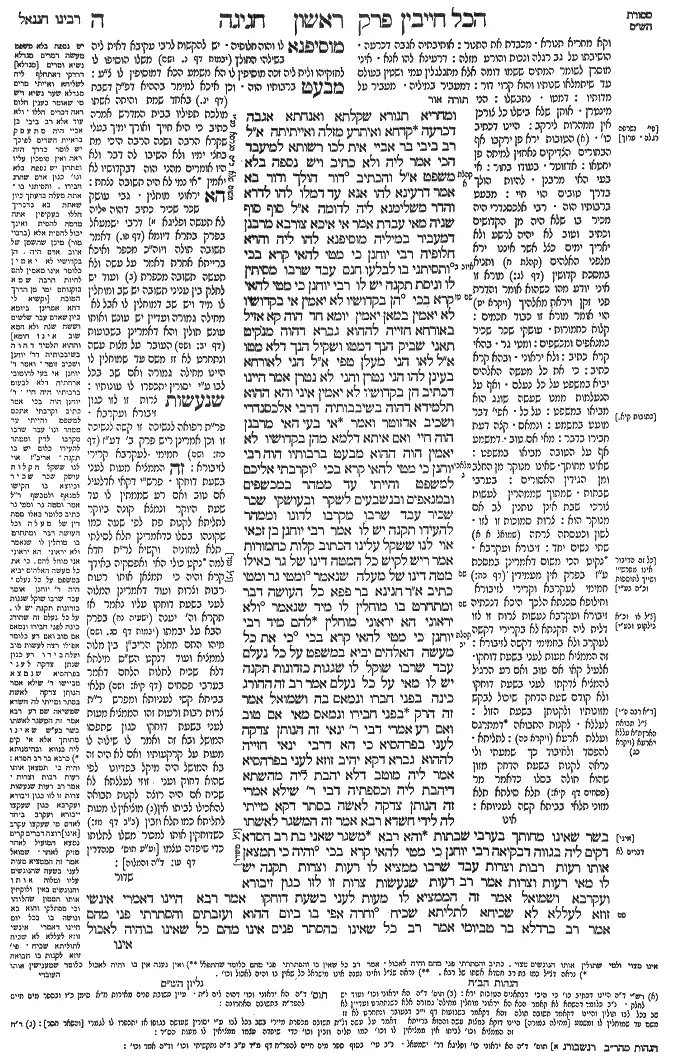
Hagigah 5a - Guemara
ומחריא תנורא שקלתא ואנחתא אגבה דכרעה קדחא ואיתרע מזלה ואייתיתה א"ל רב ביבי בר אביי אית לכו רשותא למיעבד הכי אמר ליה ולא כתיב ויש נספה בלא משפט א"ל והכתיב (קהלת א, ד) דור הולך ודור בא אמר דרעינא להו אנא עד דמלו להו לדרא והדר משלימנא ליה לדומה א"ל סוף סוף שניה מאי עבדת אמר אי איכא צורבא מרבנן דמעביר במיליה מוסיפנא להו ליה והויא חלופיה רבי יוחנן כי מטי להאי קרא בכי (איוב ב, ג) ותסיתני בו לבלעו חנם עבד שרבו מסיתין לו וניסת תקנה יש לו רבי יוחנן כי מטי להאי קרא בכי (איוב טו, טו) הן בקדושיו לא יאמין אי בקדושיו לא יאמין במאן יאמין יומא חד הוה קא אזיל באורחא חזייה לההוא גברא דהוה מנקיט תאני שביק הנך דמטו ושקיל הנך דלא מטו א"ל לאו הני מעלן טפי א"ל הני לאורחא בעינן להו הני נטרן והני לא נטרן אמר היינו דכתיב הן בקדושיו לא יאמין איני והא ההוא תלמידא דהוה בשיבבותיה דרבי אלכסנדרי ושכיב אדזוטר ואמר אי בעי האי מרבנן הוה חיי ואם איתא דלמא מהן בקדושיו לא יאמין הוה ההוא מבעט ברבותיו הוה רבי יוחנן כי מטי להאי קרא בכי (מלאכי ג, ה) וקרבתי אליכם למשפט והייתי עד ממהר במכשפים ובמנאפים ובנשבעים לשקר ובעושקי שכר שכיר עבד שרבו מקרבו לדונו וממהר להעידו תקנה יש לו אמר רבי יוחנן בן זכאי אוי לנו ששקל עלינו הכתוב קלות כחמורות אמר ריש לקיש כל המטה דינו של גר כאילו מטה דינו של מעלה שנאמר (מלאכי ג, ה) ומטי גר ומטי כתיב א"ר חנינא בר פפא כל העושה דבר ומתחרט בו מוחלין לו מיד שנאמר (מלאכי ג, ה) ולא יראוני הא יראוני מוחלין להם מיד רבי יוחנן כי מטי להאי קרא בכי (קהלת יב, יד) כי את כל מעשה האלהים יביא במשפט על כל נעלם עבד שרבו שוקל לו שגגות כזדונות תקנה יש לו מאי על כל נעלם אמר רב זה ההורג כינה בפני חברו ונמאס בה ושמואל אמר זה הרק בפני חבירו ונמאס מאי אם טוב ואם רע אמרי דבי ר' ינאי זה הנותן צדקה לעני בפרהסיא כי הא דרבי ינאי חזייה לההוא גברא דקא יהיב זוזא לעני בפרהסיא אמר ליה מוטב דלא יהבת ליה מהשתא דיהבת ליה וכספתיה דבי ר' שילא אמרי זה הנותן צדקה לאשה בסתר דקא מייתי לה לידי חשדא רבא אמר זה המשגר לאשתו בשר שאינו מחותך בערבי שבתות והא רבא משגר שאני בת רב חסדא דקים ליה בגווה דבקיאה רבי יוחנן כי מטי להאי קרא בכי (דברים לא, כא) והיה כי תמצאן אותו רעות רבות וצרות עבד שרבו ממציא לו רעות וצרות תקנה יש לו מאי רעות וצרות אמר רב רעות שנעשות צרות זו לזו כגון זיבורא ועקרבא ושמואל אמר זה הממציא לו מעות לעני בשעת דוחקו אמר רבא היינו דאמרי אינשי זוזא לעללא לא שכיחא לתליתא שכיח (דברים לא, יז) וחרה אפי בו ביום ההוא ועזבתים והסתרתי פני מהם אמר רב ברדלא בר טביומי אמר רב כל שאינו בהסתר פנים אינו מהם כל שאינו בוהיה לאכול
Comments from Rashi on Masechet Hagigah Page 5a
וקא מחריא תנורא . מכבדת את התנור: אותיבתיה אגבה דכרעה . הושיבתו על גב רגלה ונכות והורע מזלה: דרעינא להו אנא . איני מוסרן לשומר המתים ששמו דומה אלא מתגלגלין עמי ושטין בעולם עד שיתמלאו שנותיו והוא קרוי דור: דמעביר במיליה . מעביר על מדותיו: דמטו . נתבשלו: הני מינטרן . אותן שלא בישלו כל צורכן אין ממהרות לירקב: היינו דכתיב כו' . הטובות ירא פן ירקבו אף הבחורים הצדיקים נאחזין למיתה פן יחטאו: אדזוטר . בעודו בחור: אי בעי האי מרבנן . להיות הולך בדרך טובים הוי חיי: מבעט ברבותיו הוה . רבי אלכסנדרי היה מכיר בו שלא היה מן הקדושים וכתיב וטוב לא יהיה לרשע ולא יאריך ימים כצל אשר איננו ירא מלפני האלהים (קהלת ח) ותניא במסכת קדושין (דף לג:) מורא זו איני יודע מהו כשהוא אומר והדרת פני זקן ויראת מאלהיך (ויקרא יט ) הוי אומר מורא זו כבוד חכמים: קלות כחמורות . עושקי שכר שכיר כמנאפים ומכשפים: ומטי גר . בהאי קרא כתיב: ולא יראוני . ובהא קרא כתיב: כי את כל מעשה האלהים יביא במשפט על כל נעלם . ואף על הנעלמות ממנו שעשה שוגג הוא מביאו במשפט: על כל . אפי' דבר מועט במשמע: ונמאס . קצה דעת חבירו בדבר: מאי אם טוב . דמשמע אף על הטובה מביאו במשפט: שאינו מחותך . שאינו מנוקר מן החלב ומן הגידין האסורים: בערבי שבתות . שמתוך שממהרין לעשות צורכי שבת אינן נותנין לב אם מנוקר הוא: צרות סמוכות זו לזו . לשון וכעסתה צרתה (שמואל א א) שתי נשים יחד: זיבורא ועקרבא . נקיט הכי משום דאמרינן במסכת ע"ז בפרק אין מעמידין (דף כח:) חמימי לעקרבא וקרירי לזיבורא וחילופא סכנתא הלכך היכא דנכתיה זיבורא ועקרבא נעשות צרות זו לזו דלית ליה תקנתא לא בקרירי דקשה לעקרב ולא בחמימי דקשה לזיבורא: זה הממציא מעות לעני בשעת דוחקו . אלעיל קאי אם טוב ואם רע הרגיל להמציא צדקתו לעני בשעת דוחקו ולא קודם שעת הדחק שיכול לבקש מזונותיו ולקנותן בשעת הזול: לעללא . לקנות התבואה דמתרגם ועללת ארעא (ויקרא כה): לתליתא . להפסד ולאיבוד כך שמעתי ולי נראה לקנות בשעת הדחק מזון שהוא תולה בסלו כדאמר מר (פסחים דף קיא:) תלא סילתא תלא מזוני תלאי בביתא קשה לעניותא:
Comments from Tosafot - Hagigah 5a
מוסיפנא לו והוה חלופיה. יש להקשות לרבי עקיבא דאית ליה בשילהי החולץ (יבמות דף נ. ושם) משלו הוסיפו לו לחזקיהו ולית ליה זכה מוסיפין לו הא משמע הכא דמוסיפין לו צ"ע: מבעט ברבותיו הוה. וכן איכא למימר בההיא דפ"ק דשבת (דף יג.) באחד שמת והיתה אשתו מולכת תפיליו בבית המדרש אמרה כתיב כי היא חייך ואורך ימיך בעלי שקרא הרבה ושנה הרבה היכי מת בחצי ימיו ולא השיבו לה דבר ולא היו אומרים מהני הוה דבקדושיו לא יאמין אי נמי לא היה תשובה נצחת: הא יראוני מוחלין. גבי עושק שכר שכיר כתיב דהוה ליה לא תעשה ופליגא דרבי ישמעאל בפרק בתרא דיומא (דף פו.) דאמר תשובה תולה ויוה"כ מכפר ואיכא ברייתא אחרת דאמר על עשה ולא תעשה תשובה מכפרת ועוד יש לחלק בין עניני תשובה יש שב ומוחלין לו מיד ויש שב דמוחלין לו אבל לא מחילה גמורה ועדיין יש עונש ואותו עונש תולין והא דאמרינן בשבועות (דף יב: ושם) העובר על מצות עשה ונתחרט לא זז משם עד שמוחלין לו היינו מחילה גמורה ואם שב בכל לבו ע"י יסורין יתכפרו לו עונותיו: שנעשות צרות זו לזו כגון זיבורא ועקרבא. פר"ת רפואה לנשיכה זו קשה לנשיכה זו וכן אמרינן ריש פרק ב' דע"ז (דף כח: ושם) חמימי לעקרבא קרירי לזיבורא: זה הממציא מעות לעני בשעת דוחקו. פרש"י דקאי אדלעיל אם טוב ואם רע שממתין לו עד שעת היוקר ונמצא קונה ביוקר . לתליתא לקנות פת לפי שעה כמו שקונהו בסלו כדאמרינן תלא לסילתי תלא למזוניה וקשיא לר"ת חדא למה נקט כולי האי ואפסקיה באידך קרא והיה כי תמצאן אותו רעות רבות וצרות ועוד דאמרינן המלוה לעני בשעת דוחקו עליו נאמר אז תקרא וה' יענה (ישעיהו נח) בפרק הבא על יבמתו (יבמות דף סג. ושם) מיהו התם מחלק הריב"ן בין מלוה לממציא ועוד דנקט הש"ס מילתא דלא שכיח לתלות הלחם דאמר בערבי פסחים (דף קיא: ושם) תלאי בביתא קשי לעניותא ומפרש ר"ת צרות רבות ורעות זהו הממציא מעות לעני בשעת דוחקו כגון שתפסו המושל ובא זה ואמר לו שילוה לו מעות על קרקעותיו ואם לא היה זה בא המושל היה מיקל בפדיונו לפי שהוא דחוק ועני זוזי לעללתא לא שכיח אם היה רוצה לקנות תבואה להאכילו לביתו אין מוציאין לו מעות לתליתא כמו תלא וזבין (ב"ב דף מז:) כשדוחקין אותו למכור משלו לתלותו כדי שיפדה עצמו [וע"ע תוס' סנהדרין דף עו: ד"ה והמלוה]:
Hagigah 5a - Mishnah translated into english
and sweeping the oven. She took the fire and set it on her foot; she was scalded and her luck suffered, which gave me the opportunity, and I brought her.
Rav Beivai bar Abaye said to the Angel of Death: Do you have the right to act in this manner, to take someone before his time? The Angel of Death said to him: And is it not written: “But there are those swept away without justice” (Proverbs 13:23)? Rav Beivai said to him: And isn’t it written: “One generation passes away, and another generation comes” (Ecclesiastes 1:4), which indicates that there is a predetermined amount of time for the life of every generation.
He said to him: I shepherd them, not releasing them until the years of the generation are completed, and then I pass them on to the angel Duma who oversees the souls of the dead. Rav Beivai said to him: Ultimately, what do you do with his extra years, those taken away from this individual? The Angel of Death said to him: If there is a Torah scholar who disregards his personal matters, i.e., who overlooks the insults of those who wrong him, I add those years to him and he becomes the deceased’s replacement for that time.
§ The Gemara returns to the previous topic. When Rabbi Yoḥanan reached this verse, he cried, as God said to the Satan about Job: “Although you did incite Me against him, to destroy him without cause” (Job 2:3). Rabbi Yoḥanan said: With regard to a slave whose master is one whom others incite to act harshly against the slave and the master is incited to do so, is there a remedy for the slave? Additionally, when Rabbi Yoḥanan reached this verse, he cried: “Behold He puts no trust in His sacred ones” (Job 15:15), saying: If He does not place trust in His sacred ones, in whom does He place trust?
The Gemara relates: One day Rabbi Yoḥanan was walking along the road, and he saw a certain man who was picking figs in an unusual manner: He left the ones that had reached the stage of ripeness and took those that had not yet reached that state. Rabbi Yoḥanan said to him: Aren’t these ripe ones much better? He said to him: I need these figs for the road; these that are not yet ripe will be preserved, and these that are already ripe will not be preserved. Rabbi Yoḥanan said: This is the same as is written: “Behold He puts no trust in His sacred ones”; there are righteous people whom God takes from this world before their time, as He knows that in the future they will stumble.
The Gemara asks: Is that so? But there was a certain student in the neighborhood of Rabbi Alexandri, and he died while he was still young. And Rabbi Alexandri said: If this young Sage had wanted, he would have lived, i.e., his actions caused him to die young. And if it is so, as Rabbi Yoḥanan suggested, perhaps this student was from those concerning whom it is written: “Behold he puts no trust in his sacred ones,” and it was not his sins that caused his death. The Gemara answers: That student was one who acted irreverently toward his teachers, and Rabbi Alexandri knew of his improper behavior.
When Rabbi Yoḥanan reached this verse, he cried: “And I will come near to you to judgment; and I will be a swift witness against the sorcerers, and against the adulterers, and against false witnesses, and against those who oppress the hireling in his wages, the widow, and the fatherless, and who turn aside the convert from his right, and do not fear Me, says the Lord” (Malachi 3:5). He said: With regard to a slave whose master comes near to him to judge him and is swift to testify against him, is there a remedy for him?
With regard to that same verse, Rabbi Yoḥanan ben Zakkai said: Woe to us, as the verse weighs lenient mitzvot for us like more stringent mitzvot, as it lists both those who violate sins punishable by death, e.g., sorcerers and adulterers, with those who violate apparently less severe sins, e.g., those who withhold payment from a hired worker.
Reish Lakish said: Anyone who distorts the judgment of a convert, it is considered as if he distorted the judgment of the One above, as it is stated: “And who turn aside [umattei] the convert” (Malachi 3:5). This term is written as: Umatti, turn Me aside, i.e., one who distorts the judgment of a convert is considered as though he distorts the judgment of God, as it were. Rabbi Ḥanina bar Pappa said: Anyone who does something sinful and regrets it, he is forgiven immediately, as it is stated: “And do not fear Me” (Malachi 3:5), which indicates that if they do fear Me and are embarrassed to sin before God, they are forgiven immediately.
Additionally, when Rabbi Yoḥanan reached this verse, he cried: “For God shall bring every work into the judgment concerning every hidden thing” (Ecclesiastes 12:14). He said: With regard to a slave whose master weighs his unwitting sins like intentional ones, i.e., God punishes him even for an action that was hidden from him, is there a remedy for him?
The Gemara asks: What sin is the verse referring to when it states: “Concerning every hidden thing”? Rav said: This is referring to one who kills a louse in the presence of another and his friend is disgusted by it. God judges him for the unintentional discomfort he caused. And similarly, Shmuel said: This is referring to one who spits in the presence of another and his friend is disgusted by his action.
The Gemara asks: What is the meaning of the end of that verse: “Whether it be good, or whether it be evil” (Ecclesiastes 12:14)? This verse indicates that God judges man harshly even for the good deeds he performs. The Sages from the school of Rabbi Yannai say: This verse is referring to one who gives charity to a poor person in public. Although he performed a good deed, he embarrassed the pauper, as in this case of Rabbi Yannai, who saw a certain man who was giving a dinar to a poor person in public. He said to him: It would have been better had you not given it to him than what you did, as now you gave it to him and embarrassed him.
The Sages from the school of Rabbi Sheila say: This verse is referring to one who gives charity to a woman in private, as he subjects her to suspicion, for people might think that he is engaging her services as a prostitute. Rava said: This is referring to one who sends his wife meat that is not sliced, i.e., that has not yet had the prohibited sciatic nerve removed, on Shabbat eve. Since she is in a hurry she might not notice and will perhaps cook the prohibited meat.
The Gemara asks: But yet Rava himself would send this type of meat to his wife on Shabbat eve. The Gemara answers: The daughter of Rav Ḥisda, Rava’s wife, is different, as he was certain about her that she was an expert in this matter. Rava trusted that his wife would realize the sciatic nerve had not been removed even when she was in a hurry on Shabbat eve.
Additionally, when Rabbi Yoḥanan reached this verse, he cried: “Then it shall come to pass, when many evils and troubles are come upon them” (Deuteronomy 31:21). He said: With regard to a slave whose master brings upon him evils and troubles, is there a remedy for him?
The Gemara asks: What is the verse referring to when it states: “Evils and troubles”? Rav said: Evils that become troubles for one another, i.e., the remedy for one problem has a deleterious effect on the other. For example, one who is stung by a hornet and a scorpion. The sting of a hornet must be treated only with a cold ointment, while that of a scorpion must be treated with a hot ointment. As these medicaments are mutually exclusive, one cannot treat both stings at the same time.
And Shmuel said: This verse is referring to one who provides money to a poor person as a loan during his exigent financial circumstances, but immediately after the borrower is released from the initial pressure by receiving the loan, the lender begins to demand repayment, subjecting the recipient to further pressure. Rava said that this explains the folk saying that people say: A dinar for produce is not found; for hanging it can be found. A poor person cannot find money to buy basic necessities; however, when the lenders hang on and pressure him he must come up with the money somehow.
On the same topic the Gemara states: “Then My anger shall be kindled against them in that day, and I will forsake them, and I will hide My face from them, and they shall be devoured” (Deuteronomy 31:17). Rav Bardela bar Tavyumei said that Rav said: Anyone who is not subject to His hiding of the face, i.e., whose prayers are invariably answered, is not from the Jewish people, as the verse states about the Jewish people that God will hide His face from them as a result of their sins. Similarly, anyone who is not subject to: “And they shall be devoured,” i.e., gentiles do not steal his money,
Traduction : The William Davidson digital edition of the Koren Noé Talmud, with commentary by Rabbi Adin Even-Israel Steinsaltz.