 Talmud Bavli
Hagigah 4a : Youtube
Rabbi Dr. Moshe WeisblumYoutube
1 video class :
Hagigah Page 4a
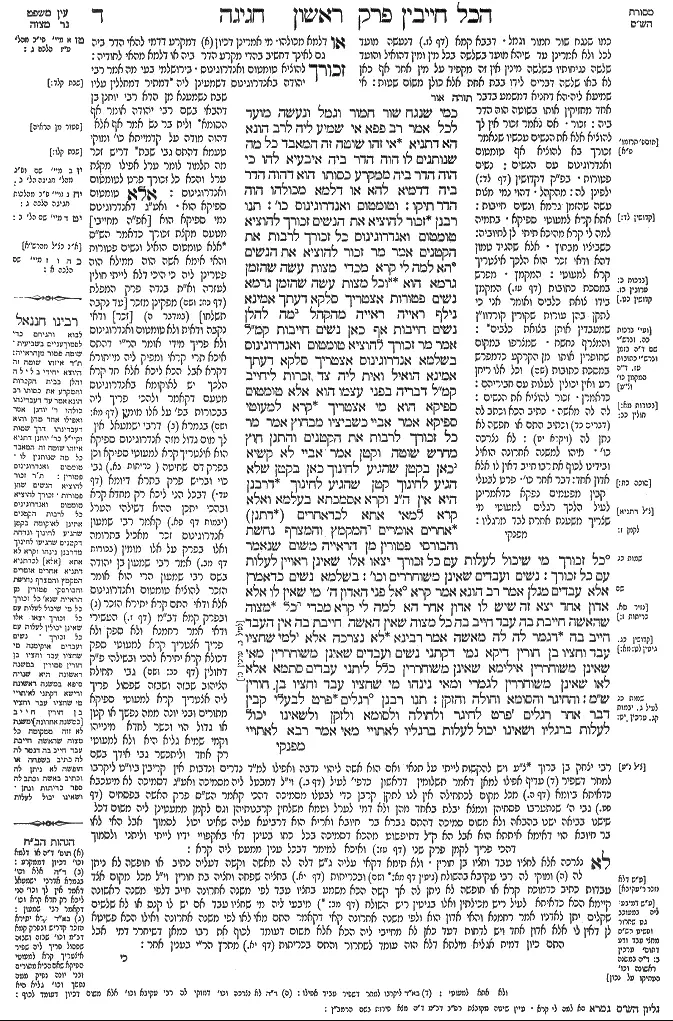
Hagigah 4a - Guemara
כמי שנגח שור חמור וגמל ונעשה מועד לכל אמר רב פפא אי שמיע ליה לרב הונא הא דתניא אי זהו שוטה זה המאבד כל מה שנותנים לו הוה הדר ביה איבעיא להו כי הוה הדר ביה ממקרע כסותו הוא דהוה הדר ביה דדמיא להא או דלמא מכולהו הוה הדר תיקו:
וטומטום ואנדרוגינוס כו':
תנו רבנן זכור להוציא את הנשים זכורך להוציא טומטום ואנדרוגינוס כל זכורך לרבות את הקטנים אמר מר זכור להוציא את הנשים הא למה לי קרא מכדי מצות עשה שהזמן גרמא הוא וכל מצות עשה שהזמן גרמא נשים פטורות אצטריך סלקא דעתך אמינא נילף ראייה ראייה מהקהל מה להלן נשים חייבות אף כאן נשים חייבות קמ"ל אמר מר זכורך להוציא טומטום ואנדרוגינוס בשלמא אנדרוגינוס אצטריך סלקא דעתך אמינא הואיל ואית ליה צד זכרות ליחייב קמ"ל דבריה בפני עצמו הוא אלא טומטום ספיקא הוא מי אצטריך קרא למעוטי ספיקא אמר אביי כשביציו מבחוץ אמר מר כל זכורך לרבות את הקטנים והתנן חוץ מחרש שוטה וקטן אמר אביי לא קשיא כאן בקטן שהגיע לחינוך כאן בקטן שלא הגיע לחינוך קטן שהגיע לחינוך דרבנן היא אין ה"נ וקרא אסמכתא בעלמא ואלא קרא למאי אתא לכדאחרים (דתנן) אחרים אומרים המקמץ והמצרף נחשת והבורסי פטורין מן הראייה משום שנאמר (שמות כג, יז) כל זכורך מי שיכול לעלות עם כל זכורך יצאו אלו שאינן ראויין לעלות עם כל זכורך:
נשים ועבדים שאינן משוחררים וכו':
בשלמא נשים כדאמרן אלא עבדים מנלן אמר רב הונא אמר קרא (שמות כג, יז) אל פני האדון ה' מי שאין לו אלא אדון אחד יצא זה שיש לו אדון אחר הא למה לי קרא מכדי כל מצוה שהאשה חייבת בה עבד חייב בה כל מצוה שאין האשה חייבת בה אין העבד חייב בה דגמר לה לה מאשה אמר רבינא לא נצרכה אלא למי שחציו עבד וחציו בן חורין דיקא נמי דקתני נשים ועבדים שאינן משוחררין מאי שאינן משוחררין אילימא שאינן משוחררין כלל ליתני עבדים סתמא אלא לאו שאינן משוחררין לגמרי ומאי נינהו מי שחציו עבד וחציו בן חורין ש"מ:
והחיגר והסומא וחולה והזקן:
תנו רבנן (שמות כג, יד) רגלים פרט לבעלי קבין דבר אחר רגלים פרט לחיגר ולחולה ולסומא ולזקן ולשאינו יכול לעלות ברגליו ושאינו יכול לעלות ברגליו לאתויי מאי אמר רבא לאתויי
Comments from Rashi on Masechet Hagigah Page 4a
כמו שנגח שור חמור וגמל . דבבא קמא (דף לז.) דנעשה מועד לכל ולא אמרינן עד שיהא מועד בשלשה בכל מין ומין דהואיל והועד שלשה נגיחותיו בשלשה מינין אין זה מקפיד על מין אחר אף כאן לא באו שלשה דברים לידו בבת אחת אלא כולן משום שטות: אי שמיעא ליה . הא דתניא דמשמע בדבר אחד מחזיקין אותו בשוטה הוה הדר ביה: זכור . אם נאמר זכור אין לך להוציא אלא את הנשים עכשיו שנאמר זכורך בא להוציא אף טומטום ואנדרוגינוס עם הנשים: נשים פטורות . בפ"ק דקדושין (דף לד:) ילפינן לה: מהקהל . דהוי נמי מצות עשה שהזמן גרמא ונשים חייבות: אתא קרא למעוטי ספיקא . בתמיה למה לי קרא מהיכא תיתי לן לחיוביה: כשביציו מבחוץ . אלא שהגיד טמון דהא ודאי זכר הוא הלכך איצטריך קרא למעוטי: המקמץ . מפרש במסכת כתובות (דף עז.) המקמץ בידו צואת כלבים ואומר אני כי לתקן בהן עורות שקורין קורדוו"ן שמעבדים אותן בצואת כלבים: והמצרף נחשת . שמצרפו במקום שחופרין אותו מן הקרקע כדמפרש במסכת כתובות (שם) וכל אלו ריחן רע ואין יכולין לעלות עם חביריהם: כדאמרן . זכור להוציא את הנשים: לה לה מאשה . כתיב הכא וכתב לה (דברים כד) וכתיב התם או חפשה לא נתן לה (ויקרא יט): לא נצרכה כו' . מיהו למשנה אחרונה הואיל ובידינו לכוף את רבו חייב דאין לו אלא אדון אחד: דבר אחר כו' . פרט לבעלי קבין מפעמים נפקא כדאמרינן לעיל הלכך רגלים למעוטי מי שצריך משענת אחרת לבד מרגליו:
Comments from Tosafot - Hagigah 4a
או דלמא מכולהו. מי אמרינן דכיון דמקרע דדמי להאי הדר ביה גם לאינך דחשיב בהדי מקרע הדר ביה או דלמא מהאי לחודיה: זכורך. להוציא טומטום ואנדרוגינוס. בירושלמי בעי מה אמר רבי יהודה באנדרוגינוס דשמעינן ליה דמתיר דמחללין עליו שבת נשמענא מן הדא רבי יוחנן בן דהבאי בשם רבי יהודה אומר אף הסומא ולית בר נש אמר אף אלא דהוה מודה על קדמייתא כו' ומוקי טעמא דהתם גבי שבת דריש זכר מה תלמוד לומר ערל אפילו מקצת ערל והכא כל זכורך פרט לטומטום ואנדרוגינוס: אלא טומטום ספיקא הוא. ואע"ג דאנדרוגינוס נמי ספיקא הוא [אפ"ה מחייבי] מטעם מקצת זכורך כדאמר הש"ס אלא טומטום הואיל ונשים פטורות והאי אימא אשה הוה ממילא הוה פטרינן ליה כי היכי דלא לייתי חולין לעזרה וא"ת בנדה פרק המפלת (דף כח: ושם) מפקינן מזכר [עד נקבה תשלחו] (במדבר ה) [זכר] ודאי נקבה ודאית ולא טומטום ואנדרוגינוס ולא פריך מידי אומר הר"י דהתם איכא תרי קראי ומפיק ליה מייתורא דקרא אבל הכא ליכא אלא חד קרא הלכך יש לאוקומא באנדרוגינוס מטעם דקאמר ולהכי פריך ליה בבכורות בפ' על אלו מומין (דף מא: ושם) בגמרא דרבי ישמעאל אין לך מום גדול מזה אנדרוגינוס ספיקא הוא איצטריך קרא למעוטי ספיקא וכן בפרק דם שחיטה (כריתות כא.) גבי כוי ובריש פרק בתרא דיומא (דף עד.) דבכל הני ליכא רק מחדא קרא ובהכי יתכן ההיא דשילהי הערל (יבמות דף פא.) קאמר רבי שמעון אנדרוגינוס זכר מאכיל בתרומה ואלו בפרק על אלו מומין (בכורות דף מב.) אמר רבי שמעון בן יהודה בשם רבי שמעון הרי הוא אומר הזכר להוציא טומטום ואנדרוגינוס אלא ודאי התם קרא יתירא הזכר ובפרק קמא דב"מ (דף ז.) העשירי ודאי אמר רחמנא ולא ספק ולא פריך אצטריך קרא למעוטי ספק דכולא קרא יתירא להכי ובשילהי פ"ק דחולין (דף כב: ושם) גבי תחילת הציהוב שבזה ושבזה שפסול פריך ליה אצטריך קרא למעוטי ספיקא מתורים ובני יונה ממה נפשך או קטן או גדול הוי וכשר לחדא מינייהו וקמי שמיא גליא היא ולא למעוטי רק אחד וליתכשר גבי אידך בשם רבי יצחק בן ברוך צ"ע ויש להקשות לייתי על תנאי ואם הוא אשה ליהוי נדבה ואפילו למ"ד נדרים ונדבות אין קריבין ביו"ט ליקרבו למחר דשפיר עדיף אפילו למאן דאמר תשלומין דראשון כדפי' לעיל (חגיגה דף ב.) וי"ל דמבטל ליה מסמיכה ואע"ג דסמיכה לא מיעכבא כדאיתא ביומא (דף ה.) מכל מקום לכתחילה אין לנו לתקן קרבן כדי לבטלו מסמיכה דהכי קאמר הש"ס פרק האשה בפסחים (דף פט.) גבי ה' שנתערבו פסחיהן ונמצא יבלת באחד מהן ולא דמי לערל וטמא משלחין קרבנותיהן וגם לקמן ממעטינן ליה משום דכל שישנו בביאה ישנו בהבאה ולא משום סמיכה דהתם גברא בר חיובא ואריא הוא דרביעא עליה שאינו יכול לסמוך אבל האי לאו בר חיובא הוי דאימא איתתא הוא אבל הא ק"ל דתיפשוט מהכא דסמיכה בכל כחו בעינן דאי באקפויי ידיו לייתי וליתני ולסמוך דהכי פריך לקמן פרק שני (חגיגה דף טז:) ואיכא למימר דבכל ענין ממעט ליה קרא: לא נצרכה אלא לחציו עבד וחציו בן חורין. ולא תימא דקאי עליה ג"ש דלה לה מאשה וקשה דעליה כתיב או חופשה לא ניתן לה ומוקי לה רבי עקיבא בהשולח (גיטין דף מא: ושם) ובכריתות (דף יא.) בחציה שפחה וחציה בת חורין וי"ל מכל מקום אצד עבדות כתיב כדמוכח קרא או חופשה לא ניתן לה אך קשה הכא משמע בחציו עבד לפי משנה אחרונה חייב דלפי משנה ראשונה קיימא הכא כדאיתא לעיל ריש מכילתין ואלו בגיטין ריש השולח (דף מב:) מיבעי ליה מי שחציו עבד אם יש לו קנס או לא שלשים שקלים יתן לאדניו אמר רחמנא והאי אדון הוא ולפי משנה אחרונה קאי דקאמר התם מאי לאו לפי משנה אחרונה ואילו הכא פשיטא לן דאין לו אלא אדון אחד ויש לדחות דעד כאן לא מחייבי ליה הכא אלא משום דעומד לכוף את רבו כמאן דשיחרר דמי. אבל התם כיון דמית אגליא מילתא דלא הוה עומד לשחרור והתם בכריתות (דף יא.) מתרץ הר"י בענין אחר:
Hagigah 4a - Mishnah translated into english
like the actions of a forewarned ox that gored an ox, a donkey, and a camel. Since this ox gored three different animals on three separate occasions, it is considered predisposed to gore and becomes forewarned for every type of animal. Likewise, if someone performs three different deranged actions, it is assumed that there is no logical reason for his behavior and he is classified as an imbecile. Rav Pappa said: If Rav Huna had heard that which is taught in a baraita: Who is an imbecile? This is one who destroys whatever is given to him, he would have retracted his statement that one is an imbecile only if he performs three deranged actions.
A dilemma was raised before the Sages with regard to Rav Pappa’s statement: When Rav Pappa claims that Rav Huna would have retracted his statement, would he have retracted only from the case of one who tears his garments, as this person is similar to one who destroys whatever is given to him? Or perhaps he would have retracted his opinion with regard to all of the signs of an imbecile? The Gemara states that the dilemma shall stand unresolved, as no answer was found.
§ The mishna taught: And a tumtum and a hermaphrodite are exempt from the mitzva of appearance in the Temple. The Sages taught, with regard to the verse: “Three occasions in the year all your males will appear before the Lord God” (Exodus 23:17), had the verse simply said “males,” this would serve to exclude women from this mitzva. By specifying “your males,” it comes to exclude a tumtum and a hermaphrodite as well. Furthermore, when the verse adds “all your males,” this serves to include male minors.
The Master said in the baraita: “Males” comes to exclude women. The Gemara asks: Why do I need a verse for this halakha? After all, the obligation of appearance on a Festival is a positive, time-bound mitzva, and women are exempt from any positive, time-bound mitzva.
The Gemara answers: This statement was necessary, as otherwise it could enter your mind to say: Let us derive by means of a verbal analogy between the term: Appearance, which appears here, and the term: Appearance, stated with regard to the mitzva of assembly (Deuteronomy 31:11), which is also a positive, time-bound mitzva. Just as there, women are obligated in the mitzva of assembly, so too here, women are obligated in the mitzva of appearance on the Festival. Therefore, the baraita teaches us that women are exempt.
The Master said in the baraita: “Your males” comes to exclude a tumtum and a hermaphrodite. The Gemara asks: Granted, the exclusion of a hermaphrodite was necessary, as it could enter your mind to say that since he possesses an aspect of masculinity, i.e., he has a male sexual organ, he should be obligated like a male. Therefore, the baraita teaches us that a hermaphrodite is a being unto itself, which is neither male nor female.
However, as the status of a tumtum, who lacks external sexual organs, is a halakhic uncertainty, is a verse necessary to exclude an uncertainty? Abaye said: It is referring to a case when the testicles of a tumtum are on the outside, although his penis is not visible. The verse teaches that this tumtum is not obligated in the mitzva of appearance, despite the fact that he is certainly male.
The Master said in the baraita: “All your males” comes to include minors. The Gemara asks: Didn’t we learn in the mishna: All are obligated to appear, except for a deaf-mute, an imbecile, and a minor? Abaye said: This is not difficult. Here, the baraita that obligates minors is referring to a minor who has reached the age of training in mitzvot. There, the mishna is referring to a minor who has not yet reached the age of training in mitzvot, and therefore he is exempt from the mitzva of appearance. The Gemara asks: The obligation of a minor who has reached the age of training is one that applies by rabbinic law. How then can the baraita derive this halakha from a verse? The Gemara answers: Yes, it is indeed so, and the verse is a mere support for this rabbinic obligation.
The Gemara asks: Rather, for what purpose does the verse: “All your males,” come? It comes to teach that which Aḥerim taught. As it is taught in a baraita: Aḥerim say that a scrimper, one who gathers dog feces to give them to tanners for the purpose of tanning hides; and a melder of copper, who purifies copper from dross; and a tanner of hides, are all exempt from the mitzva of appearance, as their occupation inflicts upon them a particularly unpleasant odor. This is because it is stated: “All your males,” which indicates that only one who is able to ascend with all your males is obligated, excluding those who are not suited to ascend with all your males, as people avoid their company.
§ The mishna taught that women and slaves who are not emancipated are exempt from the mitzva of appearance. The Gemara asks: Granted, women are exempt, as we said earlier that this is derived from the phrase: “Your males.” However, with regard to slaves, from where do we derive that they are exempt? Rav Huna said that the verse states: “Before the Lord God” (Exodus 23:17). This indicates that one who has only one Master is obligated, which excludes this slave, who has another master.
The Gemara asks: Why do I need a verse to teach this halakha? After all, with regard to every mitzva in which a woman is obligated, a slave is also obligated in that mitzva; and with regard to every mitzva in which a woman is not obligated, a slave is not obligated in it either. The reason for this principle is that it is derived by means of a verbal analogy between the phrase: “To her” (Leviticus 19:20), written with regard to a designated maidservant, and the phrase: “To her” (Deuteronomy 24:3), written with regard to a divorced woman.
Ravina said: This verse is necessary only to teach the exemption of one who is half-slave half-freeman. The Gemara notes that the language of the mishna is also precise, as it teaches: Women and slaves who are not emancipated. What is the purpose of specifying: Who are not emancipated? If we say that this means that they are not emancipated at all, let it simply teach: Slaves, without any further description. Rather, is it not the case that the mishna is referring to slaves who are not entirely emancipated? And who are these slaves? One who is half-slave half-freeman. The Gemara concludes: Learn from this that this is correct.
The mishna further taught: And the lame, and the blind, and the sick, and the old are all exempt from the mitzva of appearance. The Sages taught: “Times [regalim]” (Exodus 23:14) alludes to the use of one’s feet [raglayim], and therefore it excludes people with artificial legs. Although they are able to walk, they are exempt from traveling, as they do not have feet. Alternatively, the term “regalim” comes to exclude the lame, the sick, the blind, the old, and one who is unable to ascend on his own feet. The Gemara asks: The last category of one who is unable to ascend on his feet, comes to add what? The baraita already taught that the lame and the sick are exempt. Rava said: It comes to add
Traduction : The William Davidson digital edition of the Koren Noé Talmud, with commentary by Rabbi Adin Even-Israel Steinsaltz.