 Talmud Bavli
Eruvin 97b : Youtube
Rabi Yitzchok LobensteinYoutube
2 video classes :
Eruvin Page 97b
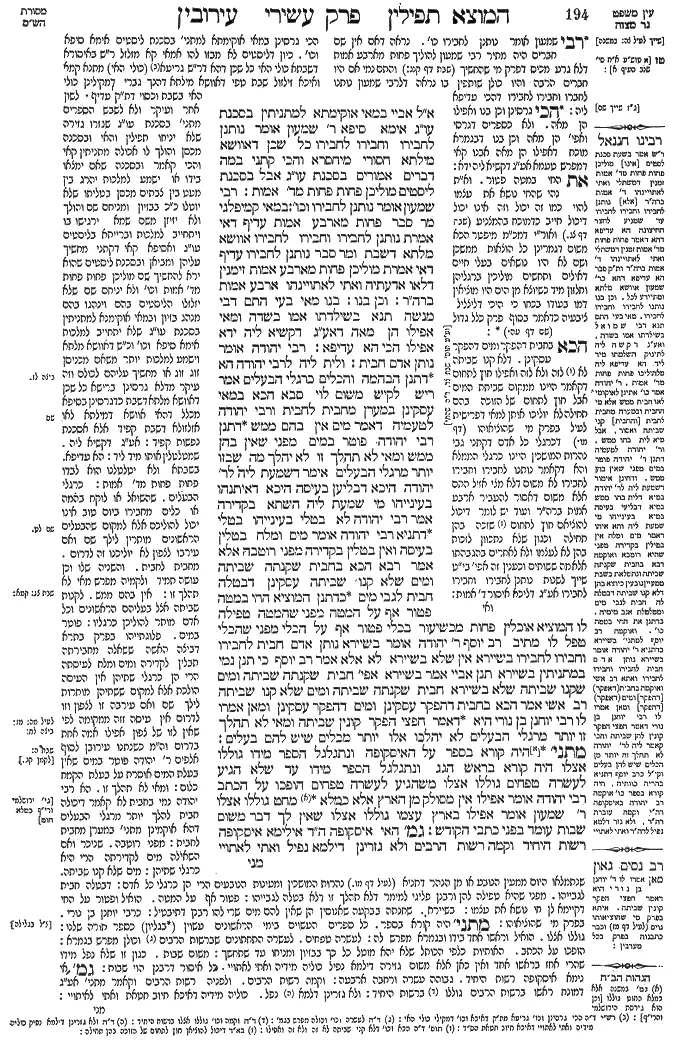
Eruvin 97b - Guemara
א"ל אביי במאי אוקימתא למתניתין בסכנת עו"ג אימא סיפא ר' שמעון אומר נותנן לחבירו וחבירו לחבירו כל שכן דאוושא מילתא חסורי מיחסרא והכי קתני במה דברים אמורים בסכנת עו"ג אבל בסכנת ליסטים מוליכן פחות פחות מד' אמות:
רבי שמעון אומר נותנן לחבירו וכו':
במאי קמיפלגי מר סבר פחות מארבע אמות עדיף דאי אמרת נותנן לחבירו וחבירו לחבירו אוושא מלתא דשבת ומר סבר נותנן לחבירו עדיף דאי אמרת מוליכן פחות מארבע אמות זימנין דלאו אדעתיה ואתי לאתויינהו ארבע אמות ברה"ר:
וכן בנו:
בנו מאי בעי התם דבי מנשה תנא בשילדתו אמו בשדה ומאי אפילו הן מאה דאע"ג דקשיא ליה ידא אפילו הכי הא עדיפא:
רבי יהודה אומר נותן אדם חבית:
ולית ליה לרבי יהודה הא דתנן הבהמה והכלים כרגלי הבעלים אמר ריש לקיש משום לוי סבא הכא במאי עסקינן במערן מחבית לחבית ורבי יהודה לטעמיה דאמר מים אין בהם ממש דתנן רבי יהודה פוטר במים מפני שאין בהן ממש ומאי לא תהלך זו לא יהלך מה שבזו יותר מרגלי הבעלים אימר דשמעת ליה לר' יהודה היכא דבליען בעיסה היכא דאיתנהו בעינייהו מי שמעת ליה השתא בקדירה אמר רבי יהודה לא בטלי בעינייהו בטלי דתניא רבי יהודה אומר מים ומלח בטלין בעיסה ואין בטלין בקדירה מפני רוטבה אלא אמר רבא הכא בחבית שקנתה שביתה ומים שלא קנו שביתה עסקינן דבטלה חבית לגבי מים כדתנן המוציא החי במטה פטור אף על המטה מפני שהמטה טפילה לו המוציא אוכלין פחות מכשיעור בכלי פטור אף על הכלי מפני שהכלי טפל לו מתיב רב יוסף ר' יהודה אומר בשיירא נותן אדם חבית לחבירו וחבירו לחבירו בשיירא אין שלא בשיירא לא אלא אמר רב יוסף כי תנן נמי במתניתין בשיירא תנן אביי אמר בשיירא אפי' חבית שקנתה שביתה ומים שקנו שביתה שלא בשיירא חבית שקנתה שביתה ומים שלא קנו שביתה רב אשי אמר הכא בחבית דהפקר עסקינן ומים דהפקר עסקינן ומאן אמרו לו רבי יוחנן בן נורי היא דאמר חפצי הפקר קונין שביתה ומאי לא תהלך זו יותר מרגלי הבעלים לא יהלכו אלו יותר מכלים שיש להם בעלים:
מתני׳ היה קורא בספר על האיסקופה ונתגלגל הספר מידו גוללו אצלו היה קורא בראש הגג ונתגלגל הספר מידו עד שלא הגיע לעשרה טפחים גוללו אצלו משהגיע לעשרה טפחים הופכו על הכתב רבי יהודה אומר אפילו אין מסולק מן הארץ אלא כמלא מחט גוללו אצלו ר' שמעון אומר אפילו בארץ עצמו גוללו אצלו שאין לך דבר משום שבות עומד בפני כתבי הקודש:
גמ׳ האי איסקופה ה"ד אילימא איסקופה רשות היחיד וקמה רשות הרבים ולא גזרינן דילמא נפיל ואתי לאתויי
Comments from Rashi on Masechet Eruvin Page 97b
הכי גרסינן במאי אוקימתא למתני' בסכנת ליסטים אימא סיפא וכו' . כיון דליסטים לא מבזו להו אמאי קא מזלזל ר"ש באיסורא דשבתא כולי האי כל שכן דהא דר"ש גריעא (כולי האי) מתנא קמא ואיכא זילזול שבת טפי דאוושא מילתא דהנך גברי דמקילינן כולי האי בשבת וכסוי דת"ק עדיף. לשון אחר ועיקר ולא לשבש הספרים מתני' בסכנת עו"ג שגזרו גזירה שלא יניחו תפילין והאי ובסכנה מכסן והולך לו אכולה מתניתין קאי והכי קאמר ובסכנה שאם ימצאו בידו או ישמע למלכות יהרג בין מעט בין צבתים מכסן בטליתו שלא יוטלו כ"כ בבזיון ומניחם שם והולך ולא יזיזן משם שמא ירגישו בו ויתחייב למלכות וברייתא בליסטים עו"ג ואסיפא קאי דקתני מחשיך עליהן ומביאן ובסכנת ליסטים שהוא ירא להחשיך שם מוליכן פחות פחות מד' אמות וכו' ולא יניחם שם שלא יזלזלו הליסטים בהם וינהגו בהם מנהג בזיון ובמאי אוקימנא למתניתין בסכנת עו"ג שלא יתחייב למלכות אימא סיפא וכו' וכ"ש דאוושא מלתא וישמע למלכות יותר משאם מכניסן זוג זוג או מחשיך עליהם לכולם וזה עיקר מדלא גרסינן ברישא כל שכן דאוושא מילתא דשבת כדגרסינן בסיפא מכלל דהאי אוושא דמילתא לאו אזלזולא דשבת קפיד אלא אסכנת נפשות קפיד: אע"ג דקשיא ליה . שמטלטלין אותו מיד ליד: הא עדיפא . בשבתא ולא יטלטלנו הוא לבדו פחות פחות מד' אמות: כרגלי הבעלים . שהשואל או לוקח בהמה או כלים מחבירו ביום טוב אינו יכול להוליכם אלא למקום שהבעלים הראשונים מותרין לילך שם ואם עירבו לצפון לא יוליכנו זה לדרום: מחבית לחבית . והשניה שלו וכן עושה תמיד ולקמיה מפרש מאי לא תהלך זו: אין בהם ממש . לקנות שביתה אצל בעליהם הראשונים וכל אדם מותר להוליכן כרגליו: פוטר במים . פלוגתייהו בפרק בתרא דביצה האשה ששאלה מחבירתה תבלין לקדירה ומים ומלח לעיסתה הרי הן כרגלי שתיהן אין העיסה הולכת אלא למקום ששתיהן מותרות לילך שם ואם עירבה זו לצפון וזו לדרום אין עיסה זזה ממקומה לפי שאין לזו של צפון אפילו אמה אחת בדרום וה"מ כשנתנו עירובן לסוף אלפים ר' יהודה פוטר במים שאין בעלת המים אוסרת על בעלת הקמח כלום: ומאי לא תהלך זו . הא רבי יהודה נמי בחבית לא קאמר דיכולה חבית להלך יותר מרגלי הבעלים דהא אוקמינן מתני' במערן מחבית לחבית: מפני רוטבה . שניכר ואם השאילה מים לקדירתה הרי היא כרגלי שתיהן: מים שלא קנו שביתה . שנתמלאו היום ממעין הנובע או מן הנהר דתניא (לעיל עירובין דף עו.) נהרות המושכין ומעינות הנובעים הרי הן כרגלי כל אדם: דבטלה חבית לגבייהו . מפני שהיא טפילה להן ורבנן פליגי למימר דלא תהלך זו דלא בטלה לגבייהו: פטור אף על המטה . הואיל ופטור על החי דקיימא לן חי נושא את עצמו: בשיירא . שחנתה בבקעה שאנוסין הן שאין להם מים שרי להו רבנן דתיבטיל: כרבי יוחנן בן נורי . בפרק מי שהוציאוהו: מתני' היה קורא בספר . כל ספרים העשויים בימי הראשונים עשוין (בגליון) כספר תורה שלנו: גוללו אצלו . הואיל וראשו אחד בידו ובגמרא מפרש לה: לעשרה טפחים . לעשרה התחתונים שברשות הרבים וכולן מפרש בגמרא: הופכו על הכתב . האותיות כלפי הכותל שלא יהא מוטל כל כך בבזיון ומניחו עד שתחשך: משום שבות . כגון זו שלא נפל מידו שהרי אחז בראשו אחד ואין כאן אלא משום גזירה דילמא נפיל כוליה מידיה ואתי לאתויי כל איסור דרבנן הוי שבות: גמ' אי נימא איסקופה רשות היחיד . גבוהה עשרה ורחבה ארבעה: וקמה רשות הרבים . ולפניה רשות הרבים וקאמר מתני' אע"ג דמונח ראשו ברשות הרבים גוללו ברשות היחיד: ולא גזרינן דלמא נפל . כוליה מידיה דאיכא חיוב חטאת ואתי לאיתויי:
Comments from Tosafot - Eruvin 97b
רבי שמעון אומר נותנן לחבירו כו' . נראה דאם אין שם חברים היה מתיר רבי שמעון להוליך פחות מארבע אמות דלא גרע מכיס דפרק מי שהחשיך (שבת דף קנג:) והתם נמי אם היו חברים הרבה והיו כולן שותפין בו נראה דלרבי שמעון נותנו לחברו וחבירו לחבירו דהכי עדיפא ליה: הכי גרסינן וכן בנו ואפילו הן מאה . ולא כספרים דגרסי ואפי' הן מאה וכן בנו דבגמרא מוכח דאפילו הן מאה אבנו קאי דמפרש טעמא אע"ג דקשיא ליה ידא: את החי במטה פטור . וא"ת נהי שהחי נושא את עצמו להוי כמו זה יכול וזה אינו יכול דיכול חייב כדמוכח בהמצניע (שבת דף צג.) ואור"י דמכ"מ מיפטר הכא משום דגמרינן כל הוצאות ממשכן ושם לא היו נושאים בעלי חיים דאילים ותחשים מוליכין ברגליהן וחלזון מיד כשיוצא מן הים היו מוציאין דמו בעודו בכחו כי היכי דליצליל ציבעיה כדאמר בסוף פרק כלל גדול (שם דף עה.): הכא בחבית דהפקר ומים דהפקר עסקינן . דלא קנו שביתה לא לזה ולא לזה ואפילו חוץ לתחום דקאמר היינו ממקום שביתת המים אבל חוץ לתחום של הזוכה בהם תחילה לא יוליכו אותן למאי דפרישית לעיל בפרק מי שהוציאוהו (עירובין דף מו.) דכרגלי כל אדם דקתני גבי נהרות המושכין היינו כרגלי הממל"א והא דקאמר נותנו לחבירו וחבירו לחבירו לא משום דלא מצי אזיל התם אלא משום דאסור להעביר ארבע אמות ברה"ר ועוד יש לומר דיכול להוציאם חוץ לתחום שזכה בהן תחילה וכגון שלא נתכוון לזכות בהן לא לעצמו ולא לאחרים בהגבהתו אלא מה ששותים וכענין זה אפי' בי"ט שייך לשנות נותנן לחבירו וחבירו לחבירו אע"ג דליכא איסור ד' אמות:
Eruvin 97b - Mishnah translated into english
Abaye said to him: In what manner did you establish our mishna as dealing with the danger posed by gentiles? Say the latter clause of the mishna as follows: Rabbi Shimon says that one gives them to another and the other passes them to another. In that case, all the more so will the matter be conspicuous, and they should fear the decree issued by the gentiles.
The Gemara answers: The mishna is incomplete and is teaching the following: In what case is this statement that the finder covers the phylacteries said? It is where the concern is danger posed by gentiles. However, where the concern is danger posed by bandits, one carries them less than four cubits at a time. In that case Rabbi Shimon disagrees, maintaining that it is preferable that many people carry the phylacteries.
It is stated in the mishna that Rabbi Shimon says: One gives them to another and the other passes them to another. The Gemara asks: With regard to what principle do they disagree? One Sage, the first tanna, holds that having one person carrying the phylacteries less than four cubits at a time is preferable, as if you say that the finder gives them to another, and the other passes them to another, Shabbat desecration will be noticeable, thereby demeaning Shabbat’s character as a sacred day of rest.
And the other Sage, Rabbi Shimon, holds that the solution that one gives the phylacteries to another is preferable, as if you say that the finder carries them less than four cubits at a time, sometimes it is not in his thoughts and will unwittingly come to carry the phylacteries four cubits in the public domain. That is unlikely if there are numerous people together.
It was stated in the mishna: And the same is true with regard to one’s son. The Gemara is surprised: What is his son doing there in the field necessitating his retrieval in this way? The school of Menashe taught: It is referring to a case where his mother gave birth to him in a field, and he must be brought to town.
And what may be inferred from the mishna’s ruling that the baby is passed from one person to the next, even if it requires a hundred people? This teaches that although it is difficult for the child to be passed from hand to hand, even so, this method of transporting him is preferable to his being carried by one person less than four cubits at a time.
It was stated in the mishna that Rabbi Yehuda says: A person gives a barrel to another, and the other may pass it to another, and in that way they may take it even beyond the Shabbat limit. The Gemara asks: And is Rabbi Yehuda not of the opinion of that which we learned in a mishna: The distance that an animal and vessels may be taken is like the distance that the feet of the owners may go with regard to Shabbat limits?
Reish Lakish said in the name of Levi the Elder: With what are we dealing here? We are dealing with a case where one pours the water from one barrel to another barrel so that only the water, rather than the barrel itself, is taken beyond the limit. And Rabbi Yehuda follows his usual reasoning, as he said: Water has no substance, i.e., it is not significant enough for its transfer beyond the Shabbat limit to be prohibited.
As we learned in a mishna that discusses a dispute on this issue: If one person adds flour for dough while another adds the water, the Rabbis say that the dough may only be taken as far as both owners are permitted to go, whereas Rabbi Yehuda exempts water from any limit due to the fact that it has no substance.
And what, then, is the meaning of the Rabbis’ statement in the mishna: This may not go farther than the feet of the owners may go, which apparently refers to the barrel? It means: That which is in this barrel may not go farther than the feet of the owners may go.
The Gemara rejects this explanation. Say that you heard Rabbi Yehuda express his opinion that water has no substance in a case where it is absorbed in dough; but in a case where it is in its pure, unadulterated state did you hear him say so? Now, if with regard to water in a pot of cooked food Rabbi Yehuda said that it is not nullified, would it be nullified when it is in its pure, unadulterated state? That is clearly not the case, as it was taught in a baraita that Rabbi Yehuda says: Water and salt are nullified in dough, as they are absorbed into it and are not independently discernible. However, they are not nullified in a pot of cooked food, because the water and salt are discernible in its gravy.
Rather, Rava rejected this explanation and said: Here, we are dealing with a barrel that belonged to a particular individual who acquired residence at the start of Shabbat in a specific location, and water that did not remain in one place, i.e., spring or river water, and that does not belong to any individual who acquired residence. In that case, the barrel is nullified relative to the water, since the barrel is designated to hold the water.
As we learned in a mishna: One who carries out a living person on a bed from one domain to another on Shabbat is exempt even for carrying out the bed, due to the fact that the bed is secondary to the person. He is exempt for carrying out the living person because a living being carries itself, i.e., the person being carried lightens the load and thereby assists those bearing him.
Similarly, one who carries out an amount of food, less than the measure that determines liability for carrying out food on Shabbat, in a vessel is exempt, even for carrying out the vessel, due to the fact that the vessel is secondary to the food inside it. By the same reasoning, the barrel should be nullified relative to the water it contains.
Rav Yosef raised an objection from the following baraita. Rabbi Yehuda says: If members of a caravan camped in a field wish to drink, one person gives a barrel to another, and the other passes it to another. By inference: In a caravan, yes, it is permitted to do so due to exigent circumstances; however, in a case that is not a caravan, no, it is prohibited. Rather, Rav Yosef said: When we learned the case in the mishna as well, we learned it with regard to a caravan. The Sages were lenient in the case of a caravan due to the lack of water.
Abaye said that this explanation is unnecessary: In a caravan, even if the barrel acquired residence and the water acquired residence, it is permitted to move them. If one is not in a caravan, if the barrel acquired residence and the water did not acquire residence, it is prohibited to move them.
Rav Ashi said: Here, we are dealing with an ownerless barrel and ownerless water, neither of which acquired residence as they do not belong to anyone. And who is the tanna about whom it says in the mishna that they said to Rabbi Yehuda that it may not go farther than the feet of its owners may go? It is Rabbi Yoḥanan ben Nuri, who, consistent with his approach, said that ownerless objects acquire residence where they were located when Shabbat began, and it is prohibited to move them beyond their limit. And what is the meaning of the statement: This may not go farther than the feet of its owners may go, as it has no owner? It means that the barrel and water may not go farther than vessels that have owners, i.e., they may not be moved beyond their limit.
MISHNA: One who was reading a sacred book in scroll form on Shabbat on an elevated, wide threshold, and the book rolled from his hand into the public domain, he may roll it back to himself, since one of its ends remains in his hand.
If he was reading on top the roof, which is a full-fledged private domain, and the book rolled from his hand, as long as the edge of the book did not reach within ten handbreadths above the public domain, the book is still in its own domain, and he may roll it back to himself. However, once the book has reached within ten handbreadths above the public domain, it is prohibited to roll the book back to oneself. In that case, he may only turn it over onto the side with writing, so that the writing of the book will be facedown and not exposed and degraded.
Rabbi Yehuda says: Even if the scroll is removed only a needle breadth from the ground, he rolls it back to himself. Rabbi Shimon says: Even if the scroll is on the ground itself, he rolls it back to himself, as you have nothing that was instituted as a rabbinic decree to enhance the character of Shabbat as a day of rest that stands as an impediment before the rescue of sacred writings.
GEMARA: The Gemara questions the first clause of the mishna: What are the circumstances of this threshold? If you say it is referring to a threshold that is a private domain, and there is a public domain before it, and the mishna teaches that we do not issue a decree lest the entire scroll fall from one’s hand and he come to bring it from a public to a private domain,
Traduction : The William Davidson digital edition of the Koren Noé Talmud, with commentary by Rabbi Adin Even-Israel Steinsaltz.