 Talmud Bavli
Eruvin 64b : Youtube
Rabbi Dr. Moshe WeisblumYoutube
1 video class :
Eruvin Page 64b
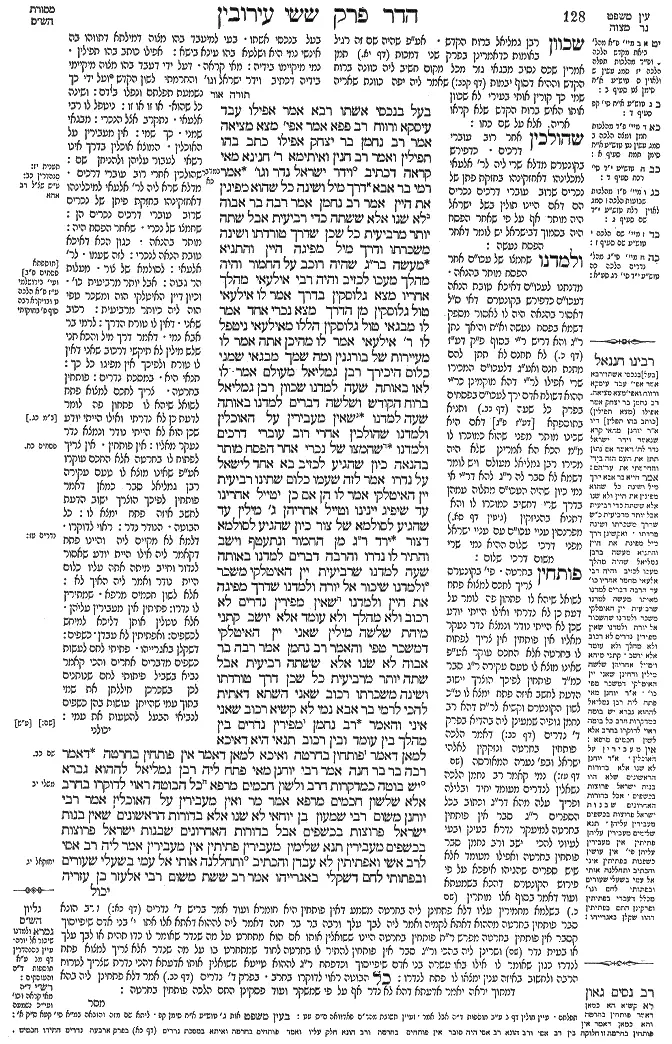
Eruvin 64b - Guemara
בעל בנכסי אשתו רבא אמר אפילו עבד עיסקא ורווח רב פפא אמר אפי' מצא מציאה אמר רב נחמן בר יצחק אפילו כתב בהו תפילין ואמר רב חנין ואיתימא ר' חנינא מאי קראה דכתיב (במדבר כא, ב) וידר ישראל נדר וגו' אמר רמי בר אבא דרך מיל ושינה כל שהוא מפיגין את היין אמר רב נחמן אמר רבה בר אבוה לא שנו אלא ששתה כדי רביעית אבל שתה יותר מרביעית כל שכן שדרך טורדתו ושינה משכרתו ודרך מיל מפיגה היין והתניא מעשה בר"ג שהיה רוכב על החמור והיה מהלך מעכו לכזיב והיה רבי אילעאי מהלך אחריו מצא גלוסקין בדרך אמר לו אילעאי טול גלוסקין מן הדרך מצא נכרי אחד אמר לו מבגאי טול גלוסקין הללו מאילעאי ניטפל לו ר' אילעאי אמר לו מהיכן אתה אמר לו מעיירות של בורגנין ומה שמך מבגאי שמני כלום היכירך רבן גמליאל מעולם אמר לו לאו באותה שעה למדנו שכוון רבן גמליאל ברוח הקודש ושלשה דברים למדנו באותה שעה למדנו שאין מעבירין על האוכלין ולמדנו שהולכין אחרי רוב עוברי דרכים ולמדנו שחמצו של נכרי אחר הפסח מותר בהנאה כיון שהגיע לכזיב בא אחד לישאל על נדרו אמר לזה שעמו כלום שתינו רביעית יין האיטלקי אמר לו הן אם כן יטייל אחרינו עד שיפיג יינינו וטייל אחריהן ג' מילין עד שהגיע לסולמא של צור כיון שהגיע לסולמא דצור ירד ר"ג מן החמור ונתעטף וישב והתיר לו נדרו והרבה דברים למדנו באותה שעה למדנו שרביעית יין האיטלקי משכר ולמדנו שיכור אל יורה ולמדנו שדרך מפיגה את היין ולמדנו שאין מפירין נדרים לא רכוב ולא מהלך ולא עומד אלא יושב קתני מיהת שלשה מילין שאני יין האיטלקי דמשכר טפי והאמר רב נחמן אמר רבה בר אבוה לא שנו אלא ששתה רביעית אבל שתה יותר מרביעית כל שכן דרך טורדתו ושינה משכרתו רכוב שאני השתא דאתית להכי לרמי בר אבא נמי לא קשיא רכוב שאני איני והאמר רב נחמן מפירין נדרים בין מהלך בין עומד ובין רכוב תנאי היא דאיכא למאן דאמר פותחין בחרטה ואיכא למאן דאמר אין פותחין בחרטה דאמר רבה בר בר חנה אמר רבי יוחנן מאי פתח ליה רבן גמליאל לההוא גברא (משלי יב, יח) יש בוטה כמדקרות חרב ולשון חכמים מרפא כל הבוטה ראוי לדוקרו בחרב אלא שלשון חכמים מרפא אמר מר ואין מעבירין על האוכלין אמר רבי יוחנן משום רבי שמעון בן יוחאי לא שנו אלא בדורות הראשונים שאין בנות ישראל פרוצות בכשפים אבל בדורות האחרונים שבנות ישראל פרוצות בכשפים מעבירין תנא שלימין מעבירין פתיתין אין מעבירין אמר ליה רב אסי לרב אשי ואפתיתין לא עבדן והכתיב (יחזקאל יג, יט) ותחללנה אותי אל עמי בשעלי שעורים ובפתותי לחם דשקלי באגרייהו אמר רב ששת משום רבי אלעזר בן עזריה
Comments from Rashi on Masechet Eruvin Page 64b
בעל בנכסי אשתו . בעי למיעבד בהו מצוה דמילתא דתווהו בה אינשי נמי היא ושלטא בהו עינא בישא: אפילו כותב בהו תפילין . נמי מיקיימו בידיה: מאי קראה . דעל ידי דעבד בהו מצוה מיקיימי בידיה דכתיב וידר ישראל וגו' והחרמתי לשון הקדש ועל ידי כך נשמעת תפלתם ונפלו בידם: ושינה כל שהוא . או זו או זו: ניטפל לו רבי אלעאי . נתקרב אצל הנכרי: מבגאי שמני . כך שמי: אין מעבירין על האוכלין . המוצא אוכלין בדרך אינו רשאי לעבור עליהן ולהניחן שם: שהולכין אחרי רוב עוברי דרכים . מדלא שרא ליה לר' אלעאי למיכלינהו דאחזקינהו בחזקת פיתן של נכרים שרוב עוברי דרכים נכרים הן: שחמצו של נכרי . שאחר הפסח היה: מותר בהנאה . כגון הכא דאיכא טובת הנאה לנכרי: לזה שעמו . לר' אלעאי: לסולמא של צור . מעלות הר גבוה: אבל יותר מרביעית כו' . וכיון דיין האיטלקי הוה ומשכר טפי הוה ליה כיותר מרביעית: רכוב שאני . דאין לו טורח הדרך: לרמי בר אבא נמי . דאמר דרך מיל והכא תני שלש מילין לא תיקשי דרכוב שאני דאין לו טורח ולפיכך אין מפיגו כל כך: תנאי היא . במסכת נדרים: פותחין בחרטה . צריך לחכם למצוא פתח לשואל שיהא לו פתחון פה לומר לדעת כן לא נדרתי ואילו הייתי יודע שכן הוא לא הייתי נודר ונמצא נדר נעקר מאליו: אין פותחין . אין צריך לפתוח לו בחרטה אלא החכם עוקרו אע"פ שאינו מוצא לו טעם עקירה רבן גמליאל סבר כמאן דאמר פותחין לפיכך הוצרך ישוב הדעת לחשב איזה פתח ימצא לו: כל הבוטה . הנודר נדר: ראוי לדוקרו . דלמא לא מקיים ליה והיינו פתח דקאמר ליה אילו היית יודע שאסור לנדור וחייב מיתה אתה עליו כלום היית נודר ואמר ליה האיך לא: אלא לשון חכמים מרפא . שמתירין לו נדרו: פתיתין אין מעבירין עליהן . אלא נוטלין אותן דליכא למיחש לכשפים: ואפתיתין לא עבדן . כשפים: דשקלן באגרייהו . פתיתי לחם לעשות כשפים מדברים אחרים והכי קאמר נביא בשביל פיתותי לחם שנותנים לכן בשכרכן חיללתן את שמי בתוך עמי שהייתן עושות בהן כשפים לנביאי הבעל להטעות את עמי:
Comments from Tosafot - Eruvin 64b
שכוון רבן גמליאל ברוח הקדש . אע"פ שהיה שם זה רגיל באומות כדאמרינן בפרק שני דמכות (דף יא.) תמן אמרין שכם נסיב מבגאי גזר מכל מקום חשיב ליה כוונה ברוח הקדש וההיא דסוף יבמות (דף קכב:) שאמר ליה יפה כוונת שאריה שמי כך קורין אותי בעירי לא שכוון אותו האיש ברוח הקדש שלא קראו אריה אלא על שם כחו: שהולכין אחר רוב עוברי דרכים . כדפירש בקונטרס מדלא שרי ליה לר' אלעאי למכלינהו דאחזקינהו בחזקת פתן של נכרים שרוב עוברי דרכים נכרים הם דאם היינו תולין בשל ישראל היה מותר אף על פי שאחר הפסח היה בסמוך דבישראל יש לומר דאחר הפסח נעשה: ולמדנו שחמצו של עכו"ם אחר הפסח מותר בהנאה . מדנתנו לעכו"ם דאיכא טובת הנאה דעכו"ם כדפירש בקונטרס דאי ס"ל דאסור בהנאה היה לו לאסור מספק דשמא בפסח נעשה וא"ת והיאך נתן ר"ג והא דריש ר"י בסוף פ"ק דע"ז (דף כ.) לא תחנם לא תתן להם מתנת חנם ואע"ג דלעכו"ם המכירו שרי אפילו לר"י דהא מוקמינן כר"י ההוא דשולח אדם ירך לעכו"ם בפסחים בפרק כל שעה (דף כב.) ותניא בתוספתא [דע"ז פ"ג] דאם היא שכינו מותר מפני שהוא כמוכרו לו מ"מ הכא הא אמרינן שלא היה מכירו רבן גמליאל מעולם ויש לומר דשמא לא סבר לה ר"ג להא דר"י אי נמי כיון שהיה העכו"ם מתלוה עמהן בדרך שרי דחשיב כמוכרו לו והא דתניא בהניזקין (גיטין דף סא.) מפרנסין עניי עכו"ם עם עניי ישראל מפני דרכי שלום ההיא נמי שרי משום דרכי שלום: פותחין בחרטה . פי' בקונטרס צריך לחכם למצוא פתח לשואל שיהא לו פתחון פה לומר על דעת כן לא נדרתי ואילו הייתי יודע שכן לא הייתי נודר ונמצא נדר נעקר מאליו אין פותחין אין צריך לפתוח לו בחרטה אלא החכם עוקר אע"פ שאינו מוצא לו טעם עקירה ר"ג סבר כמ"ד פותחין לפיכך הוצרך יישוב הדעת לחשב איזה פתח ימצא לו ע"כ לשון הקונטרס וקשיא לר"ת דהא רב נחמן גופיה שמעינן ליה בהדיא בפרק ד' נדרים (דף כב:) דאמר הלכה פותחין בחרטה ונזקקין לאלהי ישראל ובפ' נערה המאורסה (שם דף עז:) נמי קאמר רב נחמן הלכה נשאלין לנדרים מעומד יחיד ובלילה ופריך עלה מהא דר"ג וכתוב בכל הספרים ר"ג סבר אין פותחין בחרטה למיעקר נדרא בעינן ובעי לעיוני להכי ישב ורב נחמן סבר פותחין בחרטה ואפילו מעומד אלא שיש ספרים שהגיהו איפכא על פי פירוש הקונטרס דהכא בשמעתא ועוד דאמר בסוף אלו מותרין (שם כ.) בשלמא מחמירין עליו דלא פתחינן ליה בחרטה משמע דאין פותחין היא חומרא ועוד אמר בריש ד' נדרים (דף כא:) דרב הונא סבר פותחין בחרטה מההוא דאתא לקמיה ואמר ליה לבך עלך ורבה בר בר חנה דאמר ליה לההוא דאתא אלו אתו י' בני אדם שיפייסוך קסבר אין פותחין בחרטה מפרש ר"ת פותחין בחרטה היינו ששואלין אותו אם הוא מתחרט על מה שנדר שאומר לו כדו תהית או לבך עלך או בעית נדר (שם) ושרינן ליה בהכי ור"ג סבר אין פותחין להתיר לו בחרטה לחוד שמתחרט בו על מה שנדר אלא צריך למצוא פתח לנדרו כגון שאומר לו אילו באו עשרה בני אדם שיפייסוך וכדפתח ר"ג לההוא טייעא ששואלין אותו אדעתא דהכי נדרת שצריך לטרוח הרבה ולחשוב באיזה ענין ימצאו לו פתח לנדרו: כל הבוטה ראוי לדוקרו בחרב . בפרק ד' נדרים (דף כב.) אמר דלא פתחינן ליה בהא דמתוך יראה יאמר אדעתא דהא לא נדר אף על פי שמשקר ועוד פסקינן התם הלכה פותחין בחרטה:
Eruvin 64b - Mishnah translated into english
a husband who acquired rights to his wife’s property that she had brought into the marriage as her dowry should use part of the profits for the acquisition of a Torah scroll.
Rava said: Even if he entered into a business venture and made a large profit, he should act in a similar manner. Rav Pappa said: Even if he found a lost article, he should do the same. Rav Naḥman bar Yitzḥak said: He need not use the money to commission the writing of a Torah scroll, as even if he wrote a set of phylacteries with it, this, too, is a mitzva whose merit will enable him to retain the rest of the money.
Rav Ḥanin said, and some say it was Rabbi Ḥanina who said: What is the verse that alludes to this? As it is written: “And Israel vowed a vow to the Lord and said: If You will indeed deliver this people into my hand, then I will consecrate their cities” (Numbers 21:2), which shows that one who wishes to succeed should sanctify a portion of his earnings for Heaven.
The Gemara now cites additional teachings relating to the drinking of wine. Rami bar Abba said: Walking a path of a mil, and similarly, sleeping even a minimal amount, will dispel the effect of wine that one has drunk. Rav Naḥman said that Rabba bar Avuh said: They only taught this with regard to one who has drunk a quarter-log of wine, but with regard to one who has drunk more than a quarter-log, this advice is not useful. In that case, walking a path of such a distance will preoccupy and exhaust him all the more, and a small amount of sleep will further intoxicate him.
The Gemara poses a question: Does walking a path of only a mil dispel the effects of wine? Wasn’t it taught in a baraita: There was an incident involving Rabban Gamliel, who was riding a donkey and traveling from Akko to Keziv, and his student Rabbi Elai was walking behind him. Rabban Gamliel found some fine loaves of bread on the road, and he said to his student: Elai, take the loaves from the road. Further along the way, Rabban Gamliel encountered a certain gentile and said to him: Mavgai, take these loaves from Elai.
Elai joined the gentile and said to him: Where are you from? He said to him: From the nearby towns of guardsmen. He asked: And what is your name? The gentile replied: My name is Mavgai. He then inquired: Has Rabban Gamliel ever met you before, seeing as he knows your name? He said to him: No.
The Gemara interrupts the story in order to comment: At that time we learned that Rabban Gamliel divined the gentile’s name by way of divine inspiration that rested upon him. And at that time we also learned three matters of halakha from Rabban Gamliel’s behavior: We learned that one may not pass by food, i.e., if a person sees food lying on the ground, he must stop and pick it up.
We also learned that we follow the majority of travelers. Since the area was populated mostly by gentiles, Rabban Gamliel assumed that the loaf belonged to a gentile, and was consequently prohibited to be eaten by a Jew. Therefore, he ordered that it be given to a gentile. And we further learned that with regard to leavened bread belonging to a gentile, it is permitted to benefit from this food after Passover. The incident recounted above occurred not long after the festival of Passover. By giving the loaf to the gentile instead of burning it in accordance with the halakhot of leavened bread that remains after Passover, Rabban Gamliel gained a certain benefit from it in the form of the gentile’s gratitude. This benefit is regarded as having monetary value.
The Gemara resumes the narrative: When Rabban Gamliel arrived in Keziv, a person came before him to request that he dissolve his vow. Rabban Gamliel said to the one who was with him, i.e., Rabbi Elai: Did we drink a quarter-log of Italian wine earlier? He said to him: Yes. Rabban Gamliel replied: If so, let him journey after us until the effect of our wine is dispelled, after which we may consider his issue.
And that person journeyed after them for three mil, until Rabban Gamliel arrived at the Ladder of Tyre. When he arrived at the Ladder of Tyre, Rabban Gamliel alighted from his donkey and wrapped himself in his shawl in the customary manner of a judge, who wraps himself in a shawl in order to sit in awe at the time of judgment, and he sat and dissolved his vow.
The Gemara continues: At that time we learned many matters of halakha from Rabban Gamliel’s conduct. We learned that a quarter-log of Italian wine intoxicates, and we learned that one who is intoxicated may not issue a halakhic ruling, and we learned that walking on a path dispels the effect of wine, and lastly we learned that one may not annul vows when he is either mounted on an animal, or walking, or even standing, but only when he is sitting.
In any event, the baraita is teaching that Rabban Gamliel found it necessary to walk three mil in order to become sober after drinking wine. The Gemara resolves the contradiction. Italian wine is different in that it is more intoxicating, therefore more extended activity is required in order to dispel its effects.
The Gemara poses a question: But didn’t Rav Naḥman say that Rabba bar Avuh said: They taught this only with regard to one who has drunk a quarter-log of wine, but with regard to one who has drunk more than a quarter-log, walking that distance will preoccupy and exhaust him all the more, and a small amount of sleep will further intoxicate him? If Italian wine is more intoxicating than other wine, shouldn’t a quarter-log be considered like a larger quantity of other wine?
The Gemara answers: Being mounted on an animal is different from walking; since he is not on foot it is not such a tiring activity. Accordingly, riding three mil will not exhaust him; rather, it will dispel the effect of the wine. The Gemara adds: Now that you have arrived at this conclusion, according to Rami bar Abba, who says that walking one mil is sufficient, it is also not difficult, as he too can say that riding is different from walking. Since one is not on foot, the effects of the wine are not dispelled as quickly. Therefore, three mil is necessary.
The Gemara poses a question with regard to one of the details of the story: Is that so, that Rabban Gamliel was required to alight from his donkey in order to annul the vow? But didn’t Rav Naḥman say: One may annul vows walking, standing, or mounted? Why, then, did Rabban Gamliel dismount his donkey?
The Gemara answers: This is a dispute between tanna’im, as there is an authority who says that one may open the possibility for dissolution of a vow by means of regret alone. In other words, there is no need to search for a special reason in order to dissolve a person’s vow; it is enough to ascertain that he regrets making it. This can be done easily, even while walking, standing, or riding.
And there is another authority who says that one may not open the possibility for dissolution of a vow by means of regret alone. Rather, one must find an opening, i.e., a particular reason to dissolve the vow in question, which requires a thorough analysis of the circumstances of the vow. This task must be performed free of distractions, which means one must be seated (Tosafot).
As Rabba bar bar Ḥana said that Rabbi Yoḥanan said: With what did Rabban Gamliel open the possibility for dissolving his vow for that man, i.e., what opening did he find for him? Rabban Gamliel cited the verse: “There is one who utters like the piercings of a sword; but the tongue of the wise is health” (Proverbs 12:18) and explained it as follows: Whoever utters a vow deserves to be pierced by a sword, as he might fail to fulfill it. Therefore, one should not vow at all. Had you known that whoever vows is liable to be executed, would you have vowed? Rather, it is the tongue of the wise that heals, as when a Sage dissolves a vow, he dissolves it retroactively, and it is as though one had never taken the vow.
The Gemara continues with its analysis of the baraita. The Master said previously: One of the halakhot learned from the incident involving Rabban Gamliel was that one may not pass by food; rather, one must treat the food with respect and pick it up. Rabbi Yoḥanan said in the name of Rabbi Shimon bar Yoḥai: They taught this ruling only in the early generations, when Jewish women were not accustomed to using witchcraft. However, in the later generations, when Jewish women are accustomed to using witchcraft, one may pass by food, as a spell might have been cast on the bread, and one must not put himself in unnecessary danger.
A Sage taught: If the loaves are whole, one may pass them by, as they might have been placed there for the purposes of witchcraft; however, if they are in pieces, one may not pass them by, because bread in pieces is not used for witchcraft. Rav Asi said to Rav Ashi: Do they not perform magic with pieces of bread? Isn’t it written in the verse that deals with witchcraft: “And you have profaned Me among My people for handfuls of barley and for pieces of bread” (Ezekiel 13:19)? The Gemara answers: The verse does not mean that they used pieces of bread in their witchcraft, but rather that they took such pieces as their wages.
Rav Sheshet said in the name of Rabbi Elazar ben Azarya:
Traduction : The William Davidson digital edition of the Koren Noé Talmud, with commentary by Rabbi Adin Even-Israel Steinsaltz.