 Talmud Bavli
Bava Kamma 98b : Youtube
Daf TubeYoutube
2 video classes :
Bava Kamma Page 98b
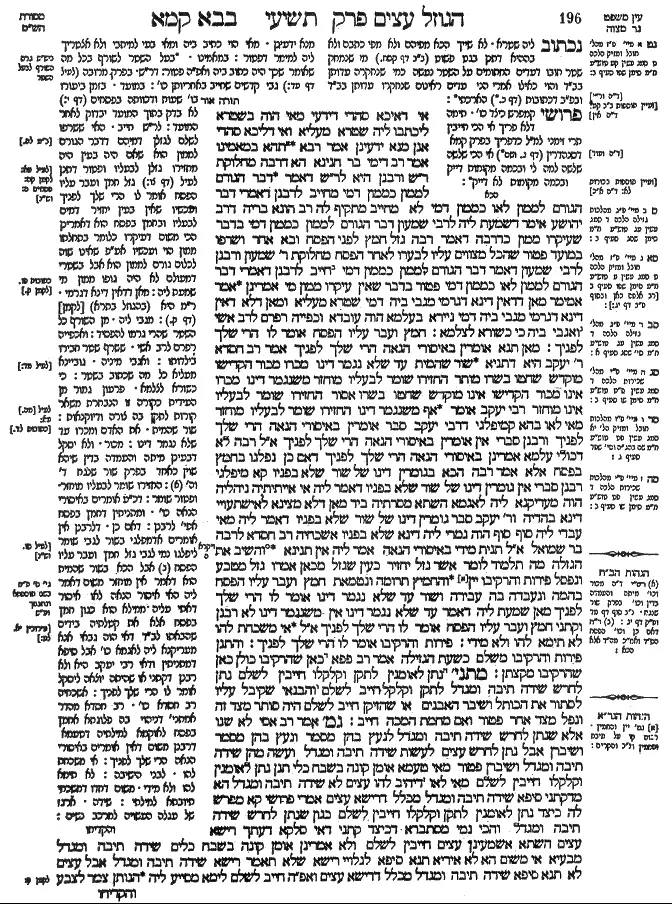
Bava Kamma 98b - Guemara
אי דאיכא סהדי דידעי מאי הוה בשטרא ליכתבו ליה שטרא מעליא ואי דליכא סהדי אנן מנא ידעינן אמר רבא תהא במאמינו אמר רב דימי בר חנינא הא דרבה מחלוקת ר"ש ורבנן היא לר"ש דאמר דבר הגורם לממון כממון דמי מחייב לרבנן דאמרי דבר הגורם לממון לאו כממון דמי לא מחייב מתקיף לה רב הונא בריה דרב יהושע אימר דשמעת ליה לרבי שמעון דבר הגורם לממון כממון דמי בדבר שעיקרו ממון כדרבה דאמר רבה גזל חמץ לפני הפסח ובא אחר ושרפו במועד פטור שהכל מצווים עליו לבערו לאחר הפסח מחלוקת ר' שמעון ורבנן לרבי שמעון דאמר דבר הגורם לממון כממון דמי חייב לרבנן דאמרי דבר הגורם לממון לאו כממון דמי פטור בדבר שאין עיקרו ממון מי אמרינן אמר אמימר מאן דדאין דינא דגרמי מגבי ביה דמי שטרא מעליא ומאן דלא דאין דינא דגרמי מגבי ביה דמי ניירא בעלמא הוה עובדא וכפייה רפרם לרב אשי ואגבי ביה כי כשורא לצלמא:
חמץ ועבר עליו הפסח אומר לו הרי שלך לפניך:
מאן תנא אומרין באיסורי הנאה הרי שלך לפניך אמר רב חסדא ר' יעקב היא דתניא שור שהמית עד שלא נגמר דינו מכרו מכור הקדישו מוקדש שחטו בשרו מותר החזירו שומר לבעליו מוחזר משנגמר דינו מכרו אינו מכור הקדישו אינו מוקדש שחטו בשרו אסור החזירו שומר לבעליו אינו מוחזר רבי יעקב אומר אף משנגמר דינו החזירו שומר לבעליו מוחזר מאי לאו בהא קמיפלגי דרבי יעקב סבר אומרין באיסורי הנאה הרי שלך לפניך ורבנן סברי אין אומרין באיסורי הנאה הרי שלך לפניך א"ל רבה לא דכולי עלמא אמרינן באיסורי הנאה הרי שלך לפניך דאם כן נפלגו בחמץ בפסח אלא אמר רבה הכא בגומרין דינו של שור שלא בפניו קא מיפלגי רבנן סברי אין גומרין דינו של שור שלא בפניו דאמר ליה אי אייתיתיה ניהליה הוה מעריקנא ליה לאגמא השתא מסרתיה ביד מאן דלא מצינא לאישתעויי דינא בהדיה ור' יעקב סבר גומרין דינו של שור שלא בפניו דאמר ליה מאי עבדי ליה סוף סוף הוה גמרי ליה דינא שלא בפניו אשכחיה רב חסדא לרבה בר שמואל א"ל תנית מידי באיסורי הנאה אמר ליה אין תנינא (ויקרא ה, כג) והשיב את הגזלה מה תלמוד לומר אשר גזל יחזיר כעין שגזל מכאן אמרו גזל מטבע ונפסל פירות והרקיבו יין והחמיץ תרומה ונטמאת חמץ ועבר עליו הפסח בהמה ונעבדה בה עבירה ושור עד שלא נגמר דינו אומר לו הרי שלך לפניך מאן שמעת ליה דאמר עד שלא נגמר דינו אין משנגמר דינו לא רבנן וקתני חמץ ועבר עליו הפסח אומר לו הרי שלך לפניך א"ל אי משכחת להו לא תימא להו ולא מידי:
פירות והרקיבו אומר לו הרי שלך לפניך:
והתנן פירות והרקיבו משלם כשעת הגזילה אמר רב פפא כאן שהרקיבו כולן כאן שהרקיבו מקצתן:
מתני׳ נתן לאומנין לתקן וקלקלו חייבין לשלם נתן לחרש שידה תיבה ומגדל לתקן וקלקל חייב לשלם והבנאי שקיבל עליו לסתור את הכותל ושיבר האבנים או שהזיקן חייב לשלם היה סותר מצד זה ונפל מצד אחר פטור ואם מחמת המכה חייב:
גמ׳ אמר רב אסי לא שנו אלא שנתן לחרש שידה תיבה ומגדל לנעץ בהן מסמר ונעץ בהן מסמר ושיברן אבל נתן לחרש עצים לעשות שידה תיבה ומגדל ועשה מהן שידה תיבה ומגדל ושיברן פטור מאי טעמא אומן קונה בשבח כלי תנן נתן לאומנין וקלקלו חייבין לשלם מאי לאו דיהיב להו עצים לא שידה תיבה ומגדל הא מדקתני סיפא שידה תיבה ומגדל מכלל דרישא עצים אמרי פרושי קא מפרש לה כיצד נתן לאומנין לתקן וקלקלו חייבין לשלם כגון שנתן לחרש שידה תיבה ומגדל והכי נמי מסתברא דכיצד קתני דאי סלקא דעתך רישא עצים השתא אשמעינן עצים חייבין לשלם ולא אמרינן אומן קונה בשבח כלים שידה תיבה ומגדל מבעיא אי משום הא לא איריא תנא סיפא לגלויי רישא שלא תאמר רישא שידה תיבה ומגדל אבל עצים לא תנא סיפא שידה תיבה ומגדל מכלל דרישא עצים ואפ"ה חייב לשלם לימא מסייע ליה הנותן צמר לצבע
Comments from Rashi on Masechet Bava Kamma Page 98b
מנא ידעינן . מאי הוי כתיב ביה ומאי בעי למיתבי ולא אצטריך ליה למימר דפטור: במאמינו . בעל השטר לשורף בכל מה שאומר שכך היה כתוב ביה ואפ"ה פטור: דר"ש . בפרק מרובה (לעיל בבא קמא דף עד:) גבי קדשים שחייב באחריותן כו': במועד . בזמן ביעורו בו' שעות ודכוותה בפסחים (דף י:) לא בדק בתוך המועד יבדוק לאחר המועד: לר"ש חייב . האי ששרפו לשלם לגזלן דמיהם דדבר הגורם לממון הוא שאם היה בעין היה מחזירו גזלן לבעליו ופטור דתנן לעיל (בבא קמא דף צו:) גזל חמץ ועבר עליו הפסח אומר לו הרי שלך לפניך ועכשיו שאין בעין יחזיר דמים לבעליו ובחמץ בפסח הוא דאמרינן הכי משום דעיקרו כלומר בתחלתו ממון הוי ועכשיו אע"פ שאינו שוה לכלום גורם לממון הוא אבל בשטרי דמעולם לא היה גופו ממון מי שמעת ליה: מאן דדאין דינא דגרמי . ר"מ היא (בהגוזל בתרא) [לקמן] (דף ק.): מגבי ליה . מן השורף כל השטר שהרי גרמו להפסיד: ואכפייה רפרם לרב אשי . ששרף שטר חבירו בילדותו: ואגבי מיניה . גוביינא מעליא כל מה שכתוב בשטר: כי כשורא לצלמא . פרעון גמור מן העידית כקורה זו הנבחרת משאר קורות לתקן בה צורה ודיוקנאות: שור שהמית . את האדם ומכרו עד שלא נגמר דינו: מכור . ולא יסקל דבעינן מיתה והעמדה בדין שיהא שוין כאחד בפרק שור שנגח ד' וה': החזירו שומר לבעליו מוחזר . ופטור שומר: דכ"ע אומרים באיסורי הנאה כו' . ומתניתין דחמץ בפסח אפי' לרבנן: דאם כן . דלרבנן אין אומרים אדמפלגי בשור לגבי שומר ליפלגו נמי לגבי גזל חמץ ועבר עליו הפסח אבל הכא בשור שהמית הוא דאמר אין מוחזר משום דאמר ליה האי איסור הנאה לאו איסור דאתי עליה ממילא הוא כגון חמץ בפסח אלא את קטלתיה בידים שהבאתו לב"ד דאי הוה גבאי אנא מעריקנא ליה לאגמא כו' אבל סיפא דמתניתין ודאי רבי יעקב היא ולא רבנן דקתני או שהיתה יוצאה ליסקל אומר לו הרי שלך לפניך: אשכחיה רב חסדא כו' . רב חסדא מהדר אמתני' דניהוי בה פלוגתא אחמץ בפסח לאוקמא למילתיה דטעמא דרבנן משום דאין אומרים באיסורי הנאה הרי שלך לפניך: אי משכחת להו . לבני הישיבה: לא תימא להו ולא מידי . משום דחדו דמשכחי תיובתא למילתי: שידה . ארגז של עגלה העשויה למרכב נשים:
Comments from Tosafot - Bava Kamma 98b
נכתוב ליה שטרא . לא שייך הכא מפיהם ולא מפי כתבם ולא בההיא דתנן בגט פשוט (ב"ב דף קסח.) מי שנמחק שטר חובו דעדים החתומים על השטר נעשה כמי שנחקרה עדותן בב"ד והוי כאילו אמרי הני עדים ראינום שנחקרו עדותן בב"ד ובפ"ב דכתובות (דף כ:) הארכתי.: פרושי קמפרש כיצד כו' . תימה דלא פריך אי הכי חייבין תרי זימני למ"ל כדפריך בפרק קמא דסנהדרין (דף ג. ושם) אי הכי שלשה שלשה למה לי ובכמה מקומות דייק ובכמה מקומות לא דייק:
Bava Kamma 98b - Mishnah translated into english
If there are witnesses who know what was written in the promissory note, they should write a new, proper, promissory note for him, and there will not be any loss. And if there are no witnesses, how do we know what was written in the promissory note in order to assess liability? Rava says: Let it refer to a case where the one who burned the promissory note trusts the creditor with regard to the details of the promissory note. Despite the concession of the one who burned the promissory note with regard to the amount of the debt, Rabba holds that he is exempt, since the value of the debt is not inherent in the actual paper.
Rav Dimi bar Ḥanina said: This statement of Rabba is the subject of a dispute between Rabbi Shimon and the Rabbis. According to the opinion of Rabbi Shimon, who says that an item that causes financial loss is considered to have monetary value, the one who burned the promissory note is liable. According to the opinion of the Rabbis, who say that an item that causes financial loss is not considered to have monetary value, he is not liable. Rabba holds in accordance with the Rabbis, and therefore rules that one who burns a promissory note is exempt from liability.
Rav Huna, son of Rav Yehoshua, objects to this: Say that you heard the opinion of Rabbi Shimon, that an item that causes financial loss is considered to have monetary value, with regard to a case where he damaged an item that has intrinsic monetary value, in accordance with the statement of Rabba. As Rabba says: If one robbed another of leavened bread before Passover, and another came and burned it during the festival of Passover, when the leavened bread had already become forbidden, the one who burned it is exempt from paying the robber, as all are commanded to destroy the leavened bread, and he therefore performed a mitzva. If he burned it after Passover, that is the matter of dispute between Rabbi Shimon and the Rabbis.
Rav Huna, son of Rav Yehoshua, explains: According to the opinion of Rabbi Shimon, who says that an item that causes financial loss is considered to have monetary value, the one who burned it is liable, and he must pay the robber. Although it is prohibited to derive benefit from leavened bread, the robber could have returned it to the victim and been exempt from liability. Now that it has been burned, the robber will have to pay the monetary value of the leavened bread at the time of the theft. According to the opinion of the Rabbis, who say that an item that causes financial loss is not considered to have monetary value, he is exempt. But with regard to an item such as a promissory note, which has no intrinsic monetary value, do we say that in Rabbi Shimon’s opinion it too is considered to have monetary value?
The Gemara cites a ruling for the case where one burns the promissory note of another. Ameimar said: The one who rules that there is liability for damage caused by indirect action collects, in this case, the value of a proper promissory note, i.e., the amount of the debt, from the one who burned the promissory note. The one who rules that there is no liability for damage caused by indirect action collects, in this case, merely the value of the paper. The Gemara relates that there was an incident like this one, and Rafram forced Rav Ashi, who had burned a document in his youth, to pay damages, and he collected payment, in this case, as if he had damaged a beam used for crafting a sculpture, i.e., he paid him the value of the debt listed in the promissory note.
§ The mishna teaches that if one robbed another of leavened bread, and Passover elapsed over it, and it is therefore prohibited to derive benefit from it, the robber says to his victim: That which is yours is before you. The Gemara asks: Who is the tanna who taught that with regard to items from which benefit is forbidden one says: That which is yours is before you? Rav Ḥisda said: It is the opinion of Rabbi Ya’akov, as it is taught in a baraita (Tosefta 5:4): If there was an ox that killed a person and is consequently liable to be stoned, and before the court sentenced it the owner sold the ox, the sale is valid; if he consecrated it, the consecration is valid; if he slaughtered it, its flesh is permitted; if a bailee returned it to its owner, it is returned.
The baraita continues: By contrast, from when it was sentenced to be stoned it is prohibited to derive benefit from it, and if the owner sold it, the sale is not valid; if he consecrated it, the consecration is not valid; if he slaughtered it, its flesh is forbidden; if a bailee returned it to its owner, it is not returned, as once it is prohibited to derive benefit from it, the ox is worthless. Rabbi Ya’akov says: Even after it was sentenced, if a bailee returned it to its owner, it is returned.
Rav Ḥisda completes his analysis: What, is it not that they disagree about this issue, that Rabbi Ya’akov holds that with regard to items from which benefit is forbidden one can say: That which is yours is before you, and the Rabbis hold that with regard to items from which benefit is forbidden one cannot say: That which is yours is before you?
Rabba said to him in response: No. It may be that everyone agrees that with regard to items from which benefit is forbidden one can say: That which is yours is before you, and the ruling of the mishna is also in accordance with the opinion of the Rabbis. As if so, i.e., if it were true that the dispute in the baraita between the Rabbis and Rabbi Ya’akov concerns the general question of returning an item from which benefit is forbidden, they should disagree with regard to the case of leavened bread on Passover and whether it can be returned as is, since this is a clear case of an item from which benefit is forbidden. Rather, Rabba said: Here, in the baraita, they disagree with regard to a different issue: Can an ox be sentenced in its absence?
Rabba explains the dispute: The Rabbis hold that an ox may not be sentenced in its absence, and therefore the bailee is liable to pay. The reason is that when the ox is returned after its sentencing, the owner may say to the bailee: Had you brought the ox to me before sentencing, I would have chased it away into the marsh, preventing the sentencing from taking place. Now, since you did not return it to me before it was given to the court, you have given it to one with whom I cannot litigate, as the court was sure to sentence it. Therefore you must pay me and not return the ox. And Rabbi Ya’akov holds that an ox may be sentenced even in its absence, and the claim of the owner of the ox is not accepted. The reason is that the bailee may say to the owner in response: What did I do to the ox? Ultimately it would have been sentenced in its absence and rendered forbidden.
The Gemara relates an incident: Rav Ḥisda, who stated that the mishna is in accordance with the opinion of Rabbi Ya’akov and not the Rabbis, found Rabba bar Shmuel and said to him: Did you learn anything with regard to the halakhot of returning stolen items from which benefit is forbidden? Rabba bar Shmuel said to him: Yes, we learned a baraita: The verse states: “Then it shall be, if he has sinned, and is guilty, that he shall restore the item that he robbed” (Leviticus 5:23). What is the meaning when the verse states: “That he robbed”? It means that the robber must return the same item that he robbed.
The baraita continues: From here the Sages stated that if one robbed another of a coin and it was invalidated, or of produce and it rotted, or of wine and it fermented, or of teruma and it became ritually impure, or of leavened bread and Passover elapsed over it, or of an animal and a sin was performed with it, or of an ox that had not been sentenced, he can say to the robbery victim: That which is yours is before you.
The Gemara notes: Who did you hear say that before the ox was sentenced it can be returned, but after it was sentenced it cannot? It is the Rabbis, who disagree with Rabbi Ya’akov in the baraita; and this baraita teaches that if one robbed another of leavened bread and Passover elapsed over it, he can say to the robbery victim: That which is yours is before you. This disproves the analysis of Rav Ḥisda, as even the Rabbis agree that an item from which benefit is forbidden is returned as is. Rav Ḥisda said to Rabba bar Shmuel: If you find the Sages, do not say anything to them, i.e., do not publicize that I erred.
§ The Gemara discusses the baraita, which states that if one robbed another of produce and it rotted, he can say to the robbery victim: That which is yours is before you. The Gemara asks: But didn’t we learn in the mishna (96b): If one robbed another of produce and it rotted, he pays compensation according to the value of the stolen item at the time of the robbery? Rav Pappa said: Here, the mishna is referring to a case where the stolen produce all rotted, which constitutes a significant change. The robber acquires the produce and must pay what its value was at the time of the robbery. There, the baraita is referring to a case where part of the stolen produce rotted. In such a case the robber may return it and say: That which is yours is before you.
MISHNA: If one gave items to craftsmen to fix and they damaged them, the craftsmen are liable to pay for the damage. For example, if one gave a chest, a box, or a cabinet to a carpenter to fix, and he damaged it, he is liable to pay. And a builder who committed to demolish a wall and while demolishing it he broke the stones, or who damaged them, is liable to pay. If he was demolishing on this side of the wall, and the wall fell from another side and caused damage, he is exempt from liability. But if a stone fell and caused damage due to the force of the blow, he is liable.
GEMARA: The mishna teaches that if one gave a carpenter a chest, a box, or a cabinet to fix, and he damaged it, the carpenter is liable to pay for the damage. Rav Asi says: The Sages taught that a carpenter is liable to pay damages only in a case where one gave the carpenter a chest, a box, or a cabinet to drive a nail into them, i.e., he gave the carpenter complete vessels to repair, and he drove the nail into them and broke them. But if one gave wood to a carpenter to build a chest, a box, or a cabinet, and he built a chest, a box, or a cabinet from the wood, and before giving it to the owner the carpenter broke them, he is exempt from paying for the damage caused to these vessels, and must pay only for the damage caused to the wood.
What is the reason for this? It is because a craftsman acquires ownership rights through the enhancement of the vessel. The craftsman is considered to have acquired the vessel through his work, which enhances its value, and it remains in his possession until he returns it to the owners. Consequently, if he damages the vessel in any way, he is damaging his own item, and must return only the value of the raw materials to the owners.
The Gemara attempts to contradict Rav Asi’s statement: We learned in the mishna that if one gave items to craftsmen to fix and they damaged them, they are liable to pay for the damage. What, is it not referring to a case where he gave them wood, and they nevertheless pay the owner the value of a vessel? The Gemara responds: No, it is referring to a case where he gave them a chest, a box, or a cabinet to repair.
The Gemara asks: But from the fact that the latter clause of the mishna teaches about a chest, a box, or a cabinet, it may be inferred that the first clause of the mishna is referring to wood. The Sages say in response: The latter clause is explaining the first clause. After stating that the craftsmen are liable to pay damages, the mishna explains: In what case is it so that if one gave items to craftsmen to fix, and they damaged them, they are liable to pay? It is with regard to a case where one gave a carpenter a chest, a box, or a cabinet.
The Gemara notes: And so too, it is reasonable to say that the latter clause of the mishna teaches in what case the first clause deems them liable, as, if it enters your mind to think that the first clause is referring to a case where he gave wood, one could ask: Now that the mishna told us that if one gave wood, the craftsman is liable to pay the value of a vessel, and we do not say that a craftsman acquires ownership rights through the enhancement of vessels, is it necessary to tell us that if one gave a chest, a box, or a cabinet, the craftsman is liable to pay damages?
The Gemara dismisses this proof: If it is due to that reason, i.e., if that is the manner in which the explanation of the mishna is refuted, there is no conclusive argument, because that claim can be refuted by saying that the tanna taught the latter clause to shed light on the first clause, so that you would not say that the first clause is referring to a case where one gave the carpenter a chest, a box, or a cabinet, but had he given wood, the carpenter would not be liable. Therefore, the mishna teaches the case of one who gave a carpenter a chest, a box, or a cabinet in the latter clause, and it follows by inference that the first clause discusses one who gave the carpenter wood, and even so the carpenter is liable to pay damages. It is therefore impossible to prove Rav Asi’s statement from the mishna.
The Gemara suggests: Let us say that a mishna (100b) supports the opinion of Rav Asi: With regard to one who gives wool to a dyer
Traduction : The William Davidson digital edition of the Koren Noé Talmud, with commentary by Rabbi Adin Even-Israel Steinsaltz.