 Talmud Bavli
The learning on the whole site is dedicated : L'ilui Nishmat יוסף בן מושה
The learning on the whole site is dedicated : L'ilui Nishmat רינה בת לדיסיה
The learning on the whole site is dedicated : L'ilui Nishmat Chemouel Eliezer ben Batcheva
Bava Batra 107b : Youtube
Daf TubeYoutube
2 video classes :
Bava Batra Page 107b
Bava Batra 107b - Guemara
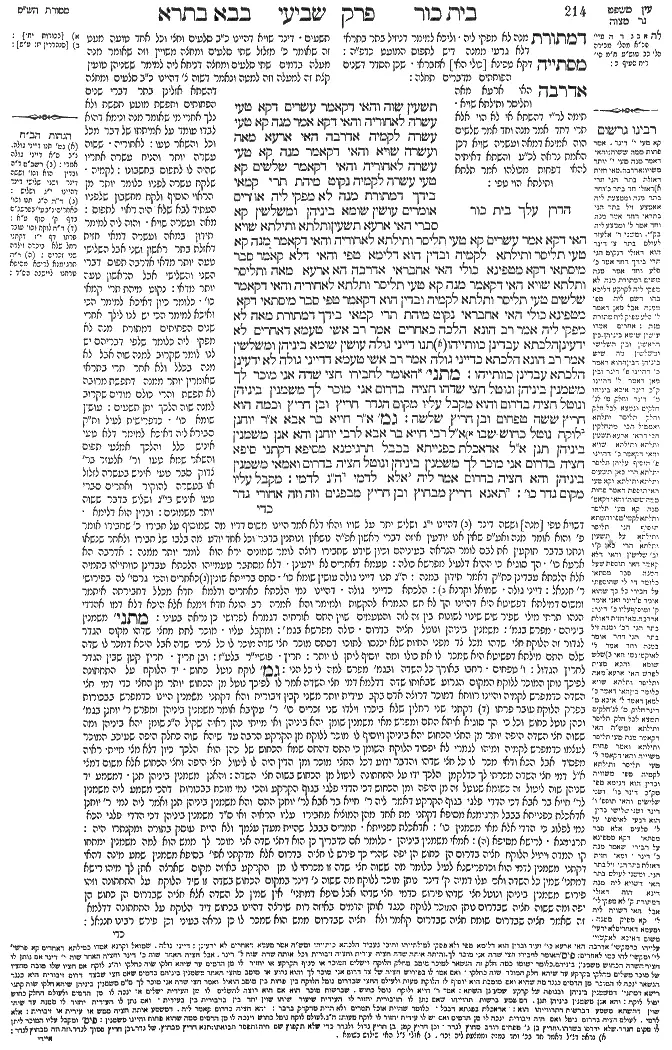
תשעין שוה והאי דקאמר עשרים דקא טעי עשרה לאחוריה והאי דקא אמר מנה קא טעי עשרה לקמיה אדרבה האי ארעא מאה ועשרה שויא והאי דקאמר מנה קא טעי עשרה לאחוריה והאי דקאמר שלשים קא טעי עשרה לקמיה נקוט מיהת תרי קמאי בידך דמתורת מנה לא מפקי ליה אחרים אומרים עושין שומא ביניהן ומשלשין קא סברי האי ארעא תשעין ותלתא ותילתא שויא האי דקא אמר עשרים קא טעי תליסר ותילתא לאחוריה והאי דקאמר מנה קא טעי תליסר ותילתא לקמיה ובדין הוא דלימא טפי והאי דלא קאמר סבר מיסתאי דקא מטפינא כולי האי אחבראי אדרבה הא ארעא מאה ותליסר ותלתא שויא האי דקאמר מנה קא טעי תליסר ותלתא לאחוריה והאי דקאמר שלשים טעי תליסר ותלתא לקמיה ובדין הוא דקאמר טפי סבר מיסתאי דקא מטפינא כולי האי אחבראי נקוט מיהת תרי קמאי בידך דמתורת מאה לא מפקי ליה אמר רב הונא הלכה כאחרים אמר רב אשי טעמא דאחרים לא ידעינן הלכתא עבדינן כוותייהו תנו דייני גולה עושין שומא ביניהן ומשלשין אמר רב הונא הלכתא כדייני גולה אמר רב אשי טעמא דדייני גולה לא ידעינן הלכתא עבדינן כוותייהו:
מתני׳ האומר לחבירו חצי שדה אני מוכר לך משמנין ביניהן ונוטל חצי שדהו חציה בדרום אני מוכר לך משמנין ביניהן ונוטל חציה בדרום והוא מקבל עליו מקום הגדר חריץ ובן חריץ וכמה הוא חריץ ששה טפחים ובן חריץ שלשה:
גמ׳ א"ר חייא בר אבא א"ר יוחנן לוקח נוטל כחוש שבו א"ל רבי חייא בר אבא לרבי יוחנן והא אנן משמנין ביניהן תנן א"ל אדאכלת כפנייתא בבבל תרגימנא מסיפא דקתני סיפא חציה בדרום אני מוכר לך משמנין ביניהן ונוטל חציה בדרום ואמאי משמנין ביניהן והא חציה בדרום אמר ליה אלא לדמי ה"נ לדמי:
מקבל עליו מקום גדר כו':
תאנא חריץ מבחוץ ובן חריץ מבפנים וזה וזה אחורי גדר
Comments from Rashbam - Bava Batra 107b
תשעים . דינר שויא דהיינו כ"ב סלעים וחצי וכל אחד טועה מעט זה שאומר כ' מזלזל שתי סלעים ומחצה משויין וזה שאומר מנה מעלה בדמים שתי סלעים ומחצה דניחא ליה למימר ששניהן טועין קצת זה למעלה וזה למטה ונאמר דשוה צ' דהיינו כ"ב סלעים ומחצה דהשתא אזלינן בתר דברי שנים הפחותים ותפשת מועט תפשת ולא נלך אחרי מי שאומר מנה ונימא דהוא לבדו עומד על אמיתתו של דבר מכל וכל והשאר טעו: לאחוריה . ששוה עשרה יותר והניח עשרה אחריו שהיה לו לתפוס בחשבונו: לקמיה . שלקח עשרה לפניו כלומר יותר מן הראוי הוסיף ולקח מחשבון שלפניו העתיד לבא שלא היה ראוי לתפוס: מאה ועשרה שויא . והוה ליה למימר תידון במאה ועשרים דמאי חזית דאזלת בתר ראשון ושני אבל השלישי טעה יותר מדאי אדרבה תפוס דברי השני והשלישי אבל הראשון טעה יותר מדאי: נקוט מיהת תרי קמאי כו' . כלומר כיון דאיכא למימר הכי ואיכא למימר הכי יש לנו לילך אחרי שנים הפחותים דמתורת מנה לא מפקי ליה כלומר שלפי דבריהם יש לנו לומר שקרוב למנה שוה אבל לא מנה בכלל ולא אחר תרי בתראי שאומרין יותר ממנה דתפשת מרובה לא תפשת והרי כולם מודים שקרוב למנה שוה הלכך יתן תשעים: עושין שומא כו' . כדפרישית לעיל ות"ק סבירא ליה דאיכא למימר דלא טעי איניש כלל והלכך אמצעי תפוס והשאר שמא טעו ור' אלעזר בר' צדוק סבר טעי איניש בעשרה לזלזל או בעשרה להוקיר ואחרים סברי טעי איניש בי"ג ושליש בדבר ששוה יותר משמונים: ובדין הוא דלימא . דשויא טפי [מנה] וששה דינר דהיינו י"ג ושליש יתר על שויו והאי דלא אמר היינו משום דדיו מה שמוסיף על חבירו כ' שחבירו אומר פ' והוא אומר מנה ואע"פ שאין אנו יודעין איזה דברי ראשון אפ"ה נושאין ונותנין בדבר וכל אחד יודע מה בלבו של חבירו ולאחר שנשאו ונתנו בדבר תוקעין את לבם לומר הנראה בעיניהם וכיון שידע שחבירו רוצה לומר שמונים ירא הוא לומר יותר ממנה: אדרבה הא ארעא כו' . הך סוגיא כי ההיא דלעיל מפרשא כולה: טעמא דאחרים לא ידעינן . דלא מסתבר טעמייהו הלכתא עבדינן כוותייהו בתמיה אלא הלכתא עבדינן כת"ק דאמר תידון במנה: ה"ג תנו דייני גולה עושין שומא כו' . סתם ברייתא שונין כאחרים והכי גרסי' לה בפירושי ר' חננאל: דייני גולה . שמואל וקרנא: הלכתא כדייני גולה . דהיינו נמי הלכתא כאחרים ודלמא חדא מכלל דחבירתה איתמר ומשום דמילתא דפשיטא היא דהיינו הך לא חש הגמרא להקשות ולמימר והא אמרה רב הונא חדא זימנא אלא היכא דלא דמו אהדדי הנהו תרתי מילי שפיר שיש שינוי לשונות בין זה לזה והטעמים שוין התם אורחיה דגמרא לפרושי כן נראה בעיני: מתני' משמנין ביניהם . מפרש בגמ': משמנין ביניהן ונוטל חציה בדרום . כולה מפרשא בגמ': ומקבל עליו . מוכר לתת מחצי שדהו מקום הגדר לגדור זה הלוקח חצי שדהו מכל צד מפני החיות שלא יכנסו לתוכו דסתם מוכר חצי שדה מוכר לו כל צרכי שדה אבל היכא דמכר לו שדה שלם התם מילתא דפשיטא היא שמכר לו את כולו ומה יוסיף ליתן לו יותר: חריץ . פושיי"ר בלע"ז: ובן חריץ . חריץ קטן שבין הגדר לחריץ הגדול: ו' טפחים . רחבו באורך כל השדה ובגמ' מפרש למה לי כל הני: גמ' לוקח נוטל כחוש . יד הלוקח על התחתונה לפיכך נותן המוכר ללוקח המקום הגרוע שבאותו שדה דדלמא דמי חצי השדה אמר לו לפיכך נוטל מן הכחוש יותר מן החצי כדי דמי חצי השדה כדמפרש לקמיה והיינו רווחא דמוכר דרוצה אדם בקב עידית יותר משני קבין זיבורית והא דקתני משמנין היינו כדמפרש בבכורות בפרק הלוקח עובר פרתו דקתני שני רחלין שלא ביכרו וילדו שני זכרים כו' ר' עקיבא אומר משמנין ביניהן ומפרש ר' יוחנן בגמ' וכהן נוטל כחוש וכל כי הך סוגיא איתא התם ומפרש מאי משמנין שומן יהא ביניהן ואי מייתי כהן ראיה שקיל ה"נ שומן יהא ביניהן ומה ששוה חצי השדה היפה יותר מן החצי הכחוש יהא ביניהן ויוסיף לו מוכר ללוקח מן הקרקע הרבה עד שיהא שוה כחלק היפה שעיכב המוכר לעצמו כדמפרש לקמיה ומיהו לגמרי לא יפסיד הלוקח השומן כי התם דהתם שמא הכחוש של כהן הוא הלכך כיון דלא מצי מייתי ראיה מפסיד אבל הכא ודאי מכר לו כל חצי שדהו והדבר ידוע דכל החצי מוכר ומן הדין היה לו ליטול חצי היפה וחצי הכחוש אלא משום דמצי א"ל דמי חצי השדה מכרתי לך כדלקמן הלכך ידו על התחתונה ליטול מן הכחוש בשוה חצי השדה: והאנן משמנין ביניהן תנן . דמשמע יד שניהן שוה ליטול זה כשומא שנוטל זה מן היפה ומן הכחוש דכי הדדי פלגי בגוף הקרקע והכי נמי מוכח בבכורות דהכי משמע ליה משמנין לר' חייא בר אבא דכי הדדי פלגי בגוף הקרקע דאמר ליה ר' חייא בר אבא לר' יוחנן התם והא משמנין ביניהן תנן ואמר ליה נמי ר' יוחנן אדאכלת כפנייתא בבבל תרגימנא מסיפא דקתני מת אחד מהן המוציא מחבירו עליו הראיה ואי ס"ד משמנין ביניהן דכי הדדי פלגי הכא נמי לפלוג כי הדדי אלא מאי משמנין כו': אדאכלת כפנייתא . תמרים בבבל שהיית מעדן עצמך ולא היית עוסק בתורה ומקנתרו היה: תרגימנא . לרישא מסיפא: אמאי משמנין ביניהן . כלומר אם כדבריך כן הוא דחצי שדה אני מוכר לך ממש הוא למה משמנין ימתחו קו המדה ויטול הלוקח חציה בדרום הן כחוש הן יפה שהרי כך פירש לו חציה בדרום אלא מדקתני אפי' בסיפא משמנין שמע מינה דהאי דקתני משמנין לדמי הוא וכדפרישנא לעיל כלומר מה ששוה חצי שדה זו מכרתי לו מן הקרקע באיזה מקום שארצה אתן לך מיהו רישא דמתני' שמין כל השדה ואם עלו דמיה ק' דינר נותן מוכר ללוקח מה ששוה נ' דינר במקום הכחוש בשדה זו שיד הלוקח על התחתונה וזהו פירוש משמנין ביניהן ונוטל חצי שדהו פירוש כדמי חצי שדהו אבל סיפא דמתני' אין שמין כל השדה אלא חציה שבדרום הן כחוש הן יפה ומה ששוה חציה שבדרום נותן המוכר ללוקח כנגד אותן הדמים באיזה רוח שירצה דהיינו בכחוש דיד הלוקח על התחתונה דדלמא זה שאמר חציה שבדרום שומת חציה שבדרום קאמר ולא חציה שבדרום ממש הוא שמכר לו כן נראה בעיני וכן פירש רבינו חננאל:
Comments from Tosafot - Bava Batra 107b
דמתורת מנה לא מפקי ליה. וליכא למימר דניזיל בתר בתראי דלא גרעי ממנה דיש לתפוס המועט כדפ"ה: מסתייה דקא טפינא [כולי האי] אחבראי. שכן הסדר דשנים הפוחתים מדברים תחלה: אדרבה האי ארעא מאה ותליסר ותילתא שויא. תימה לר"י דהשתא אי לא הוי אלא תרי דחד אמר מנה וחד אמר שלשים הוה אמינא דמאה ועשרה שויא דכן האמת נראה לכ"ע והשתא דאיתיה להאי דפחות מכולהו אמר תלתא ותילתא הוי טפי:
Bava Batra 107b - Mishnah translated into english
is in fact worth ninety dinars, and the one who says it is worth twenty sela, which is equivalent to eighty dinars errs with an assessment that is ten dinars behind, i.e., too low, and the one who says it is worth one hundred dinars errs with an assessment that is ten dinars ahead, i.e., too high. Therefore, the average of these two assessments is followed.
The Gemara raises a difficulty: On the contrary, say that this land is in fact worth one hundred and ten dinars, and the one who says it is worth one hundred dinars errs with an assessment that is ten dinars behind, and the one who says it is worth thirty sela, which is equivalent to one hundred and twenty dinars, errs with an assessment that is ten dinars ahead. If so, the average of these two assessments, one hundred and ten dinars, should be followed. The Gemara replies: In any event, grasp the first two assessments in your hand, as neither of them takes the assessment beyond the sum of one hundred dinars.
The baraita teaches that Aḥerim say that an appraisal is performed of the sum between the two most extreme assessments and then divided by three. This sum is then added to the lowest assessment. The Gemara explains this opinion: Aḥerim hold that this land is in fact worth ninety-three and one-third dinars. The one who says it is worth twenty sela, the equivalent of eighty dinars, errs with an assessment that is thirteen dinars and one-third behind, and the one who says it is worth one hundred dinars errs with an assessment that is thirteen dinars and one-third ahead. By right, that assessor should have said more, i.e., quoted a higher sum, since according to this calculation, he should have said it is worth one hundred and six and two-thirds dinars. And the reason that he did not do so is that he thinks as follows: It is enough that I add this much above and beyond the assessment of my colleague who says it is worth eighty dinars. Therefore, he lowers the sum of his assessment to one hundred dinars.
The Gemara raises a difficulty: On the contrary, say that this land is in fact worth one hundred and thirteen dinars and one-third, and the one who says it is worth one hundred dinars errs with an assessment that is thirteen dinars and one-third behind, and the one who says it is worth thirty sela, which is equal to one hundred and twenty dinars, errs with an assessment that is thirteen dinars and one-third ahead. By right, he should have said more, i.e., quoted a higher sum, since according to this calculation, he should have said it is worth one hundred and twenty-six dinars and two-thirds. And the reason he did not do so is that he thinks as follows: It is enough that I add this much above and beyond the assessment of my colleague who says it is worth one hundred dinars. The Gemara answers: In any event, grasp the first two assessments in your hand, as neither of them take the assessment beyond the sum of one hundred dinars.
Rav Huna said: The halakha is in accordance with the opinion of Aḥerim, who say that the sum of the difference between the two most extreme assessments is calculated and then divided by three, and this sum is then added to the lowest assessment. Rav Ashi said: We do not even understand the reason of Aḥerim; shall we then establish the halakha in accordance with their opinion? The judges of the Diaspora taught a baraita that accords with the opinion of Aḥerim in the previously cited baraita: An appraisal is performed to determine the sum of the difference between the two most extreme assessments and then that sum is divided by three and added to the lowest assessment. Rav Huna said: The halakha is in accordance with the judges of the Diaspora. Rav Ashi said: We do not even understand the reasoning of the judges of the Diaspora; shall we then establish the halakha in accordance with their opinion?
MISHNA: If one says to another: I am selling you half a field, without specifying which half he is selling, an assessment is made of the field, which is then divided between them, and the buyer takes half of the seller’s field. If the seller says: I am selling you the half that is on the southern side of the field, an assessment is made of the northern and the southern sides of the field, which is then divided between them, and he takes the half on the southern side. And he accepts upon himself to provide the space for the fence between the two halves of the field out of his own property. He also accepts to provide out of his own property the space for the larger ditch and the smaller ditch, which are meant to keep animals out of the field. And how wide is the larger ditch? Six handbreadths. And how wide is the smaller ditch? Three handbreadths.
GEMARA: Rabbi Ḥiyya bar Abba says that Rabbi Yoḥanan says: When one sells half of his field to another person, the buyer takes the leaner part of the field, the part that is of lower quality. Rabbi Ḥiyya bar Abba said to Rabbi Yoḥanan: But didn’t we learn in the mishna that in such a case an assessment is made of the field, which is then divided between them, which indicates that the buyer and the seller are given similar parcels of land? How then can you say that the buyer takes the leaner part? Rabbi Yoḥanan said to him in a sarcastic manner: While you were eating dates in Babylonia and neglecting your studies, we explained the matter based on the latter clause of the mishna, which proves that my understanding is correct.
As the latter clause teaches: If the seller says: I am selling you the half that is on the southern side of the field, an assessment is made of the northern and the southern sides of the field, which is then divided between them, and he takes the half on the southern side. If taken literally, this passage gives rise to a difficulty: Why is an assessment made of the northern and the southern sides of the field, which is then divided between them? In any case, didn’t he say to him that he is selling him the southern half? Let the seller give the buyer the southern half of the field. Why is an assessment necessary? Rather, it must be that the matter is more complicated than it seems, and the mishna is referring to money. That is to say, the buyer takes the southern half, but the seller must reimburse him with money for the difference in value between the two halves of the field. Here too, in the first case, the mishna is referring to money: The buyer takes the leaner half, but the seller must reimburse him with money for the difference in value between the two halves of the field.
§ The mishna teaches that the buyer accepts upon himself to provide out of his own property the space for the fence between the two halves of the field and for the larger and smaller ditches. A Sage taught in a baraita: The larger ditch is dug on the outside, while the smaller ditch is dug on the inside, closer to the field. Both this and that are dug behind the fence,
Traduction : The William Davidson digital edition of the Koren Noé Talmud, with commentary by Rabbi Adin Even-Israel Steinsaltz.