 Talmud Bavli
The learning on the whole site is dedicated : L'ilui Nishmat Jamila bat Chlomo Abensour
The learning on the whole site is dedicated : For the success of Elyahou ben H'anna & family
The learning on the whole site is dedicated : L'ilui Nishmat Reuven ben Rivka SEBBAG
Nazir 12b : Youtube
Daf TubeYoutube
2 video classes :
Nazir Page 12b
Nazir 12b - Guemara
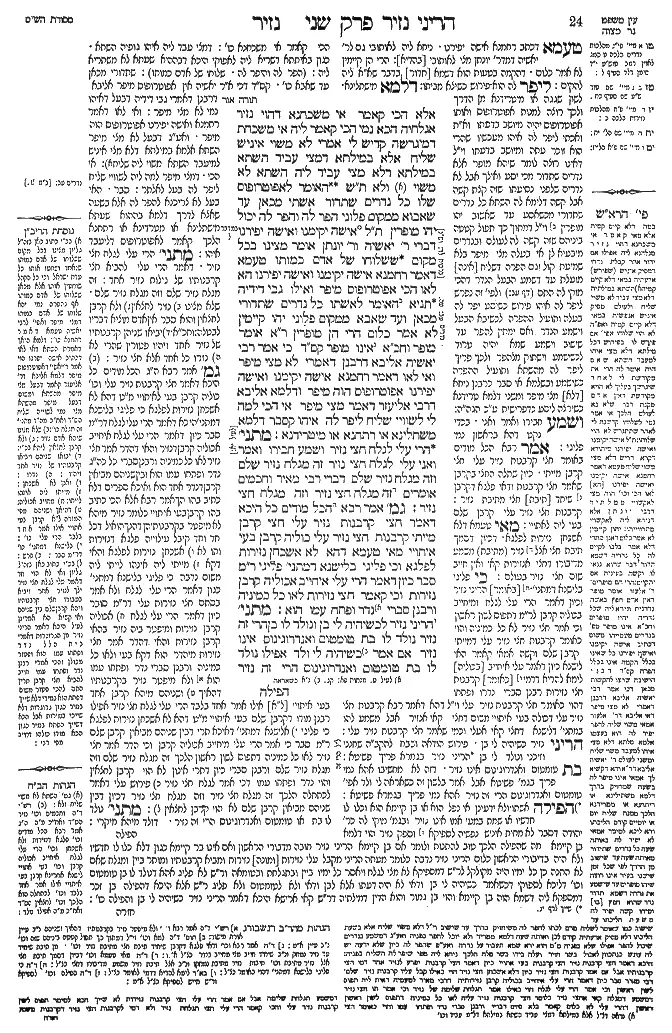
אלא הכי קאמר אי משכחנא דהוי נזיר אגלחיה הכא נמי הכי קאמר ליה אי משכחת דמיגרשה קדיש לי אמרי לא משוי איניש שליח אלא במילתא דמצי עביד השתא במילתא דלא מצי עביד ליה השתא לא משוי ולא ת"ש האומר לאפוטרופוס שלו כל נדרים שתדור אשתי מכאן עד שאבוא ממקום פלוני הפר לה והפר לה יכול יהו מופרין ת"ל (במדבר ל, יד) אישה יקימנו ואישה יפירנו דברי ר' יאשיה ור' יונתן אומר מצינו בכל מקום ששלוחו של אדם כמותו טעמא דאמר רחמנא אישה יקימנו ואישה יפירנו הא לאו הכי אפוטרופוס מיפר ואילו גבי דידיה תניא האומר לאשתו כל נדרים שתדורי מכאן ועד שאבא ממקום פלוני יהו קיימין לא אמר כלום הרי הן מופרין ר"א אומר מופר וחכ"א אינו מופר קס"ד כי אמר רבי יאשיה אליבא דרבנן דאמרי לא מצי מיפר ואי לאו דאמר רחמנא אישה יקימנו ואישה יפירנו אפוטרופוס הוה מיפר ודלמא אליבא דרבי אליעזר דאמר מצי מיפר אי הכי למה לי לשוויי שליח ליפר לה איהו קסבר דלמא משתלינא או רתחנא או מיטרידנא:
מתני׳ הרי עלי לגלח חצי נזיר ושמע חבירו ואמר ואני עלי לגלח חצי נזיר זה מגלח נזיר שלם וזה מגלח נזיר שלם דברי רבי מאיר וחכמים אומרים זה מגלח חצי נזיר וזה מגלח חצי נזיר:
גמ׳ אמר רבא הכל מודים כל היכא דאמר חצי קרבנות נזיר עלי חצי קרבן מייתי קרבנות חצי נזיר עלי כוליה קרבן בעי איתויי מאי טעמא דהא לא אשכחן נזירות לפלגא וכי פליגי בלישנא דמתני' פליגי ר"מ סבר כיון דאמר הרי עלי איחייב אכוליה קרבן נזירות וכי קאמר חצי נזירות לאו כל כמיניה ורבנן סברי נדר ופתח עמו הוא:
מתני׳ הריני נזיר לכשיהיה לי בן ונולד לו בן הרי זה נזיר נולד לו בת טומטום ואנדרוגינוס אינו נזיר אם אמר כשיהיה לי ולד אפילו נולד לו בת טומטום ואנדרוגינוס הרי זה נזיר
Comments from Rashi on Masechet Nazir Page 12b
הכי קאמר. אי משכחנא כו': דמצי עבד ליה איהו גופיה השתא . כגון באיתתא דשריא ליה לאפוקי היכא דבההיא שעתא לא משתריא ליה: (הפר לה והיפר לה. שלוחו של אדם כמותו): שתדורי מכאן עד שאבא כו' . קס"ד דכי א"ר יאשיה אין אפוטרופוס מיפר אליבא דרבנן דאמרי גבי דידיה דבעל דאיהו נמי לא מצי מיפר: ואי לאו דאמר רחמנא ואישה יפירנו אפוטרופוס הוה מיפר . ואע"ג דבעל לא מצי מיפר השתא אלמא במילתא דלא מצי איניש למיעבד השתא משוי ליה שליח: אי הכי . דמצי מיפר למה ליה לשוויי שליח ליפר לה בעל לאלתר: סבר . האי בעל לא צריכנא להפר לה אלא בשעה שאצא לדרך דלמא בההוא שעתא מישתלינא או מטרדינא או רתחנא הלכך קאמר לאפוטרופוס דליעבד איהו: מתני' הרי עלי לגלח חצי נזיר . דאמר הרי עלי להביא חצי קרבנותיו של גילוח נזיר אחד: זה מגלח נזיר שלם וזה מגלח נזיר שלם . שלא מצינו נזיר לחצאין ולא קרבן לחצאין והוא סבר אין אדם מוציא דבריו לבטלה: וחכ"א . יביאו שניהן קרבנותיו של נזיר אחד ויהיו פטורין שהרי לא נזרו כל אחד אלא חצי נזיר: גמ' אמר רבא . ה"ג הכל מודים כל היכא דאמר חצי קרבנות נזיר עלי וכו' כוליה קרבן בעי לאיתויי מ"ט דהא לא אשכחן נזירות לפלגא כי פליגי בלישנא דמתני' היכא דאמר הרי עלי לגלח דר"מ סבר כיון דאמר הרי עלי לגלח איחייב אכוליה קרבן דנזיר והאי דהדר אמר חצי נזיר לאו כל כמיניה ורבנן סברי כל כה"ג נדר ופתחו עמו הוא ובין שניהם מביאין קרבן דנדר אחד הוא ואיכא ספרים דלא כתיב בהו הך אמר רבא אלא הכי כתיב בהו קרבן בעי איתויי כלומר נזיר מיהא לא מיפטר בקרבנותיהן דהנך הואיל דכל חד וחד קיבל עילוייה פלגא דנזירות ותו לא אשכחן נזירות לפלגא והאי דקא מייתי ליה אינהו לייתי ליה משום נדבה כי פליגי בלישנא דמתני' כגון דאמר הרי עלי לגלח ולא אמר בסתם חצי נזירות עלי דר"מ סובר כיון דאמר הרי עלי לגלח אכוליה קרבן נזירות ומיפטר ביה נזיר בהאי קרבן נזירות והאי דהדר אמר חצי נזירות מיהדר הוא דקא בעי ולאו כל כמיניה ורבנן סברי נדר ופתחו עמו הוא ולא מיפטר נזיר בקרבנותיו דהאיך ושניהם מיהא קרבן אחד בעי איתויי [ל"א] אילו אמר אחד בלבד הרי עלי לגלח חצי נזיר אפילו רבנן מודו דקרבן שלם בעי איתויי מ"ט דהא לא אשכחן נזירות לפלגא כי פליגי אלישנא דמתני' דאיכא תרי דבין שניהם מביאין קרבן שלם ר"מ סבר כי אמר הרי עלי מיחייב אכוליה קרבן וכי הדר אמר חצי נזיר לאו כל כמיניה דתפוס לשון ראשון הלכך זה מגלח נזיר שלם וזה מגלח נזיר שלם ורבנן סברי כיון דתרי אינון לא הוי קרבן לחצאין והוי נדר ופתחו עמו דכי אמר לגלח חצי נזיר פירוש עלי דאמר לכתחלה הלכך זה מגלח חצי נזיר וזה מגלח חצי נזיר דכיון דבין שניהם מביאין קרבן שלם לא הוי קרבן לחצאין: מתני' נולד לו בת או טומטום ואנדרוגינוס הרי זה נזיר . דולד מיהא מיקרי:
Comments from Tosafot - Nazir 12b
טעמא דכתב רחמנא אישה יפירנו . ניחא ליה לאותובי גם לר' יאשיה דמדר' יונתן מצי לאותובי [בהדיא]: הרי הן קיימין לא אמר כלום . דהקמה בטעות הוא דשמא [תדור] בדבר שא"א ליה להקים: ליפר לה הוא . פירוש כשיצא מביתו: דלמא מישתלינא . לשון שגגה או מיטרידנא מן הדרך ולכך רוצה למנות אפוטרופוס ואותו אפוטרופוס יהיה מיושב בדעתו וא"ת ואכתי ליפר לה איהו מעכשיו שהרי הוא זוכר עתה ומיושב בדעתו וי"ל דאינו רוצה לומר שיהא מופר אלא נדרים שתדור מכי יסע ואילך אבל לא נדרים שלפני נסיעתו שזה קצת קשה אבל קשה דילמא לה השתא כל נדרים שתדורי מכשאסע עד שאשוב יהו מופרין וי"ל דמתוך כך תפול קטטה ביניהם שזה קשה לה לעולם ובנדרים מיבעיא לן אי בעלה מצי מיפר בלא שמיעת קול וגם הפרה דשליח [אינה] מועלת עד דשמע הבעל הנדר דהכי מוקי לה התם (דף עב:) ולפי' זה נפרש ליפר לה איהו פירוש כשיסע יפר לה בעלה ותועיל ההפרה לכשיבא הבעל וישמע הנדר ואם ימתין להפר עד שישוב וישמע שמא יהיה טרוד לכשישמע וישתוק מלהפר ולכך פריך ליפר לה מהשתא ותועיל ההפרה כשישמע ובשלמא אי סבר כרבנן ניחא [דלא] מצי מיפר ומשני דלמא טרידנא כשירצה ליסע כדפרישית ע"כ הגה"ה: ושמע חבירו ואמר ואני . בכדי נקט דהא בראשון נמי פליגי: אמר רבא הכל מודים באומר חצי קרבנות נזיר עלי חצי קרבן מייתי . כיון שתלה החצי בקרבן שאמר חצי קרבנות ודאי פלגא דקרבן שיחד [תיבת] חצי מתיבת נזיר: קרבנות חצי נזיר עלי . קרבן שלם בעי ליה לאתויי: מאי טעמא דלא אשכחן נזירות לפלגא . דכיון דסמך תיבת חצי אצל נזיר (מתיבת) משמע מדיבורו דחצי אנזירות קאי ואין חייב שום חצי נזיר בעולם: כי פליגי בלישנא דמתני' . [באומר] הריני נזיר וכיון דאמר הרי עלי לגלח ומיחייב בכוליה קרבן לר"מ דתפוס לשון ראשון וכי אמר חצי נזיר לא כל כמיניה והוי כאומר קרבנות חצי נזיר עלי דמייתי קרבן שלם וקשה אמאי קאמר האי לישנא כיון דאמר עלי איחייב [בכוליה] לימא להדיא דדמי [כאומר] קרבנות חצי נזירות רבנן סברי נדרו ופתחו דהוי כאומר חצי קרבנות נזיר עלי וי"ל דהא דאמר רבא קרבנות חצי נזיר עלי דכולה בעי איתויי משום דחצי קאי אנזיר אבל משמע להו במתני' דלישנא דחצי קאי אעלי וכמי שאמר חצי קרבנות נזיר עלי: הריני נזיר כשיהיה לי בן . פירוש הודאה ושבח להקב"ה שחנני וזיכני ונולד לי בן הריני נזיר בגמרא פריך פשיטא: בת טומטום ואנדרוגינוס אינו נזיר . דזה לא מחשיבו אהא נמי פריך בגמ' פשיטא אבל אמר בלשון זה כשאראה לי ולד אפי' טומטום ואנדרוגינוס הרי זה נזיר אהא נמי פריך בגמרא פשיטא:
Nazir 12b - Mishnah translated into english
Rather, it can be explained that this is what he is saying: If I find someone who becomes a nazirite, I will shave him. Here too, in the case of betrothal, this is what the one who appointed the agent is saying to the agent: Even if the woman you find is married at this moment but when you come to her you discover that she has been divorced in the meantime, betroth her to me. If so, he would be prohibited from marrying her sister, contrary to the ruling of Rava.
The Gemara rejects this comparison: The Sages say that there is a distinction between the two cases: A person appoints an agent only for a matter that he himself can perform now, at the time of the appointment, but for a matter that he cannot perform now, he does not appoint an agent. Consequently, the agent cannot betroth a woman who was married at the time of his appointment. The one who appointed the agent may therefore marry the sister of the recently divorced woman, as stated by Rava.
The Gemara asks another question on the ruling of Rava: And can one not appoint an agent to betroth a woman in this manner? Come and hear a baraita that indicates the contrary: One who says to the steward [apotropos] of his affairs: All vows that my wife will vow from now until I come from such and such a place, nullify for her, and the steward nullified them for her, one might have thought they are nullified. Therefore, the verse states: “Her husband sustains the vow and her husband nullifies the vow” (Numbers 30:14); this is the statement of Rabbi Yoshiya. The repetition of “husband” teaches that it is the husband alone who may nullify his wife’s vows. And Rabbi Yonatan says: We have found in all places that the legal status of a person’s agent is like that of himself. Therefore, a steward, who serves as the husband’s agent, may nullify the wife’s vows.
Even according to Rabbi Yoshiya, who maintains that the steward cannot nullify her vows, the reason is that the Merciful One states in the Torah: “Her husband sustains the vow and her husband nullifies the vow,” but if it were not so, the steward could nullify even the future vows of the wife. However, with regard to the husband himself it is taught in a mishna (Nedarim 75a): One who says to his wife: All vows that you will vow from now until I come from such and such a place shall be ratified, he has not said anything. However, if a husband says: All vows that you will vow from now until I come from such and such a place, they are hereby nullified, Rabbi Eliezer says: It is nullified, and the Rabbis say: It is not nullified.
The Gemara finishes the question: It enters our mind to say that when Rabbi Yoshiya said that the steward cannot nullify the vows, he spoke in accordance with the opinion of the Rabbis, who say that the husband is not able to nullify her vows ahead of time, and yet, even according to their approach, if the Merciful One had not stated in the Torah: “Her husband sustains the vow and her husband nullifies the vow” the steward would be able to nullify such vows. This proves that one can appoint an agent for something he himself cannot do at the time, which contradicts the statement of Rava.
The Gemara rejects this: And perhaps Rabbi Yoshiya spoke in accordance with the opinion of Rabbi Eliezer, who says the husband can nullify the vows ahead of time, and it is for this reason that he can appoint the steward to do the same. The Gemara rejects this: If so, why do I need to make him into an agent; let him nullify the future vows for her before he sets out on his journey. The Gemara answers: He thinks, perhaps I will forget, or become angry, or be occupied with other matters when I am about to set out on my journey. This is why he appoints an agent to nullify the vows on his behalf, and no proof can be derived from this baraita.
MISHNA: If one says: It is incumbent upon me to shave half a nazirite, i.e., he is vowing to pay half the costs of a nazirite’s offerings, and another heard and said: And I, it is incumbent upon me to shave half a nazirite, this one shaves a whole nazirite and that one shaves a whole nazirite, i.e., each pays the full cost of a nazirite’s offerings; this is the statement of Rabbi Meir, since there is no such entity as half a nazirite. And the Rabbis say: This one shaves half a nazirite and that one shaves half a nazirite; they may join together to pay for the offerings of one nazirite.
GEMARA: With regard to this dispute, Rava said: All concede that whenever one said: Half of the offerings of a nazirite are incumbent upon me, he brings half of the offerings, since he vowed to pay only that amount. Also, everyone agrees that if he said: The offerings of half a nazirite are incumbent upon me, he needs to bring all of the offerings of a nazirite. What is the reason that he must bring all of the offerings of a nazirite? It is that we have not found such an entity as half a naziriteship. If one vowed to be half a nazirite, he is a full nazirite.
And when they disagree, it is only in a case of one who used the precise wording of the mishna. Rabbi Meir holds that once he said: It is incumbent upon me, he is obligated in all of the naziriteship offerings, and when he later says: Half a naziriteship, it is not in his power to uproot his first obligation. And the Rabbis hold that it is a vow with its inherent opening. By saying he had only half the offerings of a nazirite in mind from the outset, he has nullified his own vow.
MISHNA: If one said: I am hereby a nazirite when I will have a son, and a son was born to him, he is a nazirite. If a daughter, a tumtum, or a hermaphrodite [androginos] is born to him, he is not a nazirite, since a son was not born to him. However, if he says: I am hereby a nazirite when I will have a child, then even if a daughter, a tumtum, or a hermaphrodite is born to him, he is a nazirite.
Traduction : The William Davidson digital edition of the Koren Noé Talmud, with commentary by Rabbi Adin Even-Israel Steinsaltz.