 Talmud Bavli
The learning on the whole site is dedicated : L'ilui Nishmat Yaakov ben Myriam
The learning on the whole site is dedicated : For the success of Elyahou ben H'anna & family
The learning on the whole site is dedicated : L'ilui Nishmat Reuven ben Rivka SEBBAG
Ta'anit 14b : Youtube
Daf TubeYoutube
4 video classes :
Ta'anit Page 14b
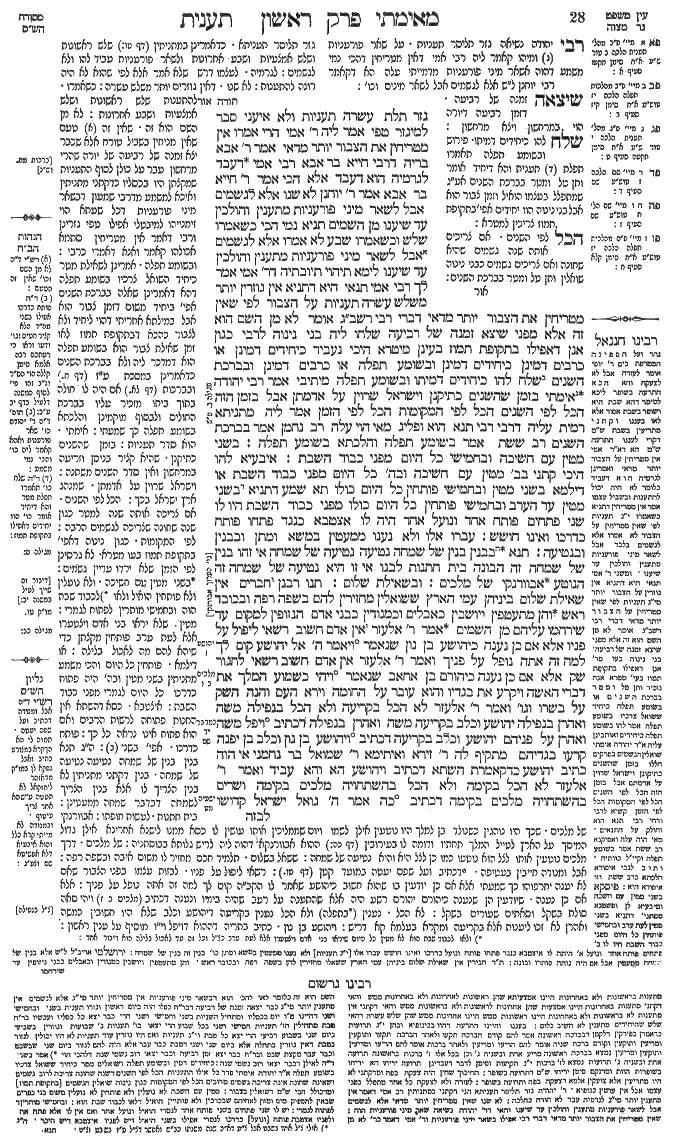
Ta'anit 14b - Guemara
גזר תלת עשרה תעניות ולא איעני סבר למיגזר טפי אמר ליה ר' אמי הרי אמרו אין מטריחין את הצבור יותר מדאי אמר ר' אבא בריה דרבי חייא בר אבא רבי אמי דעבד לגרמיה הוא דעבד אלא הכי אמר ר' חייא בר אבא אמר ר' יוחנן לא שנו אלא לגשמים אבל לשאר מיני פורעניות מתענין והולכין עד שיענו מן השמים תניא נמי הכי כשאמרו שלש וכשאמרו שבע לא אמרו אלא לגשמים אבל לשאר מיני פורעניות מתענין והולכין עד שיענו לימא תיהוי תיובתיה דר' אמי אמר לך רבי אמי תנאי היא דתניא אין גוזרין יותר משלש עשרה תעניות על הצבור לפי שאין מטריחין את הצבור יותר מדאי דברי רבי רשב"ג אומר לא מן השם הוא זה אלא מפני שיצא זמנה של רביעה שלחו ליה בני נינוה לרבי כגון אנן דאפילו בתקופת תמוז בעינן מיטרא היכי נעביד כיחידים דמינן או כרבים דמינן כיחידים דמינן ובשומע תפלה או כרבים דמינן ובברכת השנים שלח להו כיחידים דמיתו ובשומע תפלה מיתיבי אמר רבי יהודה אימתי בזמן שהשנים כתיקנן וישראל שרוין על אדמתן אבל בזמן הזה הכל לפי השנים הכל לפי המקומות הכל לפי הזמן אמר ליה מתניתא רמית עליה דרבי רבי תנא הוא ופליג מאי הוי עלה רב נחמן אמר בברכת השנים רב ששת אמר בשומע תפלה והלכתא בשומע תפלה:
בשני מטין עם חשיכה ובחמישי כל היום מפני כבוד השבת:
איבעיא להו היכי קתני בב' מטין עם חשיכה ובה' כל היום מפני כבוד השבת או דילמא בשני מטין ובחמישי פותחין כל היום כולו תא שמע דתניא בשני מטין עד הערב ובחמישי פותחין כל היום כולו מפני כבוד השבת היו לו שני פתחים פותח אחד ונועל אחד היה לו אצטבא כנגד פתחו פותח כדרכו ואינו חושש:
עברו אלו ולא נענו ממעטין במשא ומתן ובבנין ובנטיעה:
תנא בבנין בנין של שמחה נטיעה נטיעה של שמחה אי זהו בנין של שמחה זה הבונה בית חתנות לבנו אי זו היא נטיעה של שמחה זה הנוטע אבוורנקי של מלכים:
ובשאילת שלום:
תנו רבנן חברים אין שאילת שלום ביניהן עמי הארץ ששואלין מחזירין להם בשפה רפה ובכובד ראש והן מתעטפין ויושבין כאבלים וכמנודין כבני אדם הנזופין למקום עד שירחמו עליהם מן השמים אמר ר' אלעזר אין אדם חשוב רשאי ליפול על פניו אלא אם כן נענה כיהושע בן נון שנאמר (יהושע ז, י) ויאמר ה' אל יהושע קום לך למה זה אתה נופל על פניך ואמר ר' אלעזר אין אדם חשוב רשאי לחגור שק אלא אם כן נענה כיהורם בן אחאב שנאמר (מלכים ב ו, ל) ויהי כשמוע המלך את דברי האשה ויקרע את בגדיו והוא עובר על החומה וירא העם והנה השק על בשרו וגו' ואמר ר' אלעזר לא הכל בקריעה ולא הכל בנפילה משה ואהרן בנפילה יהושע וכלב בקריעה משה ואהרן בנפילה דכתיב (במדבר יד, ה) ויפל משה ואהרן על פניהם יהושע וכלב בקריעה דכתיב (במדבר יד, ו) ויהושע בן נון וכלב בן יפנה קרעו בגדיהם מתקיף לה ר' זירא ואיתימא ר' שמואל בר נחמני אי הוה כתיב יהושע כדקאמרת השתא דכתיב ויהושע הא והא עביד ואמר ר' אלעזר לא הכל בקימה ולא הכל בהשתחויה מלכים בקימה ושרים בהשתחויה מלכים בקימה דכתיב (ישעיהו מט, ז) כה אמר ה' גואל ישראל קדושו
Comments from Rashi on Masechet Ta'anit Page 14b
גזר תליסר תעניתא . כדאמרינן במתניתין (דף טו:) שלש ראשונות ושלש אמצעיות ושבע אחרונות ולשאר פורעניות עביד להו ולא לגשמים: לגרמיה . לעצמו דרש שלא אמר אלא לפי שהוא לא היה רוצה להתענות: לא שנו . דאין גוזרים יותר משלש עשרה: כשאמרו . להתענות שלש ראשונות ושלש אמצעיות ושבע אחרונות: לא מן השם הוא זה . שאין זה טעם שאין מניחין בשביל טורח אלא שכבר יצא זמנה של רביעה של יורה שהרי מרחשון עבר על כולן לסוף התעניות שמקצתן היו בכסליו כדקתני מתניתין ואיכא למשמע מדרבי שמעון דבשאר מיני פורעניות דכל שעתא הוי זימנייהו למיבטלי אפילו טפי גזרינן ורבי דאמר אין מטריחין סתמא אכולהו קאמר ואנא דאמרי כרבי: ובשומע תפלה . אמרינן לשאילת מטר כיחיד השואל צרכיו בשומע תפלה דהא דאמרינן שאלה בברכת השנים אפי' ביחיד משום דזמן צבור הוא אבל במילתא אחריתי דהוי ליחיד ולא לצבור כהכא דבתקופת תמוז לאו זמן שאילת צבור הוא בשומע תפלה הוא דמדכר ליה ולא בברכת השנים כדאמרינן במסכת ע"ז (דף ח.) ובברכות (דף לא.) אם היה לו חולה בתוך ביתו מזכיר עליו בברכת החולים ולבסוף מוקמינן והלכתא בשומע תפלה כך שמעתי: אימתי . הוא סדר תעניות: בזמן שהשנים כתיקנן . שהיא קציר בניסן וזריעה במרחשון ואין סדר השנים משתנה: וישראל שרוין על אדמתן . שמנהג ארץ ישראל בכך: הכל לפי השנים . אם צריכה אותה שנה למטר כגון שנה שחונה שצריכה לגשמים הרבה: לפי המקומות . כגון נינוה דאפי' בתקופת תמוז בעו מטרא. לא גרסינן לפי הזמן שלא ירדו עדיין גשמים: בשני מטין עם חשיכה . ולא נועלין ולא פותחין הואיל ולאו לכבוד שבת הוה ובחמישי מותרין לפתוח לגמרי: מטין . שלא יראו בני אדם ויצטערו אלא לעת ערב פותחין הואיל ולאו לכבוד שבת הוא ובחמישי מותרין לפתוח לגמרי: או דילמא . פותחין כל היום והכי משמע מתניתין בשני מטין ובה' היה פתוח כדרכו כל היום לגמרי מפני כבוד השבת: איצטבא . כסא דהשתא אין החנות פתוחה לרשות הרבים ואם הוא פתוח אינו נראה כל כך: פותח כדרכו . אפי' בשני: ה"ג תנא בנין בנין של שמחה נטיעה נטיעה של שמחה . בנין דקתני מתניתין לא בנין הצריך לו אלא בנין הצריך לשמחה דבדבר שמחה ממעטינן: בית חתנות . לעשות חופתו: אבוורנקי של מלכים . שכך היו נוהגין כשנולד בן למלך היו נוטעין אילן לשמו ויום שממליכין אותו עושין לו כסא ממנו לישנא אחרינא אילן גדול המיסך על הארץ לטייל המלך תחתיו ודומה לו בעירובין (דף כה:) ההוא אבוורנקא דהוה ליה לריש גלותא בבוסתניה: של מלכים . דרך מלכים נוטעין אותו לצל הוא נוטעו כמו כן לצל היא והיא נטיעה של שמחה: ששאל בשלום . תלמיד חכם מחזיר לו משום איבה ובשפה רפה: אבל ומנודה חייבין בעטיפה . דכתיב ועל שפם יעטה במועד קטן (דף טו.) רשאי ליפול על פניו . לבזות עצמו בפני הצבור שאם לא יענה יחרפוהו כך שמעתי אלא אם כן יודעין בו שהוא חשוב כיהושע שאמר לו הקב"ה קום לך למה זה אתה נופל על פניך: אלא אם כן נענה . שיודעין הן שנענה כיהורם יהורם רשע היה אלא שהתענה על רעב שהיה בימיו ונענה דכתיב (מלכים ב ז) ויהי סאה סולת בשקל וסאתים שעורים בשקל: לא הכל . נענין (בתפלה) ולא הכל נענין בקריעה דיהושע וכלב שלא היו חשובין כמשה ואהרן לא זכו ליענות אלא בקריעה ומקרא בעלמא קא דריש: ויהושע בן נון . כתיב בתריה דההוא דויפל וי"ו מוסיף על ענין ראשון: ולא הכל בקימה . לקראת ישראל לעתיד לבא מלכים יראו וקמו שרים וישתחוו:
Comments from Tosafot - Ta'anit 14b
רבי יהודה נשיאה גזר תליסר תעניות. על שאר פורעניות ומיהו קאמר ליה רבי אמי דאין מטריחין דהכי נמי משמע דהוה אשאר מיני פורעניות מדמייתי עלה הא דקאמר רבי יוחנן ל"ש אלא לגשמים אבל לשאר מינים וכו': שיצאה זמנה של רביעה. דזמן רביעה דיורה הוי במרחשון ויצא מרחשון: תני חדא מתענות בראשונות ולא באחרונות ותנא אידך מתענין באחרונות ולא בראשונות ותני אידך לא מתענין לא בראשונות ולא באחרונות נקוט מציעתא בידך. פירש הקונטרס השלש תעניות אמצעיות בידך דבאותן תעניות עוברות ומיניקות מתענות וה"ק מתענות בראשונות פי' בראשונו' ר"ל אמצעיות דהם ראשונות לאחרונו' שהיו חמורות אבל לא באחרונות דנפישי ולא מצו עבדי להו והא דקתני באחרונות ולא בראשונות האי אחרונו' היינו אמצעיות וקרי להו אחרונות שהם אחרונות מן הראשונות בתחלה גוזרין שלש תעניות וכן בשניה שלש אבל אין מתענות בראשונות שהם קלות והא דקתני לא בראשונות ולא באחרונות כלומר לא בשלש הראשונות הראשונות ממש ולא בשבע האחרונות האחרונות ממש אלא דווקא באמצעיות: שלח להו כיחידים דמיתו. פירוש ובשומע תפלה תאמרו תפלת תענית והא דיחיד אומר ותן טל ומטר בברכת השנים אע"ג שמתפלל בעצמו הואיל וזמן צבור הוא אבל בני נינוה הוו יחידים אפי' בתקופת תמוז צריכין למטרא: הכל לפי השנים. אם צריכים אותה שנה גשמים שהיא שחונה ואם צריכים גשמים כבני נינוה שואלין ותן טל ומטר בברכת השנים:
Ta'anit 14b - Mishnah translated into english
Rabbi Yehuda Nesia decreed thirteen fasts, but he was not answered. He considered decreeing more fasts until they would be answered. Rabbi Ami said to him that they said: One does not trouble the community excessively, and therefore you should not impose more than thirteen fasts.
Rabbi Abba, son of Rabbi Ḥiyya bar Abba, said: When Rabbi Ami acted and issued this ruling, he did so on his own authority, as it went against the majority opinion. Rather, Rabbi Ḥiyya bar Abba said that Rabbi Yoḥanan said as follows: They taught only that the community observes a maximum of thirteen fasts when they are praying for rain. However, with regard to other types of calamities, they continue to fast until they are answered from Heaven. The Gemara comments: This halakha is also taught in a baraita: When the Sages said three and when they said seven, they spoke only concerning fasts for rain. However, with regard to other types of calamities, they continue to fast until they are answered.
The Gemara suggests: Let us say that this baraita is a conclusive refutation of the opinion of Rabbi Ami. The Gemara answers: Rabbi Ami could have said to you that this is a dispute between tanna’im, as it is taught in a baraita: One does not decree more than thirteen fasts on the community, as one does not trouble the community excessively. This is the statement of Rabbi Yehuda HaNasi. Rabban Shimon ben Gamliel says: This halakha is not for that reason. Rather, it is due to the fact that after thirteen fasts the time of the rainfall has already passed, and there is no reason to fast for rain after the rainy season has ended.
The Gemara relates a story on a similar topic: The inhabitants of Nineveh sent a question to Rabbi Yehuda HaNasi: People such as us, who require rain even during the season of Tammuz, and who live in areas where rain falls all year round, what should we do when there is a drought during the summer? Are we likened to individuals or are we likened to a community? The Gemara explains the practical difference between these two options: Are we likened to individuals and therefore we pray for rain in the blessing: Who listens to prayer? Or are we likened to a community and we pray for rain in the ninth blessing, the blessing of the years? He sent his answer to them: You are likened to individuals and therefore you pray for rain in the blessing: Who listens to prayer.
The Gemara raises an objection from a baraita: Rabbi Yehuda said: When do the halakhot concerning the times during which the prayer for rain is recited apply? When the years, i.e., the climate, are as they ought to be and the Jewish people are living in their land. However, nowadays, when the Jewish people are dispersed around the world, and the climate is not always as it ought to be, all is in accordance with the year, i.e., the local climate, all is in accordance with the place in question, and all is in accordance with the particular time, and therefore one prays for rain in the blessing of the years, as necessary for the local climate. He said to him: You raise a contradiction from a baraita against Rabbi Yehuda HaNasi? Rabbi Yehuda HaNasi himself is a tanna, and consequently has the authority to dispute the opinion of Rabbi Yehuda.
The Gemara asks: What halakhic conclusion was reached about this matter? Rav Naḥman said: One prays for rain in the blessing of the years, in accordance with the opinion of Rabbi Yehuda. Rav Sheshet said: One prays in the blessing: Who listens to prayer, as stated by Rabbi Yehuda HaNasi. The Gemara concludes: And the halakha is that if rain is required when it is not the rainy season in Eretz Yisrael, one prays for rain in the blessing: Who listens to prayer.
§ The mishna taught: On Monday they open the stores a little at nightfall, and on Thursday they are permitted to open the stores all day, in deference to Shabbat. A dilemma was raised before the Sages: How is this taught, i.e., what is the meaning of this ruling? Does it mean that on Monday the storeowners open their doors a little at nightfall, and on Thursday they likewise open their doors just a little, but do so all day, in deference to Shabbat? Or perhaps, the mishna means that on Monday they open their doors a little, but all day, and on Thursday they open their doors wide the entire day?
The Gemara answers: Come and hear a resolution of this dilemma, as it is taught in a baraita: On Monday they open their doors a little until the evening, and on Thursday they open them the entire day, in deference to Shabbat. If one’s shop had two entrances, he opens one and locks one, thereby demonstrating that his store is not open in the normal manner. If he had a platform opposite his entrance which conceals the door to his store, he may open in his usual manner without concern, as it is prohibited to open one’s store not due to work, but only so that it not appear as though people are eating and drinking on this day.
§ The mishna taught: If these fasts have passed and they have not been answered, they decrease their engagement in business negotiations and in building and planting. It was taught in the Tosefta (Megilla 5:2): Building means joyful building, not building in general. Likewise, planting means joyful planting, not all planting. The Tosefta elaborates: What is joyful building? This is referring to one who builds a wedding chamber for his son. It was customary upon the marriage of a son to build him a small house where the marriage feast was held and where the newlywed couple would live for a certain period of time. What is joyful planting? This is referring to one who plants a splendid, royal garden that does not serve practical purposes, but is only for ornamentation.
§ And the mishna further taught that they decrease greetings between one another. The Sages taught: Ḥaverim, members of a group dedicated to the precise observance of mitzvot, do not extend greetings between each other at all. Amei ha’aretz, common, uneducated people, who extend greetings to ḥaverim, do so while unaware that this is inappropriate. The ḥaverim answer them in an undertone and in a solemn manner. And ḥaverim wrap themselves and sit as mourners and as ostracized ones, like people who have been rebuked by God, until they are shown mercy from Heaven.
Rabbi Elazar said: An important person is permitted to fall on his face and humiliate himself in front of the community only if he is certain that he will be answered like Joshua, son of Nun, as it is stated: “And the Lord said to Joshua, Get you up, why are you fallen upon your face?” (Joshua 7:10). One who is not absolutely certain that he will be answered may not fall on his face in public, as if he is unanswered he will become an object of derision.
And Rabbi Elazar said: An important person is permitted to gird himself in sackcloth as a sign of mourning and to pray for mercy only if he is certain that he will be answered like Jehoram, son of Ahab, as it is stated: “And it came to pass, when the king heard the words of the woman, that he rent his clothes, now he was passing by upon the wall, and the people looked, and, behold, he had sackcloth within upon his flesh” (II Kings 6:30). Although he was wicked, Jehoram was later answered and the suffering of the Jews was alleviated.
And Rabbi Elazar further said: Not all are worthy to petition God by rending their garments, and not all are worthy of falling on their faces in times of trouble. Moses and Aaron were worthy of petitioning God by falling on their faces, whereas their students Joshua and Caleb prayed by only rending their garments. The Gemara elaborates: Moses and Aaron petitioned God by falling on their faces, as it is written: “Then Moses and Aaron fell on their faces” (Numbers 14:5). Joshua and Caleb prayed by rending their garments, as it is written in the next verse: “And Joshua, son of Nun, and Caleb, son of Jephunneh, who were of those who spied out the land, rent their garments” (Numbers 14:6).
Rabbi Zeira strongly objects to this interpretation, and some say it was Rabbi Shmuel bar Naḥmani who objected: Had the verse written only: Joshua and Caleb, the meaning would be as you said, that Moses and Aaron fell upon their faces whereas Joshua and Caleb only rent their garments. However, now that it is written: “And Joshua,” it is possible that the connecting word “and” indicates that Moses and Aaron merely fell upon their faces, while Joshua and Caleb did both this and that, i.e., they rent their clothing in addition to falling upon their faces.
And Rabbi Elazar further said: Not all dignitaries will worship God in the messianic age by rising, and not all will do so by bowing. Rather, kings will serve God by rising, and ministers by bowing. The Gemara elaborates: Kings by rising, as it is written: “Thus says the Lord, the Redeemer of Israel, his Holy One,
Traduction : The William Davidson digital edition of the Koren Noé Talmud, with commentary by Rabbi Adin Even-Israel Steinsaltz.