 Talmud Bavli
Sukkah 4b : Youtube
Daf TubeYoutube
3 video classes :
Sukkah Page 4b
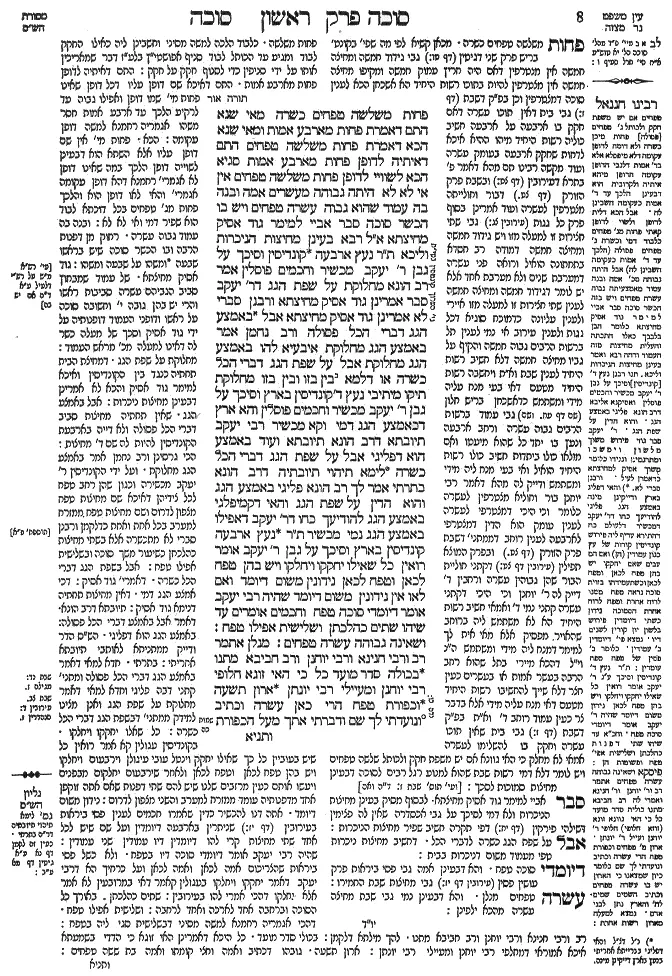
Sukkah 4b - Guemara
פחות משלשה טפחים כשרה מאי שנא התם דאמרת פחות מארבע אמות ומאי שנא הכא דאמרת פחות משלשה טפחים התם דאיתיה לדופן פחות מארבע אמות סגיא הכא לשוויי לדופן פחות משלשה טפחים אין אי לא לא היתה גבוהה מעשרים אמה ובנה בה עמוד שהוא גבוה עשרה טפחים ויש בו הכשר סוכה סבר אביי למימר גוד אסיק מחיצתא א"ל רבא בעינן מחיצות הניכרות וליכא ת"ר נעץ ארבעה קונדיסין וסיכך על גבן ר' יעקב מכשיר וחכמים פוסלין אמר רב הונא מחלוקת על שפת הגג דר' יעקב סבר אמרינן גוד אסיק מחיצתא ורבנן סברי לא אמרינן גוד אסיק מחיצתא אבל באמצע הגג דברי הכל פסולה ורב נחמן אמר באמצע הגג מחלוקת איבעיא להו באמצע הגג מחלוקת אבל על שפת הגג דברי הכל כשרה או דלמא בין בזו ובין בזו מחלוקת תיקו מיתיבי נעץ ד' קונדיסין בארץ וסיכך על גבן ר' יעקב מכשיר וחכמים פוסלין והא ארץ דכאמצע הגג דמי וקא מכשיר רבי יעקב תיובתא דרב הונא תיובתא ועוד באמצע הוא דפליגי אבל על שפת הגג דברי הכל כשרה לימא תיהוי תיובתיה דרב הונא בתרתי אמר לך רב הונא פליגי באמצע הגג והוא הדין על שפת הגג והאי דקמיפלגי באמצע הגג להודיעך כחו דר' יעקב דאפילו באמצע הגג נמי מכשיר ת"ר נעץ ארבעה קונדיסין בארץ וסיכך על גבן ר' יעקב אומר רואין כל שאילו יחקקו ויחלקו ויש בהן טפח לכאן וטפח לכאן נידונין משום דיומד ואם לאו אין נידונין משום דיומד שהיה רבי יעקב אומר דיומדי סוכה טפח וחכמים אומרים עד שיהו שתים כהלכתן ושלישית אפילו טפח:
ושאינה גבוהה עשרה טפחים:
מנלן אתמר רב ורבי חנינא ורבי יוחנן ורב חביבא מתנו בכולה סדר מועד כל כי האי זוגא חלופי רבי יוחנן ומעיילי רבי יונתן ארון תשעה וכפורת טפח הרי כאן עשרה וכתיב (שמות כה, כב) ונועדתי לך שם ודברתי אתך מעל הכפורת
Comments from Rashi on Masechet Sukkah Page 4b
פחות משלשה . כלבוד הלכה למשה מסיני וחשבינן ליה כאילו החקק לבוד ומגיע עד הכותל לבוד סניף אפושטי"ץ בלע"ז דבר שמאריכין אותו על ידי סניפין כדי לסנוף חקק על חקק: התם דאיתיה לדופן פחות מארבע אמות . התם דאיכא שם דופן עליו דכל דופן שאינו פחות מי' שמו דופן ואפילו גבוה עד לרקיע הלכך עד ארבע אמות חסר משהו אגמריה רחמנא למשה דופן עקומה: הכא . פחות מי' אין שם דופן עליו אלא השתא הוא דבעינן לשוייה דופן הלכך במה שאינו דופן לא אגמרי' רחמנא דהא דופן עקומה אגמרי' והאי לאו דופן היא והלכך פחות מג' טפחים בכל דוכתא לבוד הוא שפיר דמי ואי לא לא: ובנה בה עמוד גבוה עשרה . רחוק מן דפנות הרבה ובו הכשר סוכה שיש בראשו שבעה ומשהו על שבעה ומשהו: גוד אסיק מחיצתא . של עמוד שמבחוץ סביב הגביהם עשרה סביבות ראשו והרי יש בהן גובה י' וחשובה סוכה על ראשו ודופני העמוד דופנותיה על ידי גוד אסיק וסכך של מעלה כשר לה דאינו למעלה מכ' מראש העמוד: מחלוקת על שפת הגג . דמחיצת הבית תחתיה כנגד בין הקונדיסין ואיכא למימר גוד אסיק והכא לא אמרינן דבעינן מחיצות ניכרות: אבל באמצע הגג . שאין תחתיה מחיצות סביב דברי הכל פסולה ולא דייה בארבעת הקונדיסין להיות לה שם ד' מחיצות: הכי גרסינן ורב נחמן אמר באמצע הגג מחלוקת . ועל ידי הקונדיסין ר' יעקב מכשירה וכגון שהן רחב טפח לכל צידיהן דאיכא שם מחיצות טפח מצפון לדרום ושם מחיצות טפח ממזרח למערב בכל אחת ואחת כדלקמן ורבנן סברי לא מתכשרה אלא בשתי מחיצות כהלכתן כשיעור משך סוכה ובשלישית אפילו טפח: אבל בשפת הגג דברי הכל כשרה . דאמרי' גוד אסיק: דכי אמצע הגג דמי . דאין מחיצות תחתיה דנימא גוד אסיק: תיובתא דרב הונא . דאמר אבל באמצע דברי הכל פסולה: באמצע הגג הוא דפליגי . הש"ס הדר ודייק ממתניתא לאותבי תיובתא אחריתי: בתרתי . חדא למאי דאמר באמצע הגג דברי הכל פסולה ומתניתא קתני דבה פליגי וחדא למאי דאמר מחלוקת על שפת הגג ואנן מצינו למידק ממתני' דבשפת הגג דברי הכל כשרה: כל שאלו יחקקו ויחלקו . בקונדיסין עגולין קא אמר רואין כל שיש בעוביין כל כך שאילו יחקק וינטל עובי עיגולן וירבעום ויחלקו ויש בהן טפח לכאן וטפח לכאן ולאחר שירבעום יחלקום מבפנים ויעשו אותם כעין מרזבים שלנו שיש להם שתי דפנות שאם אתה זוקפן אחד מדפנותיה עומד ממזרח למערב והשני מצפון לדרום: נידון משום דיומד . אתה דנו להכשיר כדין שאמרו חכמים לענין פסי ביראות בעירובין (דף יז:) שניתרין בארבעה דיומדין ועל שם שיש לכל אחד שתי מחיצות קרי להו דיומדין דיו עמודין שני עמודין: שהיה ר' יעקב אומר דיומדי סוכה דיו בטפח . ולא כשל פסי ביראות שהצריכום אמה לכאן ואמה לכאן ועל כרחיך הא דרבי יעקב דאמר יחקקו ויחלקו בעגולין קאמר דאי במרובעין לא אמר אלא יחלקו דהכי אמרי להו בעירובין: שתים כהלכתן . באורך כל הסוכה וברחבה אחד לארכה ואחד לרחבה: ושלישית אפילו טפח . דהכי אגמריה רחמנא למשה מסיני דבשלישית סגי ליה בטפח: רב ורבי חנינא ורבי יוחנן ורב חביבא מתנו . להך מילתא דלקמן: בכולי סדר מועד . כל היכא דאמרינן האי זוגא כי הדדי בשמעתא איכא אמוראי דמחלפי רבי יוחנן ומעיילי רבי יונתן: ארון תשעה . גובהו דכתיב ואמה וחצי קומתו ואמה בת ששה טפחים:
Comments from Tosafot - Sukkah 4b
פחות משלשה טפחים כשרה. מכאן קשיא לפי מה שפי' בקונט' בריש פרק שני דגיטין (דף טו:) גבי גידוד חמשה ומחיצה חמשה אין מצטרפין דאם היה חריץ עמוק חמשה ומקיפו מחיצה חמשה אין מצטרפין להיות בתוכו רשות היחיד הא אשכחן הכא לענין סוכה דמצטרפין וכן בפ"ק דשבת (דף ז:) גבי בית דאין תוכו עשרה דאם חקק בו ארבעה על ארבעה חשיב כוליה רשות היחיד מיהו ההיא איכא לדחות שחקק ארבעה בעומק עשרה ועוד מקשה רבינו תם מהא דאמר פ' בתרא דעירובין (דף צט:) ובשבת פרק הזורק (דף צט.) דבור וחולייתה מצטרפין לעשרה ועוד אמרינן בסוף פרק כל גגות (עירובין צג:) גבי שתי חצירות זו למעלה מזו ויש גידוד חמשה ומחיצה חמשה דמודה רב חסדא בתחתונה הואיל ורואה פני עשרה דמערבת שנים ולא מערבת אחד אלא יש לומר דגידוד חמשה ומחיצה חמשה לענין שתי חצירות זו למעלה מזו איירי ולענין עליונה כדמוכח סוגיא דכל גגות ולענין עירוב אי נמי לענין תל ברשות הרבים גבוה חמשה והקיף על גביו מחיצה חמשה דלא חשיב רשות היחיד לענין שבת וא"ת ויחשבה רשות היחיד מטעם דאי בעי מנח עליה מידי ומשתמש כדאשכחן בריש חלון (שם דף עח. ושם) גבי עמוד ברשות הרבים גבוה עשרה ורחב ארבעה ונעץ בו יתד כל שהוא מיעטו ואם מילאו כולו ביתדות חשיב כולו רשות היחיד הואיל ואי בעי מנח ליה מידי ומשתמש ודייק לה מהא דאמר רבי יוחנן בור וחוליא מצטרפין לעשרה כלומר וכי היכי דמצטרפי לעשרה לענין עומק הוא הדין דמצטרפי לארבעה לענין רוחב דממתני' דשבת פרק הזורק (דף צט.) ובפרק המוצא תפילין (עירובין דף צט:) דקתני חוליית הבור שהן גבוהין עשרה ורחבין ד' דייק לה ר' יוחנן וכי היכי דקתני עשרה קתני נמי ד' ואמאי חשיב רשות היחיד הא לא משתמש ליה ברוחב שהאויר מפסיק אלא מאי אית לך למימר דמנח ליה מידי ומשתמש ה"נ וי"ל דהכא מיירי בתל שהוא רחב הרבה בעשר אמות או בעשרים כעין חצר דלא שייך להחשיבו רשות היחיד מטעם דאי מנח עליה מידי אלא בדבר צר כעין עמוד רוחב ד' וא"ת בפ"ק דשבת (דף ז:) גבי בית שאין תוכו עשרה וחקק בו להשלימו לעשרה אמאי לא מחלק כי האי גוונא אם יש משפת חקק ולכותל שלשה טפחים ויש לומר דלא דמי רשות שבת שהוא למנוע רגל רבים לסוכה דבעינן מחיצות סמוכות לסכך: [ועי' תוס' שבת ז: ד"ה ואם] סבר אביי למימר גוד אסיק מחיצתא. לבסוף מסיק בעינן מחיצות הניכרות ולא דמי לסיכך על גבי אכסדרה שאין לה פצימין דשילהי פירקין (דף יח:) דפי תקרה חשיב שפיר מחיצות הניכרות: אבל על שפת הגג כשרה לדברי הכל. דחשיב מחיצות ניכרות טפי מעמוד משום דניכרות בבית: דיומדי סוכה טפח. והא דבעינן אמה גבי פסי ביראות פרק עושין פסין (עירובין דף יז:) גבי מחיצות שבת החמירו: עשרה טפחים מנלן. והא דבעינן נמי גבי שבת מחיצה עשרה מהכא ילפינן:
Sukkah 4b - Mishnah translated into english
If the distance from the edge of the dug-out area to the wall was less than three handbreadths then it is fit, as the edge of the dug-out area is joined to the wall of the sukka based on the principle of lavud.
The Gemara asks: What is different there, in the case of a sukka with a platform in its center, that you said that it is a fit sukka if the wall is at a distance of less than four cubits from the edge of the platform, and what is different here that you said the wall must be at a distance of less than three handbreadths for the sukka to be fit?
The Gemara answers: There, in the case of the sukka more than twenty cubits high, where there already is a wall, but it is removed from the platform, as long as the wall is at a distance of less than four cubits, it is sufficient to render the sukka fit. Here, where the sukka is less than ten handbreadths high, its wall is not a fit wall. In order to render it a wall by adding the height of the dug-out area, if the distance between them is less than three handbreadths, yes, the dug-out area is considered joined to the wall, as based on the principle of lavud two objects are considered joined if the gap between them is less than three handbreadths; and if not, no, they are not considered joined.
If a sukka was more than twenty cubits high, and one built a pillar in the sukka, far from the walls, that is ten handbreadths high, and the distance from the top of the column to the roofing was less than twenty cubits, and on the horizontal surface of the column there is a bit more than seven by seven handbreadths, the minimum area required for fitness of a sukka, Abaye thought to say that this is a fit sukka because of the principle: Extend and raise the partitions of this pillar. Given that the column is at least ten handbreadths high, its four sides are therefore considered partitions, and the halakha is that the legal status of a partition is as if it extends and continues upwards indefinitely. Based on that perspective, the surface of the column is supported by four partitions at least ten handbreadths high that extend upward indefinitely, and from the top of the pillar to the roof is less than twenty cubits; therefore, this squared column forms a fit sukka.
Rava said to Abaye: That is not so, since in order to have a fit sukka we require conspicuous partitions, and there are none, as the sides of the column do not actually project above the surface.
§ The Sages taught: If one inserted four posts [kundeisin] into the floor and placed roofing over them but no walls, Rabbi Ya’akov deems it a fit sukka and the Rabbis deem it unfit.
Rav Huna said: The dispute between the Rabbis and Rabbi Ya’akov is in a case where the four posts are aligned on the edge of the roof, directly above the exterior walls of a house, as Rabbi Ya’akov holds that we say the principle: Extend and raise the partitions. Since the exterior walls of the house are full-fledged partitions, they are considered as extending upward indefinitely, constituting the walls of the sukka. And the Rabbis hold that we do not say the principle: Extend and raise the partitions. However, if the posts are placed in the center of the roof, then the walls of the house are irrelevant and everyone agrees that it is an unfit sukka. And Rav Naḥman said: The dispute is in the case of a sukka in the center of the roof, as according to Rabbi Ya’akov, if the posts themselves are one handbreadth wide, they serve as the partitions, while the Rabbis hold that it is not a fit sukka until it has two complete walls and a partial third wall.
A dilemma was raised before the Sages: Is Rav Naḥman saying that only if the sukka is in the center of the roof there is a dispute between Rabbi Ya’akov and the Rabbis, but if it is at the edge of the roof everyone agrees that it is fit? Or perhaps he is saying that there is a dispute both in this case and in that case? No resolution was found, so the dilemma shall stand unresolved.
The Gemara raises an objection from another baraita: If one drove four posts into the ground and placed roofing over them, Rabbi Ya’akov deems it fit and the Rabbis deem it unfit.
But isn’t the legal status of the ground like that of the center of the roof, as it is not surrounded by partitions that extend upward, and nevertheless Rabbi Ya’akov deems it fit? This is a conclusive refutation of the opinion of Rav Huna, who said that everyone agrees that a sukka in the center of the roof is unfit. The Gemara concludes: Indeed, it is a conclusive refutation of Rav Huna’s opinion.
And furthermore, there is an additional refutation of the opinion of Rav Huna. It is apparent from this baraita that they disagree with regard to the case of posts inserted in the center of the roof; however, in the case of the posts inserted on the edge of the roof everyone agrees that it is fit. Let us say, then, that this is a conclusive refutation of the opinion of Rav Huna on two counts. First, with regard to his statement that everyone agrees in the case of a sukka in the center of the roof that it is unfit, while the baraita cites a dispute on the matter; second, with regard to his statement that there is a dispute in the case of a sukka on the edge of the roof, while the baraita indicates that everyone agrees that it is fit.
The Gemara rejects this: Rav Huna could have said to you that there is no proof from the baraita with regard to the second matter, as it is possible that they disagree in the case of a sukka in the center of the roof and that the same is true in the case of a sukka on the edge of the roof. And the fact that they specifically dispute the case of a sukka in the center of the roof is to convey to you the far-reaching nature of the opinion of Rabbi Ya’akov, who deems the sukka fit even in the center of the roof.
The Sages taught: If one inserted four posts into the ground and placed a roof over them, Rabbi Ya’akov says: One considers whether the posts are wide enough that if they were grooved and split, forming a piece of wood with two segments at a right angle, and they have a handbreadth to here, in this direction, and a handbreadth to there, in that direction, then they are considered a double post [deyumad]. With regard to certain halakhot, the status of a double post positioned at a corner is that of two full-fledged partitions. And if not, if after splitting them they are narrower than that, they are not considered a double post, as Rabbi Ya’akov would say: The minimum measure of double posts of a sukka to be considered full-fledged partitions is one handbreadth. And the Rabbis say: The sukka is fit only if it has two full-fledged partitions in the standard sense, completely closing each of those two sides, and a third wall, which, based on a halakha transmitted to Moses from Sinai, measures even a handbreadth.
§ The mishna continues: A sukka that is not even ten handbreadths high is unfit. The Gemara asks: From where do we derive this halakha?
It was stated that Rav, and Rabbi Ḥanina, and Rabbi Yoḥanan, and Rav Ḥaviva taught the matter below.
As an aside, the Gemara notes: Throughout the entire order of Mo’ed, wherever this second pair of Sages is mentioned, there are some amora’im who replace Rabbi Yoḥanan and do so by inserting Rabbi Yonatan in his place.
And this is what they taught: The Ark of the Covenant was itself nine handbreadths high, as it is stated explicitly in the Torah that it was one and a half cubits high and the cubit used to measure Temple vessels consisted of six handbreadths. And the Ark cover was one handbreadth thick. There is a total height of ten handbreadths here. And it is written: “I will meet with you there and I will speak with you from above the Ark cover” (Exodus 25:22),
Traduction : The William Davidson digital edition of the Koren Noé Talmud, with commentary by Rabbi Adin Even-Israel Steinsaltz.