 Talmud Bavli
Sukkah 17b : Youtube
Daf TubeYoutube
3 video classes :
Sukkah Page 17b
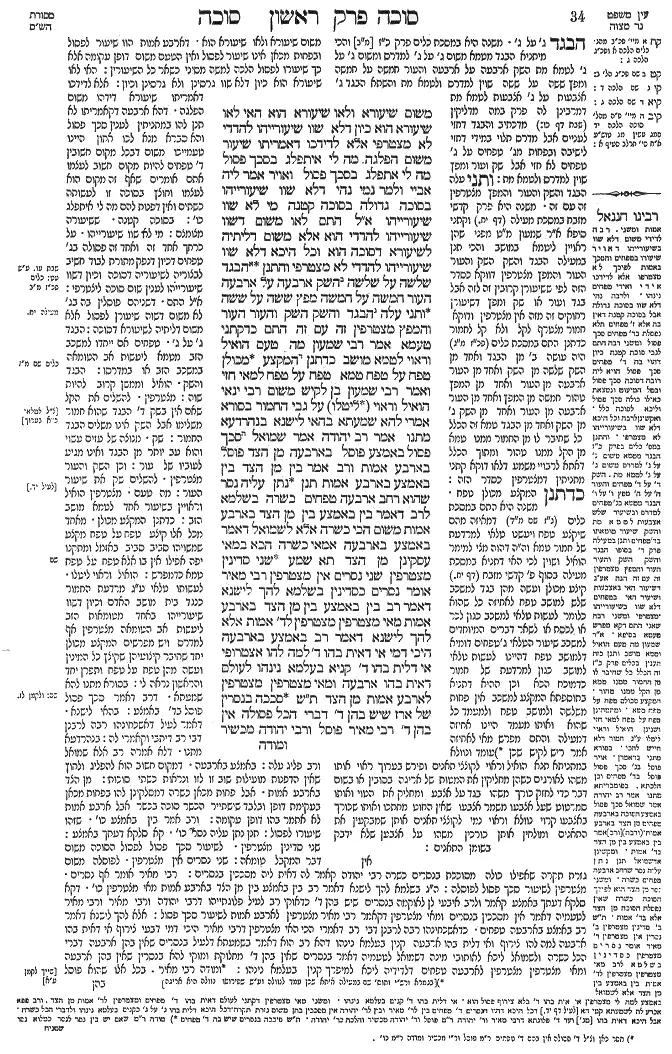
Sukkah 17b - Guemara
משום שיעורא ולאו שיעורא הוא האי לאו שיעורא הוא כיון דלא שוו שיעורייהו להדדי לא מצטרפי אלא לדידכו דאמריתו שיעור משום הפלגה מה לי איתפלג בסכך פסול מה לי אתפלג בסכך פסול ואויר אמר ליה אביי ולמר נמי נהי דלא שוו שיעורייהו בסוכה גדולה בסוכה קטנה מי לא שוו שיעורייהו א"ל התם לאו משום דשוו שיעורייהו להדדי הוא אלא משום דליתיה לשיעורא דסוכה הוא וכל היכא דלא שוו שיעורייהו להדדי לא מצטרפי והתנן הבגד שלשה על שלשה השק ארבעה על ארבעה העור חמשה על חמשה מפץ ששה על ששה ותני עלה הבגד והשק השק והעור העור והמפץ מצטרפין זה עם זה התם כדקתני טעמא אמר רבי שמעון מה טעם הואיל וראוי לטמא מושב כדתנן המקצע מכולן טפח על טפח טמא טפח על טפח למאי חזי ואמר רבי שמעון בן לקיש משום רבי ינאי הואיל וראוי (ליטלו) על גבי החמור בסורא אמרי להא שמעתא בהאי לישנא בנהרדעא מתנו אמר רב יהודה אמר שמואל סכך פסול באמצע פוסל בארבעה מן הצד פוסל בארבע אמות ורב אמר בין מן הצד בין באמצע בארבע אמות תנן נתן עליה נסר שהוא רחב ארבעה טפחים כשרה בשלמא לרב דאמר בין באמצע בין מן הצד בארבע אמות משום הכי כשרה אלא לשמואל דאמר באמצע בארבעה אמאי כשרה הכא במאי עסקינן מן הצד תא שמע שני סדינין מצטרפין שני נסרים אין מצטרפין רבי מאיר אומר נסרים כסדינין בשלמא להך לישנא דאמר רב בין באמצע בין מן הצד בארבע אמות מאי מצטרפין מצטרפין לד' אמות אלא להך לישנא דאמר רב באמצע בארבעה היכי דמי אי דאית בהו ד' למה להו אצטרופי אי דלית בהו ד' קניא בעלמא נינהו לעולם דאית בהו ארבעה ומאי מצטרפין מצטרפין לארבע אמות מן הצד ת"ש סככה בנסרין של ארז שיש בהן ד' דברי הכל פסולה אין בהן ד' רבי מאיר פוסל ורבי יהודה מכשיר
Comments from Rashi on Masechet Sukkah Page 17b
משום שיעורא ולאו שיעורא הוא . דארבע אמות הוו שיעור לפסול ובפחות מכאן אינו שיעור לפסול ואין הטעם משום דופן עקומה אלא כך שיעורו לפסול הלכה למשה מסיני כשאר כל השיעורין: האי לאו שיעורא הוא כיון דלא שוו גרסינן ולא גרסינן וכיון: אלא לדידכו דאמריתו שיעורא דידהו משום הפלגה . דהא ארבעה דקאמריתו לא תנן להו במתניתין לענין סכך פסול והא סברא מנא לכו אתון היינו טעמייכו משום דבכל מקום חשובין ד' טפחים להיות מקום חשוב לעצמו אתם אומרים שאף זה מקום הוא לעצמו וחוצץ בסוכה זו לעשותה כשתים ואין דפנות להם מה לי איתפלג כו': בסוכה קטנה . ששיעורה מצומצם: מי לא שוו שיעורייהו . על כרחך אחד זה ואחד זה פסולה בג' טפחים דכיון דנפק מתורת לבוד חשיב לבצוריה לשיעוריה דסוכה וכיון דשוו שיעורייהו לענין שום סוכה ליצטרפי: א"ל התם . דשניהם פוסלין בה בג' לא משום דשוה שיעורן לפסול אלא משום דליתיה לשיעורא דסוכה: הבגד ג' על ג' . טפחים אם ייחדו למשכב הזב מטמא ליעשות אב הטומאה במשכב הזב או במדרסו: הבגד והשק . הואיל וממשן קרוב להיות שוה: מצטרפין . להשלים את הקל שאם אין בשק ד' הבגד שהוא חמור משלימו אבל השק אינו משלים הבגד החמור: שק . מנוצה של עזים עשוי והוא עב יותר מן הבגד ואינו מגיע לעוביו של עור: וכן השק והעור מצטרפין . להשלים שק את שיעור העור: מה טעם . מצטרפין הואיל וראויין בשיעור אחד לטמא מושב הזב: כדתנן המקצע מכולן . מאחד מכל אלו קיצע טפח על טפח מקצע שמשויהו סביב סביב באזמל ומתקנו יפה אפילו אין בו אלא טפח על טפח טמא כדמפרש: הואיל וראוי ליטלו . לעשותו טלאי ע"ג מרדעת החמור כנגד בית מושב האדם וכיון דשוו שיעורייהו באחד מטומאות הזב ליעשות אב הטומאה מצטרפין אף למדרס ויש מפרשים המקצע מכולן יחד שחיבר קיצועיהן שקיצץ כל המינין ועשה מהן טפח על טפח ותפרן יחד והראשון נראה לי: בסורא מתנו להא שמעתא . דרב דאמר סכך פסול פוסל בד' באמצע: בהאי לישנא . דאמר לעיל דאשכחינהו רבה לרבנן דבי רב דיתבי וקאמרי לה: בנהרדעא מתנו . דלא אמרה רב אלא שמואל ורב פליג עלה: באמצע בארבעה . דמקום חשוב הוא להפליג ולחוץ שאין הדפנות מועילות שוב זו לזו ונראות כשתי סוכות: מן הצד בארבע אמות . אבל פחות מכאן כשרה דמסלקינן להו בפחות מכאן בעקימת דופן ובלבד שישתייר הכשר סוכה בכשר אבל ארבע אמות לא אתמר בהו דופן עקומה: ורב אמר בין באמצע כו' . שזהו שיעורו לפסול: תנן נתן עליה נסר כו' . קא סלקא דעתך באמצע: שני סדינין מצטרפין . לשיעור סכך פסול לפסול הסוכה משום דבר המקבל טומאה: שני נסרים אין מצטרפין . לפוסלה משום גזרת תקרה שאפילו כולה מסוככת בנסרים כשרה רבי יהודה קאמר לה דאית ליה מסככין בנסרים: רבי מאיר אומר אף נסרים . מצטרפין לשיעור סכך פסול לפוסלה: ה"ג בשלמא להך לישנא דאמר רב בין באמצע בין מן הצד בארבע אמות מאי מצטרפין כו' . דקא סלקא דעתך באמצע קאמר ולרב איבעי לן לאוקמה בנסרים שיש בהן ד' כדאוקי רב לעיל פלוגתייהו דרבי יהודה ורבי מאיר ורבי מאיר לטעמיה דאמר אין מסככין בנסרים ומאי מצטרפין דקאמר רבי מאיר מצטרפין לארבע אמות לשיעור סכך פסול: אלא להך לישנא דאמר רב באמצע בארבעה טפחים . כדאשכחינהו רבה לרבנן דבי רב דאמרי הכי האי מצטרפין דרבי מאיר היכי דמי דבעי צירוף אי דאית בהו ארבעה למה להו צירוף ואי דלית בהו ארבעה קנין בעלמא נינהו דהא רב הוא דאמר בשמעתא דלעיל בנסרים שאין בהן ארבעה דברי הכל כשרה ולשמואל ליכא לאותובי מינה דשמואל לטעמיה דאמר בנסרים שאין בהן ד' מחלוקת ומוקי להא בנסרין שאין בהן ארבעה ומאי מצטרפין מצטרפין לארבעה טפחים דלדידיה ליכא למיפרך קנין בעלמא נינהו:
Comments from Tosafot - Sukkah 17b
הבגד ג' על ג'. משנה היא במסכת כלים פרק כ"ז [מ"ב] והכי מיתניא הבגד מטמא משום ג' על ג' למדרס ומשום ג' על ג' לטמא מת השק ארבעה על ארבעה והעור חמשה על חמשה ומפץ ששה על ששה שוין למדרס ולטמא מת והשתא הבגד ג' אצבעות על ג' אצבעות לטמא מת דמרבינן לה פרק במה מדליקין (שבת דף כו:) מדכתיב והבגד דחזי לעניים אבל מדרס תלוי במידי דחזי לישיבה ובפחות מג' טפחים על ג' טפחים לא חזי אבל שק ועור ומפץ שוין למדרס ולטמא מת: ותני עלה הבגד והשק והעור והמפץ מצטרפין זה עם זה. משנה היא פרק קדשי מזבח במסכת מעילה (דף יח.) וקתני סיפא א"ר שמעון מ"ט מפני שהן ראויין ליטמא במושב והכי תנן במעילה הבגד והשק השק והעור העור והמפץ מצטרפין דווקא כסדר הזה לפי ששיעורן קרובין זה לזה אבל בגד ועור או שק ומפץ דשיעורן רחוקים זה מזה אין מצטרפין ודוקא חמור מצטרף לקל ולא קל לחמור כדתנן התם במסכת כלים (פכ"ז מ"ג) היה עושה ב' מן הבגד ואחד מן השק שלשה מן השק ואחד מן העור ארבעה מן העור ואחד מן המפץ טהור חמשה מן המפץ ואחד מן העור ארבעה מן העור ואחד מן השק ג' מן השק ואחד מן הבגד טמא זה הכלל כל שחיבר לו מן החמור ממנו טמא מן הקל ממנו טהור ומתוך הכלל דאתא לרבויי משמע דלאו דוקא קתני מתניתין דמצטרפין כסדר הזה: כדתנן המקצע מכולן טפח. משנה היא התם במסכת כלים (ג"ז שם מ"ד) דמאיזה מהם שיקצע טפח ויעשנו טלאי למרדעת של חמור טמא וה"ה דהוה מצי למימר הואיל ושוין לכי האי דתניא במסכת מעילה בסוף פ' קדשי מזבח (דף יח.) קיצע מכולן ועשה מהן בגד למשכב שלש למושב טפח לאחיזה כל שהוא כלומר לעשות טלאי למשכב כגון לכר או לכסת או לשאר דברים המיוחדים למשכב שיעור הטלאי ג' טפחים דומיא דלמושב טפח דהיינו לעשות טלאי למושב כגון למרדעת של חמור כדמוכח הכא וכן ההיא דתניא בתוספתא המקצע למשכב אין פחות משלשה ולמושב טפח ולמעמד כל שהוא ואותו מעמד היינו אחיזה דמעילה והתם מפרש מאי לאחיזה אמר ריש לקיש שכן עומד ונוולא במתניתא תנא הואיל וראוי לקוצצי תאנים ופירש בערוך ראוי אותו משהו לאורגים כשהן מחליקין את המטות של אריגה בסובין או בשום דבר כדי לחזק כורך משהו בגד על אצבע ומחליק את הטוי ואותו סמרטוט שעל אצבעו משמר אצבעו שאין החוט מחתכו ואותו שכורך באצבעו קרוי נוולא וראוי נמי לקוצצי תאנים אותן שמבקעין את התאנים ומולחין אותן כורכין משהו על אצבען שלא ידבק בשומן התאנים:
Sukkah 17b - Mishnah translated into english
the status of the sukka is determined on the basis of whether it is the requisite measure or it is not the requisite measure. In other words, the difference between unfit roofing that is four cubits and unfit roofing that is less is a unique halakha, completely unrelated to the principle of curved wall. Similarly, it is a unique halakha that three handbreadths of space in a roof render a sukka unfit. In this case, there is not the requisite measure according to either halakha; and since their measures are not equal to each other, they do not combine to render the sukka unfit. The sukka is rendered unfit only when the measure of unfit roofing reaches four cubits.
However, according to you, who say that the measure of four handbreadths for unfit roofing is due to the distance between the wall and the fit roofing, which renders the sukka unfit, what is the difference to me if it was distanced due to unfit roofing, and what is the difference to me if it was distanced due to a combination of unfit roofing and space? In either case, the distance between the roofing and the wall should prevent connecting the roofing to the wall. This concludes Rabba’s account of his exchange with the Sages of the school of Rav.
Abaye said to Rabba: And according to the Master, too, although their measures are not equal in a large sukka, which is larger than four cubits, in a small sukka aren’t their measures equal? In a minimally sized sukka, seven by seven handbreadths, three handbreadths of unfit roofing must render the sukka unfit. If the measure of fitness were to remain up to four handbreadths, that would mean that a sukka with a majority of unfit roofing is fit, which is unreasonable. Therefore, Rabba’s contention that the measures of unfit roofing and space are totally different is not precise.
Rabba said to him: There, in the case of the minimally-sized sukka, the fact that the sukka is unfit is not due to the fact that their measures are equal. Rather, it is due to the fact that in a case where the unfit roofing is three handbreadths, the sukka lacks the minimum required measure of fit roofing. In other words, it is not the amount of unfit roofing that creates the problem; rather, it is that the fit area of the sukka is too small.
Rabba maintains that since the two requisite measures of unfitness are not equal, they do not join together. The Gemara asks: And anywhere that their measures are not equal, do they not combine to constitute the requisite measure? But didn’t we learn in the mishna: The garment must be at least three by three handbreadths in order to become a primary source of ritual impurity by means of ritual impurity imparted by treading of a zav; and the sackcloth made from goats’ hair must be at least four by four handbreadths; and the animal hide must be five by five; and a mat must be six by six?
And a baraita is taught concerning the mishna: The garment and the sackcloth, the sackcloth and the hide, and the hide and the mat join together with one another. If one attaches a piece of material that has a smaller, more stringent measure for ritual impurity to a piece of material that has a larger, more lenient measure, the combined cloth is susceptible to contract ritual impurity if together they compose the larger measure. Apparently, two items whose measures are not equal combine to compose the more lenient measure.
The Gemara rejects this. There, it is as the reason is taught that Rabbi Shimon said: What is the reason that these different fabrics combine? They combine since all the component materials are fit to become ritually impure through the ritual impurity imparted to a seat upon which a zav sits, as they can each be used to patch a saddle or saddlecloth. Since they are all suitable for the same use, they join together with regard to the halakhot of ritual impurity. As we learned in a mishna: In the case of one who trims and processes a piece of any of the above-mentioned materials measuring one handbreadth by one handbreadth, that piece is capable of becoming ritually impure. There is a certain halakha for which each of the different materials has the same measure; they therefore join together in other areas as well.
The Gemara asks: For what use is a cloth that is one handbreadth by one handbreadth fit? After all, a rag that has no use does not contract ritual impurity. Rabbi Shimon ben Lakish said in the name of Rabbi Yannai: Since it is suitable for use as a patch on a donkey’s saddlecloth, it is capable of contracting ritual impurity. This ends the discussion of the exchange between Rabba and the Sages of the school of Rav.
The Gemara notes: In Sura, they stated this halakha in that language cited above. In Neharde’a, however, they taught it as follows: Rav Yehuda said that Shmuel said: Unfit roofing in the center of the sukka renders the sukka unfit with a measure of four handbreadths of unfit roofing. Along the side of the sukka, it renders the sukka unfit with a measure of four cubits of unfit roofing. And Rav said: Both along the side and in the center, it renders the sukka unfit with a measure of four cubits of unfit roofing.
We learned in a mishna: If one placed a board that is four handbreadths wide atop the sukka, the sukka is fit. And the Gemara asks: Granted, according to Rav, who said that both along the side and in the center, a sukka is rendered unfit with a measure of four cubits of unfit roofing, it is due to that reason that the sukka is fit. However, according to Shmuel, who said that in the center of the sukka, the sukka is rendered unfit with a measure of four handbreadths of unfit roofing, why is the sukka fit? The Gemara answers: With what are we dealing here? It is with a case where he placed the beam along the side; but had he placed it in the center, then according to Shmuel the sukka would indeed be unfit.
The Gemara cites a proof with regard to Rav’s opinion. Come and hear: Two sheets placed over the roofing of the sukka join together to render the sukka unfit. However, two boards placed on the sukka do not combine to render the sukka unfit. Rabbi Meir says: Even boards have the same legal status as sheets, and they combine to render the sukka unfit.
The Gemara clarifies: Granted, according to that version from Neharde’a that Rav said: Both along the side and in the center, a sukka is rendered unfit with a measure of four cubits of unfit roofing, what is the meaning of join together? It means that the two unfit objects join together to comprise four cubits. However, according to this version from Sura, in which Rav said: A sukka is rendered unfit with a measure of four handbreadths of unfit roofing in the center, what are the circumstances? If each of the boards has four handbreadths in its width, why must they join together to render the sukka unfit? If each board is four handbreadths wide, each is capable of rendering the sukka unfit on its own, and if each of the boards does not have four handbreadths in its width, why would Rabbi Meir prohibit their use; they are merely reeds?
The Gemara answers: Actually, it is a case where each of the boards has four handbreadths in its width, and what is the meaning of join together? It means they join together to constitute four cubits along the side. This understanding fits both versions of Rav’s opinion.
Come and hear proof from another baraita: If one roofed the entire sukka with cedar beams that have four handbreadths in their width, everyone agrees that the sukka is unfit. If they do not have four handbreadths in their width, Rabbi Meir deems the sukka unfit and Rabbi Yehuda deems it fit.
Traduction : The William Davidson digital edition of the Koren Noé Talmud, with commentary by Rabbi Adin Even-Israel Steinsaltz.