 Talmud Bavli
Shabbat 142b : Youtube
Daf TubeYoutube
2 video classes :
Shabbat Page 142b
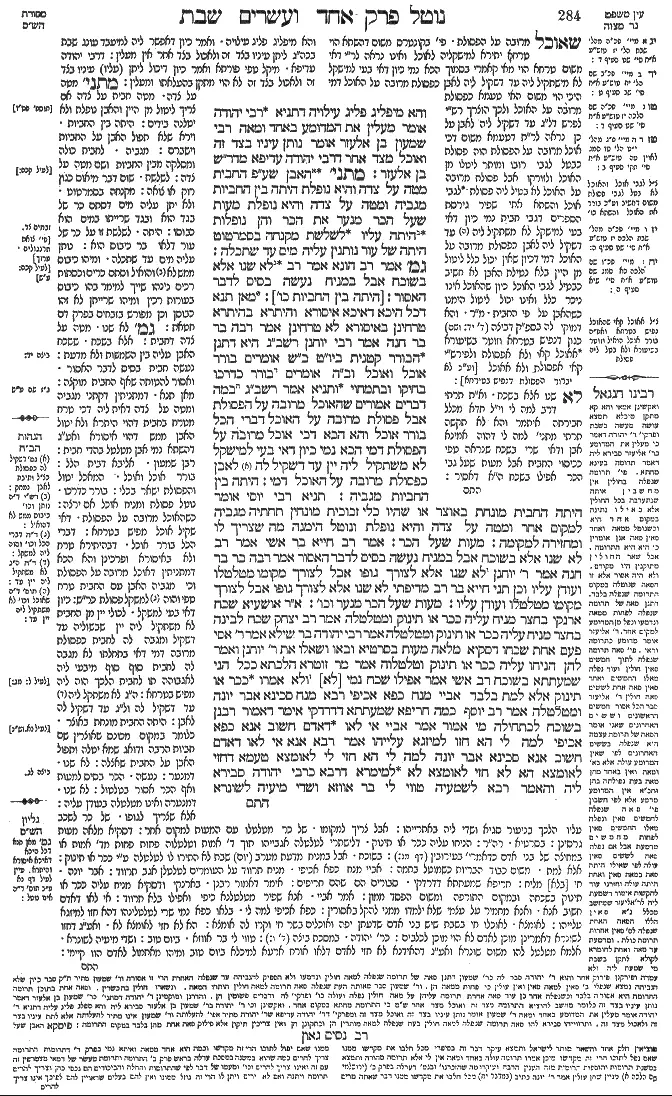
Shabbat 142b - Guemara
והא מיפליג פליג עילויה דתניא רבי יהודה אומר מעלין את המדומע באחד ומאה רבי שמעון בן אלעזר אומר נותן עיניו בצד זה ואוכל מצד אחר דרבי יהודה עדיפא מדר"ש בן אלעזר:
מתני׳ האבן שע"פ החבית מטה על צדה והיא נופלת היתה בין החביות מגביה ומטה על צדה והיא נופלת מעות שעל הכר מנער את הכר והן נופלות היתה עליו לשלשת מקנחה בסמרטוט היתה של עור נותנין עליה מים עד שתכלה:
גמ׳ אמר רב הונא אמר רב לא שנו אלא בשוכח אבל במניח נעשה בסיס לדבר האסור:
[היתה בין החביות כו']:
מאן תנא דכל היכא דאיכא איסורא והיתרא בהיתרא טרחינן באיסורא לא טרחינן אמר רבה בר בר חנה אמר רבי יוחנן רשב"ג היא דתנן הבורר קטנית ביו"ט ב"ש אומרים בורר אוכל ואוכל וב"ה אומרים בורר כדרכו בחיקו ובתמחוי ותניא אמר רשב"ג במה דברים אמורים שהאוכל מרובה על הפסולת אבל פסולת מרובה על האוכל דברי הכל בורר אוכל והא הכא דכי אוכל מרובה על הפסולת דמי הכא נמי כיון דאי בעי למישקל לא משתקיל ליה יין עד דשקיל לה לאבן כפסולת מרובה על האוכל דמי:
היתה בין החביות מגביה:
תניא רבי יוסי אומר היתה החבית מונחת באוצר או שהיו כלי זכוכית מונחין תחתיה מגביה למקום אחר ומטה על צדה והיא נופלת ונוטל הימנה מה שצריך לו ומחזירה למקומה:
מעות שעל הכר:
אמר רב חייא בר אשי אמר רב לא שנו אלא בשוכח אבל במניח נעשה בסיס לדבר האסור אמר רבה בר בר חנה אמר ר' יוחנן לא שנו אלא לצורך גופו אבל לצורך מקומו מטלטלו ועודן עליו וכן תני חייא בר רב מדיפתי לא שנו אלא לצורך גופו אבל לצורך מקומו מטלטלו ועודן עליו:
מעות שעל הכר מנער וכו':
א"ר אושעיא שכח ארנקי בחצר מניח עליה ככר או תינוק ומטלטלה אמר רב יצחק שכח לבינה בחצר מניח עליה ככר או תינוק ומטלטלה אמר רבי יהודה בר שילא אמר ר' אסי פעם אחת שכחו דסקיא מלאה מעות בסרטיא ובאו ושאלו את ר' יוחנן ואמר להן הניחו עליה ככר או תינוק וטלטלוה אמר מר זוטרא הלכתא ככל הני שמעתתא בשוכח רב אשי אמר אפילו שכח נמי [לא] ולא אמרו ככר או תינוק אלא למת בלבד אביי מנח כפא אכיפי רבא מנח סכינא אבר יונה ומטלטלה אמר רב יוסף כמה חריפא שמעתתא דדרדקי אימר דאמור רבנן בשוכח לכתחילה מי אמור אמר אביי אי לאו דאדם חשוב אנא כפא אכיפי למה לי הא חזו למיזגא עלייהו אמר רבא אנא אי לאו דאדם חשוב אנא סכינא אבר יונה למה לי הא חזי לי לאומצא טעמא דחזי לאומצא הא לא חזי לאומצא לא למימרא דרבא כרבי יהודה סבירא ליה והאמר רבא לשמעיה טווי לי בר אווזא ושדי מיעיה לשונרא
Comments from Rashi on Masechet Shabbat Page 142b
והא מיפליג פליג עילויה . ואמר כיון דאפשר ליה למיעבד עונג שבת בכה"ג ליתן עיניו בצד זה ולאכול בצד אחר אין מעלין: דרבי יהודה עדיפא . מיקל טפי פורתא ואמר כיון דיכול ליתן (עליו) עיניו בצד זה ולאכול בצד זה לא הוי מתקן בהעלאתו ומעלין: מתני' מטה על צדה . מטה חבית על צדה אם צריך ליטול מן היין והאבן נופלת ולא יטלנה בידים: היתה בין החביות . וירא שלא תפול האבן על החביות וישברם: מגביה . לחבית כולה ומסלקה מבין החביות ושם מטה על צדה: לשלשת . שום דבר מיאוס כגון רוק או צואה: מקנחה בסמרטוט . ולא יתן עליה מים דסתם כר של בגד הוא ובגד שרייתו במים הוא כבוסו: היתה . לשלשת זו על כר של עור דלאו בר כיבוס הוא: נותן עליה מים עד שתכלה . ומיהו כיבוס ממש לא והואיל וסתם כרים וכסתות רכים נינהו שייך למימר בהו כיבוס בעורות רכין ומיהו שרייתן לא זהו כבוסן וכן מפורש בזבחים בפרק דם חטאת: גמ' לא שנו . מטה על צדה דחבית: אלא בשכח . ששכח האבן עליה בין השמשות ולא מדעת: נעשה חבית בסיס לדבר האסור . ואסור להטותה שאף החבית מוקצה: מאן תנא . דמתניתין דקתני מגביה ומטה על צדה דאית ליה דכי טרח מטרח בחבית דהוי היתרא ולא יטול האבן ממש דהוי איסורא ואע"ג דהשתא נמי אבן מטלטל בהדי חבית: רבן שמעון . אליבא דבית הלל: בורר אוכל ואוכל . המאכל יטול והפסולת ישאר בכלי: בורר כדרכו . נוטל פסולת ומניח אוכל אם ירצה: כשהאוכל מרובה על הפסולת . דאי שקיל אוכל מפיש בטרחא: דברי הכל בורר אוכל . דבהיתירא טרח ולא באיסורא ופרכינן והא הכא דמתניתין דאוכל מרובה על הפסולת וכי מגביה האבן עם החבית טרח טפי והוה למשקל פסולת כר"ש: כיון דאי בעי למשקל . לכולי יין מן החבית לא משתקיל ליה יין שבשוליה עד דשקיל ומגבה לה לחבית כפסולת מרובה דמי דאי בתחלתו לא מגבה לה לחבית סוף סוף מיבעי ליה לאגבוהה תו לחבית הלכך הוה ליה מפיש בטרחא: ה"ג לא משתקל ליה עד דשקיל לה ול"ג עד דשקיל לה לאבן: היתה החבית מונחת באוצר . כלומר במקום מכונס שאוצרין שם חביות הרבה ודואג שמא יטלה ותפול האבן על החבית שאצלה: לא שנו . דמנער: נעשה . הכר בסיס למעות ואף הכר אסור בטלטול: לא שנו . דמנערה ואינו מטלטלה בעודן עליה: אלא שצריך לגופו . של כר לשכב עליו הלכך בניעור סגיא ושדי ליה באתרייהו: אבל צריך למקומו . של כר מטלטלו עם המעות למקום אחר: דסקיא מלאה מעות . גרסינן: בסרטיא . רה"ר: הניחו עליה ככר או תינוק . דלישתרי לטלטלה אגבייהו תוך ד' אמות וטלטלוה פחות פחות מד' אמות או במחיצה של בני אדם כדאמרי' בעירובין (דף מג:): בשוכח . אבל במניח מדעת מערב (יום) שבת לא התירו לו לטלטלה ע"י ככר או תינוק: אלא למת . משום כבוד הבריות כשמוטל בחמה: אביי מנח כפא אכיפי . מניח תרווד על העומרים לטלטלן אגב תרווד: אבר יונה . חי [בלא] מליח: חריפא שמעתתא דדרדקי . סבורים הם שהם חריפים: אימר דאמור רבנן . בארנקי ודסקיא מניח עליה ככר או תינוק בשכחה ובמקום התורפה ומשום הפסד ממון: אמר אביי . אנא שפיר מטלטלנא כיפי ואפילו בלא תרווד: אי לאו דאדם חשוב אנא . ואנא מחמיר על עצמי שלא ילמדו ממני להקל באסורין: כפא אכיפי למה לי . בלאו כפא נמי שרי לטלטלינהו דהא חזו למיזגא עלייהו: לאומצא . לאוכלו חי בשבת שיש בני אדם שדעתן יפה ואוכלים בשר חי וקרו לה אומצא: הא לא חזי לאומצא לא . ואע"ג דחזו לשונרא דאמרינן מוכן לאדם לא הוי מוכן לכלבים: כר' יהודה . במסכת ביצה (דף ו:): טווי לי בר אווזא . ביום טוב: ושדי מיעיה לשונרא . אלמא מטלטל להו משום שונרא ואע"ג דהאידנא לא חזי לאדם דלאו אורח ארעא למיכלא ביום טוב ומיהו מאתמול לאדם הוו קיימי:
Comments from Tosafot - Shabbat 142b
שאוכל מרובה על הפסולת . פי' בקונטרס משום דהשתא הוי טרחא יתירא למישקליה לאוכל ואינו נראה לר"י דאי משום טרחא הוי מאי קאמרי בסמוך הכא נמי כיון דאי בעי למישקל לא מישתקיל ליה עד דשקיל ליה לאבן כפסולת מרובה על האוכל דמי היכי הוי משום האי טעמא כפסולת מרובה על האוכל ולכך הוצרך רש"י לפרש דל"ג עד דשקיל ליה לאבן על כן נראה לר"ת דטעמא משום דכי אוכל מרובה על הפסולת הוה פסולת כבטל לגבי רובו ומותר ליטלו מן האוכל ולזורקו אבל פסולת מרובה על האוכל לא בטיל ליה פסולת לגבי אוכל והשתא אתי שפיר גירסת הספרים דגבי חבית נמי כיון דאי בעי למישקל לא משתקיל ליה עד דשקיל ליה לאבן כפסולת מרובה על האוכל דמי דכיון שאין יכול כלל ליטול מן היין בלא נטילת האבן לא חשיב כבטיל לגבי האוכל כיון שהאוכל אינו ניכר כלל ואינו יכול ליטול הימנו כשהאבן על פי החבית. מ"ר. והא דמוקי לה בספ"ק דביצה (ד' יד: ושם) כגון דנפיש בטרחא וזוטר בשיעורא אאוכל קאי ולא אפסולת ולפירש"י קאי אפסולת ולא אאוכל [וע"כ לא יברור הפסולת דנפיש בטירחא]: לא שנו אלא בשכח . וא"ת תרתי דרב למה לי וי"ל חדא מכלל חבירתה איתמר והא לא תקשה תרתי מתני' למה לי דהוה אמינא אבן ודאי שרי בשכח שנראה טפי ככיסוי החבית אבל מעות שעל גבי הכר אפילו בשכח ה"א דאסיר:
Shabbat 142b - Mishnah translated into english
Doesn’t he disagree with him? As it was taught in a baraita that Rabbi Yehuda says: One may lift a measure of teruma that was nullified from a mixture of one hundred measures of non-sacred produce and one measure of teruma. Rabbi Shimon ben Elazar says: One casts his eyes on this side of the mixture and decides to separate a se’a from the produce on that side, and he eats from a different side of the mixture.
The Gemara rejects this: Fundamentally, the two tanna’im agree, but the opinion of Rabbi Yehuda is more far-reaching than the opinion of Rabbi Shimon ben Elazar. Rabbi Yehuda says that since thought is sufficient, lifting the se’a does not render the produce fit for consumption, and it is preferable if he lifts the se’a even on Shabbat.
MISHNA: With regard to a stone, which is set-aside on Shabbat and may not be moved, that was placed on the mouth of a barrel, one tilts the barrel on its side, and the stone falls. If the barrel was among other barrels, and the other barrels might break if the stone falls on them, he lifts the barrel to distance it from the other barrels, and then tilts it on its side, and the stone falls.
With regard to coins that are on a cushion, he shakes the cushion and the coins fall. If there was bird dung (Arukh) on the cushion, he wipes it with a rag, but he may not wash it with water because of the prohibition against laundering. If the cushion was made of leather, and laundering is not a concern, he places water on it until the bird dung ceases.
GEMARA: Rav Huna said that Rav said: They only taught this halakha with regard to a stone in a case where one forgets the stone on the barrel. However, if he places the stone on the barrel, the barrel becomes a base for a prohibited object, which itself may not be moved throughout Shabbat.
We learned in the mishna: If the barrel was among other barrels, he lifts the barrel and then tilts it on its side, and the stone falls. The Gemara asks: Who is the tanna who holds that any place that there is a prohibited item and a permitted item, we may exert ourselves for the permitted item, but we may not exert ourselves for the prohibited item? One must exert himself to lift the barrel, and he may not remove the stone, although doing so would minimize his exertion.
Rabba bar bar Ḥana said that Rabbi Yoḥanan said: It is Rabban Shimon ben Gamliel. As we learned in a mishna: With regard to one who selects legumes on a Festival, separating edible and inedible, Beit Shammai say: He selects food and eats it immediately and leaves the waste. And Beit Hillel say: He selects in his usual manner, and may even remove the waste and leave the food, in his lap or in a large vessel.
And it was taught in a baraita that Rabban Shimon ben Gamliel said: In what case are these matters, the dispute between Beit Shammai and Beit Hillel, stated: In a case where the quantity of the food is greater than the quantity of the waste. However, if the quantity of the waste is greater than the quantity of the food, everyone agrees that one selects the food to avoid the exertion involved in removing the waste, which itself may not be moved. The same is true here. He moves the barrel and not the stone, which is like waste.
The Gemara asks: And here, in the case of the barrel, isn’t it comparable to a case where the food is greater than the waste, as the barrel, which is food, is bigger and heavier than the stone. In addition, it is easier to move the stone. Nevertheless, he is not permitted to do so, in accordance with the opinion of Beit Hillel.
The Gemara answers: Here, too, since if he wants to take the wine, the wine cannot be taken until he removes the stone, the legal status of the stone is like that of waste which is greater in quantity than the food, and it cannot be likened to the case of selecting. In this case, he is unable to move the barrel without moving the stone.
We learned in the mishna: If the barrel was among other barrels, he lifts the barrel. It was taught in a baraita: Rabbi Yosei says: If the barrel was placed in a storeroom amongst other barrels, or if glass vessels were placed beneath it, preventing him from tilting the barrel and letting the stone fall, he lifts the barrel and moves it to a different place, and he tilts it on its side, and the stone falls. And then he takes from the barrel what he needs, and restores the barrel to its place.
We learned in the mishna: With regard to coins that are on a cushion, he shakes the cushion and the coins fall. Rav Hiyya bar Ashi said that Rav said: They only taught this halakha with regard to a case where one forgets the coins on the cushion; however, if he places the coins on the cushion, the cushion becomes a base for a prohibited object and may not be moved at all.
Rabba bar bar Ḥana said that Rabbi Yoḥanan said: They only taught the halakha that one shakes the cushion and the coins fall, when he needs the cushion for the purpose of utilizing the cushion itself; but if he needs it for the purpose of utilizing its place, he moves the cushion with the coins still on it. And likewise, Hiyya bar Rav from Difti taught in a baraita: They only taught the halakha that one shakes the cushion and the coins fall, when he needs the cushion for the purpose of utilizing the cushion itself, but if he needs it for the purpose of utilizing its place, he moves the cushion with the coins still on it.
We learned in the mishna: With regard to coins that are on a cushion, he shakes the cushion and the coins fall.
Rabbi Oshaya said: If one forgot a purse of money in the courtyard on Shabbat eve, and he remembers it on Shabbat and wants to bring it into the house, he places a loaf of bread or a baby on it and moves it. The purse becomes a base for a permitted object and may be moved.
Rav Yitzhak said: If one forgot a brick in the courtyard, he places a loaf of bread or a baby on it and moves it.
Rabbi Yehuda bar Sheila said that Rabbi Asi said: Once, they forgot a saddlebag [diskaya] full of coins in a main street, and they came and asked Rabbi Yoḥanan, and he said to them: Place a loaf or a baby on it, and move it.
Mar Zutra said: The halakha is in accordance with all these statements in the case of one who forgets. However, if one intentionally left an object, even a valuable object, on Shabbat eve, he may not employ artifice and move it the following day. Rav Ashi said: If one forgot, he may also not employ artifice, and they only stated that movement by means of a loaf or a baby for the purposes of moving a corpse alone.
The Gemara relates: Abaye would place a spoon on bundles of produce, so that he would be able to move the bundles because of the spoon. Rava would place a knife on a slaughtered young dove and move it. Rav Yosef said mockingly: How sharp is the halakha of children? Say that the Sages stated this halakha only in a case where one forgets, but did they say that one may do so ab initio?
Abaye explained his actions and said: If not for the fact that I am an important person, why would I need to place a spoon on the bundles? Aren’t the bundles themselves suited to lean upon? I could have carried the bundles without the spoon.
Similarly, Rava said: If not for the fact that I am an important person, why would I need to place a knife on a young dove? Isn’t the young dove itself suited to be eaten as raw meat?
The Gemara asks: The reason that it is permitted to move the slaughtered dove is because it is suited to be eaten by a person as raw meat; but if it is not suited to be eaten by a person as raw meat, no, it may not be moved. Is that to say that Rava holds in accordance with the opinion of Rabbi Yehuda, that on Shabbat it is prohibited to move food that was originally designated for human consumption and is now only suited for animal consumption?
Didn’t Rava say to his attendant on a Festival: Roast a duck for me, and throw its intestines to the cat. Moving the duck’s intestines was permitted in order to feed the cat. Similarly, moving the dove should have been permitted not because it is raw meat fit for consumption by a person, but because it is suited for consumption by a dog.
Traduction : The William Davidson digital edition of the Koren Noé Talmud, with commentary by Rabbi Adin Even-Israel Steinsaltz.